Your Tech Story

tech news

Microsoft to discontinue Azure Kinect DK; know how you can still get it?

Microsoft to discontinue Azure Kinect DK; know how you can still get it?

In a move that has taken many in the tech community by surprise, Microsoft has announced the discontinuation of the Azure Kinect Developer Kit (DK). This decision marks the end of an era for a device that has played a pivotal role in revolutionizing AI vision solutions over the years. 

Microsoft to discontinue Azure Kinect DK; know how you can still get it?
Image Source: deviestore.com

The journey of the Kinect technology has been nothing short of remarkable. First introduced by Microsoft in 2010, it gained immense popularity as a motion-sensing input device for gaming. However, after halting its production in 2017, Microsoft surprised the industry by relaunching it in 2019 as the Azure Kinect DK. This reimagined version catered to the enterprise sector, offering a connected depth camera that served as the cornerstone for creating AI-powered visual solutions.

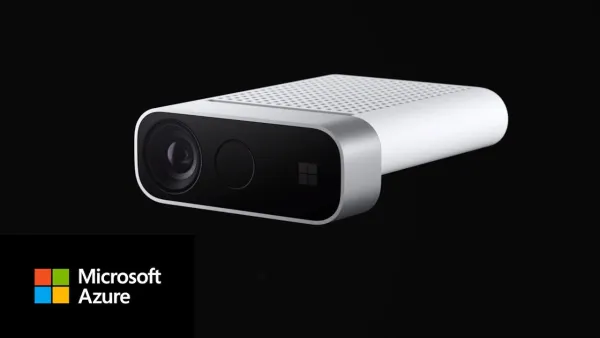
Equipped with a depth sensor, a high-definition 4K camera, and an array of seven highly sensitive microphones, the Azure Kinect DK empowered developers to create applications that harnessed the potential of AI and depth sensing technology. Despite its immense capabilities, Microsoft has now made the decision to discontinue the product, leaving users to explore alternative options.

While the discontinuation of the Azure Kinect DK is a disappointment for many, Microsoft has assured users that they can continue using their existing developer kits without any disruptions. For those who have yet to experience the power of the Azure Kinect DK and wish to do so, there is a limited window of opportunity. Microsoft has confirmed that the product will be available in the market until the end of October, or until stocks last. During this time, interested parties can still acquire the device and benefit from the standard limited hardware warranty provided by Microsoft.

Recognizing the importance of the technology behind the Azure Kinect DK, Microsoft has forged partnerships with several hardware manufacturers. These partners have been granted licenses for Microsoft’s indirect time-of-flight (iToF) depth sensing technology, ensuring that the capabilities of the Azure Kinect DK live on.

Also Read:  ‘ChatGPT Does 80% Of My Job’ — How AI Enables People To Work Second And Third Jobs

Analog Devices, a key partner, has been entrusted with the license for Microsoft’s pixel and sensor technology. This enables them to process raw sensor data and generate depth maps, carrying forward the legacy of the Azure Kinect DK’s depth sensing capabilities. Similarly, global sensor solutions manufacturer SICK A.G. and 3D depth camera specialist Orbbec have also secured licenses to incorporate iToF depth technology into their offerings.

In conclusion, while the discontinuation of the Azure Kinect DK might mark the end of one chapter, it certainly opens up new possibilities. Whether you’re an existing user looking to make the most of your device or an enthusiast seeking alternatives, the legacy of the Azure Kinect DK’s technology continues through licensed partners. The future of AI-powered vision solutions remains bright, with Microsoft’s commitment to innovation and collaboration at its core.

YouTube’s three principles to embrace generative AI in music: All details

YouTube’s Three Principles to Embrace Generative AI in Music: All Details

YouTube’s three principles to embrace generative AI in music: All details
Image Source: campaignasia.com

The Google firm’s to work with generative AI in music will be informed by the recently launched YouTube Music AI Incubator, which is expected to bring together several of the current top creative artists, songwriters, and producers, based on a statement made by YouTube on 21 August 2023. Additionally, it announced a relationship with Universal Music and disclosed three important AI music concepts.

The Music AI Incubator aims to integrate Artificial Intelligence technology in music production responsibly. Max Richter, Anitta, Ryan Tedder of OneRepublic, the estate of American musical legend Frank Sinatra, as well as other professionals in the field, are among those the firm is collaborating with.

YouTube’s CEO Neal Mohan along with Universal Music chief executive officer Lucian Grainge have written blogs.

The latter wrote: “Our challenge and opportunity as an industry is to establish effective tools, incentives and rewards – as well as rules of the road – that enable us to limit AI’s potential downside while promoting its promising upside. If we strike the right balance, I believe AI will amplify human imagination and enrich musical creativity in extraordinary new ways”.

completemusicupdate.com

Principle 1:

Artificial intelligence is here, and our team will properly use it alongside our collaborators in music. YouTube as well as our collaborators in the music business have decided to expand on our long history of collaboration and appropriately take on this quickly developing sector as generative AI enables enthusiastic new forms of innovation. Our objective is to collaborate with the music business in a way that advances our shared quest of ethical innovation.

Principle 2:

Artificial intelligence (AI) is bringing in a new era of creative language, but it must provide proper safeguards and open doors for musical producers who choose to take part. We’re maintaining our solid track record of safeguarding artists’ creative output on YouTube.

Throughout several years, the company has made significant investments in the mechanisms that support striking a balance between the needs of those who own copyright and those who create on YouTube.

Also Read:  Meta set to launch the web version of Threads this week.

Principle 3:

We’ve developed a reliable and secure organisation and set of content policies that lead the industry. To tackle the difficulties posed by artificial intelligence, we will scale them. We’ve invested a lot of time and money on the trust and safety teams, policies, and protections for the YouTube community, and we’re now extending these protections to AI-generated material as well.

Current issues including misuse of trademarks and copyrights, false information, spam, and others might be made worse by generative AI systems.

Meta set to launch the web version of Threads this week.

Meta set to launch the web version of Threads this week

According to the Wall Street Journal, social networking company Meta will launch the online version of Threads, an app that competes with X formerly Twitter, in the coming week.

Meta set to launch the web version of Threads this week.
Image Source: echjuice.pk

According to the source, Meta intends to release Threads on the internet early this coming week, although these are preliminary plans that might alter. A few Threads posts have been accessible to users online, but accessibility has been restricted because Threads was created with users of mobile phones in mind.

The web-based version of Threads is now being evaluated within the organisation according to Adam Mosseri, the chief executive officer of Threads and Instagram, who also verified this last week.

Replying to a comment on Threads, Mosseri noted, “We’re working on it! We’ve been using an early version internally for a week or two. Still needs some work before we can open it up to everyone though…”

livemint.com

The following tab and the option for users to confirm a connection to their Mastodon profile are recent additions to Threads’ feature set. According to the WSJ article, Threads began labelling regulated media organisations as of Thursday to curb misinformation and propaganda.

Mosseri mentioned that the Threads online version has only recently begun internal evaluation and still needs some work before it can be made available to the public. A new “Reposts” option on profiles, which enables users to examine all the topics they have republished in one place, was also introduced by him. Reposts will also be added to users’ Following Feeds.

In response to user questions, Mosseri said that the online version will be released before foldable device compatibility. He acknowledged that the online version is now at a high point of development.

Also Read:  Tesla Data Breach Blamed on ‘Insider Wrongdoing’ Impacted 75,000

To compete with social networking site X and gain the favour of some of the members upset with the modifications made by owner Elon Musk, Threads was introduced on July 5. The social network app was enthusiastically greeted by users, and within a week it had reached the milestone of 100 million active users per month. However, as per SimialrWeb statistics from August 7, Threads’ active user base has already shrunk to about 10 million.

Comparatively, Insider Intelligence calculated that X gets about 363.7 million active users each month. X stated that it had 237.8 million active users on a daily basis in its most recent quarterly earnings, which were released in July of last year.

Tesla Data Breach Blamed on ‘Insider Wrongdoing’ Impacted 75,000

Tesla Data Breach Blamed on ‘Insider Wrongdoing’ Impacted 75,000

In a shocking revelation, Tesla Inc. has fallen victim to a recent data breach that has affected more than 75,000 individuals. The breach has been attributed to “insider wrongdoing,” as disclosed in an official notice from the Maine Attorney General’s office. The breach has brought employee-related records to the forefront, impacting both present and former Tesla employees.

Tesla Data Breach Blamed on ‘Insider Wrongdoing’ Impacted 75,000
Image Source: techmonitor.ai

This alarming breach came to the surface thanks to the vigilance of a foreign media outlet, Handelsblatt, which notified Tesla on May 10, 2023, about the acquisition of confidential data pertaining to the company. A comprehensive investigation was swiftly initiated, unveiling a disconcerting truth: two former employees had exploited their positions to improperly access and share sensitive information, flouting Tesla’s rigorous IT security and data protection protocols. This breach has once again underscored the potent threat of internal breaches that organizations face.

Tesla has responded with unwavering determination to address this breach. Legal actions have been promptly set into motion against the two former employees who stand accused of perpetrating this security breach. The judicial intervention has culminated in the confiscation of electronic devices, which are believed to house proprietary company data. Court-issued mandates have been secured to forestall any future misuse, unauthorized access, or distribution of this purloined data, invoking severe legal repercussions.

Throughout the investigative process, Tesla has demonstrated its resolute commitment to combating this breach. Collaborating closely with law enforcement agencies and external forensics experts, the company has navigated the complexities of this incident. Tesla’s unwavering cooperation underlines its dedication to unearthing the truth and seeking justice for the impacted individuals.

While the particulars of the lawsuits directed at the former employees remain confidential, the implications of this breach extend beyond legalities. Data breaches wield the potential to inflict substantial harm upon individuals and the organizations entangled in their wake. In an age dominated by digital interconnectedness, safeguarding sensitive information stands as a paramount responsibility. Companies, irrespective of their industry, must place data security atop their priority list and institute rigorous measures to avert unauthorized access and the misuse of confidential information.

Also Read:  China Tech Giant Tencent’s Revenue Disappoints Amid Weak Game Sales

As Tesla grapples with the fallout from this incident, it serves as a stark reminder to all companies regarding the gravity of data breaches and the perils of internal vulnerabilities. The saga underscores the indispensability of nurturing a culture of data security within an organization, founded upon stringent protocols and constant vigilance. Through unwavering dedication to data protection, organizations can aspire to thwart not only external threats but also the insidious perils that lurk within their own ranks.

China Tech Giant Tencent's Revenue Disappoints Amid Weak Game Sales

China Tech Giant Tencent’s Revenue Disappoints Amid Weak Game Sales

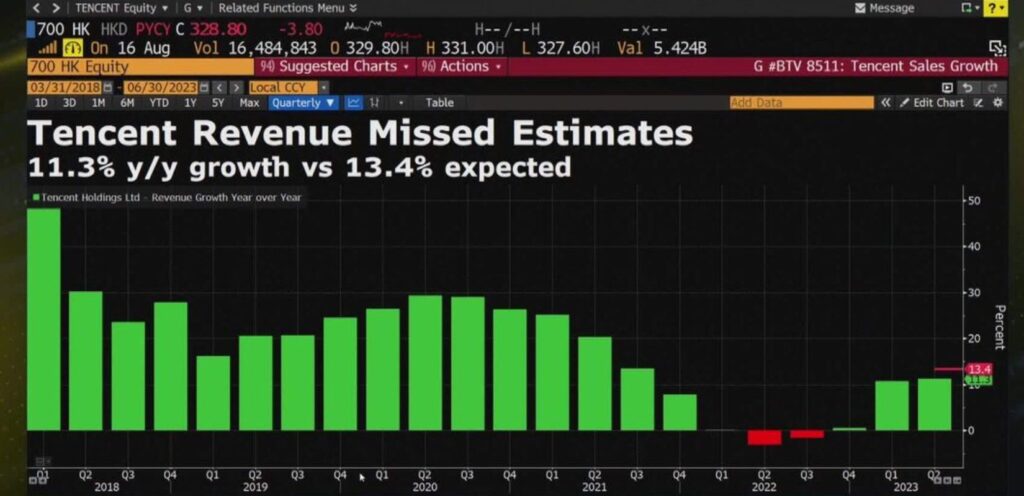
As a struggling economy hampered Tencent Holdings’ recuperation from the year’s record-breaking fall, revenue growth was lower than anticipated in the second quarter. Tencent Holdings is a Chinese social networking and gaming behemoth.

China Tech Giant Tencent's Revenue Disappoints Amid Weak Game Sales
Image Source: Bloomberg.com

The expansion of Tencent’s primary gaming division was less robust than anticipated in the January through June period. With fluctuations in currencies removed, domestic gaming income remained stable at 31.8 billion yuan whereas overseas revenue from gaming increased 12 per cent to 12.7 billion yuan.

James Mitchell, the business’s chief strategy officer, explained why the business decided to momentarily launch less socially impacting material in its second fiscal quarter as the cause of the video game industry’s poor growth during a conference call with investors.

The owner of the WeChat texting network and the biggest video gaming firm in the world, according to industry observers, is now facing intense rivalry from its rivals. According to an analyst at Blue Lotus Capital Advisors, Shawn Yang,  although Tencent’s fresh releases are up against fierce competition from other game developers like NetEase Inc. as well as miHoYo, its older blockbuster titles have provided subpar revenues owing to a lack of material.

 In the three months ending June 30, profit increased 11 per cent to 149.20 billion yuan which is approx $20.45 billion, falling short of the 151.73 billion yuan mean forecast of 21 analysts surveyed by Refinitiv. Little altered from the 10.7 per cent increase in the first quarter, the rise in revenue was stable.

Due to Beijing’s regulatory repression on the internet industry, Tencent reported its very first sales fall during the same period last year, which resulted in a decrease of one per cent in revenue.

Also Read:  X to Get Rid of Ability to Block Accounts, Owner Elon Musk Says

For China’s internet behemoths, like Tencent, regulatory anxiety has decreased this year as a result of Chinese officials’ desire to increase private sector trust. However, the world’s second-biggest economy has not grown since late last year, when COVID-19 limits were eased. In comparison to the same time in the previous year, net profit increased 41 per cent to 26.17 billion yuan. However, it was below the average expert expectation of 33.41 billion yuan.

One of the positive aspects was the income that came from web advertisements. As demand for its clip-sharing service similar to TikTok, Video Accounts expanded, jumped 34 per cent to 25 billion yuan. According to the firm, growth in both offline as well as online payment operations was the reason for the fifteen per cent rise in earnings from financial technology and business offerings to 48.6 billion yuan.

X to Get Rid of Ability to Block Accounts, Owner Elon Musk Says

X to Get Rid of Ability to Block Accounts, Owner Elon Musk Says

As the platform change continues, Musk is presently making his first trip to Japan in more than nine years. Particularly, it has undergone significant branding adjustments, moving away from Twitter and evolving into X. Now providing a significant modification to its features and services.

X to Get Rid of Ability to Block Accounts, Owner Elon Musk Says
Image Source: thesouthafrican.com

A number of the richest people in the world have had a very fascinating few months. He has announced a legal war with fellow internet billionaire Mark Zuckerberg and implemented a temporary makeover to the social media network he possesses. He is now promising that the application will shortly be discontinued without a long-held functionality.

Elon Musk has specifically said that blocking accounts would no longer be an option on X, formerly known as Twitter. Tesla’s chief executive officer reacted to a message asking whether it is ever appropriate to mute or block someone else. The function would thereafter, according to Musk, quickly be deleted since it makes absolutely no sense.

“Block is going to be deleted as a ‘feature,’ except for DMs,” Musk tweeted in response to a question by Tesla Owners in Silicon Valley. “It makes no sense.”

forbes.com

“These individuals do not seek discourse; they aim to inflict pain,” the organization said in a response to Musk. “Blocking is a necessary step to ensure that these harmful voices don’t persist in their repetitive attacks on memory.”

forbes.com

The Auschwitz Memorial’s X profile instantly argued against this claim, claiming that the association censors those who incite hate as well as holocaust denial.

Also Read:  WhatsApp now allows users to share HD images; check how to use this new feature

Nevertheless, as others have pointed out, X cannot simply decide to stop allowing users to be blocked if Musk & CEO Linda Yaccarino desire to continue using well-known international distribution platforms like the App Store for iOS or the Android platform’s Google Play. Apps that provide user-generated material must provide blocking as a functionality, according to Apple’s App Store safety rules.

The wealthy owner has referred to himself as an ardent supporter of free expression, but some have criticised his attitude as being reckless. Since he became over, analysts have discovered a rise in offensive content and discriminatory material on the site, and several governments have charged the firm with failing to act properly to control its content.