Your Tech Story

tech news

Nvidia

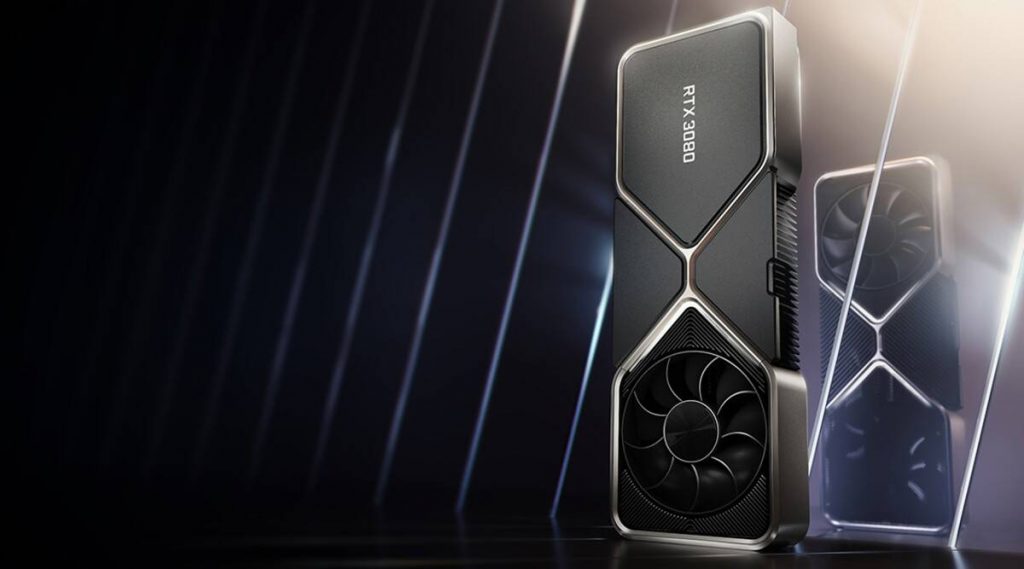
Nvidia finally acknowledged the GeForce RTX 3000 series global crisis publicly.

On 5th December 2020 during the Credit Suisse 24th Annual Technology Conference, Colette Kress, CFO of Nvidia acknowledged the global shortage of the RTX 3000 series. He went into some details about the reasons for the shortage as there have been several reports on what is causing such a crisis. Colette revealed in front of the media that wafer yields are not the only reason behind the global shortage.

During the webcast of the conference, Colette also mentioned that the production yield of Samsung 8nm nodes is one of the prime reasons for the decelerated rate of 3000 series production. Before this conference, Nvidia didn’t put any official statement acknowledge the global shortage of the RTX 3000 series.

Reason behind Nvidia GeForce RTX 3000

Colette Kress has given proper statements in the webcast regarding the shortage of the RTX 3000 series. Apart from revealing that the yield of Samsung 8nm nodes is one of the reasons for the shortage, other topics on the same group have also come up. Kress further said that the company is currently facing supply constraints that go beyond just the wafers and silicon supply. Some constraints are also in substrates and components but no details were discussed. The company will continue to work in this crisis and it believes that the demand will exceed supply in Q4 for overall gaming.
Nvidia
Image Source: indianexpress.com

From what Colette said in the webcast it is clear that the low production rate of various components is one of the reasons the production rate of GPU has gone down. Till now, Samsung was the sole provider of Nvidia GeForce RTX 3000 series 8nm nodes. But, this is also having a negative effect slowing down the production of Nvidia. So, the company is looking for other options and most probably will get nodes from TSMC as well. It is better to keep more than one option in hand in a time of crisis.

Samsung or TSMC nodes 

Many rumors and reports have spread earlier regarding Nvidia’s preference for using Samsung or TSMC’s nodes. But, it was only a few months ago that Nvidia confirmed the use of the Samsung 8N node for building Ampere second-gen RTX cards. The company said that it is replacing the TSMC 7nm node which was used for the initial Ampere GA100 GPU. Jensen Huang, CEO of Nvidia then announced that for the majority of its GPUs they will be using TSMC tech and for a small subset of graphics silicon production they have chosen Samsung.

On 1st September 2020, in GeForce Special event, Jensen Huang announced that the company decided to use Samsung’s 8N process for all the large Ampere RTX GPUs. Many reports said that with smaller Samsung-built process nodes, the new generation of GeForce chips will offer a huge amount of rasterizing performance. But, with the shortage of production, Nvidia probably will switch to TSMC again.

Why the shortage is taking place?

According to some experts, the reason behind the shortage is difficulties faced in logistics and supply chain. A report by Tom’s Hardware explains that most of the cargo space in the distribution system is taken up by the pharmaceutical supplies which have caused the shortage of supplies for the electronic division. We are in the middle of a pandemic and most of the attention is going to the pharmaceutical needs and their fastest transportation. So, this can be a very important reason why the delay has been caused in yield and production rate. Moreover, the COVId-19 vaccines are also getting transferred to so many places across the world. And, currently, that is the prime concern of every nation.

The demand for the GPU has already exceeded the supply. And, you might have also noticed that the stocks are vanishing in no time. Even if someone is lucky to get hold of the RTX 3000 series they are receiving an unboxed version.

Will it get better soon?

Kress mentioned that the situation will improve within a couple of months but still it is difficult to quantify what is the exact portion of the demand they can meet. The company will update further on this situation by the end of this quarter. Till then we just have to sit tight and wait when these GPUs will be in stock again. The pandemic has affected every field in the industrial sector and we have to overcome it.

EU and tech giants

Tech Giants Face another Threat from the EU

Technology companies have been feeling the heat ever since the onset of the Coronavirus pandemic. Throughout these last six months, they have faced various sanctions and threats from around the world. With the EU trying to bring into play a Data tax, and the American government investigating their power, big tech firms have been under the microscope this year. Several nations around the world have also stated that their handling of false news amidst the global health pandemic has not been satisfactory. The EU, in particular, has been sharp regarding its criticism of the power yielded by such companies. Now once again, the EU has threatened to ban them from the European market unless they follow EU regulations. Let us now take a look at what the ban could mean for the big tech firms and what guidelines the EU wants to be implemented.

EU Ban on the Horizon

The services of tech companies could be banned from the EU unless they follow the organization’s guidelines. EU’s chief of industry, Thierry Breton while speaking to a German weekly named Wely am Sonntag pointed out that the EU is in the process of finalizing their data handling rules. The EU has been very vocal in its criticism of big tech companies, and have been drafting better policies to control the power they wield. The new rules named the Digital Services Act, and the Digital Markets Act will revolutionize the tech industry within Europe. Breton and Margrethe Vestager, who serves as the European Competition Commissioner, will announce the new guidelines on 2 December.

What are the new rules about?

The new guidelines will serve as a list of Do’s and Don’ts for tech companies, acting as gatekeepers for such companies. They will limit the power yielded by such companies and prevent them from monopolizing the European market. It will also force such companies to share the data they collect with both rivals and regulators. Hence, it will also serve as a significant deterrent to the promotion of their services and products unfairly. All of these laws will help the EU have a more significant say on the power and exclusivity yielded by large tech firms. 

EU and tech giants
Image Source: medium.com

Who impact will the new rules have on the market?

The newly drafted rules will have a massive impact on American tech firms, which have been on the firing line for the past year. The EU pin-pointed Alphabet-owned Google, which has failed to stop its anti-competition activities. In the past, Google has been criticized for monopolizing the market and driving competition out by unfairly promoting its services and products. While it has been called out several times, the American giant has failed to curb such practices. Certain industry experts want the EU enforcers to do more than order companies to stop. Hence, the newly drafted rules will give the EU the power to ban such companies from the coalition. As a result, it is safe to say that the tech giants will take these new laws more seriously, fearing a ban from the 27-country political bloc.

What is the need for such rules?

However, until the EU passes the newly drafted rules, the organization does not have the power to enforce its threats. Breton told the German weekly that the power to enforce its threats is important if people wish to see any change. He was clear to state that the EU was done waiting for the change to occur organically. Having appropriate rules and measures in place, including fines, penalties, legal action, and bans will help the companies take these laws more seriously. The laws also allow the enforces to split companies up and limit their access to the Single market, helping them put some weight behind their threats.

However, Breton was quick to point out that the committee would take only required measures, saving the strictest rules for exceptional cases. Also, it is clear to see that big tech firms fear such rules. Google launched a 60-day plan to gain American allies to push back against such EU regulations. Donald Trump has also been vocal regarding his criticism of such strict laws and rules against American companies. But, it looks like such rules will become a reality soon enough and that the tech giants will have to curb their power finally. Such a move coupled with the enforcement of the Data tax would lead to tech giants, such as Facebook, Google, Amazon, Apple, and Microsoft becoming more accountable for their actions. We will have to wait and see to what extent the EU goes in a bid to fight the tech giants and their unchecked power.

Arm

Arm promises better gaming experience and productivity with the launch of the new Cortex-A78C CPU

Mankind can never meet the absolute best when looking for excellence. In this tech-driven world, everything we are developing becomes backdated too soon. The development in the sphere of science is taking place rapidly aiming to optimize the working condition of every single thing surrounding us. With that being said, computers and smartphones are two mostly used gadgets that undergo modification most often. Enhancing the performance of a machine and increasing its ability to do more work is the prime concern of the modern world.

So, here’s good news for the smartphone users that yesterday Arm has announced a new CPU variant that will fuel the next-generation flagship smartphones. This new CPU variant is Cortex-A78C that can be seen in laptop SOCs and it is responsible for making the system highly efficient.

Arm Powering more than the next generation smartphones

Earlier this year, the company has launched Cortex-A78 and along with that Cortex-A which has claimed that it increased the efficiency of the system by 20%. The processor broke its record as compared to Cortex-A77 it was successful in increasing the energy savings by 50%. The company claims that as Cortex-A78 is exclusively for smartphones, the new Cortex-A78C will always power on-the-go devices like always-on laptops.

In May 2020, the company’s new products were focused mainly on mobile solutions. The company launched ARM Cortex-A78 CPU, ARM Mali-G78 GPU, and ARM Ethos-N78 NPU. Apart from this, the company also launched the Cortex-X Custom Program that allowed customization of products that go beyond the conventional line of Arm products. With ARM Cortex-A78 CPU as the foundation, the company launched Cortex-A78C to build a secure computing solution as well. This new product will be a combination of Arm’s high-efficiency Cortex-A78 as well as the advanced safety features of the Cortex-A78AE CPU. We are looking forward to a CPU with enhanced performance along with scalability and security.

Arm
Image Source: cdn.ndtv.com

Features of the new Cortex-A78C CPU

The new Cortex-A78C will provide support for up to 8 big CPU clusters leading to more homogenous multi big core computing. As compared to the Cortex-A78, this new octa-core configuration will improve multi-threaded performance. This will meet the demand for digital immersion workload such as increasing the all-day gaming productivity. The new CPU has focused on making the gaming experience better and the capability of the system higher. So, when this CPU will combine with Mali GPUs, the all-day gaming will become much better as Mali-G78 provided much better graphic performance and battery life.

For having a better experience while working with datasheets, Arm has increased the L3 cache memory to 8MB. This will help in enhancing the performance of the professional applications as well as bring AAA gaming to the next-generation devices. Apart from the improvement in gaming life, the CPU will also provide updates for data and device security. To ensure security, a new feature called Pointer Authentication (PAC) has been introduced to minimize the attack surface by preventing the attackers from controlling the software control flow. This key feature also ensures data safety when installing a third-party app.

The Arm has committed completely to respond to the needs of all users. It understands the need for a different market and thus trying to deliver CPU designed for individual needs. So, it has taken a big leap from Cortex-A78 to Cortex-A-78C by not thinking only about smartphones but also on-the-go devices. The company still hasn’t made clear that exactly which are the devices that can be powered by the new Cortex-A78C CPU.

More about Arm 

The Arm is a semiconductor and software design company whose primary interest lies in designing ARM processors. It has an important role to play in the market of smartphones, computers, and other devices. It licenses the right to many companies to build systems using Arm cores and eventually coming up with the most efficient device. Recently, Arm has come into a partnership with the US Defence Department’s DARPA Agency. This gives the agency access to Arm’s technology for research purposes. This year, NVIDIA announced plans on acquiring Arm which would mark the biggest acquisition in the semiconductor industry to date. Many multinational tech companies use Arm’s processor. Some of them are Apple, Samsung, Nokia, Sony, HTC, Qualcomm, etc.

Google

Google Trusted Contact Service is going to be discontinued from December 2020

On 16th October 2020, Google announced that it will be shutting down the company’s trusted contact service. Google’s trusted contact service was launched in 2016 to enable location sharing for friends, family, and emergency contacts. A service that was solely focused on location sharing so that you feel safe when you are outside or send your location so that your family can track you for your safety is now shutting down. The main reason behind the ceasing operations of Google’s trusted contact is the same functionality can be carried out by Google Maps nowadays. This service was available for both iOS and Android where the activity and device battery status of your trusted people were visible.

Google’s Trusted Contact Service will stop working on 1st December 2020. Till then you can still use the service on your smartphone to share the location. One disadvantage or at times advantage of using trusted contact service is that if someone requested your location and you didn’t respond, they will receive your location automatically. At the time of emergencies, when one is unable to respond this feature is a savior.

Google Trusted Contact Service

In December 2016, Google rolled out the app of trusted contacts to keep track of friends and family. With an increasing number of crimes outside our home especially against women, this was a thoughtful initiative taken by Google. Moreover, by installing and using this app the parents can also track the activity of their kids. If you are in danger, chances are you won’t be able to pick up a call leading to growing tension in your family. So, if they know your location it will be easier for them to reach you.

Using this app, you can create a list of trusted people who can request your location. The users will have to approve the list of people manually who can send the request for location. And, once a user sent a location request you will have five minutes to accept and request or deny it. If the person didn’t opt for any option then the location will be sent automatically to the requested person. If the network connectively is poor or completely cut off the other user will receive the person’s last updated location. There is also a feature of live tracking in the app. When the app was launched, it was made free.

Google

Sharing location in Google Maps

Now that after a month we won’t be able to use the trusted contact app of Google, we need to have a look at our alternate option. Google Maps is a very diverse app with new features getting added at quick intervals. If you don’t use Google Maps, it is better to get a hang of it as it is easy to use and gives you location privacy as well.

How to share your location with someone using Google Maps?

  • First, open the Google Map on your phone and sign in.
  • Tap on the profile picture icon followed by location sharing.
  • Click on New share to send your location to someone.
  • If the person is in your Google contacts you can easily find him or her.
  • Create a time limit you want to avail for location sharing and then select the contact and tap on Share.
  • If the person doesn’t have a Google account then you can simply copy the location link by tapping on Copy to Clipboard.
  • You can then send the link via any social media or phone messaging.
  • If you want to stop sharing the location then again open the app, go to location sharing, and click on Stop.

How to request someone’s location on Google Maps?

  • First, open Google Maps and click on the profile picture icon.
  • Go to location sharing and select the contact with whom you one to request location.
  • Tap on the Request option.
  • The person will receive a notification with your email address and that you requested the location.
  • Then the person can check your profile, accept the request, deny the request, or block your profile so that you cannot request anymore.

There are many other features on Google Maps that can come in handy. But, these two are the very basic and most important features you should know how to use.

DJI

DJI Announces two new gimbals: Ronin S 2 and Ronin SC 2

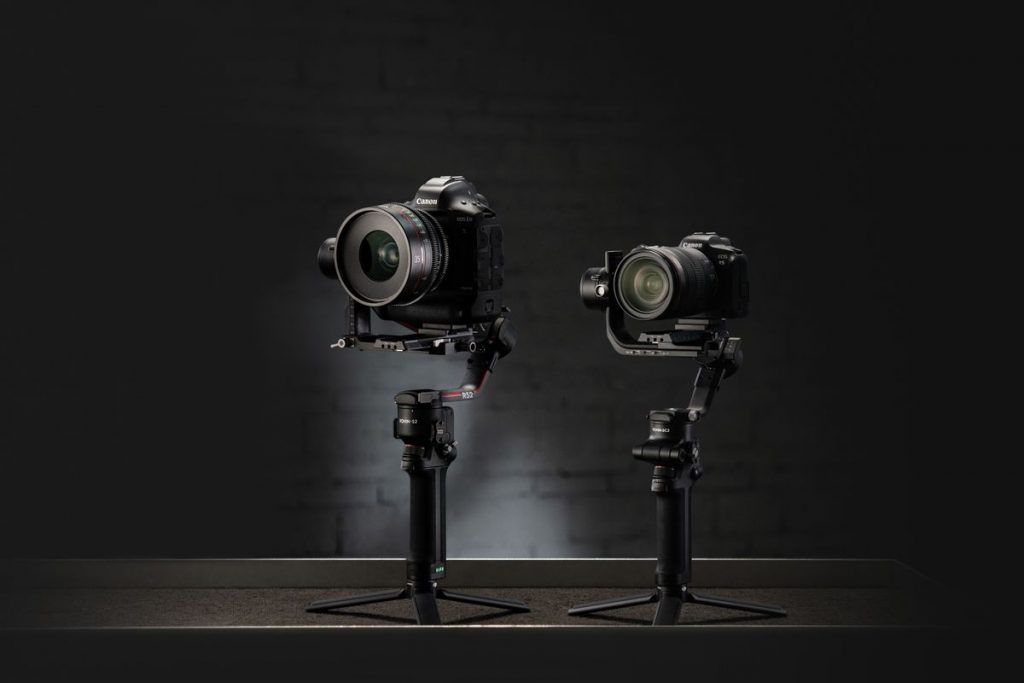
Camera enthusiasts have been expecting good news regarding DJI’s new cameras for a while now. The company teased information back in September, promising some new products in October.  While enthusiasts have been waiting patiently for the drop, there were a lot of speculations regarding the new gimbals. Well, DJI has quelled all rumors by announcing the new models themselves. On Wednesday, DJI announced the release of two gimbals, named Ronin S2 and a smaller model named Ronin SC 2. Here’s a look at everything you need to know about the gimbals and their prices.

DJI New Gimbals

DJI New Gimbals
Image Source: theverge.com

Both the Ronin S 2 and the Ronin SC 2 are three-axis gimbals that have a variety of upgrades. For instance, both of them feature heavier payload capacities, improved motors, lighter materials, and software updates. Let us look at some of the hardware changes implemented on the RS 2.

Deeper Look at RS 2

The RS 2 is the more professional out of the two, being made out of carbon fiber. The usage of such a light-weight, yet strong material makes the RS 2 1.3 lbs lighter than the Ronin S. The RS 2 weighs only 2.8 lbs, and can support a payload of 10 lbs. While DJI claims the gimbal can hold hearing rigs, that might not showcase ideal performance due to the added weight. The device comes with a 1.4-inch touchscreen display situated above the joystick. The touchscreen displays the camera data, device settings and can transmit what the camera is recording as a live feed. However, the main purpose of the display is to enable active tracking without attaching smartphones to the top of the camera.

Further Updates

DJI is adding a unique Titan Stabilization Algorithm, which will help optimize the shooting style. This predictive technology will help cut down on the requirement for manual user input regarding acceleration, speed, and deadband settings. Another software enhancement the device features is the SuperSmooth capability. It helps smooth movements out when shooting lenses of focal length up to 100mm. Other changes that will help filmmakers include the movement of the focus wheel onto the front of the handle. This positioning makes it easy for users to interact with the wheel using their index finger. Furthermore, both models are compatible with both Arca Swiss and Manfrotto plates. The balancing knob allows users to fine-tune their axis, helping reduce set-up time between shots. 

Closer Look at the Ronin SC 2

The RSC 2 is a smaller model built for mirrorless cameras of smaller dimensions. The new design features a foldable design and several software updates. The device weighs 2.65 lbs, considerably lighter than the RS 2 but more massive than its predecessor which weighed only 2.4 lbs. The introduction of improved motors allows it to carry a payload of weight 6.6 lbs. Furthermore, DJI says the gimbal is perfect for more powerful camera-lens combos, with an example being the Panasonic SH1 with a lens of focal length between 24 and 70mm. The foldable design allows users to hold the device in sling mode, making it easier to shoot closer to the ground. Furthermore, there is no i-inch screen above the handle, making low shots easier and more comfortable.

Extra Features

Both gimbals have built-in batteries that last for 12 hours and come with an upgraded quick charge function. This function enables users to charge the device for two hours’ worth of usage within fifteen minutes! Along with the usual modes such as panorama, vertical and time-lapse, DJI is adding a Time Tunnel mode. Time Tunnel essentially captures hyper lapses while doing a 30-degree camera roll.

Both the models go on sale today and will cost users $849 and $499 respectively. DJI is also releasing a Pro Combo package that includes a RavenEye Image Transmitter, phone holder, carrying case, and separate focus motor. The entire package will set filmmakers back by $999 for the RS 2 and $739 for the RSC 2. The images of both gimbals leaked online one day before their unveiling, through the Twitter account of user OsitaLV. The images seem to be from a DJI store in China, and the pictures quickly went viral on social media. With all this interest and buzz on social media, both these gimbals look like they will become hits with the film and photography fraternity!

Amazon

Amazon Announces Ring – A New Indoor Security Camera Drone That Flies

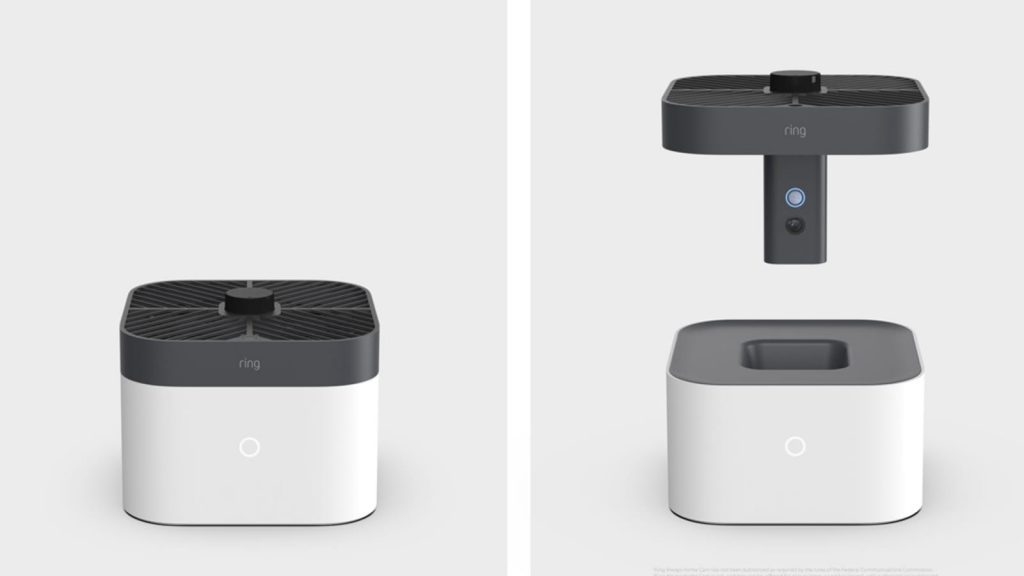
Amazon has been a significant player in the indoor home security space for a while now. The tech giant has also been growing within the smart devices space with several entries, such as smart cameras and speakers. However, it recently announced that its indoor home security camera drone named Ring would literally be taking flight soon enough. This new Always Home Cam will serve as an autonomous indoor drone that flies around your home, helping you keep an eye out while outside. Here’s a quick look at everything you need to know about the Ring and its expected launch date.

Always at Home with Amazon Ring

Amazon new indoor Home Cam will enable users to keep an eye on their homes at all times. Furthermore, once the drone is done flying and taking a look everywhere, it will return to its charging dock to power up again. The new drone will start shipping next year and will cost their buyers a whopping $249.99. Ring’s founder, Jamie Siminoff, said the inspiration for such a drone came as a way to receive multiple perspectives of your home without the need for several cameras. With such an autonomous drone, the owners can gain a look into all their rooms, without paying for several separate security cameras. According to Jamie, the company spent the last two years working on this device.

Taking to the Skies

The Always Home Cam is an “obvious” product, according to the parent company Ring, but one which took a lot of effort to develop. Jamie credits recent advancements in the field of drone technology, for helping his team build a product like this. The autonomous drone carries a camera on it to help provide users with live-footage of their houses. The owners also have the option of telling the drone where they want it to go, and which patch to take. After buying the product, the owners will help set up a map of the home, and also set viewpoints, such as a bedroom or kitchen. The drone starts flying either on command or when it detects a disturbance though its linked Ring Alarm system.

Amazon Ring
Image Source: cnbc.com

Other Features and Details

Since the charging dock blocks the drone’s camera, it will record only when in flight. Also, the device makes an audible noise while flying so that the people are aware that footage is being recorded. Ring states that the drone can help check anything from a stove being left open to whether a door is shut properly. The drone comes packed with obstacle detection and avoidance technology to help avoid collisions and other mishaps. Furthermore, it has shrouded propellers to help prevent damage to things in the room, pets, and other humans if there is a collision.

The project is Ring’s most ambitious yet and seems to be one from the future. It will be interesting to see whether the project kicks off and how effective it proves to be. Amazon, through such collaborations, is trying to bring the future to us, and it will be exciting to see how the drone performs next year. For years now, experts have debated whether such intrusive technology might hinder our privacy. The introduction of such a drone raises various questions, such as; 

  1. Where do the pictures regarding the mapping of the house go?
  2. Could someone at Ring fly the drone around?
  3. How safe is the system against hacking and other such threats?
  4. How long can it fly, what is the average flight speed, and what is the battery life?
  5. What happens when it runs out of charge?

While these questions remain unanswered, it looks like Amazon will have to clarify regarding the privacy issues related to the product. That being said, it will be exciting to see such cutting-edge drone technology being accessible to ordinary people. Also, since the new system collaborates with the Ring Alarm system, users are unsure regarding the systems that can be used individually. All the systems in place might also lead to the Ring H having a bird’s eye view of our homes. How safe will people feel in such an atmosphere? Only time will tell whether such autonomous drones help make us feel safer and in control, but it sure is an exciting time for techies and enthusiasts!