Your Tech Story

tech news

Bard

Google announces Bard A.I. in response to ChatGPT

Google disclosed on Monday that the company will gradually launch an artificial intelligence chatbot software called Bard in the following weeks. The declaration backs up previous CNBC news. Bard will directly compete with OpenAI’s ChatGPT, an AI service.

LaMDA, or Language Model for Dialogue Applications, is the firm’s large language model that powers Bard. Google revealed in a blog post on Monday that it would make the chat technology accessible to reliable testers before adding it much more widely accessible to the general public.

Bard
Image Source: businessinsider.in

According to CNBC, Search Engine Giant, Google, is running tests on some of these functionalities with staff as part of a code red response plan to ChatGPT, a renowned AI chatbot supported by Microsoft in part. A chatbot labeled “Apprentice Bard” was added, in addition to the latest search desktop design concepts that can be utilized in a question-and-answer format.

Also Read: ChatGPT creator made a free tool for detecting AI-generated text

Soon, you’ll see AI-powered features in Search that distill complex information and multiple perspectives into easy-to-digest formats, so you can quickly understand the big picture and learn more from the web: whether that’s seeking out additional perspectives, like blogs from people who play both piano and guitar, or going deeper on a related topic, like steps to get started as a beginner,” wrote CEO Sundar Pichai.

Source: cnbc.com

The corporation used Bard to demonstrate new findings from the James Webb Space Telescope of NASA to just a 9-year-old as an illustration of how it can be used to ease complex subjects.

The software tests follow the latest all-hands discussion in which employees voiced concerns over the firm’s competitive aspect in AI, provided ChatGPT’s rising popularity.

According to CNBC, Google’s AI lead, Jeff Dean, told staff at the time that now the firm has a significantly higher reputational damage risk of offering inaccurate information and is therefore moving “extra cautiously than just a small project.” Even so, he & Pichai hinted at the time that Google could perhaps release parallel products to the general public the following year.

Also Read: Dell to slash about 6,650 jobs in latest tech job cuts

Google’s primary business is simple website search, and the firm has long positioned itself as an AI innovator. In recent weeks, officials have asked more staff for input on the attempts.

The company emphasized Monday that it will need rigorous testing, saying “we’ll combine external feedback with our own internal testing to make sure Bard’s responses meet a high bar for quality, safety, and groundedness in real-world information.”

Source: cnbc.com

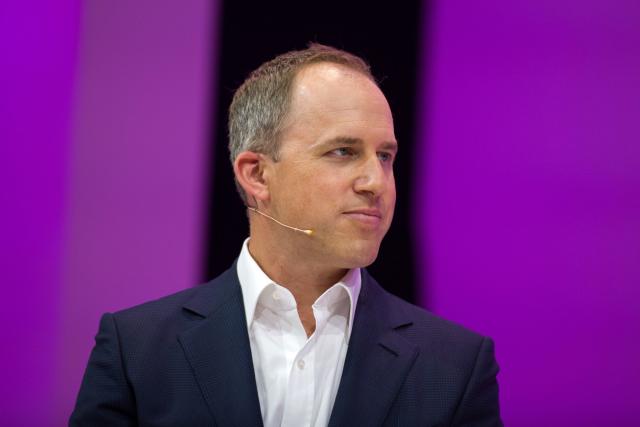
Bret Taylor

Salesforce’s Bret Taylor to Start AI Firm With Departing Google VP

Together with departing Google vice president Clay Bower, Bret Taylor, who just quit as co-CEO of Salesforce Inc., is creating an artificial intelligence firm.

In a LinkedIn post, Bavor, who worked for Google for over seven years as the vice president of augmented reality and virtual reality as part of an 18-year career, was vague about his future plans but made it apparent that he is working with Bret Taylor.

Bret Taylor
Image Source: finance.yahoo.com

Since the two of them joined Google together years ago, he claimed that they had known one another for a long time. He stated that he has “always admired [Taylor’s] keen product sense and entrepreneurial spirit, his technical chops, and, above all, his character and integrity.”

Bavor stated, “We share an obsession with recent advances in AI, and we’re excited to build a new company to apply AI to solve some of the most important problems in business,” possibly teasing what may happen next. Will there be an AR/VR component? Right now, it’s tough to say, but the two are working on something.

He wasn’t being detailed, but next month we could learn more about whatever it is. He noted, “I’ll be setting out with Bret on this next adventure in March, and will have more to share once we get started. Until then, I’ll be focusing on transitioning my teams and projects, and wrapping things up properly at Google.”

Also Read: Salesforce co-CEO Taylor to leave as Benioff takes sole charge

Prior to embarking on an entrepreneurial path and launching the pioneering social network FriendFeed in 2007, Taylor worked at Google for four years beginning in March 2003. In 2009, Facebook bought the company where Taylor served as CTO for a while.

Later, he founded Quip, a business document collaboration platform that Salesforce purchased in 2016 for $750 million. He climbed the ranks to become co-CEO and is now going back to his entrepreneurial origins of business development.

Bavor, who joined Google in 2005, advanced through the organization’s ranks to become a manager on Gmail and Google Drive. He is regarded as Sundar Pichai’s preferred lieutenant.

Bavor was chosen to lead Google’s virtual reality division in 2015 in an effort to outperform competitors regarding the next computer platform. Although Google has introduced a number of devices and waves of software, its products have not been widely adopted, and the corporation has pulled back from this market.

A company spokesperson stated that Google had no plans to announce a replacement for Bavor. Projects from the laboratories devoted to cutting-edge technology will be transferred to Google’s Tech & Society division, which is run by senior vice president James Manica. Executives from Google Hiroshi Lockheimer and Rick Osterloh will be in charge of the augmented reality lab projects.

Also Read: Samsung, Google & Qualcomm team up on mixed-reality platform

Bavor recently wrote an email outlining changes to Google’s R&D initiatives within the Google Labs division, which housed the business’s internal incubator Area 120. After a reorganization in 2021, Bavor was the head of Labs, although many of its innovative initiatives were severely harmed by Alphabet’s widespread layoffs.

Dell

Dell to slash about 6,650 jobs in latest tech job cuts

Dell Technologies Inc is laying off 6,650 workers, or 5 percent of its worldwide workforce, as it faces challenges with a downturn in the market for personal computers and prepares for a global recession.

Dell’s decision aligns it with a slew of U.S. firms on Monday, ranging from Goldman Sachs Group Corporation to Alphabet Inc, that already have fired thousands this year to weather a demand slump caused by high rising prices and increasing interest rates.

Dell
Image Source: bloomberg.com

Dell had already implemented cost-cutting measures such as a hiring freeze and travel restrictions because it coped with a post-pandemic slump in PC sales, which also comprise more than half of its earnings.

Also Read: Twitter to start charging developers for API access

However, those actions are “no longer sufficient,” according to Jeff Clarke, the co-Chief Operating Officer, as he stated in a memo to the workforce.

“What we know is market conditions continue to erode with an uncertain future,” Clarke said. Dell expects to book costs related to the layoffs in its fiscal fourth quarter, which ends in January.

Source: reuters.com

HP Inc has also announced job cuts of up to 6,000 people. As per a research company IDC, the PC, as well as tablet market, will decline by 2.6 percent in 2023 after experiencing fast expansion during the global epidemic due to working remotely.

“It was only a matter of time before the wave of tech layoffs reached Dell’s shores, given how sensitive the company is to both consumer and corporate confidence,” said Susannah Streeter, markets analyst, Hargreaves Lansdown.

Source: reuters.com

As of January 28, 2022, Dell had approximately 133,000 staff members, with approximately one-third located in the United States.

Bloomberg News announced the news of the job cuts earlier today.

Dell’s stock was unchanged before the bell.

Also Read: Samsung, Google & Qualcomm team up on mixed-reality platform

According to preliminary findings from industry expert International Data Corp. (IDC), personal computer deliveries will drop dramatically in the final quarter of 2022. According to IDC, Dell experienced the greatest decline within and between major corporations, with a 37 percent drop when compared to the same period in 2021. PCs account for approximately 55 percent of Dell’s earnings.

In 2022, the technical sector declared 97,171 job cuts, an increase of 649 percent compared to the previous year.

API

Twitter to start charging developers for API access

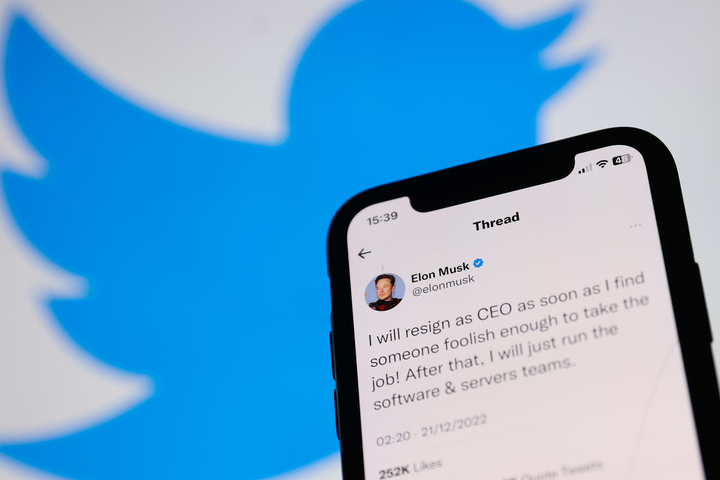
Twitter will stop providing free access to the Twitter API on February 9 and instead will release a paid version as the mini-blogging platform owned by Elon Musk tries new ways to profit from the platform.

The Twitter Developer account announced in several tweets that the company will be discontinuing assistance for both the legacy v1.1 as well as the latest v2 Twitter APIs. It did not say how much it intends to begin charging for API usage right away.

API
Image Source: cnbc.com

The change comes after Twitter suddenly changed the conditions of its API over the past weeks, the API seems to have been used by many famous Twitter service users, including Tweetbot and Twitterrific. The majority of third-party Twitter applications have discontinued their mobile apps.

Twitter data are among the world’s most powerful data sets. We’re committed to enabling fast & comprehensive access so you can continue to build with us,” the Twitter Dev account said Thursday. “Over the years, hundreds of millions of people have sent over a trillion Tweets, with billions more every week.”

Source: techcrunch.com

In light of recent modifications which saw Twitter shutter third-party customers, several other application developers became wary of how they progressed development atop the Twitter API. This new change may force some devs to give up their brands or pass the expense on to their consumers.

Also Read: Why major advertisers are leaving Twitter?

Large numbers of developers use the Twitter API for a variety of purposes, including monitoring Twitter accounts and providing alerts. These are enjoyable side projects for those who are unwilling to pay service charges for something which they are not monetizing.

Then there’s yet another type of Twitter API user, the researchers. Twitter’s latest revelation could have an influence on research in a wide range of sectors, such as hateful speech and online harassment.

Academic institutions frequently use Twitter to understand human behavior in various regions. Limiting free API usage could also deter companies from developing methods to detect the dissemination of false information on Twitter.

Ever since its founding, Twitter has had an odd relationship with developers. But, even though there was an inconvenience, both parties benefitted from the relationship.

Also Read: What Does Twitter 200 Million User Email Leak Actually Mean?

Third-party companies were frequently the ones releasing new services and features for Twitter, and the social media platform helped by not charging people for API usage.

Twitter has even aimed to improve relationships with developers in recent times by introducing new programs such as the Twitter toolkit for app discovery. Several of these initiatives have been halted under the new administration.

mixed-reality platform

Samsung, Google & Qualcomm team up on mixed-reality platform

The newest tech behemoth to embrace augmented and virtual reality is Samsung. The smartphone manufacturer claims that it will collaborate with Qualcomm and Google on a future mixed-reality platform.

The information was released on Wednesday during Samsung’s Unpacked event and comes after rumors that Apple may launch the first ever-virtual reality headset this year. Hiroshi Lockheimer, SVP of Android at Google, and Cristiano Amon, CEO of Qualcomm, both took the stage to jointly announce the partnership.

mixed-reality platform
Image Source: techweekmag.com

No specific products were mentioned by Samsung as being under development. Additionally, it didn’t offer a release date for any planned mixed-reality services or products.

Technology that combines the traits of augmented and virtual reality is referred to as mixed reality. Similar to Google Glass, augmented reality combines software and the physical world by superimposing graphics on the user’s surroundings.

Also Read: The iPhone may get a microLED display. What does that mean?

In contrast, virtual reality technologies like the Meta Quest 2 immerse the user in a 360-degree virtual environment. Passthrough cameras, a method that enables AR and virtual reality technologies to merge into one product line, are helping a new generation of VR headsets advance mixed reality, nevertheless.

This is possible with the Quest 2 and Quest Pro headsets from Meta and the future Vive XR Elite. The identical idea should be used in Apple’s anticipated headset.

The development arrives at a time when virtual, augmented, and mixed-reality platform are receiving more attention. According to Bloomberg, Apple is planning to unveil a mixed-reality headgear in 2023 that might cost $3,000 or more.

Google unveiled a new pair of AR glasses at Google I/O last year with a focus on language translation, and Sony’s PlayStation VR 2 and HTC’s Vive XR Elite are both set to debut this month. Before the year is out, Meta’s Quest 3 will be released.

With the exception of the Gear VR device, which it released in multiple incarnations between 2015 and 2017, Samsung has been very quiet regarding virtual reality.

Given that Samsung, Google, and Qualcomm already collaborate to develop smartphones, the alliance makes logical. Samsung creates the physical components of its Galaxy devices, while Qualcomm provides the processor and Google is in charge of the Android operating system’s supporting software.

Also Read: Samsung’s Galaxy Unpacked 2023 Event: What to expect?

Since many of the leading VR and AR headsets use Qualcomm chips, the company has been driving the development of phone-compatible AR and VR headsets for many years. Additionally, Qualcomm is working with Meta on upcoming smartphones and Microsoft on the hardware for its next augmented reality glasses. It’s unclear if this new partnership will work with Qualcomm’s current Snapdragon Spaces technology for phones and headsets.

Samsung unveiled its plans for mixed reality alongside the release of its latest Galaxy Book and Galaxy S23 smartphone range. The new range, which comes in three versions—standard, Plus, and Ultra—offers a number of enhancements and is currently up for preorder.

chatGPT

ChatGPT creator made a free tool for detecting AI-generated text

The firm behind the renowned ChatGPT, OpenAI, has launched free software, that it claims can differentiate between text written by humans & text created by AIs. In a press statement, it warns that the classifier is not yet fully reliable.

So, we should not use it as a main decision-making tool. As per OpenAI, it can be useful in determining whether an individual is intending to pass off the obtained text as human-written text.

ChatGPT
Image Source: thejakartapost.com

The tool which is known as a classifier is easy to use, but you require a free OpenAI account to begin using it. Simply insert text into a box, press a button, and it will show you if the content is very unlikely, unlikely, unclear if it is, possibly, or likely generated by AI.

Also Read: China’s Baidu to launch ChatGPT-style bot in March

In its press release, OpenAI says it trained the model powering the tool using “pairs of human-written text and AI-written text on the same topic.”

Source: theverge.com

However, It includes a variety of concerns regarding how to use the tool. The firm stated some drawbacks above the text box:

A requirement of a minimum of 1,000 characters, or roughly 150-250 words, is placed.

The classifier may not always be correct; it can classify both AI-generated as well as human-written text incorrectly.

AI-generated content can be easily edited to avoid detection by the classifier.

Since it was trained mainly on English text written by grownups, the classifier is susceptible to errors when reading text written by kids or text written in a language other than English.

The firm also claims that it will occasionally imprecisely but confidently Identify human-written content as AI, particularly if it deviates greatly from any of the training data. It emphasizes that the classifier is currently a work in progress.

Also Read: BuzzFeed will use ChatGPT bots instead of writers

OpenAI is not the first to create a tool that could detect ChatGPT-created text. Some websites such as GPTZero, created by a student named Edward Tian to identify AI plagiarism, appeared nearly quickly after the chatbot hit the internet.

One area where OpenAI is concentrating its efforts with this detection technology is education.

According to the press release, identifying AI-generated text has been a main concern among educators, as education systems have reacted to ChatGPT by prohibiting or embracing it. According to the firm, it is interacting with educators in the United States to learn what they perceive from ChatGPT in their schools and is asking for feedback from anybody associated with education.