Your Tech Story

startup

UPI

Mandar Agashe : The Man Who Brought a Revolution in the Indian Digital Payment System

Receiving rewards for paying your bills is like the smartest scheme ever to digitalize the payment system of our nation. Most of us make payments through UPI apps like Tez to earn digital scratch cards and cash backs. The growth of UPI has been unbelievable from only 92,000 transactions in August 2016 to 105 million transactions in November 2017. Today, almost everyone with a smartphone uses these UPI apps for the transaction. And, the biggest advantage of UPI is you don’t have to walk to your bank to deposit money into someone’s bank account. From transferring money to bank accounts to paying for movie tickets, UPI has become the most convenient and the most successful initiative in terms of online banking.

But, who is the person behind this massive success that turned the entire scenario of digital payment in no time?

Mandar Agashe, the founder of Sarvatra Technologies, a company that provides financial and payment solutions to the Indian banking sector, came up with the idea of Unified Payments Interface (UPI) and launched it in 2016.

Early Life of Mandar Agashe

Mandar Agashe
Image Source: Facebook

In 24th May 1969, Agashe was born into an influential family of Mumbai to an Indian businessman, cricketer and philanthropist, Dnyaneshwar Agashe, and Rekha Gogte. Agashe had two other siblings, Ashutosh Agashe and Sheetal Agashe.

When Agashe was pursuing his B.E. degree in Computers, he created Musicurry.com, an online radio website. After completing his college, Agashe joined his family business in 1994 and started working in the firms. By 2000, he established EBZ Online in association with Oracle, followed by establishing Brihans Natural Products Ltd., and finally, Sarvatra Technologies in 2000.

Sarvatra Technologies

Agashe established his startup in Pune. The startup was basically to provide payment solutions and promote online banking through UPI and IMPS (Immediate Payment Service). The main goal of the company was to get the rural and semi-urban population connected to banking as well as the system of digital payment and get every citizen of India accustomed to EFT (Electronic funds transfer).

Since Mandar Agashe belonged to a family full of successful business tycoons, he had a clear idea of how the corporate sectors function. He wanted to come up with a solution that can be affordable to every single person out there and can easily carry out online transactions with minimal knowledge.

Oracle was the first company to invest in the strategies of Agashe, and eventually, investors like Vallabh Bhanshali and ICICI Bank participated in the following funding rounds. By 2018, the company brought 450 co-operative banks on National Financial Switch.

Agashe realized that both, the banks and the customers, faced a lot of issues during online transactions because of the poor connectivity. So, he provided the banks with SaaS-based technologies to enhance better performance, and also, reducing the operating cost at the same time.

The success of UPI and other payment solutions

After UPI was launched in 11th April 2016, the transaction volume increased unexpectedly. Transactions through the leading UPI apps like Google Tez, PhonePe and BHIM increased exponentially. By 5th December 2017, two months since the launch of Tez, the transaction volume hit 140 million, and the amount processed through PhonePe summed up to 100 crores per day.

Another advantage of Tez which accounts for 70% of the total UPI transaction is that the money one pays through it directly gets credited in one’s bank account instead of getting dropped into the wallets. By 2017, the apps that use UPI reached 20 million downloads from Play Store.

In the financial year 2017-2018, Mandar Agashe announced that they had a gross transaction value of 27,000, and by the next financial year, they will be going to make it 40,000 crores.

Agashe’s Musical Career

Apart from being an entrepreneur, a philanthropist and a successful businessman, Agashe is also a renowned singer. Releasing Musicurry.com was his first step towards the musical world, which led to launching his very own music album. His first role in the world of music was as a co-director with Pandit Hridayanath. He sang his first playback song with Asha Bhosle, and in 1998, his album ‘Nazar Nazar’ was recorded and released in Hindi and English. In 2005, another album, Jaan Le was released followed by 82 in 2016.

venmo

Venmo : The Experience of Money Transfer Made Easy

You do not get success in the first few attempts, but you sure get the experience. Trying and trying again always gets you with some good exposure and enhanced skill, such that the end product you create is always ‘the product’ that changes your life. One such similar story is of the founders of Venmo, a mobile payment service, who from being clueless about their future were able to build a multimillion startup.

The Founders

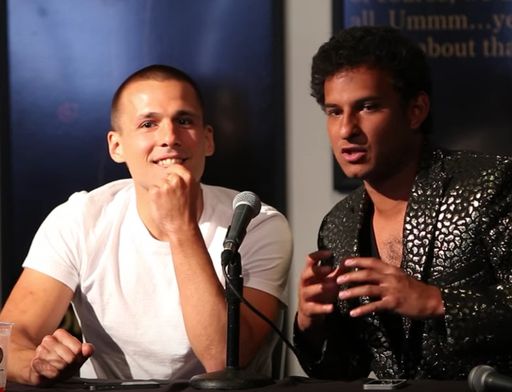
Venmo, an online payment app, was founded by two friends, Andrew Kortina and Iqram Magdon-Ismail. The two had joined the University of Pennsylvania in 2001, where they got to share their room as freshmen. Iqram and Kortina both opted for Computer Science as their major, but later, Kortina switched to philosophy and creative writing. The reason being that he was already able to study computers and programming through homework exercises, so to utilize the university fee, he changed his subjects.

With time, the two became good friends and together, started working on different projects. The first project, on which they worked together, was a college advertisement website. They named the website My Campus Post. Along with the website, they spent most of their time on various other projects, but all they were doing as a hobby.

Venmo founders
Image Source: fastcompany.com

But Kortina realised that the graduation time is near, and they had no plans for their career only when his mother asked him about his career plans. This hit his mind, as he and Iqram, both of them need to make a career plan for them.

Beginning the Career

The two decided to move to West Philly, as the rents were way cheaper there. Here they started advertising about website development services from door to door and started getting some work. They also started their own online music selling project named Philafunk, at the same time. The platform provided the musicians with the facility to sell their music, and the website would charge them a minimal fee on every sale.

The two had skills, but they did not have real-world experience. So they decided to take a job. For the next two-three years, they worked for different technology firms, including iminlikewithyou.com.

They kept their part-time work of developing websites running alongside and continued to look for the life-changing idea. They even developed software for shops that could be used as a ledger or register on a laptop.

They came up with the idea of Philafunk while enjoying a Jazz show in the city. Philafunk enabled the musicians to accept money for the subscription, music or the merchandise people bought from them.

Founding Venmo

While the two were working on Philafunk in NYC, Iqram forgot to bring his wallet and borrowed some money from Kortina and wrote a cheque to him. This hit his mind, as he was using the traditional method of paying the money when he was using their mobile for every other thing. The two knew PayPal was already there for online money-related transactions, but even though people were not using it.

This led them to think of a new idea of developing a method to send and receive money through their mobile. They started working on the project and made use of the text message, i.e. SMS, for sending and receiving the status of money transferred. The working of the new payment method was quite derived from the Philafunk model, where now everyone (not only musicians) could receive the money for anything (not just for selling music).

The two also included the option to add a small description about for what the payment was made, such that people could keep the record of when and who they paid money for. They put the name of the service as Venmo. ‘Ven’ in Venmo has been derived from the Latin word vendere, which means ‘to sell’ and ‘mo’ is short for mobile.

The two were ready with the prototype of Venmo and started meeting people for its seed investment. But unfortunately, they could not convince any major investors. But they had to launch the service, and they took the help of Magon-Ismail’s old boss at Ticketleap and his father with the investments. They launched Venmo in August 2009. But in the next few months, the popularity of the app led the two co-founders to raise a $100,000 in debt financing.

The Rise of the Company

By the end of the year, the company shifted the model from website and SMS to mobile application and launched an iOS app in December. In January 2010, they got the opportunity to represent their product at the Mobile Monday Mid Atlantic Demo Night. Here they asked the audience to send some donation money to the relief fund for people suffering from an earthquake in Haiti. The relief fund raised a $600 in just a few minutes of announcement and in a week, there was a total donation of worth $15,000 through Venmo. This was one of the best marketing moves for the company.

The company raised another $1.2 million in May 2010, in a funding round led by RRE Ventures, followed by another $400,000 in debt financing in June 2010. The next month, Venmo launched its Android app. The coming year, the company partnered with most of the banks running in the U.S, for the payments.

By 2012, the growth rate for the company reached 30 per cent per month, and it was carrying out $10 million in payments every month.

On August 16, 2012, Braintree, another technology and mobile payment company, acquired Venmo for $26.2 million. But in September 2013, eBay acquired Braintree and all its subsidiaries, such that Venmo became the part of PayPal.

Venmo still is one of the famous payment apps in the U.S. and only serve in the U.S. As of 2017, a million users were using Venmo for mobile payments, and it carried out nearly $50 billion worth of transactions in 2018.

Tumblr

David Karp : The Young Entrepreneur Who Founded the Biggest Microblogging Website Tumblr

Experience matters, and when it is earned since childhood, it can help you achieve many things. As a kid, humans are sharper than adults and capable of learning even the toughest of things. These days we see many little kids coming up and showing off their skills and knowledge, whereas many are already launching their startups in the various fields. Thanks to the evolving technology. Though David Karp is not a teenage entrepreneur, he had achieved a lot before he passed his teens. David Karp is the founder of Tumblr, the microblogging website, and has an interesting success story to follow.

Early Life

Karp was born to a science teacher and a film and television composer, on 6 July 1986, in New York City. He was a bright student and got his primary as well as middle school education from Calhoun School, at the same place where his mother worked. Karp, at the age of 11, started learning HTML and was soon developing websites for businesses.

Karp always wanted to join MIT for his graduation, so, he after studying for one year at The Bronx High School of Science, dropped out and opted for homeschooling, to make his resume interesting for admissions in the university.

Career

David Karp
Image Source: charitybuzz.com

Things to go according to one’s will is not always possible. Karp wanted to add more to his resume, so he was doing many things alongside his homeschooling. He started working at the Frederator Studios as an intern when he was 14. At that time, he was also learning Japanese and had joined maths classes. Along with his maths tutor, he learned some of the programming skills. At the Frederator Studios, he got to work on various software products, and he even developed studio’s first blogging platform and its first internet video network, named Channel Frederator.

Later, he got to work with UrbanBaby. One day, at the firm, he solved a glitch in the software successfully in a comparatively lesser amount of time. The incident helped him to win the attention of John Maloney the founder of UrbanBaby.

Maloney appointed Karp as the head of product at UrbanBaby. Karp continued to work with the company for four more years and left it in 2006 after the company was acquired by CNET. Four years spent in a company made him leave the dream of joining MIT behind, as he had also not received a high school degree yet and he was doing great as a programmer.

Entrepreneurial Journey towards Tumblr

Karp work and experience opened new doors for him, and he went on to start his own development consulting company named Davidville. He hired a programmer named Marco Arment, through Craigslist, with the help of whom, Karp started to work on a new project. Karp had grown an interest in microblogging and was looking forward to developing a platform based-on microblogging. It took him a year and a half on deciding to finally work on his interest, and he launched Tumblr in February 2007.

David Karp was aware of the scope of a microblogging website, but he did not know that his website will gain 75000 users just within two weeks of its launch. In six months, he realised that Tumblr has got huge potential, so to focus on it, entirely, Karp shut down his consulting business and rebranded his company as Tumblr, Inc.

The Rise of the Company

In 2009, the company launched an iOS app for Tumblr, and in 2010, another app was launched for Blackberry phones. In 2011, the company valued at $800 million, and in the same year, raised a funding of $85 million. In October 2011, Tumblr became the first blogging website that hosted American President Barak Obama’s blog.

The 3.0 version of Tumblr launched in 2012, which also included support for Spotify. This way, the users could now post HD pictures on the platform and also use it at offline mode. In August 2012, the company monetized the platform through advertisements.

Major investors including Union Square Ventures, Fred Seibert, John Borthwick, and Sequoia Capital, etc. were the major investor in the company at that time. Karp sold 25% of the company share to few of its investors.

On May 20, 2013, Yahoo! announced that it will be acquiring Tumblr for $1.1 billion, Karp remaining the CEO of the company. After working together with Yahoo! for four years, Karp resigned from his post.

David Karp was named Best Young Tech Entrepreneur by BusinessWeek in August 2009. He was also named in the list of MIT Technology Review TR35 as one of the top 35 innovators in the world under the age of 35.

4chan

Christopher Poole : The Founder of 4Chan Who Tasted Success Without Being Known

The rise of computers and programming languages has brought a revolution in the world. The programming languages have become the biggest contribution to the world and the growth of the economy. That is why most of the people are not hesitant about taking a step in the same field. Little kids and teenagers are the ones who are more curious about them, and there is another reason behind it. The magic a person feels behind building things only by coding makes it interesting enough for the kids and the adults. Also, it has helped many people to grow financially as well.

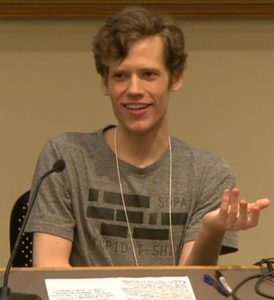
One such teenage coder was Christopher Poole, who was only fifteen when he founded one of the biggest forum-based social network 4chan. An American enthusiast, Chris was always into programming and loved what he could do with it. Without letting people know, he used to code almost every night.

Chris Poole was born in 1988 in New York City. He lived with his mom and wanted to build a platform that would help him earn some extra money. While in school, he used to create comedy content and post it on ‘Something Awful’, a comedy website.

chris poole 4Chan
Image Source: cdn.vox-cdn.com

Chris was inspired by Japan’s famous imageboard of ‘Futaba Channel’ (2Chan) and wanted to create something similar for America as well. When he was still in school, he started working on a new project and developed 4Chan, the American version of the Japanese imageboard. He went on to follow the source code of Futaba Channel and took the help of AltaVista’s Babel Fish online translator to translate the code.

On 1 October 2003, when he was just 15, he finally launched 4Chan by pseudonym ‘Moot’. He used the name Moot as he did not want to mix his private and professional life. That is why there is not much information about Chris’s early life. His real identity was only revealed on 9 July 2008, after five years he launched 4Chan, that too, by The Wall Street Journal.

After launching 4Chan and completing his school education, Chris joined the Virginia Commonwealth University. But eventually, he had to quit college only after a few semesters, such that he could focus on his startup.

Soon, 4Chan emerged as a place where people could create and share meme and animes. They had the facility to share the content anonymously as well as non-anonymously. The platform was a great success, and even before revealing his real identity, he got the chance to speak at the Massachusetts Institute of Technology and Yale University as Moot. He had become an influencer in no time.

In 2008, Leopoldo Godoy of Brazilian TV Globo called the site as “the ground zero of Western web culture”. He was named as the world’s most influential person of 2008 by the ‘Time’ magazine after it conducted an open internet poll.

In February 2010, Chris spoke at the ‘TED2010’ conference held at Long Beach, California. In the same year, he also raised a $625,000 for his next startup ‘Canvas Networks’, which he launched in January 2011. But unfortunately, he had to shut the platform due to the security breaches the site was facing.

Though he was running 4Chan with the name of Moot, he always conducted Q&As for the users and answered their questions. Chris worked for 4Chan as the administrator and had already left the job of programming at his company. He, after working for more than 10 years for the company, decided to step down from his post of administrator in 2015. During his career with 4Chan, he achieved a maximum user engagement, i.e. over 20 million monthly visitors to the site.

He announced the news on 21 January 2015 and on 23rd January conducted another Q&A on the platform and a live stream on YouTube.

In September 2015, 4Chan was acquired by Japanese internet entrepreneur Hiroyuki Nishimura for an undisclosed amount. In March next year, Chris revealed through a blog post that he will be joining Google. He joined the company and is still working as an employee.

Though Chris has been secretive about his life, one thing he has always been clear at the right to anonymity. The success he received at such an early age never put a bad influence on him. In fact, he always stayed away from the limelight.

kik

Ted Livingston : The Journey of the Founder of Kik Messenger

Establishing a new innovative start-up is the ultimate dream of every young entrepreneur out there. And, especially, if a mind has both excellent technical skills and impressive business strategies, wonders can be created. But, how many of us realize that the real voyage begins after one has accomplished his or her dreams? Because with great power comes great responsibilities. Reaching the zenith is easier than holding onto it. It is obvious that one will face ups and downs during the entire journey of success, but one must be strong enough to not give up or choose a wrong path.

Ted Livingston, founder of Kik Messenger and an incredible tech genius, was sentenced to death in 9th June 2019 for committing fraud, drug trafficking and an endless chain of illegal activities. He confessed all of his crimes saying that he did everything to save his company from bankruptcy, though the press release gives enough evidence of Kik’s short-term success. He started the company after he was rejected by RIM (Research in Motion), which led him to join the Velocity program, and finally, open his own start-up. So, let’s have a look into Livingston’s life before he hit such a massive crisis.

Early Life

Livingston was born in 1987, in Toronto, Ontario to a prosperous family. His father was a financial advisor, and his mother worked in the advertising sector. From a very young age, Livingston showed a great interest in building robots, and he joined the robotics team of his school. He went to Crescent School in Toronto and graduated from there in 2005.

Higher Studies and Early Career

Ted Livingston founder kik
Image Source: Twitter

Livingston pursued a Bachelor’s degree in mechatronics at the University of Waterloo, but he dropped out later. During his time at the university, he took part in the Waterloo co-op program and landed placements at Honda and City of Toronto Government.

In 2007, he started working as a Systems Engineering Project Coordinator at RIM, and then, as a Technical Product Management Coordinator. The internship was a part of his engineering course, and, Livingston once said about it that the best part about the internship was having a smartphone with a full data plan which was very expensive at that time.

Since he acquired a very lucrative position at RIM, during his internship, he got to work with every product manager individually and learnt a lot of new things. He was so good at his job that his boss advised him not to go for a full-time job in RIM and rather open his own company. This was all the motivation he needed, and hence, he turned down the job at RIM in 2008.

Founding KiK

Ted went back to Waterloo to complete his Bachelor’s degree, but somehow he ended up participating in the Velocity program followed by founding KiK. At first, Livingston created KiK Music, which was then known as Unsycned for RIM (later known as Blackberry). The app was connected to BBM to allow users to share soundtracks via messenger. But, KiK had bigger plans, which were blatantly turned down by RIM. So, Livingston and his team started working on the Kik messaging app on their own, and it was released on 19th October 2010.

While messaging apps like WhatsApp and Ping were already ruling the market, KiK hit one million users within 15 days of its release. Pretty impressive for an infant company, isn’t it? Though KiK was initially released for iOS and BlackBerry, BlackBerry removed it in November 2010 from BlackBerry App World followed by filing a lawsuit against KiK, which was settled later in 2013.

Success of KiK

In 2014, KiK raised $38.3 million from Series C funding followed by $50 million in the next year, thus resulting in KiK’s total worth to $1 billion. Gradually, KiK decided to raise funding in cryptocurrencies, and it raised $125 million cryptocurrencies through an ICO in September 2017.

In June 2018, Kin Coin (for cryptocurrencies) was released officially in Beta version, and in the next month, Kinit Beta App was released which was exclusively for the US residents.

Death Sentence of Livingston

The news of Livingston’s death sentence hit like an unexpected jolt to the world. He was accused of multiple reasons which included conduction of an illegal ICO, drug trafficking, prostitution and fraud. And finally, he was given a death sentence by an SEC Commission.

shopclues

Sandeep Aggarwal : Serial Entrepreneur, Angel Investor and the Founder of Shopclues

The emerging Indian start-ups are bringing a great revolution in the entrepreneurial world. The young Indian minds and their untamed passion is creating history in the 21st-century economy. But, it isn’t always the young minds, because it is known that experience makes you wiser.

Sandeep Aggarwal is one such passion-driven entrepreneur who has successfully launched two start-ups, Shopclues and Droom, and now is one of the most influential men in the business world. The idea of Shopclues was pondering in his mind since 2010, but finally, he founded it in July 2011, followed by the launch of Droom in April 2014. The entire business was set up in Silicon Valley, and later, it shifted to India. Aggarwal faced a lot of difficulties and failed plans before he finally founded Shopclues.

Early Education

After passing school, Aggarwal pursued a degree in B.Com followed by a master’s from Indore. While doing his master’s, he also interned with Kotak Mahindra, Mumbai.

The First Step into the Professional World

Sandeep Aggarwal Founder Shopclues
Image Source: techcircle.in

Aggarwal first stepped into the professional world when he landed an internship in Kotak Mahindra, in 1995. The internship was in Mumbai, and it was his first chance to interact with intelligent minds around him and learn from them. He was perfectly groomed in this duration of his internship on how to deal with people and work at a professional level. He realized that most of us might have proper skills and knowledge, but only a few knew how to expose it professionally. Aggarwal, in one of its interviews, said that this internship also helped him strengthen his analytical skills and strategic thinking, apart from business communication and personality development.

Life before Shopclues happened

After completing his master’s degree, Aggarwal worked in the field of investment banking. While working in it, something changed his mind, and he decided to move to the US. He joined the Washington University, St. Louis, USA to pursue an MBA degree, and after receiving the degree, he worked for two different companies. After leaving these jobs, he joined Wallstreet and served eight years as an internet analyst, where he was given research covers on companies like Google, Amazon, Microsoft, Yahoo! etc. Aggarwal is also a chartered member of TiE Silicon Valley.

While Aggarwal was still working as an internet analyst, in 2010, he visited India quite a few times to launch research coverage for MakeMyTrip. It was the time when the idea of launching an online marketplace clicked in his mind. He started planning about his business with a website called DealsClues.com, but finally, he settled with Shopclues.com, in 2010 and established this marketplace in Silicon Valley.

Founding of Shopclues.com

With Radhika Ghai Aggarwal (Sandeep Aggarwal’s wife), Mrinal Chatterjee and Sanjay Sethi, he started his new business in Delaware. By September 2011, the team moved to India and permanently settled in Gurgaon. At the very beginning of Shopclues, Aggarwal raised $1.95 million from his social circle.

In 26th January 2012, the public beta version of Shopclues was released, and by next month, the team size expanded to 25 from only 3-4 members. The Alexa ranking dropped from 14,000 at the beginning of the year to 200 only in August of the same year. The company started making a jaw-dropping profit with more than 2 million monthly visitors.

In January 2013, Shopclues has ranked as the fifth largest e-commerce companies in India, and the Alexa ranking dropped to 90. The business was progressing swiftly, until, July 2013, when he found legal charges filed against him for the time he worked as an internet analyst in Wallstreet. Aggarwal said that it was a time of sheer crisis in his life, and it almost took a year or so for him to get back on track. He didn’t have any choice other than avoiding the press and any other formal role in Shopclues. His family suffered, too. But today, Shopclues, his first company is worth $1.1 billion, and it is one of the largest online stores to serve in India.

Droom

Aggarwal founded Droom in April 2014, and it was the first-ever online platform for selling and buying automobiles (used and new) and services related to the same. Droom has a very strong founding team with more than 75 years of experience in technology. It was only after a year of its founding that Droom raised $16 million in Series A funding led by Lightbox.

Even today, it is India’s most trusted platform for automobiles.

The emotional outburst

In 2017, Aggarwal was in the spotlight for posting about a private matter in social media which was concerning his wife, Sanjay Sethi and Shopclues. An emotional outburst in social media is often not considered as a very clever judgment especially for business tycoons like Aggarwal. But, he said it was a very fragile moment for him and it was definitely a mistake to attract negative attention. Though he went through an emotional turmoil, the companies didn’t suffer any such loss but his personal life is still a very big question mark.