Your Tech Story

News

Dropbox Ends Unlimited Cloud Storage Following Google Change

Dropbox Ends Unlimited Cloud Storage Following Google Change

Given a spike in illegal behaviour, Dropbox is discontinuing unlimited space in its Expanded plan, which is geared at businesses.

Dropbox Ends Unlimited Cloud Storage Following Google Change
Image Source: yugatech.com

As Other sites made similar adjustments to reduce storage capacity, it noted in a blog post, that it has seen an increase in people using Advanced plans “not to run a business or organization, but instead for purposes like crypto and Chia mining, unrelated individuals pooling storage for personal use cases or even instances of reselling storage.”

yahoo.com

While there will of course be legitimate outliers when it comes to unlimited storage plans, Dropbox says bad actors “frequently consume thousands of times more storage than our genuine business customers, which risks creating an unreliable experience for all of our customers.”

yahoo.com

The organisation claims that establishing a list of acceptable-use limits is impractical since it currently holds standards that forbid abusive behaviour. Because of this, Dropbox is switching to a regulated approach.

Effective on November 1st, the firm will progressively transition current subscribers to the updated Advanced plan. Before moving users to the updated policy, Dropbox will provide them with at least thirty days of notice.

On the Advanced plan, more than 99 per cent of users utilise no more than 35TB of capacity for each licence. As stated by Dropbox, those groups are allowed to utilise the amount of storage they are already using at the time they receive transfer alerts in addition to an additional 5TB of shared storage for five years without incurring any additional costs.

The same offer, but for one year, will be made to the small percentage of users that consume more than 35TB of storage each licence. Dropbox will collaborate with them to come up with a strategy that will ultimately benefit all parties concerned. Maximum storage for all Advanced plan variations is 1,000TB.

Also Read: Meta Launches AI Coding Software to Compete With OpenAI

Starting today, customers who purchase a three-license Advanced plan will receive an overall 15TB of shared storage. 5TB of storage will be added with each subsequent licence. In addition, Dropbox will begin providing storage upgrades on September 18 for newly registered users and on November 1 for current customers. On a month-to-month payment schedule, they cost 10 dollars per month for 1TB and eight dollars per month if bought yearly.

Meta Launches AI Coding Software to Compete With OpenAI

Meta Launches AI Coding Software to Compete With OpenAI

In a bold move to solidify its position as a strong contender in the AI landscape, Meta Platforms Inc. has unveiled its latest innovation – an artificial intelligence coding tool named Code Llama. The announcement comes as part of Meta’s ongoing efforts to compete head-on with giants like OpenAI, backed by Microsoft Corp., and Alphabet Inc.’s Google.

Meta Launches AI Coding Software to Compete With OpenAI
Image Source: dig.watch

Code Llama, introduced just last Thursday, is a revolutionary coding assistant powered by generative AI. This innovative tool is set to transform the way developers write code by providing intelligent suggestions and enhancements. Leveraging the capabilities of AI, Code Llama aims to significantly boost developer efficiency, ultimately resulting in faster and more streamlined software development processes.

One of the most remarkable aspects of Code Llama is that Meta has chosen to make the underlying generative AI model open source. This strategic move allows other organizations to harness the power of Code Llama’s technology for their own purposes. As highlighted in a recent blog post by Meta, companies now have the opportunity to create their own tailored coding tools using this cutting-edge AI, reducing their dependence on existing solutions from competitors.

In recent months, Meta has been on a mission to democratize AI by releasing open-source versions of AI solutions that directly rival those offered by its competitors. This trend started with the launch of a commercial variant of their extensive language model, similar to the technology that powers OpenAI’s renowned ChatGPT. By giving companies access to their AI chatbot technology, Meta has paved the way for cost-effective chatbot development, sidelining expenses tied to software from tech giants like OpenAI, Google, and Microsoft.

Code Llama is set to continue this trend, simplifying the creation of AI coding tools for businesses. This groundbreaking tool aims to replace the need for purchasing similar products from competitors such as Microsoft’s GitHub Copilot, which relies on OpenAI’s technology. While Code Llama will be accessible for most users at no cost, Meta has indicated that certain large enterprises will have the option to access enhanced features through a paid subscription model.

Also Read: How will the European Union’s Digital Services Act impact Google, Facebook, TikTok, and other major tech companies

The development of generative AI technologies has become a focal point for Meta, evident from the establishment of a dedicated product group solely focused on advancing generative AI capabilities. Mark Zuckerberg, CEO of Meta, has consistently emphasized the company’s vision of seamlessly integrating AI throughout its entire product spectrum. Internally, Meta is actively encouraging the adoption of its AI-powered chatbot, Metamate, among its employees. Moreover, there’s anticipation surrounding the imminent launch of a public-access chatbot in the coming weeks.

In conclusion, Meta’s introduction of Code Llama marks a significant milestone in the company’s pursuit to establish itself as a prominent player in the AI landscape. With the power of generative AI and the open-source approach, Code Llama not only empowers developers but also signals a shift towards more accessible and democratized AI tools across the industry.

How will the European Union's Digital Services Act impact Google, Facebook, TikTok, and other major tech companies

How will the European Union’s Digital Services Act impact Google, Facebook, TikTok, and other major tech companies

According to the AP, a significant effort is being made to purge online information, which Google, TikTok, Facebook, Amazon, Instagram, Snapchat, as well as other large internet businesses that operate throughout Europe are dealing with. This Friday, August 25, marks the start of the first part of the new digital rules for the European Union, referred to as the Digital Services Act (DSA).

How will the European Union's Digital Services Act impact Google, Facebook, TikTok, and other major tech companies
Image Source: techxplore.com

By enforcing stringent standards, the DSA hopes to shield people from dangerous information and hold platforms accountable. Organisations are now expected to swiftly and impartially delete items or information that has been reported as illegal. For instance, TikTok has added a new reporting feature for users, and Amazon has established a new route for reporting things that are allegedly unlawful.

DSA forbids using advertisements to specifically target sensitive groups like kids. Snapchat announced that businesses in the European Union and the UK would no longer be allowed to access its teen-focused personalisation and optimisation tools. A firm that violates the DSA may be subject to sanctions of up to six per cent of its annual worldwide earnings and perhaps expulsion from the European Union. Platforms are obliged to examine any systemic dangers by the end of August and submit the necessary assessments, which will subsequently be externally inspected to confirm compliance.

The legislative reforms in Europe might affect the entire world. To handle problematic users and material worldwide, Wikipedia is changing its terms of service and regulations. Sally Broughton Micova, a lecturer at the University of East Anglia, asserts that it will be difficult for digital companies to restrict modifications relating to DSA.

The reason for this is the extensive worldwide reach of social media influencers as well as digital advertising networks.

Since they interact with multichannel systems that operate internationally, the new restrictions will probably have an impact. The Digital Security Act (DSA) is anticipated to have an impact on information technology firms and consumers all across the world as platforms build mitigation measures.

Also Read: Google’s eSIM transfer tool for Android smartphones revealed

Platforms have started implementing unique systems so that European users may report bad items and illegal internet material. Businesses will be required to swiftly and fairly remove reported information. The availability of reporting mechanisms for unlawful or policy-violating content is set to improve on well-known sites.

In a blog post, Meta’s President for Global Affairs, Nick Clegg, stated, “The DSA will wield a significant influence on the digital experiences of Europeans as they access their phones or engage with their laptops.”

english.newstracklive.com
Google's eSIM transfer tool for Android smartphones revealed

Google’s eSIM transfer tool for Android smartphones revealed

eSIMs are gradually but steadily gaining acceptance. Apple only allowed US eSIM customers to purchase the whole iPhone 14 series lineup. Google appears to be making progress with the eSIM technology by attempting to make it easier for consumers to switch their eSIM, around devices.

Google's eSIM transfer tool for Android smartphones revealed
Image Source: gizbot.com

As reported by 9to5Google, Google is creating an incorporated eSIM exchange feature for Android. Since then, it has come to light that Android is using QR codes instead of Apple’s chosen approach, which was just recently made public. The evidence for this was discovered just recently in Google Play Services.

The user must scan a QR code to begin the eSIM transmit process, however, considering the guide is still under development, it will only address the first few steps of the abovementioned QR transfer procedure.

Android may or may not have these native features, but when it does, the procedure of transferring an eSIM within an Android phone, which is presently reliant on carriers, is projected to be considerably easier.

The fact that Google initially unveiled the eSIM transfer functionality in February 2023 in Barcelona at the MWC, means that it is not unexpected. Researcher, as well as Android developer Mishaal Rahman, also found eSIM transfer configurations in various Android beta releases back in January.

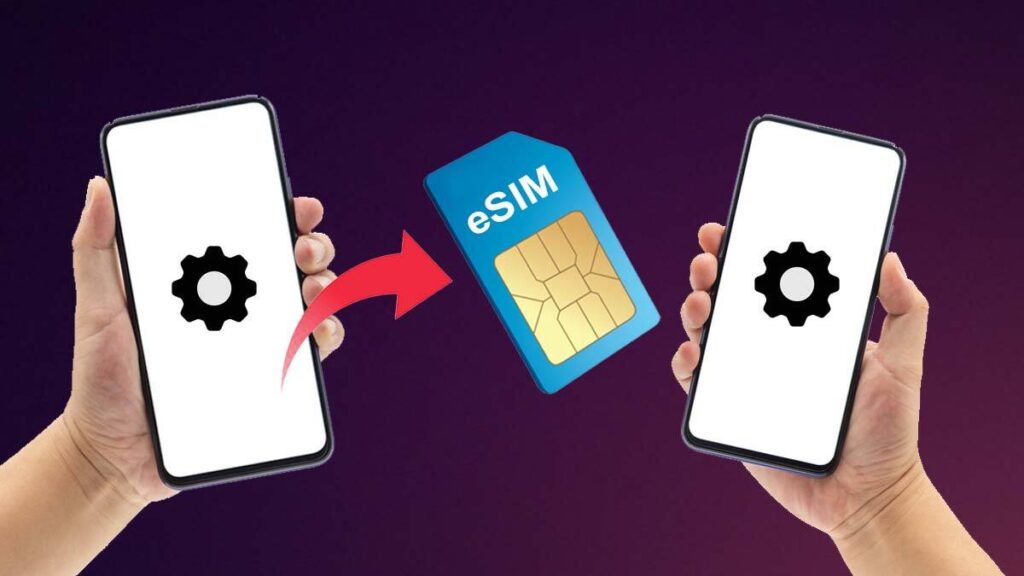
It appears that Google is facilitating quick and simple eSIM transfers. The older device must scan a QR code from the newer one in order for it to be shown. After the back-end authentication is complete, your eSIM is expected to be transferred without additional help from your internet service provider.

Transferring your eSIM within devices is now still more difficult than conducting it with a traditional SIM card. Customers who switch between devices regularly or foreign visitors have difficulty rapidly exchanging SIM cards as a result of this.

Also Read: ElevenLabs’ AI Voice Generator Can Replicate Your Voice in 30 Languages

Phone makers choose to provide an eSIM because makes smartphones easier to watertight and decreases the number of openings in the device. It also saves space within the device because the real SIM tray has to be inside the phone. The eSIM will be useful when a cell phone is stolen since it makes it simpler to trace the missing device because the actual SIM can’t be taken out.

Microsoft to discontinue Azure Kinect DK; know how you can still get it?

Microsoft to discontinue Azure Kinect DK; know how you can still get it?

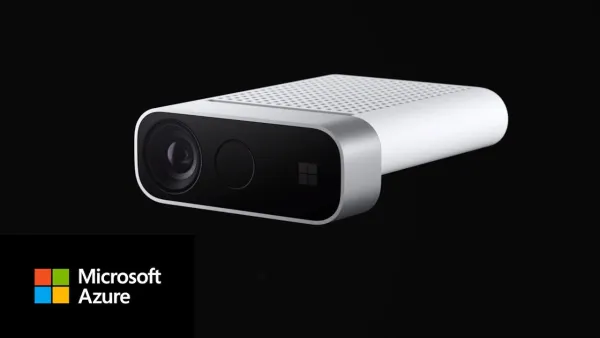
In a move that has taken many in the tech community by surprise, Microsoft has announced the discontinuation of the Azure Kinect Developer Kit (DK). This decision marks the end of an era for a device that has played a pivotal role in revolutionizing AI vision solutions over the years. 

Microsoft to discontinue Azure Kinect DK; know how you can still get it?
Image Source: deviestore.com

The journey of the Kinect technology has been nothing short of remarkable. First introduced by Microsoft in 2010, it gained immense popularity as a motion-sensing input device for gaming. However, after halting its production in 2017, Microsoft surprised the industry by relaunching it in 2019 as the Azure Kinect DK. This reimagined version catered to the enterprise sector, offering a connected depth camera that served as the cornerstone for creating AI-powered visual solutions.

Equipped with a depth sensor, a high-definition 4K camera, and an array of seven highly sensitive microphones, the Azure Kinect DK empowered developers to create applications that harnessed the potential of AI and depth sensing technology. Despite its immense capabilities, Microsoft has now made the decision to discontinue the product, leaving users to explore alternative options.

While the discontinuation of the Azure Kinect DK is a disappointment for many, Microsoft has assured users that they can continue using their existing developer kits without any disruptions. For those who have yet to experience the power of the Azure Kinect DK and wish to do so, there is a limited window of opportunity. Microsoft has confirmed that the product will be available in the market until the end of October, or until stocks last. During this time, interested parties can still acquire the device and benefit from the standard limited hardware warranty provided by Microsoft.

Recognizing the importance of the technology behind the Azure Kinect DK, Microsoft has forged partnerships with several hardware manufacturers. These partners have been granted licenses for Microsoft’s indirect time-of-flight (iToF) depth sensing technology, ensuring that the capabilities of the Azure Kinect DK live on.

Also Read:  ‘ChatGPT Does 80% Of My Job’ — How AI Enables People To Work Second And Third Jobs

Analog Devices, a key partner, has been entrusted with the license for Microsoft’s pixel and sensor technology. This enables them to process raw sensor data and generate depth maps, carrying forward the legacy of the Azure Kinect DK’s depth sensing capabilities. Similarly, global sensor solutions manufacturer SICK A.G. and 3D depth camera specialist Orbbec have also secured licenses to incorporate iToF depth technology into their offerings.

In conclusion, while the discontinuation of the Azure Kinect DK might mark the end of one chapter, it certainly opens up new possibilities. Whether you’re an existing user looking to make the most of your device or an enthusiast seeking alternatives, the legacy of the Azure Kinect DK’s technology continues through licensed partners. The future of AI-powered vision solutions remains bright, with Microsoft’s commitment to innovation and collaboration at its core.

YouTube’s three principles to embrace generative AI in music: All details

YouTube’s Three Principles to Embrace Generative AI in Music: All Details

YouTube’s three principles to embrace generative AI in music: All details
Image Source: campaignasia.com

The Google firm’s to work with generative AI in music will be informed by the recently launched YouTube Music AI Incubator, which is expected to bring together several of the current top creative artists, songwriters, and producers, based on a statement made by YouTube on 21 August 2023. Additionally, it announced a relationship with Universal Music and disclosed three important AI music concepts.

The Music AI Incubator aims to integrate Artificial Intelligence technology in music production responsibly. Max Richter, Anitta, Ryan Tedder of OneRepublic, the estate of American musical legend Frank Sinatra, as well as other professionals in the field, are among those the firm is collaborating with.

YouTube’s CEO Neal Mohan along with Universal Music chief executive officer Lucian Grainge have written blogs.

The latter wrote: “Our challenge and opportunity as an industry is to establish effective tools, incentives and rewards – as well as rules of the road – that enable us to limit AI’s potential downside while promoting its promising upside. If we strike the right balance, I believe AI will amplify human imagination and enrich musical creativity in extraordinary new ways”.

completemusicupdate.com

Principle 1:

Artificial intelligence is here, and our team will properly use it alongside our collaborators in music. YouTube as well as our collaborators in the music business have decided to expand on our long history of collaboration and appropriately take on this quickly developing sector as generative AI enables enthusiastic new forms of innovation. Our objective is to collaborate with the music business in a way that advances our shared quest of ethical innovation.

Principle 2:

Artificial intelligence (AI) is bringing in a new era of creative language, but it must provide proper safeguards and open doors for musical producers who choose to take part. We’re maintaining our solid track record of safeguarding artists’ creative output on YouTube.

Throughout several years, the company has made significant investments in the mechanisms that support striking a balance between the needs of those who own copyright and those who create on YouTube.

Also Read:  Meta set to launch the web version of Threads this week.

Principle 3:

We’ve developed a reliable and secure organisation and set of content policies that lead the industry. To tackle the difficulties posed by artificial intelligence, we will scale them. We’ve invested a lot of time and money on the trust and safety teams, policies, and protections for the YouTube community, and we’re now extending these protections to AI-generated material as well.

Current issues including misuse of trademarks and copyrights, false information, spam, and others might be made worse by generative AI systems.