Your Tech Story

News

Google’s 2019 ‘Code Yellow’ Blurred Line Between Search, Ads


Google’s 2019 ‘Code Yellow’ Blurred Line Between Search, Ads

Emails presented in the Justice Department’s historic antitrust hearing in opposition to the search engine giant revealed that in February 2019, the previous head of search at Alphabet Inc.’s child firm Google complained to coworkers that his team was getting excessively involved with advertising for the beneficial aspects of the product and company.

Google’s 2019 ‘Code Yellow’ Blurred Line Between Search, Ads

Image Source: techxplore.com

To allow its engineers to develop on Google’s search engine without being constrained by the team whose aim is to maximise advertising income, Google keeps a firewall across its search and ad teams. However, in February 2019, when evidence from the antitrust trial was made public on Tuesday, Google secretly issued a “Code Yellow” due to worries that the business could miss its quarterly targets for search revenue.

Documents state that during the seven-week crisis, engineers from Google’s search as well as Chrome browser divisions were transferred to investigate the reason behind the slowdown in user inquiries.

Justice Division Ben Gomes, a previously employed Google employee, was contacted by the firm to defend itself and demonstrate the progress it has achieved in search, especially in the mobile space. On interrogation, however, attorney David Dahlquist of the Justice Department brought to light the conflicts that existed between Gomes’ search department and its marketing competitors.

The goal of the interrogation was to disprove Google’s claims that its search team only concentrates on enhancing user experience and is occasionally drawn into the advertising space, where the Department of Justice claims Google has been able to hike prices without facing opposition.

In its eighth week of trial, the fundamental question is whether Google used billions of dollars to suppress competition and retain its monopoly over internet search, in violation of the law.

Google Chief Executive Officer Pichai refutes the Department of Justice's Claims of Evidence Erasure.

Google refuted the notion that the firm’s advertising revenue targets had an impact on results from searches and innovation in a statement.

“The organic results you see in search are not affected by our ads systems or by the ads we show for a query,” said Peter Schottenfels, a Google spokesperson.

finance.yahoo.com

Google claims that its improved offering has allowed them to grab almost 90 percent of the search engine market, and that the general public has benefited from its innovations in internet search. However, emails shown in court on Tuesday indicated that several important members of the search team at the business expressed worry about Google prioritising revenue above innovation.

Tesla stock closes below $200, hits 5-month low amid tough October

Tesla Stock Falls Below $200 for First Time Since May

Tesla’s stock declined 4.8 percent on Monday, breaking below 200 dollars and reaching lows that have not occurred since late May, even in the face of a bounce in the entire market and a resurgence in discounted tech.

Panasonic's Reduced Battery Production in Japan

Tesla’s stock was being affected by two news stories. First, Panasonic, the company that supplies its batteries to Tesla, reduced car battery manufacturing in Japan during the September quarter and lowered its projected year profit by 15 percent, citing the impact of a worldwide slowdown in sales of electric vehicles.

Across the world, Panasonic supplies battery cells for electric vehicles to manufacturers; however, in the United States, the Japanese business collaborates with Tesla to manufacture the cells at the Gigafactory in Nevada.

Panasonic's Global Production Cut and Its Impact on Tesla's Model S and Model X

Having said that, the corporation said that it has reduced production, not for North American business processes, but for clients worldwide and in Japan. In the second quarter, Panasonic ceased to provide Tesla with its 1865 electric vehicle batteries; nevertheless, the older batteries are still utilised in Tesla Model S as well as Model X cars, which are not eligible for electric vehicle (EV) tax credits under the Inflation Reduction Act (IRA).

“The IRA has a price ceiling up to $80,000 and since the high-end models exceed that level, demand decreased,” Panasonic CFO Hirokazu Umeda said on Monday.

finance.yahoo.com
Tesla stock closes below $200, hits 5-month low amid tough October

Image Source: uk.finance.yahoo.com

The second potentially negative development for Tesla was the announcement by chipmaker ON Semiconductor that its earnings and revenue outlook were lower than anticipated as a result of declining sales.

Silicon carbide chips manufactured by ON Semiconductor, are used by Tesla in its electric vehicle powertrain and other essential parts. Compared to regular silicon chips, silicon carbide chips can often resist higher temperatures, use less energy, and are designed for a longer lifespan. The financiers may be watching a decline in the market for silicon carbide as a sign that sales of electric vehicles particularly Tesla’s, are softening.

Gary Black, a Tesla investor from The Future Fund, commented on the company’s decline today.

“$TSLA weakness today could be due to big $ON guidance miss (-18%). ON sells silicon carbide chips to EV makers and cited 'increased risk to automotive demand due to high-interest rates,'" Black wrote on X, formerly Twitter, around midday on Monday.

finance.yahoo.com

Although down more than 22 percent in the last month, the stocks of Tesla continue to be up 60 percent year to date.

YouTube is now cracking down on ad-blockers globally

YouTube is now cracking down on ad-blockers globally

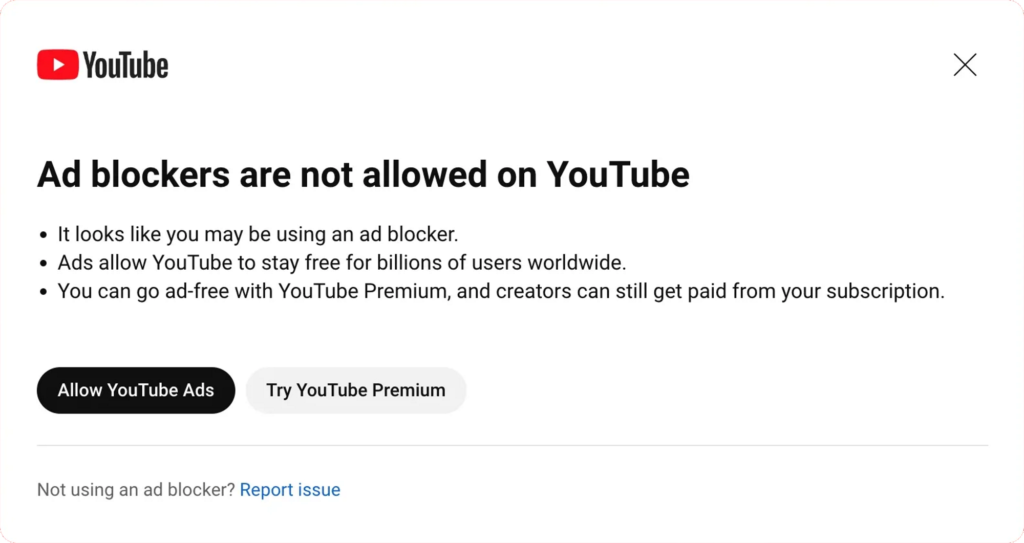
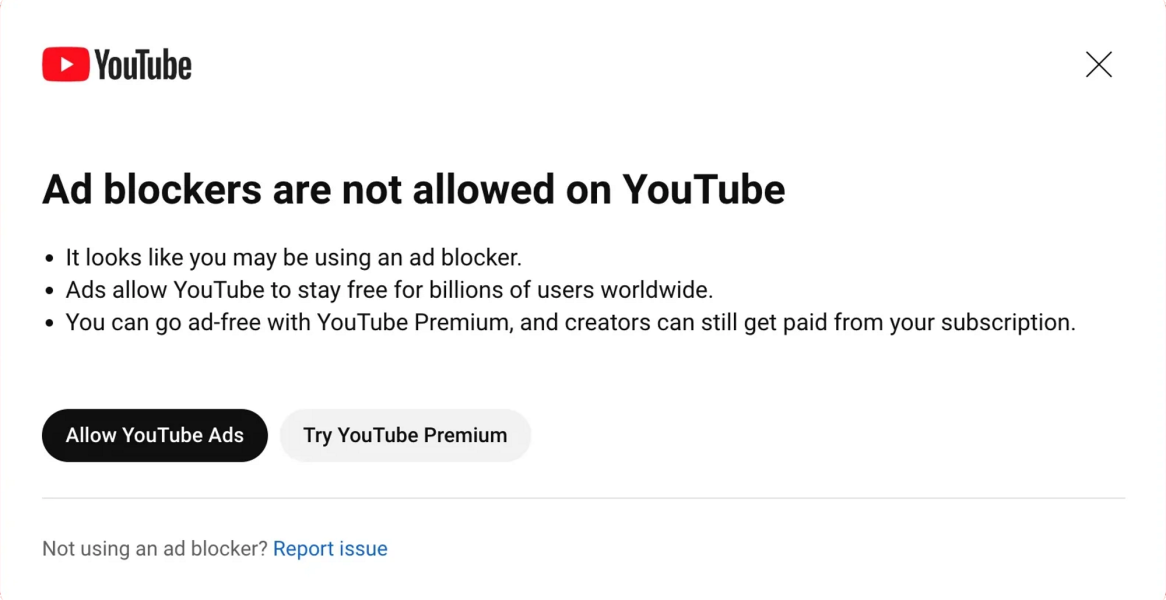
In a significant move to combat ad-blocker usage on its platform, YouTube has launched a global initiative aimed at curbing the practice that violates its Terms of Service.

YouTube is now cracking down on ad-blockers globally

Image Source: techspot.com

The video streaming giant began experimenting with this approach back in June, when it started displaying warning messages to users who employed ad-blockers while viewing content. These messages informed users that if they continued using ad-blockers, their access to the video player would be restricted after viewing just three videos. This initial experiment has now escalated into a full-scale campaign, as YouTube seeks to ensure that users either purchase a YouTube Premium subscription or allow ads to play during their viewing experience.

User Reactions and the Growing Irony of Ad Blockers on YouTube

The initiative has not gone unnoticed by the YouTube community, with numerous users taking to the r/YouTube subreddit to express their concerns and experiences. Many Redditors were quick to point out the irony of YouTube cracking down on ad-blockers while allowing advertisements related to ad-blockers on its service. This juxtaposition has sparked debates about the platform’s commitment to user experience and revenue generation. Users are left questioning the platform’s motives as it promotes anti-ad-blocker ads while penalizing those who employ ad-blockers.

YouTube, however, has not provided specific details regarding the extent of restrictions imposed on users employing ad-blockers in this experiment. In a statement, the company simply reiterated that the use of ad-blockers violates YouTube’s Terms of Service, leaving room for users to speculate about potential consequences.

YouTube’s pursuit of increased revenue and a broader user base is evident in its diverse strategies. The platform currently boasts 80 million paid users across its Music and Premium tiers. Nevertheless, YouTube’s parent company, Google, continues to experiment with alternative methods to bolster its user numbers. Some of these tests include prompting users to pay for access to videos in 4K resolution or subjecting them to multiple unskippable ads for an uninterrupted viewing experience. These endeavors indicate the company’s determination to strike a balance between user satisfaction and revenue generation.

As YouTube tightens its stance on ad-blocker usage, it remains to be seen how the community will react and whether these measures will succeed in pushing users toward YouTube Premium subscriptions or encourage them to tolerate advertisements during their video consumption. The evolving landscape of ad-blocker usage on YouTube underscores the ever-present tension between platform profitability and user preferences in the online video streaming industry.

Infosys Bucks Global Trend, Asks Some Staff Back in Office 10 Days a Month

Infosys Bucks Global Trend, Asks Some Staff Back in Office 10 Days a Month

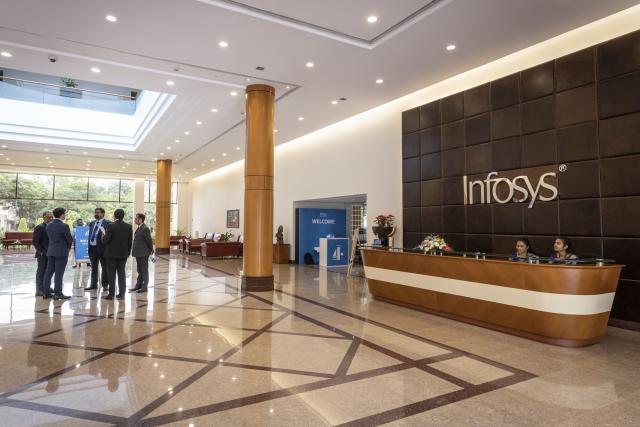
Indian tech giant Infosys Ltd. is making headlines by defying the global trend and asking some of its employees to return to the office for a minimum of 10 days a month. This decision comes in stark contrast to many of its global peers who are moving towards greater remote work flexibility.

A Departure from Pandemic-Era Remote Work

Infosys Bucks Global Trend, Asks Some Staff Back in Office 10 Days a Month

Image Source: ca.finance.yahoo.com

This change follows a controversial statement by Infosys co-founder Narayana Murthy, who suggested that young Indians should work 70 hours a week, a stance that is at odds with Infosys’s official position on providing complete flexibility to its employees.

Infosys is not the only Indian IT services provider to ask employees to return to the office. Its larger Indian rival, Tata Consultancy Services Ltd., had already requested many of its employees to return to the office for five days a week, starting from October 1. This shift is driven by the desire to enhance efficiency as demand for their services faces challenges amidst a global technology spending slowdown.

On the global stage, major tech companies are also opting for office-centric approaches. Amazon.com Inc. in the United States has been taking measures to ensure that employees adhere to its mandate, requiring them to work in the office for three days a week. Alphabet Inc.’s Google faced backlash for its similar office return policy.

Infosys CEO's Perspective

Infosys’s Chief Executive Officer, Salil Parekh, emphasized during an earnings call that the company is witnessing an increase in employees returning to the office, despite maintaining a flexible work policy. He explained, “There are some instances, for example, with specific client work or specific types of engagement where we feel it’s better that everyone is working together. But in general, our view is we want to support this flexible approach. It’s something that we believe is appropriate given how we’ve set up the work-from-home infrastructure.”

As Infosys deviates from the prevailing global trend toward remote work, it remains to be seen how this move will impact its workforce and whether it will influence the wider Indian IT services industry’s approach to office work in the post-pandemic era.

HP Printer Won't Connect to Wi-Fi? Here Are Some Troubleshooting Tips

HP Printer Won’t Connect to Wi-Fi? Here Are Some Troubleshooting Tips

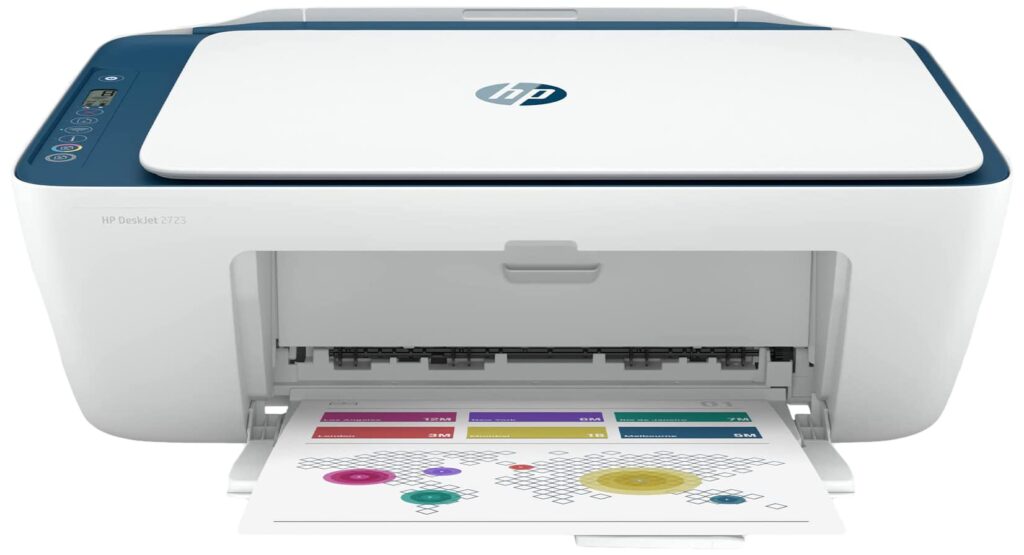
Setting up an HP printer with Wi-Fi usually involves a few steps. These instructions will guide you through the process for most HP printers, although some specific models may have slight variations.

Prerequisites:

HP Printer Won't Connect to Wi-Fi? Here Are Some Troubleshooting Tips

Image Source: amazon.in

  • An HP printer that supports Wi-Fi connectivity.
  • A computer or mobile device with Wi-Fi capability.
  • An active Wi-Fi network.

Steps to set up an HP printer with Wi-Fi:

1. Prepare the Printer:

  • Turn on the HP printer.
  • Ensure it has paper and the ink or toner cartridges are installed.

2. On the Printer’s Control Panel:

  • Navigate to the ‘Setup’ or ‘Network’ menu.
  • Choose ‘Wireless’ or ‘Wi-Fi Setup Wizard.’ This might be under ‘Wireless Settings’ or a similar menu.
  • The printer will start searching for available networks.
  • From the list of networks, select your Wi-Fi network.
  • If prompted, enter the Wi-Fi password using the printer’s control panel.

3. Software Installation (if not already installed):

     Insert the CD that came with the printer into your computer and follow the on-screen instructions. If you don’t have a CD:

  • Go to the HP website.
  • Navigate to ‘Support’ and then ‘Software and Drivers’.
  • Enter your printer model and download the appropriate driver/software package.
  • Install the downloaded software on your computer and follow the on-screen instructions.

4. Connect the Printer to the Computer:

  • During software installation, you will be asked to select a connection type. Select ‘Wireless’.
  • The software will search for the printer on the network.
  • Once found, follow the on-screen instructions to complete the connection.

5. Print a Test Page:

  • Once setup is complete, try printing a test page to make sure the connection is successful.

6. Mobile Devices (optional):

    If you want to print from a mobile device:

  • Download the HP Smart app from your device’s app store.
  • Open the app and follow the instructions to connect the printer.
  • Now you can print directly to your HP printer from your mobile device.

Troubleshooting Tips:

  • If your printer does not detect the Wi-Fi network, make sure the printer is within range of the router.
  • Make sure the Wi-Fi network is active and working for other devices.
  • Restart both the printer and the router if you encounter connection issues.
  • If using a dual-band router (2.4GHz and 5GHz), make sure your printer is connecting to a 2.4GHz network, as many printers may not support the 5GHz band.
  • Always make sure you have installed the latest printer drivers from the HP website.

Following these steps will help you set up your HP printer with Wi-Fi. If you encounter any problems, refer to the specific user manual for your printer model or visit the HP Support website for more assistance.

Vodafone to Sell Spanish Unit to Zegona for Up to €5 Billion

Vodafone to Sell Spanish Unit to Zegona for Up to €5 Billion

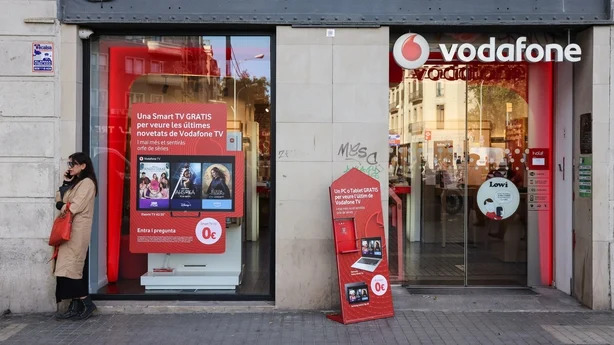
Vodafone Group Plc has announced an agreement to sell its Spanish business to Zegona Communications Plc, a London-based acquisition vehicle, in a deal valued at up to €5 billion ($5.3 billion), including debt. This strategic move reflects the evolving landscape of the telecommunications industry in Spain, where Vodafone has faced challenges and seeks to capitalize on new opportunities.

Vodafone to Sell Spanish Unit to Zegona for Up to €5 Billion

Image Source: rte.ie

To finance this significant transaction, Zegona has successfully raised debt of €4.2 billion and secured a committed revolving credit facility of €500 million. Additionally, Vodafone will provide up to €900 million in financing through an investment vehicle that will acquire new shares of Zegona, further cementing their commitment to the deal.

Zegona gambles on Vodafone's Spanish unit amid possibility of industry consolidation

The market reaction to this transaction has been mixed, with Vodafone shares declining by 1.1% to 75.9 pence at the time of the announcement. Some experts, such as Karen Egan from Enders Analysis, have characterized the deal’s valuation as potentially disappointing. Egan cites factors such as higher interest rates, the uncertain competitive and regulatory environment in Spain, and Vodafone’s eagerness to close the deal as contributors to this perception.

Vodafone’s move to divest its Spanish unit comes after the company’s acquisition of Spanish cable operator Ono in 2014 for €7.2 billion, leading to a reported €2 billion loss on that transaction alone. Zegona’s decision to acquire this unit indicates their belief in the potential for a turnaround and profitability in the Spanish market.

Zegona’s Chief Executive Officer, Eamonn O’Hare, stated in an interview that the company plans to raise between €300 million and €600 million in equity on the market to reduce its leverage to less than three times its earnings. This strategic shift aims to strengthen Zegona’s financial position and position the company for further success in the Spanish telecom market.

Notably, Zegona has previously played a pivotal role in reshaping the Spanish telecom landscape. Founded in 2015 by former Virgin Media executive Eamonn O’Hare, the company has previously bought and sold Spanish operator Euskaltel SA to Masmovil Ibercom SA, which reduced the market from five players to four. This acquisition significantly impacted the industry and paved the way for further consolidation.

However, the merger between Masmovil and France’s Orange SA is currently under examination by the European Commission. If approved, it would reduce the market to three major players, potentially opening the door to more telecom consolidation across Europe.

Zegona is embracing this uncertainty as an opportunity, indicating that if the Orange-Masmovil deal proceeds, Zegona-owned Vodafone could emerge as an alternative merger partner for Masmovil. Additionally, Zegona plans to explore wholesaling on Vodafone’s fixed network and consider network sharing or combining strategies to maximize infrastructure efficiency, a move that could enhance the industry’s competitiveness.