Your Tech Story

Apple

wwdc

One week ahead of WWDC, Apple adds Mac support to its Developer app

Apple launched the Apple developer app in late 2019. The app was available only for the iPhone, iPad, and Apple TV users until now. Yesterday, Apple announced the redesigning of the app so that it can provide Mac support. This is for the first time that Mac users will be able to use the Apple Developer app. Last month, Apple announced that its WWDC (Worldwide Developers Conference) will take place online starting from 22nd June. So, did Apple plan to launch the updates just one week before WWDC? Including features to support Mac users is a very good decision especially when WWDC20 will be a virtual experience.

Redesigning and feature updates of the Developer app

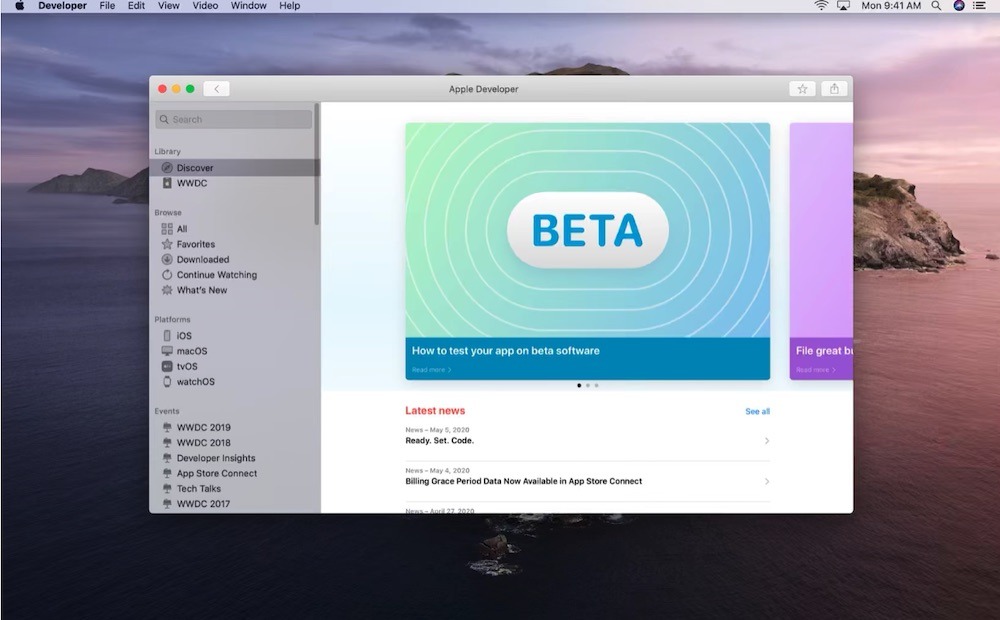
Not only Apple added Mac support to the Developer app but also many changes took place for its user interface. Some new features have been added, regular updates of content for the discover section, etc. The changes that have taken place in the Apple Developer app have been mentioned below:

  • New UI for Mac OS: A new user interfaces for the Mac developers since Apple is launching it for them the first time.
  • Redesigning the Discover section: Staying updated around the clock is very important. This made Apple redesign the discover section of the app. So, from today onwards it will be easier for the users to stay informed about the latest stories, news, videos, etc. Apple will update the Discover section with “Actionable” content and Apple notes. And, to inspire the developers and users it will also post stories of successful engineers and designers.
  • A new browse interface: The browse tab has also been updated. It will help the users surf the existing articles, videos, news, sessions, etc.
  • The WWDC corner: Since WWDC20 will start on 22nd June, the company has taken a lot of time to design and update the WWDC tab. Over hundreds of videos can be found in this tab that is especially focused on the design and technical topics. In this tab, you will find everything you need to know about the live event of WWDC.

Apart from all these features, the users can also download or favorite any article they like for later. The same goes for videos as well. Apple has also added new iMessage stickers to make it more appealing and fun to use.
mac
Image source: Appleinsider.com

Importance of Apple Developer App

For a long time now, the developers around the world are working towards making their community stronger. Learning new techniques, reading stories of inspirational designers are always advantageous to the users. At the end of the day, they are creating apps that can serve many purposes for various fields.

Apple said that the Developer app helps the users stay informed, learn a new skill which further helps them to create better apps. When Apple introduced the Developer app in November 2019, it was an updated version of the WWDC app. It was mainly for Apple’s third-party developer’s community. Because Apple thought it is crucial to share key resources of assets with them. It will make them learn, grow, and get better.

The new app, that is, the Apple Developer app wants to target international developers as well. They want to extend the accessibility of the resources to developers in Brazil, India, and Indonesia.

Pandemic shifted WWDC online

The annual conference of Apple, WWDC is very prestigious and valuable in terms of the developer’s community, talking about new products, upcoming technology, etc. Every year the conference goes on for a week in-person. But, the pandemic has altered so many plans and events from our schedule.

Apple says WWDC20 is supposed to be the biggest one till now bringing 23 million developers together. The company has already declared that the conference will take place by online-only means from 22nd June to 26th June. The conference is the perfect tech hub for all the tech lovers to come and meet other developers and speak about the new software. Though the event will take place for five days like every other year, the impact is doubtful.

android

All You Need to Know About the Android 11 Update

It is time for all tech geeks and enthusiasts to rejoice because Google just released the beta version of Android 11 for Pixel phones! The new Android OS comes with a sleuth of new features, revamps, and quite a few surprises. Read on to get an in-depth analysis of all the new features, how they work, and different the new OS will feel. 

Maturity Shows

Since Android is a mature OS, that has gone through various iterations, there aren’t any large missing chunks in it. That is precisely why the new update doesn’t come with massive revelations, but smaller surprises. Android and iOS already have many features in place. Rather than pick those apart, the developers have made them more intuitive and user-friendly. Therefore, the primary function of such a mature OS is not to add a lot of new features but to help manage those that exist more efficiently.

Major Changes and Additions

  1. Conversations Tab: On your notification bar, you can now see the messages from texting apps in a separate section, broken out from the rest.
  2. Priority: Users will now have the option of marking conversations as “priority.” This essentially allows such messages to bypass your Do Not Disturb mode. 
  3. Bubbles: This feature enables texting threads to pop out as little bubbles over other apps the way FB Messenger’s Chat Heads do.
  4. Notification Customisation: Users can now choose notifications to be either Alerting or Silent, giving them more power concerning how to view their information.
  5. DND: The revamped Do Not Disturb setting allows users to decide which apps and contacts can bypass their DND setting. 
  6. Quick Controls: All the media controls have become Quick settings, making it easier than ever to determine where your audio output should go.
  7. Screenshot: With the new OS, when you click a screenshot, it appears on the lower-left side of the screen, much like an iPhone.
  8. Recording: In all probability, native screen recording will become a fully-fledged feature with this new Android update.
  9. Power: The revamped power menu works like a digital wallet, powering your phone, passes, and cards on Google Pay and your smart home control.

Other changes include a Recent screen that allows you to click and share screenshots, the ability to customize your app dock, and one-time permission for location registering. Also, in case you don’t use any app for a while, all the permissions granted to it resets automatically. The new Voice Access has been upgraded to recognise screen content and generates labels for commands to improve accessibility and inclusivity.

Notifications Update

Every Android update finds some way to revamp the notifications section and make it more user-friendly. While that makes it challenging to keep up with all the settings moving around, the new layout is a lot smoother and efficient than before. For Android 11, Google has decided to abstract notification options and split them into three presets. Doing so makes notification management easier than ever before.

The new Conversations tab will allow users to clearly distinguish between messages and other notifications. Much like the interface sprouted by the FB Messenger, the Conversations preset sits atop the notification panel. They also stay separate from the rest of your notifications, which can get buried, meaning you will never lose texts again. The Bubble feature also makes it easy to draw them out and answer them immediately, by overlaying the chat thread on your app.

Furthermore, by long-pressing a notification, users can choose to set it to Alerting, Silent, or Priority. Priority messages remain in your status bar, and on your lock screen with a yellow highlight, making them prominent. The Alerting preset handles the messages just like the older version, whereas the Silent setting ensures that messages only remain at the bottom of the Conversation section.

More Granular Control

In case you are someone who quickly brushes through notifications, only to lose important messages, Google has something to help you. The new update introduces a fix that enables you to have an updated notification history. When turned on, this feature allows users to have access to a new “History” button, which brings up all notifications from the last 24 hours.

Also, users can manage their Do Not Disturb settings more precisely now. The new Settings panel allows them to set options for what apps and contacts can breach their DND settings to alert them. Therefore, through this update, Google has successfully made a ton of options more accessible to everyday users via a single long-press.

Other Changes

The new update doesn’t really change much about the Home screen. The only changes here being a dock upgrade, wherein you can replace the dock with apps the phone thinks you need. Another difference here is the Recents screen, which has a new screenshot grab button and a share sheet to send it to someone. Also, there is a Select button in the middle, which allows people to copy text with ease. 

The Android 11 update also sees Google doubling down on its permission settings. The automatic resetting of permissions of rarely used apps is a welcome move. Here again, we see Google replicating an Apple trend by incorporating the one-time permission option. Also, users have found the new Voice Access to be celebrated as it allows people to speak much more naturally than before to control their phone via voice.

Plenty Of Tweaks 

The Gboard will be updated, too, allowing users to mix and match emojis and improve its auto-fill capabilities. Other smaller tweaks include 12 new modules for Google’s Project Mainline, an improved Dark mode, new icon shapes, and resizable videos. They will also introduce tethering via USB-Ethernet, which has been missing for years.

While some of these changes might look small, for a mature OS, rearranging icons in itself can be a good change. It is these small and subtle things that make a phone more intuitive and user-friendly. Google is essentially trying to simplify Android by adding layers to its complex framework, and as of now, it looks like it’s working.

apple

Apple Files New Patent On Software That Allows Socially-Distant Group Selfies

As the novel coronavirus continues its aggressive march around the world, it has had a massive impact on all spheres of our lives. Most experts believe that we will look at the time, in two periods, before and after corona. The global pandemic will have massive and long-lasting changes in the way we interact and communicate with people. With social distancing still being active in many zones, people socialise differently now. Another change that will be put in place will be how people meet and greet others. These changes seem to be verified by Apple’s new patent. Let us look at what the new patent is on and how this software will impact the world of technology.

software
Image source: theverge.com

New Software

Apple’s new patent is for a software that will allow users to take synthetic group selfies. This could be the future for group selfies as more people become aware of the need for social distancing. Also, this generated group selfie might become a viable alternative when you post pictures on social media during such times. Discovered by Patently Apple, the new patent application allows users to invite others to be a part of their selfies. The software will then generate a single image that captures all the participants and arrange them into a memorable group photo. The selfie can have in it photos, video images, and even live-streamed images. Also, users get to keep both the original and group selfie, and the recipients can modify it, and even put themselves in different positions within the group.

Not So New A Concept

While the idea of a socially-distant selfie seems bizarre right now, it is definitely a need of the hour. However, while it seems relevant now, due to the pandemic, it was not something born out of coronavirus. Instead, Apple first filed for such a patent long before, way back in 2018. It gained popularity now as the patent was granted only a few days back, on June 2. However, like with all patents, there is no guarantee that Apple will use this software or materialise it into a real product.

Product For the Future

The patent is essentially a way for Apple to envision and explore the possibility of such a product. However, it is in no way a roadmap for a specific product, which we may or may not see. Also, the pandemic makes the likelihood of such a product hitting the market higher. People are looking for innovative ways to reach out and stay connected with their loved ones. Such remote group selfies will serve as a perfect way to get people together safely and healthily. The app would allow people to invite friends, and friends can arrange their position in the selfie. Once all the invited people are in the frame, the software generates a group photo with everyone in place.

It looks like Apple is looking at a new avenue. With people having to spend time away from each other due to different reasons, such software might become a hit with the crowd. While there is no clarity regarding whether Apple will soon roll out such an app, the idea looks very promising indeed. It sure looks like Apple wants to be at the forefront when it comes to changes in the post-pandemic world.

Apple

APPLE AND GOOGLE GAVE AN IDEA ON HOW THEIR CONTACT TRACING SYSTEM WILL WORK

With the outbreak of the novel coronavirus, many big tech giants are trying to develop smart tools for tracking. Many websites are providing updated information about the coronavirus cases at both national and international levels. The development of apps has taken place that are marking zones with different colors to clarify the impact of the spread.

But, Apple and Google are trying to come up with something more innovative. From the beginning, these two companies are trying to help people in many ways to keep them safe during the outbreak. For example, Google launched new features in Google Maps to show the nearest takeaways, Apple is launching new products to help users stay connected, etc. This time, the two companies together have come up with a coronavirus tracking system for both IOS and Android.

Revealed more information

Yesterday, both Apple and Google have shared more information on their contact tracing system. The company explained the design of the user interfaces for potential applications. Thorough explanations were carried out on how the users will get automatic information. Also, how data will be shared between a large network of mobile phones without putting a person’s privacy in jeopardy. Yesterday, the companies have also shared a library of reference code, namely, an SDK toolkit (for Android) and an Xcode toolkit (for iOS). This will help the building of applications by health authorities with an embedded contact tracing system.  

How the contact tracing system will work?

The companies announced the contact tracing system in April. It is one of the most effective ways to prevent the spread of the disease. The idea is to notify people if he or she came in contact with an infected person and thus stopping people from transmitting further. And, to build this system, the companies decided to transmit data through short-range Bluetooth communication.

Since the application will get access to the user’s private data, the concern for privacy is obvious. But, Sundar Pichai, CEO of Google confirmed that user’s privacy won’t be compromised. The system will be designed in such a way that it will protect the user’s privacy and notify them about positive cases as well.

The launch of the new app

When the joint venture started in April, the companies decided to launch the app for both iOS and Apple during mid-May. The companies wanted to make sure that the application of the health authorities can also use it. So, the users need to download the app and participate in the procedure of contact tracing. The most unique part of this system is using Bluetooth Low Energy Transmissions to share data.

So, the app won’t be tracking your physical location as GPS does. At an interval of 5 minutes, your phone will pick up the signals of the nearby phones and store it in a database. So, if any of these people are tested positive with COVID-19, then they can update it on their phone. Every other phone that was near it will be notified henceforth.

Rules for using this application

Apple and Google together have also set many ground rules that any applications should maintain while using it. For the private sector partners, they can use the system only for the response efforts of COVID-19. They will need prior permission or in better words opt-in consent to access the API or share a positive diagnosis. The app will neither allow using location services nor any targeted advertisement.

In case health agencies already have existing apps that use either of these mentioned above, they need to turn them off before accessing API.

UK’s contact tracing app without Apple and Google

Every nation is trying to build contact tracing applications to notify people and prevent the spread of the virus as much as possible. Recently, U.K has launched the beta version of an application that is built on the concept of contact tracing. But, the user interface of the app is very poor and the overall design is ineffective as well.

It will be hard to build a contact tracing system followed by an application without the help of tech giants like Apple and Google. Moreover, if the time taken is longer, the cases will increase rapidly. But, unfortunately, the U.K. is not a big fan of decentralizing data. Many experts have said that the app U.K. is planning to use is not so reliable for tracking COVID-19.

Apple Macbookpro

Apple Releases New MacBook Pro with a Magic Keyboard

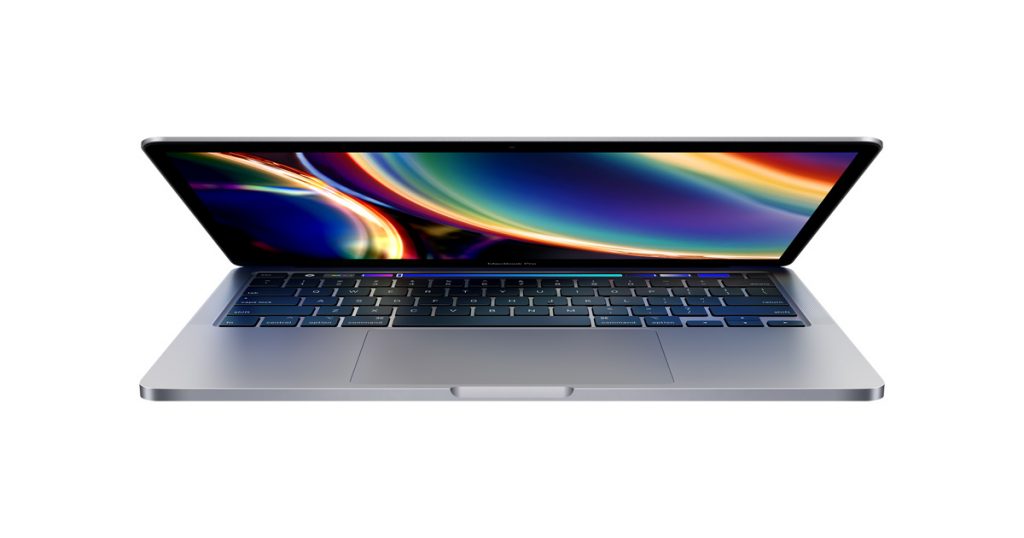
Much earlier than expected, Apple has come out with the price and release date of their new MacBook Pro. The 13-inch Pro will come with a Magic Keyboard, to the delight of fans from around the world. The new MacBook Pro functions with an Intel 10th Gen processor, and the latest tech will set you back by $1,299.  When you look at the specs of the new MacBook, it isn’t a significant leap from the older version. Let us take a look at the latest release and what it will offer loyal fans around the world.

Goodbye Butterfly

The most significant change with this launch is that Apple has finally moved away from their disappointing butterfly keyboard. The keyboard which was met with a lukewarm response on release has been cut from their lineup quite quickly. The announcement for the MacBook Pro with a 16-inch screen came out in November 2019. The last March also saw the release of a new MacBook Air with the Magic Keyboard. Within just six months, the company has switched up their keyboards, replacing the butterfly with the newer scissor-switch consoles. The butterfly came out initially in 2015, as a part of the MacBook.

Changes in Spec

Like with the previous MacBook Pro, the new release also uses four Thunderbolt 3 USB-C connectors, with a headphone jack. Furthermore, the older design model has pulled through as the Touch Bar remains with the Touch ID fingerprint sensor. However, they have added a physical Esc key, which fans desperately found lacking in the older design.

The RAM may go up to 32GB, whereas storage can expand up to 4TB. Also, as per Apple, the 10th Gen processor works at 4.1Ghz, and the Intel Iris supports the Pro Display at 6K resolution. The new screen has a resolution of 2560 x 1600 pixels, which supports True Tone technology. Reports state that the base model comes with an 8th gen Intel i5 chipset. The laptop will come out equipped with the macOS Catalina out-of-the-box.

Storage Capacity Upgrade

The $1,299 model contains 256GB storage, which is 128GB higher than the older models. However, this model does not have the 10th Gen processor and comes with 8GB of RAM. To upgrade to 16GB RAM, users have to pay only $100, which is half of the $200 they charged previously. While there were rumors that the display would be made more prominent, that turned out to be false. The 13-inch screen can go up to 500 units of brightness and also supports the P3 gamut.

Keyboard Switch-Up

The upgraded SSDs have a reading speed of up to 3.0GB/s, which is quite fast. However, as per fans, the most significant change is the fact that Apple has now regularised the new scissor keyboard. All the newer launches of the company now come with this new keyboard. The butterfly keyboard had met with criticism as it was less dust resistant. In the scissor-switch console, keys are linked through interlocking plastic pieces that move like a scissor when pressed. Meanwhile, butterfly keyboards used a hinge to activate the keys. While the Magic Keyboard requires more travel than the older model, it will have less dust stuck in between the keys.

The new model is available for order via the company’s official website as of now. Within a week, it will reach select stores and resellers around the world. Students also get the option of saving $100 on the base model. As per Apple, the new 10th gen processor will provide 80% faster graphics performance, when compared to older models. However, the India sale date has not yet been announced. Furthermore, since the country has entered the third phase 3 of the lockdown, non-essentials may now be delivered in green and orange zones. Therefore, soon enough, the sale of the new MacBook Pro can begin with delivery, having started in some areas.

wwdc

APPLE’S REVENUE ACHIEVES A POSITIVE SLOPE DESPITE THE GLOBAL PANDEMIC

Big businesses are hit and rupturing drastically during the pandemic. The outbreak of novel coronavirus has suppressed the hope for future recovery for the economy. Every nation is facing a big dilemma as saving people’s lives and planning the post-pandemic survival strategy are equally important. All of a sudden everything in this world has hit a pause, yet some companies are still emerging successfully. While every big business companies are strategizing about how to save their business, Apple’s second-quarter earning shows positive results. It is quite impossible to believe that amongst the crisis, Apple still managed to keep its business on track. Although the sale of the iPhone declined, Apple’s revenue in the past quarter slightly increased.

Revenue Growth

Yesterday, Tim Cook, CEO of Apple, in a press release said that the company is proud to report the growth of revenue in the past quarter. It is a great achievement for the company given that the world is facing a current serious crisis. The quarterly revenue of the company that ended on 28th March turns out to be $58.3 billion. This shows an increase of 1% as compared to the quarterly revenue of the previous year. Earnings per diluted share are up by 4%. Analysts said that they expected the revenue to be around $53.8 billion and diluted earnings per share of $2.23. Tim also said that the company is glad that customers are choosing their products to stay connected during this pandemic. But, the sale of Apple’s products in the Great China region has decreased to $9.46 billion from $10.22 billion.

Though the sale of iPhone has plummeted in the quarter last year, Apple’s Wearables and accessories have pushed up the revenue slightly. The company confirmed that Apple Watch and AirPods have led to a growth of 22.4% than last year. The cash dividend per share witnessed an increase of 6% of the company’s common stock.

The market opened for Apple

Taking care of the medical guidelines regarding social distancing due to the pandemic, Apple has decided to open some stores. But, the decisions will have a different impact on different places as Apple will go through the condition of every city and every county. Tim Cook is planning to reopen the retail stores in Austria and Australia within the next couple of weeks. Tim also said that a few of the many retail stores in the U.S will also reopen in early May. The stores in the U.S are closed since mid-March. And, a few of them already opened maintaining the social distancing guidelines. But, the mainland of China and South Korea the exceptions to the reopening of retail stores. Cook has already said that the campus in Cupertino won’t be opening at least for the next month.

New Products

Apple is not only cherishing the revenue growth during this pandemic but also launching new products in the market. Since customers are buying more Apple Wearables and Home in this crisis, why should Apple stop from giving them something extra?

Some of the new products that have hit the market in recent weeks are MacBook Air, iPad Pro, and a $399 second-generation iPhone SE. The company is also planning to conduct an online version of its annual Worldwide Developers Conference next month. In this conference, the next upcoming features of Apple’s existing products will be revealed to the world. But, rumors have spread that there might be a little delay in shipping this year’s iPhone lineup due to the infected disease.

Joint Venture of Apple and Google

In response to fighting COVID-19, Apple and Google are planning to create a system that will be helpful for contact tracing. This tech will be available both for iOS and Android users. The companies have decided to build such a system as in many regions people are revolting against the lockdown. So, this might help in tracking new cases of coronavirus. It will allow the users to share data through Bluetooth Low Energy transmissions and from apps approved by health organizations.

The official apps approved by the public health authorities can access this data. This is very beneficial as the users can easily report and alert people if they are diagnosed with COVID-19. The system will also help the user known if he or she was near an infected person.