Your Tech Story

Apple

Parler

Apple Removes the Free Speech Social Media App, Parler, from App Store

The Capitol Hill Siege is one of the most unfortunate incidents. On Wednesday the Donald Trump Supporters came forward to protest against US President Joe Biden’s win. And, the social media company Parler has been accused of having a hand in igniting the riots. The accusation has resulted in the removal of this self-proclaimed ‘Twitter without rules’ app from Apple Store and the Google Play Store.

The Parler App

The Parler app is a community social media app, launched in August 2018 and headquarters in Henderson, Nevada. The app advertises itself as a free-speech app, and most of its users are right-wing extremists. The app has got a huge Donald Trump supporter community who, most of the time, are involved in posting content related to far-right, anti-Semitism, and conspiracy theories. Since the company calls its app the platform for free speech, there is no filtration or moderation service for the posts on the platform.

Parler
Image Source: bbc.com

The app has become a home for the conservatives and the ones who have been banned from the mainstream social media platforms like Facebook and Twitter for their hate speech or hateful posts. This app has also been the topic of criticism for being the cover for its right-extremist user-base. Noticeably, Donald Trump got banned from Facebook and Twitter recently, but on the other hand, the Parler app did not ban Trump from its platform. This act of Parler has attracted all the attention to itself.

The Removal from App Store

As mentioned before, the company does not include any moderation for the posts on the app, and it has been accused of being far-right itself. After the riots, the app is also being accused of supporting the protestors. According to Apple, it has warned Parler many times to update its policy and make some solid changes to it. And, when the riots took place on Wednesday, the California-based technology company Cupertino came forward and gave Parler 24 hours to represent new moderation and post-filter plan to Apple, so that to remain available on the Apple Store.

In return, Parler had told Apple that it is working on the moderation service for the last many weeks. But according to Apple, the company has shown no signs of improvement. Apple said in an email sent to Parler, “We have continued to find direct threats of violence and calls to incite lawless action. It was not removing content that encourages illegal activity and poses a serious risk to the health and safety of users.” Apple further wrote, “We want to be clear that Parler is, in fact, responsible for all the user-generated content present on your service and for ensuring that this content meets App Store requirements for the safety and protection of our users.”

The Response from Parler

On the other hand, the CEO of Parler, John Matze, said in an interview that he and his company doesn’t feel responsible for the riots, “considering we’re a neutral town square that just adheres to the law.” Shortly after Apple removed the app from the App Store, Google also decided on taking down the app from the Google Play Store. Now there is news that Amazon is also looking forward to pulling its support from the app, as Parler is using the AWS services, but again, was found to be violating the AWS Acceptable Use Policy.

The reaction of the Users of Parler

The action led to the criticism of Apple by the conservatives and users of the Parler app. One of the Parler app investors, Dan Bongino, who was also banned from Twitter some time ago, wrote on the site, “The tech tyrants at Apple have pulled the app from their App Store. Apple is no different than the Chinese communist party in its preference for totalitarian thought control. I’m proud of the remaining liberty-loving people of this great country. And I’m embarrassed, and horrified by the tech totalitarians who’ve taken control of it.”

It is really strange to see that Parler has been on the top of all the News apps on the Apple Store and among the top 13 apps on the top charts of non-gaming apps on the Apple store, despite all the complaints against the app. For now, though it is no more available on Apple Store and Google Play Store, people who have the app on their phones will still be able to use the app.

Apple

Apple Faces Stern Chip Challenge in Replacing Qualcomm Modems

Apple Inc is one of the world’s largest technology companies with investments in various sectors and fields. Recently, the company made a foray into the world of semiconductors and chipsets. The switch has helped make Apple a powerhouse within the semiconductor industry in the past decade or so. The move impacted several major manufacturers who earlier used to supply chips to the American tech-giant. However, the iPhone maker will soon face their sternest test in the coming years. The biggest and toughest challenge that Apple will face will be Qualcomm. In this article, we will take a look at what Apple needs to do to replace Qualcomm’s cellular modems with its unique design.

Can Apple Succeed?

On Friday, Qualcomm slumped to its steepest decline since mid-June when it fell by over 7% to $144.28. Bloomberg was the first to report in June that Apple was entering the modem industry by kicking off development on its unique design. However, this reaction severely undermines the challenges that Apple will have to face to make it in this industry. According to analysts and experts, Apple will b confronted by the primary task of replacing Qualcomm in the coming years. Many also questioned whether the California-based tech giant had bitten off more than what it could chew. With doubts swirling around the industry, Apple will have to come back strong with a design that is both unique and highly functional.

Apple

Questions Raised

A representative of Raymond James, Chris Caso mentioned that the most significant questions that experts have are when and if Apple will be successful. Many experts believe that there are no assurances that Apple will be highly successful in developing a high-end and cutting-edge modem. However, modems are one of the most vital elements that make up an iPhone. It is the part that is responsible for connecting the phone to various cellular networks. Without this device, people could no longer browse the internet, message their friends over the internet, or make phone calls. Hence, ensuring that this component works smoothly and seamlessly is vital to ensuring the mobile in itself is successful. However, designing and crafting a modem requires specialized engineering and critical and broad industry knowledge and know-how. Both of these might take significant time to acquire, which Apple does not possess.

Other options and issues

Meanwhile, wireless carriers work differently as the networks built to support them use distinct radio frequencies. But, in that case, the equipment required to capture these waves are also very different and must conform to various stringent local government rules. As a result, modems have to integrate seamlessly with different technologies and fit into older systems as well with ease. The ever-growing need for cellular data and technical prowess makes this divide and the need for complexity even more considerable. Hence, field testing will be an integral part of the research and development process. 

What Qualcomm Does Right

To facilitate such testing, Qualcomm has labs that work towards replicating the varying environments that mobile phones will face. These labs accurately predict and run scenarios that phones will experience around the world. Additionally, engineers spent decades working with various carriers to fine-tune their technology and integrate it seamlessly over the years. It is this experience and knowledge that has helped Qualcomm rule the semiconductor and modem industry all this time. It is also precisely these qualities that served as a barrier to other tech companies that wished to work their way into the lucrative semiconductor industry.

Expert Opinion

Analysts at Bernstein Research mentioned that while Apple has a history of immaculate expertise in semiconductor design. However, even with all that expertise, modems are very challenging to design and get right. The company took around five to ten years to come up with a sustainable and viable processor for the personal computer system. Experts believe that modems pose an even more significant challenge than PC processors, making this a difficult journey for the American giant.

Also, Qualcomm enjoys another vital advantage when compared to Apple. It regularly collaborates with players in the wireless industry and helps in the development of cellular standards. As a result, most of their chips are the first to market when it comes to functionality and features. This has been one of the things that have helped Qualcomm maintain its lead over its competitors.

However, it is foolish to write Apple off since it has in the past taken on influential industry players and won. The company started designing PC processors to displace Intel from being used in Macs. Since 2010, Apple has been using its own processors in the iPhone and iPad. The company has also been successful in developing wireless and power-management chips for the Apple Watch. While the challenge might be harder this time around, users will have to wait and see if it can meet this stern challenge.

Apple

Privacy activist Max Schrems’ hits Apple with new complaints of consent breach

Yesterday, a privacy activist group called Noyb founded and led by Max Schrems filed a complaint against the US tech giant Apple. A specific complaint has been filed with German and Spanish data protection authorities regarding the tracking tool of Apple. According to Max Schrems, Apple’s online tracking tool saves user data on iPhone without their consent. This is strictly against European law and also the first time Apple has been accused of such a major action that questions its privacy rules.

In response to this allegation, Apple has made it clear that the company is very strict and superior in terms of privacy protection. Apple will also tighten the rules further with the launch of iOS 14. Unfortunately, Apple’s plan to launch the new OS has been shifted to sometime earlier next year.

Why complain was launched against Apple?

Noyb brought the complaint against Apple regarding the company’s online tracking tool that automatically generates a tracking code while setting it up. This tracking code is called the Identifier for Advertisers (IDFA). This code is used by Apple and third-party applications to track the online behavior of the users and consumption preferences. By tracking these data, it will be easier to send the users targeted advertisements that might interest him or her.

Apple

According to Noyb lawyer, Stefano Rossetti, these codes are placed in the iPhones without user consent and it is a clear breach of European Union privacy laws. Stefano further gave a reference to the EU’s e-Privacy Directive according to which a user’s prior consent is required for the installation and use of such information. He also said that the complaint is not launched to make Apple pay higher fines but to establish a clear principle where tracking must not be the rue but an exception. He also demanded that instead of restricting IDFA it should rather be deleted. But, the planned new rules of Apple will not change this as it restricts the third-party apps from accessing such private data but not Apple.

German and Spanish market

Kantar Group in early 2019 revealed that 24.3% smartphone users across five major European market uses Apple’s iPhone. According to Counterpoint Research, currently one out of four smartphones sold in Europe is the iPhone which is very impressive growth. An accusation as big as this is most probably going to affect Apple’s European market. According to Noyb, the claims on behalf of German and Spanish consumers were handed to the Spanish data protection authority. The authorities counterpart in Berlin led by Austrian Schrems has also said it received the complaint against Apple. And, this privacy advocacy group has already won two trials against Facebook. Spain’s privacy protection authorities denied making any comments regarding this.

Apple hits back

In response to the claims by Noyb, Apple said that the claims were factually inaccurate and the company is looking forward to making it clear that the privacy regulators should examine the complaint. Moreover, specifically in response to the comment regarding IDFA, Apple said that “does not access or use the IDFA on a user’s device for any purpose”. Apple said that the company always targets on how to make the privacy of a user more protected and secure. And, iOS 14 gives the users control over whether they want to link the apps with the third party for targeted advertisement. Apple also said that the company’s practices comply with European law. The US tech supports and advances the aim of the GDPR and the e-Privacy Directive which makes sure users have the full power and control over their data. 

More about Max Schrems

Max Schrems is a famous Australian activist who also founded NOYB- European Center for Digital Rights. He studied law at Santa Clara University. He is mostly famous because of the campaigns against Facebook for its privacy violations. Max accused Facebook of violating European privacy laws and allegedly sending personal data to the US National Security Agency (NSA). In 2018, he also filed suit against both Google and Facebook for coercing their users to accept data policies. He didn’t only target these two companies but also every other major tech giants around the world.

Apple Event

Apple Major Announcements from One More Thing Event

Apple hosted its One More Thing event yesterday. This was the tech giant’s third event in the last three months, with several major announcements coming out yesterday. Apple has kept itself busy throughout the pandemic, focusing on research and development. All that hard work seems to have paid off as the One More Thing event announced certain new releases for the company. In this article, we will take an in-depth look at the event and the major announcement made by the American giant.

Apple Move to Better Chips

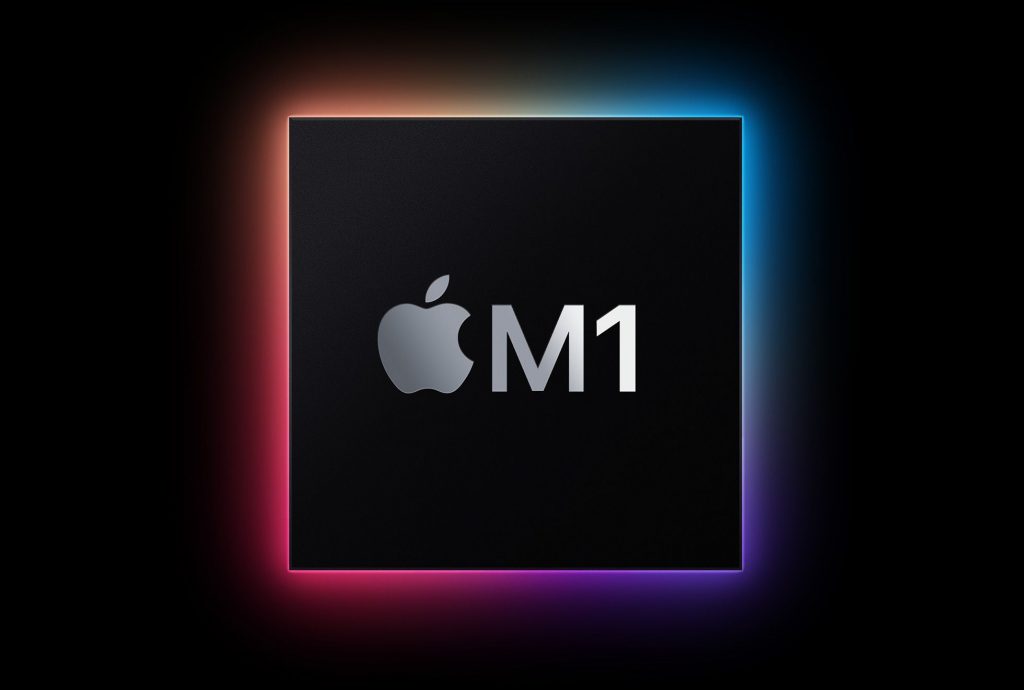
The One More Thing event’s most significant announcement came in the way they detailed in what manner Apple would be shifting the new Macs to better chips. The new chips, built and designed by Apple will power the new Mac Mini, MacBook Pro, and MacBook Air. While Apple has been mass-producing its chips for the iPad, iPhone, and Watches, they relied on third-party suppliers for the other devices. Rather than rely on Intel processors, Apple has switched to its ARM-based processors to power all their new Macs.

However, the company seems to be shifting that concept by using their chips for their bigger devices as well. Apple promises better performance, higher efficiency, and improved power efficiency with its new chips. The first Mac chip named M1 will have the following specifications;

Runs on an 8-core CPU with four focusing on high-performance and the four on high efficiency

  • A GPU with up to eight cores
  • Uses around 16 billion transistors
  • Comes built-in with Apple’s Secure Enclave system in
  • Supports both the Thunderbolt and USB 4 system

iOS Applications to run on Mac

As mentioned at the WWDC conference held in June, the iOS applications will now run on Mac devices. In June, Apple announced that several new applications will now run on both iOS and Mac. Apple held true to their word, and the One More Thing event showcased the HBO Max and Among Us apps running on both iOS and macOS.

Apple Event
Image Source: hk.asiatatler.com

New MacBook Air Announced

Apple also announced a new MacBook Air which will run on Apple’s self-designed M1 chip. The new device, much to the surprise of fans and experts, will run fanless. Apple claimed that the latest device was around 3.5 times faster than its predecessor. Furthermore, the absence of fans for cooling will help make the new MacBook Air a lot quieter than the previous generation. Announcers claimed that the device would run for up to 15 hours on a single charge while using the internet, and for 18 hours if only watching videos. The MacBook Air features a 13.3-inch display and supports an SSD of up to 2 TB. The device will also support Wi-Fi 6, Thunderbolt connectivity, and USB 4 systems. Apple announced that the new device would cost $999 for regular customers, and $899 for educational users.

Apple Announces New Mac Mini

The Mac Mini will also feature the new M1 chip and will go for sale at $699. When considered with older models, the new Mac Mini has been priced $100 less, with experts believing this will help boost sales considerably. The device will support an SSD with up to 2TB capacity and comes with 16GB worth memory. When it comes to connectivity, the device has two USB-A and USB-C ports. The USB-C ports support both Thunderbolt and USB 4 connectivity. The Mac Mini also features a 3.5mm headphone jack, along with space for HDMI 2.0 and Gigabit Ethernet cables.

New MacBook Pro

The new M1 chips will help the MacBook Pro last for up to 17 hours claims Apple. Furthermore, the device will last for up to 20 when used only for video playback. Similar to the MacBook Air, the Pro too features a 13.3-inch display and offers support to SSD’s with up to 2TB storage. The device has 16GB worth of memory and supports both Thunderbolt and USB 4 for connectivity. Additionally, it also features the TouchID, supports Wi-Fi 6, and has a TouchBar. The device will go on sale for $1,299 for regular customers and $1,199 for educational users.

Big Sur arriving soon

Another major announcement that Apple made concerned the new macOS update. Apple announced Version 11.0, named the Big Sur back in June during the WWDC event. The One More Thing event finally named a release date for the update, by informing excited fans that it will drop on November 12th. We will have to wait and see what new changes the update brings, but it is safe to say that fans are excited regarding all the new announcements.

Apple

Apple iPhone 12 launch event revealed a lot of new and affordable tech

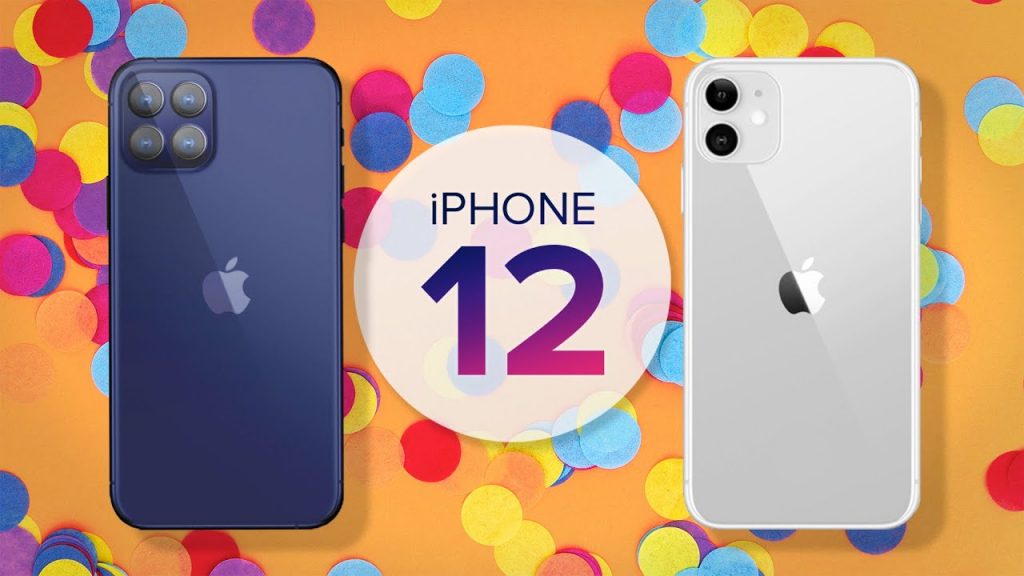
The Apple iPhone 12 launch event revealed a series of new gadgets especially the mini version of the existing smart devices. They are affordable and are equally efficient that gives the users an authentic iPhone experience. The iPhone 12 series along with the pro-line-up consists of 4 smartphones including iPhone 12, iPhone 12 Mini, iPhone Pro, and iPhone Pro Max. Apart from the launch of the iPhone 12 series, Apple also launched HomePod Mini, a smaller and affordable version of the HomePod. Also, this is for the first time in Apple, that the new smartphones will have 5G connectivity.

There are many modifications in the iPhone 12 series starting with larger screens, better camera systems, new A14 Bionic processors, etc. So, let us have a detailed look at the specifications of these devices and prices in India as well.

Specifications of Apple iPhone 12 series

Apart from the fact that the iPhone 12 series supports 5G connectivity it also supports mmWave 5G in the United States. iPhone 12 comes with an OLED display screen and Ceramic Shield glass technology making it more durable. All the smartphones will have iOS 14 along with the new A14 Bionic SoC. This new A14 is a six-core processor with a four-core GPU which will make these smartphones the fastest of all. The new camera system of the iPhone 12 consists of two wide-angle sensors of 12 megapixels each. The photography results are claimed to be better in low-light photography as compared to the smartphones of the previous series. The company has also enabled its night mode for the front camera and also for video recording. It is a brilliant choice for users to do videography, especially in low-light. The new MagSafe charging support of the iPhone provides a maximum of 15W of wireless charging. The company is also working towards releasing a charger that will allow the user to charge iPhone 12 and Apple watch using the same charger. Apple will not provide headphones and charging adaptor in the box this time.

Apple
Image Source: cnet.com

The iPhone 12 mini has the same design, camera quality, processor, Super Retina XDR-display, and connectivity as that of the iPhone 12. The main differences between these two products are different in price and size. The iPhone 12 Mini comes with a 5.4-inch display and a lot lighter in weight.

The size of the iPhone 12 Pro is 6.1 inch and that of the iPhone 12 Pro Max is 6.7 inches. Apple has incorporated its Deep Fusion machine learning technology in the cameras to make the overall picture and video quality better. iPhone 12 Pro has three triple rear cameras (two wide-angle, one telephoto) while the telephoto sensor of the iPhone 12 Pro Max is better with a 5x zoom range and 2.5x optical range. The Pro series also has the option of HDR video recording and Dolby Vision HDR.

The price range of the new iPhone 12 series

Starting with the cheapest and smallest of all, the price of the iPhone 12 Mini in the Indian market is approximately Rs 69,900 for 64GB, and that for iPhone 12 is Rs 79,900. Outside India, the price of the iPhone 12 Mini is $699 and that of the iPhone 12 is $799. In India, the price of iPhone 12 Pro is Rs 1,19,000 (starting price) for 128GB base variant and for the iPhone 12 Pro Max is Rs 1,29,000 (starting price). Outside the Indian market, the price range is $999 for iPhone 12 Pro and $1,099 for iPhone 12 Pro Max.

Features of the HomePod Mini

Apple incorporated the S5 processor in HomePod Mini. The company has invested more time to improve the audio quality of the device. The new HomePod mini has computational audio technology that can automatically optimize the sound for your room. Moreover, if you turn on two HomePod Mini in one room, they will sync automatically and play music like a stereo pair. The HomePod mini will go through a major upgrade when iPhone’s U1 ultra wideband chip will be able to establish a stable connection with HomePod Mini helping to send feedback and audio handoff. Siri is the most important part of HomePod Mini as it will also recognize the voice of your family members and will give you a summary of the day when asked for an update. The price of Apple HomePod Mini in India is Rs 9,900.

Apple

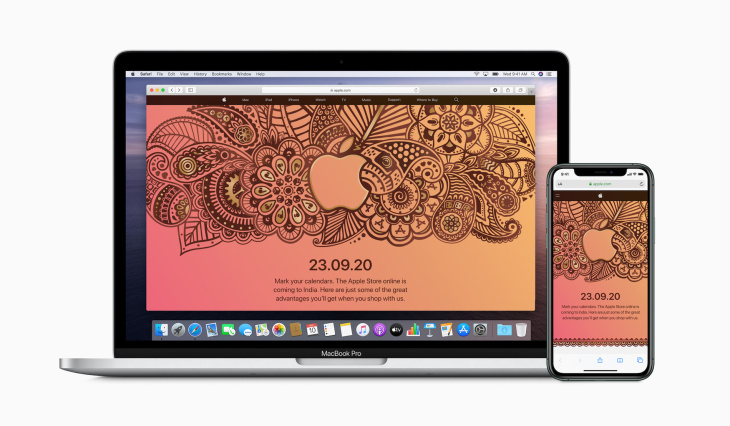
Apple launching its online store in India on September 23.

There’s some good news coming the way of Apple fanatics in India! The tech giant announced today that it would be unveiling an Apple Store in India on the 23rd of September via online means.  The online store will feature a slew of Apple products. While Apple products mostly sell online in India via Amazon and Flipkart, Bloomberg reported that the company was planning on establishing a unique store in time for Diwali. Furthermore, for the first time, the store will offer customers directly to clients throughout the country. Here’s a look at everything you need to know about the announcement, and why Apple fans are excited.

Apple Online Store in India

Apple’s online store will go live on 23rd September and will offer its full range of products. The store will offer all clients the premium experience that clients around the world receive. The model will try to replicate the service delivered at Apple stores worldwide with the help of an experienced online team. Deirdre O’Brien, who serves as the VP of Apple Retail and People, said that the company is proud to be expanding in India. He also said that the team is looking forward to serving its Indian customers in the best way possible. Since the COVID-19 pandemic has left everyone relying heavily on technology, the company felt it was the right time to make the transition. Brien said that the team hopes bringing the Apple Store to India would help their customers during such a vital time.

Apple Online Store
Image Source: techcrunch.com

Digital Transformation

The Apple online store will serve as a convenient one-stop shopping destination for all fans of the American tech company. The shop will have Apple Specialists in place to help customers with choosing the right products and explaining technical details. They will also help customers with configuring their devices and setting up newly bought ones to suit their requirements. The store will also help customers get advice, learn about new products, and receive guidance on a variety of matters in both Hindi and English. 

Special Features

The Apple Store also features various financing and trade-in programs, helping make their products more affordable. For instance, students can shop for iPads and Macs at exceptional prices, and also receive discounts on AppleCare+ plans and other accessories. By October, clients can expect the store to start free Today at Apple sessions online. The sessions will be led by Creative Pros from local areas and will focus on music and photography. Also, the store will make gift wrapping options and personalized engraving available by the festive season. Engravings on AirPods will be available in the following languages;

  • English
  • Hindi
  • Marathi
  • Kannada
  • Gujarati
  • Bengali,
  • Tamil
  • Telugu

For engraving on the iPad and Apple Pencil, the language available will be English for now. To keep with modern requirements of health and safety regulations, the Apple team will enable contactless delivery for all services. Orders which do not need a signature to complete will be left at the door, while the ones that do will be completed via verbal confirmation. BlueDart will handle the delivery fulfillment within 24 to 72 hours of order placement by following all the required safety protocols.

Other Efforts and Investments

Apple has been a presence in India for over two decades now. The American tech giant has invested in creating and sustaining over 900,000 jobs across the country. Furthermore, Apple’s App Design and Development Accelerator provides frequent support to local developers in Bengaluru. Indian apps have become crucial now, with ones like AI-based Wysa helping provide mental wellness support to millions. Similarly, YogiFi has become quite popular due to its innovative use of computer vision to help with posture-correction. The app also makes use of Machine Learning to curate personalized yoga plans and programs, helping and encouraging people to stay fit during this pandemic.

While the COVID-19 threat looms over the country, Apple is doing all it can to provide local support to organizations promoting remote learning. It will be interesting to see how big a hit this store becomes as Indians will now get a taste of the exemplary Apple service for the first time. Also, with reports stating that the tech giant plans on unveiling physical stores in Mumbai and Bengaluru from next year, this will act as a test to see whether the idea holds true.