Your Tech Story

Apple

Apple to Testify It Sees No Need to Deploy Google Alternative

Apple to Testify It Sees No Need to Deploy Google Alternative

In a pivotal moment during the Department of Justice trial against Google, Apple’s senior vice president of services, Eddy Cue, is set to testify on Tuesday, defending the tech giant’s longstanding partnership with Google as the default search engine on Apple devices, including the iPhone. 

Apple to Testify It Sees No Need to Deploy Google Alternative
Image Source: finance.yahoo.com

Cue will assert that this partnership remains the best choice for consumers and that Apple sees no reason to develop its own search tool. The agreement between Apple and Google, established in 2002, has been a lucrative one for both companies, with Google paying billions to secure its position as the default search engine on Apple products. However, this arrangement has drawn scrutiny from the government, which alleges that Google has used its search dominance to stifle competition.

Cue’s expected testimony will emphasize that Apple is committed to providing consumers with choices. While Google is the default search engine, Apple makes it effortless for users to switch to other search providers, such as Microsoft Corp.’s Bing, Yahoo, DuckDuckGo, and Ecosia, by offering these options within the Safari internet browser. Apple also receives a share of advertising revenue when users select these non-default search engines.

Apple’s stance on this issue stands in contrast to its approach in other areas where it competes head-to-head with Google. Notably, Apple rivals Google in mapping software, voice assistants, and operating systems for phones and computers.

John Giannandrea, Apple’s machine learning chief and a former leader of search at Google, also testified last week, highlighting a new feature introduced in iOS 17 and iPadOS 17. This feature allows users to assign a different default search engine specifically for private browsing, making it easier for consumers to switch between Google and other options.

Also Read: Tinder Offers $500-a-Month Subscription to Its Most Active Users

The ongoing trial between the Department of Justice and Google holds significant implications for the future of tech giants and their competitive practices. Apple’s testimony, through Eddy Cue, underlines the company’s belief that Google’s search engine remains the preferred choice for its users. As the trial unfolds, it will be interesting to see how these arguments impact the outcome and whether they will result in any changes to the default search engine landscape on Apple devices.

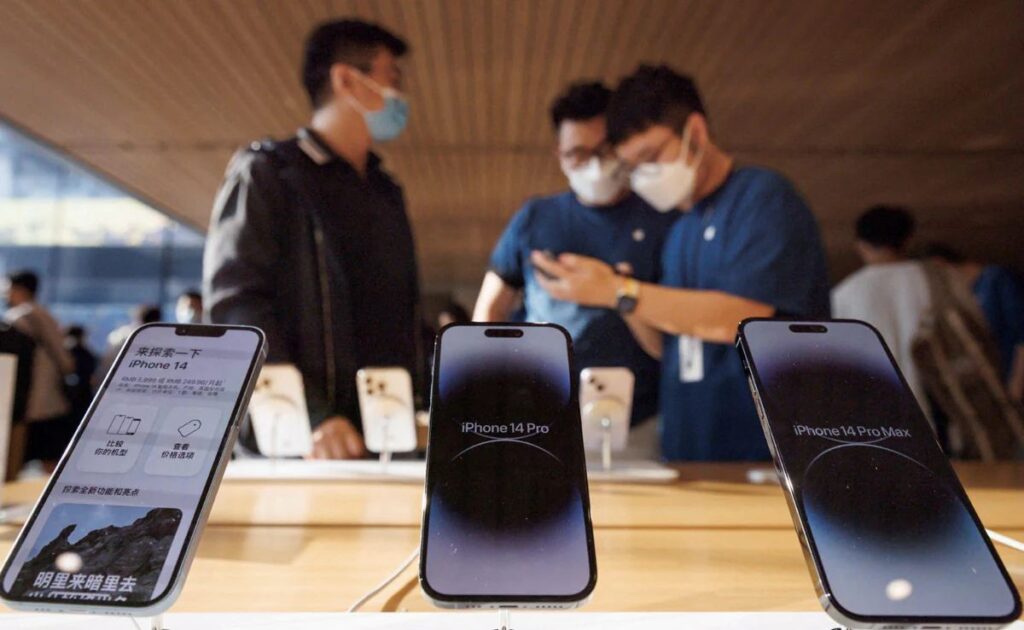
Apple Falls on Report That China Agencies Are Barring iPhone Use

Apple Falls on Report That China Agencies Are Barring iPhone Use

According to the Wall Street Journal, which cited persons who knew the situation, employees at “some” central government regulators were instructed through chat groups as well as meetings to cease bringing such devices into the workplace. The publication stated that It’s unclear the extent to which the orders were given.

Apple Falls on Report That China Agencies Are Barring iPhone Use
Image Source: ndtv.com

The shares dropped the most in a single day since August 4 when they dropped 3.6 percent to $182.91 in New York on Wednesday. Before the dip, Apple had increased by 46 percent this year, contributing to a larger run-up in tech equities.

Despite growing anger at American attempts to restrain the Asian nation’s technological economy, the corporation has great appeal in China, which is its biggest foreign market.

Apple’s iPhones have become the most popular devices in the nation and are widely used in both the public and private sectors.

However, the use of foreign gadgets has long been prohibited in sensitive organizations, especially since Beijing has intensified an effort to lessen reliance on tech from the United States, which is China’s geopolitical competitor.

An Apple representative did not quickly answer a request for comment despite being headquartered in Cupertino, California.

Beijing issued an order in 2022 requiring state-backed companies as well as central government organizations to swap out foreign-branded desktop computers with local models within two years. This was one of the government’s most zealous attempts to remove important foreign technology from its most vulnerable institutions.

In the meantime, the administration of Joe Biden has worked to restrict China’s access to modern semiconductor equipment exports. Additionally, Semiconductor Manufacturing International Corp., the largest chipmaker in China, has come under fire for selling parts to Huawei Technologies Co., a business that the United States has banned.

Read More: OpenAI to Host First Developer Conference in San Francisco on November 6th

Apple continues to be mainly reliant on Asia as its manufacturing facility as well as customer base for its products, despite the deteriorating US-China relations. On his visit to China earlier this year, CEO Tim Cook praised the partnership and referred to it as symbiotic.

Among the surprises of Apple’s accomplishments in the previous quarter was China, which helped to counteract the generally slow time. The business is getting ready to introduce its newest iPhones next week, kicking off the holiday quarter, which is often its largest sales season of the year.

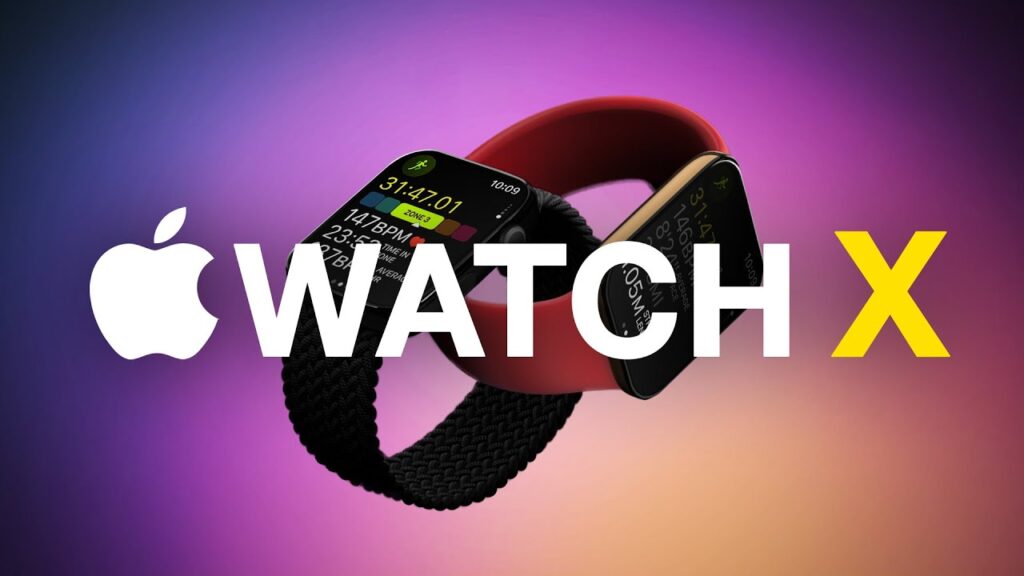
Apple Plans Major ‘Watch X’ Overhaul for Device’s 10-Year Anniversary

Apple Plans Major ‘Watch X’ Overhaul for Device’s 10-Year Anniversary

Apple is gearing up to celebrate the 10th anniversary of its groundbreaking smartwatch with a significant redesign of the iconic device. While the upcoming 2023 models are expected to be a modest upgrade, Apple enthusiasts can look forward to the launch of the highly anticipated “Watch X” in the near future.

Apple Plans Major ‘Watch X’ Overhaul for Device’s 10-Year Anniversary
Image Source: i.ytimg.com

The yearly refresh cycle of Apple’s flagship smartwatch has seen incremental improvements, often focusing on a specific feature enhancement. For instance, the Series 8 model introduced a body-temperature sensor, while the previous iteration boasted a larger display. Despite these consistent upgrades, industry insiders note that Apple hasn’t provided consumers with compelling reasons to frequently upgrade their watches, unlike the rapid innovation seen in the iPhone lineup.

The imminent 2023 Apple Watch Series 9 lineup, set to be unveiled alongside the latest iPhone on September 12, is projected to retain its current size dimensions. However, the notable advancements will be in the form of enhanced processors and a variety of fresh colors. While these updates may not excite recent Apple Watch buyers, they serve to attract first-time smartwatch adopters and those who are using older models.

The steady pace of incremental improvements has led Apple’s internal discussions about the potential benefits of deviating from this strategy. The company has historically adhered to a yearly upgrade cycle for the smartwatch, consistently releasing new models since the category’s debut in 2015. Yet, the recent evolution of the device has sparked internal deliberations about the necessity of such frequent updates.

However, Apple’s plans for its upcoming 10th anniversary “Watch X” model signal a bold departure from its established upgrade cycle. The company is already in the works to design a thinner watch case and explore novel methods of attaching bands to the device. The current mechanism, which involves sliding bands into the sides of the chassis and securing them with a locking mechanism, has proved functional but constraining in terms of utilizing available space for other components like batteries.

To address these design limitations, Apple’s engineers are reportedly experimenting with a magnetic band attachment system. While it remains uncertain whether this system will make its debut in the “Watch X,” it signifies the company’s commitment to pushing the boundaries of design to create a more efficient and versatile product.

Also Read:  Foxconn Starts Production of Upcoming Apple iPhone 15 in Tamil Nadu Ahead of September Launch

Beyond the band attachment, “Watch X” is expected to feature transformative upgrades, including a microLED display that offers superior color and clarity compared to existing OLED screens. Additionally, insiders reveal that the company is working on incorporating blood pressure monitoring technology, positioning the smartwatch as a potential health and wellness companion.

As Apple moves towards the launch of the “Watch X,” it not only demonstrates its dedication to innovation but also marks a pivotal moment in the evolution of its smartwatch lineup. With this significant overhaul, the company aims to provide users with a compelling reason to upgrade, further cementing its status as a trailblazer in the tech industry.

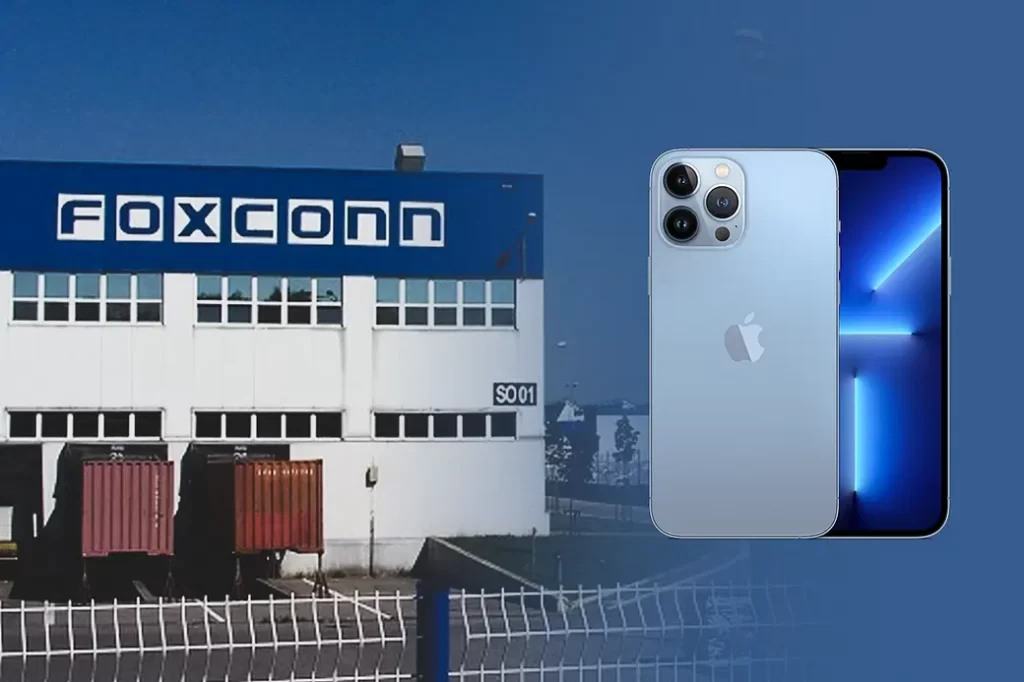
Foxconn Starts Production of Upcoming Apple iPhone 15 in Tamil Nadu

Foxconn Starts Production of Upcoming Apple iPhone 15 in Tamil Nadu Ahead of September Launch

In a significant stride towards bolstering the “Make in India” initiative, Apple Inc. is poised to kickstart the production of its eagerly anticipated iPhone 15 in the southern state of Tamil Nadu. A recent report has unveiled that the Foxconn Technology Group’s manufacturing plant in Sriperumbudur is gearing up to roll out the latest iPhone iterations merely weeks after they commence production in Chinese factories. This strategic move aims to bridge the gap between Indian and Chinese manufacturing operations.

Foxconn Starts Production of Upcoming Apple iPhone 15 in Tamil Nadu
Image Source: gumlet.assettype.com

Anticipation is rife as Apple aficionados await the grand unveiling of the iPhone 15, anticipated to be announced on September 12, 2023. This upcoming iteration is slated to usher in the most extensive array of updates to the device in the past three years. The scale of production hinges largely on the availability of crucial components, many of which are imported. In view of this, production lines have been ramped up at the Chennai facility to facilitate seamless assembly.

Prior to the iPhone 14, Apple’s manufacturing footprint in India was limited, lagging behind China by a considerable six to nine months in terms of output. However, this disparity was considerably narrowed down last year. As of March-end, Apple managed to produce 7 percent of its iPhones in India, signifying substantial progress.

Apple is currently focused on aligning shipment timelines from India and China, aspiring to reach parity in this aspect. While sources remain cautious about achieving this goal, the push is evident and promising.

The spotlight isn’t solely on Foxconn, as other key Apple suppliers in India are also set to contribute to the production of the iPhone 15. Companies like Pegatron Corp. and the Wistron Corp. factory, which is on the brink of being acquired by the Tata Group, are gearing up to assemble the highly anticipated device.

In tandem with this development, reports have emerged indicating that Apple is primed to initiate the production of its iconic AirPods wireless earbuds at Foxconn’s Hyderabad facility. With an impressive $400 million investment by Foxconn, the Hyderabad plant is slated to commence large-scale manufacturing by December 2024.

The Foxconn Hyderabad factory is poised to churn out AirPods, marking the second product category, following iPhones, to be manufactured in India. Apple’s AirPods have etched their dominance in the TWS (true wireless stereo) market globally, making this strategic shift a pivotal move.

Also Read: Apple is working on its most powerful MacBook chip yet, the M3 Max

Having already established a manufacturing foothold in India through partners such as Foxconn, Wistron, and Pegatron, Apple’s expansion of product categories showcases their commitment to local production. As was the case with iPhones, there are whispers that AirPods production might extend to other facilities in the future.

With these groundbreaking developments, Apple is steadfastly ushering in a new era of localized production, underscoring India’s importance as a vital market and production hub.

MacBook chip M3 Max.

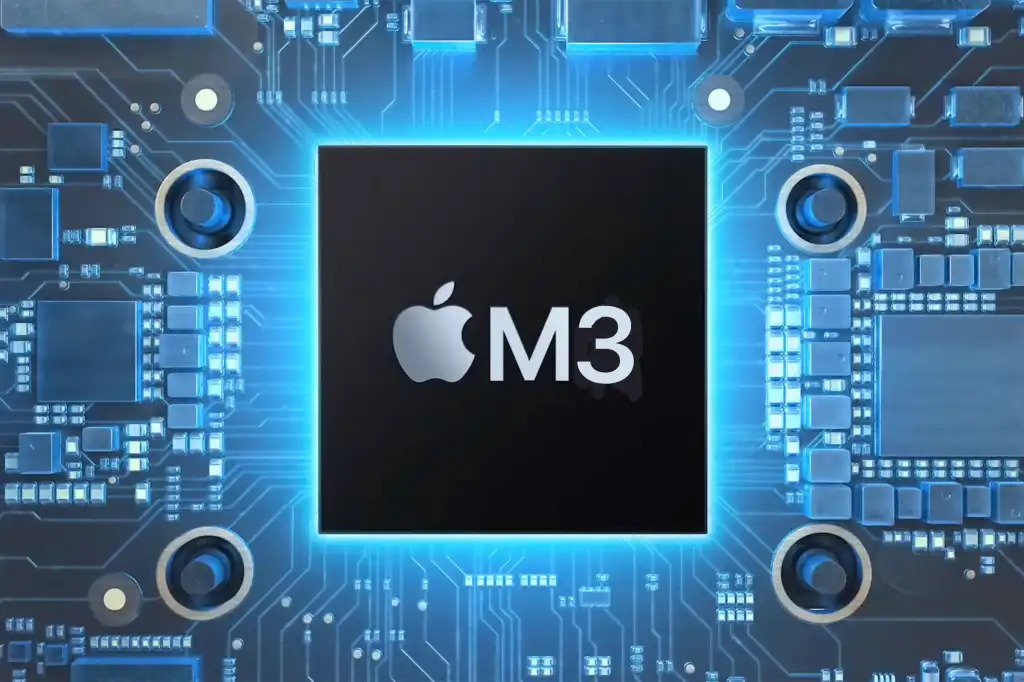
Apple is working on its most powerful MacBook chip yet, the M3 Max

The extremely positive response to Apple’s M1 and M2 series CPU’s has led to the majority of users not noticing the absence of Intel chips in MacBook Air as well as MacBook Pro computers. The Apple M-series silicon offers outstanding efficiency in addition to exceptional performance. The MacBook Pro has even become a go-to device for many business customers since it is sufficiently capable to cope with everything they send at it. The latest MacBook Pro with an M3 Max processor from Apple may provide all you need if you’re on the lookout for a notebook with even greater capability.

MacBook chip M3 Max.
Image Source: macworld.com

Mark Gurman, a reputed Apple leaker, disclosed to Bloomberg that Apple has started evaluating the M3 Max, their high-end laptop CPU.

In a minimum of one of its variants, the forthcoming M3 Mac might have 40 Graphics Processing Unit cores and 16 cores for the central processing unit (12 high-end along with four efficiency cores). 48GB of embedded RAM is also included in this setup for testing.

In contrast, the most advanced 16-inch MacBook Pro now available could come with up to 96GB of memory (RAM) as well as up to 8TB of storage on an SSD, along with a 38-core GPU, 12-core CPU, and 16-core Neural Engine. Although the current price of 6,500 dollars can appear eye-watering, several business scenarios can make this setup affordable.

To believe that the MacBook Pro with the M3 Max will be capable extend the limits of mobile computing further than before. The M3 processors increase the number of cores while switching from the TSMC 5nm manufacturing method used in the M2 range to the TSMC 3nm manufacturing technique. Only, this increase is anticipated to produce greater longevity of batteries and significant performance improvements.

Also Read: AI chip firm Tenstorrent raises $100 mln from Hyundai, Samsung

The only catch with this enormous, overbuilt computer is that its debut is not anticipated to happen very soon. The M3 Max-powered MacBook Pro model is anticipated in 2024, likely in January since that’s when Apple often updates the most expensive chips in its processor lineup.

If we may guess, the initial M3 computers should appear in October 2023. These are expected to be limited to the M3 base model, with the M3 Pro as well as M3 Max releases being postponed until early 2024. Therefore, we anticipate seeing the Mac mini,13-inch MacBook Air, iMac and 13-inch MacBook Pro, loaded with the M3 in October 2023.

Apple

Apple rolling out second public beta of iOS 17 and macOS 14

Exciting news for Apple enthusiasts as the tech giant releases the second public beta of its highly anticipated software updates: iOS 17, iPadOS 17, watchOS 10, tvOS 17, and macOS Sonoma.

A week after the initial release to developers, these beta versions are now available to users registered in the Apple Beta Software Program. This move comes as Apple continues to fine-tune its operating systems for a seamless user experience.

Apple
Image Source: 9to5mac.com

The updates have been in developer beta testing since June, and earlier this month, Apple expanded the testing program to include the public beta as well. While watchOS 10 and tvOS 17 retain the same builds as those shared with developers last week, iOS 17 and macOS Sonoma are being introduced with revised builds.

The version details are as follows:

iOS 17 and iPadOS 17: 21A5291j (beta 4 build: 21A5291h)

watchOS 10: 21R5320i

tvOS 17: 21J5318

macOS Sonoma: 23A5301h (beta 4 build: 23A5301g)

Despite the similar numbering, today’s builds are not expected to contain any additional features. However, users can look forward to several exciting enhancements from these upcoming software updates.

iOS 17 and iPadOS 17 introduce significant improvements to Phones, Messages, and FaceTime. Additionally, users will enjoy the new Standby feature, allowing the display of information in landscape mode. iPadOS 17 will include Lock Screen customization, the Health and Journal apps, and various other improvements.

Also Read: WhatsApp Launches Instant Video Messages

macOS Sonoma will bring enhancements to Messages and FaceTime on the Mac and will also introduce an exciting new Game Mode. This feature is expected to elevate the gaming experience for Mac users.

WatchOS 10 comes with a fresh interface for Apple Watch apps, promising a smoother and more intuitive user experience. On the other hand, tvOS 17 marks a major milestone as FaceTime is finally enabled on Apple TV for the first time, making video calls more accessible to users.

Apple has confirmed that the stable versions of these software updates will be officially released to the public in the fall. However, users are reminded that beta software may have bugs that could impact the overall device experience. It is crucial to back up data before installing beta software, and if possible, refrain from using the beta on primary devices.

The public beta program provides an opportunity for eager users to explore and test the new features before the official launch, while also enabling Apple to gather valuable feedback and identify potential issues. This collaborative approach ensures a smoother and more refined final release of the software.

As Apple continues to innovate and enhance its ecosystem, the tech community eagerly awaits the stable versions of iOS 17, watchOS 10, and macOS Sonoma. With the promise of improved functionality and user experience, these software updates are poised to elevate Apple devices to new heights.