Your Tech Story

Tech Story

Avaya

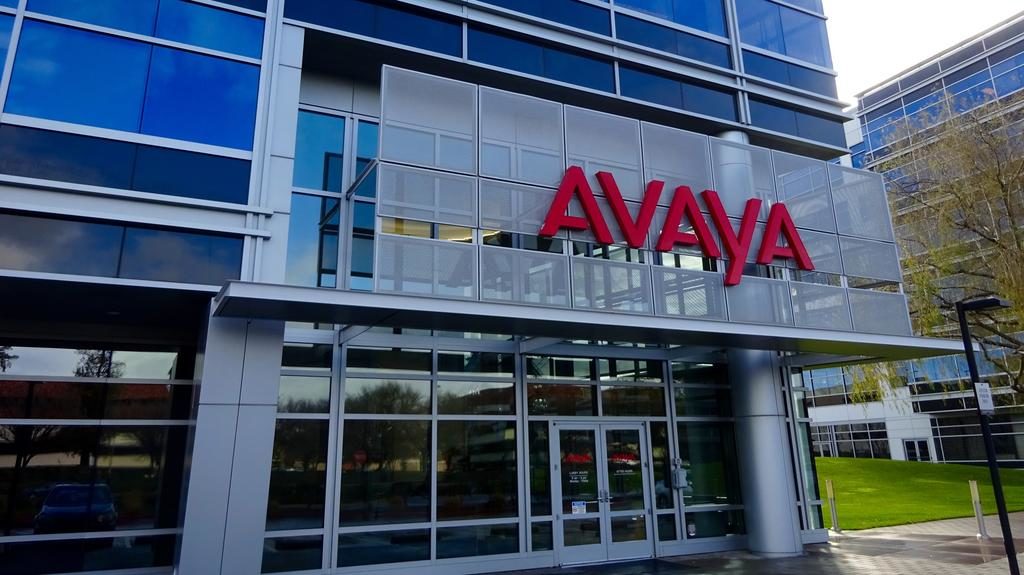
Avaya, the world’s number one contact centre and unified communication service provider.

Businesses are based on communication and establishing relations. Thanks to the companies that are building tools to make online communication easy through their online communication platforms. In times of pandemic, people are able to maintain their business relations and control their work using the internet and these software products. The work-from-home culture is only possible because of the internet connection and the various software that companies are using to communicate with their clients and employees. The most used communication software is from Avaya, an American technology company that specializes in developing unified communication software and service.

About Avaya

Avaya is an over twenty years old technology and software company. The company headquarters is based in Durham, North Carolina, and it basically develops communication software for its clients. The company is publically held and trades on New York Stock Exchange with ticker AVYA. Avaya is a multinational company and has offices in 190 countries. The company is home to 7900 employees. As per the 2020 data, Company made revenues worth US$2.9 billion for the financial year 2020, and it registered US$706 million as its operating income for the financial year 2019. The company’s most popular product is the Avaya OneCloud, which offers UCaaS (unified communications), CCaaS (contact centre), and CPasS services to the customers in one place. The company has also registered over 4000 patents in the same industry under its name.
Avaya is the world’s number one contact centre and unified communication service provider. Apple, AT&T, Comcast, Dell, Standard Chartered Bank, Liberty Mutual Insurance, Disney, Walmart, Lloyds Banking Group, Michigan State University, U.S. House of Representatives, etc. are some of the major and permanent clients that Avaya serve. For its new software products, the company has started to merge AI with them. It has also partnered with companies like Google and Amazon to make the platforms more user-friendly and up-to-date for consumers.

Avaya
Image source: media.bizj.us

The Back Story

Avaya is the result of a spin-off that occurred in 1995. AT&T had a spun-off, and Lucent Technologies was born. The latter then had a restructure and further divided its operations, and one of the spun off from Lucent was Avaya. Avaya was formed in 2000, a publically traded company. The company stayed independent for seven long years, and in October 2007, two partners, TPG Capital and Silver Lake Partners, acquired Avaya for $8.2 billion, and it became a private company.
But in the next few years, Company faced a lot of losses, and in 2017, it decided to become independent and again went public on NYSE. The going public helped the company get back on its foot and experiment with new technologies, resulting in new software launches and more customer reach.
In twenty years of career, Avaya also made some strategic acquisitions that aided the company’s growth. These acquisitions included names like VISTA Information Technologies, VPNet Technologies, Tenovis, Traverse Networks, Sipera, Aurix, Quintus, NimCat Networks, Esnatech, etc. In October 2019, Company launched its most revolutionary product, Avaya Cloud Office, unified communications as a service solution.

The CEO and President at Avaya

Jim Chirico is the current CEO at Avaya. He has got a BS, Marketing degree from Providence College. Chirico has been in the technology industry for more than thirty years. At the beginning of his career, Chirico worked for IBM in various positions. In 1998, he joined Seagate Technology as the Vice President of the Global Operations, Development, and Manufacturing. Chirico started working at Avaya as the COO and Global Sales Leader in 2008. In 2017, he was appointed as the President and the CEO of Avaya.

QAD Inc.

QAD Inc. – Company acquired by Thoma Bravo in an All-Cash $2 Billion Transaction.

QAD Inc is an American software company with headquarters based in Santa Barbara, California. It offers enterprise resource planning software and other related software to several manufacturing companies across the world. It is a privately held company as in November 2021, Thoma Bravo, a private equity firm completed the acquisition of QAD Inc. It was an all-cash transaction with an equity value of $2 billion. The founder of the company is Pamela Lopker, who is currently serving as the President and Chairman of the Board at QAD Inc.

About QAD Inc

QAD is a leading company in the manufacturing sector as it developed the best full-featured manufacturing ERP software and supply chain solutions. When the company was founded in 1979, there were only a few local customers who supported the company and from there it currently has customers across 100 countries. This is why QAD strongly believes in a very loyal and strong community. QAD has nearly 2,000 employees and it is currently focusing on enabling adaptive manufacturing enterprises and eradicating the disruption problems caused by technology and the constant shift in the preferences of customers.

QAD Inc.
Image source: wistia.com

History of the Company

Pamela Lopker started the company in 1979 and initially targeted the manufacturing companies in Southern California. The company started locally by offering them proprietary software applications and then eventually expanded to international markets. In 1984, QAD Inc introduced a new product that was built using 4GL (Fourth Generation Language) and RDBMS of Progress Software. QAD followed the APICS principles to build its first software product, MFG/PRO for the manufacturers. This also became one of the first products to support closed-loop Manufacturing Resource Planning (MRP II). In 1997, QAD Inc decided to go public and filed its first IPO. It began trading on 6th August 1997.

In 2003, the company launched its first SaaS product and it was a huge success. The product was launched as Supply Visualization and later became QAD Supplier Portal. This platform allowed the QAD customers and the authorized suppliers to share necessary information about orders, shipments, inventory, etc. In 2006, QAD launched a user interface called .NET UI. In 2007, the company changed the name of its core product suite MFG/PRO to QAD Enterprise Applications. After a few years, the company launched QAD Cloud ERP.

Currently, QAD focuses on selling its software products in six different manufacturing industries. They are automotive, high tech, food and beverage, consumer products, industrial equipment, and life sciences. QAD Adaptive ERP is the flagship product of the company which is a SaaS software marketed using cloud computing.

Acquisitions

QAD Inc has acquired several companies during the 2000s and a few of them recently. In 2006, it acquired three companies in a row. In September 2006, QAD acquired a company called Precision Software. It offered transportation and supply chain management software. The company was renamed QAD Precision in 2019. In November 2006, it acquired FBO Systems, an enterprise asset management company followed by a UK-based marketing company, Bisgen Ltd. Some of the other companies on the list are FullTilt Solutions’ product suite, DynaSys (a European company), CEBOS (management software and services), Allocation Network GmbH (German-based supplier management), etc.

About Thoma Bravo

Thoma Bravo is an American private equity firm whose history dates back to 1980 when Golder Thoma & Co was established. The current brand, Thoma Bravo was established in 2008 after they dropped the name Cressey from Thoma Cressey Bravo. Thoma Bravo has three headquarters in Illinois, California, and Florida.

Pamela Lopker – Founder of QAD Inc

Pamela Lopker is famous as the founder and President of QAD Inc. She went to the University of California, Santa Barbara, and right after graduating started writing codes. She started working on a project for radar defense systems for a naval defense contractor in California. She also helped his husband, Karl Lopker with his sandal company, Deckers Outdoor. It was then she realized there wasn’t any perfect software to track from sales to inventory and other requirements for Deckers Outdoor and decided to start her own software company for manufacturing sectors.

Playtech

Playtech, 22 years Old Online Casino Gaming Software Company.

The video game industry has been one of the largest industries out there. In the past few decades, the industry has seen steady but fast growth, and the craze for these games has only risen. One of the popular wings of video games is the casino games that now have become online too. Companies like Playtech are making innovative casino games and providing people with the ease of accessing them online. The company makes a variety of casino games that include online casino games, poker room games, online bingo games, and scratch games, etc. Playtech is a 22 years old company that is one of the leading groups of its industry.

About the Company

Teddy Sagi founded Playtech in 1999 in Tartu, Estonia. Today the company has its headquarters based in Douglas, Isle of Man, and it trades as a public company on London Stock Exchange with ticker PTEC. Playtech is known for making online casino and poker games. Apart from these, it has also developed online bingo games, sports betting games, mobile games, arcade games as well as software related to these games.
The steady growth of the company has given Playtech the name of one of the leading international designers and developers of the digital gaming industry. As of 2020 records, the company made revenues worth 1,078.5 million, with 297.4 million net income. Playtech is operational in over 24 countries, and over 6500 people are working for it. The company has got 170 global licenses for its work.

Playtech
Image source: igamingbrazil.com

Founding Playtech

Teddy Sagi, an Israeli entrepreneur, founded Playtech in 1999 in Tartu, Estonia. People from three industries, i.e., Casino, Software, and Multimedia, came together to form the company, and in 2001, it launched its first product, a casino game. With the launch of its first product only, the company was able to attract customers like William Hill, Ladbrokes, Bet365, etc. In fact, some of the government agencies also gave Playtech some contracts. The company founded iPoker in 2004, which later became the largest poker network in the world.
With the successful beginning, only in six years, in 2006, Playtech valued at approximately US$950 million in the AIM market. The same year, the company acquired Video bet and launched Bingo Broadway. Playtech also established a development center in Bulgaria. By 2010, the company had reached the UK, Spain, and Italy. It also acquired Virtue Fusion, a bingo platform in 2010, and in 2013, the company acquired one of the largest poker communities, PokerStrategy.com. In the further years, the company made acquisitions like Aristocrat Lotteries (2014), YoYo Games (2015), Quickspin (2016), Best Gaming Technology (2016), BetBuddy (2017), etc. The acquisitions helped the company grow even faster and add more products for its customers.
Playtech went public on London Stock Exchange in 2012. In 2014, The company launched its first multi-channel product named Coral Connect, which gained around 160,000 players just in one year. Playtech also opened a new branch in Romania in 2017. The same year, it partnered with Warner Bros to develop slots based on the films like Batman vs Superman and Suicide Squad, etc. In 2018, the company integrated machine learning into its platform to prevent fraudulent attacks. Playtech debuted in the online gambling market through Bet365.

The CEO at Playtech

Mor Weizer is the current CEO of Playtech. He was appointed to the post of CEO in May 2007. Before that, he has worked at various prominent positions at many big names companies. Mor started his career at PricewaterhouseCoopers as an accountant and Financial Consultant. Later, he became a software specialist at Oracle. Mor has also worked as the CEO of Techplay Marketing Ltd, which is the subsidiary company of Playtech.

LifeWorks

LifeWorks – A professional services company that was originally famous as Morneau Shepell.

LifeWorks is a leading human resource services and technology company founded in 1966. The company was previously known as Morneau Shepell and in May 2021 the shareholders voted to change its name to LifeWorks. It is a publicly-traded company with headquarters based in Toronto, Ontario, Canada.

The services provided by the company are administrative outsourcing, health, and benefit, management, asset, and risk, etc. LifeWorks is listed on the Toronto Stock Exchange and currently has a market capitalization of $2 billion. The company has made several big acquisitions over the year and offers services to more than 24,000 clients across the globe.

About LifeWorks

The main goal of LifeWorks is to offer personalized solutions to the people who need it and how they need it. In the digital era, every solution in every sector needs to combine with technology to deliver results that are optimal for the customers. So, LifeWorks combine its solutions with AI-based technologies that are simple and easily accessible for HR people. LifeWorks offers financial strategies, physical and mental support, and also choices for building strong social relationships. It covers every aspect of a person’s life to make a real difference in the community.

History of Morneau Shepell

Back in 1966, Frank Morneau founded an actuarial and consulting firm called W. F. Morneau & Associates. The first US office of the company was established in 1987 and after five years established a strategic alliance with Coopers & Lybrand. This alliance led to the acquisition of pension consulting and actuarial business of the latter by Morneau. In 1996, the company launched its administrative outsourcing practice and next year merged with Sobeco. The new company was named Morneau Sobeco where Bill Morneau became the new President and CEO.

After the merger, the company made its first acquisition in 1998 with the Canadian pension consulting firm Deloitte & Touche. After stepping into the 21st century, the company became an income trust, Morneau Sobeco Income Fund (MSIF) in 2005. Morneau eventually started to expand geographically and that led to the acquisition of several companies. In 2006, Morneau acquired Health Benefits Consulting (a Canadian firm) followed by the defined benefit pension business of Cowan Benefits Consulting in 2007.

In 2008, Morneau acquired Shepell-FGI which was the country’s largest provider of employee health and productivity solutions. After the acquisition was completed, Morneau Sebeco’s name was changed to Morneau Shepell. The acquisition was completed for $321.9 million from the Clairvest Group. In the same year, the company also acquired an actuarial firm, Leong & Associates.

LifeWorks
Image source: businesswire.com

Recent Events

In 2011, Morneau Shepell restructured its income trust (MSIF) into a public corporation called Morneau Shepell Inc. The same year it also acquired Jacques Lamarre & Associates to expand its presence in Quebec. In 2012, Morneau acquired a Canadian pension and benefits administration firm, Mercer Canada. To enhance its benefits administration platform, the company acquired SBC Systems in 2012. In 2013, Morneau acquired two companies, namely, Collage Pediatric Therapy and the worker’s compensation business of Dion Durrell.

In 2014, Morneau acquired Blue Ballon Health Services which is one of the many companies it acquired in the healthcare sector. It also acquired Pacific Risk Management Corp and Groupe AST in the same year. Next year, Morneau acquired another healthcare business (health and welfare benefits administration of Ceridian). In 2016, Morneau completed its 50th anniversary. In 2018, it acquired LifeWorks and decided to change its name three years later. Some of the other companies acquired by LifeWorks are MorningStar Health, Pro-Health Group, Chestnut Global Partners, etc.

Stephen Liptrap – President and CEO of LifeWorks

Stephen Liptrap, the current CEO and President of LifeWorks joined the company in 2008 as a member of the senior executive team. When he joined LifeWorks, he had 25 years of experience in the retail and packaged goods sector. He became the general manager and executive VP of the company’s largest business unit. Liptrap has also played his role as the COO of the company for almost a year. He graduated from Harvard Business School in 2016. He is also a Certified Human Resources Executive.

Progress Software

Progress Software, An American software company founded by a group of MIT graduates.

Progress Software is a publicly-held company founded in 1981 by a group of MIT graduates. The company’s headquarters is based in Massachusetts, US. It has offices in 16 countries and currently has over 1,500 employees. Progress Software is a company in the computer software sector and develops, and sells the same to companies who want to deploy business applications. Josep W. Alsop was one of the MIT graduates who have significant contributions in co-founding Progress Software. The present CEO and President of the company are Yogesh Gupta while Paul Jalbert is the CFO of the company.

About Progress Software

Apart from Josep Alsop, two other important founding members of the company are Charles Clyde and Zierring Kessel. Progress Software is a renowned global supplier of software products for information services organizations not only in the industrial sector but also in government bodies. The company also supplies software tools and add-on components to the companies who are building business applications with Microsoft Corporations’ Visual Basic application development environment. Progress has around 20 subsidiaries helping it to maintain a market for selling products in 60 countries in Europe, Asia, Latin America, and Australia.

Progress Software
Image source: fxdailyreport.com

Early Days

When the company was incorporated back in 1981, its original name was Data Language Corporation. The company was officially launched after the founders successfully developed its first product, the PROGRESS Application Development Environment (ADE). This environment was designed so that it can be used for the development and deployment of software applications that were scalable, portable, and reconfigurable. In 1984, the company released the first commercial version of the PROGRESS ADE for Unix followed by another version for MS-DOS. 1985 marked the first profitable year of the company and after a few years, the company released the software for computer networks and CTOS/BTOS operating systems.

By the end of the 1980s, the growth of the company was remarkable and is ranked 38th in the Inc magazine’s list of the 500 fastest-growing private American companies. When the company entered a new decade, its main focus was on value-added resellers who used PROGRESS software to build their commercial software products. These middlemen required deployment licenses from the company which significantly increased the revenue of Progress Software. In 1995, Progress was featured in Forbes’s 200 Best Companies in America list and the next year the company attempted to climb the ladder in the internet market.

As the company’s sales rose, it eventually came into the radar of big companies like Oracle, Sybase, and Informix. Big companies like these became the major competition of Progress. One of the biggest advantages of Progress was that its RDBMS could work on most types of computer hardware. With the changing of the market scenarios, the company is expected to benefit from two business trends, the growth of corporate networks and the decentralization of large conglomerates.

Present Status

Stepping into the 21st century, Progress Software acquired a handful of companies starting with eXcelon Corporation in 2002 for $24 million (approximately). Some of the products developed by the company (XML IDE and Stylus Studio) are now marketed by Progress. In 2003, the company acquired DataDirect Technologies followed by Persistent Software in 2004 and Apama in 2005. In 2006, the company acquired Actional Corporation which previously merged with WestBridge Technologies (an XML security company). The acquisitions expanded the customer base of Progress Software as well as product ranges. Although in 2012 the company announced that it will refocus its strategies and concentrate on a narrower product type. So, it decided to either sell or decommission most of its products. It recently acquired Chef Software Inc and Kemp Technologies.

Yogesh Gupta – CEO of Progress Software

Yogesh Gupta has been serving as the CEO and President of Progress Software since October 2016. He is responsible for improving customer relationships and launching new products in these few years. Before joining Progress, he was the CEO and President of Kaseya Inc, and before that FatWire Software and Oracle Corporation.

Zuora

Zuora – A savior for large enterprises to help with their billing systems.

Zuora is an American enterprise software company that develops software for businesses to manage their subscription-based services. When the company was founded, its main goal was to assist large enterprises with a proper billing system. Zuora provides a cloud-based billing platform that is designed to automate several features like recurring billing, collections, revenue recognition, subscription metrics, etc. Zuora is a publicly-traded company that is currently headquartered in Redwood Shores, California. It has more than 1,200 employees working under Tien Tzuo, CEO of the company.

About Zuora

Zuora was founded in 2007 in a small office at Mountain View, California. The founders of the company are K.V. Rao, Cheng Zuo, and Tien Tzuo. They both had industry experience as they spent several years working at WebEx and salesforce.com. Zuora, today, has become a leading company in the subscription economy industry as its cloud-based platform automates all subscription order-to-revenue operations for its clients.

The company went public in 2018 and got listed on New York Stock Exchange. The same year it established a partnership with maximum automobile manufacturing giants. Recently, Zuora was named one of the best workplaces by Glassdoor (2018) and became Innovator of the Year (2019) by the San Mateo County Economic Development Association.

History of the Company

In 2007, the three founders established Zuora to help enterprise companies in the 21st century with their real-time billing platform. Before founding Zuora, Roa and Zou were engineers at WebEx while Tzuo was an executive at Salesforce. They named the company after their surnames (combination of three surnames) and launched their first flagship product in 2008. In 2008 they launched two products, Z-billing and Z-Force. The latter one was the first billing solution of the company fully integrated with Salesforce CRM.

Zuora
Image source: octotelematics.com

Expansion

Zuora attracted investors from the beginning and hence it was able to raise lucrative funding from many famous investors. This helped Zuora expand in international markets in a short time. In 2010, the company expanded to Europe, and the next year it made it into the OnDemand Top 100 Private Companies list. It was also featured in VentureWire’s FASTech 50 list and JMP Hot 100 Best Privately Held Software Companies.

In 2012 the company expanded to the Australian market and the next year it celebrated its 50th consecutive product release. In 2015, Zuora opened eight new offices worldwide and also entered the Japanese market, and became a total team of 500 employees. It also launched subscribed magazine and bagged the best technology innovation award from Ventana Research. 2016 was an eventful year for Zuora as it launched subscribed podcasts, featured on Forbes 100 Best Cloud Companies, Tzuo named E&Y Entrepreneur of the Year, crossed $40 billion invoice transaction volume, etc. This year Zuora also launched the Subscription Economy Index, a product that tracks revenue growth of subscription businesses.

By 2017, Zuora successfully landed 900 customers and released its 100th product since it was launched. Ken Goldman, CFO of Yahoo, joined Zuora’s board and the company also opened a new data center in Germany. Recently, Zuora has brought many experienced new members into the team like Robbie Traube (former Adobe executive) as Chief Revenue Officer and Todd McElhatton (former employee of SAP) as Chief Financial Officer.

Funding

Zuora successfully led its first round of funding (Series A) on the year that it was founded. It raised $6 million in Series A funding and it was led by Benchmark Capital and Marc Benioff. In September 2008, the Series B funding was led by Shasta Ventures where the company raised $15 million followed by $20 million in October 2010. By 2015 Zuora already conducted a Series F funding round and raised a total amount of $250 million. Major investors include Redpoint Ventures, Greylock Partners, Shasta Ventures, Index Ventures, Vulcan Capital, etc.

Tien Tzuo – Co-founder and CEO of Zuora

Tien Tzuo is a famous American tech entrepreneur who co-founded Zuora. He is currently the CEO of the company and was previously the Chief Strategy Officer of Salesforce. Tzuo was born in Taiwan and moved to Brooklyn when he was very young. He completed his studies at Cornell University and worked at Oracle Corporation for six years.