Your Tech Story

Tech Story

Blinkit

From Grofers To Blinkit, Providing Instant Delivery Services For Grocery Shopping.

Blinkit is an e-commerce platform for grocery shopping. Over one crore Indians use Blinkit to shop for everything from veggies and supermarket staples to electronics and emergency supplies. It is the first company to introduce the rapid delivery concept to India. It delivers over two lakhs orders every day.

About the Company

Formerly known as Grofers, Blinkit is an Indian company providing instant delivery services for grocery and other items. It is headquartered in Gurgaon. Customers of Blinkit can place online orders for groceries and other necessities using a smartphone application. The delivery persons of Blinkit then collect the ordered items from the warehouse and deliver them within 10 minutes to the customer. BY 2021, the company was fulfilling over 1.25 lakh orders every day. In India, Blinkit is presently available in over 30 cities. As of 2021, SoftBank, Tiger Global, and Sequoia Capital have invested over 630$ million in the company.

Image source: tosshub.com

History of the Company

Saurabh Kumar and Albinder Dhindsa established Blinkit as Grofers in December 2013. They teamed together to enter the supermarket delivery market after getting to know one another while working for Cambridge Systematics in the late 2000s. Their objective was to find solutions to the issues caused by the industry’s lack of organisation (both on the client and merchant ends). Before expanding to other Indian cities, the company conducted a test run in Delhi NCR. After operating as an online service that delivered groceries for seven years, Blinkit offered quick grocery delivery services in India by constructing dark storefronts throughout the country’s cities. The company claimed to have delivered over 7,000 grocery products in Gurgaon in fifteen minutes in July 2021. After completing over 20,000 under-15-minute, deliveries each day across ten cities, it offered 10-minute delivery across the top 12 cities a month later, in August 2021. In keeping with its goal to promote quick commerce, Grofers changed its name to Blinkit on December 13, 2021. To take advantage of the rapidly expanding market for speedy grocery delivery, food delivery network Zomato has agreed to purchase Blinkit for $569 million in an all-stock deal. The deal is currently underway.

Business Model

An online marketplace served as the foundation of Blinkit’s business plan. They took orders through their website or app. Blinkit uses a partnership approach to deliver the goods in less than 10 minutes for all of its business activities. To do this, it collaborates with regional companies and brands, logistics, warehousing, transaction partners, and payment solutions. As a result of the greater visibility, partner retailers received more orders; Blinkit made money by charging a commission based on a percentage of these sales. It presently offers a 10-minute delivery service through more than 250 associate retailers.

Controversies

Groceries, fresh produce, meat, stationery, bakery goods, infant care, pet care, snacks, flowers, etc., are the main items that Blinkit provides. The 10-minute delivery service offered by the business was criticised in August 2021, and delivery partner safety issues were brought up. In a tweet, CEO Albinder Dhindsa defended the quick delivery system and asserted that there had been no accidents because of this.

Founders – Albinder Dhindsa, Saurabh Kumar

Eight years ago, in 2013, Albinder Dhindsa and Saurabh Kumar co-founded Grofers. In addition to being an IIT Mumbai alumnus, Saurabh earned his MS at the University of Texas in Austin. He served as the head of operations at Rasilant Technologies before joining Grofers and was an engineer at Cambridge Systematics in New York before that. Albinder Dhindsa is currently the CEO of Blinkit. In 2005, he started working as a transportation analyst at URS Corporation after completing his education. He worked for two years before switching to Cambridge Systematics as a Senior Associate, where he met Saurabh. Dhindsa decided to leave his work in 2010 to pursue his MBA in the United States. He worked for UBS Investment Bank for three months in 2011 while living in the US. He has also served as Zomato’s Head of International Operations.

Target Corporation

Target Corporation – Top Retailer In The United States Who Has Donated 5% Of Its Profits.

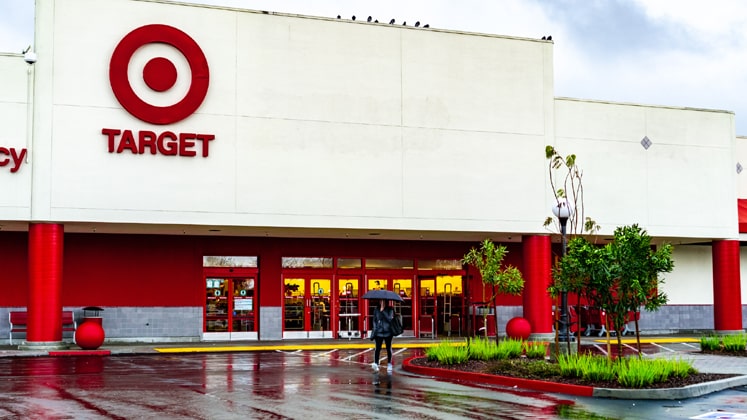
Target Corporation is amongst the most recognizable brands worldwide and a top retailer in the United States. Since 1946, the company has donated 5% of its profits, which amounts to millions of dollars per week in today’s values. Target has its stores in all 50 States in the USA.

About The Company

American big-box retailer Target Corporation has its corporate headquarters in Minneapolis, Minnesota. It is listed on the S&P 500 Index and is the eighth-largest retailer in the USA. In 1962, Minneapolis’ Dayton’s department store created Target as its discount arm. As of 2022, Target has 1,934 stores in the USA and is ranked 32nd on the 2022 Fortune 500 list. In order to provide its consumer base with a wide selection of high-quality products, Target hosts several well-known brands. Top firms like Apple, Dyson, Disney, Johnson, and Johnson, and Fisher-Price are some of the more well-known brands. Target stores sell a wide range of goods, including everything from baby apparel to luxury furnishings and technology.

Target Corporation
Image source: apparelresources.com

History Of The Company

George Draper Dayton, a banker, and property investor founded Target as Goodfellow Dry Goods in 1902. The name was altered to Dayton Dry Goods Company the following year, and in 1911 it was abbreviated to Dayton Company. In 1962, the first Target store was launched by Dayton Company as a budget-friendly alternative to Dayton’s department shops. In 1969, Dayton merged with J.L. Hudson Company to form the Dayton-Hudson Corporation. Dayton-Hudson later acquired US retailers like Mervyn’s and Marshall Field and Company. Target became the top revenue generator for Dayton-Hudson by 1975, and by 1979, its yearly sales had surpassed $1 billion. In 1990, the Target Greatland store debuted with a more extensive inventory than typical Target stores. The business built the first ever SuperTarget store in Omaha, Nebraska, five years later. This store had a full-service supermarket, a pharmacy, a photography studio, and eateries. In 2004, Dayton-Hudson sold Mervyn’s and Marshall Field and Company; changed its name to Target Corporation in 2000 to reflect a new emphasis on its Target locations. By 2010, Target had made a name for itself by providing high-end goods at affordable prices. Customers particularly favoured the limited-edition apparel lines produced through collaborations with renowned fashion designers like Zac Posen, Isaac Mizrahi, and Jason Wu. In 2012, Target debuted its first CityTarget store, catering to its urban customers.

International Operations

As of 2022, Target is only active in the United States; although, in the past, Target tried to open stores in Canada. As a result, the Target Corporation does not own other businesses or trademarks that use the term “Target” besides the United States. The stores under question are unrelated to a corporation in Australia with the same name and brand. Given that both the Target Corporation logo and the Target Australia brand’s logo are reasonable candidates for the term “Target,” it is plausible that the branding was copied legally or that the companies happened to have the same name and emblem by accident.

Controversies

In 2013, around 110 million Target customers were impacted by a data breach in Target’s systems. Data on customers’ names, phone numbers, emails, and mailing addresses were compromised. In 2015, Target and the impacted customers settled their class action lawsuit for $10 million. In 2014, a class-action lawsuit was filed in the U.S. District Court on behalf of Ohio residents who bought wet wipes under the Target brand. The Target Corporation was being sued on the grounds that the retailer deceived customers by labeling the packaging of its up & up product wipes as flushable and secure for septic and sewer systems. As a result of their purported ability to block compressors at municipal waste management facilities, the complaint also asserted the wipes posed a risk to the public’s health. In 2018, Alameda County DA O’Malley announced that Target would be fined $7.4 million for throwing out illegal e-waste, medical goods, and personal data.

Founder – George Dayton

American entrepreneur and philanthropist George Dayton is known for founding Dayton’s Department Store, which ultimately evolved into Target Corporation. He bought land on Nicollet Avenue in Minneapolis in 1902 and Goodfellow & Co., reorganizing it as Dayton’s Dry Goods, which developed into Dayton’s department store.

CEO – Brian Cornell

Brian Cornell serves as both the chairman and CEO of the Target Corporation. In 2014, he replaced Gregg Steinhafel as the CEO and chairman of Target. Cornell was behind the closing of the loss-making Target Canada during his leadership. Cornell was selected “Business CEO of The Year” by CNN in 2019.

Mentor Graphics

Mentor Graphics, Leader In Electronic Design Automation (EDA) Technology.

Electronic design automation (EDA) technology leader Mentor Graphics offers hardware and software design solutions that help businesses create superior electronic devices more quickly and affordably. The company provides cutting-edge solutions and products that assist engineers in overcoming the design difficulties they encounter in the escalatingly complicated realms of child and board design. 

About the Company

Founded in 1981, Mentor Graphics is an American electronic design automation(EDA) multinational company for electronics and electrical engineering. The company is headquartered in Oregon, United States. Since 2021, Siemens EDA has been the name of the old Mentor Graphics division. Mentor Graphics is known for selling products that automate electronic design, analogue mixed-signal design simulation tools, VPN services, fluid models, and heat transfer software. It is the only EDA firm with an embedded software solution. The company has the widest range of best-in-class products in the market.

History Of The Company

Tom Bruggere, Gerry Langeler, and Dave Moffenbeier, all of whom had previously worked for Tektronix, formed Mentor Graphics in 1981. Greylock, Venrock Associates and Stutter Hill contributed the initial $1 million round of funding. A third round, which raised another $7 million in April 1983, raised over $2 million through five venture capital groups in the next round. The first hardware platform was chosen to be Apollo Computer workstations. The founding members of Mentor Graphics initiated their first meetings with Apollo, a Massachusetts-based startup when it was barely a year old. Mentor Graphics used Apollo Computer workstations to distinguish its software and hardware in the computer-aided engineering (CAE) sector. When Mentor first entered the CAE industry, the organization had two distinguishing technical features: its software and hardware. While CAE companies like Daisy and Valid built their own hardware, Mentor ran all of its programs on the Apollo workstation. All EDA companies stopped using proprietary hardware in the late 1980s in favor of workstations by firms like Sun Microsystems and Apollo. Mentor Graphics, one of the three leading electronic design automation (EDA) businesses, stated in 2013 that it would start paying a quarterly dividend. In 1999, James Ready quit Mentor to create the embedded Linux business MontaVista. When Accelerated Technology Inc. was acquired by Mentor Graphics in 2002, Neil Henderson joined the company. Following the purchase of Project Technology in 2004, Stephen Mellor, a pioneer in the UML field and co-creator of the Shlaer-Mellor design approach, joined the company.

Mentor Graphics
Image source: www.ascenderhcm.com

Acquisitions

Between 1995-2015, It acquired several companies, including Microtec Research, VeriBest, Accelerated Technology, Innoveda, Project Technology, Tanner EDA, LogicVision, and Calypto Design Systems. In 2008, Cadence Design Systems made a leveraged buyout proposal to takeover Mentor Graphics in June 2008. Later, Cadence retracted this offer, citing its inability to secure the required funding and Mentor Graphics’ management and reluctance to consider it. In 2016, the company announced that Siemens would be acquiring it for $4.5 billion. 

Founder – Tom Bruggere

Tom Bruggere founded Mentor Graphics in 1981. In the early to mid-1970s, Bruggere worked as an engineer for Burroughs Corporation Medium Systems Plant in California, and in the late 1970s, he worked with Tektronix, Inc. He has held positions on the advisory committees of Mercy Corps, Technology Management Program at UCSB, OpenMarket, Will Vinton Studios, and Sirigen. He holds degrees in business administration from Pepperdine University; a master’s in computer science from the University of Wisconsin, and a bachelor’s of arts in mathematics from the University of California.

CEO – Wally Rhines

Before the Siemens acquisition, Wally Rhines served as the company’s CEO and president until November 2018. In 1993, Rhines took over as CEO of Mentor Graphics, which had a yearly revenue of around $340 million. In 2011, the business’s revenue surpassed $1 billion for the first time. Rhines has guided the corporation into new business ventures, such as software for the automotive industry.

Veritas Technologies

Veritas Technologies – Started Creating A Computer System Using The Concept Of “Shoe Box”.

Veritas Technologies is a market leader in the area of multi-cloud data management. The company offers its services to over 80,000 clients, including several Fortune Global 500 companies, to support their data’s security, compliance, and reusability. 

About The Company 

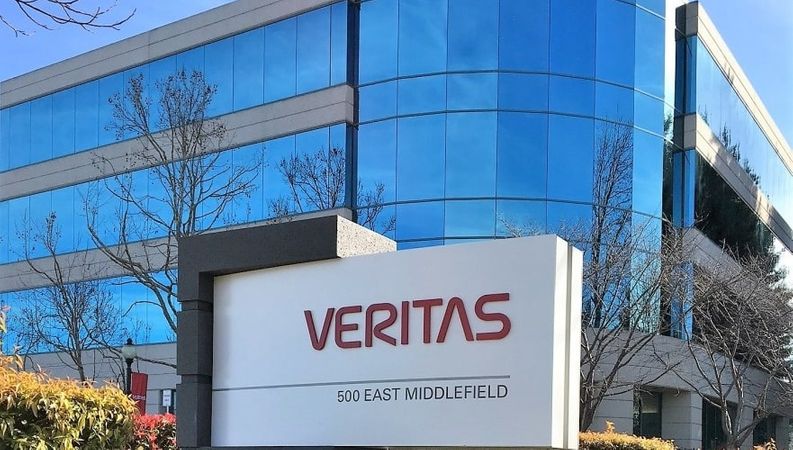
Founded in 1983 as Tolerant Systems, Veritas is an American company in the international information/data management business. The company is headquartered in California, USA. In the past 30 years, Veritas has assisted corporate clients in navigating every disruptive technology shift. The company’s integrated data protection and management strategy offer unparalleled versatility, efficiency, and cost benefits. Some of the company’s popular products and services include Access, VxFS, VxVM, NetBackup, NetBackup Appliances, Backup Exec, Cluster Server (VCS), Enterprise Vault, and Enterprise Vault. cloud, Enterprise Administrator, Volume Replicator (VVR), SANPoint, eDiscovery Platform, APTARE IT Analytics, etc.

Veritas Technologies
Image source: freshersindia.in

History

In 1983 Tolerant Systems was formed with the goal of creating a fault-tolerant computer system using the concept of “shoe box” building components. The “Eternity Series” was the name given to this computer system. This shoe box contained two 320xx processors. The OS processor ran on TX( version of Unix) while the I/O processor supported Tolerant’s Real Time Executive. The company initially collaborated with AT&T to supply the disc management and file management software for the latter’s UNIX operating system and cooperatively supported and promoted the products to System OEMs. Veritas received royalties on the sales of the OEMs. In 1993, the company launched its IPO, and its business was valued at $64 million. In 2001, the sector saw a significant decline as the internet bubble burst. Despite this, Veritas expanded its revenue by 25% to $1.5 billion and maintained 25% operating margins. In 2004, the company merged with Symantec( now NortonLifeLock). Prior to this, the company was listed on NASDAQ-100 and S&P 500. Later in 2014, in order to concentrate on security, Symantec de-merged its data management business as Veritas Technologies. As part of this de-merger, Carlyle Group, a private equity company, acquired Veritas for $8 billion.

Acquisitions

Veritas generated $36 million in revenue by the end of 1996. For $4.2 million in equity, the company bought Tidalwave Technologies, which specialised in the High Availability of cross-platform software. Veritas entered the backup industry in 1997 when it purchased OpenVision Technologies, including NetBackup, a comparable-sized public company. In 1998 it acquired Seagate NSMG. In 2000, the company generated 1.2$ billion in revenue and was included in the S&P 500 and Fortune 1000. Veritas rose to the world’s tenth-largest software company by revenue and third-largest by market cap. In 2003, for a total of about $609 million, it purchased Israel’s Precise Software Solutions, a leading company in Application Performance Management (APM).

Founder – Mark Leslie

Veritas Technologies was founded by Mark Leslie, who also served as its CEO. As the CEO and Chairman, Veritas expanded to rank among the ten leading independent software companies and earned the distinction of joining the Fortune 1000. Mark Leslie is an entrepreneur, corporate executive, venture capitalist, and professor. He also teaches management courses at the Stanford Graduate School of Business. He also serves as managing director of the private investment firm Leslie Ventures. In 1996 Leslie received a Bachelor of Arts degree from NYU. He participated in the Harvard Business School’s management development program in 1980. Leslie started his first firm, Synapse Computer Systems, in 1980.

CEO – Greg Hughes

Greg Hughes is the current CEO of Veritas. He has over twenty years of executive experience in enterprise software. Before joining Veritas, he developed and oversaw the Software Practice at McKinsey & Company. Greg has degrees from the Massachusetts Institute of Technology and Stanford University’s Graduate School of Business.

Pure Storage

Pure Storage – Company Simplifying Data Storage.

Pure Storage supports innovators by permanently simplifying data storage. The company is revolutionizing the storage process and empowering innovators by making it easier for users to consume and engage with data. With cutting-edge, cloud-ready storage solutions and the highest technological expertise, the company simplifies storage and turns data into effective results.

About The Company

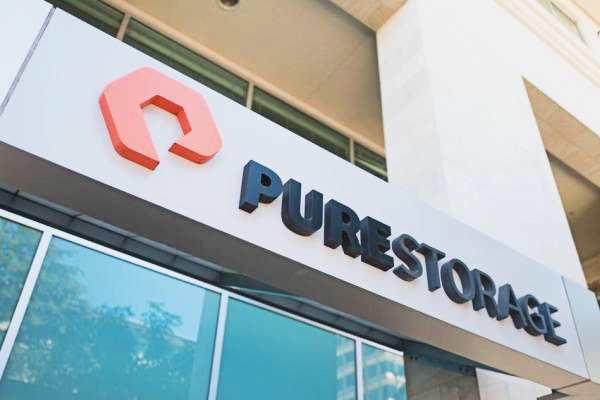
Pure Storage is an American company that offers hardware and software for all-flash data storage. The company is headquartered in California, USA. Pure Storage was established in 2009 and worked stealthily on its products until 2011. After that, the company saw a 50 percent increase in quarterly revenues and raised over $470 million in venture financing. In 2015, the company went public and debuted on the New York Stock Exchange. In the starting, Pure Storage used generic flash storage hardware and built the software for storage controllers. In 2015, Pure Storage completed the development of its exclusive flash storage hardware.

Pure Storage
Image source: techherald.in

History

In 2009, John Colgrove and John Hayes launched Pure Storage under the code name Os76 Inc. The business was initially founded inside the offices of the venture capital firm Sutter Hill Ventures, and it was supported with $5 million in seed money. The company raised an additional $20 million in venture money in a series B fundraising round. In August 2011, the company emerged from stealth mode as Pure Storage. EMC filed a lawsuit against the company and 44 former employees in 2013, alleging intellectual property theft.

Additionally, EMC asserted that the company had violated a few of its patents. In a countersuit, It claimed that EMC had illegally acquired a Pure Storage device to perform reverse engineering. In 2016, a jury court decided in favor of EMC and Pure Storage was ordered to pay $14 million to EMC. A judge overturned the verdict and mandated a further trial to determine the legality EMC patent at issue. Following that, a $30 million settlement was reached between Pure Storage and EMC. In August 2015, Pure Storage informed the Securities Exchange Commission of its intention to go public. In 2016, the organization held its first yearly user conference. In 2017, The company achieved its first year of profitability and surpassed $1 billion in revenue.

Acquisitions

In 2018 with the $25 million purchase of StorReduce, a provider of data deduplication software, the company completed its first acquisition. The same year, the company announced a binding deal to buy software-based file storage business Compuverde for an undisclosed sum. In 2020, Pure Storage paid $370 million to acquire Portworx, a Kubernetes-based cloud-native data, and storage management platform, supplier.

Products

Employing consumer-grade solid state drives, Pure Storage creates flash-based storage for data centres. Although more expensive, flash storage is speedier than conventional disc storage. The company creates unique deduplication and compression algorithms to increase the data volume that can be kept on each device. Along with that, it makes its own flash storage technology. FlashBlade, for unstructured data, FlashArray/C, which employs QLC flash, and the more expensive NVMe FlashArray/X are it’s three main product lines. Most of the company’s income comes from IT vendors that sell its solutions to operators of data centres.

Founder – John Colgrove, John Hayes

Pure Storage, which was founded in 2009, entered a market that had been dominated for over 30 years by competitors like EMC and HP. John Colgrove and John Hayes, the company’s co-founders, understood that they would need to construct and operate their storage business differently if they wanted to successfully compete with the established market leaders. Their ideas eventually led to the foundation of Pure Storage.

CEO – Charles Giancarlo

American businessman and investor Charles Giancarlo serves as the CEO and Chairman of Pure Storage. He formerly held top management positions at Silver Lake Partners and Cisco Systems. Charles Giancarlo is the company’s CEO since 2017. Giancarlo has an MBA from Harvard University, a master’s degree from the University of California, and a bachelor’s degree from Brown University.

Genesys

Genesys – Company Started With The $150,000 Loan As Initial Money.

Genesys is a market leader in contact centre solutions and cloud customer experiences. The company has a presence in over 100 countries. Employees at Company collaborate to provide the best possible client experiences. Genesys connects every user moment across marketing, sales, and service on any channel while also enhancing employee experiences with the help of cloud and AI.

About the Company

Founded in 1990, Genesys is an  American software corporation that sells customer experience (CX) and call centre technologies to mid-sized and big companies. It offers software that is both cloud-based and hybrid. In 2012, It was acquired by Technology Crossover Ventures (TCV) and Permira Funds. The company is headquartered in California, USA, and it also has offices in the Middle East, Latin America, Canada, Europe, Asia, Australia, and Africa.  The company is the main sponsor of IndyCar Series racer James Hinchcliffe’s in the #29 Andretti Autosport Honda. Additionally, the business sponsors the Genesys 300 and Genesys 600 races at Texas Motor Speedway. Genesys established “Experience as a Service” to enable companies of all sizes to communicate with customers sensitively, deliver simple personalization at scale, and cultivate their trust and loyalty.

History

Gregory Shenkman and Alec Miloslavsky started Genesys in October 1990. The families of the founders loaned the company $150,000 as initial money. In 1997, the business successfully launched its (IPO) and went public, traded on the NASDAQ under the ticker GCTI. Alcatel-Lucent (formerly Alcatel) purchased Genesys for $1.5 billion in late 1999. In 2012,  It was acquired by Permira and TCV from Alcatel-Lucent for $1.5 billion. In 2016, majority shareholders, Technology Crossover Ventures and Permira sold a $900 million share to private equity firm Hellman & Friedman, valued at $3.8 billion. Genesys creates call centre software for corporations. The software is offered as on-premises or cloud-based software. Its popular products include Genesys Cloud CX, Genesys Multicloud CX and Genesys DX.

Genesys
Image source: www.genesys.com

Acquisitions

Genesys has expanded throughout the years by making a number of acquisitions. Its popular acquisitions include Forte Software, Plato Software Corporation,  Next Age Technologies, IBM’s CallPath, Telera, VoiceGenie Technologies, Informiam, Solariat, Conseros, OVM Solutions, Interactive Intelligence, Silver Lining, AltoCloud, nGUVU. In 2021, it acquired Bold360, a digital engagement suite, from LogMeIn.

CEO – Tony Bates

Business executive Tony Bates was appointed CEO of Genesys in 2019. He is a British native. He formerly held a number of technology-related leadership positions in business, including those of former CEO of Skype, former executive vice president of Microsoft, and former president of GoPro. Bates started his job in network services and internet infrastructure after dropping out of college. He has previously held positions on the boards of GoPro, SiriusXM, LoveFilm, TokBox, YouTube, and BubbleMotion. He has been a member of the boards of VMware and eBay. Bates holds several patents under his name.

Founders – Gregory Shenkman, Alec Miloslavsky 

Gregory Shenkman and Alec Miloslavsky founded Genesys in 1990. Russian émigrés Alec Miloslavsky and Gregory Shenkman first met in San Francisco when Shenkman was selling telecoms equipment and Miloslavsky was employed by Pixar Studios. Each took out a loan from their parents at $75,000 to start the firm Genesys. Together, they started creating software that enables businesses to learn more about their phone costs and cut down on hold times. Most of the company’s employees were Russian programmers, which first led the FBI to believe the business had connections to mafias in Russia. It went public in 1997, and Alcatel purchased the company for $1.5 billion three years later. The duo later also formed another company named Exigen Services.