Your Tech Story

Tech Story

Andrew Grove

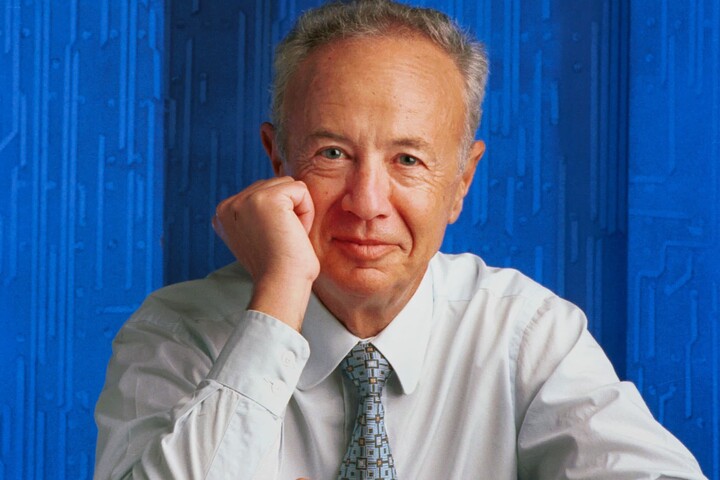
Andrew Grove: Man behind the success of Intel Corporation

Andrew Grove was an American entrepreneur, engineer, and novelist who was born in Hungary. At the age of 20, he fled communist-run Hungary and relocated to the US, where he completed his education. Later, he was appointed CEO of Intel Corporation, where he played a key role in building the business into the largest semiconductor producer in the world.

Andrew Grove
Image Source: cnbc.com

Early Life

Andrew Grove was born in Hungary and spent a significant portion of his early years evading the Nazis by using a false identity. Grove fled the 1956 Hungarian Revolution for Austria and immigrated to the USA together with thousands of people from Eastern Europe.

Andrew Grove came to the United States in 1957 with very little money and minimal English language proficiency. While attending City College of New York to study chemistry, he had a job as a busboy. He did well in every other subject but English, in which he received mediocre grades.

At the Shockley Semiconductor Laboratory in California, a group of disgruntled researchers led by William Shockley included Gordon Moore, Bob Noyce, and Andy Grove. But Shockley’s poor leadership style led to discontent among his research group. They ultimately disbanded and started their own business, Fairchild Semiconductor.

Grove began working for Fairchild Semiconductor as a researcher after receiving his Ph.D. in 1963. By 1967, he had advanced to the position of assistant director of development. He became acquainted with the early stages of integrated circuit research through his work there.

Success Story

In 1968, Robert Noyce and Gordon Moore co-founded Intel, after they and Grove left Fairchild Semiconductor. Grove started off as the business’s director of engineering and assisted with setting up its early manufacturing processes. In 1997, he subsequently take over as chairman and CEO of the business, helping Intel along the road to becoming one of the key players in the information economy and a billion-dollar firm.

Even though Intel invented the majority of the memory types in use at the time, including EPROM, Grove was forced to make significant changes in 1985 as a result of declining demand for their memory chips caused by the Japanese “dumping” of memory chips at prices below cost.

As a result, he decided to stop making DRAMs and concentrate on building microprocessors. Grove and Earl Whetstone, Intel’s sales manager to IBM, were instrumental in convincing IBM to only utilize Intel microprocessors in all of its new personal computers. In 1979, Grove was named Intel’s president.

He later became the company’s CEO in 1987 and its chairman of the board in 1997. In its first year, the company’s revenue was $2,672; and in 1997, it increased to over $20.8 billion. Grove is recognized for transforming Intel from a memory chip manufacturer into the leading global manufacturer of microprocessors for personal computers, servers, and general-purpose computing.

Andrew Grove oversaw a 4,500% gain in Intel’s market value from $4 billion to $197 billion during his time as CEO, elevating Intel to the seventh-largest corporation in the world with over 64,000 employees. The majority of the corporation’s profits were put back into R&D and the construction of additional facilities in order to create better and faster microprocessors.

Jonah Peretti

How Jonah Peretti built a billion-dollar company Buzzfeed?

Internet entrepreneur Jonah Peretti is co-founder and CEO of BuzzFeed, the company, which was formerly renowned for online quizzes, “listicles,” and pop culture pieces has developed into a global internet and technology organization that covers a range of subjects, such as politics, Crafts, animals, and business. He was the co-founder of The Huffington Post, and creator of the “Reblog” project, which pioneered reblogging.

Jonah Peretti
Image Source: theverge.com

Early Life

Jonah Peretti’s life appeared to be fairly typical until he founded the billion-dollar media giant BuzzFeed. He earned an environmental studies degree from UC Santa Cruz and found work as a teacher in New Orleans.

His passion for viral media was then kindled following an email argument with sportswear giant Nike. Before going to MIT to acquire his master’s, he spent over three years instructing computer science. During his time at MIT, his email conversation with Nike regarding a request to print “sweatshop” on specially ordered shoes became viral.

Read More: The Success Story of the Founder of The Huffington Post

Nike continued to cancel the order after several emails back and forth, so Peretti copied the emails together and forwarded them to a select group of pals. His idea became an initial email forward and eventually reached millions of people at a time when the idea of “going viral” hadn’t yet been coined.

Success Story

In 2005, Jonah Peretti co-founded the Huffington Post with Arianna Huffington after meeting her through the widely circulated Nike email. Peretti founded BuzzFeed as a side gig soon after HuffPost was acquired by AOL for $315 million in 2011. In November 2006, Peretti launched the “Internet popularity contest” website BuzzFeed.

After quitting HuffPost, Peretti started a full-time job at BuzzFeed. BuzzFeed began as an Instant Messenger bot. The bot distributed links to groups of buddies after identifying trendy content online. Although the website was initially recognized for its blend of listicles and internet memes, it was the first to report that John McCain will support Mitt Romney in the 2012 Republican Primary.

After then, the website kept expanding and the following year raised over $35 million in capital from investors. The website received an additional $50 million in funding from the investment firm Andreessen Horowitz in August 2014, almost doubling its prior fundraising rounds. According to Peretti, BuzzFeed’s audience has roughly doubled every year since its start.

Over 400 employees now work for the website thanks to Peretti, who Business Insider once dubbed “the web’s king of viral content.” Over a short period of time. Ben Smith, a well-known political journalist, was even hired by Peretti in 2012 to help develop Buzzfeed’s more serious journalism.

By 2021, BuzzFeed News had invested years into developing its investigative reporting, and it had been awarded the National Magazine Award, the George Polk Awar, and been nominated for the Michael Kelly Award. BuzzFeed news crew was a nominee for a Pulitzer Prize in the foreign reporting category in 2018. In 2021, BuzzFeed received the Pulitzer Prize for international reporting for a series of investigations into the Xinjiang detention camps.

ChatGPT

What is the ChatGPT, which has taken the internet by storm?

The capability of ChatGPT to produce human-like responses has attracted a lot of attention.

On Wednesday, the AI research firm OpenAI unveiled ChatGPT, a dialogue-based prototype chatbot that can comprehend and reply to real language. In much less than a week, it has already surpassed a million members and has subsequently gained popularity over the internet.

ChatGPT
Image Source: bleepingcomputer.com

The majority of users are in awe of the AI-powered bot’s impressive vocal intelligence. Since it may provide straightforward solutions to complicated problems, it has even been referred to as a Google alternative by certain users.

It is a smart chatbot that has conversational interactions. According to OpenAI, the dialogue style enables ChatGPT to respond to follow-up queries, acknowledge its errors, refute false premises, and reject unsuitable requests. It is claimed that it can respond to almost everything, including theoretical essays, mathematical solutions, and stories.

Read More: Is the Nintendo Switch Pro worth buying in 2023?

OpenAI noted, “We’ve trained a model called ChatGPT which interacts in a conversational way. The dialogue format makes it possible for ChatGPT to answer follow-up questions, admit its mistakes, challenge incorrect premises, and reject inappropriate requests.”

Based on the GPT-3.5 language model, ChatGPT generates text that resembles human speech using deep learning. ChatGPT is more interesting than the prior GPT-3 model, which just accepted text prompts and attempted to build on them with its own created text.

It produces detailed text far more effectively and can even produce poetry. Memory is yet another distinctive quality. The bot can recapitulate past remarks made in a chat to the user by recalling them.

But even while many individuals were astounded by the bot’s ability, some noticed a few limitations. Misinformation and prejudice are still common in ChatGPT, as they were in earlier iterations of GPT. For example, the model may provide incorrect solutions to algebraic problems.

However, some people may be duped into thinking things are genuine since it comes off as so certain in its incredibly thorough responses. Despite its drawbacks, ChatGPT is a delightful little bot to chat with. After registering for it on its official website, one can test it out.

A California-based business called OpenAI is well-known for its GPT-3 technology, which creates AI models that respond to text instructions. The company’s most recent DALL-E model, the second iteration, made headlines for its capacity to produce photorealistic graphics just by human input. Elon Musk, the CEO of Tesla Inc., and Sam Altman, the current CEO, along with other investors, co-founded OpenAI roughly seven years ago. But in 2018, Musk exited the company due to disagreements.

Technology for chatbots is by no means new. Many of these models, including from major behemoths like Microsoft and Meta, have been introduced with varying degrees of success. Microsoft’s AI chatbot “Tay” was made available on Twitter in 2016 under the handle @TayandYou. However, it was quickly pulled down after posting abusive, sexist, and racial comments. This year saw the debut of Meta’s Blender bot 3, which advanced the technology.

Huffington Post

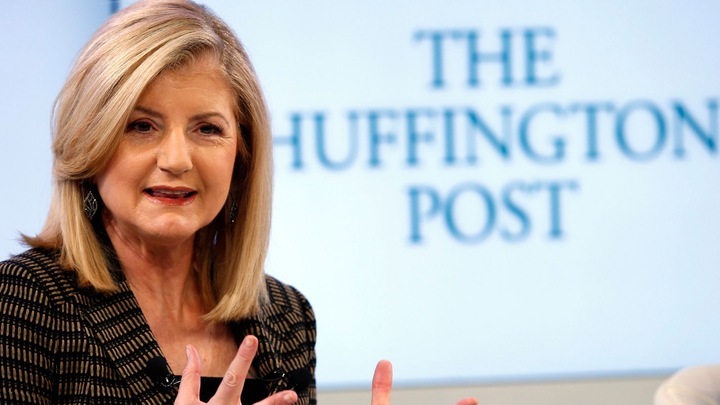
Arianna Huffington: The Success Story of the Founder of The Huffington Post

Arianna Huffington is a Greek-American novelist, syndicated writer, and entrepreneur. She is the co-founder of The Huffington Post and the CEO of and founder of Thrive Global. She has also authored fifteen books. Both the Forbes Most Powerful Women list and the Time magazine’s list of the 100 most influential people in the world include her.

Huffington Post
Image Source: huffpost.com

Early Life

Arianna Huffington was born in Greece. At the age of 16, she immigrated to the UK where she attended Girton College in Cambridge to study economics. There, she served as president of the Cambridge Union. She also went to India to study comparative religion at Visva-Bharati University.

Arianna Huffington and Bernard Levin both made appearances in a 1971 edition of Face the Music. In the 1970s, Huffington started authoring books with Levin’s editorial assistance. In 1980, she relocated to New York. Huffington collaborated with Bob Langley as co-host of the late-night chat and entertainment program Saturday Night at the Mill in 1980. She appeared in just five episodes before being fired from the show.

Success Story

When Arianna Huffington released a book titled “The Female Woman” in 1973, she officially started her writing career. Her career path was fraught with ups and downs. She received almost 37 rejections for her second book, After Reason, despite the success of the first. However, Arianna chose to grow in self-assurance and knowledge with each passing day rather than letting her emotions get the best of her.

Read More: Shou Zi Chew Success Story: From Ex-Facebook Intern to TikTok CEO

Arianna Huffington contributed several essays to National Review in the late 1980s. She wrote biographies of Pablo Picasso in 1989 and Maria Callas in 1981, respectively, under the titles Picasso: Creator and Destroyer and Maria Callas: The Woman Behind the Legend.

When her then-husband, Michael Huffington, ran unsuccessfully for the Senate in 1994, Huffington rocketed to national fame in the United States. This led to several special appearances as a social and political analyst on television, in addition to excursions into acting and television writing.

She was nominated for an Emmy in 1994 for her work on Politically Incorrect. Huffington is also a member of the boards of directors for Uber, Onex Corporation, Berggruen Institute, and Center for Public Integrity. Huffington pursued one endeavor after another in these fruitful years.

In the 2003 recall election for California Governor Gray Davis, Huffington ran as an independent. She swiftly picked herself up after losing her gubernatorial run and rebounded.

In 2005, Huffington, Kenneth Lerer, Jonah Peretti, and Andrew Breitbart, created The Huffington Post, currently known as HuffPost. It was established as a blog and discussion platform as well as a rival to news aggregators like the Drudge Report. In the past, the website has carried articles written by both paid staff reporters and writers and unpaid bloggers.

Huffington became editor-in-chief of The Huffington Post Media Group after AOL bought The Huffington Post for US$315 million in 2011. The Huffington Post won the Pulitzer Prize in 2012, making it the first commercially operated digital media company in the United States to ever win Pulitzer.

Huffington left her jobs at AOL and the Huffington Post in 2016 to start Thrive Global, a company that provides evidence-based remedies for stress and burnout. In 2016, Huffington was listed among the SuperSoul100, a list compiled by Oprah Winfrey to recognize the most inspirational and influential leaders around the world.

HuffPost continues to rule online media in the present. Huffington achieved her goals through steadfast hard work and determination.

Youtube shorts

Can you make money from Youtube shorts?

YouTube creators will soon have the opportunity to monetize their Youtube Shorts videos. This is an important development for YouTube creators who make money from YouTube.

The YPP, Youtube’s formal monetization program, does not include YouTube Shorts. Joining the YouTube Partner Program (YPP) as a Youtube Shorts creator is difficult unless one is releasing long-form videos and hitting the required benchmarks of 1,000 subscriptions and 4,000 watch hours. Additionally, there is no way to monetize short, vertical content with ads.

Youtube shorts
Image Source: variety.com

However, YouTube is altering these criteria. The platform will enable revenue sharing for Shorts advertising as of February 1, 2023. As a result, a creator may now profit from the advertisements that users watch on the Youtube Shorts Feed.

Youtube stated, “from the overall amount allocated to creators, they will keep 45% of the revenue, distributed based on their share of total Shorts views. We expect the majority of our Shorts Fund recipients to earn more money under this new model, which was built for long-term sustainability.

Read More: YouTube expands shopping features to combat digital ad slowdown

Instead of a fixed fund, we’re doubling down on the revenue-sharing model that has supercharged the creator economy and enabled creators to benefit from the platform’s success.” This is an intriguing approach to rewarding creators and encouraging the entire community to support Shorts.

Creators must first be enrolled in the YouTube Partner Program in order to profit from Shorts monetization. YouTube is adopting new eligibility requirements in order to increase the number of creators with a concentration on shorts who join the Partner Program. By reaching a minimum of 1,000 subscribers and 10 million Shorts views over 90 days, creators will be eligible for the YouTube Partner Program beginning in early 2023.

With this update, creators will be able to join the Youtube Partner Program even if they don’t make long-form videos. When this move is implemented, YouTube will maintain its current requirements, which are 1k subscribers and 4k watch hours. Last but not least, YouTube claims it will drop the fan funding level in early 2023, enabling creators who are not part of the Partner Program to profit from viewer purchases.

If one wants to immediately generate income from YouTube Shorts the $100 million Shorts Fund is one method to go about it. YouTube vowed to reward producers with a monthly “bonus” coming straight from that fund when it made this announcement in 2021. The actual amount of the bonuses, which can vary from $100-10,000, is determined by how well a creator did with Shorts the previous month.

But starting in 2023, this YouTube Shorts incentive will disappear. As previously announced, starting in the following year, creators will generate money from advertising in the Shorts Feed. The final series of Shorts bonuses will therefore be distributed in February 2023. Here are the prerequisites for obtaining a Shorts bonus until then.

Publish an original YouTube short every 180 days and follow the monetization and community rules on YouTube. Once a creator fulfil these conditions, they are eligible to win a Shorts bonus.

Nintendo Switch Pro

Is the Nintendo Switch Pro worth buying in 2023?

For years, there have been rumors of the Nintendo Switch Pro However, the upgraded Switch sequel has not yet materialized.

A recent Nvidia leak appears to corroborate the Tegra239 SoC’s existence, which is generally thought to power the Switch Pro. But even if all of this turns out to be completely off the mark, an improved version of the Nintendo Switch may be in the works.

Nintendo Switch Pro
Image Source: techstory.in

Early in 2019, rumors began to spread regarding the Nintendo Switch Pro. In a March 2019 article, The Wall Street Journal stated that Nintendo was manufacturing two new Switch models, citing “parts suppliers and software developers for Nintendo.”

The second described a more potent, full HD Switch model targeted at the more hard-core market. The first described a “cheaper option for casual gamers,” which sounds remarkably similar to the Switch Lite. The rumors have continued ever since.

Read More: From a Small Card Company to World’s Largest Video Game Maker

In a recent interview, Shuntaro Furukawa, Nintendo’s president, added that there won’t be a new Switch in the current fiscal year, which runs through March 2023. However, the Japanese gaming behemoth has backed off from complete denial, firmly denying that work is being done on an improved Switch system.

As per rumors, the new Switch will be able to output 4K video, which gamers have been yearning for and were unhappy not to see in the Switch OLED. In fact, playing through Bowser’s palace in Mario Kart or exploring Hyrule in Breath of the Wild would be immensely more immersive in sharp 4K.

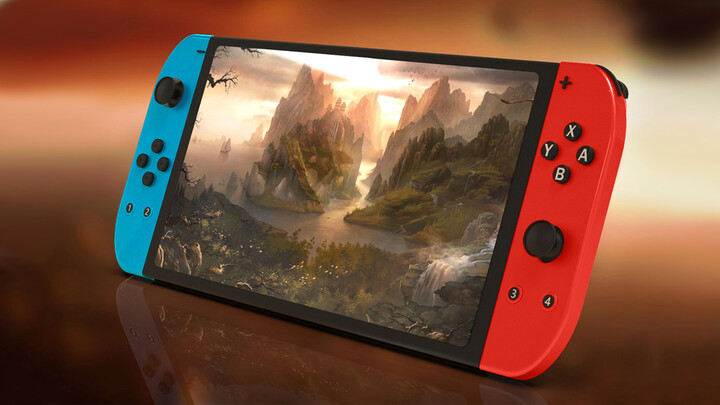
A more powerful CPU and NVIDIA DLSS AI rendering capabilities are rumored to be included in the Switch Pro. According to a leak from Nintendo, the Switch Pro will have power comparable to a PS4 — quite astounding for a portable device. There have been plenty of rumors and fan-made renderings teasing the Nintendo Switch Pro’s potential appearance.

Fans have enjoyed speculating on what the future of the Switch’s design might hold, from a completely different model with a four-cartridge port to a variety of pleasantly vintage suggestions. There have been rumors that a larger display and more ergonomic Joy-Cons are on the way.

The OLED Switch increased the size from 6.2 inches to 7 inches, which was one aspect where it did not fall short. With that in view, it’s possible that the Switch Pro will go much further and provide even more inches of screen space.

The Nintendo Switch currently has a 32GB storage capacity, a 720p LCD display, and a bespoke Nvidia Tegra X1 processor. The Nintendo Switch’s most recent update, which took place in August 2019, increased battery life, bringing it from 6.5 hours to 9 hours of playtime.

Bloomberg stated in March 2021 that a new Nintendo 4K Switch with an OLED display might be released before the holidays. In order to prepare for a Christmas launch, Nintendo reportedly asked the Samsung Display Co. to create seven-inch, 720p OLED displays.

The original Switch release was four years ago, so it seems fitting to upgrade the device now. There haven’t been official signs to date that Nintendo is prepared to introduce the Nintendo Switch Pro or any other next-generation console. However, the rumors suggest the Nintendo Switch Pro might be a good buy when it releases in 2023.