Your Tech Story

Tech Story

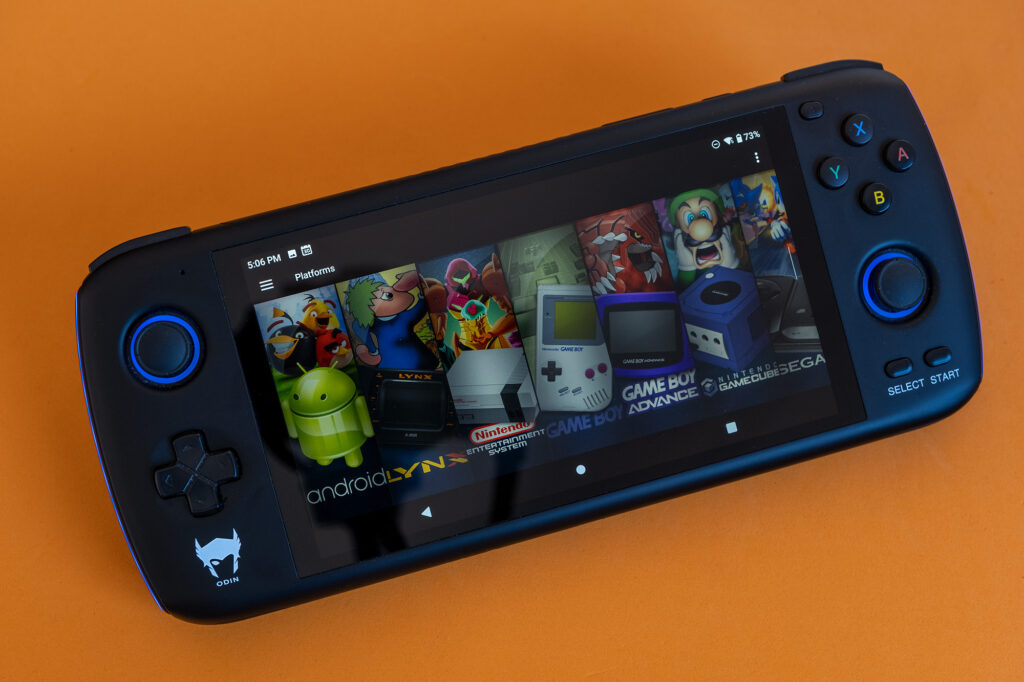
PS2 emulator

Can an Android phone run a PS2 emulator?

The PlayStation 2, also known simply as PS2, is one of the most popular gaming systems of its time. It is undoubtedly one of the indisputable kings of home video game consoles, with sales of close to 155 million units. Independent developers have recently made unwavering efforts to recreate the heyday of PS2 gameplay by creating what is now known as a “PS2 emulator”.

Instead of being restricted to gaming consoles, these apps basically allow users to run PS2 games on their Android smartphones and even PCs.

PS2 emulator
Image Source: engadget.com

One might be wondering how PlayStation games will function on the phone or computer. Technically speaking, due to the PS’s distinct hardware and software design, it is unlikely that any PS games could be played natively on smartphones or desktop computers. This is the major justification for why programmers think of making emulators.

To put it simply, emulators serve as a link and replicate a gaming console’s features, including its controls and graphics, enabling users to enjoy and play their favorite console games on both PC and mobile devices.

In essence, ROM refers to PS2 games for emulators. ROMs are made in the ISO file format and serve as the actual game. A BIOS designed exclusively for PS2 must also be downloaded.

If a user has a PS2 BIOS, PS2 games can be played without a PS2 console. Additionally, without this BIOS, your Android phone cannot play PS2 games. It’s simple to use a PS2 emulator for Android mobile devices. To begin, merely adhere to these actions:

  • Get the PS2 BIOS file now. This is accessible on most ROM web pages.
  • Install the appropriate PS2 emulator.
  • Add the obtained BIOS file to the PS2 emulator’s “Data” folder.
  • Locate the ISO file containing the game and launch the emulator from there.
  • Play Game

Older PS2 ROMs are encrypted to function for the actual console, therefore they won’t immediately run on PS2 emulators. The task can be completed using an ISO file and PS2 ROMs BIOS, but understanding how to correctly decrypt them requires more work.

One can also find PS2 ISO online. One of the top PS2 emulators on the Google Play Store is AetherSX2. However, since the emulator is still in early access, some features might be missing. AetherSX2 is 100% free, unlike earlier Android PS2 emulators, like Damon.

In principle, any user may play PS2 games on one’s Android phone as long as one has downloaded the appropriate emulator. But at the moment, only devices with flagship specs can run these games smoothly, such as the Huawei P40 Pro, Google Pixel 4, OnePlus 8 Pro, Samsung Galaxy Note 20 Ultra, and Samsung Galaxy Note 20 Ultra.

Therefore, to play these cherished classics, see if the Android smartphone has flagship specifications like a Mediatek Helio G90 chipset or a Snapdragon 865 processor.

AR glasses

Will 2023 be the year of AR glasses?

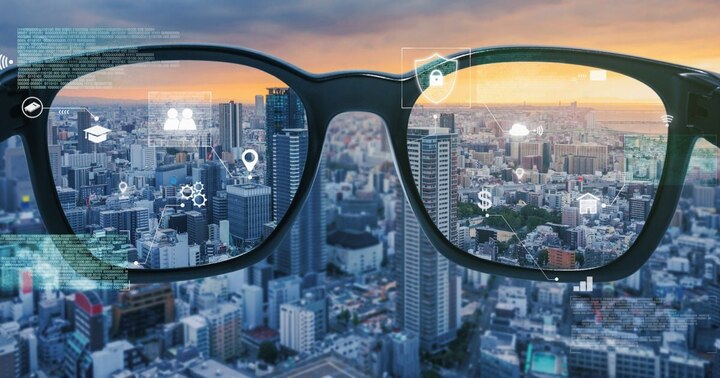
Even though smart AR glasses with augmented reality capabilities haven’t completely taken over, a lot of applications for augmented reality are now in use.

Applications of today frequently take the shape of Head-up Displays (HUDs), which are transparent displays that present data without obstructing the view, similar to a window with writings on it. Except that the annotations are data that adjust to the surroundings being examined. HUDs were first created for use in military airplanes.

AR glasses
Image Source: builtin.com

The Integrated Visual Augmentation System, a $22 billion program launched by the American Army this year, will create mixed reality battle goggles (IVAS). With the use of the new eyewear, soldiers may communicate in real-time about information like maps or enemy locations while they are engaged in combat.

However, HUDs are already being employed in other industries, including cars and commercial aviation. HUDs, which can display crucial information like driving directions on the driver’s windscreen without requiring the driver to take their eyes off the road, is viewed as the next step in advancing the driving experience, especially for cars.

Automakers like Kia, who employ the HUD in models like the Kia EV6, Kia Niro, and others, are already implementing this form of AR HUD.

Assisted reality is a different version of AR that is being used in a variety of fields. It is comparable to Augmented Reality in that information is shown on a screen over the user’s surroundings, but it is less immersive.

One business, RealWear, creates head-mounted devices for aided reality for front-line workers in sectors such as healthcare, energy, manufacturing, and automotive. According to Jon Arnold, vice president of EMEA at RealWear, the primary use cases for XR (or extended reality, which encompasses both augmented reality and aided reality) today are focused on business and security.

The potential for how AR glasses will change our user experience—and our lives—grows as digital behemoths like Google, Apple, and Magic Leap draw closer to releasing new types of smart glasses.

Take the Metaverse as an illustration. However, headsets like The Magic Leap 2 provide a fully immersive experience even while XR gear isn’t yet ready for the Metaverse (it’s too pricey, too large, or just not very good).

Users will require wearable tech and glasses like these to take them there if they intend to spend any time in the metaverse.

Faster networks for AR will enable regular employees to better interact in real-time with their international teams. What precisely does this look like? Everyone participating in a virtual presentation or meeting would be able to access the same material at the same time and collaborate on real-time digital content interaction thanks to 5G-enabled AR.

AR and VR are still far from being completely supported by today’s 5G. Meanwhile, cutting-edge smart glasses solutions continue such as in Japan. Japanese customs authorities employ smart glasses to combat smuggling since they can instantly share cargo photographs with other experienced inspectors.

iPhone 14 Plus

Why Did The iPhone 14 Plus End Up Being A Failure?

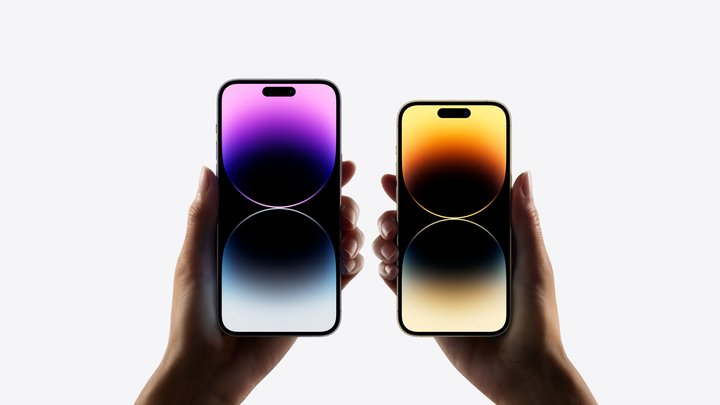
In late 2022, the iPhone 14 Plus superseded the iPhone 13 mini, and due to its greater size, it offered numerous benefits from the start. However, while garnering favorable reviews, the 6.7-inch phone was unable to achieve the kind of popularity that Apple had envisioned.

This year, Apple is believed to lower the price of the iPhone 15 and iPhone 15 Plus, indicating from the outset that one important factor in the iPhone 14 Plus’s failure was its exorbitant pricing. Apple continues to sell the standard iPhone 14 for $799, while the iPhone 14 Plus is priced at $899.

iPhone 14 Plus
Image Source: apple.com

The consumer in the US was only $100 away from switching to the iPhone 14 Pro for $899 and receiving a plethora of enhancements, including a state-of-the-art SoC, the A16 Bionic. When Apple unveiled the iPhone 13 series in 2021, there was a staggering $300 price gap between the iPhone 13 and iPhone 13 Pro.

The iPhone 14 Plus should have cost $799, and even then, there would only be a $200 price gap between it and the iPhone 14 Pro if Apple had intended to compete on price.

Even the entry-level iPhone models received good advancements in previous years, and their internals was quite similar to those of the Pro models. However, the iPhone 14 and the iPhone 14 Pro are entirely distinct devices.

It lacks the new 48MP main camera, a Dynamic Island, an A16 processor, and even a macro lens. It resembles an iPhone 13 with a satellite connection. The iPhone 14 Plus lacks a telephoto lens to capture images and videos with optical zoom and a 120Hz display.

The standard iPhone 14 or even an iPhone 13 will likely be chosen by someone looking to save some money on a new iPhone. And those who are prepared to pay more for a high-end smartphone will probably shell out an additional $100 for the iPhone 14 Pro. The iPhone 14 Plus simply has no room in that situation.

The Galaxy S22 Plus has three cameras on the back, a fast refresh rate display, and is less expensive than the iPhone 14 Plus.

The iPhone continues to sell in large numbers, regardless of how much people love or despise Apple products. Rumor has it that Apple has been exploring internally reducing the price of the iPhone 15 compared to the iPhone 14 to address the weak demand for these devices.

Although it’s unknown exactly how much Apple will reduce the price, it is predicted that it will be $50- $100 cheaper. The cost of the Pro versions won’t change (or even more expensive).

The company is nevertheless anticipated to release the iPhone 15 and iPhone 15 Plus. And this time, it’s anticipated that the new screen design with Dynamic Island will be available for all models.

Chris Sacca

Chris Sacca: Most Successful Venture Capitalist

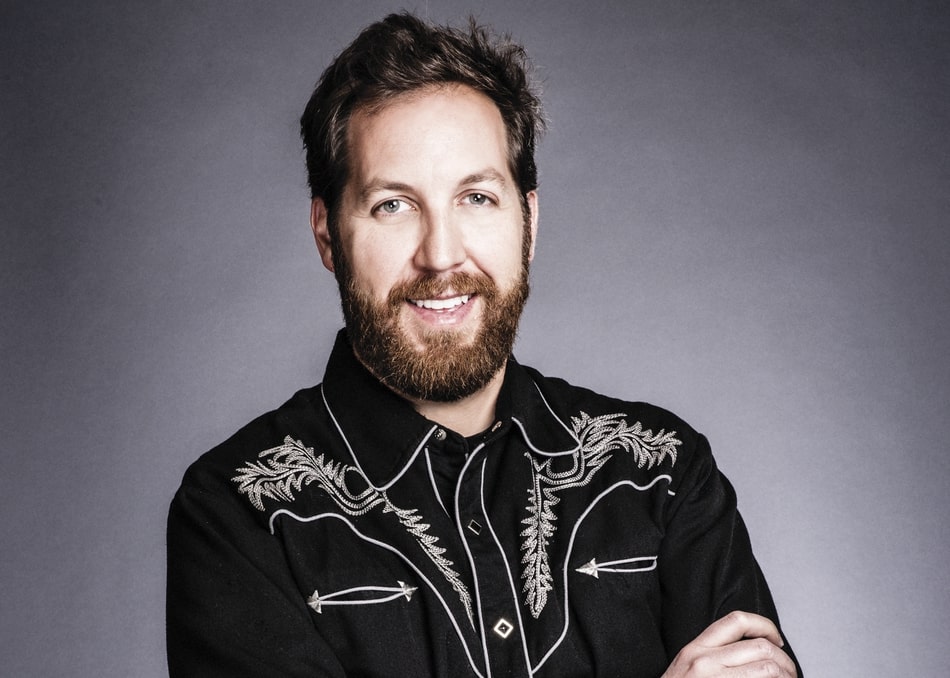
Chris Sacca is an American venture capitalist, business counselor, entrepreneur, and attorney.

About

He is the owner of Lowercase Capital, an American venture capital company that has made investments in seed and early-stage technology firms like Instagram, Uber, Twitter, Twilio, and Kickstarter. As a result of these investments, Forbes ranked him No. 2 on its Midas List: Top Tech Investors for 2017.

Chris Sacca
Image Source: forbes.com

Chris Sacca engaged in acquisitions and mergers while holding a number of positions at Google, where he oversaw alternate access and cellular operations. He made several “Guest Shark” appearances on ABC’s Shark Tank between 2015 and 2017.

Sacca announced his retirement from venture capital investing at the beginning of 2017. Sacca declared in 2021 that he was returning to venture investment with a focus on environmental issues.

Success Story

Chris Sacca, who was born in May 1975, attended Georgetown University to study law.

Chris Sacca began trading equities at this time using the money from his college debts.

He used leverage to turn $10,000 into $12 million, but he lost it all and wound up $4 million in debt which he eventually repaid. Sacca started his career in Silicon Valley in 2000 as an associate at Fenwick & West, where he managed venture capital, mergers, and acquisitions, and licensing transactions for clients in the technology industry like Macromedia, VeriSign, and Kleiner Perkins.

After being let off in September 2001 after working for roughly 13 months, he spent the following months going to networking events and “surviving” in Silicon Valley by creating contracts and working as a freelance voice actor.

He founded the consultancy company The Salinger Group in order to network, and in May 2002, he was hired by Speedera Networks According to Sacca, moving to the mountain hamlet of Truckee near Lake Tahoe in 2007 was a defining moment in his angel investment.

Sacca subsequently bought the house next door to entertain various visiting entrepreneurs after entrepreneurs like Travis Kalanick and Sacca would spend hours exchanging ideas when visiting the residence. He spent time practicing law and working for Google before launching his own venture capital business, Lowercase Capital, in 2007.

Returns are not disclosed in Lowercase. But according to records that were leaked to the media, Lowercase’s primary fund returned 447% of investors’ money in cash between 2010-2015, and it also claims to have unrealized holdings in digital companies that would have increased returns to 7,600%.

One of the most prosperous venture capitalists in history, Sacca’s early investment in Uber may have increased total profits to 216 times the original investment. When Twitter went public in 2013, Sacca used $1 billion in outside funding to purchase more shares from employees after making his initial investment of $26,000 in the company in 2006.

When the stock price was roughly double its current levels in 2015, he sold the majority of the shares. In total, he and his investors profited $5 billion from the business. In 2020, Sacca and his wife co-founded Lowercarbon Capital, a fund dedicated to combating climate change.

In August 2021, the company revealed details of its initial $800 million outside investment round. As of August 2021, the company had invested in about 50 businesses, many of which were start-ups devoted to eliminating carbon dioxide from the atmosphere.

Robert Herjavec

Robert Herjavec: From a poor immigrant to a millionaire ‘shark’

Robert Herjavec is a Croatian-Canadian entrepreneur, investor, and TV personality.

About

Herjavec developed the Canadian Internet security software integrator BRAK Systems, which he later sold to AT&T Canada (now Allstream) for $30.2 million. He established The Herjavec Group in 2003, which currently has over $200 million in yearly revenue and is one of Canada’s leading IT and computer security organizations.

Robert Herjavec
Image Source: inc.com

He has appeared in episodes of the CBC Television program Dragons’ Den and the ABC program Shark Tank, in which he is an investor. He has published books on how to succeed in business as well.

Early Life

Robert Herjavec was born in Croatia in 1962. The nation was then a part of Yugoslavia, a socialist one-party state ruled by Communists. Herjavec’s father was a strong and courageous man who was determined to speak forth against the ruling system and its unjust form of government.

Unsurprisingly, his father’s outspoken opposition to communism frequently resulted in imprisonment. And his father eventually had enough after being arrested over 22 times. He so managed to get away from his captors and left the nation with his family. The family of Robert Herjavec moved to Canada for just $20, but his father ultimately got a job in a factory.

Although it wasn’t much, there was just enough money to support a family. Herjavec was only 8 years old at the time, but the authoritarianism back at home, as well as the poor economic circumstances and the pessimism that his father railed against, had a profound effect on his mental makeup.

Herjavec, who grew up close to poverty, decided to make improvements to his family’s and his own lives at the age of 14. He finally find his way to college and graduated from the University of Toronto with degrees in political science and English literature, and then entered the professional world with a heart full of ambition and a head full of optimism.

Success Story

He created BRAK Systems, a corporation that specialized in security integration, after becoming familiar with the ins and outs of the computer industry. Herjavec’s company flourished quickly becoming one of the leading security integration businesses in North America.

And luckily for Herjavec, AT&T was interested in purchasing his business, which he quickly sold for $20 million. Following that, Herjavec landed an executive role with a corporation called RAMP Networks. He grew the business as the VP of Sales for one of the initial VPN technology providers, which Nokia eventually purchased for $225 million.

Later he founded the Herjavec Group. Similar to his earlier business, he quickly expanded this one into a major force in the IT sector. His company, which is now renowned as Cyderes and is among the biggest in Canada for cyber security, merged with Fishtech Group.

He attracted the attention of a writer for the National Post when he stated that he had paid more than $10 million for a property in the early 2000s. And it was because of this media coverage and publication that he eventually attracted the attention necessary to get a role on Dragon’s Den, a predecessor to Shark Tank in Canada.

Before entirely ending his tenure with The Dragon’s Den in 2009, he also negotiated a deal with ABC’s Shark Tank. The rest is history, as they say. Since then, he has been a constant part of the program, and he has continued to gain fame and recognition.

Herjavec was given the 2012 Queen Elizabeth II Diamond Jubilee Medal by the Governor-General of Canada for Outstanding Service to Canada as well as the 2012 Ernst & Young Ontario Entrepreneur of the Year Award for Technology.

Max Levchin

Max Levchin: A Visionary Tech Founder of Affirm

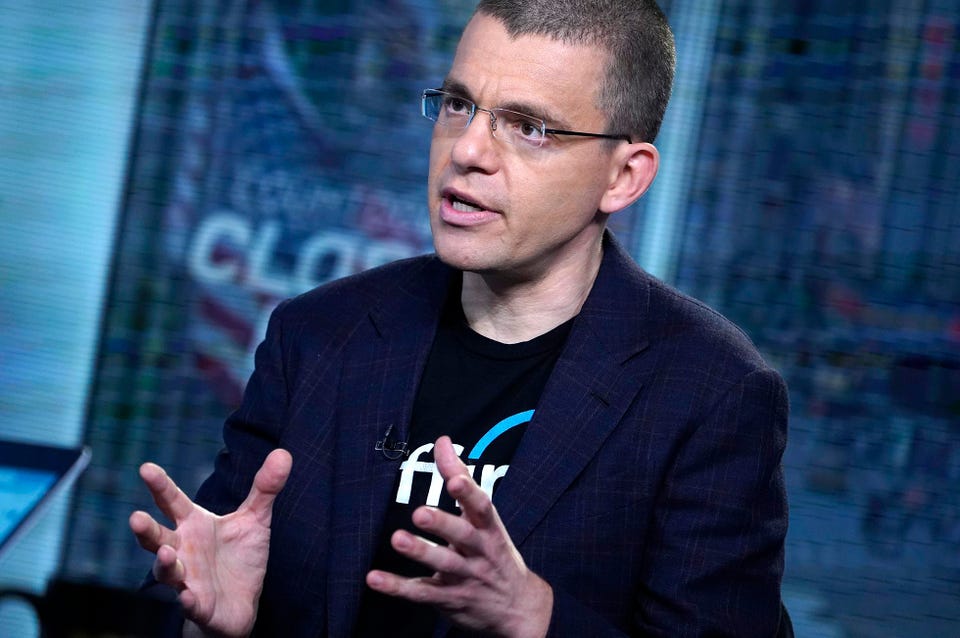
Max Levchin is a Ukrainian-American software engineer and entrepreneur. He co-founded the business that later became PayPal in 1998. Levchin contributed to PayPal’s attempts to combat fraud and co-developed the Gausebeck-Levchin test, one of the initial commercial applications of a CAPTCHA challenge response human test. Max also co-founded Affirm along with Nathan Gettings, Jeffrey Kaditz, and Alex Rampell.

Early Life

Max Levchin, who was born into a Jewish family in the USSR, immigrated to the US with his parents as refugees when he was very young. Levchin talked about overcoming obstacles as a child in interaction with Bloomberg’s Emily Chang. Doctors questioned his prospects for survival because of his respiratory issues.

Max Levchin
Image Source: forbes.com

To increase his lung capacity, he started playing the clarinet with advice from his parents and grandmother. He decided to earn his degree in computer sciences from the University of Illinois. Soon after receiving his degree, Max partnered with Peter Thiel to establish what they referred to as “the digital wallets” through their company, Confinity. Later on, the pair transformed this into Paypal. Hugely successful PayPal was quickly acquired by eBay.

Success Story

Since the late 1990s, Levchin has started or co-founded a number of technology businesses. His first business, Confinity, merged with Elon Musk’s X.com to form PayPal, adding Levchin to the group of popular investors and businessmen known as the “PayPal Mafia” who previously held executive positions at PayPal. He also created Slide.

The slide was an app that allowed users to post photos on Facebook and Myspace. It was later acquired by Google, which shut it down after a while. Levchin also served as the CEO and Chairman of HVF, a startup lab centered on extracting insights through recordable information,” according to Crunchbase.

In 2011, he established HVF, which represents “Hard, Valuable, and Fun”. Levchin co-founded Glow, a data-driven fertility startup, which is owned by HVF. The business provides a female fertility tracking iPhone app. As a part of the inaugural portfolio of startup studio HVF, Max Levchin, Nathan Gettings, Jeffrey Kaditz, and Alex Rampell established Affirm.

Affirm is a publicly listed financial technology firm with its headquarters in San Francisco, USA. The business, which was established in 2012, provides installment loans to customers at the time of sale to help them fund purchases. He also made investments in numerous other companies, including Yelp and Evernote.

He still makes consistent investments in new businesses through SciFi VC.SciFi VC is a venture capital firm founded by Levchin. The firm was started through HVF Labs. It makes investments in early-stage organizations whose viability is based on challenging technical achievements, network effects, and intricate, highly regulated sectors.

From 2012 until 2015, Levchin served as a member of Yahoo’s board of directors. Levchin became the first executive from Silicon Valley to be selected for the U.S. Consumer Financial Protection Bureau (CFPB) advisory board in 2015. From 2006-2016, he also served on the board of Evernote. Levchin’s projected net worth in 2021 was just over $3 billion.