Your Tech Story

Tech Story

Mitsubishi Group

The Japanese Multinational Conglomerate Mitsubishi Group completes more than 150 years of its journey.

Mitsubishi group is one of the biggest multinational conglomerates based in Tokyo, Japan. The Mitsubishi Group has subsidiaries in various industries from oil and gas to automotive companies. The company was founded by Yataro Iwasaki back in the 1870s. Though the company has a lot of members spreading wings in different industries, the three main core members also known as the “Three Great Houses” comprise MUFG Bank, Mitsubishi Corporation, and Mitsubishi Heavy Industries.

The origin of the Mitsubishi Group dates back to 1870 when Iwasaki started the company with others. family members. But, a lot changes in the post-world war situation. So, let’s have a better look at the history of the company which is carrying its legacy for the past 150 years.

The Beginning of the Mitsubishi Group

Iwasaki initially worked for the Tosa Clan which was one of the most dominant merchants in Japan during the 1800s. While the clan business was thriving in Japan, the Meiji government created a new policy banning the clan-led businesses which led two powerful members of the Tosa Clan to establish a new company called Tsukumo Shokai in 1870. In 1873, Yataro was completely in charge of the company who then founded Mitsubishi Shokai. The company’s headquarters eventually moved to Tokyo and the business was renamed Mitsubishi Jokisen Kaisha.

Mitsubishi Group
Image Source: fortune.com

The company started working very closely with the government as the Mitsubishi ships were used to transfer troops to Taiwan and Satsuma in 1877. Mitsubishi’s financial base became very strong after this operation and the company started flourishing under Iwasaki’s leadership. In the next few years, Iwasaki invested in new mining technology thus helping his brother’s business, and later acquired a few mines in Japan. In 1884, Mitsubishi purchased the Nagasaki shipyard from the Japanese government.

In 1885, Yanosuke Iwasaki took the place of Yataro Iwasaki as he passed away. Yanosuke was the younger brother of Yataro and the second president of the Mitsubishi Group. The new president played a major role in expanding and diversifying the company into new fields. But soon as promised to his elder brother, the reins of power were transferred to the next generation and Hisaya Iwasaki at 28 became the new president.

Entering into a new era

The young Iwasaki went to Wharton school and his leadership brought some new perspective in both business and management. The entire Mitsubishi group was then divided into various sectors like mining, banking, shipbuilding, etc and the cost and responsibility were divided accordingly. In the 1910s the company was going through great economic growth and Hisaya stepped down, passing the reins to Koyata Iwasaki. Koyata was in charge of the company during the economic depression in the early 20th century. Even in these difficult times, Koyata was committed to quality and fair business. His main idea was to shape a profitable and sustainable business which became the most important principles of the company.

While the company became one of the most powerful conglomerates in Japan, post world war II, the Mitsubishi group was forced to re-launch as independent companies. But in 1954 the companies again merged and became a single entity. In the second half of the 1900s, Mitsubishi Electric Corporation was booming. In 1969, Mitsubishi Foundation was formed which supports social welfare and research programs.

One of the most important reasons behind the success of Mitsubishi Group is its leadership. Every president that served the company embedded some strong principles in the work ethic and evolved by bringing western ideas of business and architecture into the game. The company stood strong even during the economic turmoil and during and after the world wars. Currently, the company is embarking on a new journey exploring beyond our planet.

About the Founder: Yataro Iwasaki

Born in 1835, Yataro Iwasaki understood and valued the importance of education highly. Yataro received the kind of education only a few fortunate people could afford during the time. He was born and brought up in a small village of Japan called Tosa and eventually started working for the Tosa Clan which marked the onset of his remarkable journey. While he was the president of the Mitsubishi group he introduced many new modern technologies which eventually led to uncovering some valuable mines for the company. He was the one who expanded Mitsubishi into other fields like warehousing and finance.

Infineon Technologies AG

Infineon Technologies AG: A Spin-Off Company Making Big in the Semiconductor Industry

The founding of semiconductors provided opportunities to many creative minds, and as a result, we have some big names in the industry who are the major contributors to the growth of the IT industry. Infineon Technologies AG is one of the largest semiconductor producers and suppliers in the world and is known to serve three main divisions: Automotive, Industrial Electronics, and Chip Card and Security Applications. The company has a history as old as the birth of the telegraph, but it officially started its operations as an independent company on 1 April 1999.

History and Formation of Infineon

Infineon Technologies AG is the result of the spin-off of its parent company Siemens Semiconductor. Werner von Siemens and Johann Georg Halske founded Semiconductor as Siemens & Halske on 1 October 1847 in Germany, and the company was a mere workshop in the beginning. Siemens & Halske was a telegraph manufacturing company and built the first long-distance telegraph line in Europe in 1848. By 1850, the company also started to provide its services in Russia, and in 1867, Siemens built the monumental Indo-European telegraph line stretching from London to Calcutta, over 11,000 km. Siemens is also credited for 1881’s first electric street lighting in the town of Godalming using AC Alternator driven by a watermill.

The company was experimenting in almost every field, from the light bulb to electric train, and at the same time, it was expanding overseas. During the beginning of 1900, it had become the seventh-largest company in the German empire. In the 1920s, Siemens & Halske started to manufacture radios, television sets, and electron microscopes.

Infineon Technologies AG
Image Source: en.wikipedia.org

It was the 1950s when the arrival of computers and the discovery of semiconductors encouraged Siemens & Halske to try their hands in the production of computers and semiconductor devices. Along with that, the company also invested in washing machines and pacemakers production. It also launched its first digital exchange in 1980.

In 1977, the company partnered with Advanced Micro Devices (AMD) to enter the American market and also established the Advanced Micro Computers (AMC), in Silicon Valley and in Germany to start the development of microcomputers. In the 90s, the company acquired several companies with different expertise and had a spun off in 1999, which resulted in the formation of Infineon Technologies, a legally independent company, dedicated to semiconductor manufacturing.

With the formation of Infineon Technologies AG, there was an erosion in the prices of DRAMs (Dynamic Random Access Memory), and now, the company was free to engage new customers other than Siemens. The very first year of its inception, the company produced and supplied the chips for chip cards. Though it was the first year of its operations, Infineon Technologies AG performed exceptionally well, with a recorded profit of US$70 million in its first fiscal year.

In the year 2000, Infineon started to focus on mobile communications, Internet access, electronic banking, electronic and mobile commerce along with innovative security and authentication systems. During the same time, it also introduced its first Bluetooth chipset.

Acquisitions

In 2007, Infineon partnered with Golden Gate Capital Wireline Communications for €250 million. This partnership led to the formation of Lantiq. The company sold its business segment of wireless solutions to Intel in 2011 for a sum of US$1.4 billion. In January 2011, it went on to acquire International Rectifier Corporation (IR) paying around $3 billion. Infineon bought the MEMS and LiDAR systems producers Innoluce in 2016. It also acquired Cypress Semiconductors in 2020.

The CEO                                       

Reinhard Ploss is currently serving as the CEO of Infineon AG and was appointed to the post on 1 October 2012. He has done a doctorate in process engineering from the Technical University of Munich. He has been working with Siemens since 1986 and started as a process engineer for ion implantation at the company. In 1993, he was appointed to take over the technical management in the Villach (Austria) of the company. With the spun-off of Simens, he became the head of the Infineon Industrial Power division. At the same time, he also served as the managing director of the Infineon subsidiary. In 2007, he became a member of Infineon Management Board for Manufacturing, and finally, in 2012, he was promoted to the post of CEO of Infineon Technologies AG.

BT Group

The BT Group: The UK’s Largest Telecom Company.

When talking about telecom, BT is a company that has an as old history as the telecom industry. The company is the major telecommunication provider in the UK, and it has come from the era of the telegraph to providing all digital services from fixed-line telephone and mobile service to broadband and Wi-Fi services.

A Brief Introduction

BT Group operates with the trading name BT or British Telecom and is one of the largest telecommunication companies in the UK. BT is the largest consumer fixed-line voice and broadband services provider, largest mobile network operator, and one of the leading Sports Pay-TV broadcasters in the UK. The company is also into selling and supplying wholesale products and services to worldwide communications providers. BT also provides security, cloud, and networking services to its clients and has a global reach with its operating offices in 180 countries across the world.

BT Group
Image Source: dezeen.com

The Founding Story of BT Group

Before becoming BT Group, it was a government-owned telephone department. During the time Telegraph was introduced for the very first time, five major companies were operating as the telegraph service provider in the UK. But later, in 1868 with the Telegraph Act 1868, GPO (General Post Office) got control over the telegraph service department and launched the Postal Telegraphs Department for the same. In 1876, the telephone came into being, and GPO started to run the telephone service at some of its telegraph exchanges.

With the growth of the telegraph and telephone industry, GPO in 1969 became a separate nationalized government department with the name Post office and Post Office Telecommunications (telegraph and telephone service) became a distinct division of the same.

In 1981, the British Telecommunications Act 1981 was passed, and Post Office Telecommunications was rebranded as British Telecom. British Telecom was a government entity but was no longer a division of the Post Office. The very next year, the government announced that it will be selling its shares to the public, and in 1984, the company became a public limited company, listing in London, New York, and Toronto. By 1991, the government sold all its shares in the company, and it started to trade as BT.

BT partnered with the Electricity Supply Board of Ireland to form a joint venture named Ocean and enter the Irish telecommunications market in 1990. In 1999, BT acquired all the shares in Ocean. In June 1994, BT collaborated with MCI Communications for another joint venture, called Concert plc., worth $1 billion, to provide services to multinational corporations. But in 1998, BT sold its shares in MCI to Worldcom and acquired all the shares of Concert plc in reverse.

In 2004, BT got a contract from English National Health Service (NHS) to manage a broadband network named N3 for NHS National Programme for IT. BT also launched BT Home Hub and introduced its new Internet Protocol (IP) based 21st-century network (21CN) in 2006. On 1 April 2009, BT launched the BT Engage IT.

The company, in March 2013, paid a sum of £201.5m to purchase its first 4G spectrum. It also launched a TV channel with the name BT sport, through a package of broadcast rights for the Premier League, in the same year. The company introduced the central business services (CBS) in 2014 for providing better customer service to its consumers, and in 2015, it came up with BT Mobile’s 4G services.

BT is one of the largest telecom companies operating in the UK. As of 2020, 105,300 are working for the company, and the recorded revenue earned by the company for the same year was £22.905 billion.

Acquisitions

To enter the North American telecom market, BT partnered with the leading telecom company in America AT&T, in 1998. In 2000, the company made some big acquisitions in Ireland, including Ireland On Line and Esat Telecom Group plc. Later, Esat Telecom was merged into Ocean and become part of BT Ignite. It was then renamed BT Ireland in April 2005.

In the years 2005 and 2006, the company went on to acquire other telecom and internet companies, including Infonet, an Italian company Albacom, Radianz, and online electrical retailer Dabs.com.

In 2007 and 2008, BT made some more acquisitions, like it acquired the PlusNet plc., International Network Services Inc., Wire One Communications, and Ufindus, Ribbit. BT also acquired ESPN Inc.’s UK and Ireland TV in 2013, which helped the company to grow in the field of broadcasting. In January 2015, the company completed its deal to acquire EE.

The CEO

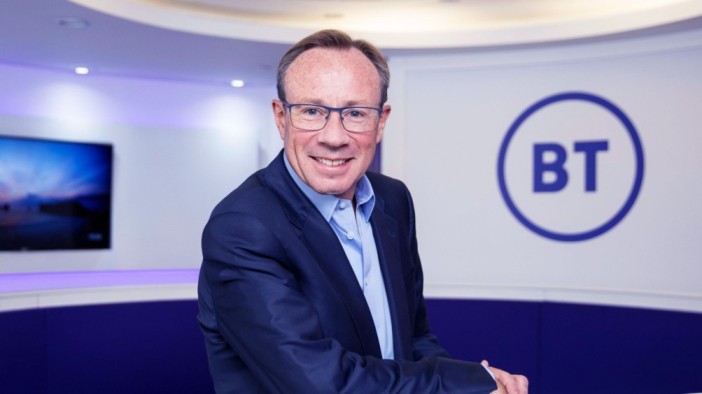
Philip Jansen BT Group CEO
Image Source: news.sky.com

Philip Jansen is a British businessman who is serving as the CEO, BT Group. He started his tenure as the CEO from 1 February 2019 and succeeded Gavin Patterson. Before BT, he was the CEO of Brakes Group.

Bell Canada

Bell Canada: The Largest Telecommunications Company of Canada.

Bell Canada started as a division of the Bell Telephone Company, the founder of the telephone. But for the last 140 years, it has been working as an independent company, keeping the name of its founder, Bell, along with it. With time, the company opted for all new technologies, and today, it sits at the top of its rivals in the Canadian telecommunication industry.

About The Company

Bell Canada is a renowned Canadian telecommunication company. The company serves as ILEC (incumbent local exchange carrier) in the Ontario and Quebec region and as a CLEC (competitive local exchange carrier) for its enterprise customers in the western part of the country. The Company has over 13 million active phone lines serving its customers. The company was founded in 1880 and headquarters at Verdun, Quebec, Canada.

Bell Canada
Image Source: play.google.com

The Company specializes in services like fixed-line and mobile telephony, internet services, digital television, radio broadcasting, etc. The subsidiary companies of Bell Canada include Bell Mobility, Bell Aliant, Bell MTS, Virgin Mobile Canada, Bell Internet, Bell Satellite TV, Bell Fibe TV, and Lucky Mobile.

The Back Story of Bell Canada

The History of Bell Canada goes back to the 1870s, almost 140 years back, when Alexander Graham Bell founded the Bell Telephone Company in Boston, Massachusetts. Bell Telephone was successfully providing its services to its American customers, but it lagged in its services in Canada. For few years, the company was offering its services on lease on customers’ private telephones as well as over the subscription of the third-party telecommunications service providers.

The National Bell Telephone Company from Boston acquired the Bell Telephone Company’s Canadian division on 29 April 1980 and renamed it the Bell Telephone Company of Canada Ltd. Charles Fleetford Sise, a U.S. executive was appointed to head the company as its general manager, who later became the key person in the growth of the company.

For about 80 years from its inception, Bell Telephone Company of Canada Ltd. was known as the “The Bell” or “Bell Telephone”, but on 7 March 1968, it was renamed Bell Canada by the Canadian federal legislation. During this time, the company had also started to serve overseas.

In 1974, the company introduced the first 9-1-1 emergency calling system for police, fire, and ambulance services in Ontario and London. The next year, the company installed the world’s largest “Centrex” system for the Alberta Government. The same year, Radio-television and Telecommunications Commission also became a government regulatory body and was used to broadcast bigger events as hockey matches live. On 16 December 1977, the company carried out the first trial for the fiber optic technology in Montreal.

In 1980, the company introduced the first digital switching units, and in 1982, the company launched the first cellular telephone system in Alberta. Bell Canada Enterprises Inc. acquired the rights of Bell Canada and became the parent company of the latter. By 1990, Canada was having the world’s largest contiguous cellular network. In 1992, CRTC (Canadian Radio-television and Telecommunications Commission) opened doors for long-distance competition, and in 1998, the company entered the public phone service sector. Till 1997, the company was having a monopoly in the telecommunication sector in Canada, but the deregulation by the federal government ended the monopoly of Bell Canada by 80%.

Bell Canada entered into a competition with many other telecommunication companies, Rogers Communications, Telus, and Shaw Communications being its major rivals. Still, it continues to be at the top of the telecommunication industry of Canada. As of 2019, the total recorded revenue of the company was C$23.96 billion, and 52,100 people are employed in the company.

The Innovative Mind Behind the Company

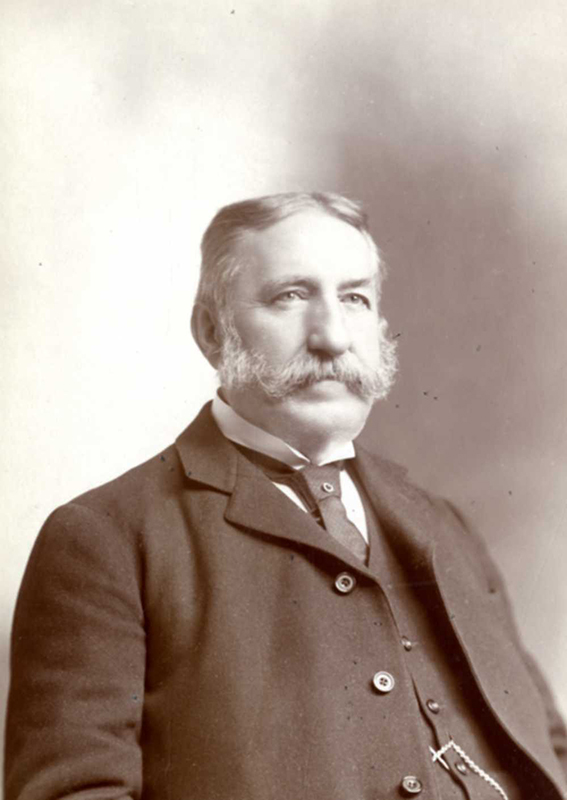
Charles Fleetwood Sise Sr. was one of the first presidents of Bell Canada, who is greatly credited for the growth of the company. Sise was born on 27 September 1834 in Portsmouth, New Hampshire. His father was a merchant and had shares in ships. So after getting a basic education till the age of 16, Sise also went on to work on a ship. While working on the ship, he was promoted to become the captain of his ship and sailed across the Atlantic and Pacific oceans.

Charles Fleetwood Sise Sr. Founder of Bell Canada
Image Source: bce.ca

In 1860, Sise came back to run a ship-brokering business in New Orleans. But just 6-7 years after he started his business, he switched his career to enter the insurance industry. This new career path made him reach the future president of the Bell Telephone Company of Canada, William H. Forbes. Forbes offered him a job as the corporate agent of National Bell Telephone and later sent Sise to Canada to head the Canadian division of National Bell Telephone (Bell Canada).

According to Biographer Robert E. Babe, Sise was one of the most passionate persons when it came to working. He was responsible for the growth of the company, as he was the influential part of most of the big decisions of the company and led many acquisitions of several telephone and telegraph companies in Canada.

TCS

TCS: The Indian IT Service Company, One of the Best in the World.

The beginning of computers and information technology was a time when everybody wanted to get an advantage from it. TCS (Tata Consultancy Services) is one of those companies, which began its journey at the time when the computer had just started to become famous, and after more than 50 years of its inception, TCS has grown as much as the IT industry. From India, it has reached more than 140 countries, where it is helping other companies with their IT problems. TCS is known for its software development work for the banking sector and the development of electronic depositories.

TCS, The Company

TCS  is a multinational IT company, with its headquarter situated in Mumbai, Maharashtra, India. The company is the subsidiary of the famous Tata Group of India. It provides IT services and consulting to its wide range of customers worldwide. TCS, with its innovative ways of working, has become the second-largest Indian company by market capitalization and is always counted among the topmost IT service companies. The Company runs its operations in over 50 countries through its 280 offices as well as has 147 delivery centers in 21 countries. The company has got its name listed in the Forbes and Fortune lists in different categories multiple times.

TCS
Image Source: allvectorlogo.com

Products and Services

The Company provides its services in 67 different categories in IT itself. The company is into software and application development, consulting, business process outsourcing, payment processing, technology education services, asset leverage solutions, cloud infrastructure, enterprise solutions, etc. The company also includes its in-house developed software products named TCS BaNCS and TCS MasterCraft.

The Foundational Story

On 1st April 1968, the already established Tata Sons started TCS as Tata Computer Systems to enter the computer industry and become a part of the IT revolution. At the very beginning, TCS was providing punched card services to Tata’s other subsidiary company TISCO. By 1975, the company started to serve foreign companies, and it developed its first electronic depository and trading system, SECOM, for a Swiss company.

System X from TCS automated the Johannesburg Stock Exchange for a Canadian company. In 1980, TCS founded Tata Research Development and Design Centre (TRDDC) in Pune, an institution dedicated to the software research and development process. The company also worked on a high complexity project, an end-to-end advanced system to manage customer relationships, for Western Trust and Savings Limited (WTSL). This project provided enough experience to the company for handling much tougher projects. The next year, TCS established India’s first client-dedicated offshore development center.

TCS in 1982 came with its flagship product, the Advanced Data Dictionary (ADDICT), a repository for storing project information to make the users understand the design of an entire project and its processes. In 1984, TCS launched the Falcon (Fast Access Local Computer Network).

In 1987, the company established the IBM mainframe Center of Excellence in Madras and also introduced a software engineering tool named Casepac for IBM Mainframes. CAD also came into existence during the same time, which led TCS to step into the engineering software services.

In 1988, TCS launched multiple software products, including Masterkey suite, PRISM, and Integrated Standard Banking System. TCS bagged a project worth $10 million from the Swiss Security Clearing Corporation (SEGA) to build a real-time domestic and cross-border securities clearing and settlement system.

In the 90s, TCS started to build programs that would ease out the working of various institutions. The company came out with E.X., ‘world’s friendliest business accounting software, a trading platform for the National Stock Exchange and Network Custody System (NCS). Later NCS became one of the most popular TCS products. The company is credited for the fastest implementation of a depository system in the world. The system was the first electronic depository in India and was developed only in five months. TCS is the pioneer of the concept of the software factory. It was the first company to provide the solution for Y2K conversion in the late 90s. 

In 2004, TCS started to trade as a public company. By 2008, the company had become the first Indian IT company to enter the bioinformatics market and was reaching revenues worth US$500 annually. In 2013, TCS partnered with the Indian Post and handled a project worth ₹1100 crore for the latter. As of 2020, TCS has become the world’s most valuable IT company. Currently, over 469,261 employees are working for TCS across the world.

The CEO: Rajesh Gopinathan

Rajesh Gopinathan is serving as the Chief Executive Officer of TCS since February 2017. He completed his graduation in Electrical and Electronics Engineering from the Regional Engineering College, Tiruchirappalli, and a post-graduate diploma in Management from IIM Ahmedabad. Gopinathan started his career with Tata Strategic Management Group in 1996, and in 2001, he got transferred to the TCS’s e-business unit in the USA, where he worked till 2013. In 2013, he became the Chief Financial Officer of TCS.

América Móvil

América Móvil – A Telecommunication Conglomerate founded by Mexico’s topmost billionaire.

Founded in 1986, América Móvil is one of the largest telecommunication corporations in the world. The company is based in Mexico City and was founded by Mexican billionaire, Carlos Slim. Through the last thirty-five years, América Móvil has successfully expanded its business through strategic plans and acquisitions. The company is one of the global leaders in wireless telecommunication, especially in Latin America. The company believes in providing better services and at the same time closely monitoring the company’s costs and expenses.

This Mexican company is based on the number of equity subscribers and is the largest Central American fixed-line operator. At the beginning of 2019, the company had more than 200 million wireless subscribers and around 84 million fixed revenue-generating units. The company receives half of its annual revenue from Mexico because of its Mexican subsidiary Telcel, the largest Mexican mobile operator. The América Móvil history dates back to the 1980s, so let’s have a look into it.

América Móvil before 2000

If speaking about the history of the company, it actually dates back to 1956 when Publicidad Turistica, an affiliate of Telmex was established. The company published telephone directories which in 1981 started installing and operating wireless telephone systems in Mexico. This company started working under the Telcel trademark in 1989. In the following years, Telcel started expanding as Telmex became a private company and its service quality dropped as well. In 1999, Telcel introduced a PCS system in Mexico and by the summer of 2000, the company had almost 9 out of 12 million cellular phone subscribers in the nation.

The Company in 21st century

While Telmex began acquiring new subsidiaries, the company decided to spin-off América Móvil as an independent company. During that time, América Móvil was Latin America’s largest mobile service provider. After América Móvil became an independent entity, the company was listed on stock exchanges in Mexico City, Madrid, and New York. Since Telcel was already booming, it formed the base of América Móvil. América Móvil eventually expanded its business and formed partnerships with Bell Canada International Inc. and SBC Communications Inc. They together formed a consortium called Telecom Americas Ltd.

América Móvil
Image Source: newsinamerica.com

This consortium was build to develop wireless communication and establish broadband in South America. In June 2002, Bell Canada International sold its 39 percent stake of the consortium to América Móvil. This time the business was booming in Brazil and also expanded to Venezuela, Argentina, and Columbia. The company had always focused on winning over mass customers by offering cheap fixed plans for a fixed number of minutes. The main idea of América Móvil was to get as many people as possible to have access to mobile phones. During this time the company’s expenses were ruthless but soon Slim’s lieutenants proceeded with a much better and strategic plan.

Acquisitions and Expansions

América Móvil eventually started making acquisitions and one of the biggest on the list was acquiring Brazilian BCP S.A. The acquisition was done for $643 million and after this América Móvil became the second-largest mobile phone operator in Brazil. In 2005, the company made a partnership with Ooredoo and in 2007 it acquired a Jamaican mobile operator, Oceanic Digital which was under the brand name MiPhone. The company operates under many brand names such as Straight Talk, Total Wireless, Telcel America, etc. This year, the company has decided to sell Tracfone to Verizon. América Móvil has nearly 2 lakh employees distributed across America and Europe.

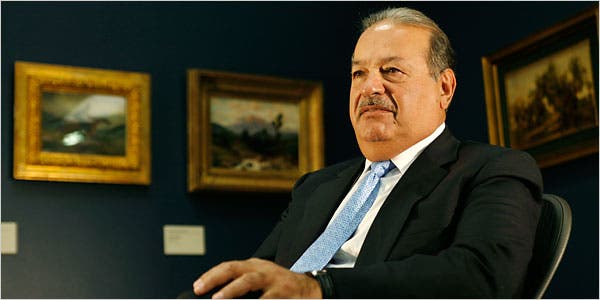
Carlos Slim – The Founder

Born in 1940, Carlos Slim belonged to a family who was a part of a small yet prosperous Lebanese Christian community. Carlson’s father started investing in real estate and became a very rich man. Carlos was very interested in his father’s business and he took his father’s place in the company when he was only thirteen years old. Carlos studied civil engineering and worked as a stock trader in Mexico. With the money he earned as a stock trader he opened his own firm, Bursatil. In the early 1980s, during the peso crisis, Carlos bought a number of companies at depressed values and this turned his future.

Carlos Slim Founder of América Móvil
Image Source: nytimes.com

One of the companies he bought was América Móvil and under his leadership, the company made some strategic acquisitions and expanded in many other countries. Carlos says that it’s not his deep knowledge in telecommunication that made América Móvil a success but the strategy of reinvesting the profits into the business itself judiciously for growth.