Your Tech Story

Tech Story

Vivo

Vivo: The Dominators of Global Affordable Smartphone Industry

The smartphone is one of the most innovative discoveries of humankind. It won’t be wrong if we call a smartphone a mini-computer, as it can do almost everything a computer can do. Today, from entertainment to business and from connecting with people to studying online, everything is possible through this small and handy gadget. Though smartphones could only be a thing for the Rich, due the companies like Vivo, people from every category have been able to get their hands on them. The company is known for its feature-rich yet affordable smartphones and is one of the most loved smartphone manufacturing companies across the globe.

A Brief Introduction

Vivo is a Chinese Android smartphone manufacturing company that is a subsidiary of BBK Electronics and was founded by Shen Wei in 2009. It is the sister company of Oppo and OnePlus. The company’s headquarter is located in Dongguan, Guangdong, and it is one of the leading smartphone companies in the world that manufactures affordable to mid-range smartphones. Apart from smartphones, Vivo also is the mass producer of smartphone accessories, software, and online services. Vivo’s mobile applications are widely available on its dedicated V-Appstore, and its smartphones also run on the Funtouch OS.

The Back Story of Vivo

Vivo, as mentioned earlier, is a subsidiary of BBK electronics, which came into being with the emergence of smartphone technology around the world in 2009. The company continued to serve its Chinese audience for around 3-4 years of its founding, and in 2014, by entering Thailand for the first time, it started to expand overseas. The company offered innovative designs and features incorporated into its smartphones that made Vivo smartphones quite popular among its global audience in no time.
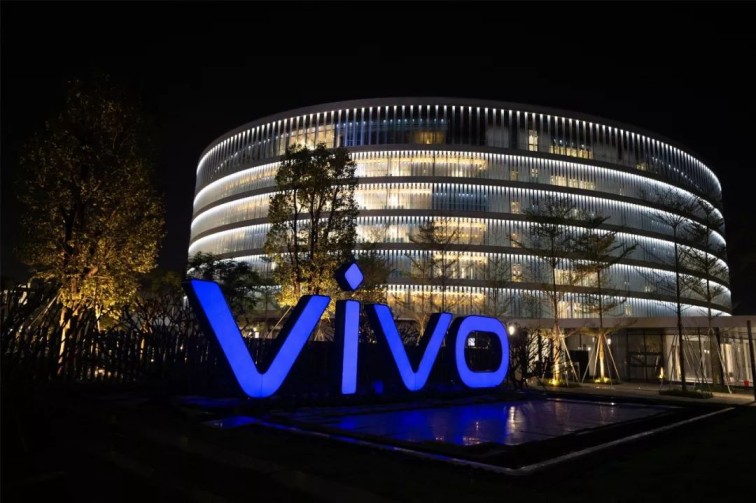
Vivo
Image Source: ohsem.me

By 2015, the company had reached major Asian countries like India, Indonesia, Malaysia, Myanmar, Philippines, and Vietnam, etc. The same year, Vivo had sold 45 million units of smartphones worldwide, whereas it was producing 60 million pieces annually. In the year 2017, Vivo also started its expansion in the European countries starting from Russia.

Vivo is credited for bringing the first slimmest smartphone in 2014 and also for becoming the first smartphone company to incorporate a Hi-Fi chip into a smartphone (the Vivo X1) in 2012. The company also entered the U.S. market with the brand name BLU. In 2019, the company had become the second-best smartphone company in India. Apart from smartphone manufacturing, the company is also one of the sponsors of the Indian Premier League (IPL), UEFA, India’s Pro Kabaddi, and FIFA.

The Key People at Vivo

Shen Wei is credited as the founder of Vivo, who is also the disciple of the founder of BBK Electronics, Duan Yongping. From the time of the founding of Vivo, Wei has been serving the company as its CEO as well as the President. Before serving as the CEO of Vivo, Shen was working for BBK Electronics. According to Duan, it was never his plan to start a dedicated smartphone company, but after the demand for affordable smartphones started, BBK had to enter the competition. Today, BBK trades as the smartphone seller with its subsidiaries Vivo, Realme, OnePlus, and Oppo.

The Company Today

Vivo has its dedicated R&D centers established in Dongguan, Chongqing, Shenzhen, and Nanjing, and around 3,000 engineers are working at those centers. Apart from that,  around 10,000 employees are serving the company globally and till now, Vivo is actively providing its services in over 100 countries. Vivo has continued to follow its ritual to introduce new smartphone models every year, such that it remains relevant in the changing smartphone market. The company with its innovation grown to become a leading name in the smartphone industry and is one major contributor to the growth of its parent company BBK Electronics, too.

NortonLifeLock

NortonLifeLock – An American company well known for Cybersecurity Services.

NortonLifeLock is a cybersecurity company that is empowering people by protecting their digital life. The company uses cutting-edge technology to build online security software to reduce the emerging rates of cyber threats. In 1982, Gary Hendrix founded the company which is now based in Arizona, US. NortonLifeLock is one of the Fortune 500 companies and in India, it has its presence in Pune, Chennai, and Bangalore. This year, NortonLifeLock made it into the Fast Company’s Annual List of the World’s Most Innovative Companies. Since the origin of the company started almost forty years from now, let’s have a look into it.

Establishing Symantec Corporation

When Gary Hendrix founded the company back in 1982 it was known as Symantec. He founded the company with help of a National Science Foundation grant and he hired several natural language processing researchers as a few of his first employees. Symantec started building projects related to artificial intelligence but a couple of years later they realized the database system they developed could not be ported from DEC minicomputers to the PC.

Since after two years of working Symantec was without any product, another software company called C&E software. After the acquisition, the merged companies decided to keep the brand name Symantec. A new product was developed combining the file management and word processing program of C&E along with an advanced natural language query system that was developed by Gary. The final product was named Q&A and it was rolled out in November 1985.

The sales of Q&A started very slowly but after a successful advertising campaign by the advertising agency Elliott/Dickens, the company started coming on the radar. Next, the company started cutting its expenses and focusing on revenue growth which enabled the company to break even. This was one of the breakthroughs of Symantec as the revenue started growing substantially after this event.

Growth of the Company

In 1985, a new division of Symantec was formed which was named Turner Hall Publishing. This division was established to publish third-party software and to diversify the revenue of Symantec. Soon the second product of the company was developed which was a 256k RAM initially released to increase the memory of Q&A. In 1987, the company completed its first merger by acquiring Breakthrough Software followed by acquiring Peter Norton Computing in 1990. Even today, the consumer antivirus and data management utilities of Symantec are still released under the name of Norton. During the time of the merger, Symantec has released Symantec Antivirus for Macintosh and Symantec Utilities for the Macintosh in the market.

NortonLifeLock
Image Source: channele2e.com

It was one year before acquiring Norton that the company started developing a DOS-based antivirus program because it thought the antivirus market was growing and a lot of new work was going on in this branch. The Norton antivirus was a big success as by the end of 1993 Norton product group revenues added up to 82% of total Symantec revenue. Though Symantec was also known for its development tools, the company exited that section of business due to strong new competitors gaining rapid market control.

Symantec in 21st Century

In the 21st century, Symantec’s share of the market increased dramatically as the company acquired Verisign’s Certificate Authority business. In 2013, Symantec went through a major corporate reorganization with the major goal of cost reduction and improving Symantec’s product line. In 2016, the company introduced a new product called the Symantec anomaly detection for automotive which was an ML-based software providing in-vehicle security analysis. The same year, the company intended to acquire LifeLock for $2.3 billion. A couple of years ago Broadcom announced that it would acquire Symantec for $10.7 billion. After the deal was closed the name of the company was changed to NortonLifeLock.

About the Founder

Gary Hendrix is a well-known American businessman who became largely famous after founding Symantec Corporation. Gary received his undergraduate education from the University of Texas and it was then he wrote several papers on robotics and planning. His quality work got him an opportunity to work at SRI international. After working at SRI for several years he left the company with a few of his colleagues to start a venture of their own. In the beginning, their first attempt was a total failure but eventually, Gary founded Symantec Corporation which is part of a bigger corporation today.

Tokyo Electron

Tokyo Electron: A 57-years old Japanese Semiconductor Company leading in Asia.

Tokyo Electron Limited, mostly known as TEL was founded in 1963. The company then was established as Tokyo Electron Laboratories. Present day TEL is based on Akasaka, Minato-ku, Tokyo, Japan. The founder of the company is Tokuo Kubo. TEL currently serves Japan, China, South Korea, Southeast Asia, Taiwan, North America, and Europe. Tokyo Electron Group has many subsidiaries which include TEL as well.

In the semiconductor industry, TEL is involved in producing Semiconductor Production Equipment (SPE) for thermal processing, photoresist development, wet surface preparation, material doping, wafer probing, etc. TEL invests a hefty amount in the research and development cell of the company. Some of the company’s leading technology and development centers are situated in Nirasaki, Sendai, Albany, etc. Let’s have a detailed look at the journey of TEL and milestones received in these 57 years.

The Early Age of Tokyo Electron

The company was founded in 1963 as Tokyo Electronic Laboratories with a capital amount of 5 million yen. It was established as an affiliate of the Tokyo Broadcasting System. At this time TEL dealt with the sales and delivery of diffusion furnaces, leak detectors, and IC production systems. After one year of its establishment, it started selling diffusion furnaces manufactured by Thermo Products Corp. In the following years, TEL came into partnership with Fairchild Semiconductor Corp, established Pan Electron Inc, and opened many new branches of the company.

Tokyo Electron
Image Source: tel.com

In the 1970s, many new subsidiaries of TEL were established like TEL Engineering Inc, TEL America, Tokyo Process Development Inc, etc. In 1973, TEL opened its first European office and in the following year, it received an award from Fairchild Semiconductor Corp as TEL expanded the sales of their IC testers. Till now the company was involved in the production and export of consumer electronic goods but in 1975 TEL withdrew from it. In 1978, the company was renamed Tokyo Electron Limited and established Japan’s first IC test center.

Growth and Expansion

The next decade started with TEL receiving the Noda Institute of Economic Research Excellence Management Award and getting listed on the Second Section of the Tokyo Stock Exchange. In 1982, the company established Central Research Laboratory and a few new subsidiaries in Japan. From 1983 the company was in the number 4 position in Nikkei Excellent Companies Ranking for three consecutive years. After a year TEL was listed on the first section of the Tokyo Stock Exchange and by the end of the decade, it was among the top companies in terms of sales in the semiconductor industry.

In the next ten years, many more subsidiaries of the company were developed such as Tokyo Electron Device Ltd, Tokyo Electron Saga Ltd, etc. In 1994, the company shipped its first single-wafer CVD system. The company expanded its many subsidiaries in Massachusetts, Phoenix, Texas, Arizona, Israeli, etc. In 1999, TEL received the Annual Award for Excellence in Disclosure from Tokyo Stock Exchange.

The Digital Era

With the advent of the digital era, TEL formulated its new corporate message as “People. Technology. Commitments. ” TEL acquired Supercritical Systems Inc and Timbre Technologies Inc in 2000 and 2001 respectively. In 2003, TEL received the Prime Minister’s award for its excellent contribution to Industry-Academia-Government collaboration. In 2008, TEL received the  Intellectual Property Achievement Award. Next year, the company entered a new sector of photovoltaic production business after acquiring Swiss Oerlikon Solar.

In 2011, Tokyo Electron Scholarship was launched at Peking University. The same year TEL was named as one of the world’s most sustainable companies. In 2014, the company’s single wafer cleaning system, CELLESTA won “Semiconductor of the year 2014.” In 2018, the company made it into the list of Top 100 Global Tech Leaders by Thomson Reuters. Last year, the company was recognized as “Most Honored Company” in the All-Japan Executive Team Rankings for five years in succession.

CEO of Tokyo Electron

Tetsuro Higashi has been working at Tokyo Electron for 42 years from 1977 to 2019. He contributed immensely in TEL and for his vivid contributions in both TEL and the semiconductor industry, he was awarded the Order of the Rising Sun, Gold and Silver Star Award in the 2020 Spring Conferment of Decorations. The position of Tetsuro Higashi in TEL was offered to Toshiki Kawai as he became the President and CEO of TEL in 2016.

Himax Technologies

Himax Technologies – A company gaining rapid momentum in the semiconductor industry.

The semiconductor industry is worth more than $450 billion in today’s market. With every passing day, the demand for the semiconductor industry reaches new heights as the demand for powerful and fast electronic gadgets increases. The semiconductor industry is the main provider of some key components for computers, smartphones, television, game consoles, cars, etc. So, if the demand increases or the market expands for the electronic companies it will positively affect the semiconductor industry as well.

One such semiconductor company that has been booming in recent years is Himax Technologies. It is one of the leading suppliers and fabless semiconductor manufacturers that supply across the globe. The company is based in the Tainan city of Taiwan. Founded in June 2001 by Biing-Seng Wu and Jordan Wu, the company has grown massively in recent years and has become one of the prime suppliers of display drivers and timing controllers that are used in a broad range of electronic devices.

A Brief Introduction

Himax Technologies is a company in the semiconductor industry that mainly focuses on providing solutions to display image processing technologies. The display driver ICs and the timing controllers that are produced by Himax are shipped worldwide for television, mobile phones, virtual reality (VR), digital cameras, tablets, etc production.

Himax Technologies
Image Source: himax.com.tw

This 20-years old company has around 2000 employees with foreign offices in China, Korea, Japan, and the US. With more than 3000 patents, Himax has established itself as a leading provider of display image processing solutions for worldwide customers (electronic brands). So, let’s have a look at the variety of solutions provided by Himax.

Solutions by Himax Technologies

Apart from display drivers and timing controllers, Himax Technologies also provides controllers for touch-sensor displays. Some of them are on-call Touch and Display Driver Integration (TDDI) single-chip solutions, LED drivers, LCOS microdisplays for augmented reality (AR), etc.

For digital cameras, the company offers CMOS image sensors and wafer level optics which are also used in mobile phones and laptops. The sensors are also used in camera security systems in many companies. Some of the other major solutions offered by Himax are Monitor and Projector Scalars, Infinity Color Technologies, 3D Color Engine, MEMS Microdisplays, and Controllers ICs, etc.

Keeping up with time, Himax Technologies has recently joined hands with Edge Impulse to provide a better user experience by deploying machine learning (ML) models in Himax AI processors and Google Tensorflow Lite Microcontrollers framework. These products will operate at ultra-low power and Edge Impulse is helping Himax to simplify the creation of neural networks.

Sustainability in the Company

When it comes to a sustainable approach in business, Himax Technologies is on top of the semiconductor industry. Following the current trends and crises worldwide, Himax also uses an energy-saving and waste reduction approach in day-to-day operation. The company strongly believes in sustainable growth thus providing economic, social, and environmental benefits to its workforce. Himax emphasizes designing products in such a way that it reduces pollution and the product itself should operate in low energy. It also invests a major amount in R&D to develop more green products thus minimizing the impact on our environment.

The Founders: Biing-Seng Wu and Jordan Wu

Biing-Seng Wu completed his studies at National Cheng Kung University who worked in a few companies before founding Himax Himax Technologies. He served as the executive vice president of Chi Mei Optoelectronics Corp for four years and currently the Chairman of Himax. Jordan Wu, cofounder of Himax Technologies Ltd is currently serving as the CEO of the same.

Recent crisis in Himax

It will be wrong to say that the crisis is only limited to Himax. The origin of a small crisis in Himax has put the business of electronic brands around the world in jeopardy as well. As mentioned earlier, Himax Technologies produces display drivers and timing controllers as two of their major solutions. But in recent days especially from the onset of COVID-19, an understandable miscalculation has led to a shortage of display drivers in the entire semiconductor industry.

The demand is rising rapidly as the display drivers are used in laptops, cars, game consoles, television’s, smartphones, etc and there is no way Himax can meet the demand even after pushing its entire workforce to the fullest. And, due to this shortage, the price of display drivers and hence the electronics are rising sharply. Though the company is making huge profits, Jordan Wu mentioned in a statement that they are not able to meet the demands of the entire customer base and hence remain unsatisfied.

SK Hynix

SK Hynix: The Second-largest Memory Chipmaker in the World

South Korea is known for its innovative and advanced technologies. There are several companies from South Korea making big in the technology industry. SK Hynix of South Korea is the third-largest semiconductor company and the second-largest chipmaker in the world. The company, with its innovation, has given the world multiple discoveries in the field of semiconductor and memory chips.

A Brief Introduction

SK Hynix is the world’s largest provider of dynamic random-access memory (DRAM) and flashes memory chips. The company headquarters in Icheon, South Korea, and its worldwide customer list includes Apple, HP Inc., Dell, etc. Hynix’s memory products are used in DVD players, mobile phones, set-top boxes, networking equipment, hard disk drives, etc. The company has its manufacturing units in various countries, including the US, Taiwan, and China. As of 2016, 22,254 are working at Hynix, and the total recorded revenue of the company as of 2018 was US$35.27 billion.

History and Formation of SK Hynix

Though the company was founded on 1 October 1949, it became famous only after it was rebranded in 1983. The company started its journey as Gukdo in 1949 and got a new name, i.e., Hyundai Electronics Industries Co. Ltd. in 1983. There was mass production of 256K DRAM in the company, and it also started to produce the Multifunctional Phone LX-2 in 1985. The company partnered with IBM to establish a PC sales agency and entered the US with the establishment of the US corporation (HEA).

In 1986, other than its B2B clients, Hyundai started to focus on B2C clients through its Hyundai Blue Chip PC. The company was manufacturing the car radios, developed CMOS type 256K EPROM, and also started the production of a key phone-based private switchboard, PABXHX50. The company developed the 4th generation switchboard HX-400 in 1987 and partnered with MOS Electronic Co. to develop the 256K SRAM. It also launched a satellite broadcasting receiver during the same time. In 1988, Hyundai came with the automatic answering machine and established its European corporation, HEE. At that time, it was at the top in the export of PCs in South Korea.

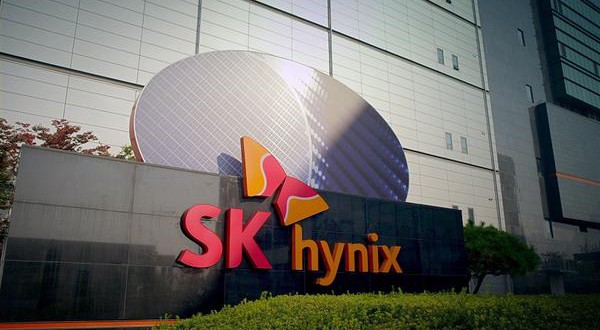
SK Hynix
Image Source: pulsenews.co.kr

Hyundai became the first company to export PCs to Japan in 1989. It also developed the 256K Fast SRAM in the same year. It was the 20th largest company in the semiconductor market in the world. In 1990, the company was mass-producing cameras and started to export them to the US. Along with that, it established the HEA Semiconductor and Computer R&D Center and also started to develop bps Pagers and 1M DRAM, becoming the first company in Korea to do that.

Hyundai developed the smallest and the lightest mobile phone in South Korea in 1991. The company also entered the Singapore market in the same year by establishing the Singapore corporation (HES) which was into 486 PC production. The next year, the company came with G4 FAX, a private switchboard HNT-832, built-in car audio systems, and completed the construction of FAB 2 B-Line. By the mid-90s, Hyundai had become the major supplier of semiconductor devices, car-audio, telecom products manufacturer, and provider of monitor & terminal category products. The company acquired Maxtor (US HDD manufacturer) and also developed the CD autochanger in 1993.

Hyundai is credited for the development of the world’s first MPEG-2 SAVI decoder chip and the world’s first 256M SRAM. In 1996, Hyundai had its first IPO on the Korea Stock Exchange. It also developed the world’s first Synclink DRAM test product and 1G synchronous DRAM using SOI technology. Hyundai acquired a large stockholder’s share of LG Semiconductor and merged into LG’s LG Electronics division in 1999.

In 2000, there was a spin-off in the company, forming Hyundai Image Quest, Hyundai Autonet, and Hyundai Calibration & Certification Technologies. Hyundai Electronics was rebranded as Hynix Semiconductor Inc. in 2001, after another spin-off from the Hyundai Group. In 2006, Hynix recorded its highest revenues since the formation of the Hyundai Group.

In 2010, Hynix partnered with HP for the development of Next Generation Memory Products, ReRAM. SK Group of South Korea acquired a 21.05% stake in Hynix in 2012, and the company started to operate as SK Hynix. The acquisition has been great for the growth of SK Hynix

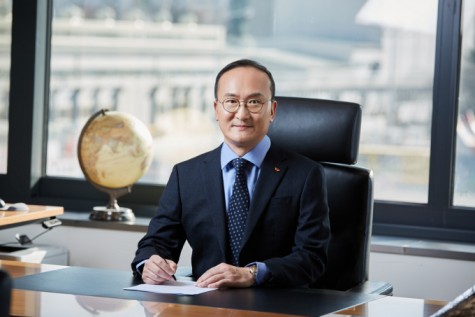
The CEO: Lee Seok-Hee

SK Hynix CEO
Image Source: kedglobal.com

Lee Seok-Hee is serving as the President and CEO, SK Hynix Inc since 2018. He became a member of the board of the company in 2017. Lee did his graduation and post-graduation from Seoul National University and went for further studies at Stanford University to complete a Ph.D.

Telefonica

Telefonica: The Leader of the Telecom Industry of Spain

There are several names in the telecom industry that have a great history and have been contributing agents to the industry itself. An about century-old Telefonica is an example of such an organization. Telefonica has its headquarter located in Madrid Spain, and it has been in the business of fixed-line telephony, mobile telephony, broadband internet as well as digital television.

Telefonica is counted as one of the largest telecom company, and in this long period of Telefonica’s existence, it has expanded its operations overseas and has established as one of the dominant telecom company in 24 countries, including Brazil, Colombia, Dominican Republic, Ecuador, Chile, Argentina, France, Germany, the UK, etc. 

According to the 2017 list of Forbes, Telefónica was the 110th largest company in the world. As of 2018, the recorded annual revenue of Telefonica was €48.7 billion, and around 120,138 employees were working at the company’s various offices around the world.

The Foundational Story of Telefonica

Telefonica is a almost a century old as was founded in 1924 as Compañía Telefónica Nacional de España (CTNE) in Madrid. ITT was the major shareholder in the company at that time, and by 1945, the state had taken over about 80% of the company shares. Since the state was a major stakeholder in Telefonica, till the year 1997, it had a monopoly over the telecommunication industry of Spain.

Telefonica laid down the first long-distance telephone line in Madrid in 1925, and the next year, it established an underground telephone network at Puente de Toledo, Madrid. The company stayed the only company providing telephone service in Spain till 1960. In 1967, Telefonica entered into satellite communications and commissioned the first Special Data Transmission Network in Europe in 1971.

In the next seven years, Telefonica had installed about 10 million phones and also got listed on the New York Stock Exchange in 1987. In 1989, Telefonica also played a crucial role in the composition of Hispasat.

Telefonica
Image Source: eleconomista.es

Only in three years of entering Chile, the company controlled around 98% of the population for its analog mobile telephone in the country in 1993. In 1994, the company launched its digital mobile service in Peru with the name Movistar. The next year, with the emergence of the internet, Telefonica also launched its internet service named Infovía, and in the same year, the company turned into a partial private company. This privatization completed in 1999 and Telefonica also launched the ADSL broadband fixed access service in the same year.

The company also sold its subsidiary companies and its stakes in other companies in the following years, including Atento (2012), 40% assets in Central America (2013), Telefónica Ireland (2014), its stake in Telecom Italia (2014), Antares (2018), etc.

In 2011 The company created the T. Digital and TGR and had its Germany IPO in 2012. In 2014, Telefonica announced to become a new fully customer-oriented organization. The company created Telxius in 2017 and Aura in 2018. Aura was Telefonica’s way to Artificial Intelligence.

Acquisitions

In 2004, Telefonica acquired BellSouth assets in Latin America, and the next year it acquired Cesky Telecom. The company also bought a 5% share in China Netcom in 2005. The company acquired the operations of O2 in the UK, Germany, and Ireland in 2006 and also acquired 51% shares in Colombia Telecom in the same year. The next year, the company partnered with Telecom Italia, followed by the acquisition of Vivo Brazil in 2008. In 2009, it also partnered with China Unicom.

In 2010, Telefonica bought the operations of a company named Hansenet in Germany, Jajah in Israel, and Tuenti in Spain, and took over the operations of Vivo in Brasilcel. In the year 2014, Telefonica acquired  E-Plus in Germany, DTS (Canal +) in Spain, and GVT in Brazil.

The CEO

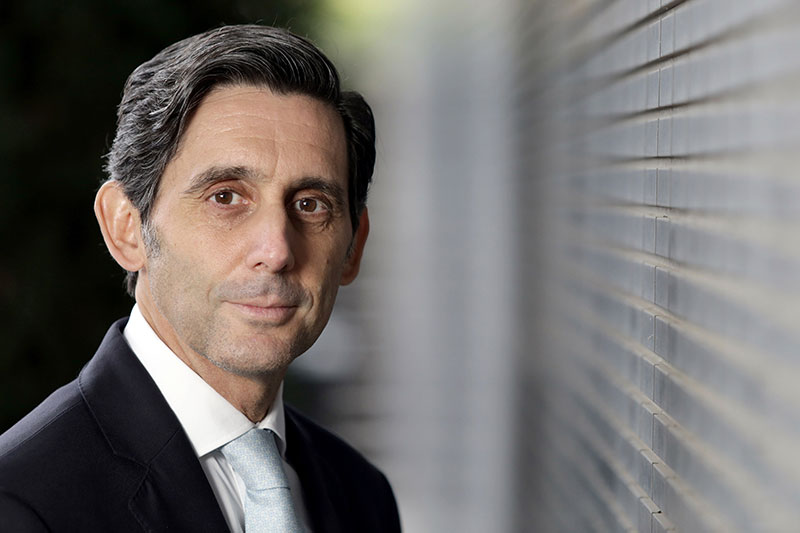
José María Álvarez-Pallete López was born on 12 December 1963, in Madrid and is a famous Spanish economist. Pallete López was appointed the CEO of Telfonica on 8 April 2016.

José María Álvarez-Pallete López CEO of Telefonica
Image Source: telefonica.com

Pallete López started his career at Arthur Young Auditors in 1987. But in 1988, he switched his job and joined Benito & Monjardín/Kidder, Peabody & Co., followed by taking a position in Compañía Valenciana de Cementos Portland (CEMEX) as head of the Investor Relations and Analysis Department in 1995. He handled various positions in the company like CFO, Chief Administration, and Finance Officer of the CEMEX Group’s international offices till 1998.

In 1999, Pallete López got an offer from Telefonica as the Managing Director of the Corporate & Finance in Telefónica S.A. After being posted to many positions like Executive Chairman of Telefonica International S.A., Managing Director of Latin America Telefonica, and President of Latin America Telefonica, he was appointed the CEO on 8 April 2016.