Your Tech Story

Tech Story

Leidos

Leidos – The Largest IT Service Provider in the Defense Sector.

Leidos is a global leader that provides cutting-edge technology solutions to customers in demanding situations. The main sectors that Leidos offers efficient solutions to are aviation, defense, information technology, and healthcare. Leidos provides a wide range of both hardware and software solutions from automatic equipment identification technology to security instruments and many more.

Leidos was formerly known as Science Application International Cooperation (SAIC) which is currently headquartered in Reston, Virginia, US. J. Robert Beyster founded the company in 1969 which now operates in four main divisions, namely, Civil, Health, Advanced Solutions, Defence & Intelligence. Roger Krone is the current CEO of the company and the company has approximately 32,000 employees.

The Establishment of Leidos

In 1969, Robert J. Beyster founded the company as Science Applications Incorporated (SAI) in San Diego, California. Before founding the company, Beyster was a scientist for Westinghouse Atomic Power Division and Los Alamos National Laboratory. In 1957, Beyster became the Chairman of the Accelerator Physics Department of General Atomics and later he sold stocks received from here to raise the money for his new company.

From the beginning of the entrepreneurial journey, Beyster’s company focused on projects for the US government. Initially, SAI focused on nuclear power and weapons effects study programs but soon the company was renamed as Science Applications International Cooperation (SAIC) and it eventually expanded its area of interest. The company worked on radiation therapy, assistance to the development of the cruise missile, post-accident cleanups in nuclear stations, design and evaluation of Stars & Stripes 87, design of the first luggage inspection machine, etc.

Leidos
Image Source: twitter.com

Beyster developed SAIC as an employee-owned company which helped in attracting many dedicated and highly motivated employees. This is the biggest reason that SAIC grew and expanded so fast in many sectors. Beyster retired in 2003 and in 2009 the headquarters of the company was shifted to Tysons Corner in Virginia. In 2012, the company had to pay a large sum of money to the City of New York for overbilling the city for seven long years.

The Founding Story of Leidos

In 2012, the company decided to split up into two independent trading companies thus forming a $4billion per year and $7billion per year publicly traded entities. The former focused on government services, systems engineering, technical assistance, financial analysis, and program office support. The $7billion company became an IT business specializing in national security, health, and the engineering sector. After the companies were split into two different businesses they were able to pursue more fields which created a conflict of interest as a whole.

In 2013, it was decided that the smaller company will continue with the name SAIC while the bigger company changed its name to Leidos and moved its headquarters to Reston. Leidos was the true successor of SAIC though it didn’t retain the name. So, the company retained SAIC’s pre-2013 stock price and corporate filing history. In 2016, Leidos announced one of the biggest deals in the defense sector as it merged with Lockheed Martin’s Information Systems & Global Solutions. This doubled the size of Leidos making it a leader in the global defense industry. In 2019, the company ranked 311 on the Fortune 500 list and its annual revenue summed up to $18.569 billion.

Subsidiaries and Structure of the Company

Leidos has multiple subsidiaries in a diverse market which helped it become successful in a short period. Some of the subsidiaries of the company are Systems Made Simple (SMS), QTC Management, Leidos Engineering, Leidos Health, CloudShield Technologies, Reveal, Dynetics, Leidos Biomedical Research, etc. In 2018, the company again shifted its headquarters to Reston, Virginia, and the new building was completed last year.

As mentioned earlier, the company is divided into four main sectors. The Civil Division deals with the aviation system, security transportation measures, IT infrastructure, and efficient energy. The Health division is responsible for optimizing healthcare companies, securing medical data, and providing better solutions for data entry. Leidos’ Advanced Solutions Division focuses mainly on data analysis, integrating advanced defense systems, etc. The Defense & Intelligence Division works on providing air service systems, geospatial analysis, cybersecurity, intelligence analysis, etc.

About J. Robert Beyster

Beyster was from Detroit, Michigan, and went to the University of Michigan. He served in the US Navy during World War II which might be one of the reasons why he focused on governmental projects when he started his own business. Apart from founding SAIC, he started the Foundation for Enterprise Development in 1986. In 2004, this foundation established Beyster Institute which is dedicated to training and education on entrepreneurial grounds. He passed away on 22nd December 2014 in his home.

Altice Europe

Altice Europe – The Journey of the Famous French Cable and Telecommunication Company.

Altice Europe is a France-based telecommunication company with a market capitalization of $4.8B. The company is the second-largest telecommunication and mass media company in France after Orange. A French-Israeli billionaire named Patrick Drahi founded Altice in 2001 as a cable television company. Today, apart from the TV service, Altice is a leader in internet and telephone subscription service.

The major countries of services for Altice include Western Europe, Israel, and the Caribbean. The company has also been providing its services in the US as one of the most used telephone and cable services. But in 2019, the company discontinued its operations in the US as a result of the spinning off of the company via an IPO in 2019.

A Brief Introduction

The company headquarters of Altice Europe lies in Woerden, Netherlands, and was founded in 2001 by Patrick Drahi. Cable television, Direct-broadcast satellite, broadcasting, broadband and telephony services, mass media are some of the fields Altice excels in and has its branches in several parts of the world. As of the records from 2017, the company is generating around €2,54 billion annual revenues and has over 47000 people working for it. Altice Dominicana S.A., Altice Portugal, Altice France (SFR), and Hot are some of its subsidiary companies. In the past 20 years, the company has seen many ups and downs, but still stands as one of the largest telecom networks in the world.

Altice Europe
Image Source: altice.net

The Founding Story of Altice Europe

The founder of Altice Europe, Patrick Drahi, was already working in the field of cable television. He left his position from his earlier cable TV business and sold his share in the UPC for approximately 40 million Euros. He then started another cable company with the name Altice ATCE.AS in Amsterdam. The company started its operation by buying several European cable companies. In the years between 2002 to 2007, he was able to merge multiple regional companies into one and established Numericable.

By 2009, Altice was also expanding to other countries by acquiring their regional cable companies, Hot from Israel being one of them. The company also acquired the operations of Orange Dominicana of Orange for $1.4 billion in 2013. The next year, Altice went on to overtake the subsidiary company of Vivendi, SFR. During the same time, Numericable also bought the operations of Virgin Mobile France.

Altice also acquired the 70% stakes in Suddenlink Communications that helped Altice to grow in the US, and in Portugal, the company bought Portugal Telecom. In March 2017, Altice also acquired Teads, a video ad-tech firm. The same year, Altice also rebranded the company logo, and the slogan, for both Altice Europe and Altice USA to unify the telecommunication operations of Altice under one name. The slogan was “Together Has No Limits”.

In June 2019, Altice had an IPO and spun off the USA division of the Altice group to become a self-governing entity. The resultant company has the same logo and is also chaired by Patrick Drahi but operates as an independent company.

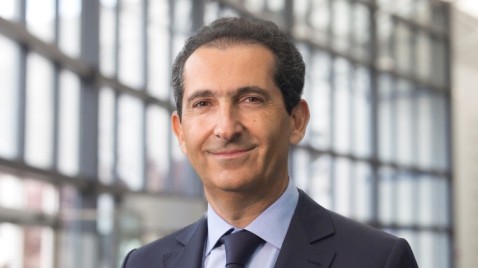
The Founder: Patrick Drahi

Patrick Drahi was born on 20 August 1963 in Casablanca, Morocco. He belonged to a Jewish family, which moved to Montpellier, France, when Drahi was 15 years old. After completing his high school education, Drahi joined the École Polytechnique University in Paris, where he received an engineering degree and a post-graduate degree in optics and electronics.

Altice Europe Founder
Image Source: capacitymedia.com

Drahi started his career by establishing a cable business in France in collaboration with an American company. After selling his post at the company, he then founded Altice Europe in 2001.

Other than Altice, Drahi founded Numericable as well as an international news channel, named i24news which operates in French, Arabic, and English languages. He also owns the Israeli cable television company HOT. Drahi has been named the third-richest person in France by Forbes in 2015, and till 2016, he was the richest person in Israel. In 2021, he was at the 248th rank on the Billionaires 2020 list of Forbes.

swisscom

Swisscom, One of the most efficient Telecommunications providers in Switzerland.

Swisscom is Switzerland’s leading provider of communication, information technology, and entertainment. Swisscom employs over 19,000 people and is one of Switzerland’s most innovative and sustainable companies. Operating the simplest mobile network and largest fiber-optic network in Switzerland, Swisscom offers maximum bandwidths nationwide. The Company network is fast, sustainable, secure, and prepared for anything.

The Backstory of Swisscom

At the beginning of 1852, Switzerland started the first telecommunications service between St. Gallen and Zurich. Alexander Graham Bell’s invention of the telephone in 1876 gave the field new impetus. In 1917, Zurich-Gottingen started the operation of the first half-automatic telephone switchboard. By 1959, Switzerland’s telephone system became the world’s first completely automated network, there were 1 million subscribers. In 1962, Telstar was launched in space, the first telecommunications satellite. The first exchange to allow direct international dialing was unveiled at the Expo 1964 in Lausanne.

Swisscom
Image Source: web24.news

In 1974, in the canton of Wallis, the Earth satellite station of Leuk was operational. In 1975, PTT-Betreibe (Postal and Telecommunications Services of Switzerland) decided to introduce a mobile telephone network for vehicles (NATEL). The first NATO A network, followed by NATEL B in 1983 and NATEL C in 1987, was established three years later. Between Berne and Neuchâtel the first fiber optic cable was placed in 1985. The first Swiss digital telecommunications network Telecom PTT was introduced in 1988.

In 1992, under the name NATEL D, the mobile phone network was digitized. In 1996, the internet portal “Blue Windows” of Telecom PTT became the market leader soon. Telecom PTT was converted to Swisscom on 1 October 1997. Swisscom Ltd was bought on the stock exchange on 5 October 1998. Swisscom became a part of the television industry in 2007 and led the digital television market with 791,000 subscribers by the end of 2012. In 2009, the fiber-optic network expansion in Switzerland was pushed forward by Swisscom.

Products And Services:

For Residential Customers:-

Surf with Internet Security more safely. The company’s security and anti-viruses protect your devices against viruses, hackers, and spyware. Since 2002 Swisscom has offered free internet access to all Swiss schools. It is in the interests of more than 6000 schools. In Swiss education systems, they are much more concerned with sustainable and efficient ICT.

For Businesses:-

Double Robotics is a modern telepresence system, and an entirely different step towards interactions with staff, customers and business partners. For companies with multiple locations and/or operating internationally, Double Robotics is ideal. Double robotics is also suited for companies offering flexible working models to their employees. It allows you to move around the room in freedom, unlike classic video conferencing in which you can only see a screen. The totally mobile Double allows physical presence from around the world in the workplace.

Digital signing is legally and securely possible with electronic signatures. It is therefore a core digitization element and enables any type of contract to be concluded. No printing, no letter sending, no scanning – with an electronic signature everything is completely digital. Client Hardware Service provides you with access to advanced, efficient devices, ideal for flexibility and environmental impact reduction.

Conextrade helps you throughout the entire digital process chain whether with e-procurement or e-invoicing. Swisscom managed services link companies and suppliers with all the current technologies and support the entire procurement-to-paid and order-to-cash process from e-invoicing. CuraMED is the web-based information system for the next-generation medical practice for electronic documentation and process optimization. Configured to the highest security standards, this software-as-a-service solution features an extensive and modern medical information system that is suited to your individual needs.

Urs Schaeppi, The Genius behind Swisscom

Since 2013, Urs Schaeppi has served as Head of Swisscom (Switzerland) Ltd and Chief Executive Officer of Swisscom. He graduated from the Federal Institute of Technology in Zurich with a degree in engineering and the University of St. Gallen with a degree in business administration. His professional career began in R&D at Iveco, followed by marketing at Ascom. In addition, he was promoted to Operations Manager at Papierfabrik Biberist.

In 1998, he joined the Mobile division as Head of Commercial Business after the formation of Swisscom. He was appointed CEO of Swisscom Solutions in 2006 and soon after became Head of the Enterprise Customers division. He sits on the boards of several economic and educational organizations.

NXP Semiconductors

NXP Semiconductors – A leading semiconductor company that was originally a part of Philips.

NXP Semiconductors is one of the largest non-memory semiconductors suppliers across the world. The company is famous in the electronics industry for supplying semiconductors for secure identification, automotive, and digital networking sectors. Originally the company was founded in 1953 as a part of Philips and it was known as Philips Semiconductors. But, in 2006 this division was sold to private equity investors who then changed the name to NXP Semiconductors.

Currently, the headquarters of this spun-off company is based in Eindhoven, Netherlands. The company is running its business in more than 35 countries with approximately 31,000 employees. Kurt Sievers is the current CEO and President of NXP Semiconductors. Qualcomm, a few years back, proposed to buy the company but the deal was called off later.

History of NXP Semiconductors

Philips is a multinational conglomerate and back in 1953, it had many divisions and factories spread across many regions. In 1953, Philips started a small-scale production in Nijmegen (a city in Dutch) which became a part of Icoma (a division of Dutch Philips). Over the next two decades many such production facilities and new divisions were established by Philips.

In 1975, Philips acquired Signetics which made the former company the second-largest semiconductor manufacturers in the entire world. Every division of Philips in every other nation had a different name and the company decided to merge all these into Philips Components and renamed it as Philips Semiconductor in 1991. In 1999, Philips Semiconductors acquired VLSI Technology and this acquisition made it the sixth-largest semiconductor company in the world.

Formation of NXP Semiconductors

It was in December 2005 when Philips decided to spin off Philips Semiconductors and make it an independent company. A consortium of private equity investors bought an 80.1% stake in Philips Semiconductors in September 2006. The investors who were involved in this acquisition were  Kohlberg Kravis Roberts (KKR), Bain Capital, Silver Lake Partners, Apax Partners, and AlpInvest Partners. The new name of the company was changed to NXP Semiconductors (from next experience). The company was launched officially during the Internationale Funkausstellung (IFA) consumer electronics show in Berlin. Even after the company was separated from the big brand name of Philips, NXP ranked one of the top 10 semiconductor companies worldwide.

NXP Semiconductors
Image Source: yicaiglobal.com

During the acquisition, Frans Van Houten was the CEO of NXP Semiconductors. He emphasized on the fact that NXP should evolve and enter into the “vibrant media” technologies present in every essential gadget and appliance from smartphones to digital televisions. NXP planned to strengthen its mobile phone and personal business and thus announced the acquisition of Silicon Laboratories’ AeroFONE single-chip phone and power amplifier product lines.

After one year, NXP decided to start a joint venture with STMicroelectronics and NXP’s mobile and personal business unit. But in 2009 STMicroelectronics bought the 20% stake of NXP and it became a joint venture between Ericsson and ST.  The same year NXP decided to sell its Home Business unit to Trident Microsystems. NXP was in a very good shape this time which called for a restructure of its manufacturing plan and it led to a job loss of 4,500 employees.

Major Events in The Company

In 2009, the position of  Frans Van Houten was taken over by Rick Clemmer and under his leadership, the company focussed more on “high-performance mixed-signal” products. In 2010, NXP acquired Jennic, a UK-based company that is now part of its smart home and energy product line. The same year NXP announced its IPO in NASDAQ with a total shares of 34,000,000. At the end of 2010, the company decided to sell its Sound Solutions business for $855 million. In 2012, NXP’s revenue increased by 41% as compared to 2011 and it was mainly because of demand for NFC chips and secure elements. Last year, Kurt Sievers was appointed the new CEO of the company.

Kurt Sievers – CEO of NXP Semiconductors

Since May 2020, Kurt has been serving as the CEO of the company and his main motto for the company is “secure connections for a smarter world”. The focus of the company should evolve with time and the demand of users is always changing with more profound tech and the threats of compromising it. Kurt went to Augsburg University, Germany, and has two master’s degrees in information technology and physics respectively. Kurt has significantly made many acquisitions possible for NXP and played different roles in the company since 1995.

wayfair

Wayfair – The Journey of American E-Commerce Company.

Wayfair is a furniture and home goods retailer based in the United States. The company was founded in 2002 and was previously known as CSN Stores. Wayfair grew into the behemoth it is today as a result of the dot-com crash in the early 2000s, the evolving nature of internet shopping, and an increasingly global supply chain. It has emerged as a pioneer of its peers. 

The online marketplace features 14 million products from over 11,000 international suppliers. It also has 80 “house brands,” which aren’t actually brands but are used to categorize and merchandise products based on certain decorating aesthetics. The company does not manufacture any of the products it sells and instead operates on a drop-ship basis. When a customer places an order, Wayfair purchases the item from one of its suppliers, who then ships it to the customer in a variety of ways. Wayfair has 12 fulfillment centers and over 12 million square feet of warehouse space in Europe and North America. 

The Wayfair Brand And Its “Lifestyle Brands”

Wayfair is more than just Wayfair.com, Joss & Main, AllModern, Perigold, and Birch Lane are also owned by the company. Wayfair.com is the company’s main hub, where you can find everything from furniture to appliances that went viral. AllModern constitutes modern and chic furniture, whereas Joss & Main and Birch Lane are nearly identical and lean towards traditional furniture.

Perigold, the newest site, is high-end, but it appears to be designed specifically for someone who owns a mansion or a villa. The company refers to these sites as “lifestyle brands.” Beyond the “lifestyle brands,” the products are further subdivided into one of Wayfair’s 80 “house brands”, which are only available on Wayfair.com.

The Establishment of Wayfair

Wayfair, formerly known as CSN Stores, began with the website racksandstands.com, selling media stands and warehouse furniture. In 2003, Wayfair expanded to include patio and garden goods suppliers, three online stores, and more than a dozen employees and relocated its headquarters to Newbury Street in Boston. Over the next two years, the company expanded its offering to include home décor, institutional, office, kitchen and dining furniture and materials, as well as home improvement goods, luggage, and lighting, as well as bed and bath materials. The company made $100 million in sales in 2006. Within the next four years, the company expanded in both domestic and international markets.

Wayfair
Image Source: digital.hbs.edu

CSN Stores opened an office in London in 2008 and began exporting to Canada and selling in the United Kingdom. The company relocated its headquarters to 177 Huntington Avenue in 2010. The company launched Joss & Main, a members-only private sales online store, at the end of that year. CSN Stores had over 200 online stores by 2011. Battery Ventures, Great Hill Partners, HarbourVest Partners, and Spark Capital provided $165 million in funding to the company in June 2011. Wayfair.com went live on September 1, 2011. Wayfair had incorporated all of its niche websites, with the exception of Joss & Main and AllModern, into Wayfair.com as of July 2012. 

Wayfair’s Response to an Emergency

Wayfair responds to crisis situations in the broader community where they have the resources and ability to assist on an emergency basis. The company worked with Habitat for Humanity International in February 2013 to directly assist the communities affected by Hurricane Sandy. Wayfair delivered over $50,000 in home furnishings to Habitat ReStore resale stores in Coastal New Jersey. Product sales funds directly supported disaster response efforts and home rebuilding in the region.

Wayfair responded to the terrorist attack at the Boston Marathon in April 2013 by donating $50,000 to Technology Underwriting Greater Good (TUGG) in collaboration with the company’s founders to directly assist victims of the bombing. Wayfair employees also raised $8,000 for One Fund Boston, which will be used to assist those most affected by the tragedy.

Stepping into the Future

Wayfair recently opened its first permanent store in Natick, Massachusetts, following a series of pop-ups over the years. The company provides hundreds of smaller items that customers can take home with them, as well as an in-person taste of what its digital services are like. Customers can collaborate with designers to design rooms and touch fabrics used in a furniture customization program.

The Founders

Niraj Shah co-founded Wayfair with Steve Conine in 2002, and the pair quickly expanded the company to become the largest online retailer of home furnishings, housewares, and home improvement products in the United States, with $15.3 billion in net sales for the fiscal year ending March 31, 2021. Wayfair employs over 16,200 employees and has large operations in the United States and Europe.

Niraj worked as the CEO and co-founder of Simplify Mobile, the Entrepreneur-in-Residence at Greylock Partners, the COO and a member of the board of iXL, and the CEO and co-founder of Spinners, which was sold to iXL in 1998. Niraj is a member of the Massachusetts Competitive Partnership and the Greater Boston Chamber of Commerce boards of directors. Niraj graduated from Cornell University with a B.S. in engineering and currently resides in Boston, Massachusetts, with his wife and two children.

Ansys Inc.

Ansys Inc. – The Most Trustworthy Engineering Software Company In The World.

Ansys Inc. is a Canonsburg-based American company. It develops and markets multiphysics simulation software to design, test, and operate products and provides its products and services to clients around the globe. Ansys picked up a large number of engineering design companies in the 2000s, which gained additional fluid dynamics, electronics, and other physical analysis technology.

Ansys software fits seamlessly with existing systems thanks to their open ecosystem of computer-aided design, manufacturing, and engineering providers. Engineers can use Ansys simulation to explore and predict how products will work in the real world. This simulation superpower also accelerates time-to-market, reduces production costs, increases efficiency, and reduces risk.

The Establishment of Ansys, Inc.

John Swanson invented the concept for Ansys at the time of his work at Westinghouse Astronuclear Laboratory in the 1960s. At that time, engineers conducted hand analyses of Finite Elements (FEA). Westinghouse dismissed Swanson’s concept of automating FEA by designing software for general purposes, so in 1969 Swanson left the company to develop the software by itself. The next year, he created Ansys in his farmhouse in Pittsburgh with the name Swanson Analysis Systems Inc. (SASI). Swanson created Ansys’ initial punch card program and leased a mainframe machine by the hour.

Ansys Inc.
Image Source: facebook.com

By 1991, SASI had 153 workers with an annual turnover of $29 million, which was a 10 percent market share for software analysis for finite elements. SASI purchased Compuflo in 1992, and the software for fluid dynamic analysis was commercialized and developed. In 1993, Mr. Swanson sold his majority stake in the firm to TA Associates, a capitalist firm. The following year Peter Smith was appointed CEO and the software, Ansys, was renamed SASI.

Ansys Products and Services

Ansys Discovery and accurately addresses important design questions early in the process. It eliminates long waits for simulation results to increase efficiency and performance. Engineers can now concentrate on creativity and product success thanks to Discovery. With Ansys SpaceClaim, you can reduce simulation prep time and easily build 3D models. By accelerating the geometry development process, these tools enable designers and analysts to concentrate on the simulation performance.

With Ansys VRXPERIENCE, you will enjoy an active sound quality and sound design solution. Recorded sound, CAE acoustics simulation effects, and Active Sound E-Motor noise, Aeroacoustics sources, Engine vibrations, and EV all have their own special tools.

Ansys Additive Prep optimizes component orientation by auto-detecting support regions and individually configuring them to construct different 3D printing support types. Ansys Additive Print takes the guesswork out of printing. Gain insight into how parts can behave during a build and take corrective actions to ensure that the parts are installed correctly the first time.

To accelerate embedded software development ventures, Ansys offers model-based embedded software development and simulation environment with a built-in certified automatic code generator. Ansys embedded software solutions provide a wide range of powerful capabilities to assist you in developing secure and stable software designs more quickly.

They offer the industry’s gold standard simulators for antenna, RF, microwave, PCB, package, IC design, and even electromechanical devices. These solutions assist you in resolving any electromagnetic, temperature, SI, PI, parasitic, cabling, and vibration issues that can arise in your designs.

Ajei Gopal, The President and CEO of The Company

Ajei Gopal has been the president and chief executive officer of Ansys since January 2017. Ajei worked as an operating partner at Silver Lake, a major private equity technology investor, from 2013 to 2016. During his time at Silver Lake, he was seconded as interim president and chief operating officer at Symantec Corporation. He was a senior vice president at Hewlett Packard from 2011 to 2013. From 2006 to 2011, Ajei served as executive vice president at CA Technologies. He was executive vice president and chief technology officer at Symantec Corporation from 2004 to 2006.

Ajei Gopal previously served as CEO and a member of the board of directors of ReefEdge Networks, a company he co-founded in 2000. From 1991 to 2000, he worked at IBM, first at IBM Research and then in IBM’s Software Group. Ajei is also a director on the board of Citrix Systems, Inc., a multinational software corporation.