Your Tech Story

Tech Story

Keysight Technologies

Keysight Technologies – The Spun-off Electronics Division of HP, Making Big in the Industry.

Keysight Technologies can be cited as the spun-off company of Hewlett-Packard, as it was one of the electronic test and measurement divisions of the latter before Keysight could be called an independent company. First, Keysight was a division at HP and then was taken over by Agilent Technologies (another division of HP).

The company came into being in 2014 and has made its separate identity in the world of electronics. Keysight Technologies, after getting separated from Hewlett-Packard, continued to manufacture and supply the electronics test and measurement equipment and added software development to one of its specializations.

About the Company

Though Keysight is a seven years old company, still with the experience of being a part of two big names Hewlett-Packard and Agilent Technologies, it was able to make its mark in the industry quite smoothly. Today the company has its own several divisions, including PathWave Design and PathWave Test oscilloscopes, etc., and over 14000 people are working for the company. Other than America, Keysight Technologies is operational in countries like UK and Australia. As of 2019, the company made an annual revenue worth US$4.3 billion.

A Brief History Keysight Technologies

The founders of Hewlett-Packard, Dave Packard, and Bill Hewlett, who were also good friends from their graduation from Stanford University, founding HP from a garage in Palo Alto, California, in 1939, today known as the Silicon Valley. The two started the company after they discovered their passion for innovation while camping in the Colorado mountains.

If we look at the beginning of HP, it started as an oscillator and electronic measurement manufacturing company. As time went by, HP excelled in its field and also added many other divisions, like the manufacturing of computers and printers, to its business. In 1999, the company separated its test and measurement components business and the computer-printer manufacturing business. The former went under the control of Agilent Technologies, the Medical Products and Instrument Group formed by HP.

Keysight Technologies
Image Source: keysight.com

For about fifteen years, Agilent handled the operations of Keysight Technologies, but on November 1, 2014, Keysight officially became a separate electronic measurement company through the spinning off of Agilent Technologies. Since then, the company has only stepped towards success. It also made some major acquisitions in the past seven years, which include Anite PLC (2015), Electroservices Enterprises UK Ltd (2015), Ixia (2017), Thales Calibration Services (2018), Eggplant (2020), and Quantum Benchmark (2021).

Keysight Technologies has established its headquarter in Santa Rosa, California, U.S., and trades on the New York Stock Exchange as KEYS.

Products by Keysight Technologies

Keysight Technologies, being a part of HP in the past, have similar values attached to its work. The major fields Keysight is focussing today include 5G, automotive, Internet of Things, network security, etc. and manufactures software and hardware products for benchtop, modular, and field instruments. Oscilloscopes, in-circuit testers, logic analyzers, signal generators, vector network analyzers, atomic force microscopes (AFM), automated optical inspection, automated X-ray inspection (5DX), power supplies, tunable lasers, optical power meters, wavelength-meters, optical modulation analyzers, etc. are the major products manufactured and shipped by Keysight Technologies.

The CEO: Ronald S. Nersesian

Ronald S. Nersesian is the president and the CEO of Keysight Technologies. Nersesian has got a bachelor’s degree in electrical engineering from Lehigh University and has completed an MBA from NYU Stern School of Business.

Nersesian started his career with Computer Sciences Corporation as a systems engineer for satellite communications systems in 1982. After working for two years at the company, he joined Hewlett-Packard in 1984 and continued to work at the company till 1996, when he joined LeCroy Corporation. In 2002 Nersesian joined Agilent Technologies as the vice president and general manager of the Design Validation Division of the company. Till 2014, he managed various roles at Agilent Technologies, like the executive vice president and COO of the company. In 2014, Nersesian was appointed as the chairman, president, and CEO of Keysight Technologies.

SAIC

Science Applications International Corporation (SAIC): The Technical, Engineering, and IT Service Provider.

The Fortune 500 Company is based in San Diego, California. SAIC, founded in 1969, is the world’s largest employee research and engineering company in the USA with annual revenues of $7.8 billion. SAIC offers global IT, integration systems, and e-business solutions.

The Company serves primarily the Government of the United States, including the Defense Department (DoD), the intelligence community, and federal civil agencies. For government projects, the Company provides engineering, systems integration, and IT services and offers a range of services focusing on higher-end, differentiated technology services.

The Establishment Of SAIC

In 1969 J. Robert Beyster created the original SAIC. The company then spent a $4 billion unit on September 27, 2013, that retained its name, while the parent company changed its name to Leidos. After the split, SAIC designated Anthony J. Moraco as its CEO and the Leidos CEO was appointed as John P. Jumper.

On 4 May 2015, SAIC acquired 790 million dollars from Scitor Holdings, Inc. to expand its intelligence presence through classified contracts, cleared personnel, and robust safety infrastructure. Leonard Green & Partners, L.P., a private shareholding firm, previously owned Scitor. In a joint effort of $2.5 billion to mergers, which was set to occur in January 2019, SAIC announced on September 10, 2018, its acquisition of Engility, a competing U.S. government services market contractor.

On February 6, 2020, SAIC announced it had acquired a combined US$1.2 billion from UNISYS US Federal, a U.S. government contracting services competitor.

Services Of SAIC

Their solutions improve decision-making, improve readiness and increase results in critical tasks. In the context of national and global safety issues, the SAIC drives applied science and branches it to policy and operational skills. Their engineering and integration, advanced analytics, training, and program management employees integrate capacity in a proven and innovative way across disciplines to achieve one common goal which is customer mission success.

SAIC
Image Source: wtop.com

The robust SAIC ecosystem for model-based engineering integrates several disciplines in order to offer customers resilient solutions to rapid technological improvements. Their systems engineering and integration services cover the life cycle of their system from the concept and development, through deployment, operation, and retirement, which are supported by the engineers, most of whom have system engineering professional certifications from the International Systems Engineering Council (INCOSE).

In support of the clients’ decision-making and strategic planning, SAIC uses a holistic approach in advanced analysis. They provide experts, processes, and tools including a high-performance computer for advanced analytics and simulation capabilities. These lead to mission success in ensuring domestic security, clean water, or a ready-to-use fleet with their experience in several domains like militarization, civil and intelligence, and multidiscipline engineering, operational research, data science, and others.

For people to engage in leading-edge solutions which achieve higher performance level, SAIC applies immersive technologies. Significant gaming, live and virtual simulations, biometrics, evocative education, microlearning, and technology-deploy platforming as well as infrastructure. These technologies include extensive realities (XR), augmented reality (AR), virtual realities (VR), and mixed reality (MR). Immersive technologies provide an information-based and realistic environment in which humans can interact with decision-making aids. They integrate the types and amounts of support necessary for program and cost performance strategically.

Areas Of Service

SAIC’s intelligence (IC) solutions ensure that the nation and world are able to protect their mission, transformative technology, and trusted people. Whether customers modernize their infrastructure, create an agile workforce, or try to use their data better, SAIC has invested in talent, development, and new processes to speed up mission success.

With its portfolio of advanced IT solutions, advanced analyzing, and training, SAIC has long been able to work with government civil agencies and business enterprises, deal with public service missions and protect the country’s economy. They offer solutions for a range of civil markets, including energy, transport, the environment, home safety, space, and trade.

As part of their commitment to serving citizens, SAIC supports the Federal Health Community, including the Department of Health and Human Services, the Military Health System, and the Veterans Health Government.

They have built a reputation for providing cost-effective techniques and subject experts in federal health agencies with a thorough understanding of their missions and for helping the government to provide essential services more quickly and efficiently. Their digital transformation solutions and health services enable agencies to overcome technical and logistical barriers to agility, alignment, mission-orientated enterprises.

Nazzic Keene, The CEO

Nazzic Keene is the CEO of the SAIC, based in Reston, Virginia (NYSE: SAIC). SAIC provides systems integration, engineering, and IT solutions to defense, intelligence, and civil agencies with a pro forma annual revenue of 7.1 billion dollars and 25,500 employees.

In August 2019 Keene was appointed CEO and elected SAIC Board of Directors. She joined SAIC in 2012 with several increasingly responsible management positions, including CEO, Global Markets and Missions Chairman, and Senior Vice Chairman of Corporate Strategy. She has also held a number of senior management positions with the company.

With over 20 years of executive management, Keene has three decades of experience in the IT and technology sectors. Keene was senior vice president and general manager for CGI’s U.S. Enterprise Markets before joining SAIC and led the company to expand in the U.S. This encompasses all aspects, from the development and implementation of strategies to operational excellence and leadership.

The Founder of SAIC, John Robert Beyster

John Robert Beyster was the founder of Science Applications International Corporation, often called J. Robert Beyster (26 July 1924 –22 December 2014). Bis his retirement in July 2004, he became Chairman of the Board and served until November 2003 as Chief Executive Officer. A recognized authority in national security, Beyster committed to building SAIC on the principles of employee possession and technical excellence for 35 years of his life. 35 years of life. In recent years, he has extended his commitment to the American corporate community by creating two non-profit organizations, the Beyster Institute and the Enterprise Development Foundation.

Ciena

Ciena – The Pioneers of Optical Connectivity.

Ciena is an American telecommunications networking company that has ruled the telecom industry. The company is one of the largest equipment and software services providers and has its headquarter located in Hanover, Maryland, United States. The company is around 30 years old and has been leading the game of networking ever since.

According to the 2019 records of the company, Ciena made $3.57 billion in revenues that year and around 7000 people are working for it, including 2700+ R&D specialists. Ciena has a strong client base, AT&T, Verizon Communications, Korea Telecom, and Sprint Corporation being some of them. The company operates in 35 countries having 60 offices globally.

The Founding Story of Ciena

Ciena started its journey as HydraLite in 1992. David R. Huber founded the company with a plan of applying fiber-optic technology to cable television. The company received its initial funding of $40 million from Sevin Rosen Funds, Charles River Ventures, Japan Associated Finance Co., and other local investors. Huber changed the name of the company to Ciena and established an office in Dallas in February 1994. Ciena launched its very first products in 1996, Sprint Corporation being the first client of the company.

After selling its first products, the company made an annual revenue of $195 million. By the year 1997, the company started to make new clients and established its headquarter in Maryland. The same year, in February, it went public on NASDAQ and valued at $3.4 billion, the largest for a startup at that time.

Ciena
Image Source: ciena.com

In the year 2001, Ciena was the second-largest manufacturer of fiber optic networking equipment in the US. But since due to the telecom crash, the technology shift took place, and the companies suffered huge pressure of serving the growing demand, Ciena too had to face some losses. Ciena leaders knew that with time they had to bring change to the company technology, so they changed the business strategy for the company. The company started to invest in other companies with diverse services. It acquired around five network companies between 2001 and 2005.

Ciena, by this time, had also started to strengthen its R&D department and built the first converged packet-optical platform that reduced the requirement of the amount of equipment to set up a network. In 2009, Ciena made $39 million in profits after making sales worth $902 million. In the next ten years, the company had a raised manpower to 5,345 people. Reportedly, the company revenue for the year 2017 was approximately $2.8 billion. Ciena also appeared on the Fortune 1000 list a few times.

Products and Services

Ciena is the producer and supplier of network equipment, software, and services for the telecommunication department. The company also provides assistance to cloud service firms as well as companies offering voice and data traffic on communications networks. Optical switches, routing platforms, and equipment for undersea cable networks are some of Ciena’s major products. Ciena has also developed machine-learning algorithm-based software programs like Blue Planet that help companies program their communication networks.

Acquisitions by the Company

Ciena
Image Source: mergr.com

Ciena started to expand its operations by acquiring other companies starting from 1997. The major acquisitions by Ciena included AstraCom Inc. (1997), ATI Telecom International Ltd. (1998), Terabit Technology Inc. (1998), Omnia Communications Inc. (1999), Cyras Corp.(2000), ONI Systems (2002), WaveSmith Networks Inc. (2003), Akara Corp. (2003), Catena Networks (2004) and Internet Photonics (2004), World Wide Packets Inc. (2008), Nortel’s optical technology and Carrier Ethernet division (2009), Cyan (2015), TeraXion Inc.(2016), Packet Design (2016), and DonRiver (2018), etc.

The CEO: Gary B. Smith

Gary B. Smith is the CEO of Ciena Corporation. He belongs to the British ethnicity and has been working in the American telecom industry for many years. He was born and brought up in Birmingham, United Kingdom, and holds an MBA degree from Ashridge Management College.

Smith has been working at executive positions in many companies. He was the vice president of the sales and marketing department at Cray Communications, Inc. and Intelsat for a few years. Smith then joined Ciena in 1997 as the vice president of worldwide sales and was promoted to be the CEO and president of the company in 2001.

Sanmina Corporation

Sanmina Corporation – An American Fortune 500 Company providing Electronics Manufacturing Services.

From the mid-1900s till the end of the 20th century, many companies started their fortune in the semiconductors and telecommunication industry. Most of them became very successful due to the rising demand for technology with the increasing population and change in lifestyle. Sanmina Corporation is one such successful company in the field of electronics manufacturing services. The company was founded in 1980 by Jure Sola. Sanmina provides end-to-end design solutions of premium quality to the Original Equipment Manufacturers (OEMs). The company’s main fields of interest are communications network, healthcare, computing and storage, multimedia, defense, aerospace, clean tech sectors, etc.

A Brief Introduction about Sanmina Corporation

Sanmina Technology is based in San Jose, California. Within 40 years of its thriving business, the company has opened nearly 80 manufacturing sites, hired 40,000 employees, operating in more than 20 countries, and has already established itself as a technology leader. In 2018, the company was ranked 411 on the Fortune 500 list. Currently, Jure Sola is serving as the Chairperson and CEO of the company although there was a change in leadership in the meantime. As many big companies are eventually entering into the profitable industry of oil and gas, Sanmina has been a provider of manufacturing services to some big oilfield equipment and service corporations for the last 20 years.

Sanmina Corporation
Image Source: sanmina.com

Founding History of the Company

Jure Sola started working for Lika after graduating which produced electronic transducers and control instruments for factory automation. In 1980, he decided to establish his own company and thus co-founded Sanmina Corporation with Milan Mandaric. When Sola and Mandaric opened the company they exclusively manufactured printed circuit boards. For the first decade, the company expanded the business into manufacturing backplanes and subassemblies. In 1991, Jure Sola became the President and Chairman of the company.

In the 1990s, the company started designing and producing products for major OEM companies and acquired a bunch of businesses. In 1993, the company filed for an IPO and completed it on NASDAQ. In 1997, among the contract manufacturers present at that time, the company ranked ninth. So, Sanmina avoided manufacturing consumer products so that it can focus on high-end networking and telecommunication applications. Sola believed that the company had lots of opportunities if it went after designing and manufacturing products that are difficult to build internally.

Sanmina Corporation and SCI Systems

From the 1990s both the OEM companies and the contract manufacturers started working side by side like integrated cooperation. During this truly cooperative time, SCI became a pioneer in the list of OEM companies as it designed and produced almost everything for the Apollo Space Project. By the end of the 1990s, the company generated most of its revenue from government contracts and personal computers. Jure Sola saw this as an opportunity as it wanted to create a more diversified revenue system for Sanmina Corporation. This meant the company needed to bring a broader group of customers on board which led to the merger of SCI and Sanmina in 2001.

Sanmina Corporation
Image Source: mergr.com

Sanmina generated two-thirds of its revenue from the communication market but it was really depressed during the time of the merger. So, this merger was very crucial for Sanmina Corporation to get back on its feet and emerge as a larger empire in the industry. In July 2001, Sanmina Corporation acquired SCI in a stock swap for $6 billion and it is till date one of the biggest acquisitions in the history of the electronic manufacturing services industry. After the acquisition, the new company started generating an annual revenue of nearly $12 billion and soon it became one of the top 5 companies in the electronics manufacturers industry. In the last few years, Sola’s company acquired a few more businesses and has maintained the quality of services provided.

The Founders: Jure Sola and Milan Mandaric

Jure Sola was born in 1951 in Croatia. He moved to the United States at the age of seventeen and completed his engineering from San Jose State University. After graduating in 1972 Sola joined Lika Corporation and worked there for eight years. In 1980, he co-founded Sanmina Corporation and switched his positions a couple of times.

Milan Mandaric is a Serbian-American businessman who started his career by taking control of his father’s machine shop. In 1969, he left his home country Yogoslavia and started working for an American company in California. Soon he founded his own company, Lika Corporation but after a few years sold it off to co-found Sanmina with Jure Sola.

Thermo Fisher Scientific

Thermo Fisher Scientific – An Approach to Excel the Healthcare Industry Via Technology

The internet and IT technology boom has helped people bring innovation to various industries. Whether it is for defense, corporate, or healthcare, every other field is trying to get their hands-on advanced technologies to make things simpler for the employees of their industry as well as the end-user of their products. Thermo Fisher Scientific is one such company that has been working towards the advancement of the healthcare industry so to ease out things for the health workers and provide better options for its customers.

A Brief Introduction

Thermo Fisher Scientific is an American Laboratory equipment company, which is the result of a merger between Thermo Electron and Fisher Scientific, the former being a leading provider of instruments and analytical services and the latter one of the well-known biotechnology companies of America. The company works in the field of manufacturing scientific instrumentation, reagents, and supplying consumables. Other than that, the company also provides software services to healthcare, life science, and laboratories in academies, etc. The company also ships products to some of the government departments and other industries.

The Founding of Thermo Fisher Scientific

Though the company is a resultant company of a merger and was established in 2006, its history dates back to over a hundred years from now. George N. Hatsopoulos and Peter M Nomikos founded Thermo Electron (one of the merged companies) in 1956. The company started as the supplier of analytical and laboratory equipment. On the other hand, Fisher Scientific was founded by Chester G. Fisher in 1902. The company sold the laboratory equipment, chemicals, supplies as well as provided services in healthcare, scientific research, safety, and education.

After ruling their respective industries, in 2006, Thermo Electron and Fisher Scientific decided to merge and unify their operation. This way, the company became a single company. The merger was a stock-for-stock exchange tax-free partnership between the two companies. After combining their operations, the company had 30,000 employees, and the annual revenue for the two as one company was recorded to be US$9 billion.

Thermo Fisher Scientific
Image Source: thermofisher.com

Currently, Thermo Fisher Scientific is dealing in the products like Analytical/other equipment and instruments, laboratory reagents and consumables, science software, and services for research, discovery, analysis, and manufacturing. Though the companies have combined their operations, Thermo Fisher Scientific manufactures and supplies the products with brand names Thermo Scientific and Fisher Scientific. Other than these two, the company also ships products under the brand names like Chromacol, Nalgene, Cellomics, Pierce Protein Research, and Fermentas. Despite being a major dominant in the American market, Thermo Fisher Scientific has also expanded into Europe and some Asian countries, including China.

Acquisitions by the Company

Thermo Electron and Fisher Scientific already had about 15 companies acquired under their name before the merger. And after the merger, in just fifteen years, Thermo Fisher Scientific made approximately 50 acquisitions. The major acquisitions by Thermo Fisher Scientific include Phadia (2011), autoimmune (2011), Life Technologies Corporation (2013), Advanced Scientifics (2015), Alfa Aesar(2015), Affymetrix (2016), FEI Company (2016), Finesse Solutions, Inc. (2017), Patheon (2017), Brammer Bio (2019), Qiagen (2020), Henogen SA (2021) and PPD, Inc. (2021), etc.

Thermo Fisher Scientific Today

It hasn’t been long since Thermo Fisher Scientific started to work as an individual company. But despite that, it has reached new heights and has made its separate identity other than its parent companies. Today, it is counted among the Fortune 500 companies and has been making annual revenues of more than $20 billion. Today the company is serving worldwide, and over 70000 people are working for it. The company is public and trades on NYSE as TMO. The company headquarters is established in Waltham, Massachusetts, U.S., and has its various offices in different parts of the world.

The CEO at Thermo Fisher Scientific

Marc N. Casper is the CEO and the president at Thermo Fisher Scientific. He has been serving as the CEO of the company since 2009, and other than that, he is a member of the boards of trustees of Brigham & Women’s Hospital, Wesleyan University, as well as the board of U.S. Bancorp.

Casper completed his Bachelor’s degree in Economics from Wesleyan University and an MBA degree from Harvard Business School. In 1997, he became the president at Dade Behring. In the year 2000, he joined Kendro Laboratory Products as the CEO and the president of the company and worked for one year. Casper joined the Life Sciences sector of Thermo Electron in 2001 as the president.

CACI International

CACI International Inc. – One Stop Destination for IT and Simulations Software Services.

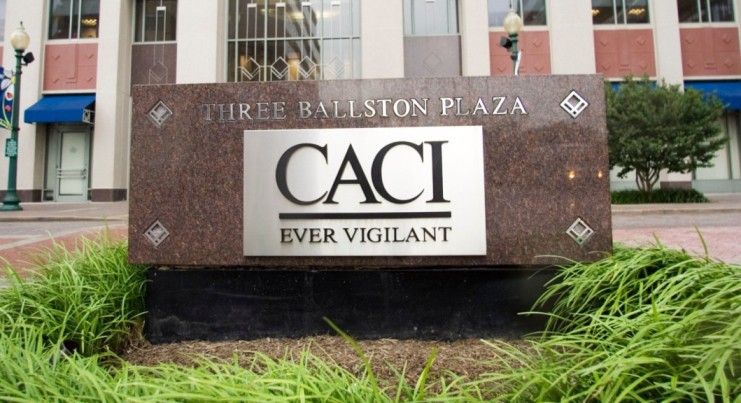
CACI International Inc. is an American information technology company that mainly works for the US federal government as 95% of the company contracts are from the federal government. The company headquarters is in Arlington, Virginia. Though it mainly works to provide IT services to the intelligence and the defense department of the government, it operates in different countries to offer custom software and IT services to its customers overseas.

The variety of services offered by CACI International Inc. includes manufacturing of technology systems, custom software development, integration and operations, simulation, and development of the proprietary database as well as software products.

The Back Story CACI International

Herb Karr and Harry Markowitz left their well-paying job at RAND Corporation to establish CACI in 1962. The company was founded on July 17 of the same year, and the main focus of the company was to sell the SIMSCRIPT simulation programming language. SIMSCRIPT is the first simulation programming language, which the two founders had developed at RAND Corporation.

CACI International
Image Source: politico.com

The optimized planning of starting the company brought $34,000 in revenue to the founders in its first year of operations. In 1963, the company bagged a contract from the government to develop an inventory control simulation for the Navy’s Ships Parts Control Center in Mechanicsburg, Pennsylvania. In the first five years, the company released a compiler to translate the SIMSCRIPT programs named Simscript 1.5 and also started to work on information processing systems, QUICK QWERY being their first such proprietary product.

The Growth and Expansion

CACI started with the name California Analysis Center, Inc. and was later changed to Consolidated Analysis Center, Incorporated in 1967. The next year, just in six years of its inception, CACI went public and topped the revenues by $1 million.

For the ten years of its beginning, CACI was offering its services to various departments of the state government like from management of vehicle registration to licensing and wheeled-vehicle revenue support and from false emergency alarm billing systems to housing registration systems. And in 1974, the company put its first step forward to expand in other countries as well. CACI established its first headquarter in Europe, i.e., in The Hague. The other European offices were set up in the major cities in Europe, like London, Dublin, Milan, and Bermuda This expansion brought the company $1 million of revenues within three years. By the end of the decade, CACI had won contracts from the US Defence and the Department of Justice. 

In the 80s, CACI started to expand its operations and entered into the field of IT. During these years, it made revenues worth $100 million annually. In 1988, CACI developed and marketed optical imaging systems for records management as its proprietary product.

CACI International
Image Source: wikimedia.org

The beginning of the 90s made CACI experiment with the emerging networking technology. During the same time, the company made some of the major acquisitions, including American Legal Systems Corp., some shares of the government-owned SofTech, Pinpoint Analysis Ltd. and Miracle Products Ltd., etc. These years brought the company around $200 to $250 million annual revenues. The expansion into the IT sector made CACI start projects in partnership with names like AT&T, IBM, Lockheed Martin, Microsoft, Oracle, Sun Microsystems, and Unisys, etc. By this time, the company had started to deal in computer hardware, software, and database products.

Beginning with the year 2000, CACI made some major investments and acquisitions. In 2002, it also moved from the NASDAQ to the Big Board on the New York Stock Exchange. Till now, the company had opened around 90 offices in the US and Europe. In 2004, the revenues of the company touched the $1 billion mark, and it became a Unicorn company. The average annual revenue for the company has been around $5.7 billion for the past few years, and approximately 23,000 employees are working for the company around the world. The company has been constant in the Fortune 1000 Largest Companies list for many years.

The CEO: John Mengucci

John Mengucci has been serving CACI as the President and Chief Executive Officer (CEO) since July 2019. He is known for his leadership skills as he has been working at some prominent positions at various big-name companies. Mengucci has a bachelor’s degree in Mathematics and Science from Clarkson University, which he completed in 1984. After he completed the bachelor’s degree, he started to work as a software engineer at Babcock & Wilcox in 1984 and then, joined Syracuse University in 1992 to pursue an MBA degree.

In June 2006, Mengucci became the president of the IS&GS-Defense department at Lockheed Martin, and in 2010, he was appointed as the president of the Global Solutions-Civil department of the same company. He then left the company to join CACI in 2012.