Your Tech Story

Tech News

huawei hongmeng

Huawei is Already Testing its In-house OS based Smartphone

It has been a tough year for Huawei, the China-based tech company. From ban in the U.S. and Australia, the company was also accused of passing the data to Beijing government. But the company had been on constant denial. The ban on the company had led it to produce some home-grown products such that those bans do not make it suffer in the other markets.

Recently, the company revealed that it is working on a new OS Hongmeng, but also cleared at the same time that it is not meant for the smartphones. The company said that it is building a new OS for its other Huawei devices, including the internet-of-things products and will continue to use Android as its smartphone OS, Honor-brand smart TV, being the first device to get it.

But according to a recent report from Global Times, the Chinese state media, Huawei is ready to launch a new smartphone powered by the Hongmeng OS, which may go on sale by the end of this year, meaning that Huawei is still backing up for its future.

huawei hongmeng
Image Source: dignited.com

The launch of the new Hongmeng smartphones is clearly an indication that even if the tech giant Google stops it from using the Android OS in its devices, it is ready with the alternative. But still, the company is mute on embedding the OS into a smartphone. Even in an interview with The Reuters, the company made no comments on the matter.

According to an unknown source, the smartphone will cost 2,000 yuan ($288). The chances are that the first smartphone that will be equipped with the new Hongmeng may be the Huawei’s Mate 30 Pro smartphone. This means the upcoming smartphone will target the mid-range smartphone market. The OS is based on the microkernel, making it compatible with various devices as well as open to adapt to the Artificial Intelligence features.

Reportedly, the company will be talking about the new OS in the upcoming developer conference to be held on Friday, August 9th in Dongguan, China. Beliving the reports, the company has already completed its work on the OS and is already in the process of testing the OS for various devices. Though Trump has said that the sanctions will be relaxed, it seems that Huawei does not want to take any chances anymore.

windows 7

Windows 7 Users will Need to Upgrade to Windows 10 by the End of this Year

Last month, Microsoft officially announced that it is going to end providing support for Windows 7 and asked its users to upgrade their PCs with Windows 10. The company took it to their blog post to announce the news and even provided with details on how the users can upgrade to Windows 10 and other things as well.

The company has said that the users will still be able to use Windows 7 on their laptops and PCs, but they won’t be getting any support like security upgrades from the company starting from January 2020. This way, the PCs with Windows 7 won’t be secure from the malicious malware and virus attacks.

Microsoft has also recommended that the users skip installing Windows 10 on their old laptops and PCs. Instead, they should go for new systems that are faster and are better working with Windows 10.

windows 7
Image Source: howtogeek.com

It has been over five years after Windows 10 was launched, even then the company has been offering support for Windows 7. But now, it seems that it wants to focus better on Windows 10 and wants the users to get some new laptops and PCs. Alongside the announcement, the company also flaunted the various features that the new Windows 10 laptops and PCs will offer the users.

For upgrading to Windows 10, one has to back up their data on an external hard drive so that they don’t lose it. Microsoft has given a detailed description on how to backup data from Windows 7. The company has also mentioned a few of the main reasons why one should go for new laptops and PCs, inbuilt security being the prime reason.

The company has started sending reminders to most of its Windows 7 users about the upgrade. The company has said that it will be sending those notifications for a few times. But the users can easily turn off these notifications. The notification leads the users to the same blog post that Microsoft has posted on its website regarding the upgrade.

The upgrade can cost the users a good amount, but the apps and security Windows 10 offers, are worth it. The Windows 10 comes in three different versions, Windows 10 Home (costs INR 9,299.00), Windows 10 Pro (costs INR 14,799.00) and Windows 10 Pro for Workstations (costs INR 22,799.00).

Windows 7 is now ten years old, and yet it is as popular as it was a decade ago. Even the launch of a revamped Windows 10, in 2015, could not convince most of the people to upgrade to Windows 10. But now, the company has found a way to make Windows 10 its prime product.

LightSail 2

LightSail 2 Successfully Sailing in Space through Sunlight

This is true that all the living things get energy from the sunlight, and now, with the latest experiment carried out by The Planetary Society through its LightSail 2 spacecraft, it is confirmed again. Bill Nye, CEO of the non-profit organisation, announced today that the organisation’s experimental bread-loaf-sized, solar-powered spacecraft has successfully raised its orbit with the help of sunlight.

“Today, we declare mission success. We’re going to a higher orbital altitude without rocket fuel, just with the push of sunlight,” Nye said in a press conference.

The spacecraft was launched on 25th June from NASA’s Kennedy Space Center, along with the other payloads, with the help of the SpaceX Falcon Heavy rocket and was deployed in its solar sail on 23rd July. The solar sail is made of four triangular sails of shiny Mylar. Since the deployment of the craft, the team LightSail have been observing and supervising every movement of the spacecraft.

LightSail 2
Image Source: pressfrom.info

According to the team, LightSail 2 was moving slowly upward in the Earth’s orbit, and it has raised its apogee about 2 kilometres in the past four days. The 5 kilograms CubeSat had been keeping the records about the progress of the craft, and on July 2, it sent the information about its successful propelling to the Earth’s orbit.

The solar sail is 344 square foot in area. The light particle from the sun bounce from the shiny sails and generate a small amount of force. With the continues bouncing of the light, particles make this force even stronger and push the craft forward, raising the craft in its orbit, that too, without the use of fuel.

It has been over a decade since The Planetary Society has been working on the LightSail program, and the previous experiment with the LightSail was a fail. The current mission is crowdfunded through about 40,000 donations, raising $7 million.

LightSail 2 has become the first spacecraft of this size to rise its orbit with solar sailing, and the first to be propelled by solar sailing in the Earth orbit. Usually, the spacecraft make use of fuel engine to a propeller in the space, but the success of LightSail 2 is indicating that in future there can be big spacecraft that will consume the photons for propelling.

The orbit raised by LightSail 2 is slowly forming an elliptical shape, and since the orbit is more towards the Earth’s atmosphere, the LightSail team has estimated that it will be dying within a year. But the success of this experiment has raised new hopes for people.

NASA collaborates with US based Space Agencies

NASA to Collaborate with Commercial U.S. Based Space Agencies to Advance Mars, Moon Technologies

NASA is the first agency to land on the surface of the moon, and the world’s top space agency, too. But it seems to further extend its operations, NASA needs the support of other organisations as well. Leading to this, the organisation has announced a partnership with the long list of various commercial U.S. based space agencies, including SpaceX, BlueOrigin, and Lockheed Martin.

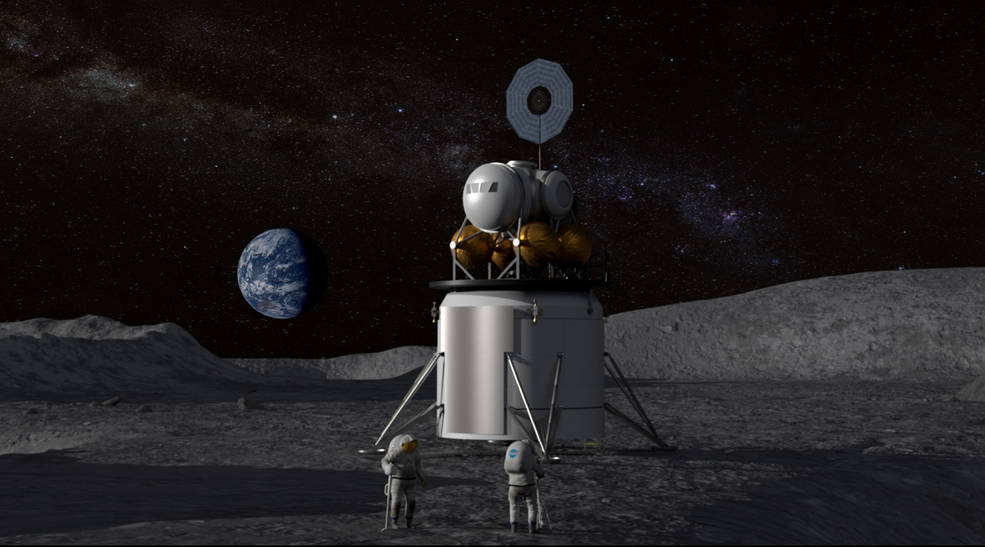
NASA has partnered with thirteen U.S. based space agencies and has formed partnerships on 19 different technologies that will help it advance its operations for reaching out and landing on other planets and extend its research on Mars and the lunar surface.

Through the Announcement of Collaborative Opportunity initiative, NASA had invited proposals from different space organisations. The agency had asked those organisations to submit proposals for the technology they want to work upon. On the basis of various factors, the agency has selected thirteen different organisations.

NASA collaborates with US based Space Agencies
Image Source: nasa.gov

With those agencies, NASA will be providing appropriate resources and support, such that they can continue their research work on the selected technology. The organisations will be working collaboratively on different operations, including landing on other planets, navigating over the surface of the Moon, transferring propellant in space, improving spacecraft operation, etc.

The Blue Origin, Jeff Bezos’s space company will work on a fuel cell-based power system to be used in the company’s Blue Moon lander. The company will be collaborating with NASA’s Johnson Space Center and the Goddard Space Flight Center. Along with that, the company will work on a new navigation system. The system will help in an accurate and safe landing of spacecraft on various parts of the Moon. It will also be developing a new power system, that will empower the landers on the Moon in the lunar nights or for at least two weeks.

On the other hand, SpaceX will be collaborating with the Kennedy Space Center. The two will be working on improving the technology that helps in verticle landing of bigger landers, at the place where the gravity is not that strong, like on the moon and other zero-gravity environments. Other than that, the company will work on improving the workability of the reusable rockets. With the new technology, the rocket propellent can be moved through one vehicle to the other efficiently, within the orbit.

The third biggest company, Lockheed Martin, will be working on robotics and autonomous technologies that would help in plantation and farming in the space so that it will be possible to harvest plants in the deep space in the coming future.

Other than these three companies, Advanced Space will be the part of NASA’s lunar navigation technologies research works and Vulcan Wireless will be helping NASA test the CubeSat radio transponder, and its compatibility with NASA’s Space Network.

Aerogel Technologies, Spirit AeroSystem Inc., Anasphere, Bally Ribbon Mills, Sierra Nevada Corporation, Maxar Technologies, Aerojet Rocketdyne, Colorado Power Electronics Inc., are the other companies that have been selected by NASA to work on its various operations, related to Mars and the Moon missions.

Google Cloud and VMware

Google Cloud to Add Support for VMware Workloads to Attract More Enterprise Customers

Google has just announced that it has joined its hands with the software company, VMware, to expand its cloud services. This way, Google will be able to court the enterprise users of VMware who will be able to run their workloads over Google Cloud.

Through the partnership, the two companies are planning to start a new hybrid cloud service called Google Cloud VMware Solution (developed by CloudSimple). The service will let the VMware enterprise customers use the Google Cloud Platform (GCP) to run their vSphere-based workloads. The partnership will make Google provide its support for the VMware Cloud Foundation. The VMware Cloud Foundation is mainly responsible for deploying and running hybrid clouds.

VMware has got a long list of enterprise customers, and it would be great for Google if it bags them for its hybrid cloud service. Though Google is a long-time rival for VMware and many of the enterprises won’t be moving to GCP, there are many who themselves had requested Google to provide support for VMware cloud over its cloud service. Migrating the VMware workloads to a VMware software-defined data centre (SDCC) running in GCP, will render the organisations to have full, native access to the complete VMware services, i.e. vCenter, vSAN and NSX-T.

Google Cloud and VMware

“Customers have asked us to provide broad support for VMware, and now with Google Cloud VMware Solution by CloudSimple, our customers will be able to run VMware vSphere-based workloads in GCP. This brings customers a wide breadth of choices for how to run their VMware workloads in a hybrid deployment, from modern containerized applications with Anthos to VM-based applications with VMware in GCP.” said Google in the announcement.

Google is moving forward towards internet-based computing and storage, and it is estimated that the company may raise its cloud business to $8 billion this year. The partnership is also going to add up some more to the annual revenue of the company. Where its rival companies like Alphabet Inc. has already been in such deals, Google has just started on this way.

“Our partnership with Google Cloud has always been about addressing customers’ needs, and we’re excited to extend the partnership to enable our mutual customers to run VMware workloads on VMware Cloud Foundation in Google Cloud Platform. With VMware on GCP, customers will be able to leverage all of the familiarity and investment protection of VMware tools and training as they execute on their cloud strategies, and rapidly bring new services to market and operate them seamlessly and more securely across a hybrid cloud environment.” VMware’s Sanjay Poonen said in a statement.

VMware is not new to such partnerships and has recently partnered with Microsoft and formed the Azure VMware Solutions, which is again developed by CloudSimple. In 2016, the company had also joined its hands with Amazon in order to integrate the cloud services from both the companies altogether.

iPhone models

Apple Confirms that all Three iPhone Models Releasing in 2020 will be 5G

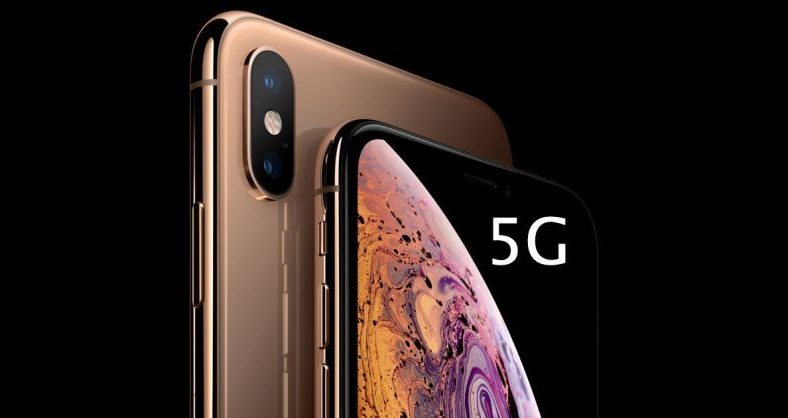
Most of the network providing companies have got their hands on the 5G technology, and so, the least we can expect from Apple is to incorporate the next iPhone models with the 5G compatibility. The rumours were already making rounds that the latest iPhone models will have support for 5G, and now, a note sent by Apple analyst Ming-Chi Kuo to the Apple investors has confirmed that three of Apple’s latest iPhone will render support for 5G.

Though in the past the company had suggested that it would be including the support for 5G in the two models of the three, it is going to launch in 2020. But since the competition is increasing and most of the Android phone developers have opted for 5G, the company has decided to get 5G to all three models it is going to release in 2020.

The previous reports also gave a hint on the sizes of the iPhones, i.e. 5.4, 6.7-inch and a 6.1-inch. All the three iPhones will have an OLED display, the first two models being the high-end iPhones. Previously, it was decided that except the 6.1-inch iPhone model, the other two would be supporting 5G, and it being the cheaper one, will have support for 3G/LTE network.

iPhone models
newslair.com

Reportedly, Apple will be including a smaller TrueDepth camera with all the three iPhones, that will be able to shrink the notch on OLED screens. Also, the company will be adding a seven-piece lens system for their rear cameras.

All the three iPhones will also be including support for mmWave and Sub-6GHz spectrum. Though rising competition is one of the main reasons for adding the 5G support in all its new iPhones coming in 2020, having acquired Intel’s 5G business, the company, now, has more resources for bringing the 5G technology to its new phones. But the company will still be using the Qualcomm chips to make the 5G technology work on the upcoming iPhone models.

“Apple may have the intention to launch the 5G iPhone, which only supports Sub-6GHz, to gain market share by lowering the cost/price for markets which only support Sub-6GHz (e.g., Chinese market). However, 5G iPhone, which only supports Sub-6GHz and the version which supports mmWave & Sub-6GHz are regarded as different projects even though they share the same form factor design,” said Kuo.

Apple currently is working on the launch of its next range of iPhones in coming September. These iPhones are said to be the revision of the iPhone models the company released in 2018. There will be successors to all the three previously launched models, i.e. iPhone XR, XS and XS Max. The iPhone XR will have an LCD display, whereas the other two iPhones will be incorporated with Sport OLED displays. The all three iPhone models will be the premium version of their ancestors and will also have dual cameras.