Your Tech Story

Tech News

android

Users Can Now Access Google Stadia Via 4G and 5G Services On Their Mobile Phones

Gamers have more good news coming their way. Google recently announced that its cloud gaming service Stadia will now be accessible to Android users. As per the report, Google’s Stadia will now work through 4G and 5G services from mobile phones. This will improve the accessibility of the service, which hit the market last November. Let us now take a quick look at how this move will help gamers around the world.

Accessibility Over Mobile Networks

Google’s announcement via their 9to5Google forum says that users can now use Stadia over mobile networks. The platform will be accessible to Android users who have 4G or 5G connectivity. However, this feature will be through an “experiment” mode, hinting that the feature might not pan out so great for the first few users. Ever since the platform dropped in November 2019, users could play games on it only over Wi-Fi. However, a few had figured out how to play over cellular networks by tethering their laptop. Even so, this was not a preferred method for many, with most opting to play over their fixed LANs. 

Experiment Op-In

In order to play over a cellular network, users will have to opt-in for the experiment. To do so, they should head to their Stadia app, select Experiments, and then click on the Use Mobile Data option. As per previous user experience, playing over a 90Mbps LTE connection ranged from playable to filled with stutters. However, that was back in November, and there is reason to suspect Google has since improved the platform. Since we are unsure of whether the tech giant has updated the portal, users might be surprised to find they can now render games smoothly over cellular networks. Also, in the past, cellular networks could be used only via tethering, which does hamper the overall quality. As users can now make use of 4G and 5G services directly, they can expect better user experience. 

Lot of Updates

This announcement is only one of many regarding Stadia since the platform’s launch. Some of the other updates, including making it available to Android phones, allowing wireless connectivity and finally launching a free service. 

Phone Compatibility

One of the major announcements was that the platform no longer supported only a few smartphones. Recently, they opened up the Stadia app to all Android phones capable of downloading it. Most phones that work on an Android 6.0 OS or higher can now use the Stadia app. To enable the platform, users need first to download and install the app. Then, they must open settings, click on Experiments, and later Play on this device. However, most gamers were unsure of whether the app works on tablets. This helped open up a lot more gamers to the platform, which was available only to Pixel phone users when it launched. Later, by February, it added Samsung, Razer and Asus devices to its roster, before finally opening up to other Android users. 

Wireless Connectivity

Six months after launching last November, Google announced that Stadia would work wirelessly with Android devices. During the launch, most users were left surprised that the tech giant did not include wireless controller support to the platform. Due to this, gamers had no option but to connect their controllers via USB to their device. With the announcement of wireless controller support, gamers got an opportunity to test how easily the platform can shift between devices, the web and Chromecast.

Over time, Google has been improving the Stadia platform, enabling 4K Streaming in March over the web, and then making the service free a month later in April. In April, Google also gave away a free trial Stadia Pro version to users for two months. Through this free version, gamers can access Thumper, GRID and Destiny 2, along with six other titles. Furthermore, existing paid users also got Stadia Pro for free for the same period, and a total of 14 countries got access to this free trial.

However, while the service is free and has a sleuth of new games now, Google has not been able to corner the gaming industry successfully. However, the giant promises to add more than 120 games by the end of 2020, ensuring that both game selection and the number of users will grow in the coming months. 

bmw

BMW Out with Electric Versions of the X1-SUV and 5-Series

Recent weeks have been exciting for auto enthusiasts, with companies like Ford and Tesla issuing updates on new releases. Well, the excitement is here to stay as BMW becomes the newest auto-giant to publish statements regarding future releases. As per a report, BMW has decided to offer completely electric versions of some of their vehicles in the coming year. Here’s a look at the whole story and what it means to the auto giant and car lovers.

BMW Company’s Electrics

BMW stated that it would be offering electric versions of two of their popular lines. The company will take the X1-SUV and 5 Series electric in a bid to have at least 25 electrified vehicles as a part of their portfolio by 2023. However, the company has not made it clear by when these vehicles will be available. The electric drive-train will serve as one of four options for the buyers of the X1 and 5-Series. The Sedan and SUV will also be available as diesel, gas or plug-in hybrids. Such models will feature a 48-bolt technology that is mild-hybrid in nature.

BMW
Image Source: autocar.co.uk

Expanding Lines

The company came out with such a decision to align with its plan of diversifying and expanding its electric lineup. Before this announcement, the company decided earlier this year to offer their 7-Series as an electric as well. The flagship 7-Series Sedan is one of their most iconic lineups, and coming next year, it will be available with an electric drive-train.

Goals in the Years to Come

By 2023, the company aims to have at least 25 electric models on their portfolio. Out of these 25, at least half the models will be fully electric, while the others will have electric components. The “electrified” models also stand for ones that come equipped as a plug-in hybrid or normal hybrid. BMW has stated that its goal is to have at least 7 million electrified vehicles on the road by the end of 2030. Also, the company is aiming to ensure that at least two-thirds of that 7 million will be fully electric.

Availability

The automaker aims to bring out these five all-electric vehicles onto the road by the end of next year. The vehicles lined up include the Mini Cooper SE, BMW i4, BMW iX3, BMW iNEXT and the BMW i3. Out of these, the BMW i3 is a famous vehicle, which is a part of the electric vehicle industry. The others are newer entries that do not have the name that the i3 has, and this is something BMW wants to cultivate. When it comes to performance, the Cooper SE comes with an i3 motor. The vehicle’s marketing focuses on the fact that it is an easy-to-drive urban vehicle. It comes with a 32.6 kWh battery that allows for a 110-mile EPA-rated range. 

iX3 Not for America

The iX3, which borrows heavily from the X3, works as an electric crossover. The car will have its assembly done in China, and will surprisingly not come to the US. Instead, BMW plans to hit the market with the iX3 in China by the middle of next year. The company choosing to ignore the US when it comes to their first electric crossover seemed surprising to most experts. However, they believe the decision will help BMW strengthen its hold on the EV market in Europe and China.

However, since the iX3 was built off the X3, which is the company’s most popular model in the US, fans were left disappointed. The company held the unveiling of the car in Beijing through the Auto China expo in 2018. The automaker will have to keep in mind Europe’s stricter regulations when it comes to emissions to have a successful campaign in the EU.

BMW isn’t the only car manufacturer to rethink their EV strategies. For instance, Mercedes-Benz has delayed the American launch of their EQC SUV, which will now occur only in 2021. Similarly, Volkswagen will also withhold the ID.3 from the US, bringing the ID.4 instead to American shores.

When it comes to the other model, BMW stated that the i4, which has a range of 270 miles, will hit production in early 2021. Similarly, the iNEXT, which is a flagship model for the company, will start production next year. It will be interesting to see the finished models and how they perform in a tepid EV market.

dave logo

Popular Banking Application Dave Suffer Major Security Breach Putting Millions at Risk

As the future looks digital, an integral part of IT infrastructure has been developing security measures. With most companies taking their business online, the protection of customer privacy is vital to enterprises. Over the past decade or so, we have seen a steep rise in cyber-attacks and security breaches. Many popular and large companies have fallen prey to such attacks, leading to a loss in credibility and customer loyalty. Recently, banking application Dave.com added itself to the list of enterprises hit by such cybersecurity attacks. Here’s a look at how bad the data breach is, and what it means for the company.

Dave’s Data Breach

Digital finance and banking app Dave.com, which is also a prominent tech unicorn confirmed they had fallen prey to a major security breach. Today, a hacker published on a forum, details regarding over 7,516,625 of Dave’s users. As per a report provided to ZDNet, the company claimed that the breach occurred through one of their former business partners. The origin of the breach, therefore, was through an engineering analytics platform Waydev. The company served as one of Dave’s third-party service providers earlier, and it was through their breach that a hacker gained access to Dave’s records. 

The fintech company allows users to receive cash advances for bills by linking their bank accounts and, therefore, avoid overdraft fees. Subscribers also have the option of taking extra money on loan, up to $100, following which they can borrow more after repaying the original investment.

Control Measures

The company verified that they have plugged the hacker’s entry point and that they have started to notify users regarding the breach. Furthermore, the company is in the process of resetting app passwords to prevent further pilferage. A spokesperson for the company made it clear that Dave had started taking appropriate control measures as soon as they became aware of the breach. 

The incident prompted an investigation, which is still underway to find the exact cause of the breach. Furthermore, the company is collaborating on the ongoing investigation with the FBI. These bodies will analyze claims stating that a hacker cracked Dave’s passwords in an attempt to sell their customer data. To add more resources and assist the investigation, the company has brought in CrowdStrike, which is a leading cyber-security firm.

Public Data Now

ZDNet learned about the breach on Saturday morning when a reader tipped them regarding the fact a hacker was offering people user data via RAID. The information was viable on a platform that has recently gained a reputation for being the best place to leak secure data and other databases. The hacker who goes by the name ShinyHunters is one who has a reputation, having done this before countless times. The name is associated with several high profile hacks, including that of companies like Wishbone, Tokopedia, and Mathway among others.

As of now, data from the app is available via a free download for members who unlock access to it using forum credits. The data on view includes real names, emails, birth dates, addresses, and contact numbers of millions of customers. For a few unfortunate users, the details also include information related to their credit/debit cards and even their Social Security Numbers. However, Dave confirmed that such data was under encryption and hence would not be accessible to the public. 

The company also stated that while the hacker claims to have passwords included, they are hashed out using a function called bcrypt. However, Dave also confirmed that as of now, they have no evidence to verify that hackers executed anything while they had access to user data.

Dave, which offers cash advance services and overdraft protection will now have to take steps to reaffirm the users of their security. Since the breach resulted in over 7.5 million records being sold via auction and then released for free, the company will have to overhaul their security protocol.

Tianwen-1

China All Set to Reach for The Stars with Tianwen-1

The last week or so has led to several high-profile space launches and missions. Adding to the list is China, which plans on launching a mission on July 23rd. It is the country’s most ambitious mission to date, with plans to send three spacecraft to Mars, which also includes a rover to explore the Martian surface. If successful, it will become only the second country in the world to get a rover to the Red Planet. Here’s a look at everything you need to know about the launch and what it means to the country. 

Aiming for the Stars

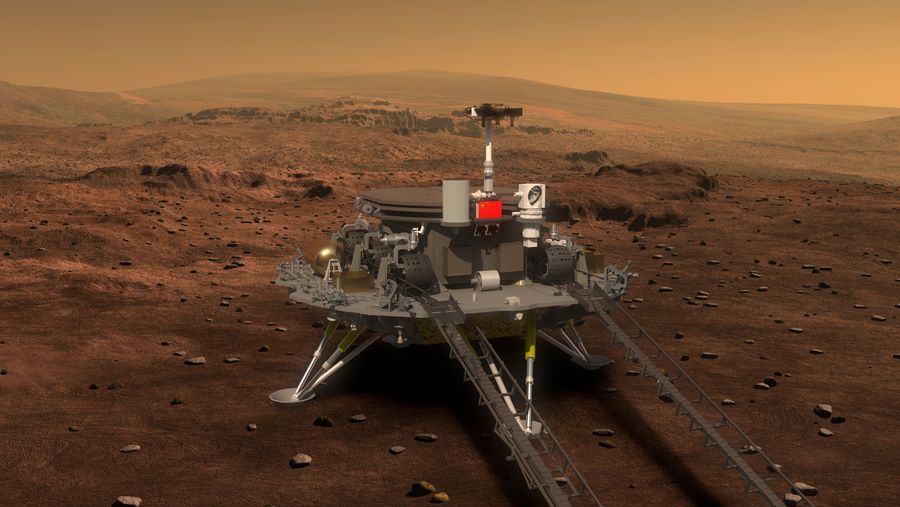
The mission, codenamed Tianwen-1, after a poem that translates to Questions to Heaven is China’s most ambitious project yet. The mission comprises sending to the lunar orbit and surface an orbiter, lander, and rover. The probes will be a part of the Long March 5, which is China’s sturdiest and most powerful rocket. The orbiter will study the atmosphere, whereas the lander will touch down on the ground. It will work as a platform for the rover, helping it move around on the Martian surface to explore it.

Tianwen-1
Image source: space.com

Ambitious Projects

Over the last decade, China has been testing out various complex space projects and missions, like Tianwen-1. Last year, it became the world’s first nation to land and explore the Far-Side of the Moon. The country also stated that it would remain committed to lunar exploration. In keeping with that, China aims to launch another mission to bring samples from the Moon. This mission will mostly occur by the end of this year. The Tianwen-1 will be China’s biggest and most ambitious interplanetary mission. In the future, the country aims to explore an asteroid, and even visit Jupiter by the 2030s. Planetary Scientist James Head, who works at Brown University and collaborated with scientists from the Chinese Space Program, believes the country has several long-term exploration plans. 

Martian Exploration

Exploring Mars is by no means an easy feat, with China’s first attempt not even leaving the Earth. The country launched orbiter Yinghuo-1 in 2011 with the help of a Russian spacecraft named Phobos-Grunt. However, the Ukrainian rocket which aimed to launch the probes failed, destroying both the Russian and Chinese crafts. However, this time around, China is handling everything from the launch to the development of the craft. If successful, China will add its name to the small list of countries that have successfully orbited Mars. Taking things further, the Chinese plan on landing on Mars, which only the USSR and the US have done prior to this. When it comes to rover exploration, only the US has done it before on Mars, making this a prestigious project for the Chinese. 

Rugged Details

The details regarding the space program, like with most things happening in China are kept hidden. However, the country has released some general information regarding the structure of their mission. All three of their crafts will take around seven months to reach Mars. As per schedule, the Chinese devices will reach their destination by February 20201, by when the UAE orbiter too will arrive. Furthermore, NASA plans to launch the Perseverance Rover on July 30th, meaning all three crafts will reach Mars around the same time. The Tianwen-1 will orbit Mars for two or three months, studying the perfect landing location. Once it has a potential landing site, it will analyse and validate data before it proceeds to the surface. The Chinese plan on landing on a strip known as the Utopia Planitia, which is where NASA’s Viking 2 touched down way back in 1976.

Mission Plan

The Tianwen-1 rover will map out unexplored Martian geography, search for water and ice, and also study the Martian surface climate. The rover has over six different instruments, including a Ground-penetrating radar that can help identify rocks, and search for water under the surface. The lander and rover will have to perform an ambitious eight-minute descent manoeuvre to reach the Martian surface. The spacecraft will utilise the Martian atmosphere to cushion the fall, helping them slow down when exiting the orbit. A parachute will deploy to help further slowdown the devices, and the lander will use its engine to hover over the surface before touching down. 

The confirmation regarding the mission’s success will have to come from Chinese officials. Experts believe that if all goes well, the Chinese will celebrate grandly, whereas there will be little noise if something goes wrong. The orbiter will help relay communication between the team and the rover while analyzing Mars from its orbit using its instruments. First and foremost, though, the launch needs to be successful. Reports state that it will take place around 12:45 AM on July 23rd. If they miss that timing, they have a window of opportunity till early August to try once again. This will be the Long March 5’s fifth launch, and its history isn’t all good. 

While its debut was a success, the second launch in 2017 was a failure, leading to redesigning. After the revamp, the rocket had a successful launch in 2019, and we will have to see if the fourth time turns out lucky for the rocket. Space enthusiasts will have to wait and see whether the mission will be a resounding success for the Chinese and their blossoming space exploration plans. Also, such an achievement could help everyone by giving us more insight into the Martian surface. 

Adobe-Logo

Google Pixel’s Camera Genius, Marc Levoy to Join Forces with Adobe to Build Super Camera App

A lot of fans were shocked when the researcher who led Google Pixel’s camera division left the company. However, much to their delight, Marc Levoy has joined Adobe to help them with the development of a universal camera application. As per the announcement today, the partnership will help the company create an amazing high-power camera application that will revolutionise mobile photography. Here’s a look at everything you need to know about this partnership.

Leaving Google

March was a bag full of surprises for everyone, with two top Pixel executives leaving Google. Both General Manager for the Pixel project, Mario Queiroz, and photography expert Marc Levoy bid farewell this year. Later reports stated that the manager had already moved on before the release of the Pixel 4, following which he left Google to join Palo Alto Networks. While no one was sure why such measures were taken, a few people believe that it was due to the Pixel 4 underperforming. The Pixel 4 did not do as well as its predecessors, with Google only shipping out 2 million devices as per The Information. In comparison, Google had shipped over 3.5 million and 3 million worth of Pixel 3 and Pixel 3A. 

Google Pixel Legacy

Levoy is best known for heading the camera team for the Google Pixel. Pixel smartphones have an awe-inspiring camera thanks to the use of computational photography technology. The camera on the smartphone boasts of features like HDR+ capability and Night Sight. In fact, Levoy helped devise a system by which the camera took better photos without requiring more expensive hardware. While the Apple iPhones used multiple cameras, the Pixel line-up competed with them with only a single camera. Later on, a desire for sharper zooming led to Google adding a telephoto lens to the Pixel 4. In comparison, the first iPhone to make use of a second lens was the iPhone 7 Plus, which came out in 2016.

Levoy’s Profile

Before leaving Google in March, he worked for them for over six years, within which he was a part of several large projects. Even before joining the tech giant, he was working on the camera of the Google Glass Explorer, which cost around $1,500. He was a visiting faculty at Moonshot division, which went by the name Google X. In 2002, he helped launch a Google research project, while at Standford, which later became Google Map’s Street View. He played an important role in piquing the world’s interest in light field photography. Furthermore, he worked as a researcher in computer graphics at Stanford. 

Image source: reportdoor.com

Soaring Reputation

Marc Levoy’s reputation inspired the other companies, including Samsung and Apple, to improve their computational photography technology. At Adobe, Levoy will try to do the same, by revolutionising their camera technology. Levoy’s work at Adobe, however, will benefit more than just Pixel users, helping anyone who owns a smartphone. Reports state that he will work on computational technology for cameras across Adobe. Also, his efforts will primarily focus on the development of a camera application that will trump everything on the market now. However, the company has not specified what that means. In the fast, social media platforms like Facebook and Snapchat have used the term to indicate a camera application for themselves. Others have used the name to refer to an app that works across devices, from larger mobile cameras to DSLRs.

Adobe’s Efforts

Adobe already has a camera app by the name Photoshop Camera, and they have a separate camera app in their Adobe Lightroom app. However, the recruiting of Levoy suggests that the company has bigger plans in store. Levoy will also assist in making Photoshop Camera, Sensei AI and Adobe Research better. This indicates that Photoshop Camera might play a bigger role in Adobe’s future. Levoy will be working under Abhay Parasnis, who is the Chief Technical Officer at Adobe. 

Marc Levoy built himself a legacy while at Google due to his association with the Pixel smartphone. The device was Google’s most competitive release with regard to mobile photography. Levoy’s brings with him the experience of working on projects as diverse as the 360-degree VR Jump and burst mode on Google Glass. Without a doubt, this will help him while at Adobe. It will be exciting to see how the photography maverick comes out with next, and how that will change the way we view mobile photography, all over again.

UAE first mission to mars

UAE Successfully Launches Its First Interplanetary Mission

The United Arab Emirates successfully launched its first interplanetary mission today. The launch took place in Japan, and the team sent to space, and eventually to Mars, a probe the size of a car. This launch marks the beginning of the UAE country’s most ambitious space project. The project aims to study Mars, its geography, and weather by following it throughout an entire year. Here’s a look at how important the launch was, and how the team got to where they are now.

Hope for the Future

Hope, which was the nation calls the spacecraft, launched out of Tanegashima Space Centre in Japan. The probe took off via an H-IIA rocket that Japan frequently uses for their launches, and the rocket launch occurred at 6:58 AM. The device will take seven months to venture into deep space. Throughout its journey, it will correct its course using engine burns to direct and align itself correctly. The probe will try to align itself with the Martian orbit sometime in February, next year. Once into the orbit, it will stay on to analyse the Martian atmosphere and gain insight into the planet’s climate and geography. 

Great Timing

For the UAE, the launch came at a critical time. The government came up with the idea for such a project in 2014 as a means to inspire their youth. Furthermore, the project was a way for the country to mark its 50th anniversary in December, next year. To ensure that the probe would be in the Martian orbit by then, the team needed to launch the satellite by the end of this summer. Also, the launch had to take place within a short window of time. This window was critical because it brought the Earth and Mars close together during their journey around the Sun. Since such a planetary alignment only occurs once every twenty-six months, the team needed to get their launch right, if they wanted to meet their deadline for next year.

Fears Subside

As far as experts can tell, the launch was a great success. However, briefly, after the launch, the scientists were afraid that the spacecraft’s solar panels had not opened correctly. Shortly afterward, the UAE government confirmed that they had deployed avoiding complications. Furthermore, the team stated that the spacecraft is in good shape and that communications have been established. This will allow them to continue monitoring the probe, ensuring it stays on course. Furthermore, the scientists will continue to analyse and process the data the probe collects along its journey.

Happy News Worth Celebrating

The UAE Ambassador to the US, Yousef Al Otaiba, stated that the launch ensures that years of hard work has paid off. During a live stream after the launch, he also congratulated the team and noted that this was just the beginning for the country. Up until recently, UAE dealt only with Earth satellites, making this a prestigious leap for them. The team comprising of engineers and scientists were able to turn a dream into a reality within six years. Furthermore, the team was able to do so by sticking to their budget of $200 million.

Project manager, Omran Sharaf said that the government was clear about the fact they wanted a new model of delivery. Rather than opting for something big budget, they wanted something efficient and fast. The team partnered with several institutions in the US, including the Universities of California, Colorado and Arizona State. All these educational institutions have experience building components for deep space probes. The partnership gave the team access to testing infrastructure, practical know-how, and experienced advice.

Big Steps Coming

The launch is big news for the UAE, but they still have a long way to go. Within the next month, they will perform the first manoeuvre needed to correct the probe’s course. It will need to keep accomplishing these engine thrusts to get itself to Mars. However, the biggest test will come in February next year wherein Hope must perform a 30-minute thruster burn to enter the Martian orbit. The move will also slow the craft, reducing its speed from 121,000 kmph to 18,000 kmph. However, by then, the craft will be too far away from the Earth. Hence, it will have to do so on its own, without any instructions from back home. 

But, February is a long way off, and for now, UAE is celebrating its successful launch. If everything goes according to plan, Mars will see quite a few spacecraft, with China planning their own launch in the days to come. NASA will follow up soon enough with their Perseverance rover, making the Martian landscape a new exploration ground.