Your Tech Story

Tech News

Trump

Trump bans Chinese apps like Tik Tok and WeChat to safeguard America’s assets

To assure national security and prevent the collection of data and personal information of Americans by the Chinese companies, Trump finally announced the ban of a few most common Chinese apps. According to the announcement on Thursday, the Chinese video-sharing app, Tik Tok, and another Chinese app WeChat will be banned in the U.S.
Trump

Imposing a ban within 45 days

In response to the miserable and horrendous consequences of the pandemic which spread from the Wuhan city of China, many nations have turned against this Asian country. A month ago, India banned the Chinese apps and now Trump is making efforts to stop the intervention of these “untrusted” Chinese companies. Trump further said that it is an effort to keep the U.S. digital network safe from “significant threats” as Tik Tok is charged with data collection. The tension between Washington and Beijing keeps on increasing and will become more intensified in the upcoming 45 days.

Trump imposed the ban on these Chinese apps under the International Emergency Economic Powers Act. This law can be used in case of any unusual and extraordinary threat thus giving power to the president of the United States to regulate international commerce. Mike Pompeo, US Secretary of State, mentioned that the US will be focusing on the expansion of a clean network thus preventing the Chinese telecom companies to fetch sensitive information as well. Wilbur Ross, US Commerce Secretary, will be in charge of identifying the transactions after the order comes into effect from mid-September.

Tension keeps on increasing 

Not only the American government has ordered China to vacate its consulate from Houston, Texas but also the Chinese government has reciprocated by ordering the U.S. to vacate from the southwestern city of Chengdu. James Lewis, a technology expert based on Washington in response to the imposed ban said that it will demolish the digital world between the U.S. and China. And, the American government should be very cautious as China will retaliate and not sit silently.

Trump also mentioned that the operation of Tik Tok in the U.S. will be sold to Microsoft is the U.S. government gets a part of the sales price. But, no matter what the Chinese apps will be banned in the U.S. on 15th September 2020.

Expansion of the Clean Network

The clean network is a program under Trump’s administration to protect the privacy of American citizens and prevent leaking of sensitive information about the nation. The program clearly states that it guards the nation’s important information against intruders like the Chinese Communist Party (CCP). On 5th August 2020, five new lines of effort were announced by the United States.

  • Clean Carrier: This new effort was to ensure that there is no relation or connection between the People’s Republic of China and the U.S. telecommunications network. It is for the safety of the nation that those companies should not carry any kind of telecommunication services to and from the nation.
  • Clean Store: This step was taken to eradicate the untrusted Chinese application from the U.S. mobile app store.
  • Clean Apps: The trusted apps should be removed from Huawei’s app store and also prevent it from pre-installing in the smartphone.
  • Clean Cloud: This is one of the most important new installations in the Clean Network as sensitive information about the vaccines and researches regarding COVID-19 are stored on cloud-based systems.
  • Clean Cable: The U.S. will work with foreign partners to make sure the undersea cables are not compromised.

The outrage of Tik Tok lovers

But apart from ensuring the safety of the U.S. citizens, the ban of Tik Tok has not been taken positively. There are around 100 million Americans who use Tik Tok and they have voiced against banning the app. But, to prevent theft of information that can destroy a nation, it’s high time to take a big step against China.

Samsung

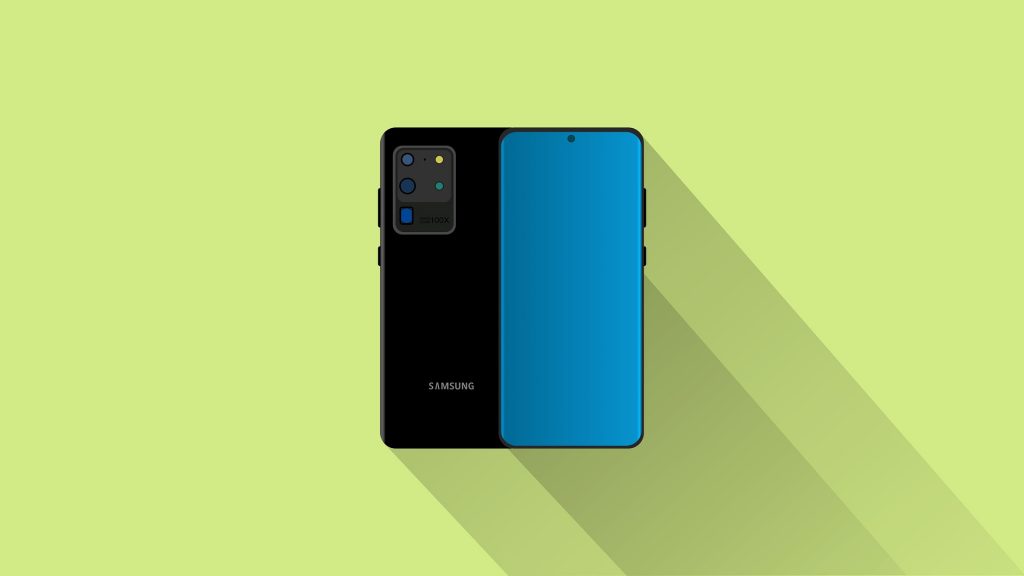
Samsung Wows Users with Specs for the Latest Galaxy Note 20 Ultra

The last few weeks has brought with it exciting news for tech enthusiasts. Major players within the smartphone market, such as Google and Huawei, have dropped details regarding their newest releases, with Google coming out with three new model specifications. Not wanting to be left too far behind, Samsung has now announced two new models for this year, and the specs for the same have left users excited and baffled. Here’s a look at everything you need to know about Samsung’s promises and how they compare with the rest on the market.

Image Source: 9to5google.com

Galaxy Series Revamped

Samsung came out yesterday and officially announced its Galaxy Note lineup for this year. The two models which will come out this year include the Galaxy Note 20 and the Note 20 Ultra. Both these phones will have the S Pen stylus that sets the Note series apart. However, the models re also quite different from their predecessors. 

Upgrading and Downgrading

Like with the Galaxy S20 that came out earlier this year, Samsung is raising the bar for the Ultra series by ramping up specifications. The Ultra series will soon be very high-end smartphones that feature a sleuth of top-notch functionalities and features. However, this has led to the regular phone missing out on some essential functionalities. For instance, Note 20 does not have a very high refresh rate, extra microSD storage, or periscope zoom lens. But, cutting back on these features has not led to a less expensive phone with the 8GB RAM model costing a whopping $999.99.

However, the Note 20 Ultra, has every feature Samsung can come up with, other than the folding screen technology. This high-end smartphone will cut users back by $1,299.99 if they go for the 128GB storage-12GB RAM one, and $1,449.99 for 512GB storage model. Preorders for both will begin on August 6th, and the shipping will start on August 21st as per the reports.

Support and Specs

Both phones will support both types of 5G networks, and this is something that the company is pushing heavily. Furthermore, they will feature an S Pen with improved latency and more support for gestures to use the phone remotely. Both of them have a wireless fast charging option while also supporting reverse wireless charging. The phones will be shielded using the newest Gorilla Glass that is scratch-resistant.

Both phones have stereo speakers that run on Dolby technology, are IP68 standard water-resistant, and will come with Android 10. Videography capability has been improved, with both phones capable of recording in 8K and support the option of better external microphones. Samsung has also leveraged its tie-up with Microsoft to offer users more software updates, and the DeX works wirelessly through Miracast.

Killer Looks

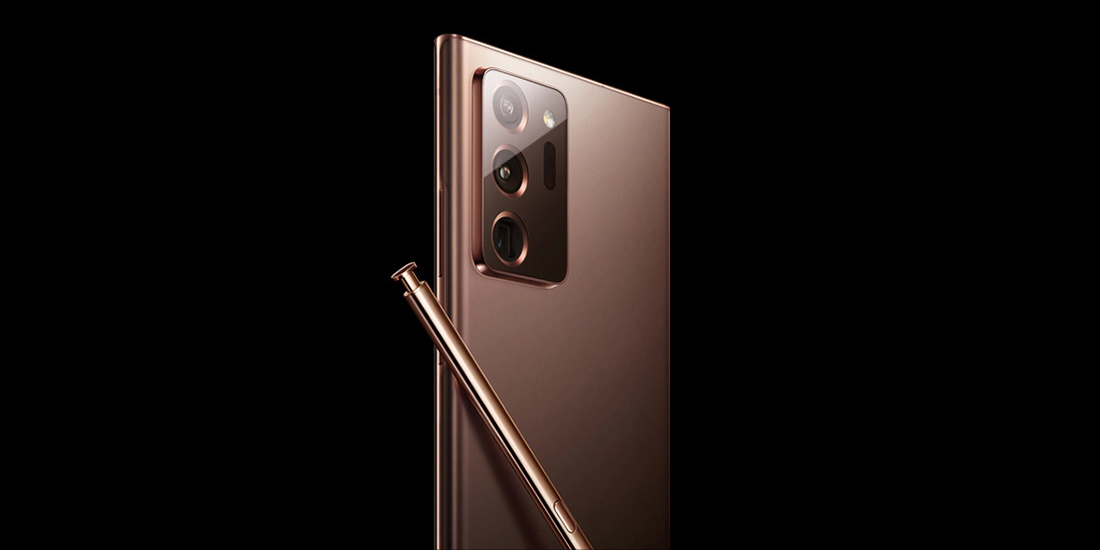
Both the Notes have a new finish that Samsung has dubbed Mystic. The look has a textured finish that will help diminish, hide and reduce fingerprint marks on the outer surface of the phone. While the Ultra will come in black, white, and bronze, Note 20 will be out in grey, green, and bronze.

Best Specs in the Market

The Ultra will take the place of Samsung’s most efficient and highest tier phone that specialises in excellence. It will be what the company will offer as something second to none within the market. Also, with the new Ultra, Samsung wants to correct the mistakes that it made on the S20 Ultra. It is a large square phone with a curved screen that minimizes bezel-visibility. The massive 6.9-inch OLED display has a refresh rate of 120 HZ and a resolution of 1440p. The three cameras in the back will have one that is of a whopping 108 megapixels, while another will include a periscope. The phone runs on the Snapdragon 865 Plus and comes with 12GB of RAM, while also supporting additional SD storage. There is no doubt that spec-wise, the Ultra will be the new king of the smartphone industry, running on a 4,500mAh battery and supporting both types of 5G.

The Note 20 Ultra also supports Ultra-Wideband radio enabling users to share files easily by pointing their devices at each other. Since the iPhone 11 Pro featured the UWB, Samsung had no choice but to follow suit. Along with this, the company has also announced a new watch, earbuds, and tablet, while also coming out with a Z Flip phone with 5G compatibility. It will be interesting to see how the phone sells, and how Samsung’s Note 20 Ultra will hold its own within the high-end smartphone market.

disney+

Things Looking Up for Disney+ As They Cross 60.5 Million Subscribers

The ongoing COVID-19 pandemic has, in many ways, spelled good news for entertainment services. Around the world, we have seen streaming services, and gaming companies witness a spike in usage as people remain confined to their homes. In keeping with this fashion, Disney+ recently released a statement that they had over 60.5 million active subscribers as of yesterday. Here’s a quick look at how the company’s journey has been, and what this means for other streaming services.

Picking Up Subscribers

As per a statement by Bob Chapek, who serves as the CEO of The Walt Disney Company, Disney+ has over 60.6 million subscribers as of August 4th. The news came out while discussing or going over the financial report of the company over the last quarter. The financial report covered the company’s earnings over a period, ending on June 27th. Since the report did not include subscriber increase in July, it reported the count as 57.5 million users. However, Chapek was quick to point out that the streaming service was doing much better than ever imagined. He also stated that Disney+ was enjoying a growth rate that initial projections did not predict. 

Early Beginnings

Disney’s streaming service launched in November 2019. In April of this year, the company passed the 50-million subscriber milestone. However, this included subscribers of Hotstar India and free subscribers as a part of the Verizon promotional campaign. The company first tested its streaming service in the Netherlands, before launching in both the US and Canada in November. As a part of their launch, the company’s catalogue included The Mandalorian, and deep archives consisting of Marvel, Disney and Pixar movies and shows. Furthermore, the channel also contained 30 seasons of the hit American show- The Simpsons. The service was made available on iOS, Android, the web, smart TVs, Roku and even through game consoles.

Journey till Now

Disney+ wasn’t the company’s first experience with streaming, having tried the same with ESPN+. Also, following its acquisition of Fox, Disney has taken over Hulu, while also owning Hotstar. A big selling point for the service was the fact that it would have exclusive rights to Marvel movies after they left the theatre. During their first year, the company spent over $1 billion in generating original content, while planning to increase this $2.5 billion by 2024. Also, the service is a delight for parents as it is family-friendly, having no R-rated content on it.

Push from COVID

The COVID pandemic has helped accelerate the growth of such streaming services greatly. For instance, Netflix was able to add over 10 million subscribers to its already large user base. It now boasts of over 193 million active subscribers. Similarly, ESPN+ too has been growing exponentially, reaching a gross of 8.5 million users as of June this year. Hulu, which is another service owned by Disney grew by 27% to over 35.5 million subscribers, out of which 3.4 million pay for both live television and video on demand. Disney+ has benefitted from the release of Hamilton, which came out during the 4th of July weekend. Chapek also announced that Disney+ would release Mulan on September 4th. However, the premiere access will only be available for people who do not mind paying an additional $29.99.

Fall in Revenue

Disney’s revenue from its international and Direct-To-Consumer divisions grew by 2% to eclipse $4 billion. However, the company’s operating loss also grew to $706 million from the earlier $562 million. Netflix too felt the impact of the pandemic, showing a 10% drop in share value for their second-quarter. Revenue for the quarter inched close to $6.15 billion, while the operating income ran up to $1.36 billion. Hence, the company’s net income was $720 million, per-share earnings being $1.59. However, investors were looking for per-share earnings of $1.81.

Yet, the growth of Disney+ will serve as encouragement for Disney, which is suffering due to the COVID-19. Most of their other businesses, including their theme parks, have had to face severe restrictions due to the ongoing pandemic. Disney’s overall revenue fell by 42% as a result to $11.8 billion, with earnings per share showing a loss of $2.61.

However, with the Disney+ service looking up, the parent company has much to celebrate. A lot of new titles are up on the line for the company, and subscription is expected to keep growing till the end of this year. It will also be interesting to see how the company adapts to this surge in users and comes out with new original content this year.

Dark Sky

Dark Sky No Longer Available to Android and Wear Device Users

There have been quite a few takeovers and acquisitions in the tech world in recent months. Furthermore, there have also been several bans and issues arising out of socio-political complications leading to apps having limited accessibility. Adding to that list is a popular app used to check on weather conditions, Dark Sky. Apple acquired the app earlier this year, announcing it would take the app off the Android platform, and did so recently. Here’s a look at the popular weather app that Android users will no longer have access to in the future. 

Apple’s Acquisition

The iPhone maker acquired the weather app sometime in March this year, deciding to make it unavailable for Android users. Though the initial plan was to take it off the market in July, the decision was later delayed by a month. However, recently users realised that the app had been removed from the Android platform. The shutdown has been put into motion, making the app officially discontinued, and inaccessible to Android users. Also, users who had paid and subscribed for the services will receive full refunds as per reports. All the Wear-enabled and Android apps shut down on August 1, 2020. 

iOS Platforms Stay Active

However, the app’s services will remain unaffected on iOS platforms. They will still be able to install and use the app, and its complete functionality as before via the iOS App Store. However, when Apple acquired Dark Sky, they stated that the API for the app would only function until 2021. The report said that the company would not be accepting new signups after that period. According to an official weblog summit right after the acquisition, Adam Grossman, who serves as a co-founder of Dark Sky, stated that it would continue to provide top-notch services. The app aims to provide accurate and reliable information regarding the weather. He said that Dark Sky worked to help as many people as possible while respecting user privacy. The company was excited to begin their association with Apple, and Grossman stated that they were hoping to reach out to more people in a larger way. 

Delayed Removal

However, while the weather app went off Android only in August, it was supposed to leave much earlier. The app kept its doors open on the other platforms longer than initially planned. While the initial plan was to shut down operations by early July, the company moved the removal ahead by a month to August. However, the apps were taken off the Playstore in July, meaning that only users who had it installed could keep using it for an extra month, as per 9to5Google.

Refund Alert

The company has also clarified that users who had paid for services beyond August will receive full refunds. Dark Sky used to charge Android users $2.99 annually to access their full functionality. Meanwhile, iOS users have to pay only $3.99 at the time of purchase to access the app’s services. Furthermore, Dark Sky will remove maps, weather forecasts, and other embeds from their official website in August as well. However, the Dark Sky API will remain active until the end of 2021. But, the company no longer accepts new signups, resulting in third-party apps being cut off from the app’s data soon enough. 

Unfortunate Takeovers

The case, in many ways, is similar to how Amazon acquired Eero last year. Many experts were apprehensive of how a large tech-company taking over such small independent companies would affect the tech scene. A lot of people support such small companies as they run independently. However, these users are left worried about what the tech giant plans to do to the product they love and use. With Apple and Dark Sky, the acquisition has led to the app being no longer available to Android users. Users loved dark Sky as it gave them hyper-local and reliable weather forecasts that were very accurate and up-to-date.

Furthermore, users also did not have to worry about whether their data was being sold or transferred. The news is even more painful as the same fate had befallen another beloved weather app called Weather Timeline a year ago. The app was bought by a company that has a history of selling data, leaving fans discouraged. Furthermore, all the other apps that use Dark Sky’s APIs will also have to look for other weather data sources. While Android users are angry, they can no longer use this great app, the silver line here is that at least the service will remain active on iOS. Also, experts are curious to see what Apple plans to do with the Dark Sky API. We will have to wait and see whether the tech giant will incorporate it into their unique weather app or offer it as a secondary service on a monthly subscription model.

flight simulator

Microsoft Flight Simulator Returns to Take Us to The Skies

If you grew up gaming in the 1990s, then there’s a high chance you know about the Microsoft Flight Simulator. To most 90’s kids, the Flight Simulator is the first thing they would associate to the tech giant, even more than Word and Excel! For most children of that age, it was the best game on the PC as it truly took them to the skies. It has been a while since Microsoft has released updates regarding their plans for the game. However, the company will soon be releasing a significant update, and the news is exciting gamers around the world. Here’s a look at why the Microsoft Flight Simulator 2020 is so phenomenal, and the cultural significance of the game. 

Rare Updates

While the game defined Microsoft in the 90s, it seldom looked back at it during the 2010s. The brand has been lurking in the darkness for a good part of the last decade. The last update or release on the franchise came in the form of 2006’s Flight Simulator X. A few years down the line, Microsoft shut down the game developer Aces Game Studio, as a part of their widespread layoffs. Later, the 2012 spin-off called Microsoft Flight was not well-received by critics or gamers, leaving many to believe the franchise was over for good. However, in a few weeks, Microsoft will release the most significant addition to the franchise throughout its 38-year heritage. Titled Microsoft Flight Simulator, and developed by Aosobo, a French development studio, this is one of Microsoft’s most ambitious projects.

What It Aims to Do

The project will help bring together data from Bing Maps and use Azure’s innovative procedural generation methodology to bring to life details we have never seen before. Critics who have already started playing the pre-release alpha were left dumbfounded at the attention to detail in the game. Considered an exquisite effort from Microsoft, gamers have already hailed the Flight Simulator, the best yet successfully shouldering the expectations of millions. However, a popular question many had were; Why now? Why did Microsoft reinvent the wheel with the series in 2020?

Why Now?

Jorg Neumann, who serves as the tech giant’s head of Flight Simulator, stated that the company switched focus to Xbox in the last decade. After launching Flight Simulator X, Microsoft focused mainly on expanding its gaming market share through developing the Xbox. He says that while the desire and intent to make a follow-up simulator always existed, it never seemed like the right time.  The team often found themselves unsure of what to add, what vision to follow, and how to take things forward.

Inspiration and Development

Recently, Neumann began working on Microsoft’s AR headset HoloLens, which featured a demo version of HoloTour. This application allows users to fly through places Machu Picchu and Rome, being their first collaboration with Bing Maps. Neumann recalls how the experience felt so surreal due to the sheer amount of detail that was possible using this technology. This was when he thought that transferring such gameplay to the simulator would be revolutionary. A year later, he contacted Asobo with the plan, and the team started work on building a realistic map of Seattle, which is also Microsoft’s home city. Asobo built a demo version that featured a Cessna plane flying in downtown Seattle, accurate to a mind-blowing 5-cm resolution. Neumann showed the demo to Vice President Phil Spencer, who now heads the Xbox division.

Though Asobo did not have much experience building a flight simulator before, Neumann trusted them with the project. Their team had worked on an open-world terrain racer game called Fuel in 2009, which made use of both satellite data and procedural techniques. They leveraged that experience to create a realistic and credible game environment for the MFS 2020. Martial Bossard, who is a co-founder of Asobo, said the team visited flight schools to understand how the flying experience truly feels. He also stated that it reminded him of how he had started gaming himself, as he began his journey on a flight simulator. Neumann sent help to Asobo in the form of the older Flight Simulator X engine, helping speed up the development process.

End Result

All this time and effort has led to the creation of a brilliant simulator.  The Microsoft Flight Simulator distinctly resembles actual flying and combines this with breath-taking visuals. The reactive clouds and weather, beautiful imagery, and accurate gameplay all add to the experience in a profound way. However, as of now, Microsoft does not have high-quality data for all regions across the world. Since AI cannot generate landmarks, bridges, and other unique objects, they will have to be built by hand. However, Neumann has stated that the team will work on building those world elements, helping make the MSF a global game. The game will launch on the Xbox Game Pass PC Version, followed by an Xbox version soon enough. The PC version will also support VR rendering, helping increase the game’s fan base.

We aren’t sure how the game will run on Xbox consoles due to the technical requirements of the game. However, it is clear to see that Microsoft has created a very accessible simulator that many will grow to love. Not only is this an incredible achievement technically, but one that will help repackage an old favorite into the hearts of a new crowd.

Huawei

Huawei Usurps Samsung to Become Biggest Smartphone Seller of the Last Quarter

The year 2020 has brought several firsts, partly due to COVID-19, and the rest due to the lockdown it caused. No industry or field has been left alone by this global pandemic as the global economy took a tumble. However, certain companies have braved the storm and come out on top. As per a report by analyst enterprise Canalys, Huawei has shipped more mobile phones in a quarter than any other smartphone manufacturer. Here’s a closer look at what this means for the world of technology, and how buyers can benefit from this shift in power.

Huawei On Top

Huawei has climbed to the top of the charts with regards to the number of units shipped within a quarter, beating out the likes of Apple and Samsung. The company has had hopes of usurping Samsung to become the world’s largest smartphone seller for a while. The reports by Canalys prove that is exactly what happened between April and June in 2020. However, the report does not claim that Huawei will hang on to the title for long. The ongoing global pandemic had a big role to play in how these numbers turned out. Therefore, experts believe that things will turn around soon enough, as the world retraces its steps back to normalcy. 

Impact of the Global Pandemic

As a result of the COVID-19, Huawei suffered a 5% loss in terms of year-on-year sales, shipping 55.8 million smartphones last quarter. However, within the same period, Samsung suffered a fall of 30%, hitting a low of 53.7 million units. The most integral point here is that over 70% of Huawei’s sales come from mainland China. The country was somehow able to escape the harrowing effects of the pandemic, leading to it becoming a more viable market. However, Samsung did not have the same fortune, as they were not as big a player as Huawei within China.

Huawei Hoping for Better Days

A Huawei spokesperson stated that the news was very welcome for the company amidst such troubling times. The achievement was also a result of their exceptional resilience, and a harbinger for better times to come. While the company braved unprecedented and unforeseen circumstances, they focused on growing their brand, leading to their claim on the top spot. Analysts at Canalys credit the COVID-19 for Huawei’s resurgence and shoot to the top. Ben Stanton, who serves as a Senior analyst, stated that the company made good use of China’s economic recovery to shoot to first place.

Difficulties Ahead

Things have not been easy for the Chinese manufacturer, though their phones have impressive hardware. Rising political tensions and sanctions on phones have threatened their hold on foreign markets. The recently launched Huawei P40 was regarded to be a remarkable phone by most who reviewed it. The company reached the zenith of its technical prowess, hitting the best hardware specs at an affordable price. 

However, President Trump’s trade war against China has borne bad news for the company. America recently put Huawei on its Entity List, meaning most American companies now cannot hold trade discussions and do business with it. As a result, the Chinese manufacturer can no longer ship phones containing Google services or apps. In fact, their phones cannot even hold the quintessential Google Play Store, leading to an almost instantaneous reduction in demand. 

Huawei Vs. Samsung

Mirroring Samsung, Huawei to has two separate flagship models, the P, and Mate series. While the P series somewhat resembles Samsung’s S series being more mainstream and simple, the Mate Series takes after Samsung’s Note Series. These phones suit power users and come with a sleuth of super-specific features. However, unlike Samsung, Huawei has made both these series look drastically different. The P40, as a result, has rounded edges and a softer design with an OLED screen and subtle curves. Also, like with the Galaxy S20 U, the P40 offers periscope-telephoto cameras, which are still hard to find in the American market. Therefore, we can see stiff competition between both brands as they try to dominate the smartphone market on a global scale. 

However, Samsung says there is no cause to worry, claiming it will bounce back soon enough. In fact, the company posted operating profit rising by 23% despite revenue dropping by over 6%. They say they have recovered from the global economic hit faster than imagined, and that sales will be back to normal soon enough. While Huawei might have to recede its top spot soon enough, its continued strength in the Chinese market will provide some much-needed hope.