Your Tech Story

Tech News

GoPro Hero 9

GoPro launches Hero 9 Black action camera with 5K video recording, dual screens, and more

After GoPro Hero 8 Black, the company has launched GoPro Hero 9 Black with added features and modification. If you are a photographer or a videographer, this is a must-have and you should add it to your list. GoPro Hero 9 Black is mainly designed for shooting adventurous video clips but you can shoot other clips as well. Though the GoPro Hero Series camera is famous among vloggers, the Hero 9 Black will be the biggest hit of this year. 

The GoPro Hero 9 Black is the flagship action camera of the company for this year. Some of the highlighted features of this new gadget are a high-resolution sensor, removable lens cover, front-facing color LCD, etc. The Hero 9 Black model will be compatible with GoPro Mods which will include a new max lens mod. Let’s have a descriptive look at this new action camera. 

GoPro Hero 9 Price and Availability 

The high resolution 23.6 megapixel Hero 9 Black will be available in the market from late October. The price of this model is Rs 49,500 in India. GoPro will also launch a Media Mod, especially for the Hero 9 Black in the upcoming months. The company claims that it will offer a much better microphone which will come with a foam cover. The foam cover will help in suppressing the noise thus being an excellent noise absorber and also a weather-resistant product.

After Hero 9 Black is made available on the market, Hero 7 Black will become the entry-level model while Hero 8 will continue to sell but maybe at a dropped price. GoPro also has a GoPro Max, that is, the only 360-degree camera offering of the company. But, it won’t be updated this year.

Specifications and Features

The most important feature of this action camera is the 23.6-megapixel image sensor. This is the biggest upgrade of the model as the previous one had a 12-megapixel sensor. The video shooting capability of the Hero 9 Black is up to 5k video at 30fps. For the still images, the quality will be 20 megapixels. The company has also upgraded the rear touchscreen by making it a bit broader. The rear screen measures 2.27 inches to be precise diagonally. The company has also added a new front-facing color display to the model.
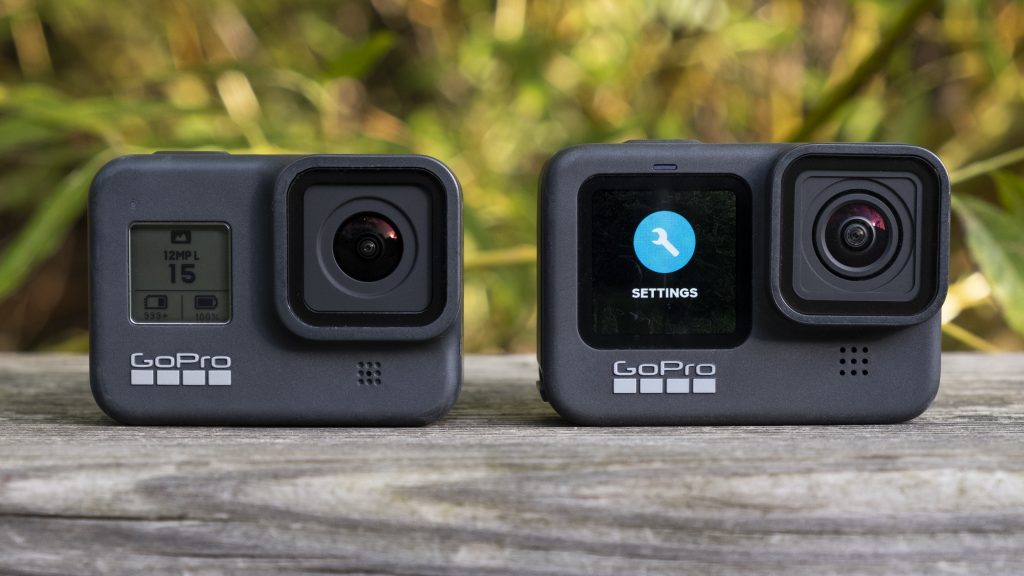
GoPro Hero 9
Image Source: techradar.com

There is also a 1.4 inch LCD that works at its best when pointed at yourself. One can also use the front display for framing the shot using it as a monitor. This product will boost the feed of the recent Instagrammers and YouTubers once it hits the market. For people who love traveling, this model is a pure blessing.

Hero 9 Black has a battery of 1,720mAh which makes it slightly bigger and heavier than the previous models. The removable lens cover of the Hero 9 Black is of great advantage as you can swap it with a new one if it is damaged. You can replace it with a new Max lens mod as well which has a wider field of view and you can use Max HyperSmooth stabilization. One can also with horizontal lock software settings with this new accessory.

Apart from the new main software HyperSmooth 3.0, TimeWarp 3.0 has also been installed. TimeWarp 3.0 always instantly to switch the video speed of the hyper-lapse to either real-time or half-speed. The new model can also perform horizontal leveling with the camera instead of relying on the GoPro app. It has a Type C charging with a single microSD card.

Scheduled capture is one of the best features of the Hero 9 Black model. You can fix the timing of the shoot and along with that schedule the duration for the time it will shoot ranging from 15 seconds to 3 hours. And, after capturing the video, the camera will turn itself off immediately.

Hero 8 Black vs. Hero 9 Black

Hero 8 Black weighs 126g and Hero 9 Black weighs 158gm. The new Hero 9 Black is waterproof up to 10m and the rugged body is similar to that of Hero 8 Black. Hero 8 Black is compatible with the Media Mod whereas for Hero 9 GoPro will launch a new Media Mod. The battery of the new GoPro Hero 9 Black is also better (1720mAh) as compared to Hero 8 Black (1220mAh).

Oppo ColorOS 11

Look at the Key Features and Expected Timeline of the OPPO ColorOS 11

The beginning of this month saw Google rolling out its newest Android version- Android 11. Now wanting to be left behind, Oppo too recently announced that it would be releasing its new OS shortly. Soon after, the smartphone maker launched the ColorOS 11 on a few of its flagship models on a testing basis. With this new OS, Oppo wants to provide its users with the best of both worlds by merging the traditional and modern. While the ColorOS retains a conventional outlook of older Android OSs while delivering a cleaner and more efficient performance. Here’s a quick look at everything you need to know about the ColorOS features and the expected timeline for release.

Customization is Key

According to Lynn Ni, who serves as the Design Leader for the OPPO ColorOS 11, the UI focuses a lot of customization. Since users want a more personalized user experience, the UI promises to deliver the same. Furthermore, it offers a unique experience by catering to the varying desires and needs of the customer. The team took customer feedback to improve their customization further, allowing the UI to encompass a large variety of features. Ni says that this allows their users to demonstrate their creativity and build a user interface they enjoy working on.

Oppo ColorOS 11
Image Source: timesofindia.indiatimes.com

Key features of the OPPO ColorOS 11

  1. OPPO provides further enhancements with regards to performance through the ColorOS 11. This combines the Quantum Animation feature, which helps reduce lag and RAM usage by 45% with a feature to improve the response rate by over 32%. Furthermore, the enhancements also help in improving the frame rate by 17%.
  2. The OS allows for significant customization, with users having the choice to enable the Dark Mode and customize their display. They can also set their own wallpapers, fonts, themes, and icons as usual, while also creating their unique white mix. The mix will feature a combination of sounds and audio clips from cities across the world. 
  3. An India-only feature allows users to mass-text a specific number of contacts in their current location when their battery falls below 15%. 
  4. The OS significantly favors and improves multitasking by allowing users to watch videos and text at the same time. They also get to pick out six apps that should run even when the battery is low to enhance the phone’s overall battery utilization.
  5. OPPO has also added more security features and privacy measures, allowing users to lock apps. The OS also features fingerprint scanners, facial recognition support, and more control over what apps can access their data.

The new features that have been added are a part of OPPO’s Make Life Flow concept. The OS also introduces unique contrast and color schemes, helping enhance the Dark mode.  Furthermore, OPPO is working on a three-finger capture mechanism for screenshots, and collaborating with Google on a translation capability for their OS. The new update will allow users to translate texts within screenshots with the help of Google Lens. The OS also comes with a feature called Flexdrop to allow users extended multitasking capabilities. Also, the new OS enables users to switch between their smart home devices with the help of a new Device Control menu. The Battery Guard feature also enables users to stop the charging of their phones when it reaches 80% at night to prevent the damages caused due to overcharging. After waking up the next day, the charging will start again till it reaches 100%.

Expected Timeline

Here’s a brief look at the anticipated release of the ColorOS for various OPPO phones.

  1. Starting from September 14: Oppo Find X2, X2 Pro, and the Lamborghini Edition
  2. Starting from September 30: Reno 3 and 3 Pro along with the Oppo F17 Pro
  3. Starting from October: Reno4 Pro 5G
  4. Starting from November: Reno4 5G
  5. Starting from December: 
    1. Reno4 4G
    2. F11, 11 Pro, and the Pro Marvel’s Avengers Edition
    3. A Series- A9, A92, A72, A52
  6. Starting from 2021 first quarter:
    1. Reno10x Zoom,
    2. Reno2, 2 F and 2 Z
    3. Reno3 Pro 5G
    4. A91
    5. F15
  7. Starting from 2021 second quarter:
    1. Reno and Reno Z
    2. A5 2020
    3. A9 2020

The new OS seems to be the real deal, helping users retain their privacy and offering optimum performance. The ColorOS 11 has already gone into beta-testing on a few new phones on a batch-rotation basis. The new update will start hitting smartphones on a large scale from the end of this month onwards as stated above. It will be interesting to see how fans and users react to this new OS and what further updates the company will bring into force.

Google

Google Sets an Unprecedented Goal to Tap Only on Renewable Power by 2030.

With our world on the verge of destruction as we are running out of non-renewable resources, green energy is the need of the hour. Fuels like natural gas and coal are in high demand around the world because many industries are consuming it and they are present in a limited amount. Many countries and the R&D department of many companies are carrying out research to make green energy more accessible and affordable. Because once we find a strong source of renewable energy we can put a stop to the use of limited resources. Till then we should consume power from natural non-renewable resources judiciously.

Speaking of consuming energy judiciously, Google is aiming to use 100% clean energy by 2030. The chief executive officer of Google, Sundar Pichai told Reuters yesterday that they will ditch consuming power generated from coal and natural gas and completely depend on renewable sources of energy.

Google “stretch” goal

Alphabet Inc’s Google is planning to use only carbon-free electricity to power all its offices and data centers by 2030. Google is a multinational company trying to become completely dependent on renewable energy sources and if they succeed it will become the first company to ditch non-renewable sources of energy.

Sundar Pichai, CEO of Google, has described it as a “stretch” goal as it will force the company to push itself beyond the technical norms of offsetting carbon emissions. He also said that to achieve this goal they also need to make a major technological and political breakthrough. The initiative taken by the company is appreciated as this will set an example for many industries around the world to pursue an alternative option. Someone had to start it and Google is helping others find solutions like it is doing for itself.

Climatic change limits the resources

Though we are receiving alert messages about how rapidly our limited resources are declining, how global warming is gradually becoming a nightmare for the Arctic and Antarctic region, this year triggered the situation. The high rate of wildfire in 2020 has led to the destruction of many natural resources with climate change at its peak. The western part of the United States has witnessed damage to wildfire and Google wants to draw people’s attention to this via its new goal and product feature.

Google
Image Source: nasdaq.com

It’s been many years that Google has inclined towards the renewable sources of energy and a part of Google’s offices and data centers run on it. Almost 61% of the total Google’s hourly electricity usage at a global level is fueled by renewable sources like wind, solar power, etc. So, more than half of Google’s energy consumption comes from green sources which are a very big success for the company. But, the consumption of green energy is not equally distributed. For example, in Google’s Oklahoma data center 96% of the total hourly energy required is met by carbon-free resources while in the gas-reliant Singapore operation only 3% is met. So, Google’s new goal will establish uniformity as well.

Sundar also said that to fuel all the offices and data centers 24/7 with carbon-free resources is pretty challenging. So, they spent the entire last year coming up with a practical model and hence confident about reaching the goal by 2030. He didn’t reveal any cost of the new system yet.

Other companies 

Other big companies like Amazon and Microsoft are also trying to eradicate carbon emissions from the environment. But, it is only Google that publicly announced their goal to be fulfilled by 2030. Every company should try its best to start producing green energy in-house as scientists say that by 2030 global warming will take a huge toll on our planet.

Stop pollution 

Jennifer Layke, the global director of the World Resources Institute (funded by Google) said that the action of Google has inspired many in America and Europe over the last decade. Google trying to ditch carbon-containing sources of energy is nothing new, the only difference is now it will look onto nations with crucial polluting regions like India, Indonesia, Vietnam, and China. Jennifer also said that if we are unable to ditch carbon, we will suffer in the hands of natural disasters like drought and firestorms.

Google has remained carbon-neutral since 2007 thus focusing more on planting trees, funding projects concerning green energy, etc. The carbon fuel electricity usage for Google is going now as compared to the early 2000s.

Nvidia Logo

Nvidia to Acquire ARM Holdings from Softbank at a $40 Million Valuation

The coronavirus pandemic has made this a precarious time for companies of all kinds. As a result, we have been seeing quite a few mergers and acquisitions in recent months. The newest addition to that group is the collaboration between Nvidia and Arm Holdings. Through a shock announcement on Sunday, Nvidia has agreed to buy smartphone chip-designer Arm Holdings, from Softbank at a valuation of $40 billion. Here’s a look at everything you need to know about this acquisition and the lead up to it.

Details Regarding the Deal

The companies announced via a report on Sunday that they were near closing the acquisition deal. The deal, which values Arm at $40 billion will include $21.5 billion via Nvidia stock, $12 billion in cash, with a $2 billion payable at the signing of the deal. In 2016, Softbank acquired Arm at a $31.4 billion valuation, making it one of the most expensive acquisitions ever. Arm Holdings is a known chip-design and manufacturing company that focuses on the design of chipsets for smartphones.  They are also involved in the making of Qualcomm and Apple chips, making them a popular choice within the industry. Furthermore, Apple has also expressed plans to shift its MAC computers from Intel to Arm chips, opening new avenues for the company.

Nvidia’s Plan for Arm

Nvidia is a giant in the field of AI and graphic card design and manufacture. They also have operations that help with the design and creation of self-driving vehicles and other autonomous applications. The company stated that it would retain Arm’s licensing model which is largely open in structure. Furthermore, Nvidia also said that they would continue to uphold Arm’s customer neutrality. Nvidia has been doing quite well for itself due to a boom in the usage and sales of video games due to the global pandemic. The company is aiming to launch a new desktop graphics card that will help PC gamers play more intensive games. As per the last earnings report, the company has projected a 46% growth in revenue for the third quarter of this year.

Nvidia Arm Logo
Image Source: nvidia.com

Past Acquisition

SoftBank’s acquisition of Arm was a result of them entering the Internet of Things space. The company viewed Arm Holdings as a valuable investment in this field due to its work on wireless connectivity and smart devices. Arm Holdings also works on intelligent chipsets that could possibly help with the development of everyday smart devices, such as refrigerators, other appliances, and cars. At the time of the acquisition, Masayoshi Son, who serves as the Chairman of Softbank, had hailed the move. He went as far as to say that Arm was a company he had always admired and that the acquisition means a lot to him.

Tough Time for Softbank

However, over the years, Softbank has had to deal with financial troubles. A couple of intensive investments, in companies like Uber and WeWork, has led to them losing money. Furthermore, the company’s shares lost value recently due to it holding stock in tech companies that had fared poorly in the market in September. While it is unclear precisely how much Softbank will make through the Nvidia acquisition, it might help them take a capital-intensive company off their hands. However, experts are concerned about whether Softbank will be able to make a lot of money on the sale due to it having invested quite a bit on Arm.

Softbank also requires cash to help the start-ups that it has picked up via the Vision Fund initiative. This move will provide some relief to start-ups that are facing hardships due to the lockdowns brought in by the coronavirus pandemic. Earlier this year, it had also stated that it would sell about $21 billion worth of stock it holds in T-Mobile. The acquisition will see Arm working as an Nvidia division. The company will stay headquartered in the UK and follow the same licensing model and customer base. However, the deal might still face intense scrutiny with regard to regulations from the EU.

Microsoft has also signed on-board, making Arm-based Surfaces and using it on their Windows. Also, the two companies are not competitors per se as Nvidia does not do much of CPU design or mobile hardware manufacturing. Nvidia might be planning an entry into the next stage of AI computing with this acquisition. Reports are stating that Nvidia wants to invest in building a brand-new AI center for research in Cambridge. If this proves to be true, then the companies can align with each other enabling both to push ahead with regards to AI software develop

Tesla Logo

Tesla has launched fast electric car charging in Berlin with more cities in target

The trend of getting shifted to battery cars have been spreading gradually across the globe. But, with diesel and petrol cars slowly dropping in sales, it will still take a few years for the battery cars to reach the steady consistent market demand. Using battery cars has a lot of advantages thus reducing the demand for limited petrochemical resources of our world. But, to meet the demand for battery cars, quick charging technologies should be invented and commercialized.

Many electric car charging points have opened recently in cities of America, China, etc. Moreover, these charging points are now spotted in the Google Maps making it easy for the customers to reach quickly. And, adding into the endless efforts of many companies, Tesla launched the fast electric car charging in Berlin yesterday. This will help in boosting the battery car scheme and development attracting more potential buyers and automobile companies.

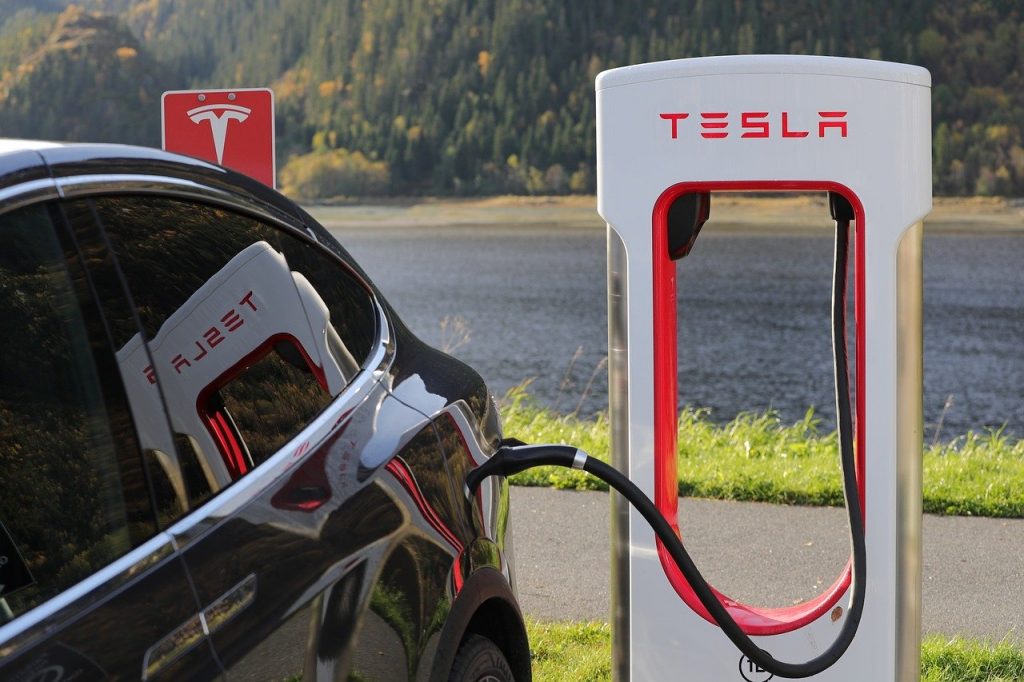
Tesla new supercharger

According to Reuters, on 10th September 2020, Tesla Inc launched a new fast electric car charging thus contributing to the upcoming industry of electric vehicles. The managers of the company demonstrated this new electric charging for cars in the Berlin campus. The company further mentioned its plan to execute the same in more cities soon. Many buyers take a step back from buying electric vehicles to get rid of the charging inconvenience in the future. But, Tesla is trying its best to eradicate the problem permanently.

With the launch of new supercharging for electric cars, the company is giving access to as many people as possible who right now can’t access such charging. Jeroen van Tilburg, manager of Europe of charging infrastructure at Tesla, said that they are expanding this supercharging network into city centers so that people who don’t have access to home or workplace charging can also experience it. It is a good business strategy by Tesla which shows a high level of commitment towards the existing and potential buyers.  

Tesla Supercharger

Market in Germany

One of the spokesmen of Tesla said to Reuters that apart from the current launch, the company will open at least another fast-charging site this year. And, this site is planned to develop as the inner city charging site in Germany. There could be more sites opening up soon in this year. Currently, the marketplace focus of Tesla seems exclusively giving its attention to Germany. This is because the German policymakers want to boost the sale of battery cars as soon as possible and as much as possible to cut out the high rate of emissions.

And, to enhance the marketplace, what can be better than creating more demand among people? This is one of the biggest reasons why Tesla is planning to create fast-charging sites as city centers. Peter Altmaier, Economy Minister of Germany has said that they are yet to do a lot in terms of charging infrastructure. He has also said that rolling out of both the public charging points and private charging will be escalated as it has harmed sales in the past.

Improvisation 

The software upgrade has been done by Tesla and it is normal for every company to evolve with time and make things better. In response to opening fast-charging sites in the cities, the Tesla spokesman said that it is a bit different from their conventional way of doing things. Tesla generally emphasizes on residential charging, but the need of the hour calls for a quicker option.

About the charging time, the Tesla Model 3 cars can be charged within five minutes by the V3 charger. This allows the cars to run approximately 120 kilometers. The company also further mentioned that relevant software upgrades will be received by the old models of Tesla.

Germany amidst the global pandemic 

The new factory of Tesla will start to operate from next year. Amidst the global pandemic, the sales have been hampered by a great extent. Many people have become jobless and the economic condition of every nation has started to worsen. But, with the factory opening in Germany, it will boost the employment rate of the nation as approximately 40,000 people will find new jobs.

Fake News

The EU Asks Facebook, Google, and Twitter to Do More to Combat Fake News

The coronavirus pandemic has been a rather unfortunate event that has shaken the world vigorously. However, one of the gravest aftermaths of it has been the large-scale sharing of fake news. Around the world, governments are doing all they can to hold tech giants more accountable for their actions. As a result of combined efforts, tech giants, such as Google, Facebook, and Twitter had agreed to accept a self-regulatory code in a bid to combat fake news two years ago. However, the European Commission has now urged these companies to do more to prevent the spread of disinformation. Here’s a look at what the EU is asking of these companies, and how they have reacted in the past.

Proactive Approach

The COVID-19 situation has made governments more active with regards to stopping the spread of misinformation. As a result, social media is now being asked to take a more proactive approach when it comes to combating fake news. The tech giants mentioned above, along with companies like Mozilla and advertising bodies have been asked to do more. All these companies had signed a more lenient deal in 2018 that aimed to prevent more heavy-handed regulations against hate speech. Later on, TikTok and Microsoft also joined these companies in promising to stop the spread of fake news. 

Shortcomings in the Code

However, following an assessment last year, experts concluded that the Code contained several shortcomings. As per a study done by Reuters, the Code allowed for its incomplete and inconsistent application. Furthermore, the report stated that there was a lack of uniform definitions, which allowed for different platforms to interpret the laws differently. Also, there were a lot of gaps in the commitments stated in the Code. The Code also featured limitations that were intrinsic to the very nature of the self-regulatory Code. Vera Jourova, who serves as the Vice President of the European Commission, therefore, called for greater transparency.

Google Facebook Twitter
Image Source: digitalinformationworld.com

Flexibility in the Digital Rule Book

Jourova also stated that the world is now witnessing new threats, making new measures extremely essential. Furthermore, Jourova said that these social media platforms need to be held accountable and that they should become more transparent. They also need to provide better access to their data to make the internet a safer place. As a result, the Commission is working on an Action Plan which will help the E.U. become more resilient towards digital threats. The E.U. Commission will soon propose a Digital Services Act by the end of 2020 to increase the responsibilities and liabilities of such platforms.

Requirement for Better Laws

The new Act aims to bring more rules that will restrict the freedom of platforms, products, and services. As a result, the move has set ablaze a fear within the tech industry as they will now face more heavy-handed opposition from governments. A joint statement regarding the inefficiencies of the older plan and the need for a new one came out on Tuesday. The announcement was made by Vera Jourova, who is the EU Commissioner, Security Chief Julian King, and Mariya Gabriel, who serves as the Digital Commissioner. The statement also noted that the old laws allowed for the large-scale spread of propaganda and disinformation which needs to be stopped. As a result, the EU Commission said that the tech giants need to work together and cooperate with governmental and independent bodies.

Trouble Brewing

In recent years, both Facebook and Twitter, with the former in particular have come under scrutiny in the US and Europe. One of the main talking points in such debates has been the Russian influence on the 2016 American election and the Brexit vote that occurred in the UK. The fears of such an influence led to the EU, asking for a better framework to moderate and regulate the spread of information by such platforms. The EU also stepped in requesting American tech companies to provide monthly reports with data on how they are fighting fake news regarding COVID-19 in June. With the US Presidential Election set to take place next year, the pressure is mounting to build such a framework as soon as possible. The rise in the number of manipulated videos and audios by using Deep-Fake technology has also become a popular talking point. Facebook’s refusal to fact-check posts have also drawn fire from lawmakers in the US, and employees within the company. Hence, it will be interesting to see how the companies handle this new law, and whether it will be successful in changing the way social