Your Tech Story

Tech News

Samsung

Samsung Introduces its Most Powerful Mobile Processor Exynos 2100 in Partnership with Arm

With the beginning of the new year, many companies are up with new launches. On 12th January, the South Korean tech giant Samsung also came up with its latest flagship processor Exynos 2100. And, according to the news speculating around, the company will be powering its upcoming Galaxy S21 series of smartphones using the newly launched chipset.

Samsung Powerful Mobile Processor Exynos 2100

Samsung just introduced its very first premium 5G-integrated mobile processor SoC composed on a 5nm process node. The new launch is basically in competition with Qualcomm’s Snapdragon 888, where Samsung has also added new features to their processor such that to stand out with its specifications.

Like Samsung’s previous launch, the Exynos 1080, the new Exynos also does not support the custom CPU microarchitecture. To raise the performance of the processor, Samsung has partnered with the leading technology provider of processor IP, Arm. The new processor will also be including the ARM second-generation Valhall architecture-based ARM Mali-G78 GPU as compensation for its previous mistakes of not having its own custom ARM-based performance cores added to its predecessor processors.

“Our Exynos team has been committed to creating premium mobile computing experiences by bringing innovations to processors that are at the heart of today’s smart devices. Today we are delighted to introduce the Exynos 2100, our most advanced mobile processor yet. Armed with powerful processing technologies and an advanced 5G modem on a power-efficient 5nm process node, Exynos 2100 will set a new standard for tomorrow’s flagship mobile devices,” said Inyup Kang, President of System LSI Business at Samsung Electronics.

What is New in Exynos 2100?

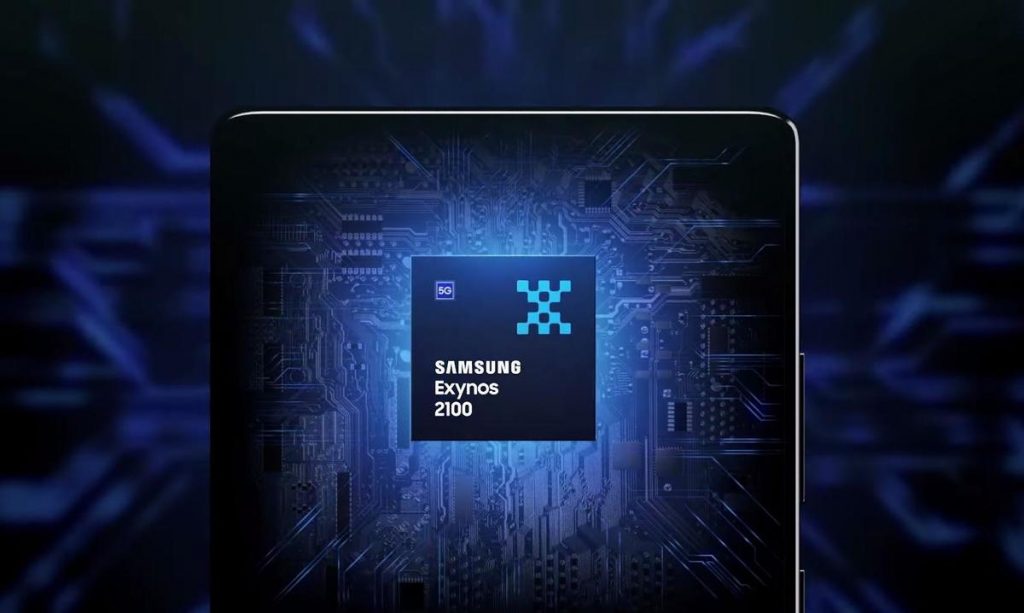
Exynos 2100 is a high-speed octa-core chipset. It has got one Cortex-X1 (core clocked at 2.9GHz), three high-performing Cortex-A78 (with a speed up to 2.8GHz), and four power-efficient Cortex-A55 cores (clocked at 2.2Ghz) performance CPUs from Arm. Adding to that, Samsung has declared that the new processor will offer a 30% better performance than the Exynos 990, and 10% better overall performance, with 20% lesser battery consumption. The company clearly mentioned that the chipset will provide up to 26-trillion-operations-per-second (TOPS) over twice the power efficiency making the processor faster than its previous versions.

Samsung
Image Source: zdnet.com

The company has also done excellent work to fulfill all the AI needs of today’s time, such that offering support for Augmented Reality (AR)/Virtual Reality (VR) or Mixed Reality(MR). The chipset also boasts the advanced multi-IP governor (AMIGO), which will be a key technology to optimize the power usage for the CPUs, GPUs as well as other processes, resulting in lesser battery consumption and extended use time.

Other Features

Other than that, the processor will provide support for UFS 3.1 and UFS 2.1 storage. It will also be supporting the LPDDR5 RAM. As mentioned earlier, the chipset has got a built-in 5G (sub-6GHz/mmWave) modem, it will also continue to implement support for 4G LTE (1024 QAM), 3G WCDMA, and 2G GSM/CDMA networks as well. The processor also features support for Bluetooth 5.2 and Wi-Fi 6.

Camera-wise too, the company has done a great job. The new Exynos 2021 is compatible to provide support for up to 200MP sensors and 4K UHD video recording at 120 frames per second (fps). It also comes with the ability to decode the 8K video at 60fps.

The Vice President and General Manager Client Line of Business at Arm, Paul Williamson, said during the launch that the new technologies, such as 5G, advanced graphics and machine learning have played a critical role in enabling new mobile experiences. “ Arm and Samsung have collaborated closely to incorporate Arm’s powerful next-generation compute and graphics platform, at the heart of the Samsung Exynos 2100,” he added.

Noticeably, the launch event for the new Exynos 2100 took place two days ahead of the launch of Samsung’s new Galaxy S21, its next high-end flagship Galaxy S phone. The company confirmed that the processors have already been gone to mass production, and the new Galaxy S21 launching in India will also feature this latest processor in it.

Envy 14

HP announced the launch of Envy 14, Elite Folio 2-in-1 tablet, and Elite Wireless Earbuds in CES 2021

For the first time in the history of CES, the event goes completely online this year due to the pandemic. CES 2021 officially started on Monday. This three-day event will provide updates about major tech companies around the globe and their new products. The tech lovers wait patiently for this event where big companies like Sony, Intel, HP, etc make big announcements followed by press conferences and exhibitor showcases.

With that being said, currently, HP becomes the center of attraction as it launches a series of new laptops in the Envy and Elite range. The company also announced the launch of the new Folio 2-in-1 tablet and truly wireless earbuds. Apart from these, HP has also announced the launch of Elite Dragonfly G2 and Elite Dragonfly Max laptops. So, let’s have a look at the features of these newly launched products.

Specifications of HP Envy 14

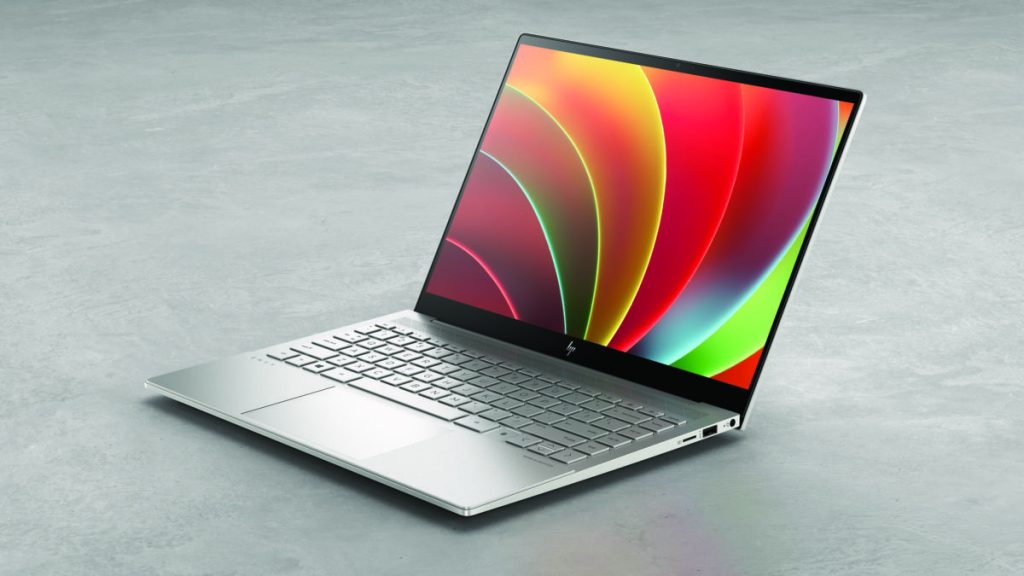
HP Envy 14 is powered by the 11th Generation Intel Core i5-1135G7 SoC. This new laptop is a 14-inch WUXGA which has a multitouch-enabled IPS display. Envy 14 comprises 16GB DDR4 RAM and SSD storage of 256GB. The operating system of the laptop is Windows 10 Home and it can integrate up to NVIDIA GTX 1650 Ti Max Q discrete graphics. The laptop has a 720p HD camera available with a camera shutter. The camera system is integrated with dual-array digital microphones.

Envy 14
Image Source: androidauthority.com

Apart from these features, the laptop has WiFi 6 and Bluetooth 5 connectivity options. The company claims that the fully charged laptop can offer 16.5 hours of battery life. According to Gadgets 360, HP Envy 14 is starting from Rs 73,300 and is expected in the market sometime this month. You can book it via HP.com.

Laptops of HP in the Elite range

HP has introduced an impressive number of new models in the Elite range. The new products include HP Elite Dragonfly G2, HP Elite Dragonfly MAX, HP EliteBook 840 Aero G8, HP EliteBook x360 1030 G8, HP EliteBook x360 1040 G8, and HP Elite x2 G8 laptops.Along with the Elite Dragonfly G2 and Dragonfly MAX, the company plans to make available a few more models in the month of January. The EliteBook 840 Aero G8 will be available sometime in March and the Elite x2 G8 in April. The prices of these models have not yet been revealed.

The Elite Dragonfly G2 and Dragonfly MAX are powered by Intel 11th generation Tiger Lake processors. Elite Dragonfly MAX comes in two color options, namely, Sparkling Black and Dragonfly Blue. Both the laptops have a 13.3-inch display with FHD or UHD resolution. Some of the new features included by HP are a privacy shutter on the webcam and a physical security feature called Tamper Lock.

The HP EliteBook x360 1030 G8 and the HP EliteBook x360 1040 G8 are powered by 11th Gen Intel Core i5/i7 U-Series processors. The HP Elitebook 840 G8 Aero is also powered by the latest Intel 11th Generation Core processors.

The new Elite Folio tablet

Expected to be available in the market in February, the new HP Elite Folio is a notebook PC that can be used both as a tablet and as a laptop. This Elite Folio 2-in-1 tablet is powered by the Qualcomm Snapdragon 8cx 5G compute platform. HP Elite Folio supports Wi-Fi 6 and optional 5G connectivity. The notebook features a 13.5-inch display integrated with an optional HP Sure View Reflect privacy panel. The price of this notebook is not yet revealed by the company.

New Elite Wireless Earbuds

This time HP has buckled up to launch truly wireless earbuds along with the new range of laptops. Since the beginning of the pandemic, we have become more gadget oriented and HP is showing its best effort to make our lives better with this new range of products. According to HP, these wireless earbuds will be “the most advanced earbuds for collaboration.” The earbuds will provide customizable setting options for noise cancellation and audio tuning. Price not yet revealed by HP.

More news from CES 2021

Consumer Electronics Show (CES) 2021 has more news to offer than just a new series of laptops or wireless earbuds. Apart from HP’s new range of products, CES 2021 witnessed LG’s transparent TV, Samsung’s Neo QLED series TVs, Mercedes’ new electric car with a 56-inch curved screen, Lenovo’s Yoga Slim 7i Pro OLED version, etc.

Parler

Apple Removes the Free Speech Social Media App, Parler, from App Store

The Capitol Hill Siege is one of the most unfortunate incidents. On Wednesday the Donald Trump Supporters came forward to protest against US President Joe Biden’s win. And, the social media company Parler has been accused of having a hand in igniting the riots. The accusation has resulted in the removal of this self-proclaimed ‘Twitter without rules’ app from Apple Store and the Google Play Store.

The Parler App

The Parler app is a community social media app, launched in August 2018 and headquarters in Henderson, Nevada. The app advertises itself as a free-speech app, and most of its users are right-wing extremists. The app has got a huge Donald Trump supporter community who, most of the time, are involved in posting content related to far-right, anti-Semitism, and conspiracy theories. Since the company calls its app the platform for free speech, there is no filtration or moderation service for the posts on the platform.

Parler
Image Source: bbc.com

The app has become a home for the conservatives and the ones who have been banned from the mainstream social media platforms like Facebook and Twitter for their hate speech or hateful posts. This app has also been the topic of criticism for being the cover for its right-extremist user-base. Noticeably, Donald Trump got banned from Facebook and Twitter recently, but on the other hand, the Parler app did not ban Trump from its platform. This act of Parler has attracted all the attention to itself.

The Removal from App Store

As mentioned before, the company does not include any moderation for the posts on the app, and it has been accused of being far-right itself. After the riots, the app is also being accused of supporting the protestors. According to Apple, it has warned Parler many times to update its policy and make some solid changes to it. And, when the riots took place on Wednesday, the California-based technology company Cupertino came forward and gave Parler 24 hours to represent new moderation and post-filter plan to Apple, so that to remain available on the Apple Store.

In return, Parler had told Apple that it is working on the moderation service for the last many weeks. But according to Apple, the company has shown no signs of improvement. Apple said in an email sent to Parler, “We have continued to find direct threats of violence and calls to incite lawless action. It was not removing content that encourages illegal activity and poses a serious risk to the health and safety of users.” Apple further wrote, “We want to be clear that Parler is, in fact, responsible for all the user-generated content present on your service and for ensuring that this content meets App Store requirements for the safety and protection of our users.”

The Response from Parler

On the other hand, the CEO of Parler, John Matze, said in an interview that he and his company doesn’t feel responsible for the riots, “considering we’re a neutral town square that just adheres to the law.” Shortly after Apple removed the app from the App Store, Google also decided on taking down the app from the Google Play Store. Now there is news that Amazon is also looking forward to pulling its support from the app, as Parler is using the AWS services, but again, was found to be violating the AWS Acceptable Use Policy.

The reaction of the Users of Parler

The action led to the criticism of Apple by the conservatives and users of the Parler app. One of the Parler app investors, Dan Bongino, who was also banned from Twitter some time ago, wrote on the site, “The tech tyrants at Apple have pulled the app from their App Store. Apple is no different than the Chinese communist party in its preference for totalitarian thought control. I’m proud of the remaining liberty-loving people of this great country. And I’m embarrassed, and horrified by the tech totalitarians who’ve taken control of it.”

It is really strange to see that Parler has been on the top of all the News apps on the Apple Store and among the top 13 apps on the top charts of non-gaming apps on the Apple store, despite all the complaints against the app. For now, though it is no more available on Apple Store and Google Play Store, people who have the app on their phones will still be able to use the app.

RealSense ID

Intel launches the RealSense ID Facial Recognition System using depth-sensing cameras

Intel introduced the RealSense ID facial recognition system advancing in the depth-sense technology to help users unlock at a glance. The company introduced the Intel RealSense ID on Wednesday which will be available to most countries at the end of Q1 2021. The active depth sensors used in the RealSense cameras provide a touch-free unlocking solution. Intel claims that this new design will deliver absolutely secure and accurate facial recognition authentication. The Intel RealSense ID can be used in ATMs, smart locks, access control, etc.

How does the RealSense ID work?

RealSense ID is built on the company’s depth-sensing technology. The dept sensors in the camera use a neural network to identify faces. It is a dedicated system-on-a-chip development that has a secure element to encrypt and process user data. The advanced Artificial Intelligence used in these sensors eventually helps the device to learn and adapt to a face over time. It studies all the facial features thoroughly from facial hair to a variety of skin tones. Rigorous testing of the Intel RealSense ID has been done on faces from different nationalities on every continent. This is done to eliminate the chances of false positives or negatives. The camera will also work if the person is putting a mask on which is a common observation since the outbreak of COVID-19.Intel claims that it provides a one-in-a-million false acceptance rate.

RealSense ID
Image Source: theverge.com

Intel RealSense ID is not expected to be used on a laptop or a phone. This module is designed to ensure more safety and security thus can be spotted in places like ATMs or entrance gates. Intel RealSense ID can either be integrated into other products or work as a standalone after plugged into a computer. Intel has made a great attempt to get its camera business on track but this time towards creating a safer and secure environment. Though the company elaborated about where this device can be used but didn’t mention if it can be used in government agencies for tracking and profiling people.

Price and availability of Intel RealSense ID

There is more than one module of RealSense ID that will be launched in the market. The price of Intel RealSense ID F455 Peripheral is $99 whereas the Intel RealSense ID F450 module is priced at $750. You can preorder these modules right now but the products will be shipped during the first week of March. The products will be shipped to India as well as per the official website.

The future of RealSense

Intel is working on the potential of RealSense ID especially as it trained the camera using a diverse sample of faces. Intel told VentureBeat in a press briefing that the device was trained using an extensive data collection as samples belonged to Asia, Europe, and Middle East Africa. Though the false acceptance rate is very low they will now wait for the outside researchers to test it and comment on it.

Apart from the Intel RealSense ID that is designed exclusively for facial recognition, the company has also announced RealSense Touchless Control Software (TCS). This software also used Intel’s RealSense depth camera to allow interaction with a touch screen only by hovering your finger rather than actually touching the screen. This is impressive software especially when we are fighting a pandemic. TCS can be a great deployment in crowded public places like shopping malls, restaurants, automated teller machines, retailers, etc. The software mainly transforms touch-based to touchless interactions in a cost-effective way.

TCS is combined with an Intel RealSense Depth Camera D435 to convert into a touchless system without changing anything in the core software. TCS can be easily incorporated into new and existing systems to establish a safer communication way in public places.

Advancements in the facial recognition system

A facial recognition system is a common development that took place after the advent of AI. But, most of the recognition system shows a higher possibility of false positives. Sometimes the camera is unable to distinguish between genders or fails to identify faces with darker skin tones. One of the reasons for this failure might be that when the device was tested a diverse sample was not used to train the system. For example, Rekognition, the facial recognition software by Amazon faces difficulties identifying faces with dark complexion than a fairer skin tone.

Vaio

Vaio to Make a Come-back to the Indian Laptop Market by 15th January

With the pandemic, we saw a rise in the prices of electric hardware, including computers and laptops. The demand for these devices was increased due to the new normal work from home culture. Now, as the demand has already risen, we see a few new entrants to the field of laptop manufacturing as well as old laptop manufacturing companies making a come-back too. Recently, the mobile and smartphone company Nokia launched its new series of laptops, and on the same rhythm, the famous laptop manufacturing company Vaio is also making a come-back to the Indian market.

The Vaio brand

Vaio Corporation is a Japanese laptop manufacturing company, where Vaio stands for Visual Audio Intelligent Organizer. It was originally the subsidiary of Sony, founded in 1996, but later, was acquired by Japan Industrial Partners (an investment firm based in Japan), in 2014.

Vaio
Image Source: zeebiz.com

The Vaio laptops were known for their spectacular designs and outstanding performance. In fact, Steve Jobs from Apple also had made an offer to Sony president, Kunitake Ando, to manufacture new MacOs based Vaio laptops. But the deal between the two wasn’t successful, and Sony came up with Vaio laptops having the Windows Operating System. The Vaio laptops have been popular in the high-end laptop category. Even, when Steve Jobs launched Apple’s first MacBook Air, he mentioned the Vaio laptop to compare the MacBook Air’s performance.

But the Vaio laptops began to lose their popularity when people started to realize that the Vaio laptops are too expensive for the specifications they were getting. In fact, they could get similar specifications in other brands’ laptops at cheaper prices. Not only the prices were too high, but the laptops were also underperforming. On the top, the laptops showed signs of overheating, causing burns to some of the users. The company had to spend $250 million to replace the Lithium-ion batteries of its around 10 million existing users in 2006.

As a result, after around a decade, Sony started seeing a downfall in sales. At that time, Sony was also focusing on its smartphone manufacturing, and rumors about Sony selling its laptop manufacturing unit started to speculate. Though the company did not confirm the news then, after a year of that, in 2014, it sold its laptop manufacturing unit to Japan Industrial Partners. The company admitted that it was facing a lot of loss in its laptop business.

Sony used to sell its products worldwide before the acquisition, but after that, the laptops were particularly available in Japan only. And, later, the company started to sell the laptops in America and Brazil, too. Despite the company is sold, Sony still has got a 5 percent stake in the company.

Coming Back to Asia

Now, the people who have always loved the Sony products, and the Vaio laptops, it is good news for them, as the Vaio laptops are coming back to Asia. The company has a new partner now, i.e., Nexstgo. The company has signed a licensing agreement with the Hong Kong-based company Nexstgo, so it will be the latter’s responsibility to manufacture, sell, and market the Vaio laptops in Asia.

Nexstgo has already started to market and sell the Vaio laptops in countries like Hong Kong, Macau, Malaysia, Singapore, Taiwan, and the Middle East countries. And now with the start of 2021, the company is all set to target the Indian market. Note that, Nexstgo is the same company that introduced the Avita laptops in India. In India, the company has partnered with Flipkart for marketing and selling the products. Flipkart has already started the marketing for the Vaio products on their specifically designed microsite for Vaio.

Announcing the relaunch of the Vaio laptops in India, the Regional Business Director of South Asia, Vaio, Seema Bhatnagar, stated in a press conference, “We are enthused to relaunch VAIO and associate with names that have made it big in the e-commerce industry. Introducing the finest-quality laptops in India, the brand focuses on reclaiming its space in the market while having an unrivaled demand by the customers. We are all set to present a futuristic laptop range to the country’s burgeoning tech-enthusiasts and young business professionals. We are looking forward to becoming the top choice for laptop buyers across the country.”

Though India is already aware of the quality and performance of the Vaio laptops, Nexstgo is looking for new methods to woo Indian customers. The company has said that the new Vaio laptops are “premium, intelligently-crafted” and are designed to deliver “exceptional” quality.

According to Vaio, the new laptops will be introduced in the Indian market by January 15th. Though there is a rise in the demand for laptops, it will be tough for new companies like Vaio and Nokia to make their place in the Indian market, when it is already dominated by the big players like HP, Dell, and Apple.

Chinese Apps

Trump signs executive order banning U.S. transactions with Alipay and other Chinese apps

Tension escalates between the White House and Beijing as the former hits China by banning U.S. transactions with eight Chinese apps. Yesterday, former U.S. President Donald Trump signed an executive order that bars any citizens of the U.S. from carrying out transactions with eight Chinese software applications. One of this Chinese software is Ant Group’s Alipay which is one of the broadly used payment services in China. The news is first reported by Reuters.

One of the senior administration officials has reported to Reuters that the executive order has been signed to protect the U.S. citizens. The U.S. government officials believe that the sensitive data of American citizens are at risk of getting exposed to this Chinese software. Due to their large user bases, it is easier for the Chinese applications to gather crucial data of the Americans.

The executive order on banning Chinese Apps

According to the order signed by Trump, it suggests the United States take “aggressive actions” against these Chinese software applications. The steps will be taken for the sake of national security. The Commerce Department is responsible for deciding which transactions will be barred under this directive within 45 days from now. The U.S. is targeting Tencent Holdings Ltd’s QQ Wallet and WeChat Pay apart from Alipay. Some of the other names mentioned in the order are CamScanner, SHAREit, and VMate. The sudden ban on transactions between these apps and America will have a huge impact on the economic stature of China.

In response to this order, Kingsoft Corporation, a Chinese software company said that it did not expect to have a huge impact on its business in such a short term due to Trump’s executive order. No other company made any comment related to this statement. Apart from this listed Chinese software, the Chinese Embassy also didn’t comment after a response was requested.

Why is this ban important?

Any kind of software used for payment purposes is linked to our bank accounts. Moreover, we are connecting these software applications from my electronic devices thus giving the Chinese software access to our personal information. The order says that this Chinese software can capture our sensitive personally identifiable information and private information. Having such a broad swath of data would allow China to locate the federal employees and contractors and build dossiers of personal information.

Chinese apps
Image Source: rappler.com

The relationship between China and the U.S. is going through turmoil for quite some time. In August, Trump ordered a ban on Chinese apps like TikTok and WeChat and gave the same reason that the government is concerned about data theft. But, amidst this bitter-growing relationship, the newly elected U.S. president, Joe Biden made very few comments. He didn’t clearly specify yet how he plans to address the cyber or tech threats from China.

Though Trump has signed this order, Biden can revoke it while he begins officially as the president of the U.S. But, Biden’s transition team has declined to comment on this matter. This order might bring out casualties on both sides even before the dispute regarding the origin of COVID-19 is settled. It seems like Trump is ready for a big battle with China striking time and again at the same wound.

If Trump’s order passed in August had gone into effect, the Chinese apps would have already been banned from the U.S. It couldn’t have been possible due to the court restrictions mainly on the ground of freedom of speech. One of the senior administration officials said that the White House is confident about the order this time. The new rules and restrictions of this order cannot stand against judicial scrutiny as software like Alipay will struggle to bring a First Amendment case.

Impact on Ant Group

In November 2020, Reuters reported that the U.S. The State Department submitted a proposal to add Ant Group to a trade blacklist. This would prevent U.S. investors from taking part in the world’s potential biggest IPO. But, for some reason, the Chinese government made Ant Group pull off the IPO resulting in a huge loss for both the company and the investors. Currently, Ant Group is suffering from the judgments of both America and China itself. Recently, China ordered an anti-monopoly investigation on Alipay which is owned by the Ant Group. It is difficult for a company to operate is in the crosshairs of both its home country and another powerful nation.