Your Tech Story

Tech News

IBM

IBM Introduces the World’s First 2-nm Node Chip.

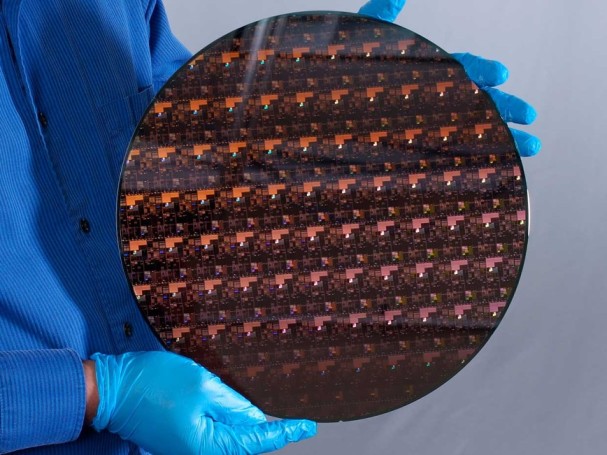
Every decade checks the boundaries of Moore’s Law, and this decade is no exception. The complexities of multi-patterning techniques built on previous technology nodes can now be implemented with the finer resolution that EUV offers, thanks to the advent of Extreme Ultra-Violet (EUV) technology. This, along with other more technological advancements, could result in a reduction in transistor size, paving the way for the future of semiconductors. To that end, IBM announced today that it has developed the world’s first 2-nanometer node chip.

IBM 2-nm Node Chip

To be clear, though the process node is referred to as ‘2 nanometers,’ nothing about the transistor measurements resembles a conventional expectation of what 2nm would be. Previously, dimension was an analogous metric for 2D feature size on the chip, such as 90nm, 65nm, and 40nm. However, with the introduction of 3D transistor designs such as FinFETs and others, the process node name is now an interpretation of an ‘equivalent 2D transistor’ design.

IBM 2-nm Node Chip
Image Source: spectrum.ieee.org

Some of the features on this chip, such as transistor fin leakage safety layers, are likely to be in the low single digits in real nanometers, however, it’s crucial to remember the disconnect in how to process nodes are actually called. The debate often pivots to transistor density as a more precise measure, which IBM is sharing with us.

Density of the Transistors

According to a recent announcement, IBM’s 2nm development would boost efficiency by 45 percent at the same capacity, or 75 percent energy at the same performance, as compared to current 7nm processors. IBM is quick to point out that it was the first academic organization to demonstrate 7nm in 2015 and 5nm in 2017, the latter of which upgraded from FinFETs to nanosheet technologies that allow for greater customization of individual transistors voltage characteristics.

According to IBM, the device will fit ’50 billion transistors on a chip the size of a fingernail.’ We contacted IBM to get feedback on the scale of a fingernail since we were coming up with numbers ranging from 50 square millimeters to 250 square millimeters internally. According to IBM’s press ties, a fingernail, in this case, is 150 square millimeters. This equates to 333 million transistors per square millimeter (MTr/mm2) for IBM.

Different foundries have different official names and densities. It’s worth noting that these densities are often classified as peak densities, for transistor libraries where die area is the primary concern rather than frequency scaling – the fastest sections of a processor are often half as small as these numbers due to power and thermal considerations.

GAA Transistors

Although IBM has not expressly announced the transition to Gate-All-Around / nanosheet transistors, photographs reveal that this new 2nm processor is using a three-stack GAA architecture. GAA will be introduced by Samsung at 3nm, while TSMC will wait until 2nm. Intel, on the other hand, we believe would implement some kind of GAA on its 5nm technology.

IBM’s 3-stack GAA has a cell height of 75 nm, a cell width of 40 nm, and discrete nanosheets that are 5 nm tall and 5 nm apart. The poly pitch of the gate is 44nm, and the gate length is 12nm.

According to IBM, its design is the first to use bottom dielectric isolation channels, allowing for the 12 nm gate length, and its inner spacers are a second-generation dry process design that aids in nanosheet production. This is supplemented by the first use of EUV patterning on the FEOL sections of the process, allowing EUV at all stages of design for essential layers.

Users may be perplexed as to why we are hearing that IBM is the first to develop a 2nm chip. IBM is one of the world’s leading research centers on potential semiconductor technologies, and while not having a foundry offering of their own, IBM produces IP for their manufacturing facilities in conjunction with others.

Back in 2014, IBM sold its manufacturing to GlobalFoundries with a 10-year collaboration commitment. IBM also deals with Samsung and recently announced a partnership with Intel. No doubt, the latter two would collaborate with IBM on some level to ensure the feasibility of this new invention in their own supply chain.

The chip was developed and manufactured at IBM’s Albany testing plant, which has a 100,000-square-foot clean space. The aim of this facility is to leverage IBM’s extensive patent and licensing portfolio for partner partnerships.


Epic Games vs Apple

Fortnite Developers Epic Games Drags Apple into Court; Calls Apple a Monopoly “Walled Garden”

Apple and Epic Games attended the US court for the trial over App Store practices and regulations on Monday. Epic Games is the developer company of the famous Fortnite game, which accused Apple mainly for its high fees on App Store and Apple trying to establish its monopoly in the industry. The two companies clashed at the California federal court, and the revelations in the court have made people’s jaw drop.

Epic Games

Epic Games is a North Carolina-based video game and software developer and publisher company, best known for the development of Fornite and Unreal Engine. The company was founded by Tim Sweeney in 1991, who is also the current CEO of the company. Apart from Fortnite and Unreal Engine, Epic Games Store, Unreal series, and Gears of War series are Epic’s main products.

Why the Court Case?

Epic Games create games for both iOS and Android platforms. But recently, the company accused Apple of abuse of the power it holds over the software developers at the California federal court. According to Epic Games, Apple has an audience base of over 1 billion, and it charges up to 30% on in-app purchases and conducting App Store reviews, which is too much. Also, the company has got all the control over the apps on App Store, which gives Apple the power to deny access to apps whenever it wants.

The Epic lawyer, Katherine Forrest, stated in her first statement that Apple is trying to have its monopoly in the market and has turned into a monopoly “walled garden”, luring in developers and users to get more and more money out of them. Forrest also claimed that the tech giant currently is earning a profit of up to 78 percent from the apps. “The evidence will show unambiguously that Apple is a monopoly,” said Forrest while representing the case in the court.

Epic Games Vs Apple
Image Source: techstory.in

Karen Dunn is defending Apple in the case, and she refused to accept that Apple is trying to have a monopoly. Despite she claimed that Apple has no problems if Epic Games run its games on rival companies’ devices. Apple is just trying to sell a broad array of services and making ways in different fields. She also said that Apple has created a safe and open environment for the developers and the users for easy access to apps, and it not at all charging a high fee for providing privacy, reliability, and quality to the developers and its consumers.

Fortnite Brought in Over $9 Billion in 2019, Shows Documents

The court case has made the two companies public their important financial records of the past few years. These documents have given a glimpse of the gaming company Epic Games’ annual reports. According to these financial documents, Fortnite made more than $5 billion in its first year for Epic Games, and by 2019, it had brought in over $9 billion in total for the company in the two years. Though the number is quite high, Epic Games revealed that it only gained around $5.5 billion in profit from the two years.

These documents also showed a prediction for the year 2020. It revealed that the predicted revenue for 2020 was $3.6 billion, but according to CEO Tim Sweeney’s recent testimony, the company made around $5.1 billion from Fortnite alone. The documents also show that the company gained around $8 million in 2018 and $100 million in the next year through its other games.

Is Apple Being Monopolistic?

For many years, Apple has been charging developers a heavy fee for letting users download their app from the App Store. The company has banned downloading of apps from other sources to be used on Apple devices. So the developers are forced to pay the ‘fee’ so that they can access the huge Apple user base.

According to Tim Sweeney, Apple forces its unfavorable rules on the developers or they can’t have the access to the one billion iPhone users. Many other app developers are on Epic Games’ side and have criticized Apple for its monopolistic behavior. The debate in the court is on whether Apple should have the power to set all the rules and control the payment system or not. 

Vivo Y52s (T1 Edition)

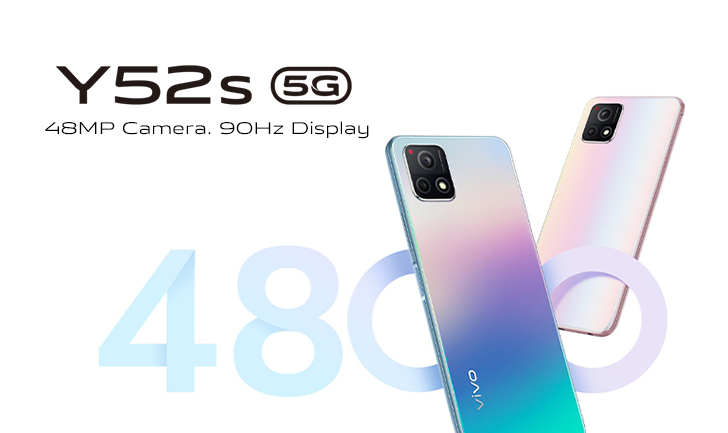
Snapdragon 480, 5000mAh Battery Revealed Vivo Y52s (T1 Edition) 5G 6.58 inch FHD+ 90Hz display.

On Monday, 3rd May, the Chinese market introduced the Vivo Y52 (Version T1). The Vivo Y52s, which began in China pretty last 12 months in December literally is an offshoot of their telephone in a sort of big way. The 2 phones are equipped with slightly different transformers though many of the features of both phones are identical.

Price and Sale of Vivo Y52s (T1 Version)

A Qualcomm Snapdragon 480 SoC powered Vivo Y52s (V1 version), while a MediaTek Dimension 720 SoC drives the Vivo Y52s previously introduced, very contrary to popular belief. Both phones actually are packed with an 18W charging assistance battery of 5,000mAh, which really is quite significant. Price and sale of Vivo Y52s in China (Version T1), the 8GB of RAM + 256GB capacity variant is priced at the cost of CNY 2,099 (approximately Rs. 23,900) in a particularly big way.

Vivo Y52s
Image Source: whatmobile.com.pk

The smartphone is available in three colors – Coral Sea, Monet, and Titanium Grey, which really is fairly significant. The phone was silently sold in the online shop of Vivo China and on JD.com. A 48MP for all intents and purposes main sensor with an f/1.8 opening and a 2MP depth sensor with an f/2.4 opening particularly is the back kind of double camera in a really major way. An 8MP, 1,8 f/1,8 front opening camera really is provided for the smartphone with a drop of water.

A 6.58-inch LCD display with a 90Hz refresh rate kind of was featured in Vivo Y52 (T1 Edition) in a subtle way. Driven by battery specifically supports of 5000mAh, 18W fast charging in a really big way. The mobile internally has 8GB of really RAM and 256GB of non-extensible capacity. Both 5G networks accept SIM cards, and Wi-fi, Bluetooth, Hotspot, and GPS kind of are other connectivity features.

Specifications

  • LCD Screen with 90hz refresh rate
  • 6.58-inch (2408 da 1080 pixels) FHD+20.07:9
  • Mobile Platform with Adreno 619 GPU Octa Cear Snapdragon 480 8nm Snapdragon (2GHz x 2+1.8GHz x 6 Kryo 540,540)
  • 8 GB of storage for literally RAM LPDDR4x, 128GB / 256GB in a subtle way.
  • SIM double
  • Origin OS 1.0 Android 11
  • 48MP f/1.79 flash, 2MP depth sensor with f/2.4 aperture. 48MP f/2.4 aperture in a major way.
  • 8MP front-facing f/2.0 opening display
  • Fingerprint sensor mounted sideways
  • Audio specifically jack of 3.5 mm
  • Dimensions: 164.15 diametrically.35 diameters; weight: 185.5g.
  • 5G SA/NSA (5G Hz + 5.1 GHz + 5.8GHz), Dual 4G VoLTE, Wi-Fi, 802.11 axis.
  • GPS/GLONASS/Beidou Bluetooth 5.1, USB Type-C
  • Battery with the charging of 5000mAh (typically)/4890mAh (minimum).
Chip shortage

Chip shortage to persist for two more years, says Intel CEO.

The damage caused by the pandemic will take a couple of years to cope up within the silicon industry. During the onset of the pandemic, a miscalculation has caused such a heavy shortage of chips as the demand was unexpected. These chips especially the display drivers are not only used in mobiles or laptops but also in automobiles and smart home devices. So, production and sales of both the tech industry and the automobile industry are coming down or getting negatively affected due to the chip crisis. Because without these chips, the final products will be incomplete.

Intel Corporation’s CEO, Pat Gelsinger, has said that the semiconductor shortage that is having its impact all over the world is not likely to end for a few more years. The company is trying its best to push the workers and increase the production of chips in some of their plants. But even if these plants work at full capacity it will take months before the crisis in the semiconductor industry followed by other industries starts to ease up. Currently, Intel is increasing chip production to address and meet the crisis in the automobile industry.

Increase in Demand and Chip Crisis

Pat Gelsinger has further mentioned that the company and the entire semiconductor industry as a whole will still need a couple of years if it has to meet the demand for chips across every industry. The pandemic followed by the lockdown is the main reason why the demand for chips skyrocketed all of a sudden. With people locked up in their homes, they wanted to buy gadgets like mobile phones, laptops, game consoles, etc to help them cope up with this hard time. Some of us bought good-performing laptops as work from home became the new normal while others bought good televisions and gaming laptops to enhance their source of entertainment.

Chip shortage
Image Source: marketwatch.com

But meeting the rising demand amidst the pandemic was very tough and the main reason is shuttered plants. There were also difficulties in transportation during the pandemic and other logistic shortcomings. The companies are trying their best to boost up the production but with the incoming second wave of COVID-19, it will still take more time to get the chip production back to normal condition.

The Political Agenda

The shortage of chip production is affecting many industries and due to this price of many appliances is increasing. Let alone the companies are trying to recover from the drastic crisis, they have become the center of many political agendas. The Biden administration has informed the companies that he will provide bipartisan support so that government funding is received to address this shortage.

Addressing the shortage, Pat also mentioned that chip manufacturing in the US was 37 percent a quarter of a century ago and now it is 12 percent of the world’s total semiconductor production. Today, Intel is the only company that produces cutting-edge high-end chips on American soil. There should be more semiconductor companies in the US as it will create more jobs and will have control over the industry for the long term.

Impact in other Industries

The shortage of chips has let to a decrease in production and thus lower revenue in other industries especially tech and automobile. Ford has announced that the shortage in chips will lead to a decrease in production by 1.1million vehicles in 2021. The others on the list are Volvo, Jaguar, and Mitsubishi. In the tech industry, Apple has confirmed the strain in supply has impacted the sales of iPads and Macs.

On the other hand, Mark Liu, Chairman of Taiwan Semiconductor Manufacturing Co., has told CBS that the company has tried its best to squeeze as many chips as possible especially for the car companies. He also mentioned within the next two months the company will be able to catch up and fulfill the minimum requirements of the customers.

The main reason that the shortage in the chip industry was amplified because along with the demand for electronics, the demand for cars also increased. After the lockdown was suspended, the covid situation made people nervous about public transport. So, the demand for personal vehicles started increasing.

V21

Vivo launches the all-new V21 Phone with 44MP OIS Front Camera and a 90 Hz Refresh Rate.

Vivo launched its newest smartphone, Vivo V21. It is one of the world’s thinnest smartphones, with a priority on the selfie camera experience. The Vivo V21 has a 44MP OIS front camera, a 90 Hz refresh rate, a MediaTek Dimensity 800U processor, and many other functions. It has a 7.29mm thin body and a streamlined and compact style. The front of the smartphone has an AMOLED E3 display. The device’s back is made of AG Matte glass giving that sleek look.

V21
Image Source: 91mobiles.com

Specifications of Vivo V21

  • The Vivo V21 5G dual SIM smartphone (Nano) runs on Android 11 with Funtouch OS 11.1 and has a 6.44-inch Full HD + (1,080 x 2,404 pixels) AMOLED touchscreen.
  • It has an aspect ratio of 6.44 inches from 20: 9 and a refresh rate of 90Hz.
  • The phone is powered by a MediaTek Dimensity 800U SoC with eight cores and comes standard with 8 GB of RAM.
  • There is also an advanced RAM feature that allows the hardware to use up to 3GB of ROM as virtual RAM for the triple rear camera setup for pictures and videos.
  • It includes a 64-megapixel main sensor with an f / 1.79 aperture, 8-megapixel wide-angle photographer, and a 2-megapixel macro shooter. 4K video, ultra-wide night mode, and artistic portrait video.
  • The V21 has a 44-megapixel front camera with OIS, electronic image stabilization (EIS), AI Extreme Night, autofocus, and a dual-LED light sensor. The device has an extreme night mode for the front camera, which is supposed to minimize the noise in low-light situations with the help of an AI algorithm.
  • The device is powered by a 4,000 mAh battery with a 33 W fast charge function.
  • Many of the sensors that we expect from a mid-range smartphone today, such as an accelerometer, an ambient light sensor, a proximity sensor, an electronic compass, and a gyroscope are present in V21.
  • There is also a fingerprint reader on the screen.
  • Device network options include a hybrid dual SIM card, Bluetooth 5.1, USB Type C, 2.4 GHz WiFi, GPS, OTG, and NFC, among others.
  • The Vivo V21 5G has built-in storage capacities of 128 GB and 256 GB and both support the expansion of microSD cards through a dedicated slot.

Price and Availability

Vivo V21 5G price in India has been set at Rs. 29,990 for the 8GB RAM + 128GB storage variant, while the 8GB RAM + 256GB storage model is priced at Rs. 32,990. The phone is available in Arctic White, Dusk Blue, and Sunset Dazzle colors. Sales begin on May 6th and with pre-orders starting Thursday, April 29th. V21 will be available through Flipkart and Vivo India’s online store, as well as major offline stores and retail chains.

Exciting Offers and Deals

An instant cashback of Rs. 2,000 from HDFC Bank, an additional trade-in discount of Rs. 3,000 and free EMI plans for up to 12 months. These promotions are only available for purchases made online. Offline consumers can receive 10 % cashback from HDFC Bank and Kotak Mahindra Bank, up to 10 % cashback.

Customers can also receive a Vivo upgrade package that includes a trade-in incentive of Rs. 1,500 and a premium bonus of Rs 800 as up to an 80% guaranteed buyback guarantee.

Samsung Galaxy Book

Samsung launches the new Galaxy Book Pro and Pro 360 Notebooks with 11th Gen Intel Processors.

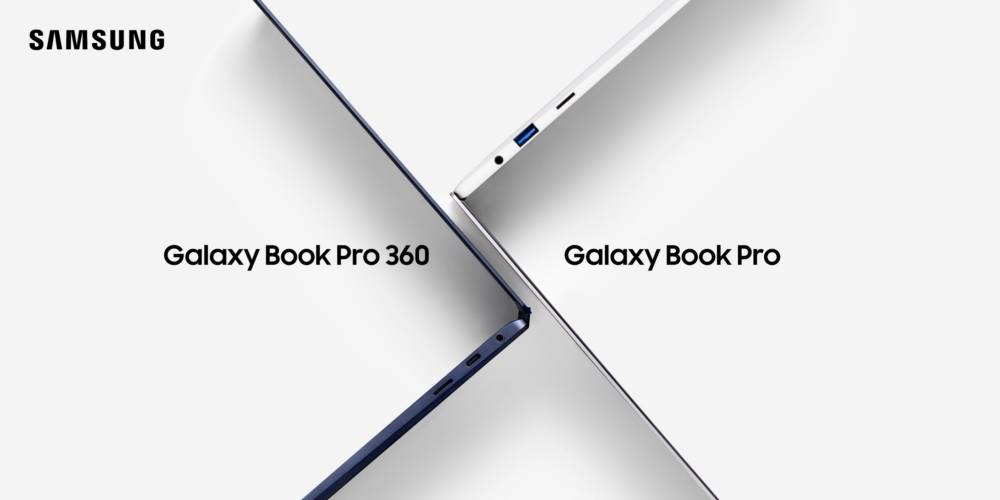
Samsung launches new Galaxy Book Pro and Galaxy Book Pro 360 notebooks entering into a new generation of mobile computing. This new pro series will provide uncompromised performance and will seamlessly sync with your other Galaxy and IoT devices. Both your workflow and entertainment will reach newer heights with the Samsung Galaxy Book Pro series which are coming with 11th Gen Intel core processors. Samsung has also collaborated with Microsoft and Intel to make these new mobile computing devices flawless and one experiences marvelous performance and smooth workflow.

Dr. TM Roh, President and Head of Mobile Communications Business, Samsung Electronics, said that the company has pioneered before many exciting mobile experiences, and with the new Samsung Galaxy Book Pro notebooks one will truly understand mobile computing for the connected world. The new series is designed for today’s multi-device world, thus ensuring high productivity, creativity, and boundless entertainment.

Samsung Galaxy Book Pro and Pro 360

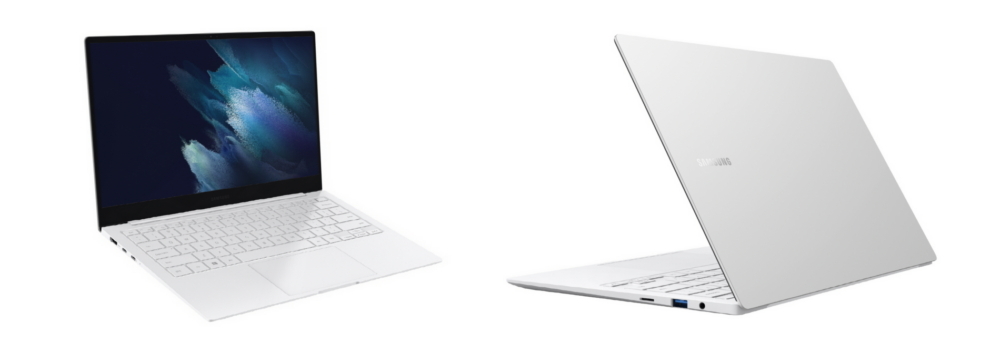
The Samsung Galaxy Book Pro and Pro 360 are designed to make the day-to-day tasks of mobile-first users better and smoother. The 13-inch Galaxy Book Pro weighs 0.87kg which doesn’t need much extra space while packing your bag. Both the notebooks are highly durable as they are made of 6000-series aluminum. The notebooks have fast and secure connectivity along with Wi-Fi 6E which allows more bandwidth and a 6GHz internet connection.

Samsung Galaxy Book
Image Source: news.samsung.com

Enhanced performance and multitasking throughout the day also need good battery life. The new Samsung Galaxy Book Pro and 360 Pro provide a long-lasting battery so that you don’t have to halt your work even for once. The notebooks provide 65W fast charging with a USB C-Type adapter. With remote working, our lifestyle is changing faster than ever and the gadgets are evolving simultaneously to keep up with our demand.

The Super AMOLED Display

The new series of notebooks feature Samsung’s first-ever Windows PCs with the Super AMOLED displays. The display of the notebooks is certified by Eye Care SGS which produces blue light emissions lesser than the LCDs. It also has an Intelligent Color Engine which automatically fine-tunes the color space depending on the type of task. To make your entertainment more profound, along with the vivid colors the devices have AKG speakers to level up your cinematic experience.

High Performance and Enhanced Productivity

The Galaxy Pro and Galaxy Pro 360 notebooks are powered by 11th generation Intel Core processors and Intel Iris graphics. The book pro series is verified by the Intel Evo platform which means the new notebooks assure a striking balance of high-level graphics, 24/7 connectivity, and long-lasting power. The Intelligence Performance Manager always balances the power consumption and performance so that the overflow user experience is very smooth.

The pro keyboards are re-engineered featuring a scissor mechanism that not only increases speed but makes sure it is comfortable with wide keys and rubber domes. The keyboard is paired with a touchpad which is 23 percent larger thus giving the user more space to scroll and surf. These notebooks also have Quick Search Software which saves a great deal of time when searching for specific documents stock files.

To enhance your professional experience from anywhere, Studio Mode enables you to change the video call environments and it also has intelligent noise cancellation to make your audio quality better. So, even if you are attending a video call inside a busy subway, your notebook will provide the best experience. You can also enjoy Samsung Studio Plus if you are a fan of gaming.

Other Important Features

The Samsung Galaxy Book Pro 360 comes with an upgraded S Pen right in the box. This pen is of huge advantage for the content creators and artists, composing your art freely. The Second Screen is a very important part of the design that allows you to expand the display onto your Galaxy Tab. One of the best reasons that these notebooks should be definitely in your bucket list is that it syncs perfectly with other Galaxy devices to enhance your performance. With the help of Galaxy Book Smart Switch, you can transfer any form of media very quickly from your Windows PC to the pro notebook. There is also another very helpful app called SmartThings that can turn on and off your lights, turn on any kitchen appliances while you relax on your couch. Both the models will be available in three different colors.