Your Tech Story

Tech News

Taxation System

Taxes Might Elevate for Tech Giants like Apple and Google as G7 Nations reach Landmark Deal.

Taxes might increase for multinational conglomerates like Apple, Amazon, and Google as many nations are looking at it as a way to cope up with the post-economic crisis of COVID-19. Large advanced economies like the United States, Britain, and others have reached a landmark deal last weekend which will lead to higher global taxation of these huge tech giants. In total, seven large economies have agreed upon this new minimum global corporate rate of at least 15 percent and also to pay more tax in the markets where they operate in terms of selling products.

The new global tax system has been revised in accordance with the global digital situation and taking in consideration the post-pandemic crisis. Rishi Sunak, British Finance Minister, made a comment that the G7 finance ministers have landed its conclusion to reform the global tax system thus making it fit for the global digital age. Janet Yellen, US Treasury Secretary, said that “significant, unprecedented commitment, would end the race to the bottom of the global taxation system (Gadgets 360).

Global Taxation System

Many new amendments have been made in the new form of the global taxation system as it promises to end the national digital services taxes levied by many European countries including Britain. According to the United States, this service tax was biased and exclusively targeted the US-based tech giants. All the other measures and the final agreements are not yet decided. A meeting of the G20 will be held next month in Venice which will include many emerging economies to discuss more terms about this new rule. Rishi Sunak has said that the entire process is completed and this is just the first step.

Taxation System
Image Source: newsbreak.com

Apart from the elevation in the tax rate, a few other major concerns will also be expressed in the upcoming days. The ministers of these nations have decided that the tech giants should clearly lay out their environmental impact in a direct and standard way. This will help the potential and new investors to decide if they want to invest in a particular company or not. This is one of the key goals for Britain and it will also increase the transparency between a company and the investors.

The big tech companies are always targeted by governments as they dominate the market and yet pay a little tax as compared to their annual revenue. It’s been quite a long time that economically superior nations have tried to raise more revenue from Apple, Google, Amazon, etc.

Nations supporting this new Taxation System

With support from the US government, the Biden administration has proposed the minimum global corporation tax rate of 15 percent, above the level in countries like Ireland and below the lowest level in G7 (Gadgets 360). Both Germany and France have agreed to this agreement but the French Finance Minister has said that he would fight for a higher global corporate tax rate and that’s a “starting point.”

The path to the final agreement will not be very smooth as the tech giants won’t agree to pay a very high rate of tax easily. These multinational companies have a huge market in every continent especially Europe, America, and Asia. So, both the high-end corporations and the government have to find a way to co-exist peacefully.

The German finance minister has added that these tech giants won’t be able to get rid of paying high tax anymore by booking their profits in the lowest-tax countries. Ireland has a tax rate of 12.5 percent and its finance minister said that the global deals before coming to a final decision should consider the scenario of smaller nations as well. Sunak further added, though the deal is advantageous for the nation’s economy, it is uncertain how much money Britain would raise.

It is yet to decide exactly which companies will fall under this new rule as till now the agreement only mentions large multinational enterprises. But, the main companies on the list are Google, Amazon, Facebook, and Apple.

Pixel Buds A-Series

Google Launches Pixel Buds A-Series; Much Cheaper than the Previous Ones.

Going wireless is the current passion for every other technology company today. Starting from mobile phones to gaming consoles and earphones, everything has gone wireless. The earphone industry has taken off quite rapidly in the past few years, as from JBL to Apple, you get a variety of hands-free earphones and headphones at a different price range. Google, too, has its series of truly wireless earphones, i.e., Pixel Buds, and now, it has brought another series of the same i.e. Pixel Buds A-Series.

Google has launched a new pair of Pixel Buds under the series name Pixel Buds A-Series, having a similar design to Google’s original Pixel Buds, but at a much cheaper price. Though there have already been many speculations about these Pixel Buds through some leaks, the company has revealed much more than that today, through its official launch announcement.

Pixel Buds A-Series Features

Though the Pixel Buds A-Series has been priced at a lower price, i.e., $99, the company hasn’t compromised on the quality of the product. The earbuds come with 12mm dynamic drivers, and the user can still control it through the hands-free “Hey Google” voice commands. Though the Pixel buds do not possess the noise cancellation feature, the quality is still as good as the original pixel buds.

The earbuds come with the Bass Boost feature (providing a powerful bass), captivated touch sensors (to make calls, pause-play music), a motion-detecting accelerometer, beamforming mics, as well as a single IR proximity sensor (to detect if the buds are fitted in the ears properly or not). Also, the new Pixel Buds possess the adaptive sound feature, such that it balances the volume according to the surrounding. Like the standard Pixel buds, it is also rated IPX4 for water and sweat resistance and also supports Bluetooth 5.0 for connectivity.

Pixel Buds A-Series
Image Source: blog.google

Talking about the usage, Google has claimed that the Pixel Buds come with a battery life of five hours and 24 hours counting recharges in the case. The buds also provide three hours of listening time on a mere 15-minutes quick charging. The charging case of the buds comes with USB Type-C charging and also features the hall-effect sensor to detect if the charging case is opened.

Coming to the design of the A-Series Pixel Buds, these are similar looking to the original Pixel Buds, except, the size of the integrated ear hooks has been reduced a little. Also, the company has softened these hooks to make them more comfortable to wear. Apart from that, Google has also done some good work on improving the new Pixel Buds by targeting the connectivity and audio cutouts issue raised by the older customers of Pixel Buds.

Price and Availability

Google, this time, has worked on bringing a much cheaper pair of earbuds for its customers, as the standard Google Pixel Buds cost $179 for a pair, whereas the newly launched A-series buds are available for $99. The cheaper price of the earbuds has also lead to the reduction of some of the features, such as noise cancellation, but still, the sound quality is similar to the original earbuds by Google.

Google has just launched the A-series Pixel Buds and has made them available for pre-orders in the United States and Canada. The Two countries will also be able to get them in the market starting from June 17. The company has not made any announcements on when the new A-series Pixel Buds will hit the global market.

HarmonyOS

Huawei introduces new smartphones and other products powered by HarmonyOS 2.

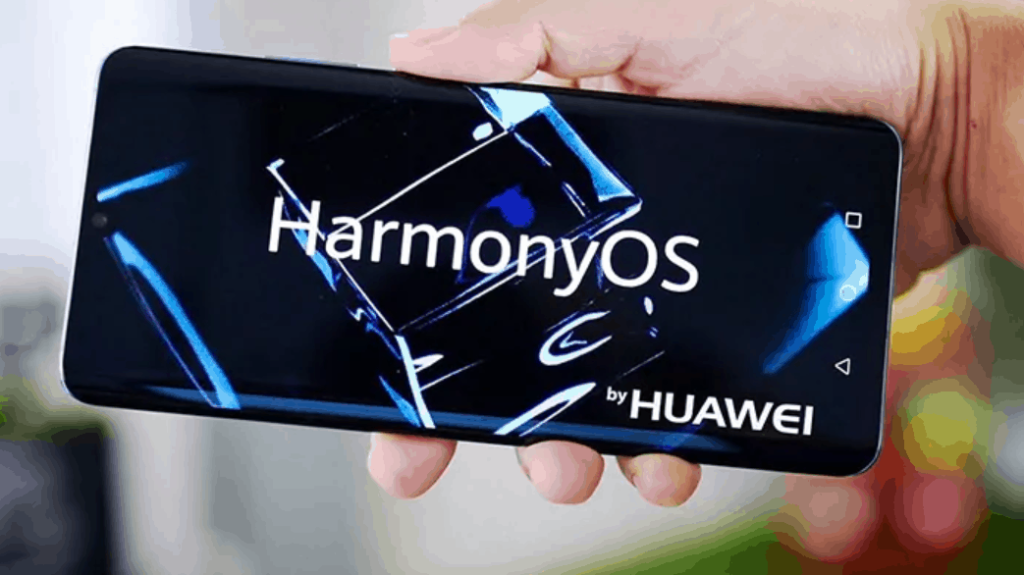
On 2nd June 2021, Huawei announced the rollout of new products which will be powered by the HarmonyOS 2 operating system. The company will launch the new OS for certain smartphone models from today itself. This will give the users a choice between the current Android OS and the new HarmonyOS that they can switch to. The new version of the HUAWEI Mate 40 Series and HUAWEI Mate X2 along with the HUAWEI WATCH 3 Series, and the HUAWEI MatePad Pro will run on this new OS.

Since the company is launching HarmonyOS, the smartphones of Huawei will not be totally dependent on the Android platform. This can be the consequence of the decision made by the US government when it banned Google from providing any technical support to the new Huawei phone models. So, let’s have a look at the new gadgets which will be powered by HarmonyOS 2 and how it will enhance user experience.

Introduction to HarmonyOS

In today’s event, Huawei has announced many new products by the company including smartphones and tablets which will be upgraded to run on HarmonyOS 2. Huawei has addressed the problem of interconnectivity between smart devices which often make us compromise on our smooth experience. The new HarmonyOS is designed in a way that it will provide a common language for different types of smart devices to connect and collaborate ensuring better safety.

HarmonyOS
Image Source: gizchina.com

This new OS uses distributed technology which makes it capable of responding to the different needs of different devices using a single system. HarmonyOS will establish a strong cohesion between independent devices turning them into a Super Device thus leveraging the capabilities of the component devices according to a user’s real-time need.

HUAWEI Watch 3 Series with HarmonyOS 2

The new flagship smartwatch of Huawei is featuring a real beauty of curved glass screen with a brand new 3D rotating crown that can sense different levels of pressure. Powered by HarmonyOS 2 the watch integrated seamlessly with your Huawei smartphone allowing you to make phone calls and also use your phone’s data. Not to mention the watch will become the favorite fitness buddy of the user providing 100 different modes along with healthcare support options. The users can manage their health in real-time with Huawei Watch 3 series which also comes with a sensor to detect skin temperature.

HUAWEI MatePad Pro

This new tablet features a 12.6 inch OLED FullView display with high color accuracy and an ultra-high contrast ratio of 1,000,000:1. It also supports a DCI-P3 color gamut. The Huawei MatePad Pro is equipped with Kirin 9000 series chipsets delivering an exceptional level of performance. With HarmonyOS, this tablet can work seamlessly with both smartphones and PCs doubling the productivity of the user.

This tablet also supports Multi-screen Collaboration with PCs meaning it will become your drawing board in Mirror mode and work as a monitor in Extend mode. Along with the new tablet, Huawei also revealed the second-generation HUAWEI M-Pencil featuring a platinum-coated riv to increase precision and decrease latency. The new Huawei M-Pencil is capable of converting any handwriting into digital text in real-time.

Multi-Device Interaction

The best part of this new HarmonyOS operating system is creating perfect sync between different smart devices for a better experience and smoother workflow. The new Control Panel of the HarmonyOS comes with a drag-and-integrate feature which will allow the users to choose the devices they want to connect together under different situations. Harmony OS2 has a new Task Center which allows apps to travel between different devices. This means if your smartphone has a specific app installed, you can transfer it to the Huawei MatePad Pro without installing the app on the tablet.

Currently, the company is aiming to launch HarmonyOS in 200 million smartphones and 100 million other third-party smart devices by the end of 2021. Wang Chenglu, president of Huawei Consumer Business Group’s software department, said that the company is looking beyond smartphones and trying to develop a system that will bridge the gap between other smart devices. And, with HarmonyOS users will be able to connect every smart device and develop a Super Device and harness the most of every product.

Alienware

Alienware launches x15 R1 and x17 R1 gaming laptops with exceptional cooling technology.

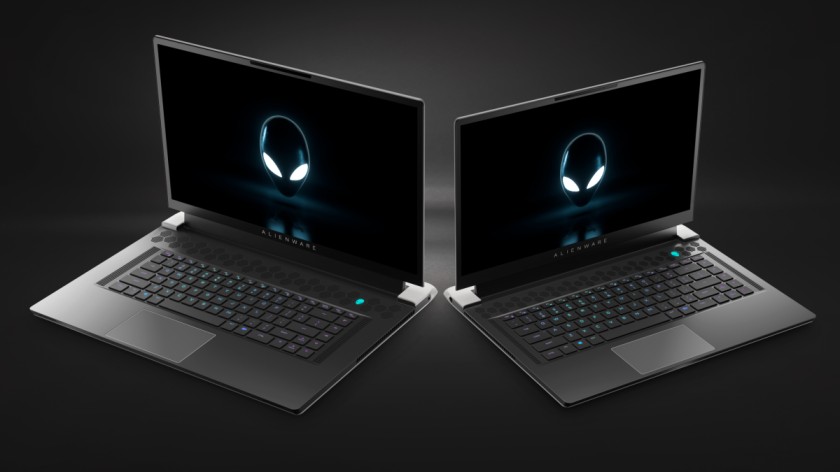
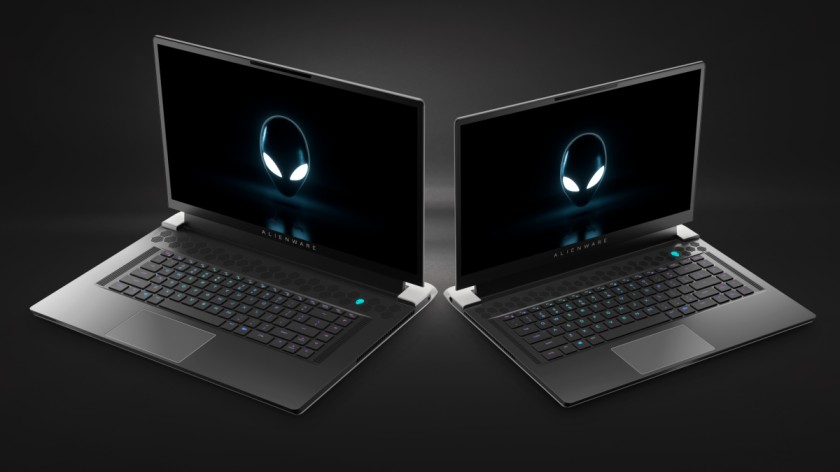
Alienware has launched the brand new x15 and x17 of the x-series gaming laptops that are going to mark a new level of exceptional capability, design, quality, and performance. The company has always challenged itself to come up with something better and far more impressive every time with a new launch. With these new gaming laptops of the x-series, Alienware is presenting its thinnest 15” and 17” gaming laptops. The company has collaborated with Intel to help successfully design the thinnest form factor for such gaming laptops.

The newly launched laptops feature patent-pending cooling technologies, high-level performance components, and other designs so that one can play any latest games with minimal discrepancy. Alienware wanted to design something that will redefine the experience of mobile gaming and do more than just a thin laptop. With this massive breakthrough with x15 and x17, x15 became the world’s most powerful sub-16mm 15” gaming laptop.

Alienware Cryo-Tech Cooling Technology

Fast heating of a gaming laptop is an issue faced by every gamer and that’s why advancements in thermal technologies are requested. Alienware’s main focus was to expand these thermal limitations and in doing so they invented new engineering methods to resolve the issue. The Alienware Cryo-Tech cooling technology has been redefined by introducing Element 31[1]. It is an exclusive thermal interface material placed between the CPU and its elements. This will help in dispersing heat and prevent the spike in temperatures from affecting the performance of the laptop.

Alienware
Image Source: laptopmag.com

The x-series laptop offers HyperEfficient Voltage Regulation to extend high performance during long hours of gaming and more heat dissipation. Alienware has also designed an exclusive Quad Fan that blows air to the system, chassis, and internal hotspots to constantly cool the system. These new laptops are also featuring Smart Fan control technology which uses AI to enhance the application-based performance of each fan independently. With this newly cooling technology, gamers can enjoy a high-level gaming experience keeping their system cool and quiet. 

Sleek Design

The new x-series laptops are designed very intricately keeping in mind every single detail adding up to its classic appearance. These laptops are featuring Alienware Legend 2.0 design identity which comes with a Dark Core that first appeared in Alienware m15 R5/R6 gaming laptops. The main purpose of this improved design is to enable high performance with the thin form factor.

These laptops have a continuous series of bold stadium lighting, illuminating the rear hexagon venting system (Alienware Arena). The laptops are designed in a way that mainly focuses on maximizing thermal benefits which explain the venting system both on the top and base of these x-series laptops. The thinness of x15 is 15.9mm while that of x17 is 20.9mm.

High Performance

Both the x15 and x17 gaming laptops are powered by 11th Gen Intel Core H-series mobile processors and NVIDIA GeForce RTX 30 Series Laptop GPUs. The graphics power supported by x15 and x17 is 110W and 165W respectively. The laptops have Thermal Control Circuit Offset which will allow the user to set a temperature for the CPU and the system will assure that the CPU temperature remains within the range. There are five options for power states that the users can choose from, namely, Full speed, performance mode, balanced mode, battery saver, and quiet mode.

The keyboards are also redefined as x17 features the CHERRY MIX keyboard which has a 3.5mm ultra-low-profile design with German stainless steel mechanical components for a better experience. The laptops also have Windows Hello IR camera ensuring quick and safe login and DirectX Raytracing providing FHD 360 Hz speed to 4K-UHD HDR400. The gamers can also personalize the lighting zone from Alienware Command Center. The packaging material of the laptops is coming from recycled products as a part of Dell’s 2030 Moonshot Goals.

For both the models, limited config models are already available and for full config models, gamers have to wait till 15th June. The starting price of the laptops are 1,999.99 (x15) and $2,099.99 (x17). Along with these, the Alienware m15 R6 and Dell G15 systems are also made available at $1,299.99 and $949.99 respectively.

AMD

AMD confirms the use of Radeon Graphics in Samsung Flagship Exynos SoC and Next-Gen Tesla Cars during Computex 2021.

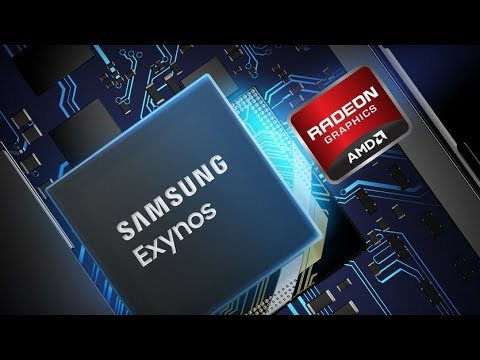
Upcoming new series of products from many companies have been confirmed during the virtual Computex 2021. One such company is AMD that has confirmed two rumors which were spreading in the air for a while. Dr. Lisa Su, CEO of AMD has confirmed that the partnership of AMD with Samsung and Tesla is going to the next level with AMD’s RDNA 2 graphics architecture. This new graphics architecture of AMD Radeon will be incorporated in Samsung’s next flagship Exynos SoC and both the Ryzen APU and GPU will power Tesla’s cars. For the Tesla company, both APUs and GPUs of AMD Ryzen will be used in the next Tesla Model S and Model X revisions.

Partnership of Samsung and AMD

The two companies have joined hands in June 2019 which will allow Samsung to have access to the license for AMD’s Radeon graphics IP for the company’s future Exynos processors. Though both the companies had entered into a partnership two years ago, the details of the agreement have not been revealed by either of them. Even the details of the partnership between AMD and Tesla are unknown. But very soon both Samsung and Tesla will make announcements about their individual new products which will be powered by AMD Radeon graphics. Samsung has dropped just a small hint that the first Exynos processor with Radeon graphics will be released in 2021 but no further information was provided.

AMD
Image Source: youtube.com

During the virtual event of Computex 2021, Su has mentioned that Samsung will use Radeon RDNA 2-based graphics for its new flagship Exynos smartphone processor. She further added this new product will also support ray tracing and variable rate shading. The rest of the details about the product will be announced by Samsung itself later this year. The existing Samsung customers are going to see which new series of smartphones will receive high-end integrated graphics capabilities. Samsung has used a blend of its own Exynos processors along with Qualcomm chips (Snapdragon) to build most of the models but this time the company is making it more exciting.

Samsung and AMD

Samsung hasn’t announced anything clearly regarding the details of the products. So, it is uncertain if the company is planning to use this upcoming Exynos SoC in smartphones or any other products or both. Tablets are another range of high-demand products but there is a rumor that Samsung is planning to launch laptops running Windows on Arm (Gadgets 360). If Samsung is planning to launch these new models of laptops it will give a competition to Apple which has started developing its own Arm-based processors. But, Samsung is famous for its wide range of smartphones in every market around the world, so it is unpredictable how the laptop market would turn out if the company truly releases it.

AMD and Tesla

Though the company has announced the partnership for Tesla Model S and X recently, the rumor spread in the market when Tesla announced the redesign of these models earlier this year. Tesla is planning to avail high-end gaming in these revised versions of cars which will require high graphics horsepower. With an embedded Ryzen APU powering the in-dash infotainment system of the new Tesla cars coupled with an RDNA 2-based GPU, it will allow the users to run AAA games.

Both the X and S models of the Tesla cars are featuring large dashboards touch screens along with rear passenger screens. Along with the modification to the infotainment systems, Tesla has also begun testing compatibility with wireless controllers which will allow the passengers to game from any seat. But, Tesla has not yet announced which game developers will be supported in this new environment or what is the software used to run the platform.

AMD CEO, Lisa Su has also mentioned that the new AMD GPU can deliver up to 10 Teraflops of graphics throughput. The graphics of AMD are already implemented in Son’s PlayStation and Microsoft’s Xbox gaming consoles. So, the gamers have a fair idea of the performance that can be delivered by the graphics of AMD given that the company is expanding its collaboration.

5G Solution 5000

Intel announced a few products including 5G Solution 5000, New Tiger Lake Laptop CPUs at Computex 2021

With the ongoing pandemic since last year, there has been a great surge in demand for high-performing gadgets. Seeing how the demand for highly efficient gadgets has risen, has changed the scenario of the entire IT industry. Intel during Computex 2021 showed a keynote presentation of how PCs have become important not only for work but also for education and entertainment.

Be it laptops or smartphones, every student to professional around the world wants high multitasking capabilities and strong connectivity. So, Intel has decided to bring a few brand-new products into the market to make communication and workflow in this pandemic easier and better. The company is launching a 5G module for PCs, that is, the Intel 5G Solution 5000 and new 11th Gen Tiger Lake CPUs for thin and light laptops. Intel also showed a glimpse of the upcoming 12th Gen Alder Lake CPUs up to and running for both desktops and laptops.

Intel 5G Solution 5000

Intel has developed this new 5G Solution 5000 in collaboration with two other companies, MediaTek and Fibocom. This 5G solution has been developed to incorporate laptops and desktops which will help the demand for 5G networks as well as improve the existing connectivity. There are still many people out there who depend on cellular data even while logging in through a PC. So, this new 5G solution will improve the connectivity for them.

5G Solution 5000
Image Source: themobileindian.com

The planning for building this 5G solution started a couple of years ago when Dell and HP were supposed to be the first companies to introduce this new Intel’s 5G solution. But, in the present scenario, it has been confirmed that Acer, Asus, and HP will introduce laptops with this 5G solution in 2021. The new laptops which will be introduced will be based on both Intel 11th Gen U-Series and H-Series CPU families (Gadgets 360). This suggests that the performance and connectivity will be enhanced for both thin and light laptops as well as gaming laptops. Intel along with the partnered companies are planning to launch around 30 laptops integrated with 5G modem and Tiger Lake (and Alder Lake) CPUs next year.

Capabilities of the new 5G Solution 5000

The new 5G solution 5000 will be implemented using the standard M.2 interface but in a wider module than the current day’s SSD. This solution will work for both laptops and desktops running on Windows, Linux, and ChromeOS. Intel provides worldwide carrier certification and some of them include APAC, Japan, Australia, North America, etc. So, once the laptop is provided with this new connectivity solution, the user can connect to 5G NR networks, 4G LTE networks, and even 3G networks. The 5G solution will support sub-6GHz 5G and also up to 4.7Gbps downloads and 1.25Gbps upload speeds as claimed by the company.

New Tiger Lake CPUs

Intel will launch two brand new Tiger Lake  CPUs which are Core i7 1195G7 and Core i5 1155G7. The former CPU will have a single-core turbo speed of 5GHz while the latter one will have up to 4.5GHz. Both of these CPUs will feature Intel Iris Xe graphics and have 12-28W configurable TDP targets. Not to mention that these new CPUs will compete with AMD Ryzen 5000 CPU series. Intel and AMD are in strong neck-to-neck competition and each one is coming up with something better, efficient, and proficient every time.

The demand of consumers is changing with time, and the real winner is the one who can evolve faster along with a sustainable approach. At the end of Computex 2021, Intel also presented the eco-friendly Acer Aspire Vero Notebook which is made from recycled materials of the post-consumer sector. This is an example of a sustainable approach which is important for a better ecosystem where both nature and technology can thrive together.