Your Tech Story

Tech News

Elon Musk Threatens to Ban Apple Devices Over OpenAI Deal

Elon Musk Threatens to Ban Apple Devices Over OpenAI Deal

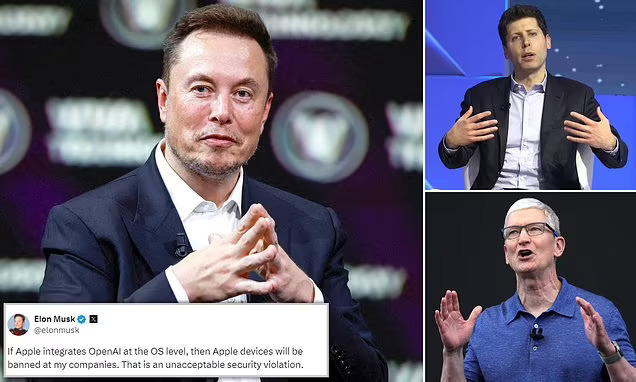
Elon Musk, CEO of Tesla and SpaceX and owner of social media platform X, has issued a strong warning about the potential banning of Apple devices at his companies. This threat follows Apple’s recent announcement of its partnership with OpenAI to integrate ChatGPT-4 technology into its operating systems.

Concerns Over Security Violations

Elon Musk Threatens to Ban Apple Devices Over OpenAI Deal

Image Source: dailymail.co.uk

Musk expressed his concerns in a post on X, labeling the integration of OpenAI technology into Apple’s operating systems as an “unacceptable security violation.” He elaborated on the measures that would be taken at his companies, stating, “Visitors will have to check their Apple devices at the door, where they will be stored in a Faraday cage.” This drastic step highlights Musk’s apprehension about the security implications of integrating third-party AI models into consumer devices.

Apple and OpenAI’s partnership will bring ChatGPT-4 to iOS, macOS, and iPadOS, with basic access available for free and additional benefits for paid OpenAI members. Despite assurances from Apple about maintaining user data privacy, Musk remains skeptical, suggesting that OpenAI could exploit this integration to gather user data covertly.

Musk's Criticism of Apple's AI Strategy

Musk’s criticism extends beyond the immediate security concerns to broader strategic issues. He argued that Apple should have developed its own AI models rather than partnering with OpenAI. Apple has emphasized its commitment to user privacy, using in-house hardware and chips to process data on-device while leveraging cloud servers for some applications. However, Musk’s distrust of OpenAI’s practices and motives adds a layer of complexity to this debate.

This is not the first time Musk has clashed with OpenAI. He co-founded the organization in 2015 but has since distanced himself, frequently criticizing its direction. Earlier this year, Musk sued OpenAI and its CEO, Sam Altman, alleging that they had deviated from the nonprofit mission to develop AI for the benefit of humanity.

Industry Implications and Future Prospects

Musk’s warning has sparked a broader discussion about the integration of AI technologies in consumer devices and the implications for user privacy and security. As AI becomes increasingly embedded in everyday technology, the tensions between innovation, privacy, and security are becoming more pronounced.

Apple’s strategy of using in-house technology to protect user data contrasts with Musk’s vision of AI development, underscoring the divergent approaches within the tech industry. The coming months will be crucial in determining how these tensions are resolved and whether Musk’s threats will impact Apple’s plans.

This unfolding situation illustrates the complex landscape of AI development and deployment, highlighting the need for robust security measures and transparent practices to maintain user trust in an era of rapid technological advancement.

Vanguard and TSMC Plans $7.8 Billion to Build Joint Chip Plant

Vanguard and TSMC Plans $7.8 Billion to Build Joint Chip Plant

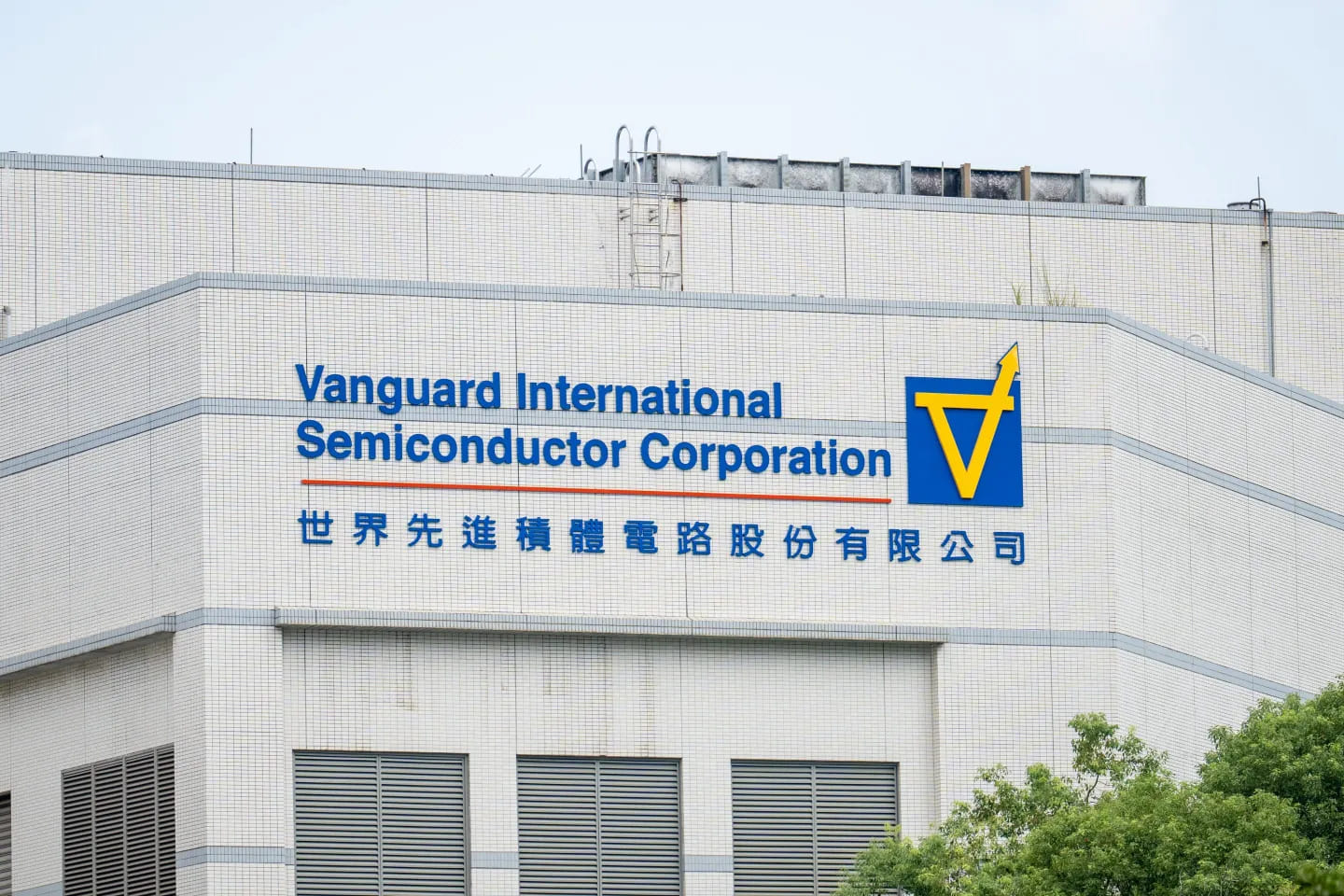
Vanguard International Semiconductor, partially owned by Taiwan Semiconductor Manufacturing Co. (TSMC), and Dutch firm NXP Semiconductors announced plans to establish a $7.8 billion joint venture to build a semiconductor plant in Singapore. The venture aims to diversify their manufacturing capabilities amidst rising geopolitical tensions and to cater to the automotive, industrial, consumer, and mobile markets.

Vanguard and TSMC Plans $7.8 Billion to Build Joint Chip Plant

Image Source: fortune.com

The new facility marks a significant step for Vanguard, traditionally known for its 8-inch wafer fabs, as it will leverage TSMC’s advanced technologies to construct its first 12-inch fab. This development underscores the strategic shift of Taiwanese chipmakers to expand their geographic footprint. Construction of the plant is expected to commence in the second half of 2024, with production slated to begin in 2027.

Strategic Diversification Amidst Global Rivalries

The move by Vanguard and NXP highlights a broader trend among semiconductor companies to mitigate risks associated with the ongoing U.S.-China technological rivalry. With the potential for supply chain disruptions, Taiwanese firms, in particular, are accelerating their efforts to establish manufacturing bases beyond their home turf. Vanguard’s decision follows similar investments by other Taiwanese chipmakers, such as United Microelectronics Corp. (UMC), which recently announced a $5 billion microchip factory in Singapore.

NXP, a key supplier to the automotive industry, which constitutes more than half of its revenue, will benefit from the enhanced production capacity to meet the growing demand for automotive semiconductors. Vanguard will hold a 60% equity interest in the joint venture with a $2.4 billion investment, while NXP will contribute $1.6 billion for a 40% stake. Both companies have also pledged an additional $1.9 billion to support the facility’s long-term capacity infrastructure, with the remaining funds expected to come from third-party loans.

Global Race for Semiconductor Supremacy

The semiconductor sector, poised to surpass $1 trillion by the end of the decade according to International Business Strategies, is witnessing unprecedented investment levels as countries and companies strive for dominance. Taiwan’s TSMC, the world’s largest contract chip maker, has been at the forefront of this race, with significant investments in new plants in Japan and the U.S. Earlier this year, TSMC secured up to $6.6 billion from the U.S. government to aid its $65 billion investment in factories in Arizona.

This joint venture by Vanguard and NXP underscores the strategic imperatives driving the semiconductor industry, as firms seek to bolster their production capabilities and safeguard against geopolitical uncertainties. As construction begins in late 2024, the new Singapore plant will play a crucial role in shaping the future landscape of global semiconductor manufacturing.

Turkish Fintech Sipay Raises $15 Million in New Funding Round

Turkish Fintech Sipay Raises $15 Million in New Funding Round

In a recent Series A fundraising round, Sipay, a well-known fintech business based in Istanbul, Turkey, raised $15 million. The money will be used to advance product development and to expand both domestically and globally. Sipay was established in 2019 and provides a range of financial services, such as wallet services, offline and online payment options, and a flexible platform that can be tailored to the specific needs of its customers.

Anfa and Prestigious Investors are Leading the Investment

Turkish Fintech Sipay Raises $15 Million in New Funding Round

Image Source: linkedin.com

Anfa, a worldwide investment firm known for its enduring relationships with remarkable entrepreneurs, led the funding round. Distinguished angel investors included Ravish Naresh (Khatabook), Edward Lando (Pareto Holdings), Kunal Shah (CRED), Amrish Rau (Pine Labs), and Jitendra Gupta (Citrus Pay and Jupiter). Their participation demonstrates a high level of confidence in Sipay’s growth potential and strategic direction.

Quick Development and Market Awareness

With a stunning 10x year-over-year growth rate, Sipay has risen quickly in the fintech business and was named the fastest-growing fintech in Turkey by Deloitte. The company has been profitable since early 2023 and projects $300 million in run-rate sales for 2024. This shows that it has a strong business plan and strong operational efficiency in a field that is very competitive.

Entire Financial Solutions for a Variety of Clientele

Sipay’s broad clientele includes financial institutions, conventional industrial and retail enterprises, and technology frontrunners like Delivery Hero-acquired Hepsipay and Yemeksepeti. Sipay also caters to big multinational companies such as Trendyol, which is owned by Alibaba. This broad clientele has helped the business grow quickly in Turkey and established a strong basis for its aspirations on the global stage.

Dedicated to Innovation and Worldwide Growth

The recently obtained funding will support Sipay’s ongoing innovation and market expansion, strengthening its ability to satisfy the intricate requirements of its partners and customers throughout the world. The CEO and founder of Sipay, Nezih Sipahioğlu, said that their team’s hard work as well as dedication are evident. We are steadfast in our commitment to enabling people and companies globally to meet their needs by providing a single, all-inclusive platform with a variety of financial goods and services.

In Summary, Laying the Foundation for Future Success

With the completion of this large funding round, Sipay is well-positioned to carry out its aim of revolutionizing the financial services industry, providing cutting-edge solutions, and breaking into new international markets. The company is positioned as a strong competitor in the fintech sector, prepared to take on new challenges and possibilities, thanks to its dedication to innovation, customer-centric approach, and strong financial performance.

 
Natural Cycles Secures $55M to Revolutionize Birth Control with Innovative App

Natural Cycles Secures $55M to Revolutionize Birth Control with Innovative App

The groundbreaking women’s health startup Natural Cycles announced today the completion of a $55 million Series C fundraising round. The company’s total funding to date has exceeded $95 million thanks to this noteworthy investment, highlighting its leadership position in digital contraception.

Background of the Company

Natural Cycles Secures $55M to Revolutionize Birth Control with Innovative App

Image Source: athletechnews.com

Dr. Elina Berglund along with Dr. Raoul Scherwitzl established Natural Cycles in 2013, which created the first direct-to-consumer contraceptive application. The only digital birth control method approved by regulators in the US (FDA), Europe (TÜV SÜD), Canada (Health Canada), Australia (TGA), Singapore (HSA), and South Korea (MFDS) is this cutting-edge app, which has been used by over three million women globally.

Latest Advancements

Natural Cycles recently increased the range of services it offers with the introduction of NC° Postpartum, an app feature that helps new moms heal both mentally and physically after giving birth. Together with NC° Plan Pregnancy, NC° Follow Pregnancy, and NC° Birth Control, NC° Postpartum completes the app’s three modes, offering complete assistance to women at every stage of their reproductive journeys.

Finances and Upcoming Initiatives

Lauxera Capital Partners spearheaded a $55 million fundraising round, in which Point72 Private Investments and J.P. Morgan provided a revolving lending facility. Lauxera Capital Partners’ founding partner Samuel Levy was enthusiastic about the partnership:

"Our mission at Lauxera is to partner with ambitious entrepreneurs to transform the future of medicine with unique technology. The visionary Natural Cycles team has built an exceptional company delivering profitable growth supported by unique clinical and regulatory business moats. We are delighted to partner with Elina, Raoul, and their team to offer women an alternative to traditional approaches without the side effects and compromises."

tech.eu

As part of the transaction, Levy will become a member of the Natural Cycles Board of Directors. The recently obtained money will be put to use creating new goods, speeding up commercial endeavours, and automating the processes involved in healthcare reimbursement.

Goals and Objectives

Natural Cycles’ co-founder and CEO, Dr Raoul Scherwitzl, emphasised the organisation’s dedication to improving women’s health:

“We look forward to leveraging their expertise to fulfil Natural Cycles’ mission of making hormone-free birth control more accessible and combining technology and science to fill the gaps in underserved areas of women’s health.”

tech.eu

In summary, Natural Cycles is in a strong position to increase its influence on women’s health around the world following the successful close of the Series C funding round. The company supports women at every stage of their reproductive journey by providing new, hormone-free contraceptive products that continue to be valuable alternatives to traditional birth control techniques.

Google Invests $2 Billion in Malaysia for New Data Center and Cloud Services Expansion

Google Invests $2 Billion in Malaysia for New Data Center and Cloud Services Expansion

Google has announced a significant investment of US$2 billion to establish its first data center in Malaysia, alongside a new Google Cloud hub. This strategic move aims to foster economic growth and technological development within the country. Prime Minister Anwar Ibrahim highlighted the potential impact of this investment, projecting an addition of US$3.2 billion to Malaysia’s economy and the creation of approximately 26,500 jobs by 2030.

Google Invests $2 Billion in Malaysia for New Data Center and Cloud Services Expansion

Image Source: atelier-c.eu

The planned development will be located in a business park in Selangor state, centrally positioned on the west coast of Peninsular Malaysia, encircling the capital, Kuala Lumpur. The choice of Selangor underscores the state’s growing importance as a technological and business hub, meeting the rising demand for cloud services and artificial intelligence (AI) literacy programs for Malaysian students and educators.

Boost to Cloud Services and AI Education

Malaysia is set to become the twelfth country to host a Google data center, joining an extensive network of 40 regions and 121 zones globally. The new Google Cloud hub will cater to large enterprises, startups, and the public sector, reinforcing Malaysia’s position in the regional tech ecosystem.

This investment aligns with Google’s global strategy to expand its cloud infrastructure and support local technological education. By integrating AI literacy programs, Google aims to equip the Malaysian workforce with essential skills for the digital age, thus fostering innovation and competitiveness.

Prime Minister Ibrahim emphasized that this project is a cornerstone for Malaysia’s ambition to become a leading digital economy in Southeast Asia. The influx of high-quality jobs and the enhancement of digital infrastructure are expected to have long-lasting benefits for the country’s technological landscape.

Growing Investment Landscape

Google’s announcement is part of a broader wave of investment activities in Malaysia’s telecommunications and technology sectors. Recently, Microsoft revealed plans to invest US$2.2 billion over the next four years to build Malaysia’s cloud and AI infrastructure. This underscores the country’s attractiveness as a destination for significant technological investments.

Other notable developments include the opening of Malaysia’s first Apple store and plans for a US$107 billion investment in the semiconductor industry. Additionally, collaborations with global giants like Ericsson and Intel, alongside plans to develop Southeast Asia’s largest integrated circuit design park, further highlight Malaysia’s rapid technological advancements.

These investments collectively signal Malaysia’s rising prominence on the global tech stage, positioning it as a pivotal hub for innovation and digital transformation in the region. As Google and other tech giants establish a stronger presence in the country, Malaysia is poised to become a critical player in the global digital economy.

Orca AI Raises $23 Million to Boost Autonomous Shipping Technology

Orca AI Raises $23 Million to Boost Autonomous Shipping Technology

Orca AI, an AI-powered operational platform for ships, has successfully secured $23 million in a new funding round, led by OCV Partners and Mizmaa Ventures. This latest investment brings Orca AI’s total funding to nearly $40 million, solidifying its position as a key player in the burgeoning field of autonomous shipping technology.

Addressing Maritime Challenges

Orca AI Raises $23 Million to Boost Autonomous Shipping Technology

Image Source: orca-ai.io

Orca AI is tackling some of the maritime industry’s most pressing issues by introducing sophisticated AI features to existing vessels. The company’s platform functions as a “digital watchkeeper,” utilizing visual data to enhance human capabilities during navigation, especially in complex, high-traffic situations. This innovative technology is designed to improve safety, efficiency, and sustainability within the maritime sector.

The effectiveness of Orca AI’s solutions was demonstrated in 2022 when it powered the world’s first autonomous commercial ship voyage in partnership with NYK. Currently, Orca AI is working on the second phase of its technology, aiming for a full rollout of autonomous ship capabilities by 2025. According to Yarden Gross, CEO and co-founder of Orca AI, advancements in global connectivity, such as Elon Musk’s Starlink, are crucial in enabling these high-tech solutions. Gross emphasizes that the maritime industry must embrace technological innovation to enhance operational efficiency and safety, which is vital for global trade.

Enhancing Safety and Efficiency

Founded by naval technology experts Yarden Gross and Dor Raviv, Orca AI places a strong emphasis on real-world impact. In collaboration with major shipping companies like MSC, NYK, Maersk, and Seaspan, Orca AI’s platform has significantly improved maritime safety. In 2023, it reduced close encounters at sea by 33% and crossing events by 40% across 15 million nautical miles, leading to safer conditions for crews and vessels.

Orca AI’s technology also offers substantial environmental and economic benefits. By detecting high-risk situations and optimizing operational efficiency, the platform helps ships avoid unnecessary maneuvers and speed adjustments, resulting in reduced fuel consumption and emissions. In 2023 alone, the platform achieved average fuel savings of $100,000 to $300,000 per vessel, equating to a total reduction of 172,716 tonnes of CO2 emissions.

Expanding Reach and Enhancing Security

Beyond navigation, Orca AI’s platform enhances vessel security by enabling crews to proactively mitigate threats such as drone attacks and piracy. This capability significantly improves both vessel security and crew safety.

With orders exceeding 1,000 vessels, Orca AI is on a trajectory for substantial growth. The new funding will be directed towards technology development, international expansion, and overall growth, contributing to a reduction in maritime carbon emissions and the establishment of higher efficiency and safety standards in the industry.

Hemi Zucker, Managing Partner at OCV Partners, highlights the extensive market potential of autonomous shipping technology. Given that over 80% of international trade goods are transported by sea, Zucker views autonomous ships as a transformative opportunity within the maritime industry.