Your Tech Story

Tech News

Twitter

Twitter Takes Orders To Court Over The takedown of Content.

Twitter, a US microblogging platform, has requested a legal review of many requests for material removal it received from the Indian government. A lawyer and official from the Information Technology (IT) Ministry who were aware of the matter acknowledged that Twitter had submitted a case to the Karnataka High Court opposing the takedown requests. According to sources with knowledge of the situation, Twitter has taken legal action against some of the government letters demanding it removes particular content uploaded on the microblogging website in its most recent dispute with the Ministry of Electronics & Information Technology.

Twitter received a letter from the IT Ministry last month requesting that it comply with its directives by July 4 in order to maintain its safe harbor status under the intermediary rules.

The social network business filed a lawsuit against the Ministry’s content-blocking orders under Section 69(A) of the Information Technology Act, 2000 on Tuesday, alleging excessive use of power by government representatives. It has been learned that Twitter argued in its filing that many of these banning orders violate Section 69(A) of the Act both procedurally and substantively. This includes things like removing user-posted content without giving them a prior warning.

Twitter
Image source: themeghalayan.com

Another report claims that the business claimed MeitY failed to show how some of the content it wanted to be removed was in violation of Section 69. (A). Twitter has argued on many occasions that the criteria used to identify various accounts and pieces of information by the Ministry are “overbroad and arbitrary” or “disproportionate.”

According to a source, Twitter has also informed the court that some of the Ministry-identified content might relate to official political party accounts, and removing them might violate their right to free expression.

Ashwini Vaishnaw, Union Minister for Railways, Communications, and Electronics and Information Technology, said that nations around the world, including India, are moving toward making social media accounts. She was speaking to the media at the Entrepreneurship Development Institute of India in Gandhinagar. He said,

“Social media is a powerful medium. It has a lot of influence in our lives today. Its accountability is a valid question across the world. Countries and societies across the world are moving in the direction to make social media accountable.” 

Source: indianexpress.com

Multiple accounts and a few tweets from the international advocacy organization Freedom House, journalists, legislators, and backers of the farmers’ protest had been requested to be blocked by the government on Twitter.

Between January 2012 and June 2021, Twitter—which has over 24 million users in India—received over 17,000 demands from the government to remove Twitter accounts and tweets, of which it cooperated with only 12.2%. Around 1,600 accounts, 3,800 tweets, and 6,300 items were withheld in violation of Twitter’s terms of service.

According to the regulations governing these blocking orders, the government must submit any requests for blocking to a review committee, which subsequently provides these instructions. The majority of blocking orders issued under Section 69(A) of the IT Act are private in nature.

Days after giving the firm “one final opportunity” to abide by its blocking orders, the Ministry was sued by Twitter. The Ministry issued a warning in a memo late last month, stating that the company ran the risk of losing its immunity as an intermediary if the microblogging site did not remove content it had reported. Twitter had until July 4 to abide by the Ministry’s banning instructions.

India accounted for the fourth-highest number of lawful material takedown requests to Twitter between January and June 2021, according to the company’s most recent global transparency report. In the reporting period, Twitter received 43,387 legal requests to remove information referencing 196,878 accounts, with 11% of all requests coming from India.

Twitter noted a 1,060 percent rise in blocked accounts during this time period, noting that this was specifically due to Twitter’s compliance with an Indian blocking order issued under the Information Technology Act of 2000 in India.

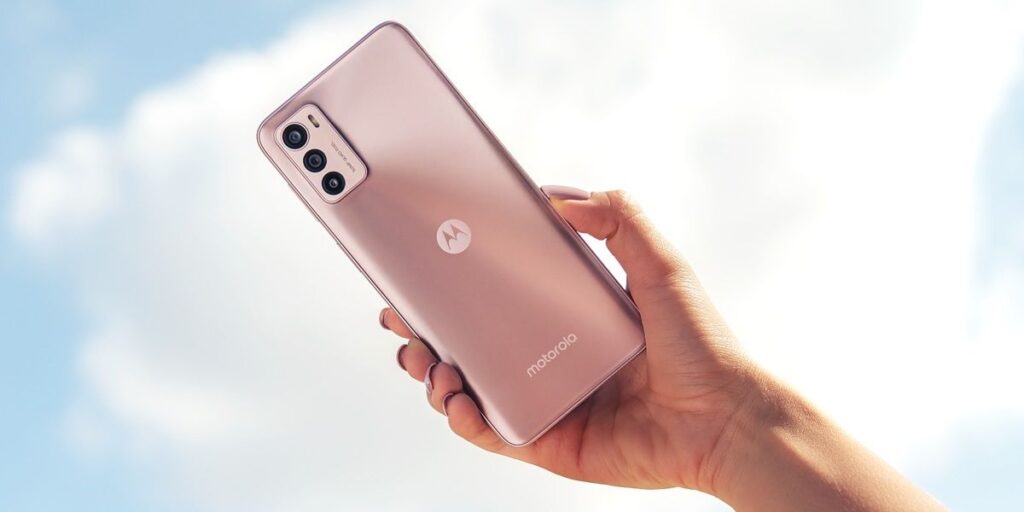
Moto G42

Moto G42 With Snapdragon 680 SoC, 50MP Triple-Camera Setup Launched In India.

Motorola unveiled the Moto G42 in Europe in early June. Almost a month later, the smartphone arrived in India as planned. Motorola, which is owned by Lenovo, has a large choice of phones in various price categories. The brand is well-known for its basic Android Moto phones that lack any UI customization. Motorola has partnered with Google’s Android One program to provide Moto phones with faster and more security updates. Motorola is well-known for producing low-cost and mid-range smartphones, but the company also produces a premium smartphone, the Moto Edge+. Motorola’s main smartphone lineups include the Moto G, Moto E, and Moto X series.

The Moto G42 is a brand-new smartphone that was introduced in India for less than Rs 15,000. The low-cost smartphone is the latest addition to the G-series, competing with the Redmi Note 11, Realme 9i, Samsung Galaxy M13, and other smartphones priced under Rs 15,000.

The Moto G42 will be available in India through Flipkart and other big retail outlets. The Moto G42 pricing in India, specifications, and features are all shown here.

Specifications And Features

The Moto G42, like most Motorola-branded smartphones, has a plastic body. For splash resistance, the device is IP52 certified. It has dimensions of 160.61 x 73.47 x 8.26mm and weighs 174.5g.

The gadget has a 6.47-inch OLED display with a resolution of 2400 x 1080 pixels (FHD+), a peak brightness level of 700 nits, and a PPI of 409. The centered punch-hole panel has a refresh rate of 60Hz and an aspect ratio of 20:9. It is equipped with a Qualcomm Snapdragon 680 SoC, LPDDR4x RAM, and uMCP storage. It runs a near-stock version of Android 12 with My UX enhancements. MicroSD cards are supported via a dedicated slot, and there is a 3.5mm headphone jack.

The phone has two stereo speakers that are compatible with Dolby Atmos. It employs a side-mounted fingerprint sensor for biometrics.

In terms of optics, there’s a triple camera system on the back that includes a 50MP primary sensor, an 8MP ultra-wide sensor, and a 2MP macro snapper. The handset’s front-facing camera is nestled inside the punch-hole. The smartphone’s connectivity options include 4G, dual-SIM, dual-band WiFi, Bluetooth 5.0, GNSS, and NFC. Finally, it is powered by a 5,000mAh battery with 20W rapid charging capabilities.

Moto G42
Image source: crast.net

Price And Availability

Priced at Rs 13,999 in India, the Moto G42 is readily available. Starting on July 11, it will be available for purchase on Flipkart. Due to an immediate reduction of Rs 1,000 for SBI Bank cards, people may be able to get it for Rs 12,999. Additionally, customers can get discounts of up to Rs 2,000 on Jio recharges and Rs 549 on ZEE5 annual memberships. So take the Moto G42 into account if you’re looking for a cheap Android phone that provides a close-to-stock Android experience.

About Motorola

Motorola, Inc. is a wireless communications and electrical systems firm based in the United States. Motorola Mobility and Motorola Solutions were spun off in 2011. The company’s headquarters are in Schaumburg, Illinois. The Galvin Manufacturing Corporation was formed in 1928 in Chicago by brothers Paul and Joseph Galvin. Its first product was the “battery eliminator,” a gadget that connected direct-current, battery-powered radios to the alternating current common in nearly two-thirds of American houses at the time.

In the mid-1990s, the company pioneered the concept of flip phones, mobile phones, and clam phones. It was also one of the first smartphone manufacturers to use Google’s open-source Android mobile operating system. The Motorola Droid was the first phone to run the Android operating system, and it was released on November 2, 2009. As part of the agreement, Google retained primary ownership of the Motorola Mobility patent portfolio, while Lenovo obtained a license to the patent and intellectual property portfolio.

Xiaomi Mi 12S Ultra

Xiaomi Mi 12S Ultra: Everything You Should Know About The New One-Inch Camera Sensor.

Xiaomi has scheduled to introduce the brand-new flagship Xiaomi 12S series including Xiaomi Mi 12S Ultra next week. It includes three models which come on the top and are better than the existing 12 series. This series will provide extraordinary performance and bring new and innovative features. It will be a remarkable development in smartphone photography.

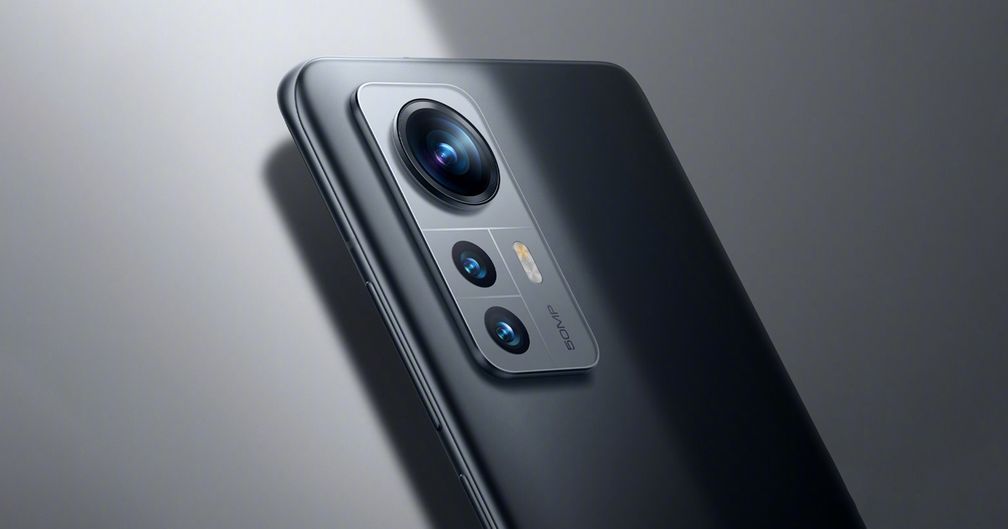
Xiaomi has unveiled the presence of a new camera sensor on the Xiaomi Mi 12S Ultra that is presumed to be the largest camera sensor co-developed with Sony. It is one inch in size. Sony is known to have the best camera sensors in the smartphone industry. That’s why many manufacturers use Sony sensors. This sensor is also used in other cameras by Sony such as RX100 MK7 point-and-shoot cameras. These types of cameras are often used by Youtube celebrities and content creators. It is the largest camera sensor Sony has ever created. Its size is pretty large for a smartphone. Its sensor is 1.7 times the camera sensor in Samsung Galaxy S22 Ultra.

Xiaomi will be launching this new 12S series in partnership with Leica which also includes the 12S Ultra smartphone with a Sony IMX989 sensor. Leica is a German camera manufacturer company. We don’t actually know if it is a marketing strategy or a contribution made by Xiaomi to the new hardware in the smartphone industry. It is said so because many famous companies have used this gimmick.

Xiaomi Mi 12S Ultra
Image source: xiaomiplanet.sk

It will become the first-ever smartphone to implement and use such a large sensor in the Indian smartphone industry. Although, firstly it will launch on the 4th of July in China. It will take a few more months for it to launch in India and maybe with a new name. Some well-known smartphones like Sony Xperia Pro-1 and Aquos R7 had similarities in size with this new sensor. The size of the Sony model was partially large. Because of their unavailability in the Indian market, they couldn’t bring any innovation or revolutionary development to the industry.

A large sensor means it can take more light providing a remarkable and better camera performance. The new sensor known as Sony IMX989 is ideally capable of exceptional smartphone photography competing with highly sophisticated cameras like the Sony Cyber-shot series. A larger sensor consists of larger pixels which allow well-lit nighttime photography. Another advantage of having a large camera sensor is that it will have a better and wide dynamic range, Naturally. That means it will be independent of brightness and darkness and will, by no means, allow color distortion. It will be able to handle a different range of brightness and darkness. The most recognizable difference is that a larger sensor makes a bokeh effect for amateur photographers while smartphones with small sensors create a fake bokeh or blur effect. Normal small sensors don’t have enough space for foreground and background separation no matter how large their aperture is.

The new features we will be seeing in this new sensor completely depend on how Xiaomi and Leica have calibrated this Sony IMX989 sensor. Sony and Samsung have been experimenting with their sensors to make them as close as possible to full-frame or medium format cameras but right now it would be very difficult but it may be possible in the distant future.

Some specifications of the vanilla Xiaomi 12S which are revealed are its 6.28” AMOLED screen size having a 120 Hz refresh rate. It will contain two RAM and two storage options 8/12 GB and 128/256 GB. The rear camera will be 50 MP main + 13 MP ultra-wide-angle + 5 MP macro and the front-facing shooter would be 32 MP. The main notable difference from the 12 series will be its new Snapdragon 8 processor with Gen 1 chipset.

The more descriptive details of the new sensor have not been revealed by Xiaomi. It will have to wait for its launch for further information. but one thing is confirmed it will bring change and innovation to the smartphone industry.

Byju’s

Byju’s Lays Off Over 2500 Employees Across Whitehat Jr And Toppr.

Start-up unicorn in edutech in order to aggressively decrease expenses, Byju’s has laid off nearly 2,500 employees throughout its group firms. India’s thriving ed-tech company is going through its most difficult phase ever. After Unacademy and Vedantu, Byju’s, India’s largest and most successful ed-tech company, is struggling to stay afloat. During the covid-induced lockout, WhiteHat Jr stole the spotlight in order to make coding accessible to children. According to a Moneycontrol report citing sources, demand for edtech services has cooled following two years of hypergrowth.

Full-time and contract employees from Byju’s group firms, including Toppr and WhiteHat Jr., were among those thrown off. According to the article, the layoffs have occurred across sales and marketing, operations, content, and design teams.

Byju’s
Image source: inc42.com

Toppr alone has laid off approximately 1,200 staff, including 300-350 permanent personnel. Another 300 employees have been asked to resign or have been notified that they would not be paid for the next 1-1.5 months. According to the article, those laid off include approximately 600 contractual staff whose contracts were set to expire in October or November of this year.

The Moneycontrol report said,

While on June 27 and June 28, Byju’s laid off over 1,500 employees from Toppr and WhiteHat Jr, the two companies it acquired over the last two years, on June 29, it sent out e-mails to nearly 1,000 employees from its core operations teams,”

Source: news18.com

BYJU’s denies the report, calling it misinformation

The corporation denied laying off 2500 workers. They even tampered with MoneyControl’s report. According to Byju’s spokesman, the company is optimizing teams from their group companies in order to realign the company’s business priorities and accelerate long-term growth.

Around 300-350 Toppr permanent employees were laid off, while another 300 were asked to resign or were notified that they would not be paid for around a month and a half.

In addition, 600 contract workers whose contracts were slated to expire in October or November of this year were sacked.

“There are just about 100 employees left at Toppr right now,” stated the person.

A BYJU’S representative dismissed the report’s findings, saying,

“We strongly deny the misinformation presented by Moneycontrol. To recalibrate our business priorities and accelerate our long-term growth, we are optimizing our teams from our group companies. This entire exercise involves less than 500 employees from across Byju’s Group companies.”

Source: thequint.com

This year, renowned Indian start-ups such as Unacademy, Cars24, and Vedanta laid off almost 5,000 staff. In January-March of this year, Ola let off over 2,100 people, followed by Unacademy (over 600), Cars24 (600), and Vedantu (400).

This is the most recent round of major layoffs in the education technology industry in 2022. Vedantu and Unacademy sacked over 2,500 staff earlier this year, and organizations like LIDO learning and FrontRow also laid-off workers.

Apart from that, e-commerce firm Meesho lay off 150 staff, furniture rental start-up Furlenco 200, influencer-led social commerce start-up Trell 300, and OkCredit 40.

Although start-ups are laying off staff for cost-cutting reasons, figures show that overall investment for these new-generation enterprises during January-April this year is nearly the same as last year, and the number of companies raising more than USD 100 million is also greater than last year. However, according to analysts, companies are laying off a personnel to save cash for shoring up profitability, as big-ticket funding is currently decreasing due to the ongoing unpredictable market conditions.

Leading venture capital company Sequoia Capital recently advised founders of its portfolio firms in a 51-page note that the era of being rewarded for hypergrowth at any cost is soon coming to an end, with investors gravitating toward companies that can demonstrate present profitability.

Google Hangouts

Google Hangouts Is Shutting Down After Nearly 9 years.

Google Workspace users were transferred to the more modern “Google Chat” software in February, replacing the outdated “Hangouts” feature. Later this year, the company intends to completely phase out older Hangouts and transition all current users to Google Chat. Google indicated in a recent blog post that users of Hangouts on desktop and mobile devices will be encouraged to move to Google Chat before Hangouts is withdrawn in November 2022. Users will be able to export all of their Hangouts data before the platform is retired, and conversation data from the Hangouts platform will be instantly available on Google Chat. After nine years, Google is ending support for its multi-platform instant messaging service. The internet giant is urging users to transition to Google Chat, which will debut in October 2022. Hangouts Chrome extension users will also be invited to switch to Chat on the web or download the Chat web app. Chat in Gmail will also be available to users of Hangouts on Gmail’s web platform beginning next month.

Hangouts, which debuted in 2013, will be discontinued in November of this year, and Google wants users to download all of their data before that time. Although most users’ discussions will be automatically transferred from Hangouts to Chat, the firm nevertheless urges customers “who prefer to save a copy of their Hangouts data to utilize Google Takeout to retrieve their data when Hangouts is no longer available in November” to use Google Takeout.

Starting today, people using Hangouts on mobile will see an in-app screen asking them to move to Chat in Gmail or the Chat app. Similarly, people who use the Hangouts Chrome extension will be asked to move to Chat on the web or install the Chat web app. In July, people who use Hangouts in Gmail on the web will be upgraded to Chat in Gmail,” according to a blog post by Google.

Source: techzimo.com

Hangouts users will continue to get in-product notifications for at least one month prior to the termination of Hangouts web. Following that, Google Chat web will begin automatically redirecting visitors from the Hangouts web.

Google Hangouts
Image source: cybernews.com

According to Google, users of Hangouts in Gmail on the web will not be prompted to switch to Chat until July. Google said it will tell customers “At least one month” before moving the Hangouts website to Chat. It will remain available on the desktop site until November. If you still use Hangouts, Google should automatically migrate all of your current conversations to Chat. When Hangouts is formally retired in November, the firm had given the chance to download a copy of your data using its Takeout service.

Compared to Hangouts, Google Chat offers a number of new features, including side-by-side editing of Docs, Slides, and Sheets. Additionally, it has a location designated -for cooperation on specific topics called Spaces. Through chats, teams and groups may collaborate on documents, manage projects and files from a single spot, and share ideas.

Additionally, Google is advising users to download their data via Google Takeout, the company’s data exportation service, before Hangouts is discontinued in November. Google is also providing new features like direct calling, establishing in-line threads in Spaces (formerly known as Rooms), viewing and sharing multiple photos, and more to make things interesting and draw users.

As we take this final step to bring remaining Hangouts users to Chat, we hope users will appreciate our continued investment in making Chat a powerful place to create and collaborate,” google mentioned in the blog.

Source: indiatoday.in
Acer Aspire 7

Acer Aspire 7 Refreshed With 12th Gen Intel Core i5 Chip Launched in India: Check Details

In order to boost performance for the Indian market, the Acer Aspire 7 has been updated with the most recent 12th-generation Intel Core i5 processor and Nvidia GeForce GTX 1650 GPU. The laptop is designed for gamers and has a 15.6-inch full-HD+ display with minimal side bezels. It has an LED-backlit keyboard and Windows 11 Home already loaded. The 50Wh battery and 8GB of RAM are both standard features of the Acer Aspire 7 laptop. Wi-Fi 6E connectivity is available on the laptop. The Aspire 7 gaming laptops blend realism with lightning-fast performance and cutting-edge new features. One of these is what people who seek a portable notebook with excellent performance for editing, creating content, and gaming will prefer.

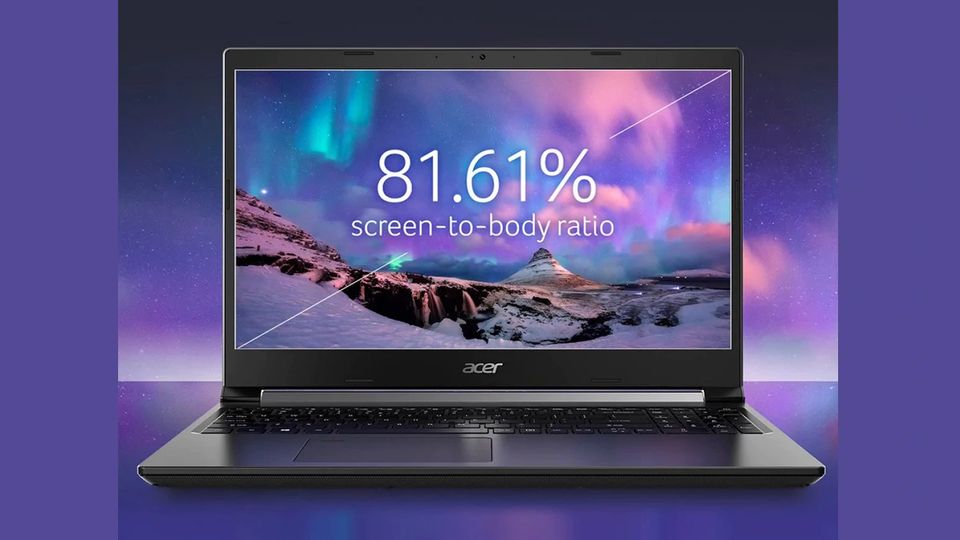
The laptop boasts a sleek, 19.9 mm aluminum body with a Charcoal Black elevating hinge for a subdued appearance. Users can do more tasks whenever and wherever they are with a lighted keyboard. With the FHD IPS display’s 81.67 percent screen-to-body ratio and Acer BlueLightShield and ExaColor technologies for visual comfort and color customization, you can enjoy entertainment like never before.

With headphones and external microphones, Acer’s PurifiedVoice with AI noise reduction can reduce background noise for both users. The Acer TNR Solution enhances images by identifying and analyzing noisy pixels, then gradually blending them into other frames. You may enable and search Windows voice recognition from standby using Modern Standby & Wake on Voice. A free Xbox Game Pass Ultimate subscription with access to more than 100 titles is also included with the laptop.

With Wi-Fi 6 and 6E, which are great for speedy file sharing and seamless 4K streaming, as well as Bluetooth ® 5.2, this gadget offers the most recent connectivity technologies. For immersive entertainment, you may also connect an 8K display to a Thunderbolt 4 connection.

Acer Aspire 7
Image source: i.gadgets360cdn.com

Specifications And Features

• As previously mentioned, the Acer Aspire 7 comes pre-installed with Windows 11 Home and has a 15.6-inch full-HD (1,080 x 1,920 pixels) IPS LED-backlit TFT LCD screen. The display has a screen-to-body ratio of 81.67 percent.

• 12-core Intel Core i5-1240P processor, clocked at 3.30 GHz with a turbo speed of 4.40 GHz, powers the laptop with a gaming-specific design.

• The processor is connected to 512GB of storage and 8GB of DDR4 RAM. The Nvidia GeForce GTX 1650 GPU, with up to 4GB of GDDR6 RAM, handles the graphics. Using two soDIMM modules, the RAM may be increased to 32GB. Up to a 2TB dual SSD is available.

• To dissipate the heat produced by the processor, the gadget contains three thermal pipes, two fans, and an air-inlet keyboard.

• A multi-gesture touchpad is included with the Acer Aspire 7 and allows two-finger scrolling, motions to launch Cortana, Action Centre, and fingerprint application commands.

• The device also includes a microphone and a T-type HD webcam with 720p resolution. The Temporal Noise Reduction (TNR) technology from Acer enables video recording at 30 frames per second (fps) or 720 pixels per second (fps).

• Wi-Fi 6, 6E, Bluetooth V5.2, Thunderbolt 4, a USB 3.2 Gen 1 Type-C connection, and an HDMI port are among the Acer Aspire 7’s connectivity choices. Stereo speakers are present.

• The Acer Aspire 7 laptop has a fingerprint reader for authentication and a backlit keyboard.

• There is a three-cell, 50Whr lithium-ion battery within the Acer Aspire 7. With the help of its 135W AC adapter, the laptop may be charged

• The gaming laptop is 362x237x19mm in size and features an aluminum body.

Pricing And Availability

Starting at Rs. 62,990, the Acer Aspire 7 is available from both the Acer Online Store and Flipkart.it is only available in charcoal black

About The Company

Acer is a global corporation from Taiwan that operates in the hardware and electronics industries. Multitech, the company that would later become Acer, was established in 1976. In 1976, Stan Shih, Carolyn Yeh, and a group of five other individuals started Acer. In 1987, the company adopted the name Acer. It is one of the biggest suppliers of personal computers worldwide. In addition to peripherals, the company also manufactures tablets, storage devices, cellphones, servers, and televisions (LCD and LED).