Your Tech Story

Tech News

Truecaller

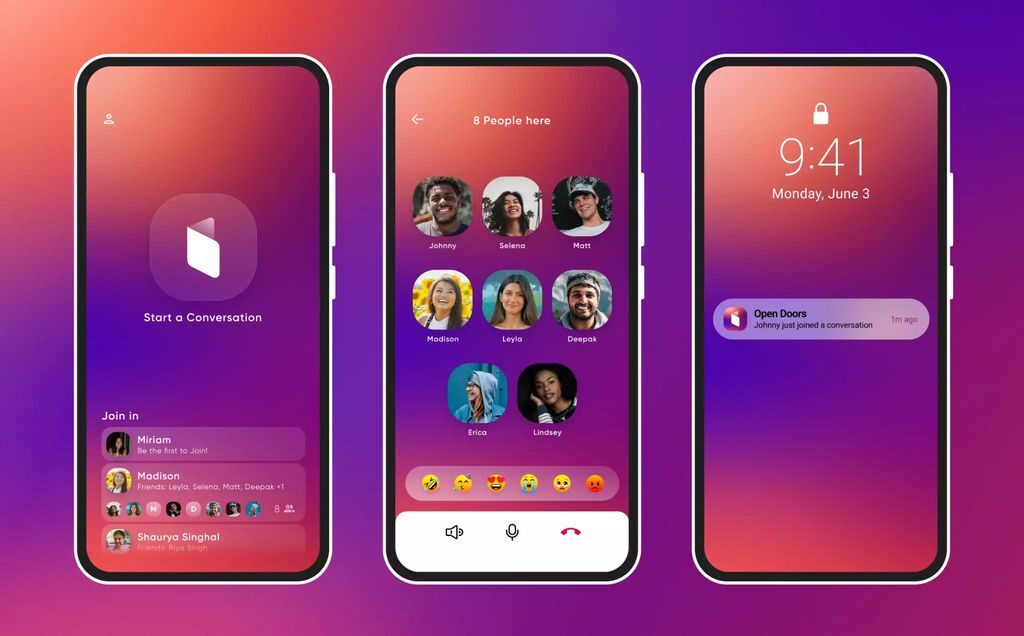
Truecaller Launches ‘Open Doors’ Inspired From Clubhouse: How it works

Truecaller has released Open Doors, a clubhouse-style private audio communication app. You can start a chat, and your friends will be notified when they can join. When they join, their friends will be notified, and they will be able to join as well. As a result, as you can see, the number of people participating in the chat expands due to the network effect. Truecaller has a large cache and user base to promote this network effect, with over 300 million daily active users. Most certainly, you are one of those users. So, if you’re intrigued about Open Doors, we’ve got the essential information for you right here.

What Is Open Doors?

Open Doors is a free social media program in which players engage with others solely through voice. In that way, it could be regarded as a Clubhouse substitute. True Software Scandinavia AB, the parent firm of Truecaller, Caller ID, and spam prevention service, created it. The app’s user interface is currently available in English, Hindi, Spanish, Latin, and French. In the future, other languages will be introduced. The software provides a communication platform that both existing Truecaller users and new users can use to initiate and join audio chats. These audio discussions will then invite more people through the ‘network effect,’ as Truecaller refers to it.

Truecaller
Image source: static.tnn.in

How does It work?

If you are already a Truecaller user, you may sign in with only one tap, the business says in the news release. A missed call or an OTP will be used to verify your phone number if you don’t enter it first. Additionally, you must allow two permissions: phone permission and contacts permission (for the network effect) (to conduct audio conversations). In case you’re worried, the firm assures you that the other party in the conversation won’t see your phone number. Again, you are free to start and stop a chat whenever you like. Notifications to join the chat will be sent to your friends (contacts), as well as to their friends. A link to someone wanting to join the chat can be shared by anyone participating in it.

Is It Safe?

It’s noteworthy to note that during a chat, only the participants’ names and profile photographs are shown; phone numbers are not displayed. Additionally, users have total control over their personal data because the program only needs two permissions. Other features include the ability to customize who receives notifications when you join a conversation and the ability to respond to what others are saying. Additionally, the app will provide users fine-grained control over how it alerts them to new Open Doors talks.

Both the Google Play Store and the Apple App Store will provide Open Doors at no charge. The seamless app experience across both platforms, according to Truecaller, is another boast. The group chats will be moderated by the Open Doors community, but the private talks will remain private and will not be stored anywhere.

Thanks to Truecaller being 13 years in the business, we’ve spent a great deal of time learning about how people communicate. Our new app Open Doors was born out of a simple question – how can we help people make new connections without being intrusive? And this is what we want to do: to bridge the world using the most natural form of communication, our voices.” said Nami Zarringhalam, Co-founder of True Software Scandinavia AB.

Source: digit.in

It’s interesting to see truecaller release this app at a time when others, like clubhouse, seem to have fizzled out and the majority of people use Twitter spaces for similar discussions. Therefore, it will be difficult to remain relevant in a declining industry.

Space Tycoon

Samsung Launches ‘Space Tycoon’ On Metaverse Within The Roblox World.

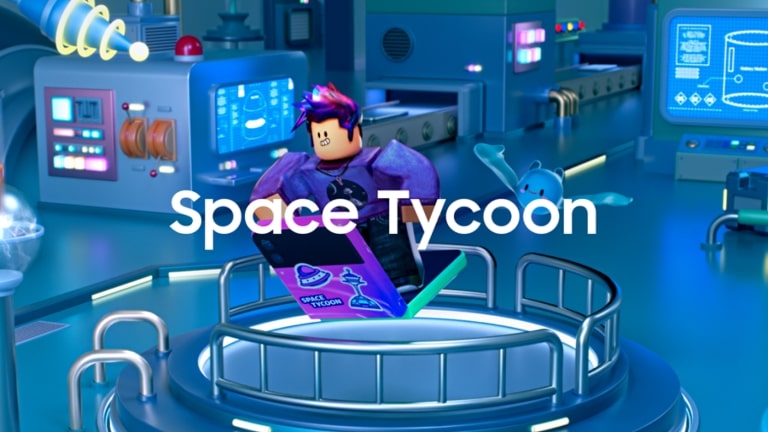
Samsung Electronics has released a new Roblox experience called Samsung Space Tycoon, which is a virtual playground within the Roblox game universe. Users can develop and play games in the virtual space, as well as share their experiences with Samsung devices with alien beings in space. The business simulation “tycoon” genre can also provide design and functionality cues. According to a message released by Samsung, Space Tycoon was built specifically for Gen Z clients. The service offers a seamless metaverse experience that enables users to create and enjoy their Samsung products.

Through the new virtual experience, customers may also interact with one another. According to Jinsoo Kim, Executive Vice President at Samsung Electronics’ Corporate Design Center, Space Tycoon is a playground for users to explore the endless possibilities of virtual spaces.

“We wanted to give our Gen Z customers a chance to experience Samsung products in a way they have never done before. We will continue to showcase content that can deliver more meaningful and entertaining digital experiences for both our current and future customers.” Kim added

Source: gadgets360.com

The newly-launched experience has three core play areas and is set in the Samsung Space Station as well as the research laboratory where alien characters perform research on Samsung’s newest items. The ‘Mining Zone’ is for resource acquisition, the ‘Shop’ is for gaming item buying, and the ‘Lab’ is for product manufacture. Players must mine for minerals before using the materials to construct Samsung items in a space factory.

Space Tycoon
Image source: bitcoinist.com

Space Tycoon users may create everything from Samsung Galaxy smartphones to TVs and various home gadgets. In addition, players can purchase game stuff or enhance their current tools. There is also a possibility for innovation by transforming a real-world thing into an in-game product.

“The foldable smartphone Galaxy Z Flip can transform into a bag or a scooter, just as users will be more creative with the Jet Bot vacuum cleaner transforming into a hoverboard or The Sero lifestyle TV transforming into a one-person helicopter,” Samsung explained.

Source: gadgets360.com

Users will have access to over 20 Samsung products in the ‘Shop’ section of the experience. As the player progresses through the stages, the colors of the things change at random.

What is the Metaverse?

A network of three-dimensional virtual environments geared toward social interaction is known as a metaverse. It is defined as a simulated digital environment that employs augmented reality (AR), virtual reality (VR), and blockchain, as well as social media principles, to build spaces for rich user interaction that resemble the real world. The term “Metaverse” was coined by science fiction author Neal Stephenson in his book Snow Crash, which describes the meeting of lifelike avatars in realistic 3D environments and other virtual reality scenarios.

Samsung has participated in a number of software experiences focused on gaming and entertainment. The company has been working on a number of initiatives with important partners in the area. One of these is the NFT platform, which was developed in collaboration with Nifty Gateway, a famous NFT marketplace, and would allow the platform to provide its NFTs through Samsung smart TVs.

In addition, the corporation has invested in entities whose primary mission is to create metaverse-based platforms. It participated in the Series A funding round for Doubleme, a Korean metaverse firm, in April. Similarly, in January, the corporation opened its own store in Decentraland, one of the most popular metaverses. The company, however, has not revealed hardware devoted to supporting these experiences, instead focusing on the software side of things. While virtual reality and augmented reality are frequently associated with the metaverse, others remain suspicious of what this term truly entails.

Nothing Phone 1

Nothing Phone 1 Finally Launched In India After Weeks Of Teasers: Check Price and Specifications.

Nothing Phone 1 was unveiled in many places, including India, on Tuesday, after weeks of teasers and hoopla. Nothing’s first smartphone, the Nothing Phone 1, is available in the United Kingdom.

The first smartphone, with a unique design and exceptional technological features, was unveiled at a ceremony in London. The smartphone is a stunner with its unique design and exceptional features, staying true to all of the brand’s teasers.

It boasts a unique design that includes a transparent rear panel. This is to aid the Glyph Interface, which employs LED strips and lets the user choose from a variety of light patterns for notifications and other functions.

Features And Specifications

The dual-SIM (nano) Nothing Phone 1 has a 6.55-inch full-HD+ (1,080×2,400 pixel) OLED display with a 120Hz adaptive refresh rate and Corning Gorilla Glass protection. It is powered by Android 12. Corning Gorilla Glass is also used on the smartphone’s rear. Additional display characteristics include HDR10+ support, a pixel density of 402 ppi, and a maximum brightness of 1,200 nits. The Qualcomm Snapdragon 778G+ SoC powers the device, which can support up to 12GB of LPDDR5 RAM.

For optics, the Nothing Phone 1 has two 50-megapixel dual cameras. The first 50-megapixel Sony IMX766 sensor sports an f/1.88 aperture lens with optical and electronic image stabilization (OIS and EIS) (EIS). The Samsung JN1 has a 50-megapixel sensor and an ultra-wide-angle lens with a /2.2 aperture. It boasts a field of view of 114 degrees, EIS image stabilization, and a Macro mode. Scene Detection, Panorama Night Mode, Extreme Night Mode, and Expert Mode are among the capabilities available on the phone. For selfies and video calls, a 16-megapixel Sony IMX471 sensor with a /2.45 aperture lens is situated on the front of the device.

Nothing Phone 1
Image source: www.mymobileindia.com

The Nothing Phone 1 has an internal storage capacity of up to 256GB UFS 3.1. Connectivity options include 5G, 4G LTE, Wi-Fi 6, Wi-Fi 6 Direct, Bluetooth v5.2, NFC, GPS/A-GPS, GLONASS, GALILEO, QZSS, and a USB Type-C connector. A fingerprint sensor embedded into the display, an accelerometer, an electronic compass, a gyroscope, a light sensor, and a proximity sensor are among the onboard sensors. The Nothing Phone 1’s 4,500mAh battery supports 33W conventional charging, 15W Qi wireless charging, and 5W reverse charging.

There are three microphones, twin stereo speakers, IP53 dust and water protection, and facial recognition that works with face coverings on the Nothing Phone 1. Using the Glyph Interface, users may customize the lighting effects for certain contacts and other notifications on the phone’s back. There’s no guarantee it’ll give four years of security patches and three years of Android updates (every 2 months).

Carl Pei, a former OnePlus co-founder, is the forthcoming brand’s co-founder. Nothing made an impression on the worldwide market when it released its debut product, the Ear (1) wireless earphones, in August 2021. The Ear (1) garnered positive feedback for its clear design and efficiency. When used in conjunction with the charging case, Bluetooth earphones are said to have a battery life of up to 34 hours.

Price And Availability

In India, the Nothing Phone 1 8GB RAM + 128GB storage edition costs Rs. 32,999. The entry-level variant with 8GB RAM + 256GB storage costs Rs. 35,999, while the top-tier variant with 12GB RAM + 256GB capacity costs Rs. 38,999. The Nothing Phone 1 will be available in black and white on Flipkart beginning July 21 at 7:00pm.

Nothing is selling the smartphone to people who pre-ordered it for Rs. 31,999 (8GB+128GB), Rs. 34,999 (8GB+256GB), and Rs. 37,999 (12GB+256GB). Customers who pre-order the Nothing Phone 1 can also take advantage of a few promotions. They will receive an Rs. 2,000 HDFC Instant Discount, as well as 3- and 6-months EMI (applicable on credit cards (EMI and full swipe) and debit cards (EMI), exchange offer, and bumped-up exchange on select devices.

Pre-order clients can also get an Rs. 1,000 discount on the 45W power charger and the Nothing Ear 1 TWS earbuds, which are priced at Rs. 1,499 and Rs. 5,999, respectively. These devices are priced at Rs. 2,499 and Rs. 6,999, respectively.

Chromecast

Chromecast With Google TV, 4K HDR Support Launched In India: Check Details.

Google TV and Chromecast were launched in India on Monday. The internet giant’s most recent device supports major streaming services and offers 4K HDR video playback at 60 frames per second (fps). Furthermore, it supports Dolby Vision. A Google Assistant button is included on the voice control for the Chromecast with Google TV. It was initially introduced in the United States in 2020. In India, the new streaming device will compete with the Realme 4K Smart Google TV Stick and the Amazon Fire TV Stick 4K Max. You can neatly tuck the pebble-shaped Chromecast with a Google TV gadget beneath your television’s screen by plugging it into the HDMI connection at the back of the device. Users can stream 4K HDR content with the gadget at up to 60 frames per second. Additionally, it supports HDMI passthrough of Dolby audio content and Dolby Vision.

Specifications And Features:

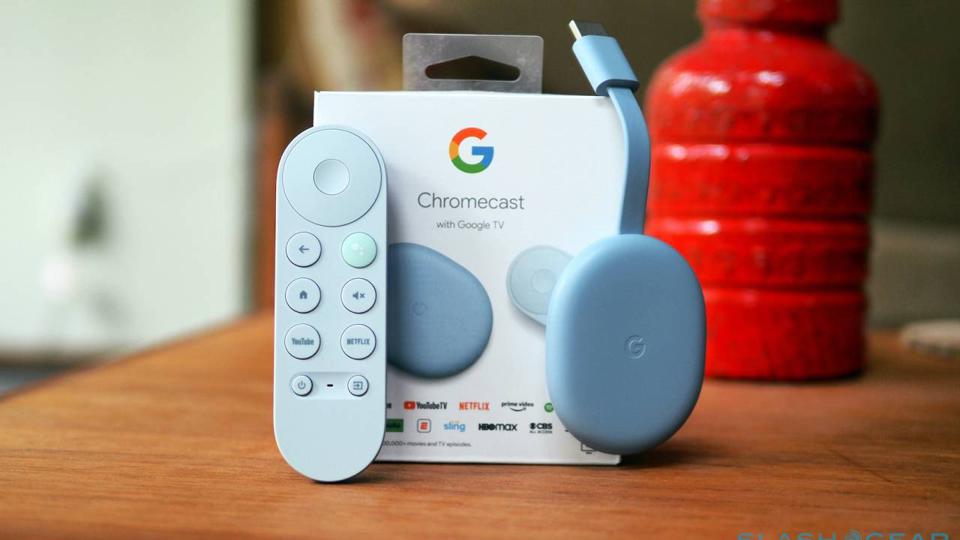
Google’s new Chromecast, which works with Google TV, is portable and connects to TVs through HDMI. Customers can access movies, TV shows, apps, subscriptions, and other content through the streaming device.

Dolby Vision and 4K HDR streaming at up to 60 frames per second are available on the most recent Chromecast gadget. An HDMI device may transmit Dolby Audio content. Furthermore, the company is bundling a voice remote with Chromecast for Google TV.

The gadget includes a voice remote with a Google Assistant button that users can use to both find material using voice searches and ask basic queries. The voice remote is made to be easy to grip. If the TV is HDMI-CEC compatible, the device can also be used to control the TV’s power, volume, and input. This can relieve you of the burden of managing many remotes. It includes buttons for entertainment services such as YouTube and Netflix, as well as a Google Assistant button for controlling smart home lights. It also supports a variety of other services, including Zee5, MX Player, Voot, Disney+ Hotstar, Spotify, and others. On top of that, it weighs 118 grams.

Chromecast
Image source: forbes.com

Viewers will be able to receive personalized watch recommendations through Google TV on the new Chromecast depending on their various subscriptions. The For You page on Google TV offers individualized viewing recommendations from a variety of subscriptions depending on what viewers have already seen. Users can save movies and television shows to their Watchlist for subsequent viewing. Users can also create a Watch List of movies and TV shows on their phone or laptop, which will instantly refresh on their TV wherever they are. Additionally, they can add items to the Watchlist from their laptop or phone, and the TV will automatically update with the addition. Users who buy the device can also take advantage of a free, three-month trial of YouTube Premium.

Google Cast with Google TV, competitors like the Realme 4K Smart Google TV Stick, and Amazon Fire TV Stick 4K Max are anticipated.

Availability and price:

The new Chromecast with Google TV is presently available for purchase on Flipkart in India for Rs. 6,399. It is only available in the color Snow. According to Google, it will soon be available in other retail locations.

Customers who use their Flipkart Axis Bank Card may receive up to 5% back on their purchases. Furthermore, Chromecast with Google TV is available through the e-commerce website with free EMIs beginning at Rs. 2,133.

Remember that the $49.99 (Rs. 3900) Chromecast with Google TV was released in the United States in September 2020.

James Webb Telescope

NASA Reveals James Webb Telescope’s First Cosmic Targets To Include Distant Galaxies, Nebulae, And More:

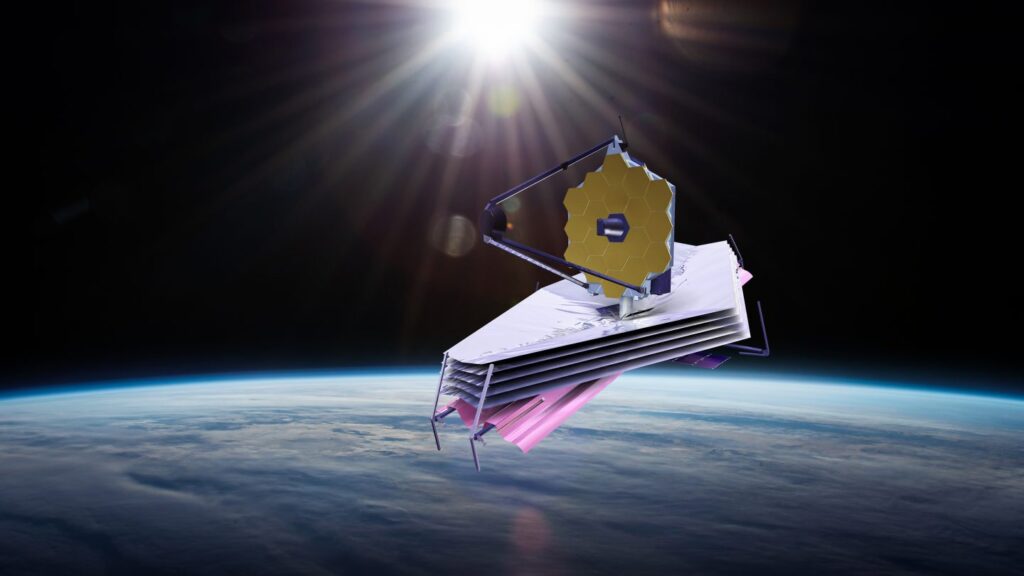
The James Webb Space Telescope, a joint project of NASA, ESA, and CSA, will soon reveal unequaled and in-depth views of the cosmos with the impending publication of its first full-color images and spectroscopic data. The US, European, and Canadian space agencies are preparing for a dramatic presentation of early observations by the $10 billion (approximately Rs. 79,330 crores) observatory, which is slated to disclose fresh insights into the origins of the universe on July 12.

An international panel chose the Southern Ring Nebula, which surrounds a dying star 2,000 light-years away, and the Carina Nebula, a gigantic cloud of gas and dust situated 7,600 light-years away, to be included in the first collection of full-color scientific images. One of the iconic towering pillars that makes up the Carina Nebula is the three-light-year-tall “Mystic Mountain,” a celestial peak that Hubble is credited with photographing.

Webb has also performed spectroscopy on the distant gas giant WASP-96 b, which was discovered in 2014. Spectroscopy is an analysis of light that provides comprehensive information. WASP-96 b is around 1,150 light-years from Earth and has a mass that is almost half that of Jupiter. It also orbits its star in about 3.4 days.

James Webb Telescope
Image source: bgr.com

The next object is Stephan’s Quintet, a tiny galaxy 290 million light-years away. The list of cosmic objects that Webb chose for these initial observations is provided here. It will be made public on Tuesday, July 12 at 10:30 a.m. EDT during NASA’s live broadcast. Each image will simultaneously be made available on social media and the agency’s website.

The targets mentioned below constitute the observatory’s first wave of full-color scientific photos and spectra, as well as the official start of Webb’s general science activities. An international committee including members from NASA, ESA, CSA, and the Space Telescope Science Institute chose them.

• The Carina Nebula: The Carina Nebula, located around 7,600 light-years away in the southern constellation Carina, is one of the largest and brightest nebulae in the sky. Stars are born in stellar nurseries called nebulae. Many huge stars several times the size of the Sun can be found in the Carina Nebula.

• WASP-96 b (spectrum): WASP-96 b is a huge gas-filled planet located beyond our solar system. The planet is approximately 1,150 light-years away from Earth and orbits its star every 3.4 days. It was discovered in 2014 and has nearly half the mass of Jupiter.

• The Southern Ring Nebula: It is also known as the “Eight-Burst” nebula, is a planetary nebula, which is an expanding cloud of gas that surrounds a dead star. It has a diameter of roughly half a light-year and is about 2,000 light-years away from Earth.

• Stephan’s Quintet: Stephan’s Quintet is located in the constellation Pegasus, approximately 290 million light-years away. It is noteworthy for being the first compact galaxy group found in 1877. Four of the quintet’s five galaxies are entangled in a cosmic dance of frequent close encounters.

• SMACS 0723: Massive foreground galaxy clusters amplify and deform the light of objects behind them, enabling a deep field view into both the extremely far-off and fundamentally dim galaxy populations.

Webb can look farther back in time to the Big Bang, which occurred 13.8 billion years ago, as compared to any instrument before it thanks to its infrared capabilities.

Webb is able to detect the first stars’ light with an unparalleled level of resolution as it transitions from the shorter ultraviolet and visible wavelengths it originally emitted into longer infrared wavelengths as the cosmos expands.

The publication of these initial photographs signals the official start of Webb’s research activities, which will continue to investigate the mission’s core scientific issues. Teams have already applied for time to utilize the telescope in its first “cycle,” or year of observations, through a competitive process.

The James Webb Space Telescope is the world’s leading observatory for space science. Webb will investigate mysteries in our solar system, as well as distant worlds orbiting other stars, and will investigate the intriguing architecture and origins of our universe and our place in it.

Apple

Apple To Add ‘Lockdown Mode’ To iPhone Will Help From Pegasus And Govt Spyware.

According to a group of journalists and Amnesty International, NSO Group’s software has been used for years to follow government employees, journalists, and human rights campaigners. That’s in spite of claims made by the Israeli spyware company that it exclusively sells to law enforcement organizations that use it to apprehend criminals. The Pegasus spyware is intricate. In a nutshell, it works by utilizing zero-day, zero-click exploits on Android and Apple mobile devices. Zero-day exploits are vulnerabilities that have not yet been discovered by phone manufacturers and may frequently be remotely installed on a target’s phone using just a text message or other emailed link, requiring no user participation (thus the name “zero-click”).

Once Pegasus is installed, the NSO customer targeting the user can access and observe almost everything the target does on the phone. Pegasus spyware from NSO has been referred to be a danger to democracy. One of the reasons Apple launched a lawsuit against the corporation, aiming to prevent it from using Apple’s devices and services, is that it uses them to target journalists and human rights advocates. The NSO would have a considerably harder time locating zero-day flaws for Apple devices as a result.

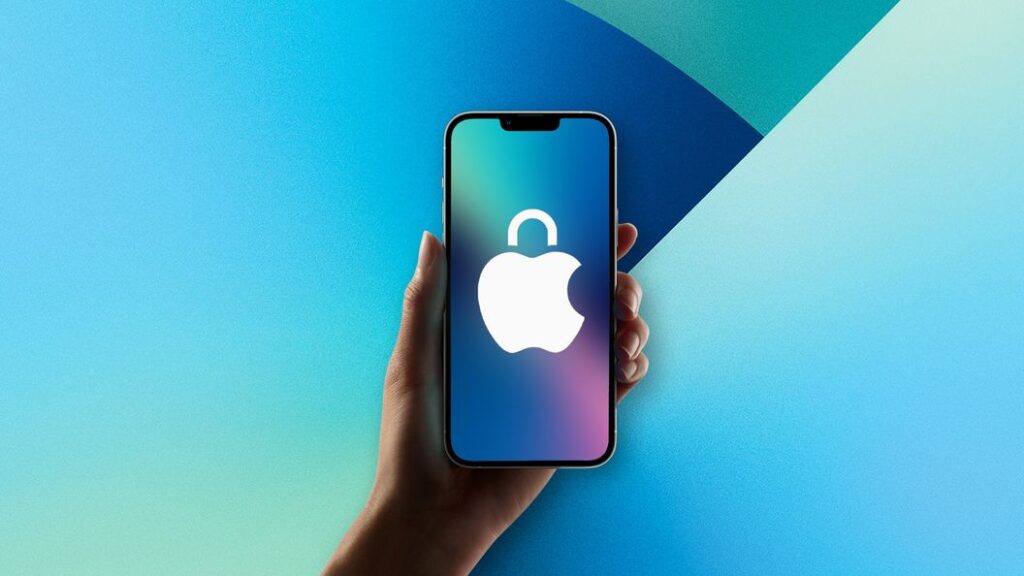
Apple
Image source: tudocdn.net

However, Apple is not just relying on the legal system in its conflict with the NSO Group, Pegasus, and spyware producers worldwide. According to the firm, “Lockdown Mode” will soon be available on its iPhones, iPads, and Macs.

The feature is what Apple refers to as an “extreme” solution for users who may be targeted by Pegasus and other very sophisticated spyware, and it will be available this autumn as part of iOS 16, iPadOS 16, and macOS Ventura. It is clear why Apple views Lockdown Mode as excessive given that many iPhone functionality would become inaccessible when customers enable it. This is how it goes: Users can instantly activate Lockdown Mode in the Privacy & Security section of the Settings app if they suspect they may be at risk of or are informed that they are the targets of a spyware assault.

Users’ iPhones, iPad, or Mac will restart after selecting Lockdown Mode, and the following features won’t be available:

  • Except for photographs, all message attachments are in the Messages app from all senders.
  • Calls on FaceTime from individuals you have never FaceTimed before.
  • Several online browsing technologies, including cutting-edge ones like just-in-time (JIT) JavaScript compilation, are prohibited.
  • Requests for new shared picture albums and shared photo albums in the Photos app.
  • If the iPhone is locked, wired connections (using a USB cable) from the iPhone to another device are possible.
  • Apple Services invitations from users you have never engaged with before.
  • configuration profiles, like those employed by school networks or VPNs.

These prohibited features share the trait of regularly serving as delivery vectors for zero-day, zero-click vulnerabilities.

The majority of Apple users, thankfully, won’t ever need to worry about Lockdown Mode because they are unlikely to be targeted by sophisticated malware like Pegasus. Lockdown Mode, however, should be a major help for individuals who are in danger because it instantly closes all known malware access points to an iPhone.

Lockdown Mode will be made available to all users with the public release of these operating systems this autumn and is now present in the development betas of iOS 16, iPadOS 16, and macOS Ventura. This news came over a month after Italian spyware vendors RCS Lab and Tykelab Srl stated that new spyware code-named Hermit was aimed at high-profile government figures. After allegations that a number of journalists, opposition politicians, activists, and businesspeople were targeted by the Pegasus spyware, a zero-click Trojan virus created by NSO Group, the Pegasus controversy gathered traction in 2021. In essence, it gives cybercriminals complete access to the victim’s smartphone and all of its contents, including its photos and messages.