Your Tech Story

Tech News

Fast Company

After an Apple News feed hack, Fast Company takes down its website

Fast Company, a US-based business news publication, stated on Wednesday that two racist offensive push notifications were delivered to consumers via its Apple News alerts as a result of a high-profile media feed hack.

Fast Company
Image Source: economictimes.indiatimes.com

As soon as the situation was rectified, Apple took down the Fast Company channel from its platform. In order to offer push alerts to Apple consumers who subscribe to the news publisher’s channel, news publishers utilizing the Apple News aggregation application can link existing digital publishing tools to Apple News.

Fast Company claims that such publishing tools were compromised by hackers. Two offensive and racist push notifications were sent by hackers one minute apart, according to a tweet from Fast Company, which also stated that the Apple News stream had been suspended while the problem was examined.

Before it vanished, the hackers left a statement on Fast Company’s website explaining how they gained access by using a password that was used by numerous users, including an administrator.

The hackers gave the following message, “Wow, Fast Company. Despite the public defacement of your site, which boasts millions of visitors, all you did was hastily change your database credentials, disable outside connections to the database server, and fix the articles. What an absolute disgrace of a news source, and one that I would personally avoid due to how little they care about user security.”

The hacker behind the intrusion, who goes by the handle “Thrax,” however, released a sponsored content article before the site was taken down that described how the attackers were able to hack the magazine. According to the message, Fast Company had login details that were “ridiculously easy” and used on numerous accounts, such as an administrator.

The hacker was able to send out emails using any @fastcompany.com email thanks to the attacker’s access to a variety of sensitive data, namely authentication tokens, Apple News API credentials, and Amazon Simple Email Service (SES) tokens. The Fast Company hacker stated they were unable to access client records because they were probably kept in a database server.

The hacker claims to have earlier compromised the photo-sharing portal ClickASnap and the self-described free-speech social media platform USA Life. In a separate message posted on Sunday to a well-known hacking forum, the attacker stated they were going to release a database with 6,737 Fast Company employee information. This database included information on the employees’ email accounts, password hashes, unpublished drafts, etc.

Reuters attempted to access the Fast Company website on Tuesday night, but it was unavailable and the page gave a 404 error. Following the shutdown, Fast Company claimed that the notifications were sent using a hack of its content management system, which is used by news organizations to publish and maintain their stories.

Business, technology, and design are the main topics of the American business magazine Fast Company. It is accessible online and in print. Six print issues are published each year. Fast Company is owned by the publishing firm Mansueto Ventures LLC.

wireless underwater camera

MIT engineers create a wireless underwater camera without batteries

According to some estimates by scientists, more than 95 per cent of the earth’s ocean has never been observed, meaning we have seen less of our planet’s ocean than the far side of the moon or Martian surface. One major challenge which prevents widespread undersea exploration is the high expense of powering a wireless underwater camera for a long time. If we do that now, it will require tethering it to a research vessel or regularly sending a ship to repower the batteries.

wireless underwater camera
Image Source: techeblog.com

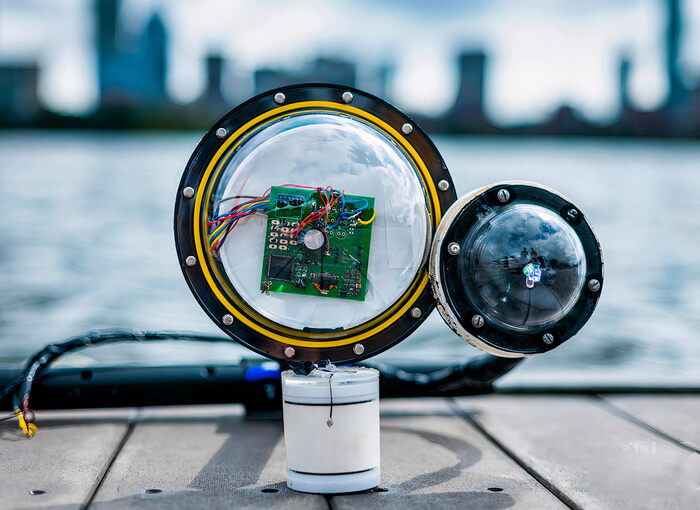
Some engineers from MIT have taken a giant step to deal with this problem by creating an ultra-efficient battery-free and wireless underwater camera. It is approximately 1,00,000 times more energy-efficient than the other undersea cameras. This device can take colour photos and transmit image data even in the dark underwater environment wirelessly through the water.

The feature that makes this autonomous camera extraordinary from the other underwater cameras is that it is powered by sound meaning it converts mechanical energy into electrical energy from sound waves travelling through water which powers its communications and imaging equipment. The camera also utilizes sound waves to transmit data to a receiver that can rebuild the image after capturing and encoding the image data.

Since it does not need a power source, the camera could operate for weeks on end before retrieval this would allow scientists to explore remote parts of the ocean pollution or supervise the growth and health of fish raised in the aquaculture farms.

One of the most exciting applications of this camera for me personally is in the context of climate monitoring. We are building climate models, but we are missing data from over 95 per cent of the ocean. This technology could help us build more accurate climate models and better understand how climate change impacts the underwater world,” says Fadel Adib, senior author of a new paper on the system. He is an associate professor in the Department of Electrical Engineering and Computer Science and director of the Signal Kinetics group in the MIT Media Lab.

Source: scitechdaily.com

Other co-lead authors and signal kinetics group research assistants joining Adib on the paper are Sayed Saad Afzal, Osvy Rodriguez, Waleed Akbar, research scientist Unsoo Haa and former group researchers Mario Doumet and Reza Ghaffarivardavagh. The paper is published in the ‘Nature Communications journal on 26th September 2022.

Going Battery Free

Scientists needed a camera that could run autonomously for long periods and could harvest energy underwater while draining very little power. Piezoelectric material-made transducers are used in the camera’s exterior to acquire energy.

They create an electric signal when a mechanical force is applied to them, they vibrate and convert the mechanical energy to electrical energy when a sound wave travelling through the water hits the transducers.

We were trying to minimize the hardware as much as possible, and that creates new constraints on how to build the system, send information, and perform image reconstruction. It took a fair amount of creativity to figure out how to do this,” Adib says.

Source: scitechdaily.com

Sending Data with Sound

When the image data is captured then they are encoded as bits and sent to a receiver one bit at a time through a process called underwater backscatter. The receiver acts as a mirror to reflect the waves and transmits sound waves through the water to the camera.

This whole process, since it just requires a single switch to convert the device from a non-reflective state to a reflective state, consumes five orders of magnitude less power than typical underwater communications systems,” Afzal says.

Source: scitechdaily.com
oneplus nord watch

OnePlus Nord Watch Specifications Unveiled Ahead of India Launch

The OnePlus Nord Watch will shortly be unveiled by OnePlus in India. The Chinese electronics manufacturer has disclosed some of the main characteristics of the future smartwatch in advance of the launch.

OnePlus Nord Watch
Image Source: gadgetsandwearables.com

A week ago, OnePlus revealed that the OnePlus Nord smartwatch will be the company’s latest offering. Since then, the company has been gradually revealing details in an effort to keep the buzz around its forthcoming product alive.

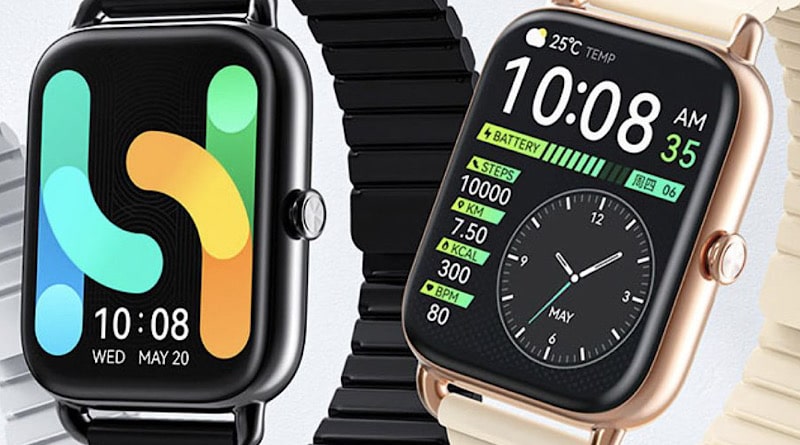
The company has revealed that the most recent upgrade to the Nord smartwatch will have around 105 Sports modes. To help the user maintain their lifestyle, it will not only have the necessary modes, such as indoor and outdoor walking and running but also sports modes, such as cricket, yoga, etc.

The 1.78-inch AMOLED screen of the OnePlus Nord smartwatch has a 500 Nits peak brightness and a high resolution of 368448. The display will have a refresh rate of 60Hz. Additionally, the Nord Watch will offer more than 100 online changeable Watch Faces. Although the brand has not yet provided details regarding the watch’s launch date, it is anticipated to do so shortly.

The watch could debut around the end of September or the beginning of October if the current claims are to be believed. The Nord Watch, according to OnePlus, seeks to “make the hallmark OnePlus technology available to a broader set of the audience” and will “bolster OnePlus Nord’s position inside the wearables category.”

The Nord Watch has gained popularity online. It is anticipated that the next Nord-series smartwatch would feature Bluetooth 5.2 and the customizable N-Health app. Both iOS and Android devices should work with the smartwatch. It would have a side-mounted navigation button and a rectangular dial.

Given that it contains the functionality found in less expensive wearables, the smartwatch is anticipated to be less than Rs 5,000. In India, OnePlus currently offers a high-end watch for Rs 14,999, and it is getting set to introduce a brand-new model in the entry-level price range.

OnePlus isn’t new in the wearable technology market and already offers products like Nord Buds, and Nord Buds CE. With their slim in-ear design, they have a similar aesthetic to the first Apple AirPods.

The OnePlus Watch, the company’s first wristwatch, was introduced in India last year. The wristwatch has a 1.39-inch AMOLED screen, 1GB RAM, and 4GB of internal storage and is powered by a 402 mAh battery. The OnePlus Watch is optimized for Android 6.0 and higher and offers Bluetooth 5.0 connectivity. Among other sensors, it has a gyroscope sensor, a geomagnetic sensor, an optical heart rate sensor, and a blood oxygen sensor.

The wristwatch, which costs Rs. 13,499, includes over 110 fitness programs, an integrated GPS, speaker, and mic for calls. It is water and dust-resistant and has an IP68 rating. It appears like OnePlus is also developing the N Health app, a new companion software for the Nord Watch that will run on both iOS and Android. According to rumors, the smartwatch would come in two colors—blue and black—and have a battery life of up to ten days.

Oneplus is a Chinese consumer electronics manufacturer. It is fully owned by Oppo, which, like Vivo, Realme, and iQOO, is a division of BBK Electronics. The OnePlus Nord, the company’s first mid-range phone ever since OnePlus X in 2015, was introduced by OnePlus in 2020.

Samsung partnered with Axis Bank

Samsung partnered with Axis Bank to launch their credit card in India

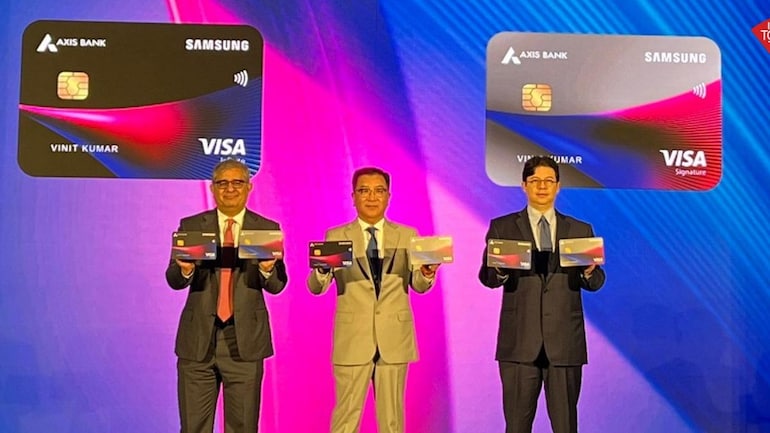
Samsung India declared its first ever credit card in India on Monday 26 September 2022. Samsung partnered with Axis Bank and visa to launch this credit card that will offer the users a 10 percent cashback on all Samsung products and services around the year.

Samsung partnered with Axis Bank
Image Source: indiatoday.in

It has entered a crowded category that sees about 50 firms compete for users’ attention in the world’s second-largest internet market.

The Samsung Axis Bank Credit Card, powered by Visa, is our next big India-specific innovation that will change the way our customers buy Samsung products,” said Ken Kang, President and CEO, Samsung South-West Asia.

Source: siasat.com

The South Korean tech giant, Samsung partnered with Axis Bank headquartered in Mumbai, and Global payments processor Visa to launch the cards known by the name ‘Samsung Axis Bank Credit Card’.

There is a monthly cap of 2500 INR (roughly $31) on the signature card. However, the infinite card extends that limit by four times.

The cashback is capped at 10,000 INR ($123) yearly on the signature card and 20,000 INR (about $246) on the infinite card.

The second largest smartphone seller in India, Samsung, has claimed that it will provide its customers with exciting financing options on credit cards. These cards are especially aimed at serving users in smaller Indian cities and towns.

Even if the space that Samsung is entering is really crowded and narrow but the opportunity here is undoubtedly large. According to industry estimates, Indian banks have issued about a billion debit cards to customers in the country but only fewer than 25 million unique individuals in the nation have a credit card.

Users will receive rewards on their spending through their cards and get access to deals from local companies such as food delivery platform Zomato, fashion e-commerce Myntra, grocer Bigbasket, online pharmacy Tata’s 1 mg, and Urban Company.

The announcement made on Monday underscores smartphone makers growing attempt to expand their services. Chinese giant, Xiaomi, which dominates the smartphone market in the country, rolled out a payment service powered by UPI in India in 2019 and started to lend customers last year.

Co-branded cards are generally beneficial for both the partner brand and the customers as it enables power users of a brand to get higher benefits as they spend more time with the brand.

We realize that 70 percent of consumers are upgrading their devices within 12 months of purchase in the country. This co-branded credit card will help them save their hard-earned money while enjoying new devices with this industry-first offering,” Raju Pullan, Senior Vice President, Mobile Business, Samsung India, told IANS.

The card is RBI-complaint and meets all the latest requirements of the central bank, including on tokenisation. The consumer electronics and technology space is open for disruption and we are the first, along with Samsung, to distrust this space,” Sanjeev Moghe, President and Head, Cards and Payments at Axis Bank, told IANS.

Source: siasat.com

On the signature card, the annual fee is $6.13 before taxes. However, the infinite card levies a charge by 10 times the current value. The firm claims that it will soon begin accepting applications from customers for the card.

The card also provides complimentary airport lounge access, dining offers, a fuel surcharge waiver, and access to a bundle of offers from Axis Bank and Visa.

MD and chief executive officer of Axis Bank, Amitabh Choudhary, said that their main focus is to provide product prepositions and cares for the customers’ evolving needs and offer them a seamless experience.

iPhone 14 in India

iPhone may get cheap as Apple starts manufacturing iPhone14 in India.

Apple Inc. revealed on Monday that it will make the newest iPhone 14 in India as the tech giant moves some of its manufacturing out of China. Since 2017, Apple has been producing iPhones in India, however often they were older models. Apple recently introduced the newest iPhone 14 model in its collection.

iPhone 14 in India
Image Source: macrumors.com

The device is being produced in the Sriperumbudur factory near Chennai by the company’s international partner Foxconn. Apple will sell phones made in India both domestically and internationally. In the next few days, users in India will start receiving the iPhones manufactured locally.

Apple continues to produce the majority of its iPhones primarily in China. Even while the majority of the world works to open its communities, Beijing has continued to use the tactic of lockdowns to quell Covid revivals. Production has been halted at facilities across China due to lockdowns caused by the zero-Covid policy, and certain possible weak links in Apple’s supply chain have been revealed.

Apple has been working to increase revenues in India, the second largest smartphone marketplace in the world, in the interim. According to Counterpoint Research, Apple only held a 3.8% market share in the country last year while cheaper rivals like Samsung and China’s Xiaomi continued to rule.

However, in the second quarter, Apple was the best top seller in the ultra-premium( phones over Rs. 45000) category. That’s because its iPhone 13 devices from the previous generation had good sales.

By 2025, according to analysts, Apple will gradually reduce its dependence on China, where it has been manufacturing the large bulk of its gadgets for more than a decade, and develop India into a worldwide hub for iPhone production.

According to research released earlier this month by JP Morgan analysts, Apple would increase its production capabilities in India to manufacture 25% of all its iPhones by 2025 and relocate 5% of worldwide iPhone 14 production there by late 2022. In recent years, India has drawn investments from Apple’s production partners Wistron and Foxconn by providing generous subsidies as Delhi works to establish the nation as a manufacturing hub.

JP Morgan analysts claim that India is a suitable location due to the presence of global production giants as well as “ample labor resources and competitive labor prices.”

As its capacity for domestic production of iPhone 14 in India grows, many people would anticipate a decrease in the price of Apple’s mobile devices there. The standard iPhone 14 model costs Rs. 79,900 which is equivalent to $799 in the United States. The entry-level iPhone Pro Max has a retail price of $1,099 in the United States, but it costs $1,717 in India.

Apple has boosted its investment in India during the past five years, despite the fact that it only has a small share of the country’s market. It introduced the country’s online Apple Store two years ago, and it has since announced that it’s working on the inauguration of the first-ever physical Apple Store in the nation.

Samsung, a rival to Apple, has already established one of its largest plants in India and views it as a crucial global manufacturing base. The market leader in smartphones, Xiaomi from China, as well as rivals Oppo, Vivo, and OnePlus all, assemble some of their products locally.

The Information recently reported that Google also plans to move some of the manufacturing of its Pixel products to India. The business announced last week that it would introduce the next Pixel 7 devices in India after forgoing shipping flagship models there for two generations.

Apple’s emphasis on production in India demonstrates the tech giant’s intention to spread production outside of China and grow its client base in India, which is currently a minor market for the business.

Google Tasks

Google is combining Google Tasks with Assistant and Calendar reminders

Tech Giant, Google, is integrating Google Assistant and Calendar reminders in its Google Tasks App in its latest step of the application clean-up drive. The firm took this decision to make it seamless for users to manage their tasks and reminders from any of these three applications by unifying its to-do systems.

Google Tasks
Image Source: neowin.net

Currently, you can create several types of ‘reminders’ in the Google Assistant, Calendar, and Tasks apps. However, they are not utilized in the same way from every app or stored within all three.

As of now, Google Tasks, which was first released as a standalone application in 2018, operates in its box. Users can create tasks and subtasks as per their requirements. They can also set reminders in the iOS and Android apps using a side panel in Gmail or Google Drive on the web. Even though, those don’t get displayed on Assistant’s reminders. Besides this, Google Calendar has two distinct options to create tasks and reminders which could create confusion for users.

Google is focusing on changing this with an update that will be launched in the upcoming months. Once this feature is incorporated, it will display in both the Tasks and Calendar lists when the user sets a reminder with Google Assistant. They will also receive notification for the task completion reminder at the set time.

All they have to do is open the notification to move their reminders into Google Tasks so that they can oversee all their to-do items in one place. Google will question the users if they want to ‘try the new Tasks experience’. When they tap on this notification, the user will be allowed to move their currently existing reminders into the Tasks application.

In the coming months, Google claimed that the users will see a prompt to try out this whole new integrated task experience when they use the Calendar or Assistant application. To add to this, the firm will also eliminate the Calendar reminders options once the transition is completed.

Soon, we’ll be simplifying our task management solutions by migrating Assistant and Calendar Reminders to Google Tasks. This means you will now have an easy way to view and manage all your to-dos in one place through Google Tasks, regardless of whether you create them using Assistant or Calendar,” the company said in a blog post.

Source: techcrunch.com

Product Manager, Ilya Brown wrote in a blog post, “We are continuing to invest in Google Tasks and expand its capabilities to help you capture, organize and accomplish all you have to get done. Moving reminders into Google Tasks is one step closer to helping people effortlessly get things done, and we are so excited to bring it to you.”

Source: metro.co.uk

What are Google Tasks?

You have heard of the integration of the above-mentioned app. But do you know what is tasks app and how it works? You might not know but it will be home to your Google reminders soon. Well, here is the detailed explanation below.

You can utilize the tasks app to create a central to-do list when you are using a particular Google app. If you are using Gmail or Sheets, you can create a ‘task’ by tapping on a circled checkmark logo.

On your desktop, it will show a sidebar where you can fill in the details of your task like name, time, and date. Your new task will be generated after clicking on the ‘Save’ option.

Every user initiates his Task experience with one task list by default while you can create more if you find them helpful.