Your Tech Story

Story

Virtual Reality

Virtual reality, experiencing a parallel world altogether

We, especially as kids dreamt of exploring so many strange places. The scene from those video games, space movies and especially the animated world in kid’s television shows fascinated us. Back then, we did know very little about animation and boons of technology. But, eventually we grew up and so did science. Have you ever thought, if a Virtual Reality world can be formed in a desktop screen then why not around us? Because every video games, animated movies are based on the manipulation of visual and auditory sensors.

This gave rise to the term ‘Virtual Reality’ where one can be virtually present in a different world and interact. The work on the acreage of virtual reality started a long time ago. The concept of virtual or artificial reality was introduced in the early 1900s. But, everything was proposed in the form of theory or an artistic form. It was all a perspective back then. The real man who is behind converting this literature to true visual illustrations is Jaron Lanier. He is a world-famous computer scientist along with being a man who admires art in the form of music.

What is Virtual Reality?

Virtual Reality can be solely described as visual illustrations along with the auditory system. The main feature of virtual reality is audio and video feedback systems. Today, it can be best described using virtual reality headsets along with a head-mounted display. Once you put it on, it gives an experience of a real-world with 3-D animations where you can walk and interact with other creatures. A virtual reality environment can also be made using large screens. It is often shown in movies that an entire room is converted to a different environment where the illustrations are reflected on those screens.

Virtual Reality has hugely developed in all these years. It has mainly contributed to the gaming industry, education and also in military training. Before Lanier stepped into this domain of technology, some theory and primitive research works were carried out by Morton Heilig (1950), Ivan Sutherland and Bob Sproull (1968) and David Em (1977).

Researches on how to navigate the virtual world were carried out in NASA’s Jet Propulsion Laboratory in the early 1980s. It was in 1985 that Lanier founded a company for virtual reality products and pioneered it.

Jaron Lanier

Born into a Jewish family in 1960, Lanier grew up in New Mexico. He lost his mother in a car accident when he was nine. Lanier didn’t belong to a privileged family and spent his early childhood living in tents. He was a highly brilliant student and hence got enrolled in New Mexico State University at the age of thirteen. Eventually, he started doing a project funded by the National Science Foundation and it introduced him to computer programming.

In 1983, Lanier started working for Atari (an American video game developing company) and later focused more on learning virtual programming language.
In 1985, Lanier finally founded his own company, VPL Research devoted to virtual reality. But, the business failed terribly after a couple of years and he was bankrupted. The company was finally acquired by Sun Microsystems in 1999.

Lanier played his role as chief scientist of Advanced Networks and Services (a non-profit organization), a visiting scientist at Silicon Graphics and a visiting scholar at Columbia University. Lanier, along with carrying out his research, nurtured his artistic part as well. He is a visiting artist at New York University.

Virtual Reality in the 21st century

A lot of development took place after Lanier introduced to the world of virtual reality. Many video game companies like Sega introduced VR headsets for their game series. In 2007, Google added a new feature, Street View in their maps which gave a panoramic visual effect. In 2010, the prototype of Oculus Rift was created which came with a new feature of rotational tracking. It was the first of its kind in the market which was later acquired by Facebook for $3 billion.

In 2013, Valve Corporation introduced new VR products in the market that provided a smear-free and lag-free display. In the next year, Sony launched VR headsets for Play Station 4. Within the next couple of years, companies like Microsoft, Samsung, Apple, Google, Sony etc grabbed the VR market. Research is still ongoing on how to make a better user interface, more viable, 360-degree interactive photography, better motion controllers etc.

hoverboard

The Future is Here- the success story of the hoverboard

How many of us have watched the movie Back to the Future and dreamt of owning a hoverboard? Most kids dreamt of owning this uber-cool device which is both modern and efficient. Well, they turned from a figment of our imagination to reality a few years ago, thanks to one man. Here’s a look at his story and everything it took to develop the hoverboard.

About the Founder

Shane Chen was born in Beijing, in 1956. He has a degree in agricultural meteorology from the Beijing Agricultural University. Since communism in China made it difficult to start and grow a business, Chen immigrated to the US. He founded his first company, CID, Inc in 1988. The company which now goes by the name CID Bio-Science made scientific instruments for agricultural research. Some of their products include a photosynthesis meter, a canopy analyser and a leaf scanner. Later, Chen sold the company in 2009 to become an inventor of consumer products.

Fun Inventions

Way back in 2003, Chen founded Inventist, Inc., which he used to develop products for mainstream consumers. He entered the retail space in 2003 with the AquaSkipper, which was a hydrofoil water craft. The invention won several awards and helped Chen gain some media attention. The History Channel’s show Modern Marvels also featured the product due to its creative and innovative approach. In 2006, Chen patented a three-wheeled scooter and sold it to RazorUSA. His notable products include the Orbitwheel Skates, Lunicycle and Solowheel.

Creating the Hovertrax

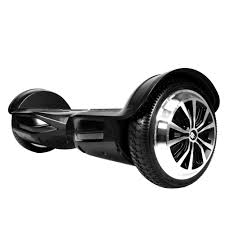
He filed for a patent for the hoverboard in 2012, following which he started making the product. The Hovertrax hit the markets in 2013 and was the first self-balancing scooter or hoverboard. A hoverboard works as a personal transporter and has two wheels connected to pads the user plants their feet on. By leaning forward and backwards, users can adjust the speed of the device. Furthermore, twisting the pads help in changing the direction of travel. Chen launched a Kickstarter campaign in 2013 to fund his idea.


However, the device brought along with its complex patent disputes. Though mass volume manufacture began in 2014 in China, safety issues plagued the device. An overheating battery made early units prone to catching fire leading to product recalls in 2016.

Phenomenal Success and Battles

The device became increasing popularity in the West, due to usage by celebrities like Justin Bieber, Chris Brown and Wiz Khalifa. PhunkeeTree noticed the device at the Hong Kong Electronics Show and started distributing it soon after. By June 2015, several manufacturers were making the board in Shenzhen and Chen decided to pursue litigation. Chen has voiced his frustrations on the lack of clarity regarding patent rights in China. Within a year the U.S. Trade Commission served notices to UP TECH, FreeGo China, Robstep, and Tech in the City for patent infringement.

Also, faulty wiring and bad batteries resulted in units catching fire in various countries around the world. Soon after, many airlines banned taking these boards or transporting them via a flight. The US Product Safety Commission launched an investigation in 2015, and in 2016 ordered over 500,000 units to be recalled. The Swagway model X1 suffered the largest as the company recalled 267,000 units. However, these issues were quickly resolved and the design took off, selling like hotcakes.

IOTAtrax

Chen has since moved on and is now working on a new device, called the IOTAtrax. This one seeks to combine the Solowheel and the hoverboard, making it a hybrid like no other. The success of the hoverboard is a testament to how the future is closer now than ever before. Inventions we deemed impossible just a few years back are turning into realities, right before our eyes. Also, with people like Chen leading the way, it is safe to say that the Future is here for the taking.

Also, faulty wiring and bad batteries resulted in units catching fire in various countries around the world. Soon after, many airlines banned taking these boards or transporting them via a flight. The US Product Safety Commission launched an investigation in 2015, and in 2016 ordered over 500,000 units to be recalled. The Swagway model X1 suffered the largest as the company recalled 267,000 units. However, these issues were quickly resolved and the design took off, selling like hotcakes.

Chen has since moved on and is now working on a new device, called the IOTAtrax. This one seeks to combine the Solowheel and the hoverboard, making it a hybrid like no other. The success of the hoverboard is a testament to how the future is closer now than ever before. Inventions we deemed impossible just a few years back are turning into realities, right before our eyes. Also, with people like Chen leading the way, it is safe to say that the Future is here for the taking.

Counter strike

Counter-strike, celebrating 20-years of video shooter games

The teenage days are sorely missed when we sat for hours in front of the desktop and played video games. Our generation surely had a craze for video games over today’s obsession with social media. Over the past decade, the world of gaming has gone through a lot of changes. But, there are still some games that bring back the nostalgia among us.

Counter-Strike celebrated its video gaming twenty years anniversary this year. The series was first launched in 1999 only for Windows OS. The first game was created when a couple of university students brainstormed to create something unique. The series of these shooter video games are very popular among the kids. The major developers of Counter-Strike are Minh Le and Jess Cliffe.

Minh Le

Born into a family in Vietnam, Le immigrated to Canada at a very young age. He went to Simon Fraser University and acquired a Bachelor’s degree in Computer Science. Le showed interest in software development, 3-D animation, graphic designing and gradually delved into the gaming world.

He created his first mod, NAVY SEALs in 1996 followed by Action Quake 2. While developing Action Quake, Le came across Cliffe and got the idea of Counter-Strike. Counter-Strike was developed as a mod for Half-Life and the beta version was first released in June 1996.

Jess Cliffe

Cliffe completed his education from Virginia Polytechnic Institute and State University. He is a reputed gaming website designer and gained popularity after co-creating Counter-Strike. In 1997, Cliffe designed a gaming website called Jedi Knight Multiplayer Addon Group. After a year, Cliffe started working on the website for Action Quake 2 and came in touch with Le. Eventually, Cliffe and Le became a team and worked hard to launch Counter-Strike.

Within a year, after launching the fourth beta version of the game, Counter-Strike was acquired by Valve Corporation. Valve Corporation is the owner of Half-Life. Along with buying the game, they hired the two developers as well.

History of Counter-Strike

Counter-Strike is all about first-person shooting games and over these twenty years the uniqueness is still conserved. The game has powerful weapons, that is, guns creating a more attracted animation for the shooters. Counter-Strike game provided a more realistic gaming environment and implemented specific patterns for shooting. Le, in one of his interview, said that it is more about the code of the game than Photoshop.

The developers didn’t have anything specific in mind to where to take Counter-Strike. That is basically the advantage of open source and hence welcoming new concepts and ideas. Both the developers wanted to make a strong game community and hence none of the levels was pre-decided. Gamers from the community built them, submitted them and the best one would be picked up as the new version.

New Versions

After Valve acquired Counter-Strike, the game was re-launched in 2000. Since then a lot of new versions have been released. Soon after this release, Counter-Strike: Source was released which used the source engine of Half-Life 2. A lot of modifications came into play which to some extent created a gap between the two generation players.

To cool down the virtually heated up situation for bringing modifications, both Le and Cliffe tried hard to bring balance. They made some changes related to weapons in the games but the strategy backfired terribly. After a few months of experimentation, the developers had to remove DWP (Dynamic Weapon Pricing) from the games.

After a huge gap of four years, a new version of the game, Counter-Strike: Global Offensive was released. And, this time it was released for Windows, PlayStation 3, OS X and Xbox 360.

The current era

The community of Counter-Strike is growing bigger and stronger every day. Currently, the community consists of around 600,000 players and it’s definitely not going down in the near future. With modifications being added continuously, competitive gaming is also getting more popular. In 2011, the Counter-Strike series sold around 25 million copies of the game.

SeparatorThe community of Counter-Strike is growing bigger and stronger every day. Currently, the community consists of around 600,000 players and it’s definitely not going down in the near future. With modifications being added continuously, competitive gaming is also getting more popular. In 2011, the Counter-Strike series sold around 25 million copies of the game.

Witnessing the popularity of competitive gaming, some organizations like IEM (Intel Extreme Masters) started hosting big Counter-Strike tournaments. And, big means literally a generous amount of prize money like $130,000. These tournaments attracted more gamers and Counter-Strike finally went outside the European markets. With this remarkable amount of success, the future of Counter-Strike is truly unpredictable.

Nokia Phones

Connecting the World- Success Story of Nokia

There are few people who are unfamiliar with the brand name Nokia. Chance are that if you ask your parents about their first handset, it would be a Nokia. Synonymous with mobile phones in India, and around the world, the company has undergone massive changes in its long history. How many of you knew that Nokia’s history goes all the way back to the 1850s? Here’s a look at the story of Nokia, and how one man’s idea changed the way the world communicates.

About the Founder

Nokia became what it is today, because of the effort and dedication of Fredrik Idestam. The founder of Nokia was born in Tyrväntö, Finland in 1838. While there isn’t much information regarding his education, we do know he was a mining engineer. Though an engineer, Idestam decided to start his own paper factory, and in 1865, set up a plant in Tampere.

Art of Paper-Making

Idestam chose to go into this field because, at the time, Europe had high for paper. Also, Idestam was responsible for bringing fresh technology to the field of paper-making in Finland. His innovative methods came from revolutionising the industry in Finland which used fabric. The new technology came from Heinrich Voelter who utilised wooden raw materials and Idestam introduced this idea in Finland. He called his company Nokia and started making paper in 1865.

A community living in southern Finland inspired Idestam to name his company Nokia. The company’s first factory came up near the Tampere waterfall in 1866 and derived power from the waterfall. The presence of abundant timber nearby made it easy for the plant to acquire raw materials. The rise in demand and the use of new technology helped the company grow exponentially. In 1871, Idestam and Leo Mechelin expanded to Finland and officially created Nokia Ltd. This company became the largest paper manufacturer in Finland and soon started exporting products to the rest of Europe.

Expansion and Merger

Idestam passed away in 1916, leaving Nokia in the hands of a successor. Until World War I ended, this company remained a paper manufacturer and soon after it entered the electricity business. The Finnish Rubber Works later acquired Nokia, and it started manufacturing cables and telegraph lines. In 1967, the merger of three different companies led to the formation of the Nokia Corporation. At this stage manufactured several products such as car tires, rubber boots, cables and even televisions. In 1960, a formal cable division came to be, and later an electronics division, which in later years, became the company’s face.

Networking Giant

By the 1970s, Nokia became a network equipment powerhouse developing switching products. They joined forces with Salora to build automatic cellular phone systems, eventually acquiring the company in 1984. In 1987, Nokia launched the Mobira Cityman 900 which became an instant hit. The Mobira Cityman 900 became iconic when Mikhail Gorbachev used it to make a call in 1987, earning the nickname “The Gorba”. The company helped in the development of the GSM 2G and delivered the first 2G system in 1989. In 1992, Nokia launched the first GSM phone, the Nokia 1011, and the mobile phone landscape was never the same again.

Global Leader

In later years, the company branched out and developed CTRs, LCDs for laptops. They also released a mini laptop, which they discontinued after a short while. But the company will always be known for its mobile phones which were sold in over 130 countries.  The Nokia 2100 series, which was the first to feature the Nokia ringtone sold over 20 million phones, making it one of the most recognisable models of all time. During the late ’90s and early 2000s, the company’s turnover rose from €6.5bn to €31bn.

They followed it up with the spectacular Nokia’s 6100 series which sold over 41 million phones in 1998. The same year Nokia surpassed Motorola to become the world’s top mobile phone manufacturer. The Nokia 6110 was also the first phone to have the game Snake pre-installed.

While mobile phones are a trend now, and everyone has different models to brag about, it wouldn’t have been so if not for Nokia. The company helped make cellular phones popular and was for decades the world’s largest mobile phone manufacturer.  In 2014, Microsoft acquired Nokia, ending the legacy established by Idestam. While it had less success later, due to tight competition, a paper company from Finland changed the telephone industry for the better!

automation

Automating the World: Story of George Devol

Robots have been mankind’s fascination for quite some time. But the last two decades have seen them grow from being a science fiction object to reality. Many industries around the world now employ robots to improve their production lines. Automation is no longer a thing for the future, but rather has become a reality. But how did we first start using robots? Here’s a look at the story of George Devol who developed the first known robot.

About the Creator

George Charles Devol was born in 1912 to a wealthy family based in Kentucky. He did his schooling from the famous Riordan Prep school. Following his graduation, he decided not to go for higher studies. Instead, he went into business and founded United Cinephone in 1932. The company produced recording equipment for motion pictures or talkies. But on discovering that companies such as RCA and Western Electric were also working on similar products, he dropped the idea. When WW2 descended on the US, he was working on a proximity controller for washing machines. Finally, in 1939 he filed for a patent for his RF-based controller. This device was the first of its kind and could open laundry presses automatically. However, due to the war breaking out in Europe, the patent office closed down, and hence, Devol could not get his patent.

Work with Radars

It was around this time that he sold his shares in United Cinephone. Briefly after that, he met with Sperry Gyroscope to discuss his ideas on radars. Sperry then hired him as a Special Projects Manager and allowed him to work on radar devices. As the war intensified, the Auto-Ordnance Company approached him to make products for them. However, Devol turned their attention to the emerging field of radar technology. Later, in 1943, he started working for General Electronics Industries which was a subsidiary of the Auto-Ordnance Corporation. He helped with the production of counter-radar devices. Under his tutelage, General Electronics became the largest producer of radar equipment for the American forces. He resigned soon after the war due to differences in opinion with regards to future products.

Creating Unimate

He followed this up by working as a sales manager at RCA. But, he quit this job as he felt he didn’t fit in and started work on his robot. A year later, in 1946 he created a magnetic recording system and applied for a patent for it. He helped with the creation of the first commercial microwave oven, known as the Speedy Weeny. By the early 1950s, Remington Rand was using Devol’s recording device. Soon enough, he became the manager of their magnetics department. Over there he worked on magnetic recording systems, high-speed printing systems and other such devices. While the idea would not work out, Devol’s magnetic invention later became the Unimate robot.

Patenting and Raising Funds


In 1954, Devol got a patent for his concept of Programmed Article Transfer which would become the basis for Universal Automation or Unimation. Devol’s wife, Evelyn suggested the name Unimate for the robot. At the time of filing the patent, Devol wanted Unimate to be a general-purpose machine. After securing the patent which did not have any citations, Devol looked for an investor. While he talked to many companies, they turned him down due to the risks involved. Finally, using family connections, Devol met with Manning, Maxwell and Moore. Joseph F. Engelberger served as the chief of engineering at Manning, Maxwell and Moore which was based in Connecticut. Engelberger found the project interesting and was about to invest in it. Unfortunately, the company was sold off that year and the plan fell through.

Forming Unimation Incorporated

However, Engelberger convinced Consolidated Diesel Electronic to back the development of the robot. Hence Codec, formed a new division called Unimation Incorporated and Joseph Engelberger served as its president. The first Unimate prototype relied on digital switches and transistors. Further, digital encoders and other electronic parts available in the 1950s were not adequate for the Unimate. Hence, under Devol, a team of engineers built all the parts for the Unimates. Devol as a part of the process invented new technologies such as the rotating drum memory system and parity controls.

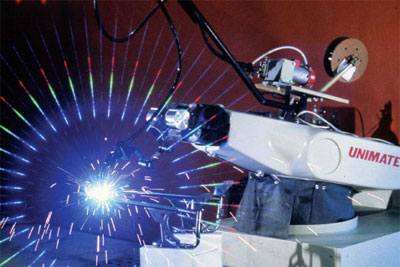
In 1961, the first Unimate robot was sold to General Motors to help with die casting and spot welding. In 1961. GM’s plant in New Jersey became the first one to utilise a material handling robot. The robot helped in lifting metal from the die-casting machine and stacking them. Soon enough, companies like Chrysler, Ford, and Fiat started purchasing the Unimate. By 1966, full-scale production facilities were set up in Connecticut and Unimate became a resounding success in the field of material handling.

Resounding Success

By 1975, the company was cash positive and was making a profit. The Programmable Universal Machine for Assembly or PUMA robot came out three years later through a collaboration with GM. Since then, industrial robotics has grown to become a massive field with a lot of large-scale applications. So much so, that in 2003, Unimate became a part of the Robot Hall of Fame for being the first of its kind.

While the first robot took over $5 million to develop, industrial robotics is now a sprawling field. Devol would later go on to obtain several patents on visual sensors and magnetostrictive manipulators. He is hence, known for creating the field of “micro-robotics”. George Devol was 9 years old when the word robot was coined. Decades later, he would be the one to invent the first programmable robot, which in turn, started a revolution that continues even today. With over 40 active patents to his name, Devol spent his life-giving wings to his ideas and turning them into real products.

Nikola Tesla

Guiding the Future: Story of Nikola Tesla

Remote controls are without a doubt something that symbolises modern technologies. Most electrical devices we use come with a remote of their own, and most of us own at least a dozen remotes. We have remotes scattered on our coffee tables and even access devices from remotes on our phones now. Although we associate remotes to TVs, they were a staple long before that. So how did the remote control come to be? Read on to find out more about the history, origins and story of remote control systems.

About the Creator

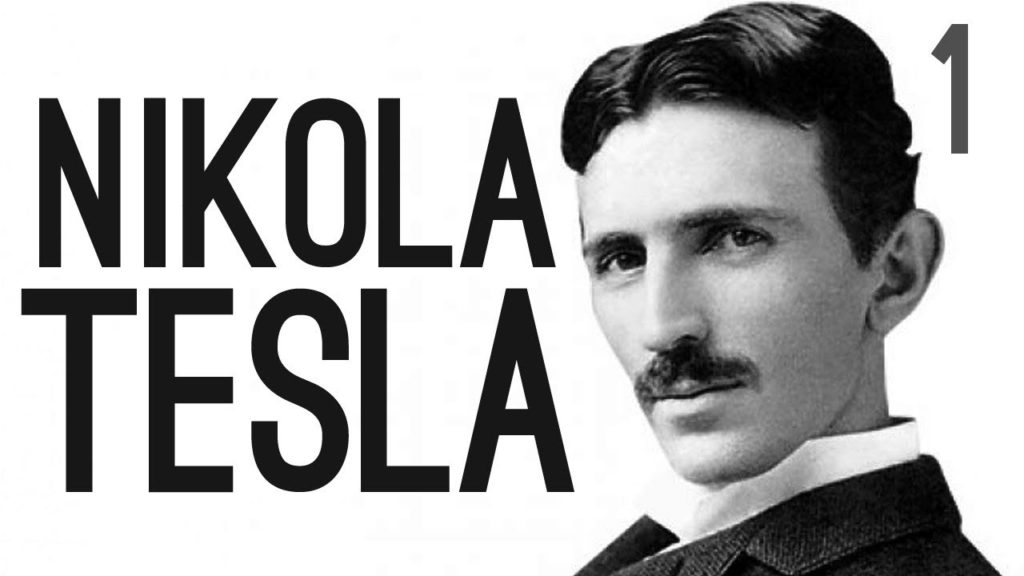
Nikola Tesla was born in Lika in 1856 to an Eastern Orthodox priest who had an interest in mechanical appliances. He attended a primary school in Smiljan and completed his high-school from the Higher Real Gymnasium. His physics teacher inculcated in him an interest in electronics, and that would life-long passion for Tesla. He was a prodigy while at school, being able to do integral calculus in his head. Tesla ran away from home in the 1870s to evade enrolment into the Austro-Hungarian Army.

He then joined the Austrian Polytechnic and learnt electrical engineering but received no degree. Rather, he gained practical knowledge working for Central Telegraph Office in Budapest and the Continental Edison. In 1884, he shifted to the United States and worked for Edison Machine Works. He left soon after, setting out to form his laboratories and companies. His patent for an AC motor through Westinghouse Electric earned him large sums of money, which he utilised to fund his research. During the 1890s, Tesla pushed for wireless lighting and communication, becoming a pioneer in the field. with his devices.

The Famous Boat Experiment

Famous American inventor Nikola Tesla created the world’s first wireless remote control. He unveiled the system at Madison Square Garden in 1898 to much awe from the public. He called the system, which could control several mechanical devices, a tele automaton. To demonstrate his new invention, Tesla used a boat and controlled it via radio waves using a small metal antenna. Tesla sent radio signals to the using a version of remote control. The box consisted of a lever and a telegraph key and generated signals. These signals moved electrical contacts on the boat, adjusting the rudder, thereby controlling it.

Idea Catches On

Financially though, Tesla’s system was a flop. He planned on selling the system to the U.S. Navy, but the contraption was too unreliable for use in war. However, the idea caught on and spread like wild-fire to other equipment. Following in Tesla’s footsteps, Leonardo Torres-Quevedo devised a system utilising wireless telegraphs. With this system he first controlled a tricycle, then a boat, and later even submarine torpedoes.

Acts of War

These inventors led the way for the concept of remote controls. In World War I, Germany made use of such boats to launch attacks against the opposition. Hence, remote controls were the start of a new kind of warfare, which saw armies fight from a distance. During World War II, both the Germans and the Allies used several guided torpedoes and missiles.

Part of Our Lives

By the end of the 1940s though, remote controls became a part of consumer electronics, like garage doors and toys. Soon enough, several products started using technology, radically changing the technological landscape. Afterwards, Philco started production of radios utilising a wireless, battery-powered remote known as the Mystery Control. The most significant contribution, however, was of Zenith who introduced the Lazy Bones remote. Soon after, Eugene Polley made the Flashmatic TV remote, which made use of light technology.

Resounding Success

A few years later, Robert Adler, created a system which made use of ultrasonic sound in place of light. This new remote was more expensive but was still a resounding success. These clicker remotes forever changed the nature of the interaction between customers and electronic devices. It gave people the power to change channels without having to rise from their seats. Ever since then, remotes have been continually evolving, making use of IR technology, and even universal remote technology.
In 1898, the world had little understanding of Tesla’s brilliant idea. But in the years to come, the spark he started grew to become a raging flame. His innovation paved the way for future inventors to build a system that changed the world.