Your Tech Story

Story

MOZ

The Wizards of Moz: Success Story of Moz

Moz began as an SEO service in 2004, but over time, grew to become one of the world’s leading SaaS companies. So much so, that they even launched their own Pro app! Started by a mother-son duo, Moz sells marketing analytics and SEO management software to their subscribers. So how did this mother and son, revolutionise the world of SEO marketing? Here’s a look at how the idea for Moz took shape, and the impact it made.

The Idea Hits

Rand Fishkin was an entrepreneur with a penchant for web design. In 2001, Fishkin realised the importance of organic search and web traffic. He learned about a variety of search engines like MSN Search, Yahoo!, and Google. This helped him develop SEO strategies and digital marketing analysis for clients. Eventually, as the demand for SEO specialists rose, so did Fishkin’s thirst for knowledge regarding the same.

After a while, he became not just proficient, but an authority on SEO. So. In 2004, he began SEOmoz as a way of helping people figure out the secretive world of SEO. The SEOmoz blog helped bring in a constant stream of clients. Since then, the once-struggling blog has become an SEO empire, bringing forth and introducing a slew of products. Read on to see how Moz grew from being a small experiment to one of the biggest SaaS companies in the world.

Humble Beginnings

Founded by Rand Fishkin and Gillian Muessig in 2004, Moz functions as a consulting firm which later became a software developer. The company now boasts of a massively successful online service, with a community of over 1 million digital marketers. The company started as SEOmoz in 2004, and three years later had their SEO-Pro app. In 2007, Moz launched a set of SEO-based tools and resources. This helped generate half their total revenue by the end of the year.

Towards the end of 2007, Ignition Partners and Curious Office, chipped in $1.1mm to help Moz grow. With a conversion rate of over 56%, Moz grew tremendously in the following years, and their subscribers grew with them. A year later, in 2008, they launched Mozscape which served as a scalable online crawl. The company was also able to grow its traffic at 54% during that same period.

Change of Hands

They even invented the TAGFEE code, and soon hit 5000 subscribers. In 2010, Moz became an Inc. 500 list website. In August of the same year, they launched their web app and followed it up in 2012 by acquiring Followewonk. The company received its first funding in 2007 and tried twice again in 2009 and 2011 to raise capital. The Foundry Group and Ignition partners helped them raise $18 million in 2012. Following this, Foundry employee Brad Feld Moz’s COO, Sarah Bird joined the board. This came as a result of Gillian Muessig stepping down from the helm the same year. Between 2008 and 2011, Moz grew from being a $1.5 million company to generating $11.4 million in revenue.

A Family Deal

Muessig co-founded Moz along with her eldest son, Rand Fishkin in Seattle 15 years ago. Since leaving the company in 2012, she worked as an advisor for various companies. She also sits on multiple boards, including Soro and Brettapproved. She is also the CEO of the venture capitalist firm Outlines Venture Group and co-founder of the Sybilla Masters Fund along with Microsoft veteran Alka Badshah and Anne Kennedy. In the early days of the company, Muessig’s youngest son would come to the office after work and did small duties for her. Her daughter too was huge support for her, being her cheerleader, always reassuring and comforting.

New Tools and Prolonged Success

The company rechristened itself Moz in 2013 and began to get more involved in inbound marketing. Later that year, they launched Moz Analytics, which used inbound marketing strategies to improve brand marketing. They followed this up, by launching Moz Local in 2014, which served as a platform to manage listings online. The company celebrated its tenth anniversary in 2014 by crossing 15,000 subscribers.

Their SEO Toolbox offers a variety of tools such as the Term Extractor, Trust factor and mozRank, which works like the Google Page Rank. An SEO audit tool, named YOUmoz, helps users learn about new trends in SEO. In 2014, Rand stepped won as CEO but continued to work at Moz in various other roles till 2018. With almost 85% of their users finding them through social media and organic search, Moz is a true social media sensation.

Moz currently has over 36,000 customers and 160 employees. Annual revenues are in the high 40’s with the company bringing in over $42 million in 2017. This was a steep rise from the $38 million they made the year before. Over the years, Moz has evolved to become a one-stop solution for all SEO and marketing needs, and the future looks brighter than ever before for the SaaS giant.

Paypal

Paypal – Say No To Traditional Payment Methods

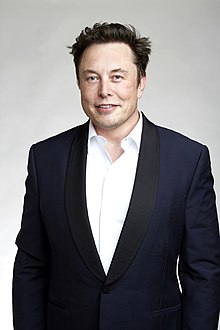
Elon MuskOnline transaction is a boon in our everyday life. It has made our life better by saving us time and making transactions by a few clicks. One does not need to run to the bank or ATM in the eleventh hour for withdrawing cash. Applications like GooglePay, PhonePe have become some of the most popular interfaces for money transactions. But, way before these applications came into play, an American company, PayPal ruled the market.
Founded in 1998, PayPal serves the entire world with its payment services. It was a subsidiary of eBay for a long time. PayPal has launched many divisions of online payment in the last twenty years. The founders of the company are Elon Musk, Ken Howery, Luke Nosek, Max Levchin, Peter Thiel and Yu Pan. Currently, Dan Schulman serves as the President and CEO of the company. The company’s headquarters is based in San Jose, California.

Founders

The world-famous tech pro, investor and entrepreneur, Elon Musk founded more than just one company. PayPal was his third start-up after co-founding Zip2 with his brother, Kimbal followed by founding X.com. Musk founded SpaceX, The Boring Company, Neuralink, and many more giant businesses.

Howery went to Stanford University and acquired a Bachelor’s degree in Economics. While he was a university student, he served as the managing editor of The Standard Review. Howery co-founded PayPal the very year he graduated. He was made Director of corporate development for eBay after it acquired PayPal.

Nosek is a computer engineer who co-founded SponsorNet New Media prior to co-founding PayPal. He served as PayPal’s vice president of marketing and strategy until the company was acquired by eBay.

Levchin has a degree in computer science who co-founded PayPal right after completing his graduation. He has also co-founded Slide, HVF, and Affirm. Levchin is mostly known for his efforts in managing fraud and contributions in CAPTCHA response.

The great venture capitalist and investor, Peter Thiel has a degree in law from Stanford. Before becoming a venture capitalist, Thiel served as a security lawyer. Thiel is a board member of Facebook, a partner at Founders Fund and a great philanthropist.

Pan has a degree in computer science from the University of Illinois. Pan served as a Google employee prior to co-founding PayPal. He was also hired by Youtube as a software engineer.

Early History

Back in 1998, the company was launched by the name Confinity. Confinity was founded to provide security software which later launched its money transfer service in 1999. BlueRun Ventures provided the initial funding for this new company.

After a year, Confinity merged with X.com, Musk’s online banking start-up. X.com had many other online payment services which Musk decided to shut down and focus exclusively on PayPal. In 2001, the company gained popularity as PayPal and not X.com anymore. It went public in 2002.

The major acquisition

In 3rd October 2002, eBay acquired PayPal for $1.5 billion. It was the biggest turning point in the success story of PayPal. After this business deal was closed, PayPal payments increased exponentially. Most of the eBay users paid through PayPal as it appeared as the default choice. Five years from buying PayPal, the company’s annual revenue summed up to $1.8 billion. In 2008, PayPal made two big acquisitions including Fraud Science (for managing frauds) and Bill Me Later.

Success of PayPal

The company reached 100 million active users from more than twenty-five different countries by 2010. Till now PayPal only provided online money transactions. In 2011, the company decided to provide offline services. The company wanted to deliver the advantage of paying in retail shops via PayPal. For launching this, PayPal came into a partnership with Discover Card in 2012. After the offline scheme was launched, it reached more than 7 million retail shops. This led the volume of PayPal’s payment transaction to $145 billion.

An independent company

In 2014, the company decided to establish itself independently. The spin-off was finally completed on 18th July 2015. After this agreement, Dan Schulman was made the CEO and President of the company and John Donahoe was declared as the Chairman.

he first acquisition made by PayPal as an independent entity was Xoom Corporation. Other acquisitions also include Hyperwallet, Simility, and GoPay, etc. The company today has more than 170 million active users and 21,000 employees approximately.

product hunt

Launch and Scavenge Every Day: Success Story of Product Hunt

Product Hunt entered the internet space in 2013 and is a website that allows users to share and discover new products, virtually every day. Founded by Ryan Hoover, and backed by Y Combinator, it allows users to submit products, and then issue polls much like Reddit. So, how did this innovative idea come to be, and what is the future of Product Hunt?

About the Founder

Ryan Hoover comes from an entrepreneurial household, wherein his parents ran their businesses. This gave him an early start in life as they encouraged him to start new projects and generate new ideas. He held several jobs before founding Product Hunt. This even includes running a gumball machine in his parent’s video game store when he was eleven. It was through such experiences that he learned to manage expenses and save money. He has also worked for a website that makes banner ads, done freelance yard work, and worked at a home improvement store.

After graduating from the University of Oregon, Hoover an internship at a startup which became a full-time job as a product manager in Portland. In 2010, he moved to San Francisco and joined the start-up PlayHaven as their tenth employee. Afterwards, he helped Nir Eyal write his book Hooked: How to Build Habit-Forming Products. Soon after, he founded Product Hunt, and the rest is history.

How it Works

Every day, the product which has the most votes becomes the daily winner and ends the day on the top of the list. Products usually fall under four main categories- hardware and software products, games, books and podcasts. All members of the community can submit products, and all it takes is a title, URL, and tagline. The website also sends out a daily newsletter highlighting the best product of the previous day.

Starting Strong

The website began as a simple mailing list utilising Linkydink. The idea took off, and a week later, the email list had over 100 participants. Two weeks, they had more than 170 subscribers and 30 contributors. A year later, they had Y Combinator backing them, thanks to the uniqueness of their idea. Nathan Bashaw and Ryan Hoover built the website over their Thanksgiving break in 2013. Meanwhile, Hoover was working on a community strategy to build Product Hunt’s online presence.

A year after launching, they went in for a funding round. Andreessen Horowitz helped them raise over $6.1 million. A year later, they won a Crunchie award for being the best new start-up on the block. The same year, the website started their podcast. However, they ended it soon as it was distracting users from the website’s main objective of introducing products.

A Resounding Success

By 2016, Product Hunt was so popular, that it had helped in discovering over 100 million products made by more than 50,000 companies. The same year, AngelList acquired the company for more than $20 million. A couple of months later, they redesigned their homepage and even launched an app for iOS users. In 2017, they launched Ship, which was a set of tools for creating demand for products. A year later, they launched a news aggregator called Sip. Recently, they launched a Launch Day initiative to help makers monitor their product on the website with ease.

Product Hunt has been so successful that the team even published a book, titled How to Build a Career in Tech. Ryan is behind one of the most unique and popular websites in the world, and the future looks bright for him, and his wacky idea. While the initial inspiration was to explore new technology, Product Hunt now helps entrepreneurs around the world launch their products with ease. With over 1 million registered users and more than 20,000 products launched on, it is safe to say that Product Hunt is here to stay!

Eventbrite

Eventbrite, manage events in a better way

What was the last time when you heard about an international event management company? Big companies may hire employees separately for this purpose, but most of the independent organizations cannot afford that. We, especially in our college life come through the term “event management” very often. Event management is considered as an appreciable skill. Especially in a metropolitan city, where numerous events take place every day, there is a sheer need for event managers. But, to organize an event, promotions are needed as well.

Eventbrite, an US-based event management company meets all the requirements needed to organize an event. The company was founded in 2006 with the motive to help people surf events around the city. The website also provided the feature of creating events, promoting them along with online ticketing for the events. The founders of Eventbrite are Renaud Visage, Julia Hartz and Kevin Hartz.

Renaud Visage

Visage is a Cornell University graduate who acquired a degree in Engineering. Visage joined Geomatrix as a Project Engineer after a couple of years since his graduation. In 2000, Visage became the Director of Engineering for Zing Networks and left the company after a year.

He became a Venture Partner at Index Ventures after which he became a very prominent Investor. He invested in many companies which include Snips, Mobius Motors, Hokodo, Engineer.ai etc. He is also a Board Partner of Point Nine Capital. Even after Visage co-founded Eventbrite in January 2006, he still serves as an Investor. He is also a mentor at StartupBootcamp.

Julia Hartz

Julia went to Pepperdine University and acquired a Bachelor’s degree in Telecommunication. After graduation, Julia joined MTV as a Development Executive followed by contributing to FX Networks. She left FX Networks in 2005 and co-founded Eventbrite next year. She is the current CEO of the company and also a member of the Board of Directors.

Hartz is a very significant figure in the women entrepreneurial world. She has been featured in the Fortune magazine as one of the most powerful women entrepreneurs. Julia is also an investor and she was featured in the Forbes.

Kevin Hartz

Brought up in California, Kevin holds a Bachelor’s degree in Arts from Stanford University and a Master’s degree from University College, Oxford. Kevin started his career as a Product Manager in Silicon Graphics. Kevin co-founded a start-up, ConnectGroup which was later acquired by LodgeNet. Before co-founding Eventbrite, Kevin along with Alan Braverman founded Xoom.

The crisis

The three founders chose the wrong time to launch Eventbrite. During the 2000s, an aura of the economic crisis was spread around the globe. None of the venture capitalists wanted to invest in any new start-ups creating a really difficult situation for Eventbrite. But, luckily the three of them were well-experienced. Visage knew how to be more strategic and play tactically without enough funding.
Eventbrite started emphasizing more on SEO and reach out to people through unique contents. The marketing strategies of Eventbrite played the ace and they were finally able to conduct Series A funding at the end of 2009.

Strategies

In the beginning, Eventbrite launched a 100% free business model which lured a good number of customers. Eventbrite proposed this model for the so that the organizers can test the managing system of Eventbrite and then get start paying for it. After Eventbrite started making progress, many organizers shifted from free to paid model to have better access and services.
In 2008, the company launched its application which solely served the purpose of surfing events. With time, more people signed up and the demand rose drastically. This led Eventbrite to launch the feature of online ticketing and earn through it.

The Success

Once Eventbrite started landing investors, the list expanded day by day. Eventbrite closed their Series E funding by raising $50 million from Tiger Capital in 2011. Another $60 million was raised by the company from the same investor in 2013. Some of the major investors of Eventbrite include Sequoia Capital, Tiger Capital etc. In 2017, the company raised $134 million from Series G funding. The next year, Eventbrite filed for its first IPO worth $200 million. According to 2018, the company’s annual revenue sums up to $291.6 million. Eventbrite made some significant acquisitions including Nvite, Ticketfly, Picatic and Pandora.

Today, apart from managing events on the land of the US, it has offices in the UK, Ireland, Germany, Argentina, Netherlands, Brazil and Australia.

cognizant

Transforming India’s Digital Landscape- Success Story of Cognizant

A while back Cognizant went ahead of Infosys to become the second-largest IT company in India. It was an iconic milestone wherein a pioneer gave to a young contender, the baton for the future. The man steering this rise of Cognizant was a boyish-looking, exuberant 44-year-old by the name Francisco D’Souza. Here’s a look at how the mild-mannered D’Souza has energized and uplifted the technology company to even greater heights.

About the Disruptor

Francisco D’Souza was born in 1968 in Kenya to Placido D’Souza, an IFS officer and Sushila. Most of his childhood was spent shuttling between countries and D’Souza has lived in over 11 countries. He graduated from the University of East Asia Macau with a degree in Business Administration. He followed this up with an MBA from Carnegie Mellon.

After graduating, D’Souza joined Dun & Bradstreet in 1992, as a management associate. Cognizant started as an experiment two years later within Dun & Bradstreet. Francisco led this experiment, which later turned into a full-on, in-house project. From 1996, D’Souza held various positions in Cognizant and joined the Board of Directors in 2007. Six years later, Francisco joined General Electric, becoming the youngest member on their board. In 2018, he became the Vice-Chairman of the Board at Cognizant.

Founding Cognizant

Cognizant began as an in-house unit of Dun & Bradstreet in 1994. The company started catering to the needs of external clients in 1996 and went public two years later. Cognizant was one of the fastest-growing companies in the early 2000s and became a Fortune 500 member in 2011.

Initially, it was set-up to help Dun & Bradstreet manage large-scale IT projects. Two years after its creation, Dun & Bradstreet merged Erisco, IMS International, Nielsen Media Research, Strategic Technologies and DBSS, to form Cognizant Corporation. The same year, the company changed its name to Cognizant Technology Solutions. In 1997, Dun & Bradstreet acquired 24% shares of DBSS for $3.4 million. A year later, the company moved its headquarters with Kumar Mahadeva serving as the CEO.

Early Days

The same year Cognizant Corporation, split into IMS Health and Nielsen Media Research, with the technology wing becoming a part of IMS Health. In June the same year, IMS Health went public with Cognizant stock raising $34 million. Kumar Mahadeva focused on applications management, and the company grew under his leadership.

In 2002, Cognizant brought in over $229 million, with zero debt. In 2003, IMS Health sold their 56% stakes to prevent hostile takeovers and Lakshmi Narayanan replaced Kumar Mahadeva as CEO. Gradually, the company expanded and ventured into the fields of business process outsourcing and consulting. Finally, in 2006, D’Souza took over CEO from Lakshmi Narayanan. The company then grew exponentially, becoming a part of Fortune’s 100 Fastest-Growing Companies list from 2003 to 2012.

Growth and Success

In 2014, Cognizant acquired TriZetto which specialises in healthcare IT services for $2.7 billion. Owing to this stellar buy, the shares of Cognizant rose by over 3% on that day. A year later, they signed up with Escorts Group in India to help them transform their business segments. The same year, they partnered with NTUC FairPrice to help them revolutionise their business.

Currently, Cognizant employs over 280,900 people globally, with more than 150,000 based in India. The company has centres in main cities such as in Bangalore, Chennai, Noida, Hyderabad, Kochi, Mangalore and Mumbai. Globally, they have centres in Spain, China, Canada, Mexico, Argentina and Brazil. Under D’Souza their revenue increased from $1.42 billion in 2006 to $16.1 billion in 2018. It will be interesting to see how Cognizant utilises its presence to further change the digital landscape in India.

accenture

Accent on the Future: Success Story of Accenture

Accenture is one of the largest professional services companies in the world and provides consulting for a wide range of operations. They are one of the biggest multinational companies in finance, consulting and management. With revenues over $39.6 billion, and operations in more than 120 countries, this Fortune 500 Company is a global leader in consulting services. So, how did Accenture’s story start, and who is responsible for this stellar growth?

About the Author

Arthur Edward Andersen was born in 1885 in Illinois to Norwegian immigrants. His parents died when he was 16, leaving Andersen to fend for himself. He graduated from Northwestern University with a degree in business by struggling through night courses. Andersen worked as a full-time mail boy while he was at college, to support himself financially.

Following his graduation, he started working in Chicago as the controller of Allis-Chalmers. He became a Certified Accountant in 1908, becoming the youngest person to do so in Illinois. While serving as an accountant, he worked as a professor at Northwestern. A couple of years later, in 1913, he formed Andersen, Delany & Co, with Clarence Delaney. Five years later, Andersen bought Delaney out, and the firm became Arthur Andersen & Co.

Founding Accenture

Accenture initially came under an accounting firm called Arthur Andersen LTD. They handled payroll processing operations and other such outsourced processes. The company was mainly based in Kentucky. In the 1950s, the accounting firm Arthur Andersen was helping General Electric with a feasibility study regarding the use of computers. This was the first time computers were used for commercial applications in the US. Andersen got the job thanks to his Joseph Glickauf, who was an early pioneer of computer consulting, working at the firm.

From Andersen to Accenture

After the split, Andersen Consulting had to pay Arthur Andersen 15% of its profits annually. Meanwhile, Arthur Andersen competed against Andersen Consulting via Arthur Andersen Business Consulting. This led to heated arguments and disputes. In 1998, Andersen Consulting claimed a breach of contract against Arthur Andersen.

Two years later, as per the guidelines stated by the International Chamber of Commerce, the two companies severed all ties. As a settlement, Andersen Consulting paid Arthur Anderson $1.2 billion and renamed itself Accenture. “Accenture” comes from a combination of the accent and future of the word, as per the phrase “Accent on the future”. Kim Petersen, an employee from the Norway office submitted the name through an internal competition. They launched their IPO in 2001, at $14.50 per share, on the New York Stock Exchange.

A Stellar Success

The IPO helped Accenture raise $1.7 billion and the day closed with the shares at $15.17. Accenture employs over 459,000 people and has clients in more than 200 cities around the world. In India alone, Accenture employs more than 150,000 technicians. As the company grew, so did their client base, and Accenture now serves 92 of the Fortune 100 and three-quarters of the Fortune 500. The company was incorporated in Ireland in 2009, becoming Accenture plc. HealthCare.gov initiate chosen them as the lead contractor in 2014 for $563 million. The following year, they won a Defense contract from the US, valued at $4.33 billion.

In 2017, Apple Inc. announced that it would be partnering with Accenture to develop iOS software. A year later, they generated $4.060 billion, growing by over 13.4% compared to the previous year.
Currently, Accenture’s shares are worth $159 per share, and the company is worth over US$104.2 billion. It is safe to say that Arthur Andersen gave the world one of that biggest companies in the world, and is hence, rightfully a member of the Accounting Hall of Fame.