Your Tech Story

News

Vietnam's Richest Man Slurps Up $39 Billion in 24 Hours

Vietnam’s Richest Man Slurps Up $39 Billion in 24 Hours

VinFast Auto Ltd., the Vietnamese electric car manufacturer, has defied conventional wisdom with its stunning debut on the Nasdaq Global Select Market. 

Image Source: assets.bwbx.io

Despite the automaker’s electric cars facing criticism and the specter of lower sales than industry behemoths like General Motors Co., the company’s shares soared an astonishing 255% on Tuesday, catapulting the net worth of its chairman, Pham Nhat Vuong, by a staggering $39 billion. This meteoric rise pushed his total fortune to $44.3 billion, as per the Bloomberg Billionaires Index.

VinFast’s robust stock performance also propelled the company’s market capitalization to surpass established giants like General Motors and Mercedes-Benz Group AG. At the current valuation, VinFast dwarfs Chinese electric vehicle manufacturer XPeng Inc. by sixfold.

The automaker’s debut exemplifies the trend of companies soaring after merging with Special Purpose Acquisition Companies (SPACs). These impressive initial surges, however, have often been followed by significant market corrections in the days following the debut. This volatility is attributed to the limited availability of shares for trading. Vuong’s substantial control of approximately 99% of VinFast’s outstanding shares via his conglomerate, Vingroup JSC, has led to larger price fluctuations.

According to Professor Jay Ritter from the University of Florida, “The stock will be very volatile until more shares are available for trading.” This volatility has been a hallmark of the SPAC debut trend, with 2023’s de-SPACs experiencing a median decline of about 45%, and a notable 18 of them plummeting over 70% in value post-merger.

VinFast’s journey to this point has not been without challenges. The company has faced operational difficulties, with a recall of electric SUVs due to software glitches and a handful of unfavorable reviews. Despite these hurdles, VinFast remains steadfast in its commitment to improvement. CEO Le Thi Thu Thuy emphasized, “We take [negative reviews] very close to our heart, we reflect on the feedback from those reviews and we make our vehicles better.”

The road ahead for VinFast appears promising, especially when compared to other electric automakers that have entered the market via SPACs and witnessed significant value erosion post-merger. While companies like Lordstown Motors Corp., Nikola Corp., and Faraday Future Intelligent Electric Inc. have seen their market value decline by over 90%, VinFast is in a unique position if it can sustain its initial gains.

Also Read:  Apple Plans Major ‘Watch X’ Overhaul for Device’s 10-Year Anniversary

VinFast’s strategic shift from a traditional initial public offering (IPO) to a SPAC listing with Black Spade Acquisition Co. speaks to its adaptability and resilience. With chairman Pham Nhat Vuong’s successful track record, including the sale of his instant noodle business to Nestle SA, and Vingroup JSC’s diverse portfolio, VinFast is positioned for growth. Despite the operational hiccups, the company forecasts sales of 45,000 to 50,000 units this year and aims to break even by the close of 2024.

In an industry prone to rapid change, VinFast’s spectacular entry into the US stock market signifies the triumph of innovation and adaptability over initial challenges. As the electric vehicle landscape evolves, all eyes are on VinFast’s continued journey and its potential to redefine the narrative surrounding SPAC mergers.

Apple Plans Major ‘Watch X’ Overhaul for Device’s 10-Year Anniversary

Apple Plans Major ‘Watch X’ Overhaul for Device’s 10-Year Anniversary

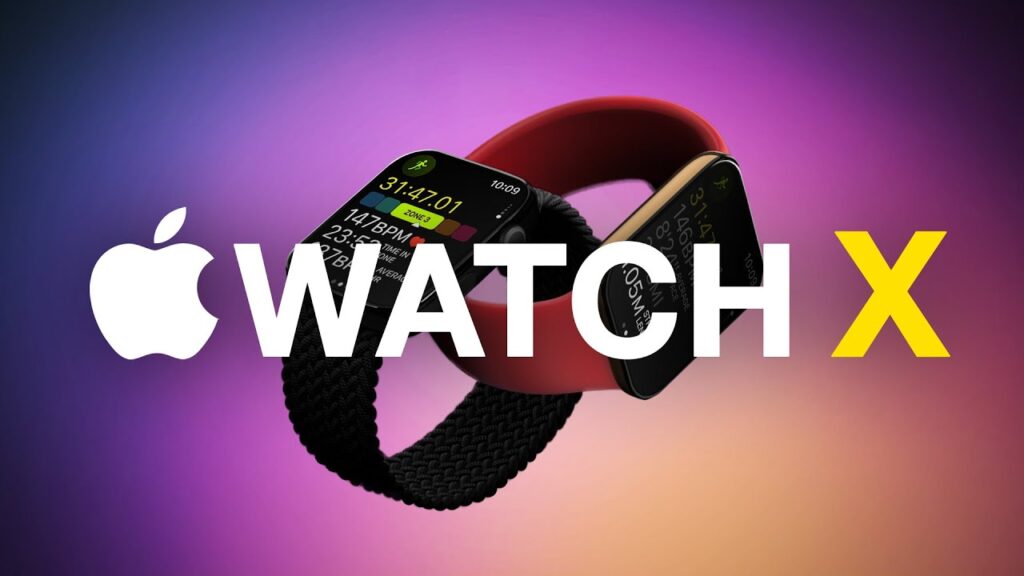
Apple is gearing up to celebrate the 10th anniversary of its groundbreaking smartwatch with a significant redesign of the iconic device. While the upcoming 2023 models are expected to be a modest upgrade, Apple enthusiasts can look forward to the launch of the highly anticipated “Watch X” in the near future.

Apple Plans Major ‘Watch X’ Overhaul for Device’s 10-Year Anniversary
Image Source: i.ytimg.com

The yearly refresh cycle of Apple’s flagship smartwatch has seen incremental improvements, often focusing on a specific feature enhancement. For instance, the Series 8 model introduced a body-temperature sensor, while the previous iteration boasted a larger display. Despite these consistent upgrades, industry insiders note that Apple hasn’t provided consumers with compelling reasons to frequently upgrade their watches, unlike the rapid innovation seen in the iPhone lineup.

The imminent 2023 Apple Watch Series 9 lineup, set to be unveiled alongside the latest iPhone on September 12, is projected to retain its current size dimensions. However, the notable advancements will be in the form of enhanced processors and a variety of fresh colors. While these updates may not excite recent Apple Watch buyers, they serve to attract first-time smartwatch adopters and those who are using older models.

The steady pace of incremental improvements has led Apple’s internal discussions about the potential benefits of deviating from this strategy. The company has historically adhered to a yearly upgrade cycle for the smartwatch, consistently releasing new models since the category’s debut in 2015. Yet, the recent evolution of the device has sparked internal deliberations about the necessity of such frequent updates.

However, Apple’s plans for its upcoming 10th anniversary “Watch X” model signal a bold departure from its established upgrade cycle. The company is already in the works to design a thinner watch case and explore novel methods of attaching bands to the device. The current mechanism, which involves sliding bands into the sides of the chassis and securing them with a locking mechanism, has proved functional but constraining in terms of utilizing available space for other components like batteries.

To address these design limitations, Apple’s engineers are reportedly experimenting with a magnetic band attachment system. While it remains uncertain whether this system will make its debut in the “Watch X,” it signifies the company’s commitment to pushing the boundaries of design to create a more efficient and versatile product.

Also Read:  Foxconn Starts Production of Upcoming Apple iPhone 15 in Tamil Nadu Ahead of September Launch

Beyond the band attachment, “Watch X” is expected to feature transformative upgrades, including a microLED display that offers superior color and clarity compared to existing OLED screens. Additionally, insiders reveal that the company is working on incorporating blood pressure monitoring technology, positioning the smartwatch as a potential health and wellness companion.

As Apple moves towards the launch of the “Watch X,” it not only demonstrates its dedication to innovation but also marks a pivotal moment in the evolution of its smartwatch lineup. With this significant overhaul, the company aims to provide users with a compelling reason to upgrade, further cementing its status as a trailblazer in the tech industry.

Foxconn Starts Production of Upcoming Apple iPhone 15 in Tamil Nadu

Foxconn Starts Production of Upcoming Apple iPhone 15 in Tamil Nadu Ahead of September Launch

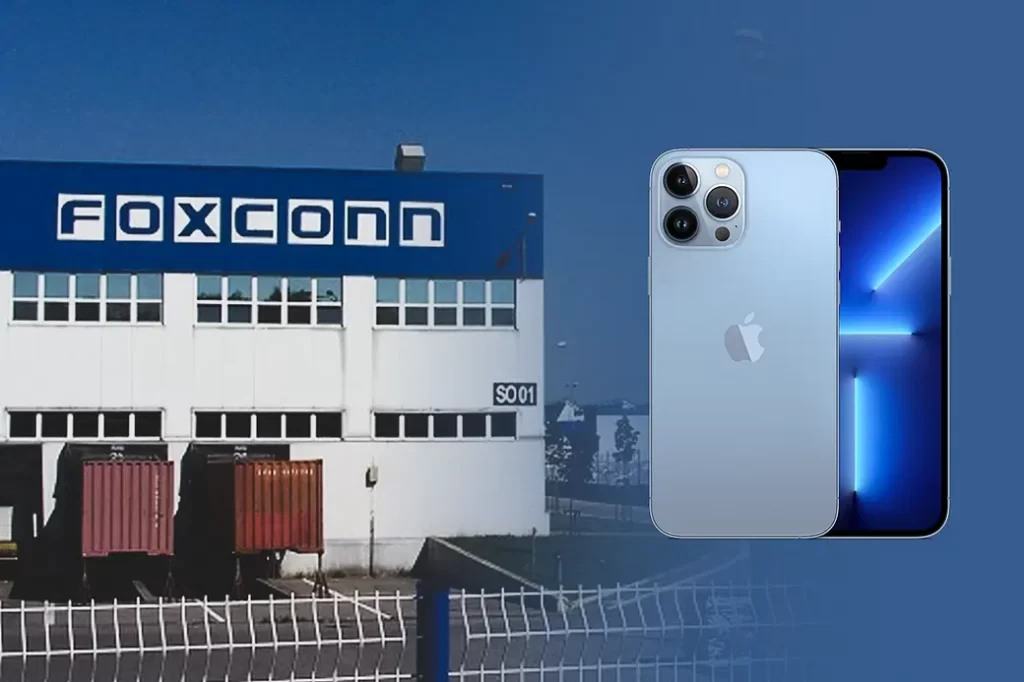
In a significant stride towards bolstering the “Make in India” initiative, Apple Inc. is poised to kickstart the production of its eagerly anticipated iPhone 15 in the southern state of Tamil Nadu. A recent report has unveiled that the Foxconn Technology Group’s manufacturing plant in Sriperumbudur is gearing up to roll out the latest iPhone iterations merely weeks after they commence production in Chinese factories. This strategic move aims to bridge the gap between Indian and Chinese manufacturing operations.

Foxconn Starts Production of Upcoming Apple iPhone 15 in Tamil Nadu
Image Source: gumlet.assettype.com

Anticipation is rife as Apple aficionados await the grand unveiling of the iPhone 15, anticipated to be announced on September 12, 2023. This upcoming iteration is slated to usher in the most extensive array of updates to the device in the past three years. The scale of production hinges largely on the availability of crucial components, many of which are imported. In view of this, production lines have been ramped up at the Chennai facility to facilitate seamless assembly.

Prior to the iPhone 14, Apple’s manufacturing footprint in India was limited, lagging behind China by a considerable six to nine months in terms of output. However, this disparity was considerably narrowed down last year. As of March-end, Apple managed to produce 7 percent of its iPhones in India, signifying substantial progress.

Apple is currently focused on aligning shipment timelines from India and China, aspiring to reach parity in this aspect. While sources remain cautious about achieving this goal, the push is evident and promising.

The spotlight isn’t solely on Foxconn, as other key Apple suppliers in India are also set to contribute to the production of the iPhone 15. Companies like Pegatron Corp. and the Wistron Corp. factory, which is on the brink of being acquired by the Tata Group, are gearing up to assemble the highly anticipated device.

In tandem with this development, reports have emerged indicating that Apple is primed to initiate the production of its iconic AirPods wireless earbuds at Foxconn’s Hyderabad facility. With an impressive $400 million investment by Foxconn, the Hyderabad plant is slated to commence large-scale manufacturing by December 2024.

The Foxconn Hyderabad factory is poised to churn out AirPods, marking the second product category, following iPhones, to be manufactured in India. Apple’s AirPods have etched their dominance in the TWS (true wireless stereo) market globally, making this strategic shift a pivotal move.

Also Read: Apple is working on its most powerful MacBook chip yet, the M3 Max

Having already established a manufacturing foothold in India through partners such as Foxconn, Wistron, and Pegatron, Apple’s expansion of product categories showcases their commitment to local production. As was the case with iPhones, there are whispers that AirPods production might extend to other facilities in the future.

With these groundbreaking developments, Apple is steadfastly ushering in a new era of localized production, underscoring India’s importance as a vital market and production hub.

WhatsApp introduces a group call scheduling feature in Android Beta: How to use it?

WhatsApp introduces a group call scheduling feature in Android Beta: How to use it?

Scheduled group WhatsApp calls are now being made available to Android beta members. With the addition of the latest capability, WhatsApp has strengthened its service so that it can compete with Zoom as well as Google Meet. Particularly, Zoom & Meet have long allowed users to arrange calls and provide call invitations. WhatsApp now allows users to arrange calls after previously integrating call connections into its app.

WhatsApp introduces a group call scheduling feature in Android Beta: How to use it?
Image Source: gizmochina.com

After first revealing that the feature was under advancement, WABetaInfo has revealed that it is now being rolled out to a small group of beta users around the world.

The community call planning function is present in the most recent WhatsApp beta for Android 2.23.17.7, but it may also be accessible to owners of the 2.23.17.5 along with 2.23.17.6 versions, claims the well-known WhatsApp beta upgrade monitoring website.

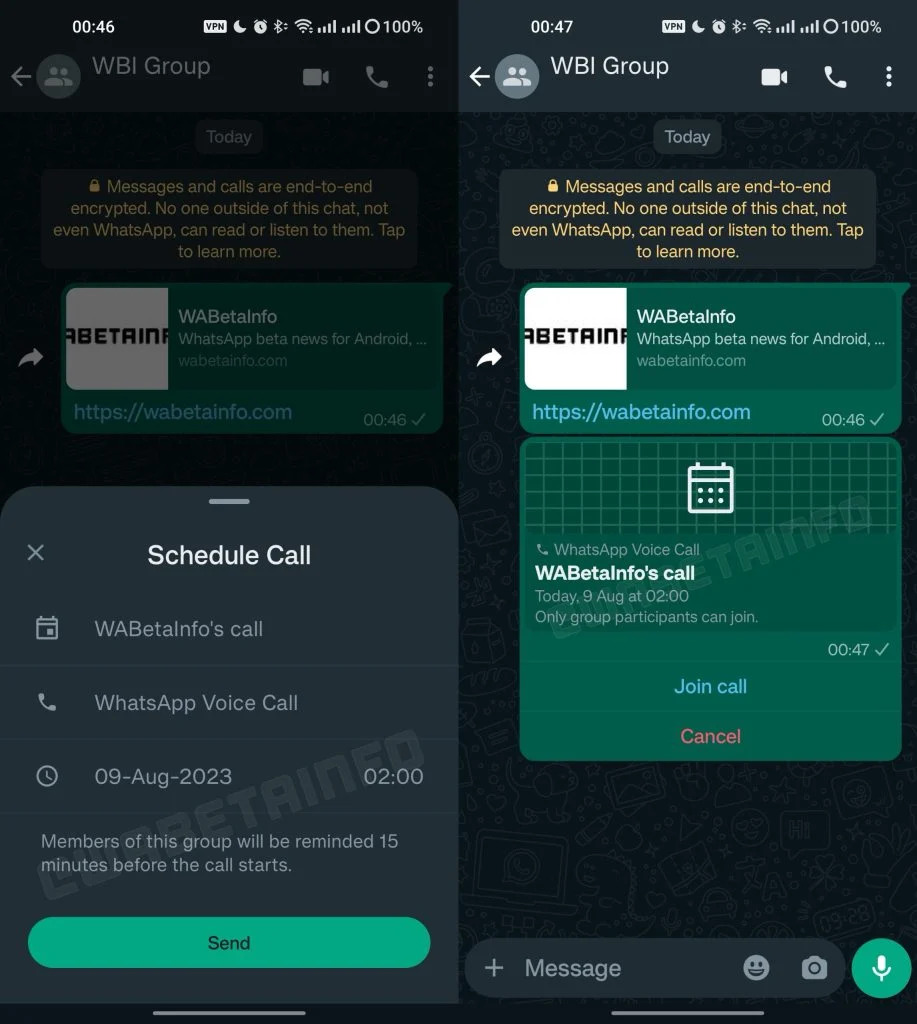
All it takes is a single push on the button for calling for group members to set up a conference call. Viewers will see an extra Schedule Call choice in the context panel that appears in addition to the standard Call Group selection. The user may choose the call subject, duration, and date after they select the Schedule Call option. The option to plan a phone or video conference with the group members is also available to users.

Only group members will be able to join the call after it has been scheduled thanks to a message that will be delivered to the group. The group members will receive a reminder 15 minutes prior to the meeting beginning when they select the Join this session button to ensure their attendance. Users may schedule a meeting with other group members using a procedure that is quite comparable to WhatsApp’s competitors.

Also Read: Google Docs Will Soon Introduce eSignatures, Beta Testing Started for Workspace Accounts

In recent times, WhatsApp has improved its group call capabilities. The platform raised the threshold for initiating a group call from seven to fifteen users. Although a group conference can still have 32 members, users could only begin a video call with 7 people and the rest had to be added afterwards.

The latest audio chat service by the company which is like Twitter Spaces, was just unveiled. The latest waveform icon will reportedly be introduced adjacent to the group name, as stated in the article.

google-digital-signature-yourtechstory

Google Docs Will Soon Introduce eSignatures, Beta Testing Started for Workspace Accounts

For Google Docs along with Google Drive in particular, Google has launched a publicly accessible beta for its recently added eSignature capability within Google Workspace.

google-digital-signature-yourtechstory
Image Source: thecurrent.pk

With the use of this functionality, various users’ signature collections for both individuals and groups of users will be improved. The statement, which Google made via a blog post, describes how this functionality will develop.

Google started alpha testing for asking and collecting eSignatures in Google Docs around June 2022. Based on the comments received throughout the testing phase, the business has now upgraded the electronic signatures feature for Google Workspace individual users to open beta.

In addition to this, Google intends to offer eSignature to a limited number of Google Workspace users in test mode. The executives and end users who utilise Google Workspace services are the development’s intended audience.

The Google Docs e-signature tool is designed to make it easier for those running independent businesses or small enterprises to ask for and append signatures to official papers.

Users may easily handle agreements, customer deals, and various other legally enforceable documents by simply integrating e-signature into Google Documents. The solution seeks to simplify processes and do away with the need to navigate between apps or tabs when signing documents.

Along with an expanded test including new personalised email designs in Gmail, the e-signature functionality will be made accessible in beta for a limited number of Google Workspace users, according to Google’s blog post.

Users have the option to change pre-existing designs, repurpose layouts across other email advertisements, or design new layouts using these email layouts.

Also Read: US starts process to restrict some investment in key tech in China

It is anticipated that the e-signature capability will begin to roll out to Workspace users on their starting on August 8. Requests will be approved, and consumers will be able to submit listings in the coming weeks for Workspace users keen on joining the beta.

Individual subscribers of Google Workspace are granted access to the electronic signature feature, and users of the Business Standard, Enterprise Starter, Enterprise Essentials, Enterprise Essentials Plus, Business Plus, Enterprise Standard, Enterprise Plus, Education Plus, and Nonprofits versions are accepted into beta testing.

US starts process to restrict some investment in key tech in China

US starts process to restrict some investment in key tech in China

The White House has taken a significant step towards safeguarding sensitive technologies by initiating measures to restrict certain U.S. investments in China’s critical tech sectors. 

US starts process to restrict some investment in key tech in China
asiatimes.com

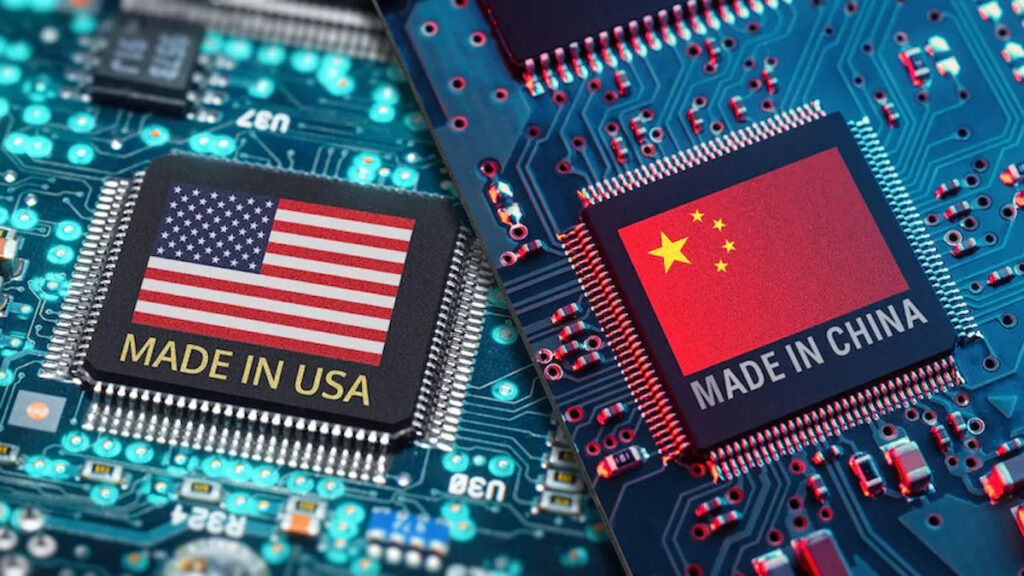
President Joe Biden signed an executive order on Wednesday, directing the U.S. Treasury Department to regulate investments in semiconductors, microelectronics, quantum computing, and artificial intelligence, with a particular focus on countries of concern, initially identifying China, Hong Kong, and Macau. The move aims to protect national security interests while setting the stage for a more controlled investment landscape.

The executive order establishes a framework where notification of investments will be required, and certain prohibitions will be applied to prevent the most acute national security risks. The targeted investments are those that could potentially provide China with military and intelligence advantages. Notably, these regulations will only apply to future investments and will not have retroactive effects.

The technology sectors under scrutiny are semiconductors, microelectronics, quantum computing, and artificial intelligence. These sectors hold immense strategic importance, and the United States has already imposed export restrictions on various technologies that are relevant to these fields. However, by restricting investments, the U.S. aims to prevent its funds from inadvertently aiding China in advancing its own domestic capabilities, which could undermine existing export controls.

While this executive order sets the groundwork for investment restrictions, it is important to note that the implementation process will be meticulous and may extend into 2024, coinciding with the presidential election year. The U.S. Treasury Department will undertake a rulemaking process that will include opportunities for public comment and stakeholder engagement. This thorough approach underscores the importance of these regulations for national security and international technological competition.

The Treasury Department’s proposed regulations target various aspects of technology investment in China. It is considering prohibiting investments in areas such as semiconductor manufacturing equipment, advanced integrated circuits, and certain quantum technologies. Additionally, the department is mulling over notification requirements for investments in less advanced integrated circuits and AI-related software with potential military or intelligence applications.

Also Read: Tokyo Electron’s Sales Dive 17% as Chip Market Malaise Persists

The U.S. has engaged in discussions with allies and partners to ensure that these measures are strategically sound and carefully tailored. Although no coordinated action was taken by allies on the day of the announcement, countries like Britain and the European Union have indicated their intention to implement similar investment restrictions. In fact, the Group of Seven advanced economies previously agreed that outbound investment restrictions should be part of the collective approach.

President Biden’s executive order represents a proactive stance towards protecting national interests and maintaining a competitive edge in crucial tech sectors. By establishing a regulatory framework for technology investments, the U.S. is working to strike a balance between economic engagement and safeguarding sensitive technologies. As the implementation process unfolds over the coming months, industry stakeholders, investors, and experts will closely monitor the developments that shape the future of U.S.-China technology interactions.