Your Tech Story

News

Tech Industry Dodges California Social Media Addiction Bill

Tech Industry Dodges California Social Media Addiction Bill

California’s Senate Bill 680, aimed at holding social media platforms accountable for addiction and harm to child users, met its demise for the second consecutive year on Friday, despite efforts from state Sen. Nancy Skinner (D) to push it through. 

Tech Industry Dodges California Social Media Addiction Bill
Image Source: campaign180.com

The bill, which had gathered substantial opposition from the tech industry, would have empowered the attorney general and public attorneys to file civil suits against social media companies for intentionally incorporating addictive or harmful designs and algorithms. This could have resulted in penalties of up to $250,000 per violation along with litigation costs.

Last year, a similar measure was prematurely extinguished during California’s suspense hearing process, a phase where bills with significant fiscal implications are often terminated without extensive debate. This year, the Skinner bill faced a similar fate due to the state’s substantial budget deficit, even with State Attorney General Rob Bonta lending his support to it in late June.

Despite adjustments made throughout the legislative process in response to concerns raised by tech groups, the bill failed to gain traction. Critics within the tech industry argued that it infringed upon free speech and could compel social media platforms to either shut down or restrict important content for children.

One notable alteration early on was the narrowing of the right of action to exclusively the state attorney general and public attorneys, excluding parents from using social media platforms. Additionally, the bill extended the grace period for companies to be in a “safe harbor” from the law. Platforms that corrected problematic algorithms or features within 60 days of a quarterly audit would not have violated the law as per the latest version of the bill.

Furthermore, encrypted direct messaging services were excluded from the bill by Skinner. This decision was influenced by logistical concerns voiced by tech groups, as determining whether messaging features caused harm or addiction without compromising privacy proved challenging.

Even if the bill had passed, social media platforms were unlikely to relent in their opposition. The Chamber of Progress, a tech industry coalition, emphasized the legal uncertainties surrounding a new California children’s online privacy law, which is currently facing a court challenge. According to Jess Miers, counsel for the Chamber of Progress, “The federal courts’ skepticism toward the [children’s online privacy law] should be a warning light: If S.B. 680 becomes law this fall, California will once again find itself embroiled in an expensive legal battle over online expression.”

Also Read: Samsung Gains 6% on Reports It’s Joining Nvidia AI Suppliers

In summary, California’s attempt to hold social media platforms accountable for addiction and harm to child users has failed for the second year in a row. Despite efforts to address concerns and criticisms from tech industry groups, the bill faced intense opposition, ultimately succumbing to the state’s budgetary constraints and the complex legal landscape surrounding online expression and privacy.

Samsung Gains 6% on Reports It’s Joining Nvidia AI Suppliers

Samsung Gains 6% on Reports It’s Joining Nvidia AI Suppliers

After news broke that Samsung Electronics Co. had been awarded the contract to provide cutting-edge memory chips to AI pioneer Nvidia Corp., It hiked by more than six percent.

Samsung Gains 6% on Reports It’s Joining Nvidia AI Suppliers
Image Source: bloomberg.com

The top electronics manufacturer in South Korea will begin selling HBM3, a new type of memory designed to operate with artificial intelligence acceleration devices, in the fourth quarter, according to Citigroup researchers which also involves Peter Lee. Since January 2021, its share price has gone up the highest. Until today, SK Hynix Inc., the arch-enemy of Nvidia, was the only supplier of high-bandwidth memory space for its artificial intelligence accelerators.

“Following its successful entry into Nvidia’s HBM supply chain, we expect Samsung to emerge as one of the leading suppliers of HBM3,” Lee and Josh Yang wrote in a report, “Citigroup’s Value for Samsung.” The target has been increased from 110,000 Won to 120,000 Won. “We see Samsung as a long-term beneficiary of the growth of the memory and AI computing markets.”

biz.crast.net

The Korea Economic Daily disclosed a report on Friday, quoting anonymous business sources, that Samsung reached an agreement to provide HBM3 to Nvidia shortly after its chips cleared the United States chip developer’s last-stage quality checks. According to the report, Samsung will begin providing the premium memory chips in as little as next month.

The arrival of Samsung as an extra HBM3 provider will be advantageous to Nvidia. As it broadens its possibilities, the Santa Clara, corporation based in California, whose stocks have quadrupled in worth to a total market capitalization of 1.2 trillion dollars, can see greater cost by performance as well as a more consistent supply.

A representative for Samsung turned down to comment on this topic.

On hearing the news, Samsung’s manufacturers also saw their stocks rise, with Hana Micron Inc., a company that tests and packages chips, increasing by an average per day of 30 percent. Dedak Electronics Co., a provider of printed circuit boards, increased 7.4 percent.

Read more: Bitcoin Falls Back to US$26,000, Ether Nears ‘Death Cross,’ While Investors Await US Jobs Report for August

HBM3, which researchers believe is suited for bandwidth-hungry artificial intelligence (AI) applications, is a technology in which Hynix leads the world. The latest HBM chip will reportedly be released by Samsung sometime this year. Hynix’s stock decreased 1.5 percent on Friday after initially gaining.

Bitcoin Falls Back to US$26,000, Ether Nears ‘Death Cross,’ While Investors Await US Jobs Report for August

Bitcoin Falls Back to US$26,000, Ether Nears ‘Death Cross,’ While Investors Await US Jobs Report for August

Cryptocurrency markets experienced a turbulent morning in Asia as Bitcoin, Ether, and most of the top ten non-stablecoin cryptocurrencies witnessed significant declines. 

Bitcoin Falls Back to US$26,000, Ether Nears ‘Death Cross,’ While Investors Await US Jobs Report for August
Image Source: fxempire.com

Bitcoin, hovering slightly above US$26,000, retraced most of its gains triggered earlier in the week by a favorable U.S. court ruling for Grayscale Investments in its Bitcoin ETF case against the SEC. Investors worldwide are now eagerly awaiting the U.S. payroll report for August in hopes of gaining insights into future interest rate policies.

Over the past 24 hours, Bitcoin plummeted by 4.42%, reaching US$26,042.84 by 07:00 a.m. in Hong Kong. For the week, Bitcoin’s performance showed a modest decline of 0.26%, according to CoinMarketCap data. This setback can be attributed to the U.S. Securities and Exchange Commission’s announcement of a delay in the decision on seven spot Bitcoin exchange-traded fund (ETF) applications, now postponed until October. Among those anxiously awaiting ETF approval are major asset management firms like BlackRock, WisdomTree, and VanEck. However, this delay has cast a shadow on market sentiment.

Benjamin Stani, Director of Business Development at Matrixport, a Hong Kong-based digital asset broker, remarked, “The pump we had from Grayscale-SEC news is now faded.” The market had been optimistic, hoping for a swift path forward after the Grayscale ruling and raising the probability of a spot ETF approval before year-end. However, with this delay, it appears that approval is not imminent.

Ether, the second-largest cryptocurrency, faced a 3.15% drop, falling to US$1,648.76 over the past 24 hours, resulting in a weekly loss of 0.33%. Analysts are closely monitoring technical signals for Ethereum, as it appears to be approaching a ‘death cross.’ This ominous pattern occurs when the short-term average falls below the long-term trend, typically indicating further losses ahead. Currently, the short-term 50-day average stands at 1808.3, while the 200-day average is at 1802.9.

Rachael Lucas, a crypto technical analyst at BTC Markets, cautioned, “It’s essential to consider these movements in the context of broader market dynamics, as the cryptocurrency space can be characterized by rapid price shifts.” Ether’s descent into negative territory on a weekly timeframe suggests a potential short-term pullback.

Several other top ten non-stablecoin cryptocurrencies experienced losses, with Solana’s SOL taking the lead with a 5.07% dip to US$19.81, its lowest level in over six weeks. Additionally, a U.S. court dismissed a class action lawsuit against Uniswap Labs, reinforcing the decentralized nature of cryptocurrency protocols and its implications for the industry.

This ruling is seen as a victory for decentralized finance (DeFi), with potential implications for regulatory clarity. Samer Hasn, a market analyst for online brokerage XS.com, emphasized the need for striking a balance between regulation and innovation in the DeFi space.

Also Read: Gin Bothy Founder on Why She is Moving Distillery to Forfar

The total crypto market capitalization fell by 3.46% to US$1.05 trillion, while trading volume increased by 16.61% to US$37.31 billion. Meanwhile, U.S. stock futures remained relatively stable after a mixed regular trading session on Thursday.

Economic indicators suggest a mixed outlook, with strong consumer spending but signs of an economic slowdown. The Federal Reserve’s aggressive tightening campaign may pause, with the potential for interest rate hikes being reevaluated in September.

ChatGPT Founder Just Announced a New Product and Companies Are Already Lining Up to Use It. How Can Investors Profit From It?

ChatGPT Founder Just Announced a New Product and Companies Are Already Lining Up to Use It. How Can Investors Profit From It?

Compared to ChatGPT Plus, which is accessible to everyone for twenty dollars per month, ChatGPT Enterprise has a number of advantages. The business-class choice has no set subscription pricing, and customers are urged to get in touch with the sales team of OpenAI to negotiate a package that meets their business’s particular requirements. The updated features consist of the Unlimited availability of the more potent GPT-4 model is one of the improved features and 50 searches are permitted each three hours under the Plus plan. more rapid processing is offered. Some other features include longer inputs, Chat templates that may be distributed among users in an organization, and a centralized administrative console with analytical capabilities for controlling ChatGPT operations in the client organization. Encryption from beginning to end, which includes data kept.Credits to use on the artificial intelligence app development portal from OpenAI.

ChatGPT Founder Just Announced a New Product and Companies Are Already Lining Up to Use It. How Can Investors Profit From It?
Image Source: livemint.com

The fact that business data doesn’t get utilized to train the AI system is the real benefit.

Over time, more functions will be added. For instance, OpenAI is developing ChatGPT capabilities tailored to particular professions like advertising, customer service, or data analytics. Future iterations will also be capable of incorporating and analyzing data relevant to a particular organization by fusing ChatGPT’s learning framework with the customer’s current IT support.

Therefore, the Enterprise package is ideal for usage in an office IT setting. Every aspect of the feature list, from enhanced security and flexible pricing to centralized management and quicker processing, would fit in perfectly with a corporate solution from Microsoft, IBM, or Oracle.

OpenAI anticipates success for ChatGPT Enterprise. Based on the business’s data, ChatGPT Plus profiles are already active at more than eighty percent of Fortune 500 businesses.

Smaller companies are going to get access to a ChatGPT Business plan with fewer functions and lower rates if the as-yet-unannounced cost of subscription is a concern. In other words, everything is coming together to make it quite simple to acquire a large number of premium-class ChatGPT users. It ought to not be too difficult to switch existing Plus customers to the proper level of business-grade services.

Also Read: OpenAI Reportedly Nears $1 Billion in Annual Sales

In the future, it appears that OpenAI will be able to create significant income streams from the ChatGPT Enterprise as well as Business offerings.

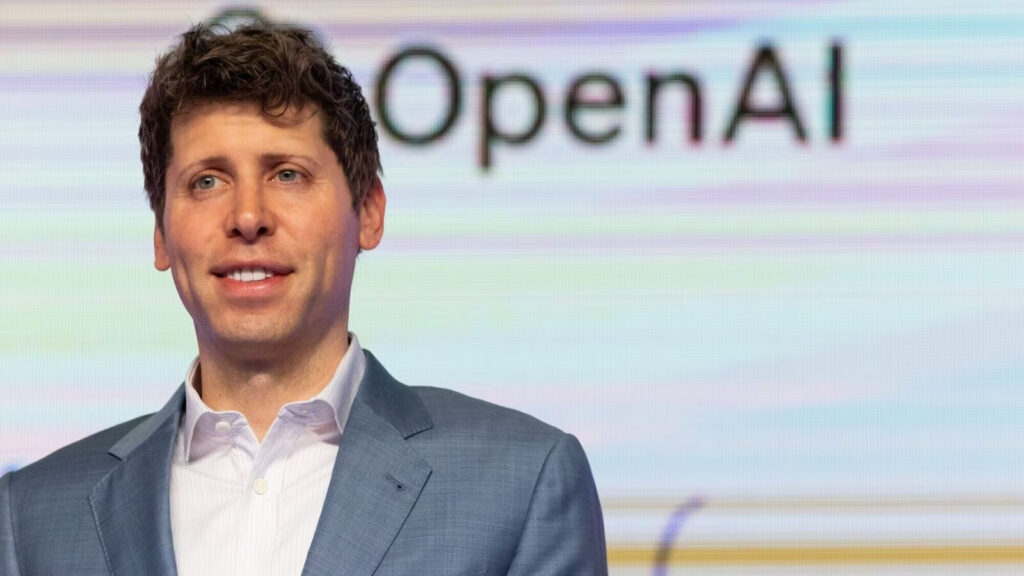
OpenAI is not yet open to investment. Sam Altman, the firm’s co-founder, claims he has no intention of using an initial public offering (IPO) to bring the business to the public stock market.

OpenAI Reportedly Nears $1 Billion in Annual Sales

OpenAI Reportedly Nears $1 Billion in Annual Sales

In a remarkable turn of events, OpenAI is reportedly on the brink of achieving a groundbreaking milestone—reaching an annual revenue of $1 billion, driven primarily by the unprecedented demand for their AI solutions, particularly their flagship product, ChatGPT. 

OpenAI Reportedly Nears $1 Billion in Annual Sales
Image Source: watcher.guru

This significant surge in sales comes as no surprise, given the recent report showcasing the overwhelming interest from businesses seeking to harness the power of artificial intelligence. What’s truly astounding is that OpenAI’s trajectory towards the $1 billion mark has outpaced their own internal forecasts. An undisclosed source with knowledge of the matter, as reported by The Information, disclosed that the company’s rapid expansion into the enterprise market has propelled them towards this impressive target. The evidence is compelling, with a noticeable increase in questions about ChatGPT during first-half earnings calls in 2023. More than 100 business leaders spanning various industries, including online retail and fashion, have openly discussed the successful integration of ChatGPT into their operations.

This momentum received a significant boost when OpenAI unveiled its partnership with tech giant Microsoft earlier this year, accompanied by a substantial multi-billion-dollar investment. This strategic collaboration placed OpenAI’s valuation at a staggering $27 billion, showcasing the confidence the industry has in the company’s capabilities.

Addressing the burgeoning demand, OpenAI recently introduced ChatGPT Enterprise—an all-encompassing solution providing unlimited high-speed access to their premier GPT-4 model, along with an array of advanced features. This follows the triumphant launch of a pilot subscription plan for ChatGPT priced at a reasonable $20 per month, which rolled out in April.

In an official blog post, OpenAI highlighted that the introduction of ChatGPT Enterprise is a pivotal step towards tailoring an AI assistant to cater to a diverse range of tasks while prioritizing data security. Notably, a staggering 80% of Fortune 500 companies have already embraced ChatGPT solutions, a testament to the platform’s utility and effectiveness. The statistic was curated through official email IDs used for platform registration. Leading enterprises, including industry giants like Canva, Carlyle, and PwC, have swiftly adopted this enterprise-level service, utilizing ChatGPT to streamline communication, accelerate coding tasks, address intricate business inquiries, bolster creative endeavors, and more.

Also Read: WordPress Now Offers a 100-year Domain and Hosting Plan for $38K

Despite this meteoric growth, data from Similarweb, a reputable research firm, indicates a minor 10% dip in global traffic to ChatGPT. Moreover, several prominent media entities, including Amazon and The New York Times, have taken measures to curtail the activities of GPTBot, OpenAI’s web crawler integral to their model training process.

In summary, OpenAI’s journey toward $1 billion in annual sales is a testament to the power of AI solutions, with ChatGPT spearheading the company’s rapid ascent. As OpenAI continues to innovate and cater to evolving business needs, the future appears even more promising for this trailblazing AI enterprise.

WordPress Now Offers a 100-year Domain and Hosting Plan for $38K

WordPress Now Offers a 100-year Domain and Hosting Plan for $38K

In a move that’s shaking up the world of digital legacies, WordPress has just introduced an extraordinary 100-year domain and hosting plan, designed to ensure the preservation of online assets for generations to come. 

WordPress Now Offers a 100-year Domain and Hosting Plan for $38K
Image Source: wiki.tino.org

The renowned platform, synonymous with website creation and content management, unveiled this groundbreaking initiative as a means to safeguard individuals’ and families’ digital footprints well into the future.

The central concept behind the 100-year plan, as outlined in an official company blog post, revolves around preserving the stories, memories, and multimedia that constitute one’s digital heritage. Tailored to meet the needs of families, founders, and individuals alike, the plan offers a novel solution to secure and document online presence for a century.

“Your domain stands as your most invaluable digital possession. While conventional domains typically remain active for a decade, our trailblazing 100-Year Plan empowers you to protect your domain for an entire century,” said WordPress in their official statement.

In exchange for a one-time payment of $38,000, subscribers gain exclusive access to an array of cutting-edge features. WordPress takes security and continuity seriously, boasting multiple content backups across dispersed data centers, automatic submission to the Internet Archive for public sites, and an optional locked mode. Additionally, the platform extends its support to cover the entire transition process, whether it involves gifting a website to a newborn or ensuring a seamless ownership transfer.

The WordPress.com 100-Year Plan takes user experience up a notch with personalized, dedicated support. Furthermore, users enjoy the perks of unmetered bandwidth, top-tier speed, and unparalleled security, all bundled conveniently into a single package.

Standard domain registrations typically span around a decade, making this 100-year proposition a truly revolutionary leap. WordPress frames this plan as an “investment in tomorrow,” encouraging users to think beyond short-term online strategies and consider the long-lasting impact they can leave on the digital landscape.

Also Read: Instacart Reveals IPO Filing, Disclosing PepsiCo Investment, Profitability

This bold move not only caters to the needs of individuals who wish to preserve their personal narratives but also caters to founders who seek to chronicle their company’s journey through time. With technology’s rapid evolution, having a stable, adaptable online platform becomes increasingly crucial. The 100-Year Plan directly addresses this concern, offering a flexible and customizable online space that can seamlessly accommodate the ever-changing tech landscape.

In an era where digital legacy is becoming as significant as physical heirlooms, WordPress emerges as a pioneer, allowing users to make a lasting mark on the internet. As the world grows more connected, the 100-year domain and hosting plan stands as a testament to the platform’s commitment to embracing the future while preserving the past.