Your Tech Story

News

Apple

Apple iPhone 12 launch event revealed a lot of new and affordable tech

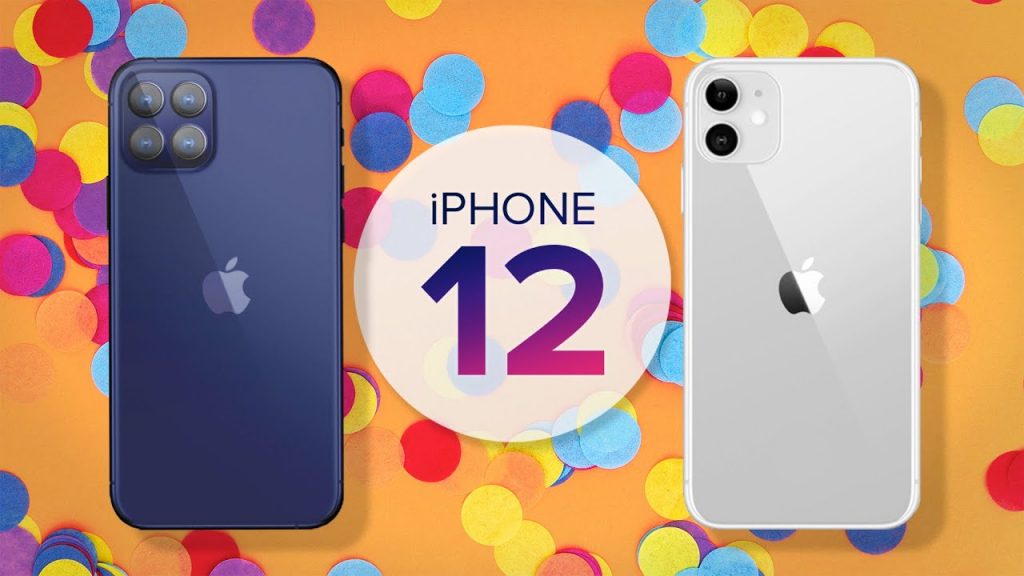
The Apple iPhone 12 launch event revealed a series of new gadgets especially the mini version of the existing smart devices. They are affordable and are equally efficient that gives the users an authentic iPhone experience. The iPhone 12 series along with the pro-line-up consists of 4 smartphones including iPhone 12, iPhone 12 Mini, iPhone Pro, and iPhone Pro Max. Apart from the launch of the iPhone 12 series, Apple also launched HomePod Mini, a smaller and affordable version of the HomePod. Also, this is for the first time in Apple, that the new smartphones will have 5G connectivity.

There are many modifications in the iPhone 12 series starting with larger screens, better camera systems, new A14 Bionic processors, etc. So, let us have a detailed look at the specifications of these devices and prices in India as well.

Specifications of Apple iPhone 12 series

Apart from the fact that the iPhone 12 series supports 5G connectivity it also supports mmWave 5G in the United States. iPhone 12 comes with an OLED display screen and Ceramic Shield glass technology making it more durable. All the smartphones will have iOS 14 along with the new A14 Bionic SoC. This new A14 is a six-core processor with a four-core GPU which will make these smartphones the fastest of all. The new camera system of the iPhone 12 consists of two wide-angle sensors of 12 megapixels each. The photography results are claimed to be better in low-light photography as compared to the smartphones of the previous series. The company has also enabled its night mode for the front camera and also for video recording. It is a brilliant choice for users to do videography, especially in low-light. The new MagSafe charging support of the iPhone provides a maximum of 15W of wireless charging. The company is also working towards releasing a charger that will allow the user to charge iPhone 12 and Apple watch using the same charger. Apple will not provide headphones and charging adaptor in the box this time.

Apple
Image Source: cnet.com

The iPhone 12 mini has the same design, camera quality, processor, Super Retina XDR-display, and connectivity as that of the iPhone 12. The main differences between these two products are different in price and size. The iPhone 12 Mini comes with a 5.4-inch display and a lot lighter in weight.

The size of the iPhone 12 Pro is 6.1 inch and that of the iPhone 12 Pro Max is 6.7 inches. Apple has incorporated its Deep Fusion machine learning technology in the cameras to make the overall picture and video quality better. iPhone 12 Pro has three triple rear cameras (two wide-angle, one telephoto) while the telephoto sensor of the iPhone 12 Pro Max is better with a 5x zoom range and 2.5x optical range. The Pro series also has the option of HDR video recording and Dolby Vision HDR.

The price range of the new iPhone 12 series

Starting with the cheapest and smallest of all, the price of the iPhone 12 Mini in the Indian market is approximately Rs 69,900 for 64GB, and that for iPhone 12 is Rs 79,900. Outside India, the price of the iPhone 12 Mini is $699 and that of the iPhone 12 is $799. In India, the price of iPhone 12 Pro is Rs 1,19,000 (starting price) for 128GB base variant and for the iPhone 12 Pro Max is Rs 1,29,000 (starting price). Outside the Indian market, the price range is $999 for iPhone 12 Pro and $1,099 for iPhone 12 Pro Max.

Features of the HomePod Mini

Apple incorporated the S5 processor in HomePod Mini. The company has invested more time to improve the audio quality of the device. The new HomePod mini has computational audio technology that can automatically optimize the sound for your room. Moreover, if you turn on two HomePod Mini in one room, they will sync automatically and play music like a stereo pair. The HomePod mini will go through a major upgrade when iPhone’s U1 ultra wideband chip will be able to establish a stable connection with HomePod Mini helping to send feedback and audio handoff. Siri is the most important part of HomePod Mini as it will also recognize the voice of your family members and will give you a summary of the day when asked for an update. The price of Apple HomePod Mini in India is Rs 9,900.

Digital Tax

All You Need to Know About OECD’s Digital Tax Reform

It looks like the tech giants will have to wait for another year to see how the impending digital tax reforms will take place. The world is witnessing a significant shift in the way it views Big Tech. With the EU planning on implementing a digital tax on such companies, most experts were looking forward to seeing how the reforms will take shape. However, the OECD released a statement saying that the new global tax will not come into force this year. Here’s a look at everything you need to know about the Digital Tax and its impact on tech giants.

A Year’s Wait Left for Digital Tax

The Paris-based OECD was to head a panel that would lead negotiations between countries to establish the Digital Tax. The organization would have been in touch with over 140 different nations to solve the taxation issue faced by Big Tech. The Digital Tax reform would for once standardize the taxation norms of companies such as Google and Facebook. However, the organization released a statement on Monday stating it would require an additional year to finalize the deal. Pascal Saint-Amans, who servers as OECD’s Head of Tax Policy, said that the glass was half-full. While the deal is nearly ready, it still requires political accord to push through and become a law, according to Pascal. He went on to say that the organization expects the deal to come out ‘sometime in 2021’.

Future in the Balance

Most experts were hoping the bill would attain resolution by the end of this year. The law is a move by the EU to ensure that large technology companies pay the fair share of tax as per their operations in the countries they function. Most EU officials believe that such companies are not paying the right amount, and that tax calculation should occur in the location of their activity, and not just their headquarters. This would extensively enlarge the sphere of taxation of such companies, as they are prevalent throughout the EU.

Digital Tax
Image Source: Pixabay.com

OECD for All

Throughout the whole discussion, the OECD has acted as a marshal demanding more accountability from the Big Tech. They are pushing for standardized tax rules and regimes on a global level due to the ever-reaching impact of such large tech firms. However, the various governments will have to agree to their proposals before they can become a law, and in turn, a reality. Angel Gurria, who serves as the head of the OECD, believes that lack of such a bill will lead to a trade war. However, the slow progress of such reform has led to several countries implementing changes of their own accord. The UK has been a vocal supporter of such a Digital Tax. However, the slow progress finally led to the country announcing its own Digital Services Tax at the beginning of the year.

Trump Wages War

Such a taxation reform led to complaints from the US, which called it an unfair levy that needed a trade probe before implementation. The Trump administration went as far as to threaten products from Europe with additional tariffs unless they withdraw the reform bill. The US believes that such laws deliberately and specifically and target American corporations. Trump also stated that the US was considering imposing further taxes on French wine sold in the States.  Since the US is the biggest market for French wine, making up almost 25% of total sales in 2018, this could turn into a massive trade war. However, President Macron’s office stated that it would stay firm in its stand, and would try to reach an amicable decision through bilateral talks.

Furthermore, the French Parliament passed a law that taxes digital companies if their French revenue goes over €25 million and if global income exceeds €750 million. While the law does not target companies of any nationality, it could have an impact on Big Tech firms, such as Facebook, Google, Amazon, and Apple. All these moves will help prevent such companies from avoiding stringent taxation by setting up headquarters in low-tax territories. Countries, such as Austria and Spain, have also vowed to implement Digital Tax laws, like Britain and France.

The OECD has been trying for two years to set up a global front to ensure all such companies may appropriate taxes. While the tax laws might take a year more to bear fruition, the result could have a massive impact on global economics. However, one this is for certain. Global opinion regarding the power yielded by big tech corporations is changing. While people never batted their eyelids regarding the growing influence of such companies, the tides seem to be shifting. Calls for better regulation regarding data privacy and data taxation might lead to the dawn of a new digital revolution.

Oxygen OS 11

Oxygen OS 11 rolling out for OnePlus 8 and 8 Pro Smartphone.

On 10th October 2020, OnePlus announced that the company will be rolling out Oxygen OS 11 for OnePlus 8 and OnePlus 8 Pro in India. The operating system Oxygen 11 is build based on stable Android 11 and this is for the first time the world is witnessing the fastest rollouts of Android 11 for a smartphone. With the launch of Oxygen OS 11 last week, and the scheduled launch of OnePlus 8T on 14th October, we can assume that OnePlus 8T will come with Oxygen OS 11.

In August of this year, the company launched the developer version of the OS followed by launching two open Betas for Oxygen OS 11 in September. Now, the stable version of the OS has been finally released which will also available for OnePlus 7T, OnePlus 7T Pro, OnePlus 7, OnePlus 7 Pro, OnePlus 6, OnePlus 6T, and OnePlus Nord in near future. The OS comes with many modified and new features and the company says that while installation the users must make sure the battery is a minimum of 30% in phone and storage of a minimum of 3GB is available.

Oxygen OS Features in the Beta 2 version

The Beta version of the Oxygen OS 11 was released in September and it came with a handful of new features. While releasing the Beta version of this OS, the company made many fixes for system optimization. Some of these fixes included repairing the black screen issue that the users face while clicking on the ‘Tips & Support’. Another major failure in the Beta one version of OS 11 is that it failed to activate Google Assistant in many situations which were fixed in this version. An ambient display feature was added to bring some chic style to your smartphone. This display feature was brand new and it is known as the ‘canvas’ feature which “can automatically draw a wireframe picture based on a lock screen photo on your phone”.

Before releasing the Open Beta 2, the HD icon was not centered on the call log and there were some issues with widgets not responding at times. They were all fixed in the new version. The company also fixed the system stability and optimized the power consumption for the latest 5G connectivity. Now, let’s have a look at the stable version of Oxygen OS 11 that rolled out last week.

Features of Oxygen OS 11

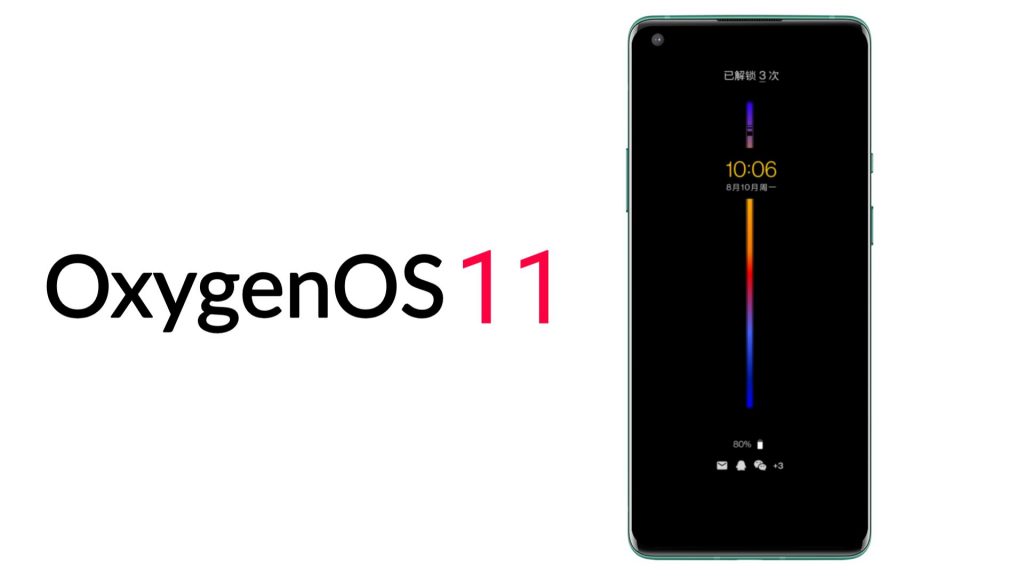
Oxygen OS 11
Image Source: gizchina.com
  • System Updates

Oxygen OS 11 comes with a brand new UI design so that the users get more comfortable using it. The company added a new weather UI that dynamically switches between sunrise and sunset. It has also improved efficiency and optimization for many third-party applications.

  • The Smart Display

A new feature, Always-on ambient Display has been added. All you have to do is go to Settings followed by Display and then turn on the Ambient Display. With the collaboration of Parsons School of Design, the new OS has added a new clock feature that changes according to the amount of data used. To enable this feature go to Settings followed by Customization and Clock Styles.

  • Modes for your different moods

With every application and OS eventually adding the dark mode, we are kind of getting addicted to it. So, the company has added a new shortcut to enable the dark mode in your phone. You can also enable the ‘turn on automatically’ feature that also helps in changing the mode from sunrise to sunset automatically. Apart from the dark mode, OnePlus also included 5 new themes under Zen mode. A group feature has been included in the Zen mode which allows you to invite friends and enable this mode together.

  • The Gaming arena

OnePlus has added three new ways of notification so that you have an uninterrupted gaming experience. The options are text-only, heads up, and block. Many new gaming tools have also been added for the Fnatic mode. A quick reply feature has also been added for Whatsapp and Instagram along with a mis-touch prevention feature.

Apart from all these new features, the gallery has also been optimized to create weekly videos automatically from saved pictures and videos. The image preview is also faster.

AMD

AMD Announces New Zen 3 Ryzen 5000 Processor Much to the Delight of Gamers

AMD has taken the gaming world by storm by recently announcing a new line of next-gen processors for CPUs. The series, named Ryzen 5000 Series will work on a Zen 3 architecture framework.  This new series might just give rise to the world’s best gaming CPUs as per reports by experts. The processors offer a whopping 26% increase with regards to gaming performance. They also promise a 16% improvement in instruction cycles, when compared to AMD’s flagship Ryzen 3000XT. Here’s a quick look at everything you need to know about the new release, and why it will have an impact on the way we game.

AMD, The Future of Gaming!

AMD
Image Source: wccftech.com

AMD states that the new series will offer better single-core and multi-core performance. Furthermore, the Ryzen 5000 Series will provide drop-in compatibility with currently used 500-series motherboards once they undergo a BIOS update. As of now, the company has announced four new CPU models, which are as follows;

  • Ryzen 5 5600X
  • Ryzen 7 5800X
  • Ryzen 9 5900X
  • Ryzen 9 5950X

Top-End Model

Out of these, the Ryzen 9 5950X will be a top-end model that features 32 threads and 16 cores. This processor can handle base and boost speeds up to 3.4GHz and 4.9GHz while also having 72MB worth of cache memory. However, due to its immensely high-end specs, owning this model will set gamers back by a whopping $799 (Rs. 58,760 without taxes). AMD claims that this model features the best single-threaded performance of any gaming processor, making this chip every gamer’s dream come true. Since it also has more cores, it offers better multi-core performance as well, when compared to other desktop CPUs.

Other Models

  1. The Ryzen 9 5900X has 24-threads and 12-cores and runs at speeds between 3.7GHz and 4.8GHz. It too offers 70MB worth of cache memory and will cost owners $549 (Rs. 40,370). 
  • The Ryzen 7 5800X works on an 8-core, 16-thread system and offers cache storage worth 3MB. The processor boasts of base and boost speeds in the range of 3.8GHz and 4.7GHz respectively. This model will go on sale for $449 (Rs. 33,020). 
  • Lastly, the Ryzen 5 5600X features 12 threads and six cores, offering base and boost speeds of 3.7GHz and 4.6GHz. It houses a total cache memory worth 35MB and costs $299 (Rs. 21,990). 

Other Details

While all three of the Ryzen 9, and 7 models feature 105W TDPs, they will have a stock cooler. In contrast, the Ryzen 5 5600X offers a 65W rating and comes with the company’s signature Wraith Stealth cooler. AMD has always bundled their high-end models with their coolers. However, since a majority of gamers like fixing up higher-end heatsinks with their CPUs, this move might help the company. Most gamers rely on an expensive external heatsink or liquid-cooled thermal solution to prevent overheating while playing. 

Introduction of New Architecture

The new Zen 3 architecture allows the implementation of a unified 8-core CCX design. Not only does this reduce latency due to its direct access to L3 cache, but it also improves branch prediction. Furthermore, it allows for broader floating-point and integer engines and doubles the L3 cache per each core. The company also boasts of almost 2.8 times better battery efficiency when compared to Intel’s Core i9. However, in keeping with tradition, these new CPUs do not have interspersed graphics capacities.

While presenting the new models, Mark Papermaster, who serves as AMD’s CTO reinstated that the Zen 3 architecture is a revelation. He also claimed it was the most significant change or overhaul for CPU architecture since 2017’s Z architecture implementation. Furthermore, he stated that a new Zen 4 model was in development and will use a 5-nanometer processor.

Hitting the Market

AMD decided to forego few numbers and jumped directly from the 3000 series to the 5000. Doing this will help the company unify or standardize its naming scheme with regards to its desktop and mobile lines. As a result, their processor names across all markets will reflect its architectural generation. AMD announced that all four CPUs would hit the market on November 5th. Furthermore, people who purchase the following models between October 20th and December 31st will receive a copy of Far Cry 6 (Standard);

  1. Ryzen 7 model
  2. Ryzen 9 model 
  3. Ryzen 9 3950X
  4. Ryzen 9 3900XT 
  5. Ryzen 7 3800XT 

The presentation ended with Dr. Lisa Su, AMD’s CEO showcasing a preview of the RX 6000 GPU, which launches on October 28th. The GPU runs on a Ryzen 5900X CPU and could handle 61fps in Borderlands 3 on the Badass preset at 4K. The CPUs look to be top-end, and gamers will have a field day once it releases judging by the excitement the news of the release has caused. Intel, not wanting to be left behind teased information regarding its 11th Gen CPUs a day before AMD released its details. Intel’s next-gen CPUs will mostly hit the market early on in 2021, making this an excellent time to be a gamer!

Qualcomm

Qualcomm is developing its gaming smartphone in partnership with Asus

Many companies have launched excellent gaming phones in the last few years. Some of the best gaming phones to date are launched by Apple, Asus, Samsung, Sony, Black Shark, Nubia, etc. But, now it seems the leading company in the sphere of telecommunication and wireless networks is also entering the realm of a gaming smartphone. So, sit tight as Qualcomm in collaboration with Asus is going to launch a gaming smartphone as early as the end of this year.

The source of this news is Digitimes, a Taiwanese tech outlet. Though we still don’t have a name yet, the outlet has also mentioned that these gaming phones will be Qualcomm-branded. Both the companies are planning on designing more than one gaming smartphone and at least one of them will run by the Snapdragon 875 processor. The details about both the system integration and the outlook design are quite vague till now. But, Qualcomm has announced an event on 1st December 2020 to introduce the Snapdragon 875 SoC. It is expected that the company might mention further details about these gaming smartphones at the event.

Qualcomm and Asus Work distribution 

Till now Qualcomm and Asus have only made the collaboration public but nothing about these smartphones. But, it is expected that Qualcomm-branded gaming phones will also bear the mark of the Republic of Gamers as the company is partnering with Asus. These gaming smartphones are also expected to run in the latest Snapdragon processor, have a better display, and a comparatively larger battery. The model might also have a shoulder button but all these are just predictions and nothing can be certain until 1st December. We also know that Qualcomm traditionally rolls out its new flagship product in December. So, there are high chances that these gaming gadgets will be in our hands by the Q1 of 2021.

In terms of which company will be looking after which field of product development, Asus is going with the hardware part thus responsible for both designing and developing while Qualcomm has the responsibility of industrial design and “software integration optimizing its Snapdragon 875 platform”. The Snapdragon 875 SoC is most likely to have an Ardeno series GPU. Now, the question is which one will be better, the upgraded Ardeno GPU or GeForce mobile GPU.

Qualcomm
Image Source: pocketnow.com

A joint partnership of Qualcomm and Asus

Not only the company is building the product together but also buying the components together as well. Sources have informed Digitimes that the agreements between Qualcomm and Asus also clearly mention the joint purchasing of components required for making these gaming smartphones (both Asus ROG gaming phones and Qualcomm gaming phones). The electronic devices that are mentioned in the agreement are screens, memory, camera modules, cooling solutions, and batteries.

Buying the components together is a very smart tactic to reduce the production cost and thus maximize the profit. Moreover, it is Asus that has created the entire series of ROG mobile gaming phones that have kept on impressing the users consistently. So, through the joint cost of purchasing Asus might have better bargaining power on this agreement later to boost its line of production. Also, we might find some analogous relationship between the core design of Qualcomm gaming smartphones and ROG as well as the later is monitoring the entire hardware development.

Production

After the joint partnership, both Qualcomm and Asus expect to produce a million units of the gaming smartphones annually. Out of the expected one million smartphones, half of the gaming phones will be launched from Asus as ROG gaming phones and the other half will be Qualcomm branded gaming smartphones. If you are planning to buy a gaming phone you might just want to wait for this one. Because with Asus’s designing which sells one of the best gaming smartphones and laptops, the technology of this new Qualcomm’s gaming phone is going to be exciting as well.

Apart from the upcoming Qualcomm’s smartphones designed for gaming, some of the best gaming phones of this year are Honor 9X Pro, Apple iPhone 11 Pro Max, OnePlus 8 Pro, etc. So, after the launch of this product, you can compare the phones and make the choice yourself.

Tech Giants

American Tech Giants Called Out for Their Monopoly Power

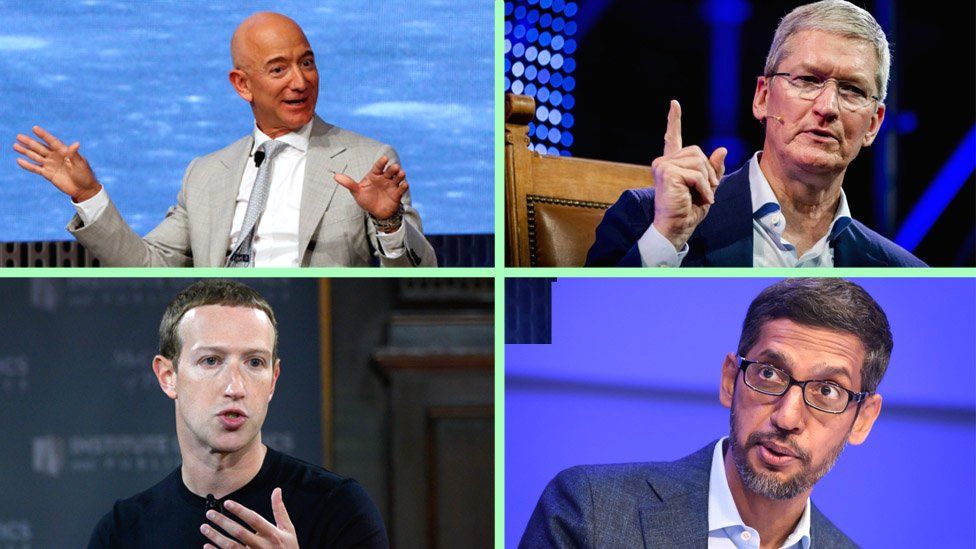
Around the world, we are witnessing governments coming down heavily on tech giants. Recently, the EU commanded social media giants to be warier about the flow of misinformation and fake news. Now the American government, which till now has been very lax seems to be doing the same. Yesterday, a group of Democratic lawyers pushed Congress to make such companies more accountable for the power they yield. Here’s a look at how the monopoly power of these companies, and how lawmakers are planning on changing it.

Tech Giants Ongoing Investigation

A list of recommendations and appeals came at the end of a 16-month investigation into such tech giants. Companies, such as Amazon, Google, Facebook, and Apple came under Congressional radar in the last few years. Since then, lawmakers have been asking for more accountability and the spreading of power. The lawmakers mentioned yesterday that such companies enjoyed too much power, resulting in numerous unfair practices. They also called for a reining in of such power to help level the playing field within the tech industry. However, as expected, the Republicans disagreed with this outlook, with Jim Jordan dismissing the report as partisan. He also claimed the report was radical, saying it was an attempt by the far left to refashion American anti-trust laws.

The monopoly power of Tech Giants

The size and power that tech companies yield has been a constant topic of debate in Washington in recent years. This ongoing investigation came up through the House Judiciary Committee to probe into the working of these firms. The final 449-page report the committee staff submitted accuses these companies of engaging in unfair means. For instance, they found that such large tech firms charge high fees and force smaller companies into unfavorable deals. Further acquisitions involve using killer acquisitions to finish off rivals and retain their monopoly. In effect, the underdog start-ups of yesteryears have grown into monopolies that resemble old-time oil barons and railroad and air tycoons.

Tech Giants
Image Source: news.yahoo.com

Changes Proposed

Some of the changes proposed by the Council are as follows;

  1. More vigorous enforcement of competition laws which already exist
  2. Limit the nature and area of business
  3. Prevent companies from playing in fields where they are a dominant infrastructure builder
  4. Shifting the burden of anti-competition to proof for acquisitions to make buying out competition more challenging
  5. Consider separating online platforms and other businesses
  6. Force the breakup of such Big Tech firms into smaller components
  7. Add nondiscrimination laws to prevent firms from prioritizing their products

As you can see, these changes will have a massive impact on the future functioning of Big Tech. While the report does not define the actual and exact legislation needed, it does give a direction for Congress to take things forward.

Replies by Big Tech

In the hearing in July, most of these significant players hit back at the allegations, calling them fringe notions. Amazon, on Tuesday, defended its actions through a blog post saying it never did anything that breaches present anti-trust laws. It also noted that the Amazon marketplace has been a successful venture for third-party sellers and that there were no unfair deals in the background. Facebook too defended its acquisition of WhatsApp and Instagram, saying it celebrated competition. It also mentioned that regulators went through all the laws and deals to ensure there was nothing illegal or corrupt behind it. 

Political Issue

The report many have said seems to be heavily Democratic. As a result, it faced severe criticism from the Republican party. For instance, the Republicans wanted a section on the anti-conservative bias of social media in the report. However, such a move did not go down well with the Democrats who blocked it, calling it an allegation and conspiracy theory. However, several Republicans do seem to agree on the fact that anti-trust laws need to be more fool-proof. For instance, Ken Buck supported a slew of recommendations, such as shifts in law that make it challenging to acquire competition. Most experts believe that there will be no legislative proposals until after the election. 

But one thing seems to be clear. Big Tech will undergo massive changes in policy and operations, following this election no matter who wins! Will this be the end of Big Tech? Let us know what you think in the comments below!