Your Tech Story

News

JioPages

Reliance Jio launches Made-in-India web browser, JioPages

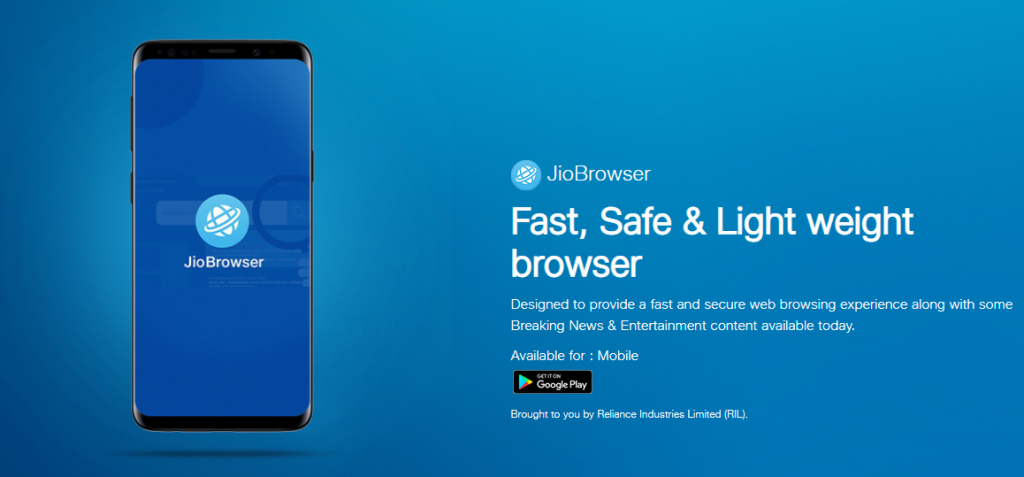
Reliance Jio has launched its web browser called JioPages which is specially made in and for India. JioPages uses the Chromium Blink engine which is indeed very powerful as it provides a very efficient search experience with faster engine migration. Jio while making a statement yesterday also said that this engine provides faster page loads, efficient media, streaming, encrypted connection, etc. The Chromium Blink engine was first launched in 2013 and it was created by the contributions from Google, IBM, Samsung, Facebook, Microsoft, and many other tech giants.

Since the new web browser is designed entirely in India, this is expected to attract a healthy number of users. With many other features of the JioPages, the company keeps privacy as its prime goal thus establishing an encrypted connection. The new JioPages web browser can be downloaded from the Play Store for Android users while the company didn’t mention any launch date about the iOS variant. Since the web browser is created for Indian users, JioPages will be available in eight different Indian languages, focusing more on localized news content creation, etc. So, let’s have a detailed look at the features of JioPages.

Features of JioPages

From personalized regional content to an advanced download manager, JioPages have started with a handful to give to its customers.

JioPages
Image Source: jio.com
  • Personalized content is a huge advantage for the users as they might only be interested to read content about the domain of their choice. So, JioPages let the users customize the content feed based on region, language, and topic. And, once you choose your interested fields you will receive notification exclusively for the content important to you.
  • A personalized home screen with a theme makes an intense appeal to the users as it gives them the liberty to choose for themselves. JioPages lets you choose any leading search engine as your default such as Google, Bing, Duck Duck Go, Yahoo, or MSN. There is also an option to pin websites which saves time as you may want to pin the most visited websites. Users are also given an option to choose from beautiful themes and not to mention the hyped dark mode.
  • JioPages is providing content in eight different Indian languages. The languages are Hindi, Marathi, Tamil, Bengali, Gujarati, Telugu, Malayalam, and Kannada. Apart from regional languages, you can also set content priority based on your geographic region. Once you do that, the top sites of your location will start appearing.
  • The Advanced Download Manager automatically separates the downloaded files based on image, video, documents, and others.
  • Incognito Mode is one of the best features of JioPages. By turning on the Incognito mode you can enable private browsing as the web browser’s surfing history will not be saved in the system. The Incognito Mode is made safer in JioPages as you can put a 4-digit code or fingerprint scan to enable the mode. 
  • Ad Blocker and Informative Cards also added in the features of the JioPages. While the former blocks the random ad pop-ups the latter captures the headline of a given topic and displays on the screen as a compact clickable option. 

The 5G connectivity

Before the launch of JioPages, the company has also entered the realm of connectivity by collaboration with Qualcomm. Emerging out as one of the biggest companies in the energy conglomerate, Reliance is now holding its roots firm in tech as well. India is the world’s second-largest mobile market in terms of users. So, by collaborating with Qualcomm, Reliance is bringing effective 5G solutions for the Indians. Radisys Corp. is working along with Qualcomm Technologies to roll out 5G network services in India at the earliest.

Reliance is also preparing the largest network connectivity, Jio for the fifth-generation wireless service with an in-house technology to provide for 400 million of its users. Ambani believes that this will keep his network away from political disputes thus leaving his rivals behind. Honestly, this is a very strategic move by the company as they don’t need to switch to a new system if the company develops its wireless technology. The company is always interested in selling this in-house tech to other carriers if it becomes successful.

Qualcomm

Reliance JIO and Qualcomm Join Forces to Bring 5G to India

India is all set to receive superfast internet soon enough. Making this dream a reality will be a partnership between India’s Reliance JIO and US-based Qualcomm. The two technology and communication giants are joining hands to build and develop 5G technologies in India. Reliance will be leveraging its subsidiary Radisys Corporation, which it wholly owns to help build the necessary 5G infrastructure. In this article, we will take a look at how this deal works out, and by when we can expect super-fast internet in India.

Jio and Qualcomm partners for the Better

Chipset manufacturer Qualcomm and Radisys Corporation will develop a virtualized RAN. Such a Radio Access Network will help boost the development of 5G architecture in India. With the help of this partnership, we can expect a faster roll-out for such services within the country. The companies also announced that they achieved speeds eclipsing 1 Gbps over their 5GNR network. Reliance Jio’s 5GNR software leverages Qualcomm’s RAN platform to obtain these high speeds. Furthermore, Qualcomm announced that this platform allows it to enter the Gigabit 5G NR portfolio.

Faster Internet for all

The usage of 5G will allow mobile phone users to receive higher data rates. Furthermore, 5G also offers lower latency communication and enhance the overall digital experience. The network supports a slew of devices, including AR and VR gaming products, smartphones, and laptops. The announcement which occurred on Tuesday will fast-track the much-awaited 5G roll-out in India. The indigenous network infrastructure for 5G will help in streamlining network services for millions in India. Also, the 5G RAN product has become a part of the Gigabit throughput clock. Furthermore, a Tier-1 American carrier has already tested and verified the product for its quality and high-speed performance. This move will also help India join the 5G club. Presently, only a few nations, including Australia, Germany, the US, South Korea, and Switzerland have produced 1 Gbps speeds over 5G.

Qualcomm
Image Source: qualcomm.com

What the Companies Had to Say

Mathew Oommen, who serves as the President of Jio Infocomm, stated that the company was looking forward to the partnership. While speaking at the Qualcomm 5G Summit, he noted that the development of new-gen 5G RAN will be a revolutionary technology. The cloud-native software will help both companies scale their operations tremendously. Qualcomm Technologies, while working with Jio Platforms, will help make India a genuinely 5G inclusive nation. It will provide a vital boost to local manufacturing and help accelerate the achievement of Atmanirbhar Bharat.

Meanwhile, VP of Qualcomm India Rajen Vagadia stated that they were delighted to take their partnership with Jio to the next level. Both companies have now been working together for quite some time now and enjoy a great relationship. By creating a shared 5G vision for India, the partnership will help in supporting India’s digital transformation. As per the needs of the day, India requires a better and more powerful mobile experience. Rajen noted that very soon more and more consumers will want 5G services, leading to a massive spike in demand. Such services will be of great help to healthcare, retail, and manufacturing industries. Since Jio is a game-changer when it comes to the delivery of cost-effective 4G services, this partnership will help both companies drastically. Jio already enjoys massive network coverage and a large user base, which will be ready to switch to 5G once the roll-out is complete.

Moving Forward

As you can see, the partnership between Qualcomm and Reliance Jio will help catalyze the adoption and implementation of 5G in India. The adoption of this technology will finally put an end to lousy streaming, never-ending buffering, and frequent voice cuts over calls. It will also give a push to the adoption of vertical IoT solutions and other smart devices across the nation. Such an indigenous network will prevent India from having to depend on Chinese systems for their infrastructure. Not only will this help reduce our dependence on them, but it will also help improve security on our national infrastructure. Also, earlier this year Qualcomm picked up a 0.15% stake in Jio for a whopping INR 730 crores. Hence, this venture may be the start of many more such partnerships between the communication-industry legends.

Micromax

Micromax to Make a Comeback With ‘In’ Phones before Diwali

There have been quite a few gadget launches in recent months with smartphone manufacturers trying to revive their sales. With the coronavirus closing stores around the world, the tech industry is trying to get back on its feet. With sales returning to pre-COVID levels, things have been looking up, and Indian users have even more news to celebrate. Micromax announced on Friday that it was making a comeback to the Indian market. Company CEO Rahul Sharma announced that the new series would launch in time for Diwali. Here’s a look at everything you need to know about the release and why it is crucial.

Homecoming for Micromax

According to CEO Rahul Sharma, the new line will offer customers a value-for-money product that assures competitive performance. The device will also enable an almost stock Android experience, with the company hoping to reclaim market share. The Indian smartphone manufacturer based in Gurugram last had a launch in October 2019. However, the last major smartphone launch hosted by the company took place in December 2018. Rahul Sharma teased the release of the new device through a short video wherein he highlighted the patriotic sentiments behind the phone.

Independence and Nationality

The company announced that the news of skirmishes at the border was the primary reason for launching the new devices. The phones will most likely hit the market before the start of the festival season, in time for Diwali purchases. The new series was in full-on R&D mode when the India-China border tussle was happening, and these issues propelled and accelerated the development. Those skirmishes have led to a vocal demand for more Indian-origin products, which will work in Micromax’s favor. While the Gurugram-based manufacturer imports components from foreign countries, it was one of the first ones to start assembly in India. Doing so helped reduce prices and also add a homely touch to their devices, which might help motivate more Indians to buy from them now. 

With many Indian consumers calling for a ban on Chinese products, such a nationalistic approach might do wonders for the company and its sales. However, experts believe that such a sentiment would not help the company revive itself as the smartphone market is highly competitive. Some of them went as far as to say that while such emotions were strong in July, they have faded by now. As a result, while it might give the brand a publicity boost, it might not help them boost sales as expected. So, we will have to see whether the nationalistic approach will help the company regain its market position. 

‘In’ to the Market

Micromax In Series
Image Source: centralviral.com

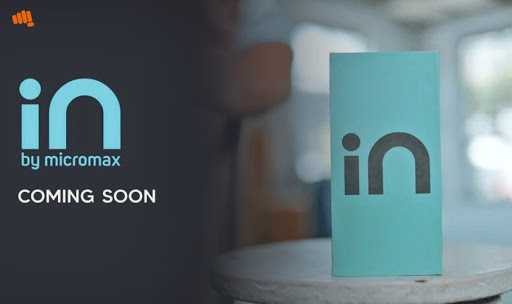
Micromax’s new series titled In will have a price range between INR 7000, and INR 25,000, making them fall in the semi-budget phone space. While Micromax initially gained popularity for its incredibly affordable phones, the company is looking to expand. They made it clear that the new lineup will not feature anything below the INR 7,000 mark. Sharma stated that since the sub-INR 5000 markets were shrinking in India, the company would not release such phones for now. Since people now prefer higher-performance products, the decision to stick to the said budget makes more sense. While the video introduced the Micromax In series, it contained no details regarding hardware or software specifications.

No more ads

Micromax has also addressed that the In series will offer a fantastic Android experience. Such a statement seems to be taking a shot at Chinese competitors within the space, such as Realme, Xiaomi, Huawei, and Vivo. All these companies often face criticism for adding bloatware to their devices, sometimes at the expense of fluid customer experience. Similarly, OnePlus faced flak for pre-installing Facebook onto their phones. While the company promised to avoid such an addition, the latest OnePlus 8T comes with an in-built Amazon integration. Rahul Sharma promised that Micromax would not take this route opting instead for a near-stock Android experience. He also said that the phones would not feature any bloatware, ads, or even attempt to download, store, and process users’ data.

Journey Ahead

Sharma is optimistic that Micromax can put up a tough fight against its Chinese counterparts. The market has changed since Micromax’s glory days, with Xiaomi having gained immense popularity in recent years. Also, rising consumer awareness has led to users demanding better refresh rates, fast charging, and updated features. However, Sharma believes that Micromax can still break through the ceiling and regain its popularity within the Indian market. While the company has missed Amazon’s and Flipkart’s festive sales, they will be launching in time for Diwali. Also, the choice to enter the INR 20,000 and higher market has puzzled experts. Both Samsung and OnePlus are strong competitors within this segment, has grown immensely in recent years. But many of them feel that the company’s brand value will help it attract pan-India customers.

Google

Google Trusted Contact Service is going to be discontinued from December 2020

On 16th October 2020, Google announced that it will be shutting down the company’s trusted contact service. Google’s trusted contact service was launched in 2016 to enable location sharing for friends, family, and emergency contacts. A service that was solely focused on location sharing so that you feel safe when you are outside or send your location so that your family can track you for your safety is now shutting down. The main reason behind the ceasing operations of Google’s trusted contact is the same functionality can be carried out by Google Maps nowadays. This service was available for both iOS and Android where the activity and device battery status of your trusted people were visible.

Google’s Trusted Contact Service will stop working on 1st December 2020. Till then you can still use the service on your smartphone to share the location. One disadvantage or at times advantage of using trusted contact service is that if someone requested your location and you didn’t respond, they will receive your location automatically. At the time of emergencies, when one is unable to respond this feature is a savior.

Google Trusted Contact Service

In December 2016, Google rolled out the app of trusted contacts to keep track of friends and family. With an increasing number of crimes outside our home especially against women, this was a thoughtful initiative taken by Google. Moreover, by installing and using this app the parents can also track the activity of their kids. If you are in danger, chances are you won’t be able to pick up a call leading to growing tension in your family. So, if they know your location it will be easier for them to reach you.

Using this app, you can create a list of trusted people who can request your location. The users will have to approve the list of people manually who can send the request for location. And, once a user sent a location request you will have five minutes to accept and request or deny it. If the person didn’t opt for any option then the location will be sent automatically to the requested person. If the network connectively is poor or completely cut off the other user will receive the person’s last updated location. There is also a feature of live tracking in the app. When the app was launched, it was made free.

Google

Sharing location in Google Maps

Now that after a month we won’t be able to use the trusted contact app of Google, we need to have a look at our alternate option. Google Maps is a very diverse app with new features getting added at quick intervals. If you don’t use Google Maps, it is better to get a hang of it as it is easy to use and gives you location privacy as well.

How to share your location with someone using Google Maps?

  • First, open the Google Map on your phone and sign in.
  • Tap on the profile picture icon followed by location sharing.
  • Click on New share to send your location to someone.
  • If the person is in your Google contacts you can easily find him or her.
  • Create a time limit you want to avail for location sharing and then select the contact and tap on Share.
  • If the person doesn’t have a Google account then you can simply copy the location link by tapping on Copy to Clipboard.
  • You can then send the link via any social media or phone messaging.
  • If you want to stop sharing the location then again open the app, go to location sharing, and click on Stop.

How to request someone’s location on Google Maps?

  • First, open Google Maps and click on the profile picture icon.
  • Go to location sharing and select the contact with whom you one to request location.
  • Tap on the Request option.
  • The person will receive a notification with your email address and that you requested the location.
  • Then the person can check your profile, accept the request, deny the request, or block your profile so that you cannot request anymore.

There are many other features on Google Maps that can come in handy. But, these two are the very basic and most important features you should know how to use.

Zoom

Zoom is finally rolling out its first phase of End-to-End Encryption offering

On 14th October 2020, Zoom announced that it will be rolling out End-to-End Encryption (E2EE) from next week. From the beginning of the pandemic this year till now, Zoom has experienced both high stiff success and failure simultaneously. In the first few months, the new users in the Zoom platform accelerated at a very high rate. But, after the security system of the Zoom has been compromised, people started withdrawing from the platform as their privacy was at risk. Soon after the Zoombombing, we heard that Zoom launched End-to-End Encryption which was nothing but a hoax. But this time Zoom is genuinely starting E2E for the participants using the platform.

Zoom, in one of its blog posts, said that they are excited to roll out the E2EE in the coming week as a technical preview. For the first 30 days, they will be soliciting feedback from the users both free and paid. Zoom is rolling out the feature across the world and the host can add a maximum of 200 participants in an E2EE meeting and enjoy a more private and secured meeting. This is Phase 1 of the E2EE offering. There are three more on its way. Eric S. Yuan, CEO of Zoom, said that the company is rolling out E2EE to make Zoom the most secure communication platform in the world.

More about the Zoom E2EE offering

In a Zoom meeting, the Zoom cloud generates encryption keys that are distributed among the participants attending the meeting via the Zoom app. But, with the E2EE offering of the platform, the host will generate the encryption keys which will be distributed among other participants using public-key cryptography (generated in the device of the individual participant). This way the encryption keys cannot be decrypted and the content will become less vulnerable to leakage. The E2EE offering provided by Phase 1 is the same as the end-to-end encryption provided by any messaging platform. Zoom is striving to roll out this offering since May as the reputation went down due to compromised security.

Who gets the accessibility? 

At first, the company decided to roll out this feature exclusively for paid users. But, after receiving plenty of criticism the company has decided to make it available for both paid and free users. In this case, the free users need to go through an extra verification process to make sure that the user is genuine and to reduce the chances of any abusive content. To create or join an E2EE meeting, the user might need to verify the phone number or provide any additional piece of information.

Zoom
Image Source: prosyscom.tech

How to enable E2EE?

To participate in an E2EE meeting, the user must enable the E2EE meeting at the account level. Under Encryption select “End-to-end encryption” and opt-in to the same on a per meeting basis. If you are hosting a meeting, you can enable the E2EE setting for account, group, and user-level and the same can be locked at account or group level. The participants can join an E2EE meeting via Zoom desktop client, mobile apps, or Zoom Rooms.

After you enter an E2EE meeting, you can look at the upper left corner where you will find a green shield logo with a padlock in the middle of it. This is the indication that your meeting is E2E encrypted. This is similar to the GCM encryption logo but here the checkmark has been replaced with the padlock. The security code of the host is also visible to the participants so that they can verify if all the participants can see the same code. Before rolling out Phase 2, this is the level of security Zoom will provide to each one of its users.

Accessing Features

Since this encryption is the first phase of the four, there are certain limitations. Some of the limitations are you won’t be able to join before host, you will not have access to cloud recording, no access to streaming, live transcription, Breakout Rooms, polling, private chats, and meeting reaction. Though you will have an option to enable E2EE, one must prioritize if accessing all these features is more important than an extra layer of security. The next phase of the E2EE offering is tentatively scheduled for 2021.

DJI

DJI Announces two new gimbals: Ronin S 2 and Ronin SC 2

Camera enthusiasts have been expecting good news regarding DJI’s new cameras for a while now. The company teased information back in September, promising some new products in October.  While enthusiasts have been waiting patiently for the drop, there were a lot of speculations regarding the new gimbals. Well, DJI has quelled all rumors by announcing the new models themselves. On Wednesday, DJI announced the release of two gimbals, named Ronin S2 and a smaller model named Ronin SC 2. Here’s a look at everything you need to know about the gimbals and their prices.

DJI New Gimbals

DJI New Gimbals
Image Source: theverge.com

Both the Ronin S 2 and the Ronin SC 2 are three-axis gimbals that have a variety of upgrades. For instance, both of them feature heavier payload capacities, improved motors, lighter materials, and software updates. Let us look at some of the hardware changes implemented on the RS 2.

Deeper Look at RS 2

The RS 2 is the more professional out of the two, being made out of carbon fiber. The usage of such a light-weight, yet strong material makes the RS 2 1.3 lbs lighter than the Ronin S. The RS 2 weighs only 2.8 lbs, and can support a payload of 10 lbs. While DJI claims the gimbal can hold hearing rigs, that might not showcase ideal performance due to the added weight. The device comes with a 1.4-inch touchscreen display situated above the joystick. The touchscreen displays the camera data, device settings and can transmit what the camera is recording as a live feed. However, the main purpose of the display is to enable active tracking without attaching smartphones to the top of the camera.

Further Updates

DJI is adding a unique Titan Stabilization Algorithm, which will help optimize the shooting style. This predictive technology will help cut down on the requirement for manual user input regarding acceleration, speed, and deadband settings. Another software enhancement the device features is the SuperSmooth capability. It helps smooth movements out when shooting lenses of focal length up to 100mm. Other changes that will help filmmakers include the movement of the focus wheel onto the front of the handle. This positioning makes it easy for users to interact with the wheel using their index finger. Furthermore, both models are compatible with both Arca Swiss and Manfrotto plates. The balancing knob allows users to fine-tune their axis, helping reduce set-up time between shots. 

Closer Look at the Ronin SC 2

The RSC 2 is a smaller model built for mirrorless cameras of smaller dimensions. The new design features a foldable design and several software updates. The device weighs 2.65 lbs, considerably lighter than the RS 2 but more massive than its predecessor which weighed only 2.4 lbs. The introduction of improved motors allows it to carry a payload of weight 6.6 lbs. Furthermore, DJI says the gimbal is perfect for more powerful camera-lens combos, with an example being the Panasonic SH1 with a lens of focal length between 24 and 70mm. The foldable design allows users to hold the device in sling mode, making it easier to shoot closer to the ground. Furthermore, there is no i-inch screen above the handle, making low shots easier and more comfortable.

Extra Features

Both gimbals have built-in batteries that last for 12 hours and come with an upgraded quick charge function. This function enables users to charge the device for two hours’ worth of usage within fifteen minutes! Along with the usual modes such as panorama, vertical and time-lapse, DJI is adding a Time Tunnel mode. Time Tunnel essentially captures hyper lapses while doing a 30-degree camera roll.

Both the models go on sale today and will cost users $849 and $499 respectively. DJI is also releasing a Pro Combo package that includes a RavenEye Image Transmitter, phone holder, carrying case, and separate focus motor. The entire package will set filmmakers back by $999 for the RS 2 and $739 for the RSC 2. The images of both gimbals leaked online one day before their unveiling, through the Twitter account of user OsitaLV. The images seem to be from a DJI store in China, and the pictures quickly went viral on social media. With all this interest and buzz on social media, both these gimbals look like they will become hits with the film and photography fraternity!