Your Tech Story

News

former tesla director

Former Tesla Australia director pleads guilty to insider trading on lithium deal

A former Tesla director has admitted to insider trading after gaining over $30,000 from buying shares of a lithium business 12 days before the company announced a significant contract with Tesla.

former Tesla director
Image Source: thewest.com.au

A former executive of Tesla’s Australian unit admitted guilty to two occasions of insider trading based on a supply agreement Tesla signed with Piedmont Lithium in 2020. Kurt Schlosser purchased 86,748 shares of U.S.-based Piedmont in September 2020, according to the Australian Securities and Investments Commission (ASIC), after learning the specifics of the five-year spodumene concentrate supply agreement with the company.

The ASIC claimed that once the deal was publicly disclosed and the share price increased, Schlosser sold his Piedmont stocks for a profit of about $28,883. According to the watchdog, Schlosser also disclosed the information to a friend who was most likely to invest in the company.

Read More: Tesla Electric Vehicles To Soon Bring Zoom Video Conferencing Feature

Piedmont Lithium announced in September 2020 that it has signed a legally binding five-year contract to provide Tesla with a third of its anticipated 160,000 tonnes per year of spodumene concentrate production, a hard rock ore commodity used to make battery-grade lithium compounds. The company’s share price increased six times following the deal.

The company intended to supply the concentrate for Tesla between July 2022-July 2023 However, due to delays in the approval procedure for its mine facility in North Carolina, it had to postpone delivery to Tesla indefinitely last year. The agreement was primarily seen as a way to reduce volatility in the commodity, whose value had been declining since 2019.

Many automakers directly signed such deals with mining companies. The support of a major automaker like Tesla can assist early-stage mining companies like Piedmont to get funding from lenders and enhance their financial position.

Former Tesla Director has not yet received a punishment and will show up in court on December 16 in Sydney District Court. The maximum punishment for insider trading, according to ASIC, is 15 years behind bars.

Piedmont Lithium has dual listings in the US and Australia. The company changed its principal listing to New York, USA last year and relocated its headquarters from Australia to the USA.

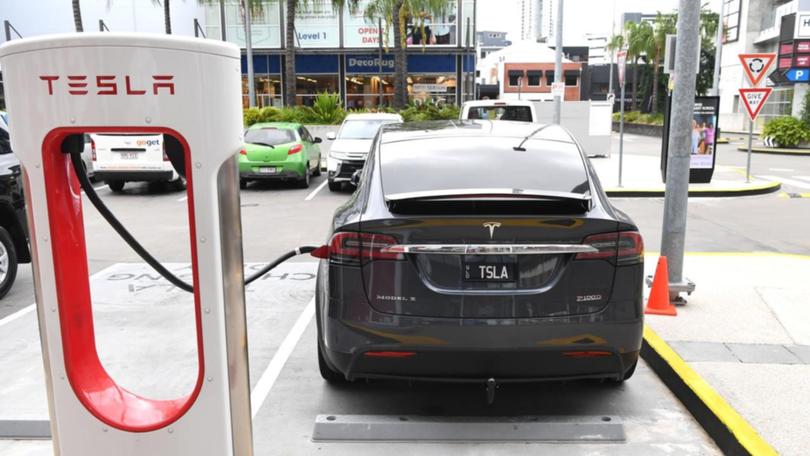
Recently, a power steering issue in the Model X and Model S vehicles sold between 2017-2020 led to the recall of over 1000 Tesla vehicles in Australia. On Wednesday, the Department of Transport released the advisory, warning that the issue might raise the possibility of collisions that cause “serious injury or death to vehicle occupants and other road users.”

The most recent Australian Tesla recall was issued for 1012 Tesla vehicles due to a possibility that their Electronic Power Assist Steering system could lose power and demand “a greater steering effort from the driver,”, especially at low speeds. There have been two Tesla recalls in Australia in the past two weeks. In the prior recall, 326 Model 3 cars had a seatbelt problem.

Recently, U.S. Senator Ed Markey reportedly warned Elon Musk to fix his companies “or Congress will,” while the U.S. Federal Trade Commission said it was closely monitoring recent events at Twitter “with deep worry.”

contract workers

Elon Musk fires thousands of contract workers without notice

According to reports, Twitter has terminated thousands of contract workers as Elon Musk appears to be taking strong steps to revive the once-dominant social media platform. Platformer estimates that employment cuts have affected over 4400 out of 5500 contract workers.

contract workers
Image Source: pynr.in

The widespread firings, which affect both US-based and international staff working in real estate, marketing, content moderation, engineering, and other departments, were first reported on by Platformer on Saturday night.

According to Platformer’s Casey Newton, Twitter fired a sizable number of contract workers on Saturday, impacting anywhere between 4,400 and 5,500 individuals. Most contract workers didn’t get any notice that they were fired and only learned of their dismissal after being denied access to the company email and inner communications systems.

According to CNBC, the fired employees didn’t discover they had been fired until they lost access to Slack as well as other work networks over the weekend. Twitter states that the job losses are a result of a “reprioritization and savings exercise” in an internal message sent to contract employees that Business Insider was able to obtain.

Read More: Twitter To Let Users Post Long-Form Tweets and help creators monetize

Platformer’s Casey Newton noted, “Contractors aren’t being notified at all, they’re just losing access to Slack and email. Managers figured it out when their workers just disappeared from the system.”

A bunch of Twitter officials have either resigned or been dismissed since Musk took over, and more employees will probably be let go due to the company’s new in-person work requirement. Elon Musk sacked Twitter’s CEO Parag Agrawal, CFO Ned Segal, and head of legal policy, trust, and safety Vijaya Gadde as soon as he took control of the platform.

Since that time, a number of high-profile employees have left Twitter. Only “exceptional people” are permitted to work remotely, according to a Q&A session between Elon and Twitter employees.  Musk remarked, “Basically if you can show up in an office and you do not show up at the office, resignation accepted.” The company’s communications division is no longer in operation.

Since taking over the Twitter business in the final week of October, Musk has been seeking to overhaul the entire system by firing top executives, cutting manpower by 50%, charging users for the “verified” tick, and other measures. The Tesla CEO has received harsh criticism for his handling of the crisis and for firing some employees without notifying them in advance. Twitter even barred access to its headquarters and instructed staff to wait in their homes for company communications.

Silicon Valley is reeling from a slump across the entire sector. Meta, the parent company of Facebook, just announced widespread layoffs, eliminating 11,000 positions, or around 13% of the workforce. The company overhired during the pandemic, but eventually realized the hyper boom isn’t sustainable, according to Meta CEO Mark Zuckerberg, who called the layoffs “some of the most difficult changes we’ve made in Meta’s history.”

In addition to Twitter and Meta, major tech giants like Apple, Amazon, and Alphabet have announced they will halt hiring or make job cuts due to inflation and recessionary fears. The companies are allegedly operating in a more risky environment, which is causing them to spend less on business expansion.

Android location tracking lawsuit

Google to pay $391M to settle Android location tracking lawsuit

Google has consented to pay 391.5 million USD to settle an android location tracking lawsuit filed by an alliance of 40 U.S. attorneys general.

android location tracking lawsuit
Image Source: sfexaminer.com

“For years Google has prioritized profit over their users’ privacy,” said Attorney General Rosenblum. “They have been crafty and deceptive. Consumers thought they had turned off their location tracking features on Google, but the company continued to secretly record their movements and use that information for advertisers,” he said in a statement late on Monday.

Source: bleepingcomputer.com

According to the android location tracking lawsuit settlement, the United States Attorneys General found while investigating a 2018 Associated Press article that Google swindled Android users and monitored their locations ever since least 2014, even when they assumed location tracking was not active.

While Android users were deceived into believing that disabling “Location History” in the smartphone’s settings would deactivate location tracking, this other account setting, “Web & App Activity,” which has been enabled by default, allowed the company to collect, store, and utilize the customers’ personal information i.e. location data.

The agreement reached today also requires Google to implement extra user-friendly account control mechanisms and restricts the firm’s use and storage of certain types of location data.

Read More: Google One VPN Service Now Available on Windows and Mac

Google will also be required to be transparent with its users about its location data tracking and collection practises, such as displaying extra details when location-related account settings are toggled and displaying detailed information about what data it harvests and how it is used.

“The company’s online reach enables it to target consumers without the consumer’s knowledge or permission,” Michigan Attorney General Dana Nessel said on Monday.

“However, the transparency requirements of this settlement will ensure that Google not only makes users aware of how their location data is being used, but also how to change their account settings if they wish to disable location-related account settings, delete the data collected and set data retention limits.”

Source: bleepingcomputer.com

The Australian Competition and Consumer Commission fined Google 60 million USD in August for deceiving and obtaining location data from Australian Android users for approximately two years which was between January 2017 to December 2018, using the same strategy.

According to the ACCC, Google has taken corrective measures to address the problems that resulted in these financial penalties by 20 December 2018, with customers no longer being shown inaccurate information implying that resetting location history stops gathering data regarding their location.

In January 2022, France’s National Commission on Informatics and Liberty charged Google $170 million for infringing on internet users’ freedom of consent by making it difficult to reject website tracking the cookies by hiding that option under multiple clicks.

The firm was also charged 11.3 million USD in November 2021 for aggressive data collection, €220 million in June 2021 for choosing its services over competitors, 1.7 billion USD in March 2019 for anti-competitive practices in online advertising and $2.72 billion in June 2017 for misusing its high position in the market to manipulate search results.

Nest Wi-Fi Pro

Google to release Nest Wi-Fi Pro update next week to fix slow internet speed

Google will launch a software upgrade for the brand-new Nest Wi-fi Pro close to the start of the next week to resolve some users’ slow Internet speeds.

Nest Wi-fi Pro
Image Source: thegoandroid.com

Google unveiled its newest IoT products, such as the Nest Wifi Pro, on October 4. The model looks hardly anything like most Wi-Fi routers and costs 200 USD, but it may be valuable for those who are committed to the Nest ecosystem and want a mesh networking setup. Why? The model includes Wi-Fi 6E, which expands on 802.11ax connectivity to provide customers with access to the 6 GHz band. As a matter of fact, the device is evidently future-proof and performs better.

Sanjay Noronha, Google Nest Wifi’s product lead said that “the company is currently investigating reports of a small number of users experiencing reduced Internet speeds on Nest Wifi Pro routers, and that its teams are working to roll out a fix,” as reported by The Verge.

Source: business-standard.com

Considering the combo of performance assurances and high price tag, it is not surprising that some customers were dissatisfied when they discovered a bug that in some cases, was restricting the Nest Wifi Pro to speeds of only around 50 Mbps.

Read More: Apple Restricts iPhone AirDrop With Everyone to Just 10 Minutes in China

It is noticeably slower than what one might anticipate out of a Wi-Fi 6E device which in actuality, for so many customers, may have signified a dramatic drop compared to the hardware they were using before purchasing Google’s. Luckily, it appears that the firm has heard the complaints and is hard at work on a bug fix.

Not every Nest Wifi Pro owner has reported slow internet speed issues. Google told The Verge that this issue affected only a small percentage of its users. The spokesperson said that Google is working on a bug fix for the issue and that it will begin the launch to consumers close to the start of the next week that means Monday is unclear, but it appears to be only a matter of days away.

According to the statement provided to The Verge, it appears that users in the United Kingdom were more likely to be affected by this glitch than consumers in the United States. That reason for the bug might well be connected to point-to-point protocol over ethernet (PPPoE). It is generally used by DSL service providers in the United Kingdom and DSL is still accessible in many other places, and those users may also be affected.

Google did not go into detail about why these slow speed issues are occurring, allowing the reader to presume what they can, from the information given. In the meantime, if you’ve a non-Pro Google Nest Wi-fi mesh network router and are undergoing slow speeds, the firm has an assistance document outlining possible solutions.

ftx

Coinbase to lay off more employees amid FTX saga

Leading cryptocurrency exchange Coinbase will shortly announce more layoffs as the industry faces yet another existential threat following the FTX collapse.

ftx
Image Source: bizzbuzz.news

According to recent reports, the present crisis in the cryptocurrency market led Coinbase, one of the biggest crypto platforms, to lay off 60 of its employees. Alesia Haas, CFO, referred to the modifications as “surgical” measures meant to save costs amid trying times.

According to The Information, Coinbase is expected to lay off about 60 employees from its recruitment and institutional induction teams. The layoffs were communicated internally. The layoffs will occur at a time when the cryptocurrency market as a whole is in disarray as a result of the ongoing FTX controversy, which has spooked investors and further depressed cryptocurrency valuations.

Though they are not nearly as astounding as Meta’s decision to lay off over 11,000 employees recently, Coinbase’s most recent series of layoffs is an indication that the crypto exchange may be attempting to cut expenses in the continuing bear market. Nevertheless, this development barely changes the picture of a week that has been filled with terrible news for the cryptocurrency industry.

According to reports, Coinbase had already attempted to minimize costs before the FTX issues as dropping cryptocurrency trading volumes were harming this year’s profitability. Due to the economic slump, the cryptocurrency exchange company stated in June that it will be cutting 1,100 employees or 18% of its workforce.

As the value of Bitcoin and other cryptocurrencies continues to fall, the crash of the FTX cryptocurrency exchange has now brought about yet another wave of threats to the whole crypto industry.

When bitcoin was trading last week at over $21,500 and the market cap was over $1 billion, the cryptocurrency winter, which is expected to linger for the majority of 2022, appeared to have eased its hold. Hopes that a new bull run is about to begin, however, were dashed by FTX’s collapse this week.

At one point, the value of the cryptocurrency market fell below $850 billion, with bitcoin falling to a two-year low of about $15,500.

According to statistics from Nomics, transaction volume on Coinbase fell by over 75% in the hours after FTX announced its bankruptcy early on Friday. This is an indication that the company is starting to feel the pain of crypto investors pulling out of the increasingly unpredictable cryptocurrency market.

The majority of Coinbase’s user base, which consists primarily of newer investors who don’t trade frequently, generates 90% of the exchange’s revenue from the sizeable transaction fees it charges. Because of this revenue model, the company must constantly add new users in order to maintain its user base. Onboarding new users, however, could be challenging given that FTX’s collapse has undermined investor sentiment in the digital asset sector.

The price of cryptocurrencies plummeted this year as a result of rising interest rates and growing concerns about an economic slowdown, wiping out important firms like Three Arrows Capital, Celsius Network, and Voyager Digital. But once FTX started to show early signs of trouble, digital assets took a heavier hit.

FTX, which has a history of saving failing crypto companies, is considering its options in light of a liquidity crisis and is currently under investigation by US regulators for its management of customer cash and its crypto-lending activities.

airdrop

Apple Restricts iPhone AirDrop With Everyone to Just 10 Minutes in China

Version 16.1.1 of Apple’s iOS has an unusual update in China that hasn’t been implemented in other countries. Apple has restricted AirDrop sharing for users in China to 10 minutes in the latest iOS update. In essence, this implies that Apple users in China cannot use AirDrop for an infinite period of time.

airdrop
Image Source: techgoing.com

Users can still share files without being constrained by the update, but the 10-minute time limit may put some people off using AirDrop services.

After demonstrators in China used the tool to distribute photographs critical of the Chinese government, Apple has imposed time limits on AirDrop sharing across iPhones.

For users in China, the “Everyone” button in Airdrop is currently restricted to a ten-minute duration. AirDrop’s device-to-device sharing will revert to “Contacts Only” once the ten minutes have elapsed, making it more difficult to systematically send content to random strangers. Just a few weeks after it was utilized to disseminate posters critical of President Xi Jinping, Apple has implemented these additional time limitations to AirDrop.

AirDrop is one of the few unrestricted communication channels in China. Although Apple hasn’t explicitly said this is the motive for the move, the corporation has previously customized its products specifically for the Chinese market.

Read More: Google One VPN Service Now Available on Windows and Mac

According to Bloomberg, AirDrop has frequently been utilized as a fix to circumvent China’s stringent online censorship. That doesn’t mean, though, that AirDrop is a haven for free speech since the tool has also been abused to ground aircraft with fictitious terrorist threats, send nude photos to random people, and, send nude pictures to ground aircraft.

Apple has already come under fire for making adjustments intended to please the Chinese government, including banning VPN apps and concealing the Taiwan flag emoji for customers in Hong Kong and Macau.

Users of Apple devices, like iPhones and iPads, can wirelessly transfer files to other device owners using AirDrop. Peer-to-peer Wi-Fi and Bluetooth Low Energy are both used for transfers. Users must explicitly modify AirDrop’s default option of “Contacts Only” in order to get files from “Everyone.”

It’s common for Apple to implement regional limits in order to follow local laws. For instance, the company has not enabled satellite connectivity on the iPhone 14 in India. Due to requirements for hearing protection, users cannot surpass the EU Volume Level in EU member states, for instance.

Apple has a history of enforcing stricter regulations in China for content-related services, like games and podcasts, an area that the national government heavily regulates.

According to Techcrunch, some Weibo users in China believe Apple should impose a 10-minute time limit on all devices worldwide because many people forget to switch off AirDrop. Users who keep it enabled to run the risk of receiving unwanted media files. It is still unknown whether Chinese Android rivals Xiaomi, Huawei, and Oppo would likewise restrict their own sharing services akin to AirDrop in response to government pressure.

Apple has maintained its supremacy in China despite the growth of regional rivals like Oppo and Huawei, especially among more wealthy groups. According to Counterpoint’s analysis, iPhones made up 13% of smartphone shipments in China in the second quarter, falling from 18% and 22% in the first and fourth quarters, respectively.