Yashica is a Software Engineer turned Content Writer, who loves to write on social causes and expertise in writing technical stuff. She loves to watch movies and explore new places. She believes that you need to live once before you die. So experimenting with her life and career choices, she is trying to live her life to the fullest.
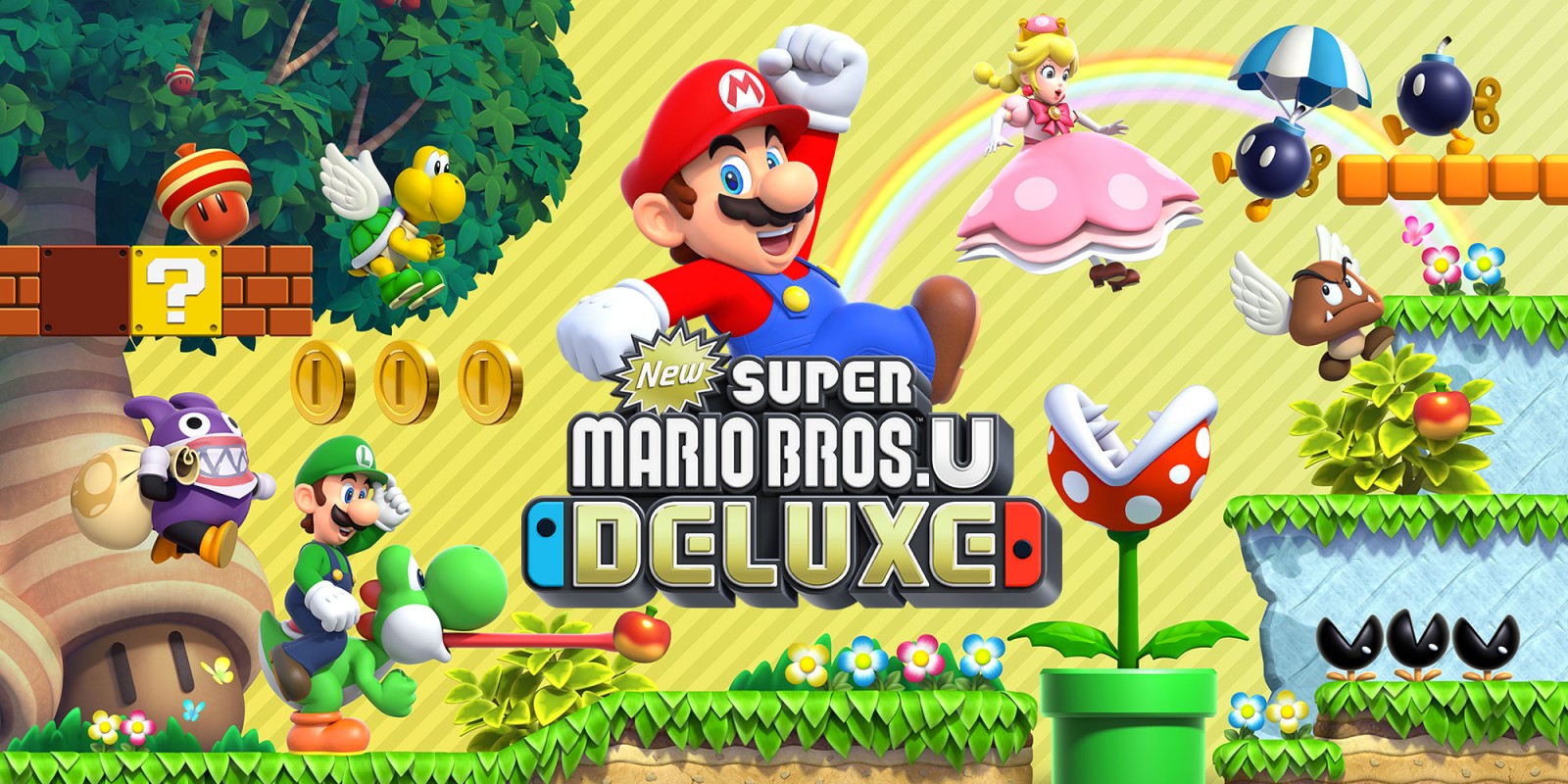
Nintendo is still prepping for the new Super Mario Bros. U Deluxe launch, which is set to be in January 2019, and besides, it made the pre-load of the game already available on the Nintendo Switch eShop for the Switch console. The company has also revealed a bit of information regarding the game, that is enough to make the Mario lovers be more excited about it.
The new Super Mario Bros. U Deluxe is very much similar to the Wii U game that was released back in 2012 but with few enhancements. With the updated graphics the game, this time, will include the New Super Luigi U, raising the difficulty level for the gamers.
For the gamers in the United Kingdom, the game is full price at £49.99, same as the Wii U port game Mario Kart 8 Deluxe, and for the U.S. players, the full price is set at $59.99. The gamers need to have a 2.5 GB space on their Switch console to run this new game, just around 100MB more than New Super Mario Bros. U and New Super Luigi U combined, on Wii U.
The game will be released in languages including Japanese, English, Spanish, French, German, Italian, Dutch, Portuguese, Russian, Korean, and Chinese languages. For the online subscribers, the game will also have the cloud save data support and can be played in all TV, handheld, and tabletop modes.
For encouraging the pre-order of the game digitally, Nintendo has offered double Gold Coins on the early purchases. Usually, the offer includes a 5% of the price back in Gold Coins, but this time the buyers will get 10%; providing the buyers with an acceptable reason to get the game early.
Yashica is a Software Engineer turned Content Writer, who loves to write on social causes and expertise in writing technical stuff. She loves to watch movies and explore new places. She believes that you need to live once before you die. So experimenting with her life and career choices, she is trying to live her life to the fullest.
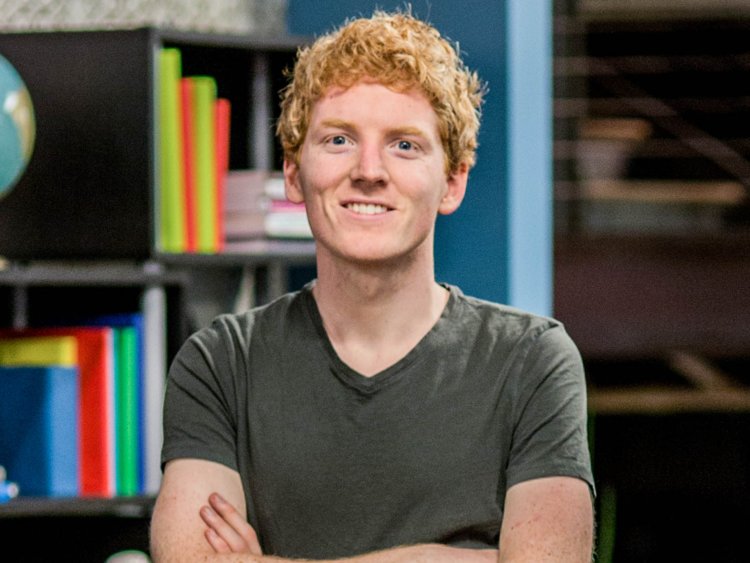
Learning has nothing to do with the age, whether you are 8 or 80, if you are learning some good stuff, it is going to pay you off in some unusual way. Like Patrick Collision’s interest in computer programming, that he grew at a tender age, led him to become the youngest self-made billionaire. He established one of the leading software companies, at an age when most of the people are still in high school or attending the college.
Early Life
Patrick Collison was born on 9 September 1988, to Lily and Denis Collison, in Dromineer, County Tipperary. He is the eldest of his two brothers John Collison and Tommy Collison. He was just eight when he started learning computers at the University of Limerick. His interest in computers, later, led him to study programming languages at the age of ten.
Image Source: businessinsider.com
At the age of fifteen, Collison took part in the 40th Young Scientist and Technology Exhibition, where he won the runner-up’s trophy for his project on artificial intelligence named after his idol Issac Newton. The very next year, on 14 January 2005, he again participated in the same competition and won the first prize, for a project on a LISP-type programming language. He was awarded a €3,000 cheque and a trophy of Waterford Crystal presented by President Mary McAleese.
Collison completed his high school education from Gaelscoil Aonach Urmhumhan, Tipperary, Ireland. Later, he joined the Castletroy College in Castletroy, County Limerick.
Career
After graduating from Castletroy College, Collison entered the Massachusetts Institute of Technology, from where he soon dropped out to co-found a software company named ‘Shuppa’, with his younger brother John. As they could not raise funding for the company in Ireland, the two approached a few investors from the Silicon Valley and moved to California after Y Combinator showed interest in the start-up.
The two joined hands with other two Oxford graduates, Harjeet and Kulveer Taggar, and merged the company into Automatic.
In March 2008, at the age of 19, Collison sold the company to a Canadian company named Live Current Media, and both the brothers became millionaires overnight. In the month of May, in the same year, Collison accepted the position of director of engineering in the company’s Vancouver branch.
Founding Stripe
While in high school, Collison and his brother started building iOS apps. During this time Collision discovered that it is much easier to earn money through those apps, rather charge for things online and get the payment. This brought an idea of the development of a payment app into Collison’s mind, and after getting inspired by the working model of virtual hosting provider Slicehost, he built a prototype of his payment app.
In 2010, the Collison brothers built and released the first version of the app named as dev/payments, which later was renamed to Stripe. Initially, they tested the app with their friends and collected the feedback from them. Soon, people started talking about the app and Collison had a long waiting list for the app users. In the same year, the Stripe managed to receive a seed funding from Y Combinator. In the following year, it also received funding from venture capitalists Peter Thiel, Sequoia Capital, and Andreessen Horowitz, worth $2 million. Again in 2012, Stripe was funded with an $18 million Series A investment led by Sequoia Capital at a $100 million valuation.
Till September 2011, Stripe was running on an extensive beta. At the time the company became public and received a $20 million Series B investment.
Personal Life
Currently, Collison is working as the CEO of Stripe and lives in San Francisco, California. In November 2016, the Collison brothers became the world’s youngest self-made billionaires. The two were also featured on a young Irish person’s rich list aired on an RTÉ television in the Christmass edition 2008.
Yashica is a Software Engineer turned Content Writer, who loves to write on social causes and expertise in writing technical stuff. She loves to watch movies and explore new places. She believes that you need to live once before you die. So experimenting with her life and career choices, she is trying to live her life to the fullest.
Slack, the business chat and direct message provider company, has announced that it is going to become public in the coming year, and has hired investment bank Goldman Sachs as the lead underwriter for its highly anticipated IPO.
In September this year, there were already reports making rounds about the company preparing for its debut in the stock market in the early quarter of 2019, with an expected valuation of the company well in excess of the $7.1 billion.
Image Source: mybroadband.co
The company had reported a total of 8 million daily active users in August this year, that is double the number of users it had in the summer last year. In the same month, the company had a funding round of $427 million, led by Dragoneer Investment Group and General Atlantic. The company’s major investors include SoftBank Group’s Vision Fund, Dragoneer Investment Group, General Atlantic, T. Rowe Price Associates, Wellington Management, Baillie Gifford, and Sands Capital, etc.
Slack, which is based in San Francisco and Vancouver, is one of the Silicon Valley companies valued over $1 billion, which is now hoping to fetch a valuation of over $10 billion in its IPO. Slack is one of the business messaging service provider, that is in a competitive race with Microsoft’s Teams, Alphabet’s Google Hangouts Chat and Cisco’s Webex Teams and its users are increasing by a rapid rate.
Last month, Slack’s co-founder and CEO, Stewart Butterfield told Fortune, “The company had no specific timeline for an IPO. We’ve been on a path to public company readiness for several years now, and we’re continuing on that path.”
2018, had a total of 188 companies went public on the U.S. exchanges, more than the number of companies last year, including 40 tech companies like Dropbox, Zuora, Uber, Lyft, and DocuSign. Other companies that are also planning for their IPO include Airbnb, Lyft, Uber, Palantir and Stripe, etc. Among which, Lyft already filed paperwork with the Securities and Exchange Commission, on Thursday, for its planned IPO ahead of other companies.
Yashica is a Software Engineer turned Content Writer, who loves to write on social causes and expertise in writing technical stuff. She loves to watch movies and explore new places. She believes that you need to live once before you die. So experimenting with her life and career choices, she is trying to live her life to the fullest.
There might merely be a person, who has not heard of Mario. The magical mission game that engaged every single child with entertainment and amusement was not just famous among the children, but, was also the first choice of every teenager, and adult. It is also one of the best-selling video games in history.
Everybody is familiar with this amazing video game, but not every person would have heard of the name of the company that produced it. Nintendo is a name that started with the production of playing cards and ended up in becoming one of the biggest producers of video games in the world. Nintendo not only have Mario to its credits but have introduced multiple entertaining games and gaming consoles to the world.
Nintendo a Playing Card Company
Nintendo was founded by a Japanese entrepreneur, Fusajiro Yamauchi, as a playing card company in Kyoto, Japan, on 23 September 1889. At the time, the foreign card games were banned in Japan, and not from twenty or thirty years, but since 1633, almost 250 years. Many people had tried making different card games, but eventually, all of them were banned too.
Image Source: nintendolife.com
Meanwhile, a playing card game Hanafuda was developed. The game was played with handmade cards, which instead of numbers had illustrations on it. The game escaped the ban and became popular in no time. Nintendo started making good profits with the production of those cards, and Yamauchi had to employ assistants to lower down the workload.
In 1949, the company was renamed as Nintendo Karuta Co., Ltd., and started operating outside Japan, as The Nintendo Playing Card Co. By the time, Yamauchi’s grandson had also joined the company, and in 1956, he flew to the USA, to expand the business overseas. He found out that the playing card market in the USA had quite limited potential, so he decided to take advantage of this opportunity and got the license from Disney, to print Disney cartoon characters on the playing cards.
Till 1963, the company had experimented with various other businesses as well, including taxi service, a love hotel chain, a TV network, a food company, etc. At the same time, the playing card game was also facing a drop in its popularity.
In 1966, the company entered into the toy business and with the help of maintenance engineer of the company, Gunpei Yokoi, developed the Ultra Hand, an extendable toy arm. The company produced many other toys, but it was taking a little longer for Nintendo to establish itself as one of the leading toy maker company.
In 1973, the company started developing family entertainment venues with the Laser Clay Shooting System, in which the participants used a light gun for shooting. The idea was a hit, but the company had to shut it down soon, maintaining it was way too expensive.
Success in Video Games
In 1974, Nintendo managed to get the rights to distribute the commercial home video game console, Magnavox Odyssey, in Japan. By 1977, the company started the manufacturing of Color TV-Game home video game consoles. It also produced arcade games with EVR Race.
In 1981, with the release of Donkey Kong, Nintendo experienced real success. The next release from Nintendo was a handheld video game, that was also an immediate hit.
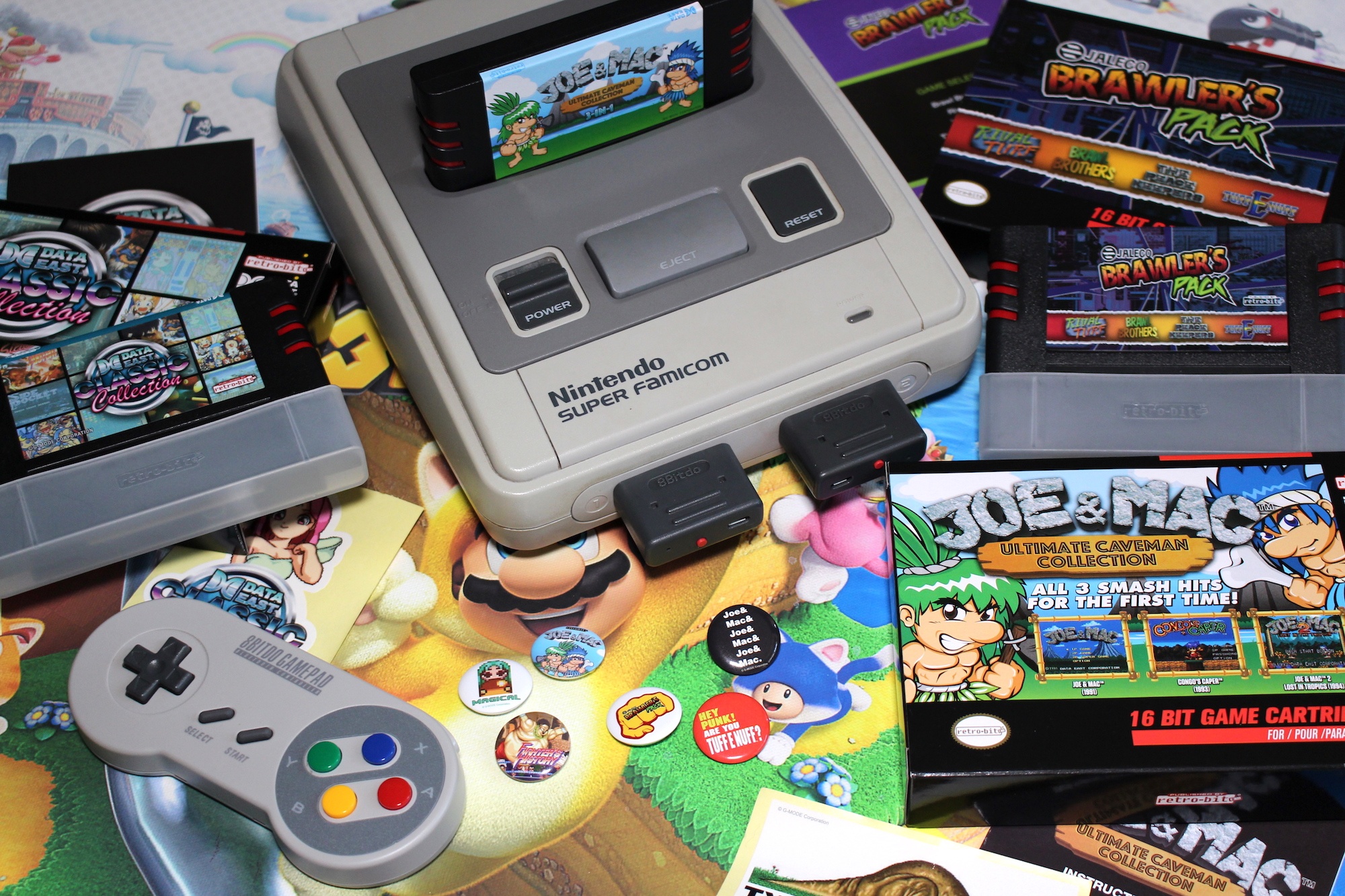
In 1985, Nintendo launched a platform video game named the Super Mario Bros., a successor to the 1983 arcade game, Mario Bros., for the Famicom, and in North America and Europe for the Nintendo Entertainment System. Along with Super Mario Bros., Nintendo holds the credit of many other famous games including NES, Game Boy, SNES, Nintendo 64, and Game Boy Advance SP.
In 1995, Nintendo announced that it had sold one billion game cartridges worldwide. At the same time, Nintendo bought 25% shares in another video game development company Rare and developed a CGI game through this partnership. The game was an instant success and became the second best-selling game in the SNES library.
Next big release from Nintendo was the Nintendo DS and Wii, between which, the Wii console became the best seller and was released in 2006. Among the handheld video games, the Nintendo DS Lite is the best-selling handheld console of all time.
Yashica is a Software Engineer turned Content Writer, who loves to write on social causes and expertise in writing technical stuff. She loves to watch movies and explore new places. She believes that you need to live once before you die. So experimenting with her life and career choices, she is trying to live her life to the fullest.
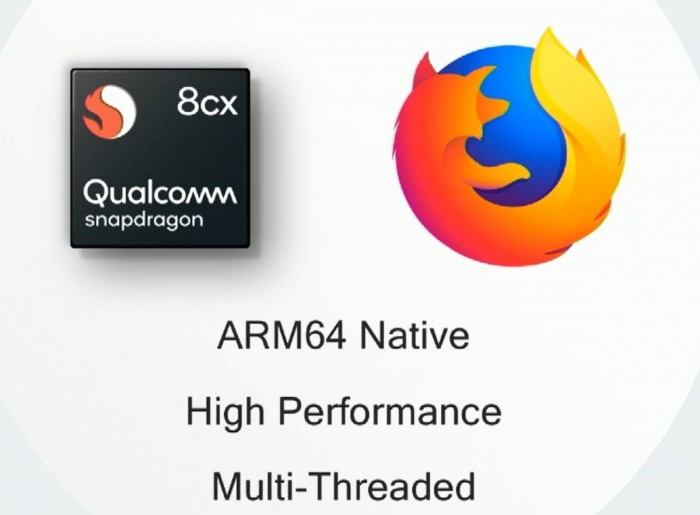
On Thursday, the two tech giants, Mozilla and Qualcomm, announced that the two are working together on a native version of Firefox for Windows 10. Mozilla stated that it is going to develop a new version of Mozilla Firefox, compatible with the Snapdragon-powered Windows computers on ARM. The browser will be a 64-bit version of Firefox that will provide high-performance and better connectivity.
Image Source: cnbeta.com
Usually, Microsoft uses a number of emulation techniques to run the Windows 10 application on ARM-based machines, among which, the native apps run faster than the other. Mozilla has kept that in mind and has specifically designed the Firefox run on an ARM machine. Firefox will use individual cores to run every tab, and Qualcomm will provide an adequate amount of it for those tabs.
Senior Director of Firefox Product at Mozilla, Marissa Morris, said, “Mozilla is excited to be collaborating with Qualcomm and optimizing Firefox. We can’t wait to see Firefox delivering blazing fast experiences for the always on, always connected, multi-core Snapdragon computer platform with Windows 10.”
On the other hand, Qualcomm also announced its brand-new processor, the Snapdragon 8cx. The ‘X’ in the 8cx stands for ‘extreme’. The processor is specially designed for the Windows’ always-connected laptops and 2-in-1 convertible Pcs. It is a 7nm chip, the biggest of all chips, Qualcomm has ever made for a laptop or a PC. The chip will provide better performance, better battery life as well as better cellular connectivity, i.e. up to 2Gbps. The chip is specifically developed for the Window Pcs and is the first one of its kind.
Microsoft had just made the announcement of completely shutting down the Edge browser. Now with the improved Mozilla Firefox, there will be only two competitors left in the field, Firefox and Safari. Although Microsoft is also working upon its chromium browser with Google, Mozilla’s new browser may arrive sooner.
Yashica is a Software Engineer turned Content Writer, who loves to write on social causes and expertise in writing technical stuff. She loves to watch movies and explore new places. She believes that you need to live once before you die. So experimenting with her life and career choices, she is trying to live her life to the fullest.
A few days ago, the news regarding the shutting down of Google Hangouts was circulating all over the internet, that later Google had denied completely. Now, again there is news that Google will soon shut down its two years old messaging app Allo.
Image source: arstechnica.net
Allo is a Google Assistant empowered app, that was launched as a competitor for Apple’s iMessage, Facebook Messenger, WhatsApp and other chat applications. The device is built for both Android and iOS devices, enabled with end-to-end encryption. Google had launched Allo two years ago, as its another messaging app experiment, that too failed.
The vice president of Chrome, Comms, and Photos (at Google), Anil Sabharwal, said in a statement, “Google noted that Allo as a whole has not achieved the level of traction we’d hoped for.”
The app was facing some problems with its functionalities, so in April month this year, Google stopped investing over Allo and put a pause on its development and marketing work. The company now is entirely focusing on the Android Messages instead, and the Allo team has also been implanted to work on the same.
On the other hand, Verizon has come with its new messaging app RCS (Rich Communication Services), a combination of the best features of Facebook Messenger, iMessage, and WhatsApp, as one platform. Verizon has initially launched the app on the Pixel 3 and Pixel 3 XL. The company is planning to replace the ages-old SMS (Short Message Service) by its new RCS app. Google has worked hard to get its own android chat, but it seems that now it is going to work with its competitor’s app, i.e. RCS.
And for Allo, it is already down for many users and will be discontinued by the March month next year.
Yashica is a Software Engineer turned Content Writer, who loves to write on social causes and expertise in writing technical stuff. She loves to watch movies and explore new places. She believes that you need to live once before you die. So experimenting with her life and career choices, she is trying to live her life to the fullest.