Your Tech Story

Yashica Vashishtha

Yashica is a Software Engineer turned Content Writer, who loves to write on social causes and expertise in writing technical stuff. She loves to watch movies and explore new places. She believes that you need to live once before you die. So experimenting with her life and career choices, she is trying to live her life to the fullest.

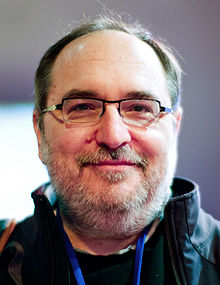
Leonard Bosack : Pioneer of the Commercialization of Routing Technology

The ousted co-founder of Cisco Systems, who is known for pioneering the widespread commercialization of local area network (LAN) technology, is an American computer scientist, who linked 5,000 computers across a 16-square-mile (41 km2) campus area, at the time when it even connecting the computers of two different buildings was an unheard thing.

Early Life

Bosack was born in 1952, in Pennsylvania. He completed his school education from La Salle College High School in 1969 and joined the Wharton School in the University of Pennsylvania to get a bachelor’s degree. After graduating, Bosack joined DEC as a hardware engineer. But, as he had applied in the Stanford University for higher education, he left his job, to join the university to pursue computer science, as soon he got accepted in the university.

Leonard Bosack
Image Source: therichestimages.com

In 1981, while studying at the Standford University, he was appointed as the support engineer for a project to connect all of Stanford’s mainframes, minis, LISP machines and Altos. At the university, he met his future wife and partner, Sandy Lerner. Lerner was working as the director of computer facilities for the Stanford University Graduate School of Business. The two started dating, and the couple got married in 1980.

Founding Cisco

While working as the support engineer for Standford University, Bosack, along with his wife, started experimenting on the same, secretly at his home using Stanford’s network. The two worked as partners and invented an Advanced Gateway Server; the revised version of the Stanford router built by William Yeager and Andy Bechtolsheim. To commercialise the router, they founded Cisco Systems and received the license for selling the router. The company was named on after the city San Francisco.

The router was able to effectively connect different hardware, like an Apple Macintosh, Unix workstation as well as an IBM mainframe, supporting multiple protocols. According to the legends, the Bosack and Lerner had invented the first such router to connect the computers of two different buildings of Stanford University, that used different networks, so that they could share emails through it.

For the first two years of the company, Bosack operated it from the garage of his house, and the medium of marketing was word of mouth. Despite, he was able to get contracts worth $200,000, only in the first month of starting the company. As the company was growing, Bosack appointed Greg Satz and Richard Troiano, for programming and for sales for the company, respectively.

In the year 1988, venture capitalist Don Valentine of Sequoia Capital invested $2 million in the start-up, and the company focused on the bigger commercial market. In 1990, the company went public, generating $70 million annual revenue. Sequoia Capital, having a share in the company, appointed John Morgridge as the new CEO of the company. The step was taken to increase the company growth. The joining of the new CEO also made Bosack and Lerner quit the company. At the time they left the company, they had two-thirds of the stakes in Cisco, which they sold for about $170 million dollars.

Personal Life

Bosack and Lerner got divorced in 1990. Currently, Bosack is retired and living in his home state of Pennsylvania. For his contribution to the field of computer science, he won the Computer Entrepreneur Award in 2009. For a long period of time, he held a significant position in the companies like AT&T Bell Labs and Digital Equipment Corporation. He also played a key role in the development of emerging network technology driven by the U.S. Department of Defense. He also gets the credits for creating new in-line fibre optic amplification systems, capable of obtaining unprecedented data transmission latency speeds of 6.071 milliseconds over 1231 kilometres of fibre.

Bosack along with his ex-wife Lerner, founded a charitable organisation, with the 70% of the money they received after selling their Cisco stocks. The foundation works towards animal welfare and finances various science projects.

Apple Unveils ‘Best of 2018’ iPhone And iPad Apps

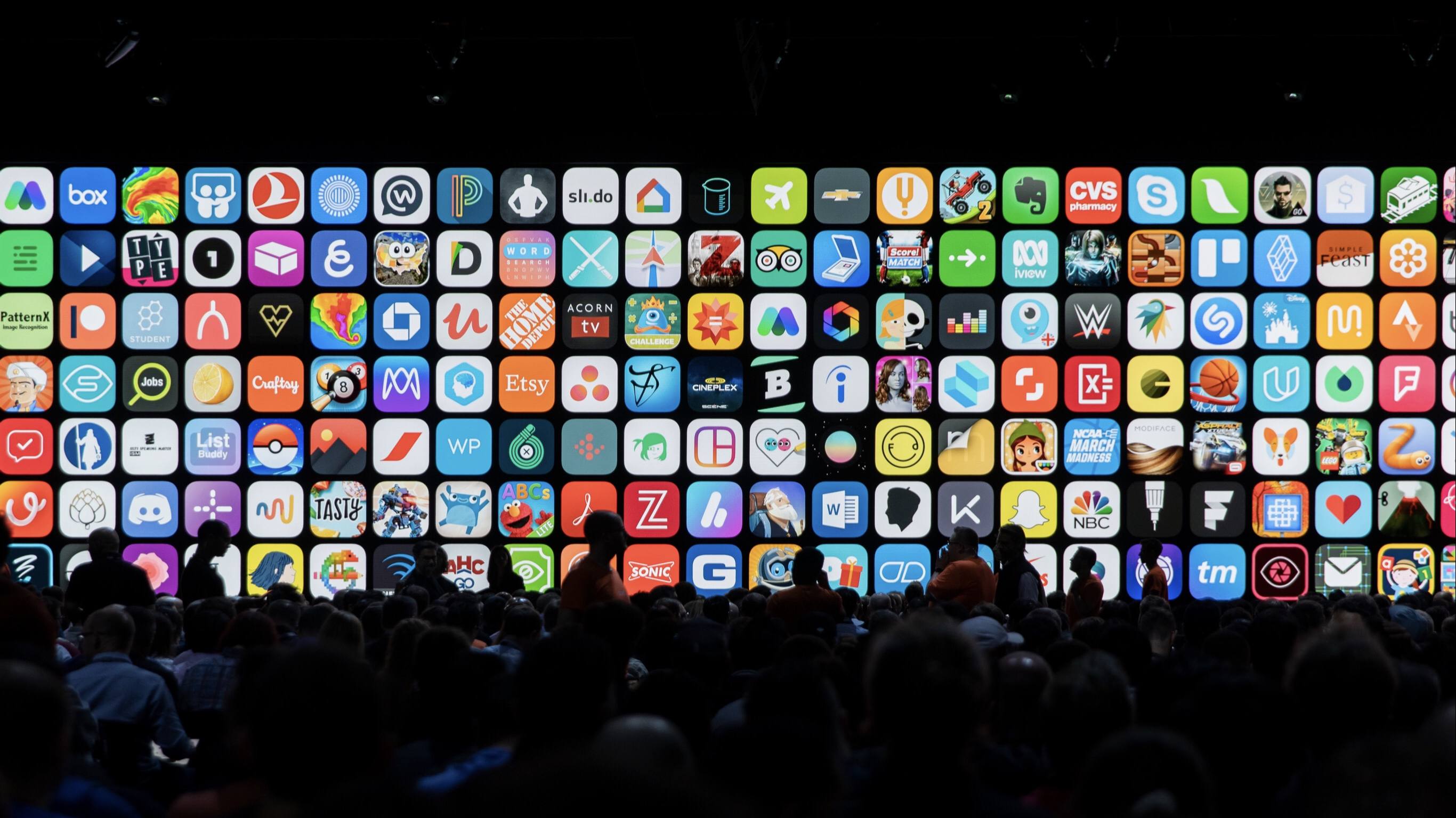
2018 is about to end, and recalling the year, every person and every company has its own story to tell. For the tech giants like Google and Apple, it’s about their products that worked really well in 2018. At the beginning of December, Google revealed its best android apps of the year and now Apple has also announced its ten best apps of 2018, for iPhone, iPad and Apple watch.

mac
Image Source : macstories.net

The Apple’s editors in the different categories have created the list that includes the most-downloaded apps, most-streamed films-music, and the best games of 2018, etc. The editorial list includes both free as well as paid versions and has been selected on the basis of popularity and on the basis of the best content across the App Store and iTunes.

In the category of free iPhone apps, YouTube topped the list, followed by Instagram and Snapchat.

Top 10 Free iPhone Apps:
1. YouTube
2. Instagram
3. Snapchat
4. Messenger
5. Facebook
6. Bitmoji
7. Netflix
8. Google Maps
9. Gmail
10. Spotify Music

The selfie-editor FaceTune won the best app in the Paid iPhone apps category.

Top 10 Paid iPhone Apps:
1. Facetune ($3.99)
2. Kirakira+ ($0.99)
3. Dark Sky Weather ($3.99)
4. HotSchedules ($2.99)
5. PlantSnap ($2.99)
6. AutoSleep Tracker for Watch ($2.99)
7. Sky Guide ($2.99)
8. 1 Second Everyday: Video Diary ($4.99)
9. The Wonder Weeks ($2.99)
10. Afterlight 2 ($2.99)

Fortnite not only won the best game in the free iPhone games category but also topped the iPad free games category.

Top 10 Free iPhone Games:
1. Fortnite
2. Helix Jump
3. Rise Up
4. PUBG Mobile
5. Hole.io
6. Love Balls
7. Snake VS Block
8. Rules of Survival
9. Roblox
10. Dune!

Heads Up won the best paid iPhone Game. It is also on the number 5 in the paid games list on iPad.

Top 10 Paid iPhone Games:
1. Heads Up! ($2.99)
2. Minecraft ($6.99)
3. Plague Inc. ($0.99)
4. Bloons TD 6 ($4.99)
5. Pocket Build ($1.99)
6. Bloons TD 5 ($2.99)
7. Geometry Dash ($1.99)
8. The Game of Life ($2.99)
9. Papa’s Freezeria To Go ($0.99)
10. Grand Theft Auto: San Andreas ($6.99)

YouTube again was crowned as the best free app for iPad, Netflix and Messenger came on the second and third positions, respectively.

Top 10 Free iPad Apps:
1. YouTube
2. Netflix
3. Messenger
4. Facebook
5. Amazon Prime Video
6. Google Chrome
7. Gmail
8. YouTube Kids
9. The Calculator
10. Amazon Shopping

The drawing app Procreate became the best of the paid iPad app of 2018.

Top 10 Paid iPad Apps:
1. Procreate ($9.99)
2. Notability ($9.99)
3. GoodNotes 4 ($7.99)
4. Toca Life: Pets ($3.99)
5. Duet Display ($9.99)
6. Toca Life: After School ($3.99)
7. XtraMath ($4.99)
8. Toca Hair Salon 3 ($3.99)
9. MyScript Nebo ($7.99)
10. Toca Kitchen 2 ($3.99)

Fortnite reigns as the top free mobile game for iPad too.

Top 10 Free iPad Games:
1. Fortnite
2. Roblox
3. Kick the Buddy
4. Love Balls
5. Helix Jump
6. Color by Number Coloring Game!
7. Bowmasters – Multiplayer Game
8. Hole.io
9. Rise Up
10. Rules of Survival

Minecraft sits on the top of the paid iPad games list.

Top 10 Paid iPad Games:
1. Minecraft ($6.99)
2. Geometry Dash ($1.99)
3. The Game of Life ($2.99)
4. The Room: Old Sins ($4.99)
5. Heads Up! ($0.99)
6. Bloons TD 6 ($4.99)
7. Goat Simulator ($4.99)
8. Five Nights at Freddy’s ($2.99)
9. Lego Jurassic World ($4.99)
10. Terraria ($4.99)

The year was incredibly good for the self-wellness apps like, Fabulous and Calm, and also for the games like Fortnite and PUBG (Players Unknown Battleground). Apple also chose its own favourite apps and games of the year, among which Procreate Pocket and Donut County, were selected as the app and the game of the year on iPhone. And, Froggipedia and puzzle-game Gorogoa were selected as the app and the game of the year on iPad, respectively.

Dave Winer : American Software Developer & the Fore-father of Blogging

Publishing is what Winer was always interested in. An MS in Computer Science, he detested computers and the engineering culture at the school level and became familiar with computers only when he went to the college. Winer is a New York-based American software developer and entrepreneur, who is best known for his writing and his contributions to outliners, scripting, content management, and web services. For his writing, he has earned titles like “protoblogger” and is counted among “most influential web voices” of Silicon Valley.

Early Life

Dave Winer was born on 2 May 1955, in Brooklyn, New York City. His father Eve Winer was a PhD and a school psychologist. His mother Leon Winer was also a Ph.D., and a former professor of the Columbia University Graduate School of Business. In 1972, he completed his high school from the Bronx High School of Science. In high school, he started an underground newspaper. Later, he joined the Tulane University in New Orleans and graduated in Mathematics in the year 1976. He then completed an MS in Computer Science from the University of Wisconsin–Madison, in 1978.

Early Career

After completing his education, Winer started working in the computer time-sharing business, in the Empire State Building on the thirty-ninth floor. Later, he moved to Silicon Valley and joined a leading software company at the time, Personal Software, Inc., as the lead developer. The company worked on a software product VisiCalc, and he began to work on his own product idea named VisiText. While in the company, he came to the conclusion that the company did not ship what it produced. At the same time, the company started working on a commercial product around an “expand and collapse” outline display, an outliner software product.

winer
Image Source: Wikipedia

In 1981, he left Personal Software and founded his own company named Living Videotext, where he further worked on the outliner. In 1983, he released ThinkTank for Apple II, which was based on VisiText, followed by the release of ThinkTank for IBM PC and Macintosh, etc.

In 1987, Winer sold Living Videotext to Symantec. The deal paid him a fortune, and he worked with the newly formed Symantec’s Living Videotext division for the next six months.

UserLand

The next year, in1988, Winer founded another company named UserLand Software and was appointed the CEO of the company. Under the name of the company, he released a system-level, outliner-based scripting language, Frontier, for Mac. In the mid-90s, Winer became interested in online publishing while helping automate the production process of the strikers’ online newspaper. He started working towards online publishing and developed a website for himself the ‘Scripting News’, in February 1997. Scripting News is described as “one of the web’s oldest blogs.”

In the same year, he started Frontier’s NewsPage, supporting Scripting News. Later, he, along with Microsoft, developed the XML-RPC protocol, resulting in the formation of SOAP, that he co-authored jointly with Microsoft’s Don Box, Bob Atkinson, and Mohsen Al-Ghosein. In the same year, he developed an XML syndication format for his Scripting News weblog in order to provide his readers with much more timely information.

During the same time, RSS was created for use on the My.Netscape.Com portal, preceded by several trials at web syndication that did not obtain much popularity. In July 1999, Dan Libby produced a new version of RSS, RSS 0.91 incorporating elements from Dave Winer’s news syndication format. In April 2001, Netscape dropped RSS support from My.Netscape.Com and Winer, along with RSS-DEV Working Group, published a modified version of the RSS 0.91 specification on the UserLand website. With a set of changes, Winer also released RSS 0.92 in December 2000 and RSS 2.0 in September 2002.

By 1999, Winer had become the leader in blogging tools and a leading evangelist of weblogs. The InfoWorld named him one of the “Top Ten Technology Innovators” in February 2000.

DaveNet

In November 1994, Winer originated DaveNet, to replace the standard news channels of the software business. DaveNet distributed newsletters over email and stored the goofy and informational web archives on it. Few of his newsletters included complaints against Apple’s management. The HotWired also published his censored columns from DaveNet, between June 1995 and May 1996. DaveNet won the Cool Site of the Day award in March 1995 but was discontinued in 2004.

Podcasting

Winer was receiving more requests for audio blogging features in the RSS from his readers and other bloggers, upon which he decided to include a new functionality in RSS 0.92, named the enclosure, that would transfer the address of a media file to the RSS aggregator. On January 2001, he first demonstrated this new feature in his Scripting News weblog, by enclosing the song Grateful Dead in it. With a built-in aggregator for both “send” and “receive” components in Userland’s weblogging product, Radio Userland, many of its users started doing audio blogging on it. In February 2004, Ben Hammersley suggested the word ‘Podcasting’ for ‘Audioblogging’.

Along with UserLand, Scripting News and Podcast, Winer also shares the credits for BloggerCon and Weblogs.com followed by some web authoring tools, including OPML Editor, River2 aggregator, Fargo, Dropbox-based outliner, etc.

Personal Life

Currently, Winer is living in New York. In June 2002, Winer underwent life-saving bypass surgery and had to step down as CEO of UserLand. He has been working as a successful writer in Silicon Valley and is referred to as one of the most prolific content generators in the web history. In 2003, he worked as a fellow at Berkman Center for Internet & Society, Harvard Law School and was the visiting scholar at NYU School of Journalism between 2010-12.

In 2002, he was named among the ‘InfoWorld Top Ten Technology Innovator’. In 2001, he was awarded the ‘Chosen Tech Renegade’ by Wired for work on SOAP with Microsoft.

Google Maps now Shows Nearby Lime Scooter & Lets You Book One for Your Last-mile Trip

The tech giant Google has been continuously working towards improving its services for its consumers. Similarly, for its most widely used GPS app, Google map, Google has been adding new features to it to make navigation simpler for its users.

google map-lime
Image Source: pcmag.com

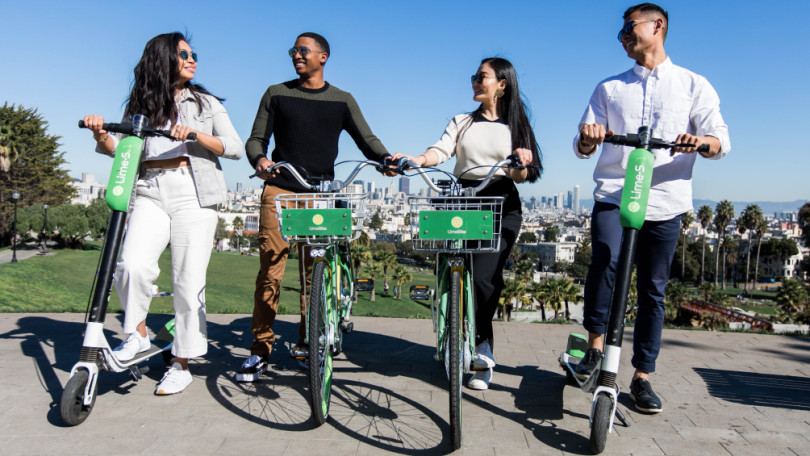
Google has already added Uber to its Google Map app, from where the users can book cabs for them. Now on Thursday, Google announced that it is going to partner with Lime and will show the location of nearby Lime battery-powered scooters, on Google Map. Google is planning to do so, in order to shorten the commute times for its users, as they will be able to rent those ride from the app.

Google, in its blog, said that after getting out of a taxi or a subway, the 15 minutes walk can be reduced to a smaller ride with the help of those scooters. Google will now display the nearby Lime scooters on the Google Map app, as another transport option, and after the users tap on it, they will be redirected to the Lime app. If there is no lime app on their smartphones, they will be redirected to the Apple Store or Play Store, so that they can download the app. And then, the users can book those scooters and bikes, from the app.

For now, the service will be available only in thirteen cities worldwide, i.e., Auckland (NZ), Austin, Baltimore, Brisbane (AU), Dallas, Indianapolis, Los Angeles, San Diego, Oakland, San Antonio, San Jose, Scottsdale, and Seattle. And, after the successful testing of the services, Google is planning to expand it into other cities as well.

The app not only will show the distance of the vehicle form users’ location but also will display the total journey time, battery consumption, the total cost for the journey and the number of other Lime vehicles nearby.

Lime, in the time of its 14 months operation, has fulfilled almost 1.5 million bike and scooter rides and has raised $467 million in funding to date, Google’s parent company, Alphabet, being one of the biggest investors in it. The partnership between the two companies is not only beneficial for them business-wise, but will be a great contribution in reducing the congestion and carbon emissions.

Logan Green & John Zimmer; The Nice Guys of Ride-sharing

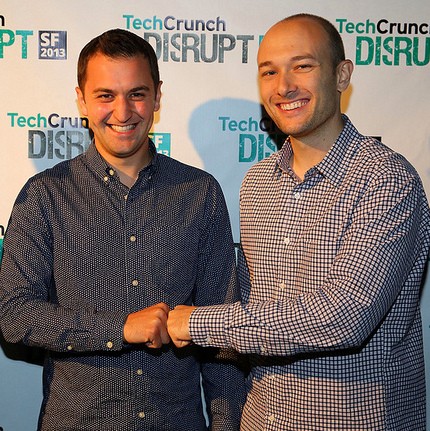
“Follow your instinct,” you might have heard it several times from the mouths of the most successful entrepreneur across the world, but how many times it happened that you really did? Logan Green and John Zimmer, two young tech professionals, are among the ones, who went along with their gut feeling of starting an unusual business of sharing a car with strangers for the money. In the beginning, they were warned by many, that the business has higher chances of failing. But after almost ten years, the two are operating the same business, backed by biggest venture capitalists and making revenue in billions every coming year.

Logan Green was a native of California, where he attended the New Roads High School in Santa Monica. He received a bachelor’s degree in Business Economics from the University of California, Santa Barbara. At the college, he founded The Green Initiative Fund and was the youngest director for the Santa Barbara Metropolitan Transit District.

As a child, Green used to ride with his parents in their car, and whenever he saw outside the car, he found more cars, with most of the times, only a single person riding it. The time he had to join the college, he left his car back at home, to try the other conventional means of transportation. At the same time, his girlfriend Eva was also transferred to a college in Los Angeles.

lyftfounders
Image source: riverfronttimes.com

In the time of three years of her college, Green continued to visit Eva on every weekend riding different transportations. He even asked Zipcar, a car-sharing program, to implant their cars at UCSB, but could not convince them. Finally, he himself bought four cars and started the car-sharing program at the campus. Under the program, the users could unlock cars with radio-frequency identification.

On the other hand, Greenwich, Connecticut brought up John Zimmer, was also interested in the car-sharing concept. Zimmer, a graduate from Cornell University School of Hotel Administration, was influenced with the fact that he could fill the empty seats of his car while going back to home in the college breaks but had no idea from where to begin. After graduating from college, Zimmer started working as an analyst in real estate finance at Lehman Brothers in New York City, keeping a journal about carpooling ideas, side-by-side.

After completing the college education, Green went on a trip to Zimbabwe, where he was introduced to the crowdsourced carpool networks. The idea led him to build a platform named Zimride, using the Facebook API, upon which users could find and plan carpools.

Eventually, at the same time, he was introduced to Zimmer on Facebook via a common friend. Zimmer came to know about Zimride, and both coincided on the same idea of the development of a carsharing platform. As the two shared the similar interest, it took no time for Green to fly to New York and meet Zimmer.

In late 2006, together Green and Zimmer launched the first version of Zimride in the Cornell University and later, in 2007, in the UCSB campuses. Over 20 per cent of students registered for the service, but still, they used it only a few times in a year. During the very time, Uber was also providing its car-renting service, but the service included the rental of brand new luxury cars. The idea of Zimmer and Green was way too different from that.

Green and Zimmer moved to Silicon Valley, to work on the growth of the company and shared an apartment that served as both apartment and office. After working hard on Zimride for five years, they expanded the company to thousands of users and over 50 universities.

The main mission, the two were working towards, was to provide an alternative to car ownership. In 2013, they sold Zimride to Enterprise Holdings and turned there focus towards Lyft, their newly founded company, providing carpooling in local areas.

The next thing they figured out was that having an app for the smartphones can get them more users as well as more frequent rides for localities. So, they hired two engineers to develop an app for Lyft, and within three weeks the app was ready.

In 2017, Green and Zimmer raised $4.1 billion dollars for Lyft, valuing the company at $11.5 billion. Currently, Lyft is providing its services in 50 United States and has grown to 1,000 employees.

In 2009, Zimmer and Logan Green were named finalists in Business Week’s list of America’s Best Young Entrepreneurs and in 2014, the two were named “35 Under 35 list of Inc. Magazine.

Amazon Opens its First Pint-sized Cashier-free Amazon Go Store in Seattle

There is nothing, which the biggest retailer, Amazon, does not want to try its hands in. After building the largest empire of online business, Amazon has also entered into the bricks-and-mortar world, with its large Amazon Go cashier-less stores, operating successfully in Chicago, San Francisco and Seattle.

amazongo
Image source: pymnts.com

This time, Amazon has launched the tiny version of its Amazon Go stores in Seattle- the eighth cashier-less store. The store is located on the sixth floor of the Macy’s building in downtown, Seattle. It is this first store of the chain of small stores, Amazon intends to launch for airports, office lobbies, and hospitals. This tiny store is quarter the size of the other big Amazon stores, almost about the size of a 450-square-foot New York City studio apartment.

Unlike the other Amazon Go stores, the small store does not have any checkout lanes. The buyers need to scan an in-app code, through the Amazon Go app, on the entrance of the store, and the cameras will take care of whatever they pick from the shelves. As the store is also a cashier-less one, for the checkouts, the customers will make the payments through their Amazon accounts.

The store is isolated with glass walls and an enclosed ceiling, with all the cameras and sensors attached to it. Amazon has built those stores, especially for its employees. The stores contain a wider variety of pre-made food, grocery, salads and snacks, etc., so that the customers can buy the items on the go.

Gianna Puerini, vice president of Amazon Go, said, “We wanted something from a design perspective that would fit nicely into open spaces. You can bring it in pieces and assemble it on site.”

There were news making rounds, in September this year, that Amazon is planning to build over 3000 such stores across the world. However, there has been no confirmation on the topic from the company.