Yashica is a Software Engineer turned Content Writer, who loves to write on social causes and expertise in writing technical stuff. She loves to watch movies and explore new places. She believes that you need to live once before you die. So experimenting with her life and career choices, she is trying to live her life to the fullest.
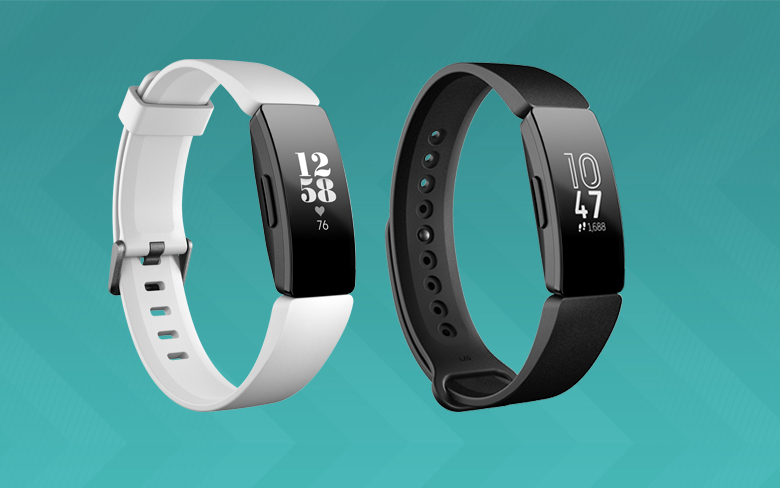
Fitbit is known for its wearable fitness trackers, and now it has come with new gadgets with improved new features, but there is a twist too. The wearables are Fitbit’s first B2B venture, which is specially designed for company employees.
The company has launched those wearables named Fitbit Inspire and Inspire HR, that are capable of tracking sleep, activities, heart rate, calories burnt, etc. The wearables are available as the wristband as well as with a clip.
However, The price of the wearable is yet to be revealed; reportedly, those new Fitbit wearables are the cheapest of all the Fitbit gadgets. Even though the price may be affordable, but those will only be available through the Fitbit Health Solutions partners like health plan providers, employers, and other wellness.
The device will be provided as a subsidy, that an employer can provide its employees to track their health and activities.
The Fitbit inspire is the basic version of the tracker and only provide the features like tracking the activity and deliver phone alerts. Whereas the Inspire Hr can do much more than the Fitbit Inspire, as it is designed to monitor the heart rate, deeper analytics on sleep and GPS, too.
Although many insurers are already subsidizing their employees the Apple Smartwatches, as we see there is a huge price difference, so it can be a good sign for the cheaper Fitbit Inspire and Inspire HR.
Yashica is a Software Engineer turned Content Writer, who loves to write on social causes and expertise in writing technical stuff. She loves to watch movies and explore new places. She believes that you need to live once before you die. So experimenting with her life and career choices, she is trying to live her life to the fullest.
Having your name ranked with leaders like Elon Musk and Jack Ma, in the Top 10 Most Influential Leaders in Tech, is a real achievement, and when you are a non-tech person, then it is huge. It’s the Singaporean entrepreneur, Min-Liang Tan, who got his name ranked ahead of these two tech savvies. Tan studied law and eventually, ended up starting up a tech company, i.e. Razer and became one of the most influential people in the Tech world. This billionaire from Singapore is in love with video games and shares an inspirational story with the world.
Early
Life
Tan was born on 5 November
1977, in Singapore. His father, Tan Kim Lee, worked as a real estate
consultant and his mother, Low Ken Yin, is a homemaker. He has three
siblings, one of whom is the famous clinician-scientist Min-Han Tan.
One of the other two is also a doctor, and one is a renowned lawyer.
He completed his primary
education from Raffles Institution, and then, attended the Hwa Chong
Junior College, to pursue high school education. Later, he went to
join National University of Singapore Faculty of Law and received a
bachelor’s and master’s degree in Law. He got ranked 20 in his
master’s degree.
Early
Career & Founding Razer
As soon as he completed his
education, Tan started working as an advocate and solicitor for the
Supreme Court of Singapore. But the future had held some other plans
for him.
Tan, since his childhood, loved playing video games, as he was not much into outdoor games. His father had brought an Apple II computer, for him and his brother, upon which he played lots of games.
Image Source: alchetron.com
The idea of starting a video
gaming peripheral manufacturing company came up to Tan, when he met
the future co-founder of Razer, Robert Krakoff, through a social
media website, in 1999. The two coincided on their interest for video
games and started working together to design the world’s first gaming
mouse – the “Razer Boomslang,” when Tan was still in
college. Even, after graduating in 2002, along with his job as an
advocate, he devoted most of the time on working for Razer.
Finally, in 2005, the two
acquired the rights to the Razer brand and Founded the company Razer.
The two headquarters of Razer are located at San Francisco and
Singapore. Tan holds the post of the CEO of the company.
The company produces the
peripherals for gamers, and the software for those peripherals, but
does not publish games. The motto of the company is “For Gamers.
By Gamers”, as both of the co-founders are avid video game lovers.
As one of the first products
of Razer, the Razer Boomslang was more responsive, accurate, and
faster than what tech companies were producing at that time, it
attracted the attention of many venture capitalists. The company
started obtaining funding from many investors, and it started
manufacturing other gaming hardware, including headsets, a handheld
gaming device, the Razer Edge gaming tablet computer and Razer Blade
laptops, etc.
In 2015, Razer acquired
software division of video-game company Ouya. It also acquired THX in
2016 and Nextbit in 2017.
In 2017, the company went public through an IPO in Hong Kong and was the 2nd most successful IPO of 2017 in Hong Kong stock exchange. In November 2017, the company launched its first Smartphone named Razer Phone.
Personal
Life
Tan, currently, lives in
Singapore in his family house with his parents. However, he keeps
travelling back and forth from Singapore to San Francisco. Tan
despite being an owner of a gaming hardware manufacturing company
lives a life of a celebrity as many of Singapore people consider him
as their idol. People get tattoos of the company logo, and one of
them even tattooed Tan’s face on his arm.
In 2015, Tan was listed among
the “Top 10 Most Influential Leaders in Tech” by Juniper
Research. He was also named in the list of “The 25 Most Creative
People in Tech” by Business Insider and was ranked one of the
top 40 most powerful people in gaming by Kotaku. TechinAsia ranked
him No 1 of the 30 top South East Asia tech founders and was also
named the Asian of the Year in 2016 by the Straits Times.
In 2016, he was among the
Forbes Singapore Rich List with a net worth of $600 million and was
the youngest Singaporean self-made billionaire.
Tan is also in philanthropy
and in 2014, he donated a US$10,000 to raise funds for ALS and a
£10,000 to fight Motor Neuron Disease, in 2015.
Yashica is a Software Engineer turned Content Writer, who loves to write on social causes and expertise in writing technical stuff. She loves to watch movies and explore new places. She believes that you need to live once before you die. So experimenting with her life and career choices, she is trying to live her life to the fullest.
TechCrunch had reported that many companies having their iOS apps are using the analytics services to record the users’ activities over their iPhone without their knowledge. Upon this Apple has asked the app developers, to disclose the analytic code to the user, or remove the code from their iOS apps, else Apple will remove the apps from Apple Store, itself.
Using
the code, these apps capture the users’ data, like their taps,
swipes, and even records their full screen, without giving a hint of
that to the user. Recording such activities is called Session
Replaying. According to App Store’s Review Guidelines, Apple
completely prohibits Session Replay feature, without the proper
consent of the user.
An
Apple spokesperson wrote in an email, “Protecting user privacy is
paramount in the Apple ecosystem. Our App Store Review Guidelines
require that apps request explicit user consent and provide a clear
visual indication when recording, logging, or otherwise making a
record of user activity.”
He
further added, “We have notified the developers that are in
violation of these strict privacy terms and guidelines, and will take
immediate action if necessary.”
To
capture the users’ activities through the apps, the developers
embed code from a third-party company, in this case, those apps used
the Glassbox for Session Replaying. Tech Crunch gave a few names that
were using Session Replay feature in their apps, including
Abercrombie & Fitch, Hotels.com, Air Canada, Hollister, Expedia,
and Singapore Airlines.
Those
companies are violating Apple’s guidelines as there is no mention
of users’ screen recording in their Privacy Policy. Although there
has been no confirmation from those companies on capturing the users’
data, Apple has already warned one of those companies to remove the
analytics code from their apps. Apple wrote in an email to the
developer, “Your app uses analytics software to collect and send
user or device data to a third party without the user’s consent. Apps
must request explicit user consent and provide a clear visual
indication when recording, logging, or otherwise making a record of
user activity.”
Apple
has also asked the companies, that wants to keep the user experience
analytic code embedded in their apps, to include a little red icon on
the upper left corner of the iPhone screen, to let people be aware of
the apps recording their screen activities.
Upon
the whole screen capturing issue, Glassbox has also taken its dig on
the matter and has said, “TechCrunch’s piece was interesting but
also misleading. Glassbox and its customers are not interested in
‘spying’ on consumers.” The company further said. “Our goals
are to improve online customer experiences and to protect consumers
from a compliance perspective. Since its inception, Glassbox has
helped organizations improve millions of customer experiences by
providing tools that record and analyze user activity on websites and
apps. This information helps companies better understand how
consumers are using their services, and where and why they are
struggling. We are strong supporters of user privacy and security.
Glassbox provides its customers with the tools to mask every element
of personal data. We firmly believe that our customers should have
clear policies in place so that consumers are aware that their data
is being recorded — just as contact centres inform users that their
calls are being recorded.”
The matter clearly is not about Glassbox but is about how the customers’ personal data is being compromised. Apple is serious about the privacy of the data that those apps are capturing, so those app developers must do something in this regard in order to keep their apps running on the iPhone.
Yashica is a Software Engineer turned Content Writer, who loves to write on social causes and expertise in writing technical stuff. She loves to watch movies and explore new places. She believes that you need to live once before you die. So experimenting with her life and career choices, she is trying to live her life to the fullest.
Going to the spam folder and deleting the Spam emails in the Gmail inbox is a regular thing for everyone, and it sometimes is quite annoying when you have to check whether any important mail isn’t there in the spam folder and you can’t simply delete all the emails directly.
Image Source: gadgetryblog.com
Well, Google already has made various AI programs that according to Google are blocking 99.9 per cent spam. But even then we see many Spam emails in our inboxes.
Last
week, Google rolled out the Material Theme for Gmail on Android,
featuring company’s latest styling and a few other features. Google
has just announced that the new Material Theme is also helping
Google’s machine learning models TensorFlow, to block 100 million
more spam messages, which will be targeting the remainder 0.1 per
cent of the spam.
Gmail,
at present, is serving over 1 billion-plus user and blocking 100
million spam messages every day may not help much, but it does not
seem bad either. As even the company has built robust programs to
block those spam messages, few of them slips through the Gmail’s
protection.
From
many years, the company has been using the rule-based algorithm to
control the spam. The rule-based algorithms are set to follow some
specifications in order to block the spam messages, leaving loopholes
for the spam. Whereas the new machine learning framework will help it
identify the spam based on new patterns. The ML framework uses the
algorithms that identifies patterns in large datasets and offer
personalized spam protections to account for users.
TensorFlow is an open-source machine learning framework, which was developed by Google in 2015. According to Google, integrating TensorFlow into Gmail will also allow it to better personalize spam filters, and besides spam, the framework may also help in preventing phishing, and malware from reaching inboxes.
Yashica is a Software Engineer turned Content Writer, who loves to write on social causes and expertise in writing technical stuff. She loves to watch movies and explore new places. She believes that you need to live once before you die. So experimenting with her life and career choices, she is trying to live her life to the fullest.
Buying
goods online is the most convenient way to get things delivered to
your doorstep. At present, there is almost nothing that you can’t
buy online. Food, grocery, clothes and air tickets, you can get all
these things just in a few clicks. Although almost ten years ago,
there were limited things that you could order online, slowly the
list got enhanced. One such thing that added to the list of the
online available items was the customized eyewear, that was
introduced by the famous Warby Parker.
The online merchandise was founded by Neil Blumenthal, Andrew Hunt, David Gilboa, and Jeffrey Raider, four students from Wharton, in 2010. The company was founded in Philadelphia and its headquarter is located in New York City.
Image Source: pinterest.com
It
was the time when the four friends were sitting in their college lab
and discussing how and why the eyewear was so expensive, and there
came up the idea of launching a website to sell eyeglasses online.
All four of them were convinced that it will be really convenient for
people to buy eyewear online. They also discussed the idea with their
teachers and got motivated when they too liked the idea.
At
the same time, their college hosted an event, the Venture Initiation
Program, that was organised to grant money to the new businesses.
Luckily, the four got the grant. The grant was worth $2500 which
played as the seed money for the launch of Warby Parker.
The
four launched Warby Parker after they went through a one-month
marketing training. The name for the company came from a journal by
author Jack Kerouac.
At
the time Warby Parker was launched, the eyewear industry was already
dominated by other big company named Luxottica. Luxottica sold the
most stylish eyewear at that time and had every brand available at
its stores. The problem with the company was that it was selling
every brand, but was putting a big price on it.
It
was a golden opportunity for Warby Parker, as it was an online store
and was letting customers try on five pairs at their homes. The
products sold on the site was also affordable, with a starting range
of $95.
According
to co-founder of Warby Parker, Gilboa, “The idea was really based
on two simple premises. One is that a pair of glasses should not cost
more than an iPhone, and two, that eyeglasses could effectively be
sold online.”
The
idea was unique and was providing people with affordable eyewear
sitting at their homes. Within a year of its launch, Vogue covered
the story. This helped the company with its marketing.
Later,
in 2011, the company earned its first round of funding of worth $2.5
million. In the month of September, in the same year, it raised a
Series A round funding of $12.5 million, following by a $37 million
Series B round funding in the next year. In 2013, American Express
and Mickey Drexler invested a $4 million in Webly Parker.
In
2011, the company had sold over 10,000 pairs of eyeglasses, and the
company grew to 60 employees.
Next
business move that the company took was to launch a physical store.
In 2013, Warby Parker launched its first pop-up shop with the name
‘Holiday Spectacle Bazaar’ in a garage in SoHo, New York. Going
offline from online was considered a crazy move by many, but it only
raised the popularity of the company. Later, they also opened another
shop in a school bus, which functioned for a long 18 months.
Now,
the company has its physical stores in over 15 different cities. In
2015, the company was valued at $1.2 billion.
Then
in 2016, following the footstep of its rival Luxottica, Warby Parker
announced to launch its own optical lab in Rockland County, New York,
to have its own manufacturing, in order to bypass the middlemen
expenses. The company also announced that it would invest $16
million, to build the 34,000-square-foot manufacturing unit, and will
employ over 130 people.
In
2018, Warby Parker raised $75 million in Series E funding, making its
total funding about $300 million.
The
Warby Parker also contributes in the philanthropic works, as it
donates a pair of glasses on every pair of glasses sold by the
company, under the “buy one, give one” model. In June 2014,
Warby Parker reported the donation of 1,000,000 pairs of eyeglasses.
The company also claims to be 100% carbon neutral.
The success story of Warby Parker is no less than any other inspiring story. From the story, we learn the importance of people, as the reason behind the success of this company was that it focussed on its customers and their needs.
Yashica is a Software Engineer turned Content Writer, who loves to write on social causes and expertise in writing technical stuff. She loves to watch movies and explore new places. She believes that you need to live once before you die. So experimenting with her life and career choices, she is trying to live her life to the fullest.
Tesla, the automotive and energy company, has launched a new Amazon store, to sell its merchandise. This is not the first time that the company is manufacturing and selling those merchandise as it has been selling them on its own ‘Tesla Shop’ website for past many years.
Image Source: pando.com
The
automaker previously had also teamed up with Home Depot to sell its
energy products, though, hey ended the partnership in 2018.
The company had been selling self-branded goods including almost everything, like water bottles, hats, hoodies, surfboards, iPhone cases, wireless smartphone charger, a portable battery, etc. on the online store, and the people who have been following CEO Elon Musk and are his fans, have always been there to buy them.
As Tesla also knows that Amazon is the number one online shopping site, making Tesla goodies available on an Amazon store will help Tesla to grab more buyers for its merch. The opening of Amazon’s online stores for the Tesla merch can be a company’s move to reach more people. Although the store will not have all the Tesla accessories, yes, it will have some interesting ones available on it.
The
Amazon store will have on sale the iPhone X cases, having written
Tesla on it, subtly emblazoned across the side. The case price will
be between $35-$45. It will also be selling hoodies branding Tesla,
which will cost between $70-$75 and a 1:18 scale die-cast models of
the company’s cars costing around $250, etc.
Although with the launch of its Amazon store, Tesla had put only two products on the site, i.e. an iPhone 8+ case and a Tesla iPhone X folio case. There can be two reasons that the company had only put two products for sale, either the other products were all sold out, or the company was not ready for the launch. The latter reason can be more accurate as now the company has even put down the page on which it was selling all the goods.
Yashica is a Software Engineer turned Content Writer, who loves to write on social causes and expertise in writing technical stuff. She loves to watch movies and explore new places. She believes that you need to live once before you die. So experimenting with her life and career choices, she is trying to live her life to the fullest.