Yashica is a Software Engineer turned Content Writer, who loves to write on social causes and expertise in writing technical stuff. She loves to watch movies and explore new places. She believes that you need to live once before you die. So experimenting with her life and career choices, she is trying to live her life to the fullest.
First Siri and then Alexa, followed by a few other voice assistants, including Google Assistant, Cortana and Bixby, have made their own space among people. Now in the same course, Facebook is also about to launch its own AI-based digital voice assistant. The company, too, has confirmed the news that it will be soon introducing a new voice assistant for its AR and VR lineup.
Image Sourec: washingtonpost.com
“We are working to develop voice and AI assistant technologies that may work across our family of AR/VR products including Portal, Oculus and future products.” a Facebook spokesperson said in a statement.
According
to a former Facebook employee, the company has been working on the
voice assistant for its augmented reality and virtual reality
division for a year now. The team of developers, for this new
product, is led by Ira Snyder, director of AR/VR and Facebook
Assistant, and the team is based out of Redmond, Washington.
It is expected that the voice assistant is especially being built for the AR, VR products including the Oculus headsets as well as the company’s Portal video chat device.
This
is not the first time that the company is trying its hands in the
field of voice assistant production. But, in 2015, Facebook had
launched a voice assistant for its messenger named as ‘M’. The
product could not sustain for long as despite offering the users
smart suggestions, it required human help to run.
Even though the company has been working on its voice assistant for a year, it is still way behind the digital voice assistants by the other tech giants. But according to the company, its voice assistant will focus more on the products that can handle hands-free interactions. This way the genre of Facebook’s voice assistants may not be similar to Amazon’s Alexa or Apple’s Siri.
Yashica is a Software Engineer turned Content Writer, who loves to write on social causes and expertise in writing technical stuff. She loves to watch movies and explore new places. She believes that you need to live once before you die. So experimenting with her life and career choices, she is trying to live her life to the fullest.
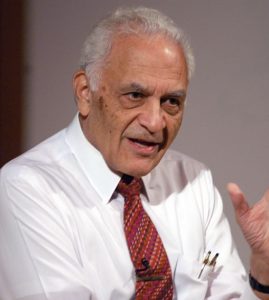
There will be rarely any person who is not aware of Bose Corporation. Bose has been a leading brand in the field of audio equipment development for past more than 50 years. The company was never founded to earn profits, but to provide better user experience for the consumers. And the man behind this revolutionary company was Amar Bose. Almost sixty years ago, Amar Bose became dissatisfied of the sound quality of an expensive and high tech speaker of that time. And today, his dissatisfaction had led to one of the best audio equipment manufacturers in the world, Bose Corporation.
Early
Life
Amar Bose was born on 2 November 1929 as Amar Gopal Bose, in Philadelphia, Pennsylvania. His father, Noni Gopal Bose, was a Bengali Hindu, and his mother, Charlotte, belonged to a French-German decent. Noni Gopal Bose was an Indian freedom fighter, and Charlotte was a school teacher.
While growing up, Bose developed an interest in electronics and during World War II, started a small business of repairing model trains and home radios, at the age of 13. He completed his high school education from Abington Senior High School in Abington, Pennsylvania.
Image Source: patch.com
After receiving a high school
degree, he entered the Massachusetts Institute of Technology, where
he first pursued a bachelor’s degree in Electrical Engineering, and
later, completed a PhD from the same institute in Electrical
Engineering. The topic for his PhD thesis was non-linear systems.
Bose had become quite active
in researches starting from the time of his graduation and even spent
a year in Eindhoven, the Netherlands for the research work at the
Philips Natuurkundig Laboratorium. In the following year, he spent
another year in Delhi, India as a Fulbright research student.
Career
After completing his
bachelor’s, he got the opportunity to work at MIT, as an assistant
professor. While working at MIT, in 1956, he bought an expensive
high-end speaker but was disappointed with the performance. Despite
having great technology of that time, the speakers could not retain
the live audio experience. This, later, became the inspiration for
his future business venture.
Acoustics became the prime
research subject for Bose, and he started working towards achieving
that live experience of a concert hall, for the high-end speakers.
Founding
Bose Corporation
After extensive research on
the speakers, in 1964, Bose was ready to start his own company. He
pitched to the angel capitalists for the funding. He also took the
help of his PhD thesis guide professor, Y. W. Lee. The loudspeaker
model that the company produced was the model 2201, designed to set
up in the corner of a room, reflecting the sound from the walls of
the room.
The next research program that
the company carried out focused on the dominance of the reflected
sound arriving at the head of the listener, to provide the listeners
with the live audio experience.
In 1968, the company launched
its first commercially successful loudspeakers, Model 901. The model
was such a huge success that the company produced it for almost 50
years, and discontinued it only in 2017. This loudspeaker is the
longest running product of the company.
In the past more than fifty
years, the company has been researching in the field of
psychoacoustics and has been improving on its product quality. In
fact, “Better Sound Through Research”, is the official
slogan of the company, which was a statement given by Bose in an
interview.
Bose continued working at MIT, even after founding Bose corporation, as he wanted to support the research work for Bose Corporation. He retired from MIT in 2001. Bose has been one of the best professors at MIT. In fact, many of his students have credited him for helping them in gaining life skills and problem-solving skills. He was awarded the Baker Teaching Award in 1964. For his contribution in the field of electronics and to the development of MIT, MIT established the Bose Award for Excellence in Teaching (1989), and the Junior Bose Award (1995) to honour him.
Bose has got two patents in
the field of loudspeaker design and non-linear, two-state modulated,
Class-D power processing. In 1994, he received an honorary doctorate
in Music from Berklee College of Music. In 2008, his name was
registered at the National Inventors Hall of Fame.
In 2007, Bose was listed at number 271 in the Forbes list of richest persons Forbes 400. In 2011, his recorded net worth was $1.0 billion. Bose donated the majority of company shares (non-voting) to MIT, to continue the research work for Bose Corporation.
Bose will be remembered for
his outstanding contributions to consumer electronics, his great
teachings, and for his leadership qualities.
Yashica is a Software Engineer turned Content Writer, who loves to write on social causes and expertise in writing technical stuff. She loves to watch movies and explore new places. She believes that you need to live once before you die. So experimenting with her life and career choices, she is trying to live her life to the fullest.
Google introduced AMP (Accelerated Mobile Pages) in 2015, in order to speed up the load time for the mobile web pages. Since then, these have been used by almost every website. Those web pages are simpler and load super quickly. Google pre-loads the web page and produces its cached copy to provide lesser load time for the user.
But with the good side of the AMPs, there has been a flaw that has been annoying the publishers of the content on those web pages, over the past years. The URL which shows up for the web page is usually in the format “http://www.google.com/abc” instead of the real URL of that particular web page.
Image Source: edenstudios.com
This
way, it has prevented the publishers from displaying their content
under their unique URLs. But now, Google has launched a fix for this
problem, such that the URL that will display on cached AMP results
will be the same as the publisher’s link. This new fix is called
the Signed Exchanges.
Google
is now using the new Web Packaging standard in order to make the
browser trust the document belonging to the original publisher with
the help of digital signatures and the signed exchanges.
Originally,
the browser is programmed to reject the scripts that do not belong to
the original publisher and try to access the data in the web page.
But from now, the publishers will have to use the signed exchange in
order to make a portable copy of their content and to achieve faster
content delivery, easy content sharing between different users and
better offline experience. With the signed exchange, the publishers
will have to publish two different versions of their content, i.e.
signed and unsigned.
AMPs have been great at providing the users with the content instantly, and also, bringing the desired traffic to their eCommerce websites. So it had become essential for Google to provide a better fix for the problem, and for that, the company had been working since the past one year. In fact, Google had announced last January that it is working on fixing the URL of the AMPs such that the real URL of the AMP will be displayed instead of the Google URL. The company had also provided a developers preview for the solution last year in November.
The
new fix is expected to be a great move for driving the traffic from
the AMP version of the web pages to its original domain as well as
reduce the bounce rate for it.
Yashica is a Software Engineer turned Content Writer, who loves to write on social causes and expertise in writing technical stuff. She loves to watch movies and explore new places. She believes that you need to live once before you die. So experimenting with her life and career choices, she is trying to live her life to the fullest.
The conglomerate company Sony has been a leader in various fields of technological product manufacturing. From video games to smartphones, and from television to home appliances, the company has marked its name in all those fields. But now with its new S.Ride app, the company is stepping into the business of taxi-hailing service.
Image Source: trendingonlinenow.in
The company has launched a taxi-hailing service in Japan, along with an app, i.e. S.Ride app, through which the users will be able to hire a taxi for them. Though the service is a similar car-rental service to Uber and other car-rental services, the app is the main attraction of this service.
According to the advertisement, the company has produced for the service, the S in the S.Ride does not stand for Sony, but it refers to “simple”, “smart” and “speedy”. The app is based on AI technology, and the UI of the app works on the sliding gesture. According to Sony, the app with the help of artificial intelligence is able to figure out the area with the most demand for the taxis, and this way the driver can be sent to that very location.
Though
the ride-sharing service is banned in Japan, and Uber is one of the
leading taxi-hailing services of the country, Sony is likely to
become popular in the field really soon, as it has partnered with
five other leading taxi-hailing services of Japan. The app is
officially launched by Minna no Taxi, a joint venture launched by
Sony Corporation, Sony Payment Services and several Japanese taxi
companies, last year.
Currently,
Sony’s taxi-hailing service will be available only in Tokoyo, with
over 10,000 taxis available for hire. The company has provided the
S.Ride users with various payment option, including through cash,
credit/debit card and digital wallets.
Sony had made an announcement about starting the car-hailing service, last year in the month of February. The company has never been in providing services but is a leader in the hardware manufacturing and supply. After Sony’s new CEO, Kenichiro Yoshida, took his position in the company last April, the company has been trying its hands in selling content and the services to its users.
Yashica is a Software Engineer turned Content Writer, who loves to write on social causes and expertise in writing technical stuff. She loves to watch movies and explore new places. She believes that you need to live once before you die. So experimenting with her life and career choices, she is trying to live her life to the fullest.
For the past two years, the internet has become more accessible for the Indians, due to high connectivity and low-cost plans. This has led to increased screen time for Indian smartphone users. According to a report from YouTube, the Indian users have become more active on this video streaming platform, tripling the number of users in the past two years, especially on the news channels.
Image Source: business-standard.com
Keeping
this in mind, YouTube is now focusing on the news section on the
platform and is working towards promoting authoritative news and
bringing transparency for the users on YouTube. The company is
launching three new features in support for the sources that provide
authoritative news and to provide transparency to its viewers, i.e.
Top News, Breaking News, and Fact-Checker labels.
As the name suggests, Top News feature will display a shelf of news on the platform, where the latest and important news from the trustworthy news sources will flash frequently. The Breaking News again will show the breaking news from reliable sources, and the news will reflect directly on the homepage of YouTube. And, the Fact-Checker Labels, will help the users with the context and sources from where the news has been produced.
The
company has also introduced the information panel for its users, such
that the users can easily look for the context fo a specific content,
event or even a publisher and make their own decision, i.e. to
believe or not to believe on that very content.
The
information panel, as well as the fact checker, will include the
information both in Hindi and English languages, and along with
India, those features have been launched in thirty other countries
too. The fact-checker works on the open source Schema.org ClaimReview
markup process.
The information panel will also label the government-funded news channels on the platform with “funded in whole or in part” as well as “public broadcast service”, such that the users will be able to judge the authenticity of the news sources. The information panel will also include a link to Wikipedia or other authorised informational sources of the news channel.
YouTube has mentioned making an investment worth $25 million for the news section on its platform and will work towards building a better online presence for the news channels.
Yashica is a Software Engineer turned Content Writer, who loves to write on social causes and expertise in writing technical stuff. She loves to watch movies and explore new places. She believes that you need to live once before you die. So experimenting with her life and career choices, she is trying to live her life to the fullest.
According to the recent reports, Facebook, Instagram as well as Snapchat will have to remove the like button and in the case of Snapchat, the streaks for the users under 18. The ICO (Information Commissioner’s Office) has said that it is going to impose 16 new rules for various social media platforms in order to make those platforms safer for young kids.
Image Source: wsj.com
One of those rules is indicating towards removing the like button from the different social media platforms including Facebook, Twitter and Instagram, as according, to ICO the like button nudges the kids to stay online on those platform for a longer time.
“We’ve
launched the draft of our Age Appropriate Design code, which sets the
standards for those designing, developing and providing online
services to children.” a tweet from the official account of ICO
stated.
ICO
is also working on the other rules to stop the social media companies
from nudging the users younger than 18 years old, to reduce the
screen time for them and to control their privacy. According to the
new rules the social media platforms will have to keep the user
information private by default, and until necessary, the kids should
not be asked to share their private information.
The
new guidelines will also prevent the companies to ask the kids under
18 to share their geolocations in any circumstances, as the
geolocations map the accurate location of the phone.
The
initiative of crafting new rules, for keeping the kids under 18 safe,
has been taken by the government of UK, after the MPs and other
public figures criticised those social media platforms for bad
effects on the children. In fact, the Duke of Sussex has called those
platforms more addictive than drugs and alcohol.
Though
it is a great initiative, for now, it has been only taken in the UK.
In fact, in the UK too, the rules will be imposed only in 2020, after
the consultation will be over in May 2019, for the other rules. The
ICO will start working on making the guidelines starting from Monday,
and will consult and take opinions from the public as well as
experts. After the guidelines come into effect, the companies would
need to pay fine in millions and billions, if it failed to follow.
Yashica is a Software Engineer turned Content Writer, who loves to write on social causes and expertise in writing technical stuff. She loves to watch movies and explore new places. She believes that you need to live once before you die. So experimenting with her life and career choices, she is trying to live her life to the fullest.