Your Tech Story

Yashica Vashishtha

Yashica is a Software Engineer turned Content Writer, who loves to write on social causes and expertise in writing technical stuff. She loves to watch movies and explore new places. She believes that you need to live once before you die. So experimenting with her life and career choices, she is trying to live her life to the fullest.

Tesla’s New Chip will Now Help it Bring Driverless Vehicles on the Roads by 2020

Tesla CEO, Elon Musk, is a visionary and has been working constantly, towards improving the company’s series of self-driven cars. At the Tesla’s Autonomy Investor Day in Palo Alto, California, held on Monday, the company announced a new silicon chip, specifically, built for its self-driving cars, which according to Tesla is “the best chip in the world”.

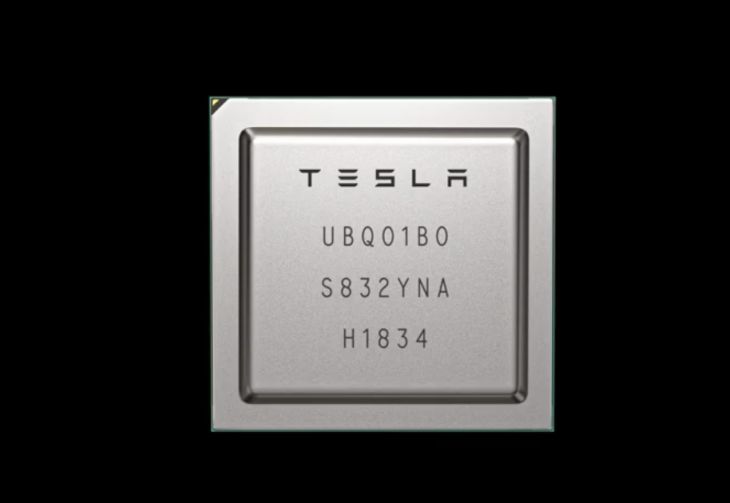
Tesla in a partnership with Samsung has developed a silicon chip to be installed into the Tesla cars to make them fully self-driven. It is a 260 square millimetre chip having 6 billion transistors, which will be a complete solution for the driver-less cars.

Tesla chip
Image Source: techcrunch.com

While representing the new chip at the event, Musk said, “All cars being produced right now have this computer. All Tesla cars being produced right now have everything necessary for full self-driving. All you have to do is improve the software.”

According to Musk, the chip is being mounted in the Tesla Model S and Model X for over a month now, and for the past ten days the Model 3 cars in manufacturing are also including this very chip in it.

Only a month ago, Musk had mentioned in an interview that Tesla will be bringing the fully-autonomous cars soon, which won’t require a human input to drive. And now, the company has announced this new silicon chip, which, according to the company, is 21 times better than the Nvidia chips that the company has been using in its cars.

The Tesla autonomous cars includes the auto-pilot feature, which still needs the supervision of humans to drive accurately. In the past years, the Tesla cars have seen a few accidents and car crashes, most of which were driving on auto-pilots. So having a new chip that won’t require any of the human inputs is sceptical for many.

This is the first time the company has developed a chip by itself, and Musk too jokingly mentioned the same, saying, “It seems improbable. How could it be that Tesla, who has never designed a chip before, would design the best chip in the world? But that is objectively what has occurred. All Teslas being produced right now have this chip.”

Musk, during the presentation, also said that the company will roll out over a million fully self-driving cars by 2020 with the help of this same new chip.

Charles Wang: The Software’s Tough Guy and the Co-founder of CA Technologies

Some people are born with leadership qualities, and some grow them with experience. For the founder of CA Technologies, Charles B. Wang, the case might be both. Despite many controversies, he stands out to be a strong leader, who led his company to new horizons. This visionary was not only a great entrepreneur but also guided many for mastering technology with the books he wrote, i.e. Techno Vision and Techno Vision II.

Wang was born on 19 August 1944, in Shanghai, China, to Kenneth Wang and Mary Wang. His father was a judge at the Supreme Court in the Republic of China. Wang was eight when his parents brought him and his two brothers, Anthony W. Wang and Francis Wang, to Queens, New York.

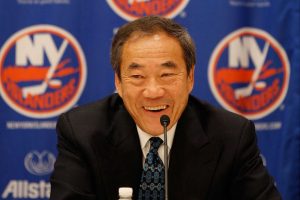
Charles Wang
Image Source: wsj.com

After coming to the U.S., Wang joined the Brooklyn Technical High School in Fort Greene, Brooklyn. And after completing his high school, he entered Queens College to pursue a Bachelor’s degree in Science. Later, Wang joined the Columbia University’s Riverside Research Institute, after answering a help-wanted job ad for a computer programmer. Though he had never studied programming and coding, for the job, he self-taught himself the programming languages.

In the 1960s, while working at the Columbia University, Wang became familiar to a fellow colleague, Russell M. Artzt. Russell was working at the Electronic Laboratories of the University. The two shared a common interest, i.e. computers and became good friends. Later, the two joined the same company to work in, i.e. Standard Data.

In 1989, when IBM separated its hardware sales division from its software division, the other companies got the chance to launch their products in the market. At the same time, Wang and Russell both saw an opportunity in the same and started building software products to sell in the market.

After gaining much experience in the field, the two co-founded Computer Associates International, in 1976. For the venture, the two partnered with Sam Goodner and Max Sevcik of Swiss Company Computer Associates and got the North American distribution rights for CA-Sort. Wang became the CEO of the company, whereas Russell served as the co-president of the company.

The venture was established with the credit card money, but soon, Wang’s leadership took the company to the new heights of success. Soon the company became the first enterprise software company to provide multi-platform products and one of the largest independent software vendors.

The credits for the success of the company is given to the strict methodology Wang used for hiring the candidates for the Computer Associates International. He would look for the capabilities of the candidate and depending upon the performance he would promote or demote the employees. The good employee’s got early promotions whereas the employees with performance below average got fired at once.

In 1989, Computer Associates was the second software-only company that generated $1billion annual revenue. In the late 90s, the company started working towards improving its own products and their compatibility with the products of the other companies.

In the years 1994 to 1998, Wang was the highest paid CEO in the U.S., with having earned a $700 million stock in1998. During the same time, the company was heading towards acquisitions, starting with ASK Group in 1994. By the year 2000, Computer Associates had acquired over 200 companies. In the same year, Wang resigned from the post of CEO in Computer Associates remaining the member of the board of the company till 2002.

Along with being the co-founder of CA Technologies, Wang is also known as a philanthropist and the majority owner of the New York Islanders hockey franchise. Initially, Wang had a minority share in the Islanders, and in 2000, he became the part-owner of the hockey franchise. From 2001 to 2016 he was the majority owner of Islanders.

In 2004, he acquired the original Iowa Barnstormers Arena Football League franchise and for some superstitious reasons, renamed it to New York Dragons.

In 1999, Wang founded the Charles B. Wang Foundation, a charitable organisation dedicated to bettering the lives of children and the disenfranchised. Along with his own foundation, he has worked with the World Childhood Foundation and the National Center for Missing and Exploited Children. He also donated to the Chinatown Health Clinic, which was later renamed as Charles B. Wang Community Health Center.

Till his death on October 21, 2018, at the age of 74, he lived in his Cove Neck mansion, on the Gold Coast of Long Island. Wang was suffering from lung cancer, which became the cause of his death.

Justin Kan : The Serial Entrepreneur Who Founded the Lifecasting Platform Twitch

Sometimes, the little thing we do can make a lot of difference in how we pursue our career, and moreover, our life. The founder of Justin.tv and Twitch.tv, Justin Kan shares a similar course of events, where he says that all the credit for is success goes to his mother, and the way, she used to assigned chores to him and his brothers when they were little kids. According to him, the methods they opted for carrying out those daily chores, has helped him learn the art of leadership and build a $1 billion empire for him. Kan is one of the youngest entrepreneurs who has started their career in the early 20s, and with their innovation have left their mark on the respective industries.

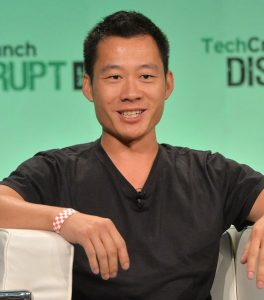
Justin Kan
Image Source: flickr.com

Kan was born on 16 July 1983, to Chinese immigrant parents. He has two siblings, Daniel Kan and Damien Kan. Daniel is also a young entrepreneur who has found another $1 billion company Cruise. Kan’s youngest brother Damiem is a software engineer at Alto Pharmacy.

Kan is a graduate from the Yale University, where he received a double major degree in physics and philosophy in 2005.

Founding Twitch

Initially, Justin launched Justin.tv, where he started broadcasting every moment of his daily life live, with a video camera tied to his cap. The platform live-streamed of what he did on a daily basis. This way, a new word ‘lifecasting’ was invented. Within less than a month of him lifecasting, his idea became famous, and he was invited to a few interviews by the leading media of the country, to know more about lifecasting as well as his platform, Justin.tv.

Later, Kan realised the potential of this platform and relaunched Justin.tv along with his friends Emmett Shear, Michael Seibel and Kyle Vogt, in 2007, as an internet startup, in San Francisco, California. The newly launched platform allowed people to add their own channels to it, and live stream. The company raised a seed funding from Y Combinator as well as a Series A funding with Alsop Louie Partners and Draper Associates.

Justin.tv became a similar platform like YouTube but allowed the users to broadcast for free. By the mid of 2007, the platform had 60 registered channels, and by the month of August 2007, it started registering international users, including from Australia, Brazil, UK, France, Netherlands and Sweden, etc. Within a year from the inception of Justin.tv, the platform had registered over 30,000 broadcasting accounts.

In March 2008, the platform added various different categories, including gaming, which later, became the most popular category having earned most of the active users. This led Justin to build another platform dedicated to gaming live streaming and inspired by the term twitch gameplay, Justin founded Twitch.tv, on 6 June 2011.

In the following two years, Twitch was registering 35 million unique visitors every month, and by the end of 2013, the company had hired over 100 employees.

The increased popularity of Twitch.tv led to the rebranding of Justin.tv, Inc., the parent company for both Justin.tv and Twitch.tv, to Twitch Interactive, on 10 February 2014. In the same month, the recorded number of views on Twitch.tv reached over 6.5 million.

In May 2014, news of Google planning to acquire Twitch started making rounds, and Twitch discontinued its services with Justin.tv in August 2014, to solely focus on Twitch.tv.

On 25 August 2014, Amazon acquired Twitch Interactive for an amount worth US$970 million.

Other Ventures

On 7 March 2011, Kan launched another video social media platform, named Socialcam, that allowed its users to record and share videos, using their mobile phones. This startup was acquired by Autodesk on 17 July 2012 for $60M. On 29 February 2012, Kan founded a service out-sourcing platform, that let the freelance service providers charge $25 per hour for any type of service. Later, the startup was bought by Handybook.

In early 2015, Kan launched another startup along with his college friend, Ranidu Lankage, naming it ‘The Drop’, which is a music discovery platform.

In March 2014, Kan joined Y Combinator as a partner, guiding the new startups with their investments. After working for three years with Y Combinator, Kan left the company to found his own investment firm named Zero-F, in March 2017.

In 2017, Kan founded a full-service corporate law firm for high-growth companies, named Atrium, where he works as the CEO.

Alexa Users Gets Ad-supported Music Streaming for Free

Though the rumours of Amazon rolling out an ad-supported streaming music service was making rounds till the last week, it was not final that when the company will launch the said service. Amazon, on Thursday, confirmed that all the company’s Echo products will now be streaming the ad-supported music service for free.

amazon music
Image Source: sonos.com

The Echo-devices will now be able to play music from the top playlists of Amazon Music Unlimited, and the user does not have to be an Amazon Prime or Amazon Music Unlimited member. Baing ad-supported, the music streaming service, from Amazon, will play smaller ads in between the songs in random time intervals.

Earlier, the users needed to subscribe for the Prime membership to use the music streaming service bundled to it, or they could buy a separate plan to use Amazon Music Unlimited, by paying a monthly $3.99 fee to use on an Echo device and $9.99 fee to use the service on a non-echo device.

Noticeably, the company has announced the news on the same day Google launched the ad-supported free YouTube Music streaming on Google Home smart devices. Also, Amazon has directly challenged its another rival, Spotify, that was the only music streaming service to provide free as well as paid service to its users.

Amazon, along with its ad-supported music streaming service has introduced referral deals to its subscribers, to get more users to buy its Alexa-powered family of Echo, other smart home devices, and its Prime membership. The music streaming service included in the free membership includes over 2 million songs in different languages, and the paid subscription plan of the same service has a library of over 50 million songs. Noticeably, last year, Amazon’s music streaming service alone had tens of millions of active subscribers, and the company sold over 100 million Alexa-enabled devices last year.

Having a music streaming service for free from the same company, as the smart speaker belongs to, is a better choice for every Echo speaker owner, as they do not have to pay extra money for a music streaming service from other company to play on those devices. Also, this is quite a move by the company to increase the sales of its smart speakers over smart speakers from its rival companies.

BBM Says Good Bye to its Users, will be Shutting Down on May 31

blackberry messenger
Image Source: bbm.com

Almost a decade ago, having a BBM number was assumed to be a cool thing. People flaunted having an instant messaging app on their phones, and many would wonder what a BBM exactly was? Blackberry Messenger has been one of the pioneers in encrypted peer-to-peer communication service. But now with the arrival of many other messaging platforms, BBM has finally given up and has decided to shut down the service.

The company said in a blog post, “The technology industry is very fluid, and in spite of our substantial efforts, users have moved on to other platforms. Though we are sad to say goodbye, the time has come to sunset the BBM consumer service, and for us to move on.”

BBM was first launched in 2005 and became an instant hit. The platform was only available for the Blackberry cellphone users, and in 2013, the company made it available for iOS as well as Android users. By 2015, the company had raised to 190 million worldwide users.

At that time, BBM introduced features like video chat, sending and receiving multimedia and also allowed its users to use a few payment services.

In 2016, Emtek took over the operations for BBM and to bear with the tough competition started to work on new features. But it seems that the messenger is no more able to co-up with the competition since its rivals Whatsapp and WeChat have got their hold over the majority of the users worldwide.

However the enterprise version of the messenger, i.e. BBMe will continue to provide its services to the consumers, and the ones, who still want to use BBM, can go for BBMe paying a half-yearly fee of USD 2.49. BBMe includes features like end-to-end encryption and message editing/un-sending. The BBMe app will be available for free on both Apple Store and PlayStore, starting from Thursday.

For now, the last day for BBM has been decided to be 31st May. And, till then, the users can download the pictures, videos and documents they have shared on the app. As soon the app shut down, the company will delete all user data from its server within seven days but will keep some important data on the server due to the legal reasons.

William Wang : The Founder and Chairman of Vizio

Keep trying is the basic mantra for success, and if one keeps on trying without expecting much in return, it becomes easier to achieve the goals. The life of the founder of Vizio, William Wang, is a great example of the fact that giving up is never an option, but keeping the faith alive and trying, again and again, will definitely land you to a better place. And, for Wang, it is not good, but the best, his hard work could pay him.

Early Life

William Wang was born and raised in Taipei, Taiwan. He was 14 when his parents brought him to California, USA. After moving to the USA, Wang faced a lot of difficulties in adjusting to the new environment, mainly due to linguistic issues.

After completing high school education from a local school, he joined the University of Southern California, where he pursued a degree in Electrical Engineering and graduated from the college in 1986. Though he aspired to become an architect, since architecture was not a well-paying job, he dropped the idea and pursued Electrical Engineering.

Career

As soon as he completed his graduate degree, he joined a Chinese company as tech support. The company sold computer monitors, and his job included answering the clients’ calls. The job was paying well, so he continued working at the company for four years.

Being an electrical engineer and having worked with a company selling computer monitors, he was exposed to a new market. With the experience, he was convinced that he could build better computer monitors than the IBM computer standards.

So, in 1999, along with his own savings, he borrowed money from his parents, former boss, and a shareholder from Asia, and raised an initial capital of worth $350,000, to start his own company.

Wang founded MAG, employing two or three people, and started manufacturing computer monitors. At the time, the computer industry was booming really fast, and the company grew to $600 million in six years. But since the technology was changing, the challenges started coming in front of him. The revenues for the company lowered down to $470 million, in only two years, and eventually, Wnag had to sell the company to its manufacturers.

Later, to recover from the losses, Wang tried his hands in other businesses, including founding a computer monitor company called Princeton Graphic Systems, and an R&D facility in Asia. But nothing worked and were a waste of time and money. But still, Wang kept on looking for that big idea, which could help him grow as a successful entrepreneur.

The Turning Point

In November 2000, while coming back to Los Angeles from a meeting in Singapore, his plane Singapore Airlines Flight 006, got crashed as it took the wrong runway and bumped into a construction site. Half of the passengers and the crew died in the crash, and Wang was one of the survivors.

Wang did not have any physical injuries but suffered from carbon monoxide poisoning. According to him, when he was in the hospital, all the business related worries faded away, and he was only thinking about his family.

It was a tough time, and it took two years for him to recover from the incident.

In 2001, one of his old MAG clients, the then chairman of Gateway, Ted Waitt, asked him to build a plan for launching new age TVs for his company. Wang shared a close bond with Ted and assumed him as his mentor. Gateway sold the personal computers, and at its retail store, Ted wanted to sell other products too.

Together, Wang and Ted brought a $2,999, 42-inch plasma TV in the market, which was way cheaper than the other plasma TVs in the market and an instant hit.

Founding Vizio

The partnership between Wang and Ted as well as the success of plasma TV, motivated Wang to start another new company. Within a year of his partnership with Gateway, Wang founded a firm named ‘V Inc.’ in 2002, along with Laynie Newsome and Ken Lowe with a capital worth $6,00,000. For the money, he turned to his parents, friends, and even mortgaged his house.

The company was founded with the intention to gain most of the customer satisfaction by providing them with high-quality products at reasonable prices. The idea worked for him, and within four years the company reached an annual revenue worth $700 million. In 2007, the revenue was estimated to be $2 billion. At the same time, Wang renamed the company from V Inc. to Vizio Inc., as many people found it difficult to pronounce V Inc.

Wang had started the company with only three employees, and by 2012, the company had hired over 400 employees, half of the workers dedicated to customer service. On 31 December 2014, in order to expand the services of its smart TV, the company acquired Advanced Media Research Group, Inc.

Till now, along with the smart TVs the company has released its Tablets, Ultrabook, Mobile phones, Soundbars as well as Google TV. The company has grown to become the largest LCD HDTVs manufacturer and seller in North America.