Your Tech Story

Yashica Vashishtha

Yashica is a Software Engineer turned Content Writer, who loves to write on social causes and expertise in writing technical stuff. She loves to watch movies and explore new places. She believes that you need to live once before you die. So experimenting with her life and career choices, she is trying to live her life to the fullest.

Lilium Unveils Five-seater Air Taxi Prototype After it Successfully Completes its First Test Flight

The German aviation startup company, founded in 2016, has been working towards attaining the comfort for the people with its on-demand air taxis, and now, it announced that it has successfully completed the first test for its full-scale air taxi. The taxi is a prototype of the company’s taxi air crafts, that holds the capacity of carrying five passengers at a time, and is all electric.
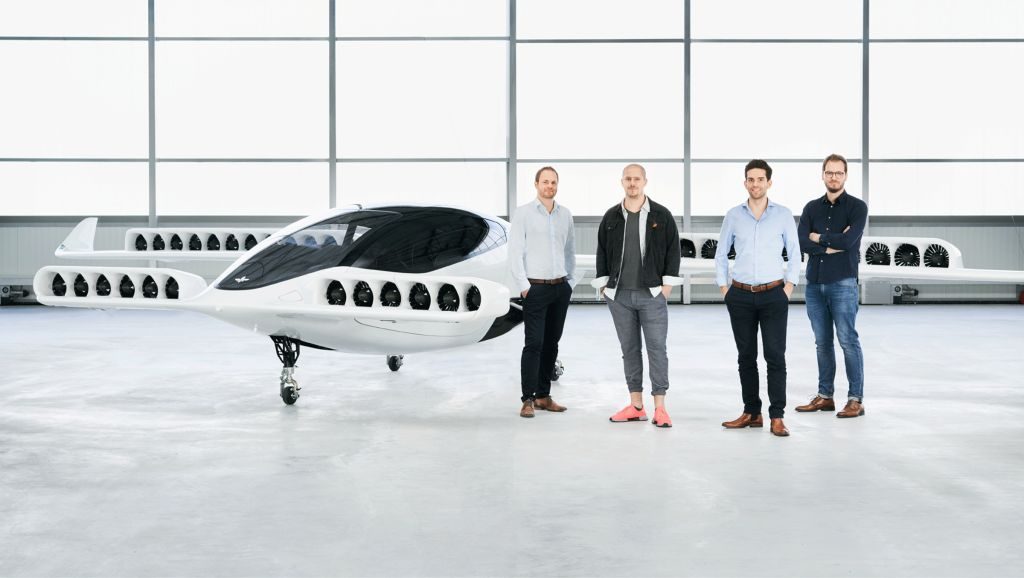
lilium five-seater air craft
Image Source: techcrunch.com

The new five-seater aircraft is the company’s one of the all-electric vertical take-off and landing (VTOL) device, the first of which was a two-seater aircraft, successfully tested by the company about two years ago. But in the case of the two-seater aircraft, the prototype test had gone well. But when it came to the full-scale Lilium jet demonstration, after the take-off of the aircraft, the shift from vertical to forward flight was not as smooth as it was expected to be.

The new five-seater Lilium taxi has an egg-shaped cabin, having five passengers’ seats, which is mounted over the landing gear. It has the unique pair of parallel, asymmetrical tilt-rotor wings, that holds the 36 all-electric jet engines. Those electric jet engines enable the aircraft to take off and land in a vertical plane. Though the flight takes off and lands vertically, it renders “remarkably efficient horizontal or cruise flight”.

The company has been carrying out extensive tests with its latest five-seater air taxi, and the results are remarkable in every aspect. The company has released a video that shows how the aircraft takes off vertically, and after hovering for a small time in the air, the aircraft lands smoothly on the ground.

The company claims that after the final product is ready, it will be able to achieve a speed of 300 km/hour (186 mph). According to the Lilium’s chief compliance officer, Remo Gerber, the speed it can achieve is way more than that of the speed attained by its rival air crafts. The reason being, the aircraft uses only 10 per cent of its maximum 2,000 horsepower during the cruise flight.

But on the other hand, the electric air taxi works better with fuel, as the batteries that are available in the market are not powerful enough. For the air taxis, the battery power has to be in a proper ratio with the weight of the aircraft. So when fuel is used in the aircraft, it provides up to 43 per cent better performance.

Since the company is still carrying out tests on its five-seater flying taxi, the possibility of it coming into operation must not be expected before 2025. Also, the company will be launching a full-fledged app for people, so that they will be able to book the taxis through it.

Facebook Launches New Policy ‘One Strike’ to Prevent People from Misusing Live Streaming

Live streaming is popular, and Facebook is among those social media platforms, who brought this feature to the common people for the very first time. But in recent times, the company has witnessed how people are missing the very feature and violating Facebook’s live video streaming guidelines. Not taking a very old example, the live broadcast of the inhuman mass shootings at two Christchurch mosques in New Zealand in March took everybody by shock.

facebook live stream
Image Source: marketingland.com

Keeping all this in mind, the company has decided that it will be implementing a ‘one strike’ rule, for the ones, who will be violating its live video streaming guidelines. According to the company, it will take down the accounts for a set time period, if they fail to maintain the live streaming guidelines and violate the rules.

“Starting today, people who have broken certain rules on Facebook, including our Dangerous Organizations and Individuals policy will be restricted from using Facebook Live,” Facebook wrote in a blog post on Tuesday.

The company confirmed that the ‘one strike’ rule is the result of the live broadcast of the horrifying New Zealand terrorist attack, which people kept on sharing even after Facebook had taken down the video. In fact, people were editing the video so that they could prevent the video from getting identified and will be shared further.

For such matters, the company has announced that it will be investing $7.5 million in new research partnerships, to carry out researches across industry and academia in order to improve the analysing techniques for the images and videos posted on the platform.

Previously, the company did not have much of strict rules for the violation of any of its guidelines. e.g. if there was a post that spread hate or rumours, Facebook would take the post down, and if the offence is done repeatedly by an account, the account was banned for a set period of time. But now, the rules will be stricter, as if Facebook finds someone broadcasting something offensive and violates the Facebook’s live stream guidelines for the very first time, the company will ban the account from live streaming for a certain time limit.

Facebook is also tightening its rules for the other areas that need attention, and for now, it will also be imposing strict rules for the people, who create ads that misguide people and spread hate.

“The overwhelming majority of people use Facebook Live for positive purposes, like sharing a moment with friends or raising awareness for a cause they care about. Still, Live can be abused and we want to take steps to limit that abuse.” the company wrote in the blog post.

SpaceX to Bring Free and Open Internet to All with the Launch of Starlink Project

Last year, the aerospace transport agency SpaceX had launched the prototype satellite for its much-talked-about project, Starlink, a project that targets to provide internet to the whole planet through a network of the satellites. And now after a year-long wait, the company will finally be launching the first batch of satellites of Starlink’s “production” version with the help of SpaceX Falcon 9 today at 10:30 PM EDT.

SpaceX Starlink project
Image Source: futurist.com

The company will launch 60 satellites with the help of a Falcon 9 rocket, which will be launched from a launchpad based in Cape Canaveral. After the launch, the satellites will be arranged like a constellation to cover a part of the Earth like a blanket. Starlink project will be responsible to provide open, high speed and low-latency internet to anyone in the world.

The Starlink project revolves around the concept of low earth orbit (LEO) satellites. Once the satellites are positioned in the orbit, these will link to the small terminals on the surface of the earth. The satellites are able to easily make a connection with the ground terminals as the LEO satellites are positioned at a distance as close as 99 to 1,200 miles from the surface of the Earth. This way the internet speed will also be faster as compared to the conventional methods used to provide internet.

The 60 satellites have been placed like kernels on a corncob, and with the help of a spring, these will be sent to the orbit at a particular velocity.

The launch of those satellites is a challenge for the company, which if went favourably, will be a great achievement for the company. Otherwise, there are other rival companies of SpaceX too that are also looking forward to getting their hands on similar projects, including OneWeb and Amazon too.

But since the company had test-launched similar satellite TinTin A and TinTin B successfully in the month of February, there are higher possibilities of the success of the Starlink project. According to Elon Musk, the founder of SpaceX those 60 satellites are the “production design”, and in future, the company plans to launch as many as 12000 satellites to achieve that constellation network. If the experiment goes according to the plan, people will be able to access high speed and free internet by the mid of 2020.

Paytm Launches First Card; Ties-up with Citi Bank to Retain its Old Customers

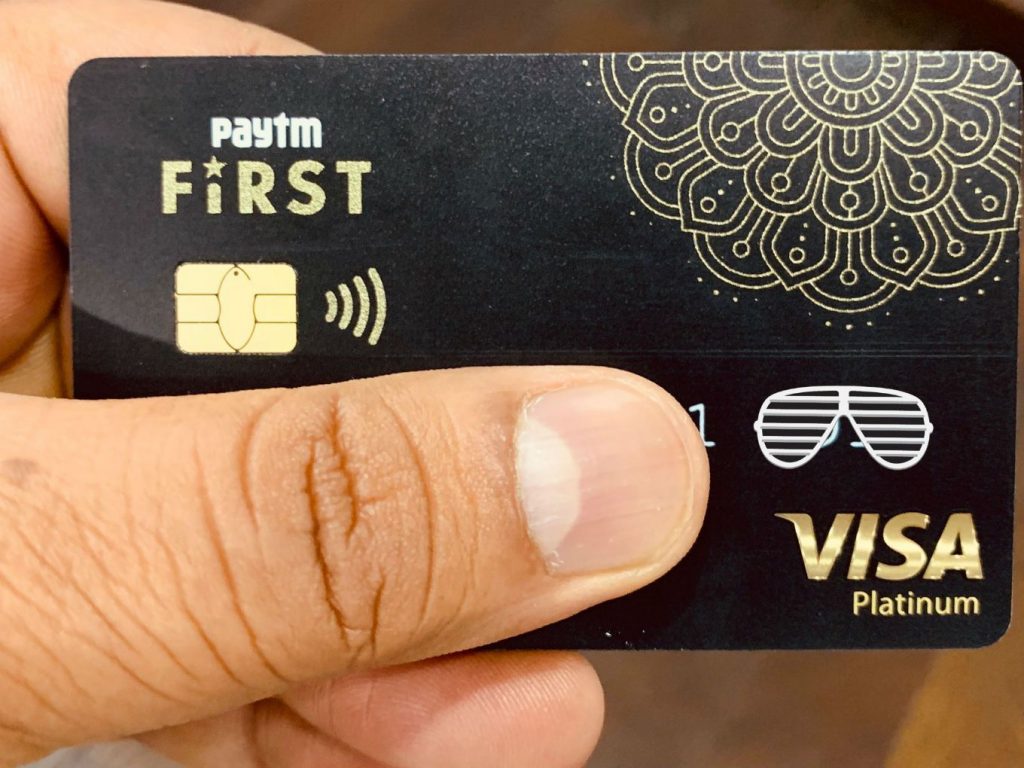
Apple recently launched its credit card for its iOS users, and amid the rising competition, from Google and the other digital wallet providing companies, India’s largest digital wallet Paytm is now launching its first credit card named First Card. The company announced on Tuesday that it will be launching its first credit card for its wallet users that too with 1 per cent ‘universal unlimited’ cash back on every purchase.

Paytm First Card
Image Source: inc42.com

The company has been struggling with maintaining its position in the Indian eCommerce market. And, the company has been trying new strategies to deal with the rising competition. It even launched its own eCommerce platform, Paytm Mall, that too providing huge cash backs for the users. But still, the threats from its rivals are only growing.

“We are delighted to partner with Citi to launch the Paytm First Card. Our new offering is designed to bring the utmost flexibility to our customers in their digital payment options and will help spur large-ticket cashless payments. We are confident of getting a very good response from our customers.” said Vijay Shekhar Sharma, Chairman and CEO – One97 Communications, the parent of Paytm.

Though there are only 50 million people, who actually have credit cards and use for purchases in India, Paytm hopes to make 25 million of Indians to avail its new credit card service. To launch the credit card, the company has partnered with the global payments company Citi Bank. The company will charge an annual fee of INR 500 to the First Card users, and if the spendings of the users will go above INR 50000 per year, the fee will be waved off for those users. The users will also be provided with the offers on dining, shopping, and travel on the platforms having tie-up with Citi Bank.

The customers can apply for the credit card directly through the Paytm app, and the Paytm account passbook will reflect the offers from both Paytm and Citi Bank for the credit card holders. The users with minimum INR 10000 expenditure in a month will be able to avail promo codes of worth INR 10000. The users of First Card will also get the option to pay for goods in easy instalments.

The Citi Bank First card is powered by Visa and is valid internationally. Noticeably, Paytm had just joined its hands with Visa to launch its debit cards last week. The partnership between Citi Bank and Paytm has a long history, and this time, it is an initiative taken to support Paytm’s new subscription-based loyalty program ‘Paytm First’ and retain its users who have been shifting to the other payment apps.

Facebook Taking Initiatives to Help Improve the Job Conditions for its Contractors

Facebook hires contractors for its different kinds of jobs, like moderation of the content as well as training the AI, etc. Those contractors are hired on the hourly bases. But recently, The Verge exposed the poor condition of those contact-bound moderators at the Facebook workplace in an article. Following which, Facebook finally is planning to increase the salaries of those contractors and will be providing them with extra benefits in order to improve their job conditions.

facebook moderator
Image Source: techspot.com

The company said in a blog post, “Today we’re committing to pay everyone who does contract work at Facebook in the US a wage that’s more reflective of local costs of living. And for those who review content on our site to make sure it follows our community standards, we’re going even further. We’re going to provide them with a higher base salary, additional benefits, and more supportive programs given the nature of their jobs.”

The company had set a basic pay of $15 per hour for every contractor in 2015, which in the past four years remained the same. Now according to the announcement from the company, after the increase in the wages the contractors in the San Francisco Bay Area, New York City and Washington, DC will soon receive a $20 hourly pay, and the ones from Seattle will earn $18 per hour. And this is not limited to the U.S. alone, but the contractors working with Facebook internationally will also get a hike in their hourly pay.

The Verge’s article on the Facebook moderator exposed a lot about the bad effect on the mental health of people. Many of those moderators even became suicidal. This has been a matter of concern for Facebook too. So now the company is also working on developing tools, that can help in protecting the moderators’ mental well being. According to the company, it will be providing its contractors with resilience training and counselling at their workplace.

The company will also be providing the moderators with other benefits including a minimum 15 days of paid holidays, sick leaves, and $4000 new child benefits for the new parents, who could not get the paternal or maternity paid leaves.

Also for the first time, the company now will provide the contractors with new options while moderating the Facebook content, such as they will now be able to blur an image temporarily for review.

The company said that the moderators and the contractors are the essential part of the company and their well being is the most required thing for the company as they “provide important services across a content review, security, culinary, transportation and other teams” and help in maintaining the content according to its community guideline.

Amazon Wants its Employees to Quit their Jobs at Amazon to Start a New Delivery Business

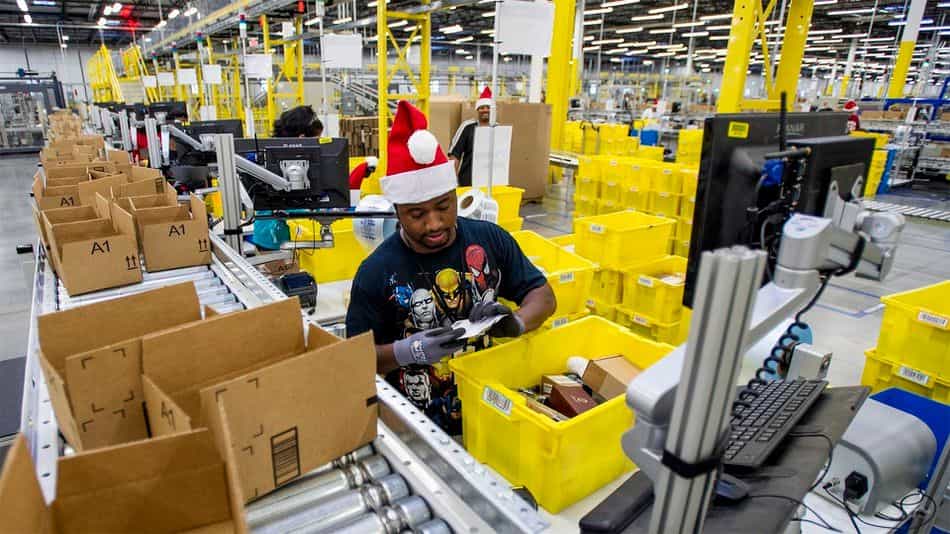
Amazon has just revealed that it is going to expand its Delivery Service Partner program, by providing up to $10,000 cost cover to its employees to start their own package delivering business. The company had launched the Delivery Service Partner program last year, which is an initiative taken by the company to create a network of independent delivery lineups. Under the program, 200 Amazon delivery businesses have already been established since last year.

Amazon Delivery Service Partner program
Image Source: mashable.com

The company revealed that many people are interested in starting their own package delivery business. In fact, many of Amazon’s existing employees have expressed their interest in the same. According to Amazon, the main motive of the company behind this incentive program is to render faster delivery to its clients, especially to speed up the one day delivery for its Amazon Prime members.

“We received overwhelming interest from tens of thousands of individuals who applied to be part of the Delivery Service Partner program, including many employees. We’ve heard from associates that they want to participate in the program but struggled with the transition. Now we have a path for those associated with an appetite for opportunities to own their own businesses.” said Dave Clark, senior vice president of worldwide operations at Amazon, in a statement.

The company announced that it will be providing a $10000 of cover to its employees who will be selected for the program. Also, the company will pay a sum of three months’ gross salary of those employees who will be leaving their jobs to start the delivery business. The ones who will be selected for the incentive plan will also be able to rent the blue vans from Amazon.

The offer is valid for all full-time, part-time as well as for the warehouse employees, who already work in the packaging and delivery department of the company. The program will help Amazon ditch the conventional delivery methods including post, UPS as well as other delivery methods such that it will be able to increase the delivery speed for all its customers.

The company claimed that the employees who will be starting their delivery business with Amazon will be able to earn yearly profits up to $3,00,000. On the other hand, this service not only will be beneficial for Amazon in terms of faster delivery but it will automatically help the company to build a huge infrastructure for its delivery business at the minimum cost.