Your Tech Story

Yashica Vashishtha

Yashica is a Software Engineer turned Content Writer, who loves to write on social causes and expertise in writing technical stuff. She loves to watch movies and explore new places. She believes that you need to live once before you die. So experimenting with her life and career choices, she is trying to live her life to the fullest.

faasos

Faasos : The Biggest Cloud Kitchen Restaurant Company in India

Most of the times, the low phases of a person’s life help him/her discover the right path for their future. But what if you are already on the right path, but this very path does not interest you anymore? Same happened with two friends, Jaydeep Barman and Kallol Banerjee, from Kolkata, India, who though were working with one of the finest companies, but still, something they always felt was missing. So what one should do in such a situation? Discover the right thing to do, and that is what they did, they founded Faasos.

Faasos is an online restaurant service, biggest in the world, that provides its customers with on-demand food delivery services. Seems similar? But it is not, the business model of Faasos is way different from Grubhub, Uber Eats and Zomato.

The Founders

Jaydeep Barman and Kallol Banerjee, both belong to Kolkata and have been friends for over two decades. The two, after completing an MBA course, started working for different firms. Meanwhile, one evening sitting at their Pune apartment, the two decided to launch a restaurant as a part-time business. But the uniqueness of the restaurant has to be Indian cuisine and no foreign brand food. So in 2004, the two started Faasos, a restaurant with the touch of Kolkata’s taste in Pune.
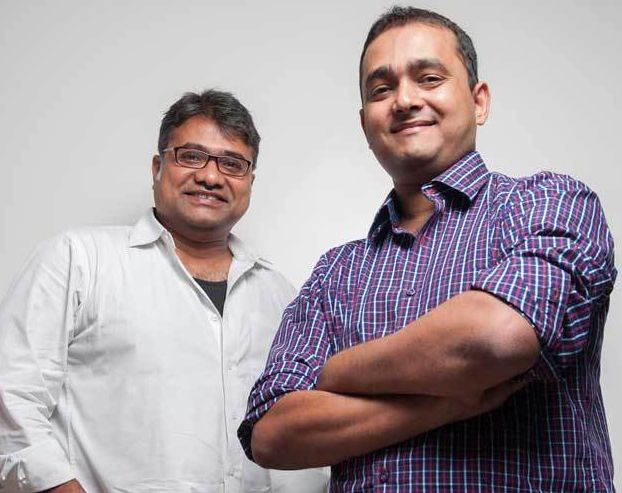
Faasos Founders
Image Source: inc42.com

The restaurant was running side by side, and the two started another management course at INSEAD. After they completed the course, Barman joined the consulting team at Mckinsey London, and Banerjee moved to Singapore to work for Bosch.

Alongside their job, they anyhow managed to open five more Faasos restaurants in Pune. While working with the two leading MNCs, they had to live separate from their family. Wives of both friends worked in different countries. It was quite hectic for the two to manage their job and family, all together. So one fine day, they decided to leave their jobs and come back to India to expand their restaurant business.

Making Passion the Career

After realising their passion after seven years, they had to come up with an idea that would help support their decision financially. So they thought of an on-demand food delivery model for their business. So they took the responsibility of all the three processes that are the part of an online-food-delivery service, i.e. taking the orders, food preparation and delivering quality food.

The idea was different, and they pitched it in front of Sequoia capital and raised $5 million in November 2011. The main idea that attracted the Sequoias was keeping the fixed prices low.

The Challenge

Soon, the chain had 16 restaurants in Pune and Mumbai. The customers could order from the telephone as well as the Faasos website. But it became quite challenging for them to run their business in Mumbai, as the rents were high in Mumbai, and they did not have any references for suppliers there. The biggest mistake they did was to hire veterans to run their restaurant and the warehouse.

The two concluded that they should hire freshers, who want to succeed in life. So they introduced the FER (Faasos Entrepreneurs-in-Residence) programme. The unique thing they did was posted the job in a blogpost and had asked the aspirants not to send CVs, as everyone glorifies themselves in a CV.

The post went viral, and they received over 1,000 applications. After fifty telephonic and ten personal interviews, they had hired a good team of eight. The team took all the responsibility from running operations to managing the supply chain, etc.

Rise of the Company

The company launched its mobile app in March 2014. The app launch increased the number of orders, and 80 per cent of the orders were coming from the app only. The app was easy to use, and thus, the owners decided to turn their service into app-only service. The app processes over 30,000 orders every month.

In February, the company raised another $20 million in the second round of funding, and in the next funding round, the company raise $30 million, in December 2015.

Faasos as of 2017, was operating in 150 locations in 20 major cities of India, including Mumbai, Pune, Bangalore, Surat, Kolkata, Chennai, Coimbatore, Hyderabad, Nagpur, Gurgaon, Ahmedabad, Vadodara, Indore, etc.

In July 2019, the company received $125 million investment from Go-Jek, Coatue Management, and Goldman Sachs, and now, operates 235 kitchens across 20 Indian cities.

LightSail 2

LightSail 2 Successfully Sailing in Space through Sunlight

This is true that all the living things get energy from the sunlight, and now, with the latest experiment carried out by The Planetary Society through its LightSail 2 spacecraft, it is confirmed again. Bill Nye, CEO of the non-profit organisation, announced today that the organisation’s experimental bread-loaf-sized, solar-powered spacecraft has successfully raised its orbit with the help of sunlight.

“Today, we declare mission success. We’re going to a higher orbital altitude without rocket fuel, just with the push of sunlight,” Nye said in a press conference.

The spacecraft was launched on 25th June from NASA’s Kennedy Space Center, along with the other payloads, with the help of the SpaceX Falcon Heavy rocket and was deployed in its solar sail on 23rd July. The solar sail is made of four triangular sails of shiny Mylar. Since the deployment of the craft, the team LightSail have been observing and supervising every movement of the spacecraft.

LightSail 2
Image Source: pressfrom.info

According to the team, LightSail 2 was moving slowly upward in the Earth’s orbit, and it has raised its apogee about 2 kilometres in the past four days. The 5 kilograms CubeSat had been keeping the records about the progress of the craft, and on July 2, it sent the information about its successful propelling to the Earth’s orbit.

The solar sail is 344 square foot in area. The light particle from the sun bounce from the shiny sails and generate a small amount of force. With the continues bouncing of the light, particles make this force even stronger and push the craft forward, raising the craft in its orbit, that too, without the use of fuel.

It has been over a decade since The Planetary Society has been working on the LightSail program, and the previous experiment with the LightSail was a fail. The current mission is crowdfunded through about 40,000 donations, raising $7 million.

LightSail 2 has become the first spacecraft of this size to rise its orbit with solar sailing, and the first to be propelled by solar sailing in the Earth orbit. Usually, the spacecraft make use of fuel engine to a propeller in the space, but the success of LightSail 2 is indicating that in future there can be big spacecraft that will consume the photons for propelling.

The orbit raised by LightSail 2 is slowly forming an elliptical shape, and since the orbit is more towards the Earth’s atmosphere, the LightSail team has estimated that it will be dying within a year. But the success of this experiment has raised new hopes for people.

digitalocean

Digitalocean : The Success Story of One of the Largest Hosting Web Providers in the World

Being one of the top companies in the world should be the result of decades of experience and hard work. But would you believe if you are told that a startup is holding the position of world’s third-largest web hosting company? Quite surprising, right? But it is not surprising for the founders of Digitalocean, the very company holding the mentioned title, Ben Uretsky and Moisey Uretsky, as it is their unique ideas and approaches they used to build their company so big.

Digitalocean is a New York-based company that the two brothers, Ben Uretsky and Moisey Uretsky, founded in 2011.

Early Life and Career

Ben and Moisey moved to the U.S. from Russia, when Ben was only 5, with their family. They started living at Brighton Beach and completed their high school education from Stuyvesant High School.

Digitalocean Founders
Image Source: soundcloud.com

Ben is a Pace University pass out and holds a bachelor’s degree in information technology. He had the experience of 20 years in systems and network engineering in the infrastructure space at the time he started Digitalocean with his brother. He even started another company named, ServerStack, a managed hosting business, before he launched Digitalocean. He drove the inspiration to start the ServerStack from his previous company that got bankrupt due to its bad planning of product development.

Being the CTO of the company, he had gained enough knowledge and experience so that he could start a similar company and established ServerStack.

Moisey on the other hand, despite having an interest in computers went on to get a bachelor’s degree in Mathematics from NYU. He also experimented with various startups and gained some expertise in the business incubation and venture investing activities, etc. His first startup was a big data company named CorreGroup.

Both, Ben and Moisey, ran ServerStack successfully for eight long years, and the annual revenue they generated always fluctuated between 3 to 7 million. But, with the rising competition, there was nothing new or unique that they were offering to their customers. So other similar companies, Rackspace being their biggest rival, were also getting their hold on the market.

During the same time, cloud computing started becoming a thing, and Amazon launched AWS. The rise of cloud and the success of AWS made the two brothers think for a new business, and they looked for an opportunity in the cloud.

Founding Digitalocean

As everyone, including Google and Microsoft, was running after the cloud, the two brothers thought of bringing something better and unique. They thought of building a cloud infrastructure that would help developers deploy and scale applications. So they founded Digitalocean in 2011.

To bring their plans into action, they hired Jeff Carr, who is also the co-founder of Digitalocean, for the engineering work. Carr built the entire backend for their company product singlehandedly himself. Later in 2012, Mitch Wainer and Alec Hartman also joined the founding team. Since the Uretsky brothers ran their previous business all by themselves, they did not know any of the venture capitalists. But for their new startup, they wanted a bigger scale and more investments. So in the same year, the co-founders participated in TechStars, the startup accelerator to raise seed funding for the company.

The Success

By August 2012, the company earned 400 customers and launched around 10,000 cloud server instances through the accelerator program. The next year, the company was offering SSD-based virtual machines and became one of the first cloud-hosting companies to do so. The company also established its first European data centre in Amsterdam, leading to becoming one of the fastest-growing companies. The company raised a US$3.2 million in July 2013, in its seed funding led by IA Ventures. In the series A funding, the company raised US$37.2 million in the next year.

In 2015, Digitalocean became the second largest hosting provider in the world, and it raised US$123.21 million in a round of funding. And by 2017, the company had opened twelve data centres in different parts of the world, including Singapore, Canada, London and India.

Digitalocean also hosts a forum for the developer-to-developer forums and tutorials on open source and sysadmin topics. Today, DigitalOcean has got 500 people working for it and records over $200 million in revenue annually.

NASA collaborates with US based Space Agencies

NASA to Collaborate with Commercial U.S. Based Space Agencies to Advance Mars, Moon Technologies

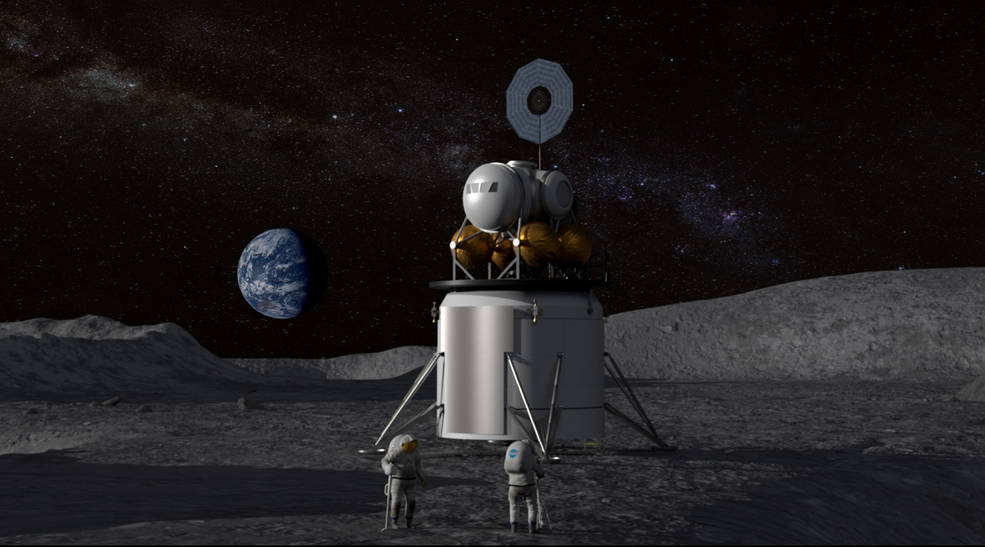
NASA is the first agency to land on the surface of the moon, and the world’s top space agency, too. But it seems to further extend its operations, NASA needs the support of other organisations as well. Leading to this, the organisation has announced a partnership with the long list of various commercial U.S. based space agencies, including SpaceX, BlueOrigin, and Lockheed Martin.

NASA has partnered with thirteen U.S. based space agencies and has formed partnerships on 19 different technologies that will help it advance its operations for reaching out and landing on other planets and extend its research on Mars and the lunar surface.

Through the Announcement of Collaborative Opportunity initiative, NASA had invited proposals from different space organisations. The agency had asked those organisations to submit proposals for the technology they want to work upon. On the basis of various factors, the agency has selected thirteen different organisations.

NASA collaborates with US based Space Agencies
Image Source: nasa.gov

With those agencies, NASA will be providing appropriate resources and support, such that they can continue their research work on the selected technology. The organisations will be working collaboratively on different operations, including landing on other planets, navigating over the surface of the Moon, transferring propellant in space, improving spacecraft operation, etc.

The Blue Origin, Jeff Bezos’s space company will work on a fuel cell-based power system to be used in the company’s Blue Moon lander. The company will be collaborating with NASA’s Johnson Space Center and the Goddard Space Flight Center. Along with that, the company will work on a new navigation system. The system will help in an accurate and safe landing of spacecraft on various parts of the Moon. It will also be developing a new power system, that will empower the landers on the Moon in the lunar nights or for at least two weeks.

On the other hand, SpaceX will be collaborating with the Kennedy Space Center. The two will be working on improving the technology that helps in verticle landing of bigger landers, at the place where the gravity is not that strong, like on the moon and other zero-gravity environments. Other than that, the company will work on improving the workability of the reusable rockets. With the new technology, the rocket propellent can be moved through one vehicle to the other efficiently, within the orbit.

The third biggest company, Lockheed Martin, will be working on robotics and autonomous technologies that would help in plantation and farming in the space so that it will be possible to harvest plants in the deep space in the coming future.

Other than these three companies, Advanced Space will be the part of NASA’s lunar navigation technologies research works and Vulcan Wireless will be helping NASA test the CubeSat radio transponder, and its compatibility with NASA’s Space Network.

Aerogel Technologies, Spirit AeroSystem Inc., Anasphere, Bally Ribbon Mills, Sierra Nevada Corporation, Maxar Technologies, Aerojet Rocketdyne, Colorado Power Electronics Inc., are the other companies that have been selected by NASA to work on its various operations, related to Mars and the Moon missions.

Ordermark

Ordermark : A Service that Streamlines the Online Orders for the Restaurants

It has become so easy for us to get things delivered to our doorsteps with just a few clicks, especially food. Numerous food apps provide 30 minutes delivery service, and for us, it is quite easy to use those apps. But for the restaurants, despite the high revenues generated through these apps, it is quite a complex process to keep track of every single app and serve the customers efficiently. Since people are making more online orders, to keep up, the restaurants need to register in all the apps. But some times, it becomes very confusing for them to operate so many apps and carry out the other processes. To deal with this problem, Alan Canter came with Ordermark, a single platform that can connect different apps at one place and streamline the whole food delivery process.

Alex Canter: Early Life and Career

Alex Canter is a native of Los Angeles and a graduate in Computer Science from the University of Wisconsin-Madison. He is also the 4th generation owner of the famous nine decades-old restaurant, Canter’s Deli, based in Los Angeles.

As soon as Canter grew thirteen, he started waiting tables at his family restaurant. And after he graduated, he started working full-time at the restaurant. At the restaurant, he handled the post of operation manager and started experimenting on new ideas to grow their business and improve the services. He came up with the point of sale system and also revamped the restaurant website. With time, the online order services also started expanding, and he also registered his restaurant with multiple online food delivery platforms, like Eat24, DoorDash and Grubhub.

Alex Canter Ordermark
Image Source: prweb.com

Initially, he experimented with the various food items that their restaurant could serve fresh, sandwiches being the first item on the menu. In fact, he himself went to deliver over 20 orders a day, through some other delivery services. As time passed by, a larger menu was already built for the deliveries. The online deliveries were getting them 30 per cent more revenue, but soon it becomes quite hectic to handle the online as well as offline customers.

Most of the times, the staff was confused, and the various devices that were logged in to different delivery apps caused chaos among them. There were multiple smartphones, laptops, and tablets, all specially used for operating the various food delivery apps. This way, sometimes the online customer was getting late deliveries or wrong food items, or the live customers were turning back without having their food.

These reasons were enough for Canter to think of a better option, as he could not shut down his four generations old live business nor he could bear the loss that shutting down the online deliveries could cause. He even went to meet the other restaurant owners and discussed the matter with them. It did not surprise him to hear that these restaurant owners were also finding it difficult to manage all the orders online as well as offline.

Founding Ordermark

Canter hired a professional team, and after analysing the problem, got to the conclusion that the restaurants wanted a system that could streamline all the orders at one place and print a similar-looking order summary through a single platform. So the aim was to centralise the online orders from different apps to a single app.

Finally, Canter launched Ordermark in January 2017, with six other co-founders, including Mike Jacob founder of TapInto and Paul Allen. The platform included all the locally running delivery services into one and chose Epson to develop a single printer to print every transaction in a similar format. Finally, Canter launched Ordermark in January 2017, with six other co-founders, including Mike Jacob founder of TapInto and Paul Allen. The platform included all the locally running delivery services into one and chose Epson to develop a single printer to print every transaction in a similar format.

With the Ordermark subscription, every restaurant receives a tablet and a printer. The service provided the users with a single dashboard, from where they could streamline the process of taking and processing the orders, such that there is no confusion and the customer service is improved.

Canter and his team helped restaurants with curating their menu and taught them how to use the platform. Also, the Ordermark created a pick-up zone for the delivery drivers.

Ordermark raised a $3.1 million series round led by TenOneTen Ventures, Act One Ventures, and Mucker Capital and a $9.5 million Series A round led by Nosara Capital in 2018. The company raised to 35 employees and 500 signed up restaurants in the same year serving in twenty states in the U.S.

Ordermark Today

Today the company has got four offices in different parts of the U.S. It has gained over 3000 signups from various restaurants, including TGI Friday’s, Qdoba, Veggie Grill, Dickey’s Barbecue Pit, Yogurtland, Johnny Rockets, and Sonic. In July 2019, the company raised an $18 million in a new round of funding. The company intends to target the already running 1 million restaurants, and the ones that will be opened in the coming future.

Alex Canter’s unique idea brought him success in his 20s, which is a great achievement for a person just graduated and a dream for many. For his early achievement, he got his name listed in Forbes 30 Under 30.

Google Cloud and VMware

Google Cloud to Add Support for VMware Workloads to Attract More Enterprise Customers

Google has just announced that it has joined its hands with the software company, VMware, to expand its cloud services. This way, Google will be able to court the enterprise users of VMware who will be able to run their workloads over Google Cloud.

Through the partnership, the two companies are planning to start a new hybrid cloud service called Google Cloud VMware Solution (developed by CloudSimple). The service will let the VMware enterprise customers use the Google Cloud Platform (GCP) to run their vSphere-based workloads. The partnership will make Google provide its support for the VMware Cloud Foundation. The VMware Cloud Foundation is mainly responsible for deploying and running hybrid clouds.

VMware has got a long list of enterprise customers, and it would be great for Google if it bags them for its hybrid cloud service. Though Google is a long-time rival for VMware and many of the enterprises won’t be moving to GCP, there are many who themselves had requested Google to provide support for VMware cloud over its cloud service. Migrating the VMware workloads to a VMware software-defined data centre (SDCC) running in GCP, will render the organisations to have full, native access to the complete VMware services, i.e. vCenter, vSAN and NSX-T.

Google Cloud and VMware

“Customers have asked us to provide broad support for VMware, and now with Google Cloud VMware Solution by CloudSimple, our customers will be able to run VMware vSphere-based workloads in GCP. This brings customers a wide breadth of choices for how to run their VMware workloads in a hybrid deployment, from modern containerized applications with Anthos to VM-based applications with VMware in GCP.” said Google in the announcement.

Google is moving forward towards internet-based computing and storage, and it is estimated that the company may raise its cloud business to $8 billion this year. The partnership is also going to add up some more to the annual revenue of the company. Where its rival companies like Alphabet Inc. has already been in such deals, Google has just started on this way.

“Our partnership with Google Cloud has always been about addressing customers’ needs, and we’re excited to extend the partnership to enable our mutual customers to run VMware workloads on VMware Cloud Foundation in Google Cloud Platform. With VMware on GCP, customers will be able to leverage all of the familiarity and investment protection of VMware tools and training as they execute on their cloud strategies, and rapidly bring new services to market and operate them seamlessly and more securely across a hybrid cloud environment.” VMware’s Sanjay Poonen said in a statement.

VMware is not new to such partnerships and has recently partnered with Microsoft and formed the Azure VMware Solutions, which is again developed by CloudSimple. In 2016, the company had also joined its hands with Amazon in order to integrate the cloud services from both the companies altogether.