Your Tech Story

Yashica Vashishtha

Yashica is a Software Engineer turned Content Writer, who loves to write on social causes and expertise in writing technical stuff. She loves to watch movies and explore new places. She believes that you need to live once before you die. So experimenting with her life and career choices, she is trying to live her life to the fullest.

Samsung Galaxy

Samsung Galaxy Note 10 and Note 10 Plus will be the Main Highlight of the Unpacked Event 2019

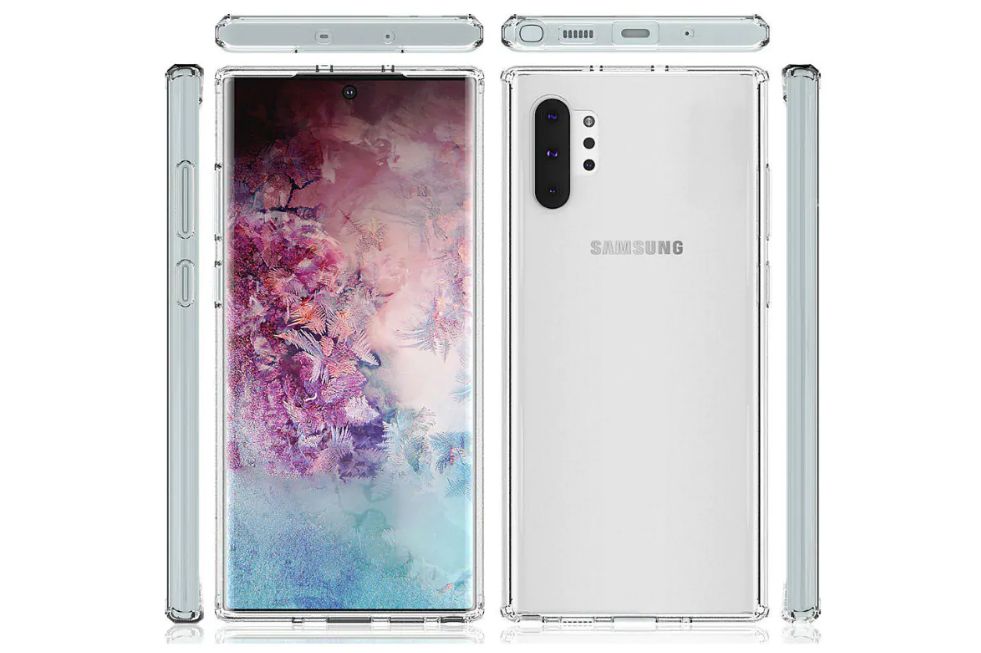
Like every year, Samsung is all set to host its Unpacked event, tonight, technically on 7th August for New York time and 8th August for India. The company as always will be showcasing its new products at the event, the launch of Samsung Galaxy Note 10 and Note 10+, being the biggest highlight. There is still confusion on the name of Note 10+, that whether it would be Note Plus or Note 10+. But still, we have got some of the information already leaked about the features of Samsung’s flagship smartphones.

Thanks to the tweets from Evan Blass, and the Droid Life’s full-page snippets, that have talked about the features of the new Galaxy smartphones. According to the rumours, most likely form the leaks, the Note 10 will have a 6.3 inches Dynamic AMOLED display, whereas the Note 10+ (or simply Plus) will render similar 6.8 inches display. The rumours also suggest that the two smartphones will be powered with the Exynos 9825 processor or Snapdragon 855 Plus processor, accordingly and will run on Android Pie OS.

The leaked pictures showcase a set of three cameras on the rear of the smartphones. If believed the rumours, the camera setup will include a 12-megapixel dual-pixel sensor primary camera, a 16-megapixel sensor with an ultra-wide-angle lens, and a 12-megapixel sensor with a telephoto lens, that too, with enhanced capabilities. The smartphones will also include a hole-punch selfie camera of 10-megapixel. For the first time, the new smartphones will also include the Audio Zoom microphones.

Samsung Galaxy
Image Source: gadgets360cdn.com

Both the smartphones will have a storage of 356 GB. The Galaxy Note will include an 8 GB RAM and a 3,500mAh battery, whereas Galaxy Note+ will have a 12 GB Ram and a 4,300mAh battery. The smartphones will come with the ‘supercharge’ feature, such that the phones will be able to get fully charged in a few minutes.

Reportedly, the price of Galaxy Note 10 may be around $949, and the Note 10 Plus may cost $1,099 to start. The company has also included a stylus with each model. The stylus will be capable of switching between the three cameras, and it will also offer support for a new air gesture feature.

Samsung had said earlier that a Samsung smartphone is more than a phone that only makes calls. According to a statement from the company, Samsung smartphones have been used for various purposes, including content creation. So the company may be including some features for the creators as well.

The event will go live at 1 PM in the New York time, and the launch of the smartphones will take place at 4 pm. You can check out the following link to watch the live stream:

https://news.samsung.com/global/how-to-watch-samsung-galaxy-unpacked-2019

segment

Segment : The Success Story of Three MIT Drop Outs

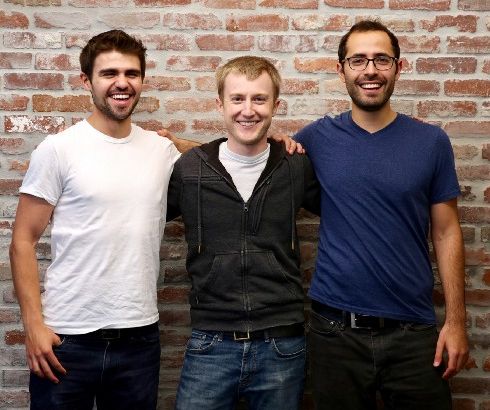
There are many successful entrepreneurs who are the geniuses with big degrees. But there are also many of the ones who just got off the college and started working on their dream projects, and ultimately, became an inspiration for all. Steve Jobs and Bill Gates are some of the names that have proved that skills are always above a degree. The story of Peter Reinhardt is similar to the two, as he also, along with his friends, Calvin French-Owen, and Ilya Volodarsky, dropped out of MIT, and founded one of the most successful startups, Segment.

Peter Reinhardt was born in Seattle City in Washington. He was always curious about the space and loved doing Mathematics. He met Calvin at a summer math class at the University of Washington when he was in 7th grade. Soon after meeting each other, the two shared a friendly vibe.

After completing high school, Reinhardt went to MIT to gain a bachelor’s degree in Aerospace Engineering. MIT was the place where he again united with French-Owen. The two then met Ilya Volodarsky in 2008, during the campus preview weekend at MIT.

segment co-founders
Image Source: architecht.io

Being into space and maths, Reinhardt took both the subjects as majors at the university. But his two friends were thinking of working on a startup. All the three first thought of building a classroom tool that would help the kids in the class to show the level of confusion they face during a lecture and tell the lecture about their doubts, without interrupting him. The three worked on the project and started the testing for the tool. But for their surprise, most of the students in the class were more engaged to Facebook than the lecture.

The three co-founders had raised a sum of $600K for the project. But they got soon aware of the fact that this idea is not going to work practically. So they tried to pay back the investors. But the investors wanted a better product instead of their money.

The three friends again started thinking of a new project. This time, they thought of products like Google Tag Manager and Mixpanel. It took a year and a half for them to even start the project. By this time, they had spent all the money and to earn some more investment, they went to Y-Combinator in 2011. But on seeing the wastage of time and money, the company refused to help.

This incident made Reinhardt and his friends realise that they were rushing the things, and their idea does not have the strength to sustain. So they took a step back and started more research work. At the same time, to devote most of their time to their dream project, they dropped out of college.

To work on their new project idea, they had to choose between Google Tag Manager and Mixpanel, and after being confused for some time, they realised that people need a tool that would help them figure out which among the various tools is better for their work.

This way, they had a new project idea, and they started working on an analytic tool that would integrate various other tools and provide the users with the right solution. The tool was Segment. Before launching the product, they made it open-source for developers. The platform started evolving and provided the engineers with the facility to integrate various tools at one place and organise their customer’s data in a cleaner way.

The idea became a huge success, as most of the people were facing a problem with what tool to choose for what data situation. The users were able to handle all the tasks from analytics to marketing automation through Segment. Reinhardt and his team used to test every new tool and integrated all the effective ones to Segment. Today, Segment helps over 19,000 companies in 70 countries to refine their toolkit, including Product Hunt, Atlassian and Instacart.

For the success of the company and its product, the company owners relied on content marketing. The company had started with four employees, and by 2017, the company had employed about 130 employees. Segment did not raise any money in its starting years. In fact, the three founders were spending $30K every year on the process of product development. Till 2019, the company has raised more than $280 million in total.

Peter Reinhardt is still very much interested in things related to space. He continuously follows the footprints of companies like SpaceX and Rocket Lab. According to Reinhardt Segment still has to go a long way.

huawei hongmeng

Huawei is Already Testing its In-house OS based Smartphone

It has been a tough year for Huawei, the China-based tech company. From ban in the U.S. and Australia, the company was also accused of passing the data to Beijing government. But the company had been on constant denial. The ban on the company had led it to produce some home-grown products such that those bans do not make it suffer in the other markets.

Recently, the company revealed that it is working on a new OS Hongmeng, but also cleared at the same time that it is not meant for the smartphones. The company said that it is building a new OS for its other Huawei devices, including the internet-of-things products and will continue to use Android as its smartphone OS, Honor-brand smart TV, being the first device to get it.

But according to a recent report from Global Times, the Chinese state media, Huawei is ready to launch a new smartphone powered by the Hongmeng OS, which may go on sale by the end of this year, meaning that Huawei is still backing up for its future.

huawei hongmeng
Image Source: dignited.com

The launch of the new Hongmeng smartphones is clearly an indication that even if the tech giant Google stops it from using the Android OS in its devices, it is ready with the alternative. But still, the company is mute on embedding the OS into a smartphone. Even in an interview with The Reuters, the company made no comments on the matter.

According to an unknown source, the smartphone will cost 2,000 yuan ($288). The chances are that the first smartphone that will be equipped with the new Hongmeng may be the Huawei’s Mate 30 Pro smartphone. This means the upcoming smartphone will target the mid-range smartphone market. The OS is based on the microkernel, making it compatible with various devices as well as open to adapt to the Artificial Intelligence features.

Reportedly, the company will be talking about the new OS in the upcoming developer conference to be held on Friday, August 9th in Dongguan, China. Beliving the reports, the company has already completed its work on the OS and is already in the process of testing the OS for various devices. Though Trump has said that the sanctions will be relaxed, it seems that Huawei does not want to take any chances anymore.

duolingo

Duolingo : The Biggest Free Language Learning Platform

Even though there are thousands of languages in the world, English has become the main medium of communication. But still, many of the people are struggling with finding a better institute, where they can learn the language at a cheaper price.

Some people want to learn different languages as a hobby, and some need to learn a different language to get a better job. But getting admission into a good college or institution is not easy for everyone.

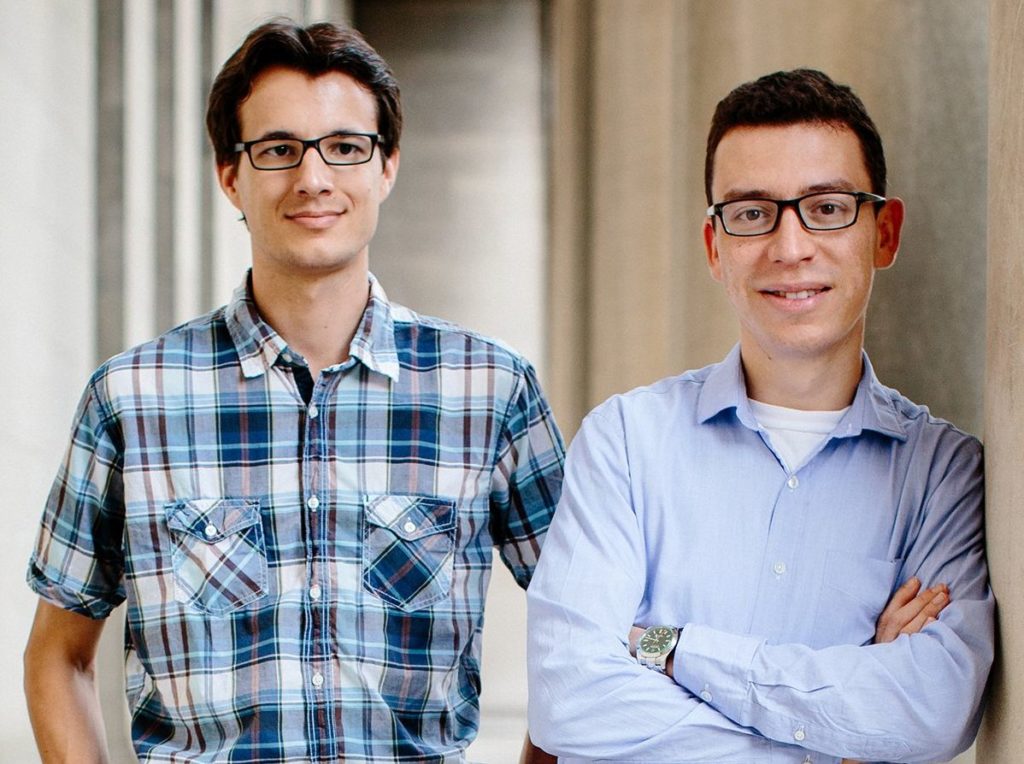
Thinking of this obstacle, the professor and student duo, Luis von Ahn and Severin Hacker, thought of developing an online platform that could help the people around the world learn different languages for free.

Duolingo Founders
Image Source: inc.com

Luis von Ahn is the Carnegie Mellon University professor, who is also the developer of reCAPTCHA. And, Severin Hacker was a graduate and Ahn’s student from the same university.

Ahn is a native of Guatemala, a place where the scope of getting a basic education is only 30 per cent. Ahn was a bright student and wanted to study Mathematics. But unfortunately, there were no resources for studying Maths in the whole country. But if a person is working hard, no obstacles can stop him/her from achieving their dreams. Ahn’s determination brought him to the U.S., and he joined the Duke University.

Ahn completed a BS degree in Mathematics from the university in 2000. In 2005, he received a PhD degree in Computer Science from the Carnegie Mellon University. The next year, he joined the Carnegie Mellon School of Computer Science, Carnegie Mellon University as the faculty member.

Ahn is recognised for his researches on CAPTCHAs and human computation. He has won many awards for his work including acclaim as the 50 Best Brains in Science by Discover and one of the 10 Most Brilliant Scientists by Popular Science Magazine.

Severin Hacker was born in 1984 in Zug and was brought up in Zurich. He completed a B.S. from Zurich and then moved to Pittsburgh. In Pittsburgh, he joined the alumni of Carnegie Mellon University and received a PhD degree in Computer Science. Hacker met Ahn at the university, where Ahn was his graduate advisor.

Being from a place where people struggle with the English language, Ahn and Hacker wanted to create a system, that could translate the website language from English to the other languages. This way, the people who did not understand English could access the website in their own language. But the two were not convinced about this idea completely and decided to develop a program that could do two things at a time, i.e., translate sentences into foreign languages and translate simple phrases in documents.

At the time, another language teaching app, Rosetta Stone, was getting famous. But the paid subscription of the app could not get more subscribers, and it was limited to the ones who could really afford it. But as the two co-founders had come from a place that where not all were economically well, they knew that not all can afford to pay for studies. The two knew that there is a larger population that require to learn a new language, especially English, and if they get a chance, it would be great for them. This led the two co-founders to build a simple and free language learning platform Duolingo.

The two started working on Duolingo in 2009, at the time when Ahn had just sold his startup reCAPTCHA to Google. In November 2011, the two started the beta testing of their product. In the beginning, they used the approach of crowdsourced translations. This gave birth to the early premise of the company, “learn a new language while translating the web”.

A National Science Foundation grant and the Ahn’s MacArthur fellowship sponsored the project initially. Later, Duolingo raised $3.3 million investments from Union Square Ventures and actor Ashton Kutcher’s firm, A-Grade Investments in a private Series A funding.

Ahn talked about Duolingo at his TED Talk in the same year, where he got a chance to reach a bigger number of audience. Though it was not a sales pitch, Ahn talked about the broken education system in underdeveloped countries and the benefits of using Duolingo. The speech received 1 million views, and this way, 300,000 users entered the waiting list for Duolingo signup.

The next year, with much improvements, Duolingo was released for the general public, and the platform included four languages, i.e. English, Spanish, French and German.

The company reported that not only the job seekers and students but the English teachers across the world were also using Duolingo. In late 2012, the company released an iOS app for its users, and the next year, the company also launched the Duolingo Android app. The Android app became an instant hit and had over 1 million downloads within the first three weeks of its launch.

In 2013, Duolingo partnered with BuzzFeed and CNN. The company raised $15 million in series C funding. By 2017, the company had received a total $108.3 million investment.

Though the service is completely free and does not support ads. To generate a certain revenue, the company uses periodic advertising. If the users do not want to see those ads as well, they can pay a subscription fee. The platform offers support for over 25 languages and 30 different courses. On the advice of Hacker, gamification was added to the platform.

The Duoliongo app was named as the number one app on Play Store and App of the Year on Apple Store in 2013. As of 2014, Ahn is serving the company as the CEO. Hacker and Luis von Ahn received the Tech 50 award in 2015.

UrbanClap

UrbanClap : One of the Most Successful Hyperlocal Startup in India

The past decade has been the decade of startups, and India has been one of the booming industry for them. From Flipkart, Paytm, Yatra, Oyo, Faasos to Unaccademy, all are some of the names that are the most successful startups in India. Their unusual idea helped them emerge as the biggest companies in India. UrbanClap is a similar startup that is originated in India and was one of the newest ideas in the field of startups.

Early Life & Career

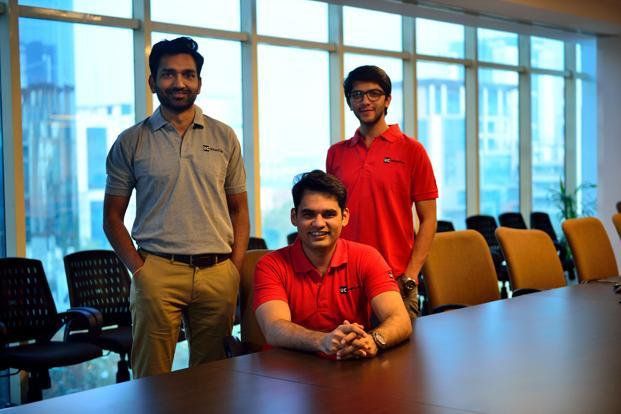
Like every other freshly graduated person, the bug of entrepreneurship had also bitten the co-founders of UrbanClap Abhiraj Bhal, Varun Khaitan and Raghav Chandra. Bhal and Khaitan were college friends, who always thought of starting up their own business. After graduating from the Indian Institute of Technology, Kanpur, the two started working for Boston Consulting Group (BCG) at their U.S. office.

During their time at BCG, Bhal and Khaitan often talked about starting their own business, but none of them had a clue that what they would be doing. Instead, they used to casually ignore the thought. But one fine day, they decided that if they want to do something, they have to start it very next second. They just can’t only daydream about it.

UrbanClap Founders
Image Source: livemint.com

The two had no idea what would be their startup based on, but after working for two years in BCG, they had figured out they want to start an ‘enduring business’. Both were ready to take the plunge. So in 2013, 0they left the job and came back to India to start their business.

Bollywood and movies being the biggest interest in India, Bhal and Khaitan launched their first startup named Cinemabox. The company made entertainment devices for public transport like buses, trains and planes. They invested about INR 10 Lakh in the startup on their own.

On the other hand, Chandra received an engineering degree in Computer Science from the University of California, Berkeley. After completing his college, he worked for some major companies like Infosys, Yelp, and Twitter. Chandra had a similar dream as of Bhal and Khaitan, so he also came back to India, in 2013. Here he started an online-autorickshaw booking platform Buggy.in.

But both the startups could not do well and were shut within seven to eight months of their inception. Despite the failure, the three budding entrepreneurs were not in the mood to quit and were still looking forward to establishing a successful startup.

Most of the times, the better startup ideas are the result of the necessities one faces in real life. This way, the foundation of the startup is always strong, and the results are the most fruitful. After failing once in the business, they were looking for that necessity-driven idea.

Meanwhile, during the wedding of Khaitan’s sister, Khaitan faced a lot of problems in hiring people and local vendors for various tasks. This hit the pinpoint, Khaitan and Bhal were certain that creating a platform, where people could find service providers at a reasonable cost will be their next startup idea.

Founding UrbanClap

The two now needed a tech guy, and eventually, got to meet Chandra through their common friends. The three of them discussed the idea, and after, contributing INR 10 lakh each, they started UrbanClap in October 2014.

They met with professionals from the different fields and shared their idea with them, such that to make them register to UrbanClap. Upon meeting those professionals, the three co-founders got to know that these service providers also faced various problems with their customers and payments.

The Success

The company was an instant hit, As you could hire people from various fields, like a Yoga teacher to a plumber, through the UrbanClap app. In two years, the company expanded to six major cities of India, including Kolkata, Jaipur, Chandigarh. UrbanClaps received its first investment of $10 million from SAIF Partners, and by 2015, it had raised $37 million, SAIF Partners, Accel, and Bessemer Venture Partners, being the major investors. In December 2015, Ratan Tata from Tata group also made an undisclosed investment in the company.

The UrbanClap app lets the customers book a particular service through the app, the professional go to their home and complete the task. The customers make the payments for the service through the app. The company deducts 20 per cent of the payment and rest go to the service provider. This way, many of the registered service providers even make a lakh a month.

In 2018, the company expanded to Dubai, UAE and also closed a $50 million Series D round for expansion. By this time, the company revenue started growing three times a year.

The three co-founders seem to have no plans of going public in the near future. They want to make the company, and its services, future-ready and with their hard work as well as their strategies, it looks quite promising as well.

windows 7

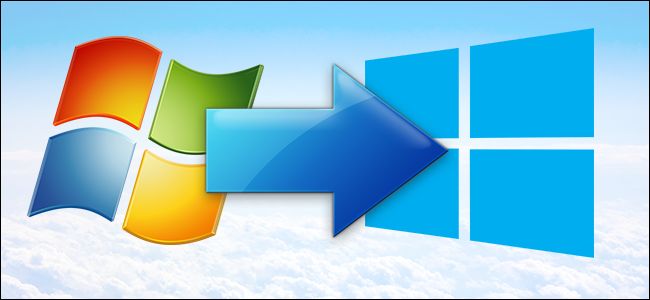
Windows 7 Users will Need to Upgrade to Windows 10 by the End of this Year

Last month, Microsoft officially announced that it is going to end providing support for Windows 7 and asked its users to upgrade their PCs with Windows 10. The company took it to their blog post to announce the news and even provided with details on how the users can upgrade to Windows 10 and other things as well.

The company has said that the users will still be able to use Windows 7 on their laptops and PCs, but they won’t be getting any support like security upgrades from the company starting from January 2020. This way, the PCs with Windows 7 won’t be secure from the malicious malware and virus attacks.

Microsoft has also recommended that the users skip installing Windows 10 on their old laptops and PCs. Instead, they should go for new systems that are faster and are better working with Windows 10.

windows 7
Image Source: howtogeek.com

It has been over five years after Windows 10 was launched, even then the company has been offering support for Windows 7. But now, it seems that it wants to focus better on Windows 10 and wants the users to get some new laptops and PCs. Alongside the announcement, the company also flaunted the various features that the new Windows 10 laptops and PCs will offer the users.

For upgrading to Windows 10, one has to back up their data on an external hard drive so that they don’t lose it. Microsoft has given a detailed description on how to backup data from Windows 7. The company has also mentioned a few of the main reasons why one should go for new laptops and PCs, inbuilt security being the prime reason.

The company has started sending reminders to most of its Windows 7 users about the upgrade. The company has said that it will be sending those notifications for a few times. But the users can easily turn off these notifications. The notification leads the users to the same blog post that Microsoft has posted on its website regarding the upgrade.

The upgrade can cost the users a good amount, but the apps and security Windows 10 offers, are worth it. The Windows 10 comes in three different versions, Windows 10 Home (costs INR 9,299.00), Windows 10 Pro (costs INR 14,799.00) and Windows 10 Pro for Workstations (costs INR 22,799.00).

Windows 7 is now ten years old, and yet it is as popular as it was a decade ago. Even the launch of a revamped Windows 10, in 2015, could not convince most of the people to upgrade to Windows 10. But now, the company has found a way to make Windows 10 its prime product.