Your Tech Story

Sandhya Gupta

I am a law graduate from NLU Lucknow. I have a flair for creative writing and hence in my free time work as a freelance content writer.

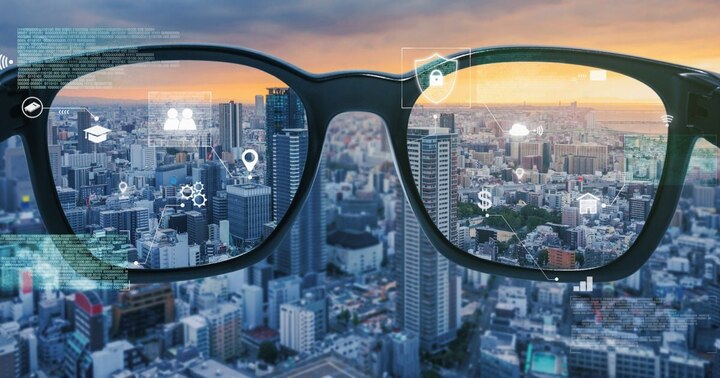
AR glasses

Will 2023 be the year of AR glasses?

Even though smart AR glasses with augmented reality capabilities haven’t completely taken over, a lot of applications for augmented reality are now in use.

Applications of today frequently take the shape of Head-up Displays (HUDs), which are transparent displays that present data without obstructing the view, similar to a window with writings on it. Except that the annotations are data that adjust to the surroundings being examined. HUDs were first created for use in military airplanes.

AR glasses
Image Source: builtin.com

The Integrated Visual Augmentation System, a $22 billion program launched by the American Army this year, will create mixed reality battle goggles (IVAS). With the use of the new eyewear, soldiers may communicate in real-time about information like maps or enemy locations while they are engaged in combat.

However, HUDs are already being employed in other industries, including cars and commercial aviation. HUDs, which can display crucial information like driving directions on the driver’s windscreen without requiring the driver to take their eyes off the road, is viewed as the next step in advancing the driving experience, especially for cars.

Automakers like Kia, who employ the HUD in models like the Kia EV6, Kia Niro, and others, are already implementing this form of AR HUD.

Assisted reality is a different version of AR that is being used in a variety of fields. It is comparable to Augmented Reality in that information is shown on a screen over the user’s surroundings, but it is less immersive.

One business, RealWear, creates head-mounted devices for aided reality for front-line workers in sectors such as healthcare, energy, manufacturing, and automotive. According to Jon Arnold, vice president of EMEA at RealWear, the primary use cases for XR (or extended reality, which encompasses both augmented reality and aided reality) today are focused on business and security.

The potential for how AR glasses will change our user experience—and our lives—grows as digital behemoths like Google, Apple, and Magic Leap draw closer to releasing new types of smart glasses.

Take the Metaverse as an illustration. However, headsets like The Magic Leap 2 provide a fully immersive experience even while XR gear isn’t yet ready for the Metaverse (it’s too pricey, too large, or just not very good).

Users will require wearable tech and glasses like these to take them there if they intend to spend any time in the metaverse.

Faster networks for AR will enable regular employees to better interact in real-time with their international teams. What precisely does this look like? Everyone participating in a virtual presentation or meeting would be able to access the same material at the same time and collaborate on real-time digital content interaction thanks to 5G-enabled AR.

AR and VR are still far from being completely supported by today’s 5G. Meanwhile, cutting-edge smart glasses solutions continue such as in Japan. Japanese customs authorities employ smart glasses to combat smuggling since they can instantly share cargo photographs with other experienced inspectors.

iPhone 14 Plus

Why Did The iPhone 14 Plus End Up Being A Failure?

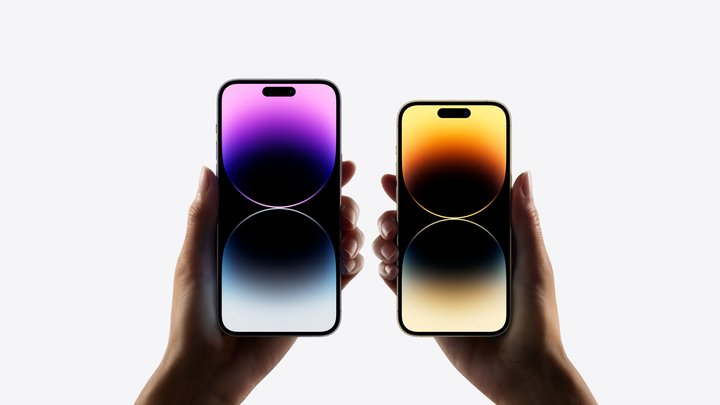
In late 2022, the iPhone 14 Plus superseded the iPhone 13 mini, and due to its greater size, it offered numerous benefits from the start. However, while garnering favorable reviews, the 6.7-inch phone was unable to achieve the kind of popularity that Apple had envisioned.

This year, Apple is believed to lower the price of the iPhone 15 and iPhone 15 Plus, indicating from the outset that one important factor in the iPhone 14 Plus’s failure was its exorbitant pricing. Apple continues to sell the standard iPhone 14 for $799, while the iPhone 14 Plus is priced at $899.

iPhone 14 Plus
Image Source: apple.com

The consumer in the US was only $100 away from switching to the iPhone 14 Pro for $899 and receiving a plethora of enhancements, including a state-of-the-art SoC, the A16 Bionic. When Apple unveiled the iPhone 13 series in 2021, there was a staggering $300 price gap between the iPhone 13 and iPhone 13 Pro.

The iPhone 14 Plus should have cost $799, and even then, there would only be a $200 price gap between it and the iPhone 14 Pro if Apple had intended to compete on price.

Even the entry-level iPhone models received good advancements in previous years, and their internals was quite similar to those of the Pro models. However, the iPhone 14 and the iPhone 14 Pro are entirely distinct devices.

It lacks the new 48MP main camera, a Dynamic Island, an A16 processor, and even a macro lens. It resembles an iPhone 13 with a satellite connection. The iPhone 14 Plus lacks a telephoto lens to capture images and videos with optical zoom and a 120Hz display.

The standard iPhone 14 or even an iPhone 13 will likely be chosen by someone looking to save some money on a new iPhone. And those who are prepared to pay more for a high-end smartphone will probably shell out an additional $100 for the iPhone 14 Pro. The iPhone 14 Plus simply has no room in that situation.

The Galaxy S22 Plus has three cameras on the back, a fast refresh rate display, and is less expensive than the iPhone 14 Plus.

The iPhone continues to sell in large numbers, regardless of how much people love or despise Apple products. Rumor has it that Apple has been exploring internally reducing the price of the iPhone 15 compared to the iPhone 14 to address the weak demand for these devices.

Although it’s unknown exactly how much Apple will reduce the price, it is predicted that it will be $50- $100 cheaper. The cost of the Pro versions won’t change (or even more expensive).

The company is nevertheless anticipated to release the iPhone 15 and iPhone 15 Plus. And this time, it’s anticipated that the new screen design with Dynamic Island will be available for all models.

WhatsApp

WhatsApp will soon enable local chat transfers on Android

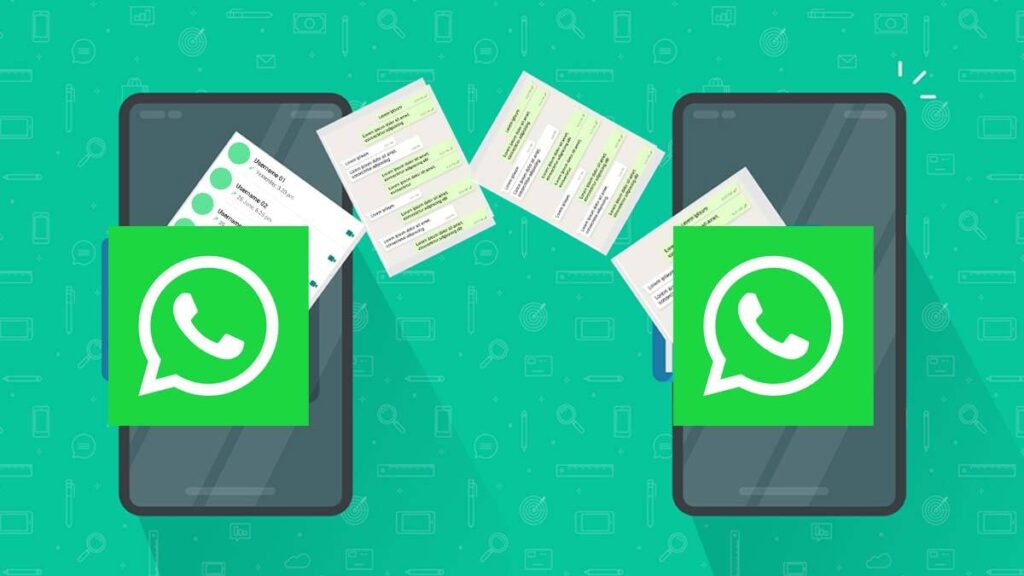
A recent revelation from WABetaInfo claims that users will be able to move WhatsApp data between Android devices without the use of Google Drive thanks to the upcoming version of the app. In other words, using a local network will soon be possible for WhatsApp chat transfers. 

Image Source: gizbot.com

According to reports, WhatsApp, which is owned by Meta, is developing a new feature dubbed “Chat Transfer” that will let users transfer data from one Android device to another via a local network.

As the software is still being developed, the new feature will be added in a later update, according to WABetaInfo. By simply scanning the QR code, the user will be able to move their conversation history to a new smartphone with this feature.

As data is typically sent over a local network rather than being downloaded from a cloud service, this future feature in WhatsApp will not only make the process of transferring chats simpler but also substantially faster than it is now. Currently, under development, the additional features may soon be made accessible to beta testers.

The new feature ought to be added to WhatsApp’s stable version after the company has finished testing it. The deployment date, however, is not known with any certainty.

Switching between the two most widely used smartphone platforms has become considerably simpler ever since WhatsApp started enabling users to transfer their chat backups from Android to iOS and vice versa. 

The App has introduced proxy support for its users worldwide, including the millions of individuals in Iran and other countries who continue to be deprived of the freedom to communicate in private and openly. By selecting a proxy, they can connect to WhatsApp using servers set up by volunteers and groups working to support free communication all over the world. 

Will Cathcart, Head of WhatsApp noted, “We are making it easier for anyone to connect to WhatsApp using a proxy. So when a connection to WhatsApp is blocked, people have the power to restore access.”

The App announced the proxy support noting,” We’re mindful that just as we’ve celebrated the start of 2023 through private texts or calls, there are many people who continue to be denied the ability to reach their loved ones because of internet shutdowns.

To help, today we’re launching proxy support for WhatsApp users all over the world. What this means is we’re putting the power into people’s hands to maintain access to WhatsApp if their connection is blocked or disrupted.”

According to WhatsApp, using a proxy connection will provide the same level of security and privacy that the social media site already provides. End-to-end encryption will still be used to safeguard users’ private messages, it claims. 

Qualcomm

Qualcomm to Bring Satellite Connectivity to Android Smartphones

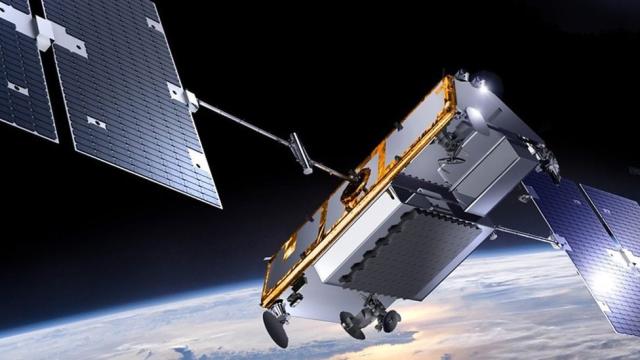
Qualcomm recently announced plans to provide satellite-based connectivity to next-generation Android smartphones.  Cellular-to-satellite communication for Android handsets will be made possible thanks to a partnership between Qualcomm and Iridium.

The service, known as Snapdragon Satellite, will first be accessible on mobile platforms supported by the Snapdragon 5G modem, such as Qualcomm’s Snapdragon 8 Gen 2 platform.

Qualcomm
Image Source: finance.yahoo.com

Iridium’s L-band spectrum will be used for the service’s uplink and downlink to enable two-way messaging. In the second half of the year, the first Snapdragon Satellite-equipped Android handsets are anticipated to go on sale. 

Although Qualcomm claims Snapdragon Satellite will first be used in smartphones, it may also be used in laptops, tablets, cars, and Internet of Things (IoT) devices. OEMs and app developers will be able to distinguish and offer distinctive branded services that employ satellite connectivity.

The L-band spectrum used by the Iridium satellite constellation, which Snapdragon Satellite will use, is “more resilient to weather” than frequencies utilized by other networks, according to Iridium. Snapdragon Satellite-enabled Android handsets still require a clear sky to function, but with a strong connection, messages can be transferred in as low as 10 seconds. 

Similar to Apple’s Emergency SOS via Satellite capability, which is made possible through cooperation with Globalstar, Qualcomm claims that the Snapdragon Satellite technology will initially be utilized for emergency communications.

Qualcomm also lists SMS texting and connectivity in isolated, rural, and offshore areas as potential uses for Snapdragon Satellite, indicating that it might have more applications in the future than just responding to emergencies. 

The news from Qualcomm and Iridium comes just after Apple unveiled the iPhone 14, which has an emergency SOS satellite message service that uses the Globalstar satellite network.

Users of Apple iPhones can get this service, named Emergency SOS through Satellite, for free for two years. Apple spent $450 million to make this service available. It’s not a great surprise that Iridium and Qualcomm announced their partnership because there was much anticipation that Iridium would compete in the smartphone-to-satellite market.

Earlier this week, Space News reported that Iridium and Samsung had a cellular-to-satellite agreement after Samsung disclosed in a regulatory filing that it is entitled to royalties, development fees, and network usage fees from an unnamed new technology. 

According to Qualcomm, the manufacturer of GPS-based devices Garmin Ltd will organize emergency response services for users. 

Qualcomm was able to update the Snapdragon platform to connect to the Iridium network without needing to make any hardware upgrades to the baseband or the transceiver, according to Francesco Grilli, VP of product management at Qualcomm.

Grilli claimed that a number of Android smartphone devices are already under development that would support Snapdragon He said that Western Europe and North America would be the first regions to sell smartphones with this feature.

Ring

Amazon’s Ring finally debuts its in-car security camera

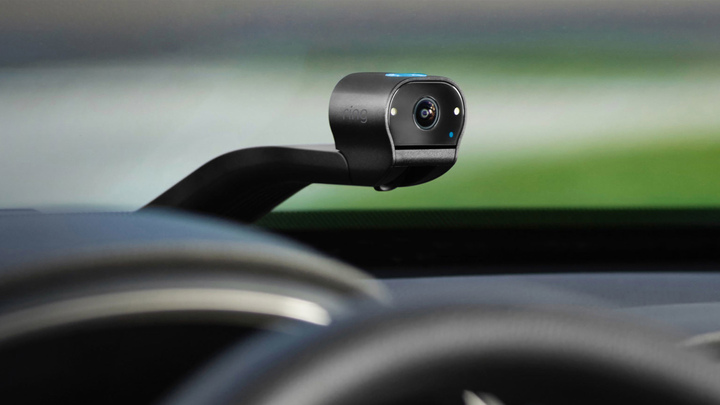
Amazon owns the home security and smart home business Ring LLC. The Ring Car Cam is now accessible for preorder, more than two years after it was first announced. The company’s first dashboard security camera is now available for purchase at Amazon.com or Ring.com for $199.99, a $50 discount off the list price. It will start shipping to US customers on February 15.

Ring
Image Source: geekwire.com

The new Ring Car Cam, which will be available later this year, adopts a novel strategy for the company by taking its security features to the road. A set of HD cameras are housed inside the modern design that sits on the dashboard and faces both into and out of the vehicle.

The night vision-enhanced wide-angle lenses encompass the road and the interior of the vehicle to guard against both accidents and break-ins. Ring adds its customary software to the hardware to enhance the Car Cam interaction.

Real-time notifications are powered by motion alerts, and a live view function that works well with two-way chat is also included.

Not to mention that the entire setup is Alexa-compatible, so one can ask the voice assistant to automatically record film to capture anything—including anything one has just passed on the road.

While driving, video can be automatically or manually recorded. If users purchase a Ring Protect Go plan, which includes LTE connectivity and costs $6 per month or $60 per year, they can access a live feed from the camera while they’re not in the car.

Additionally, the subscription includes 180 days of cloud storage for videos as well as real-time incident alerts in the Ring app. When the camera is linked to Wi-Fi, such as when parked in the driveway or via the hotspot on the phone, it can access local storage. While driving, video can be automatically or manually recorded.

If users purchase a Ring Protect Go plan, which includes LTE connectivity and costs $6 per month or $60 per year, they can access a live feed from the camera while they’re not in the car. Additionally, the subscription includes 180 days of cloud storage for videos as well as real-time incident alerts in the Ring app.

When the camera is linked to Wi-Fi, such as when parked in the driveway or via the hotspot on your phone, it can access local storage. When using the Traffic Stop feature of the Ring Car Cam, users can instantly begin recording during a stop or after an accident, for example, by saying “Alexa, record.”

The OBD-II port on the vehicle serves as the device’s power source. The cable is neatly secured between the windscreen and the dashboard with the aid of a tool that attaches to the windscreen.

For watching both recorded and live video from its two cameras, the camera integrates with the Ring app. For two-way communication from the automobile or to get in touch with others who are in the car, one may also utilize the built-in microphone and speaker.

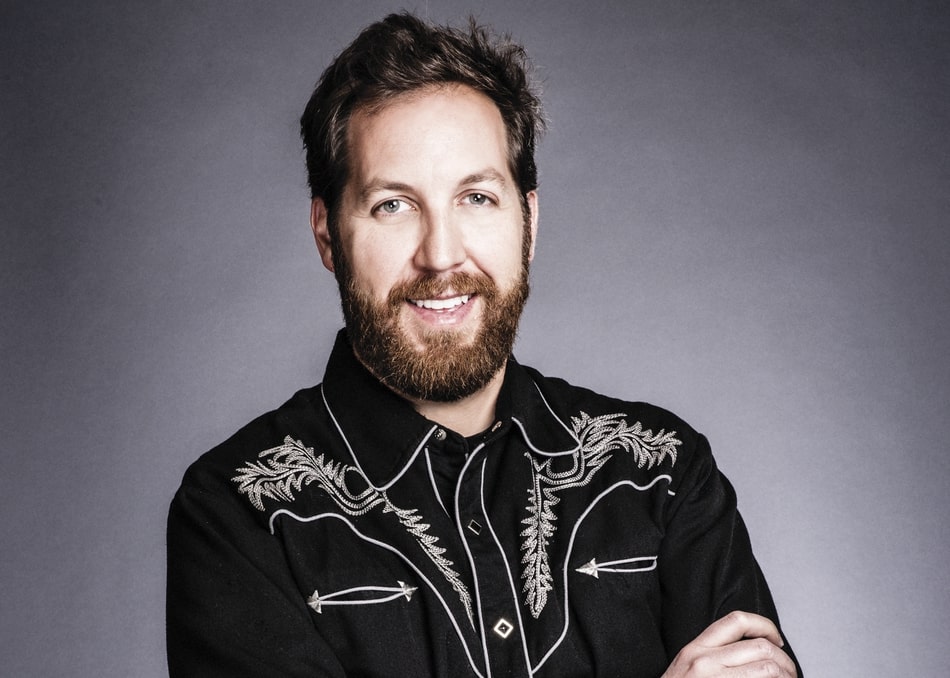
Chris Sacca

Chris Sacca: Most Successful Venture Capitalist

Chris Sacca is an American venture capitalist, business counselor, entrepreneur, and attorney.

About

He is the owner of Lowercase Capital, an American venture capital company that has made investments in seed and early-stage technology firms like Instagram, Uber, Twitter, Twilio, and Kickstarter. As a result of these investments, Forbes ranked him No. 2 on its Midas List: Top Tech Investors for 2017.

Chris Sacca
Image Source: forbes.com

Chris Sacca engaged in acquisitions and mergers while holding a number of positions at Google, where he oversaw alternate access and cellular operations. He made several “Guest Shark” appearances on ABC’s Shark Tank between 2015 and 2017.

Sacca announced his retirement from venture capital investing at the beginning of 2017. Sacca declared in 2021 that he was returning to venture investment with a focus on environmental issues.

Success Story

Chris Sacca, who was born in May 1975, attended Georgetown University to study law.

Chris Sacca began trading equities at this time using the money from his college debts.

He used leverage to turn $10,000 into $12 million, but he lost it all and wound up $4 million in debt which he eventually repaid. Sacca started his career in Silicon Valley in 2000 as an associate at Fenwick & West, where he managed venture capital, mergers, and acquisitions, and licensing transactions for clients in the technology industry like Macromedia, VeriSign, and Kleiner Perkins.

After being let off in September 2001 after working for roughly 13 months, he spent the following months going to networking events and “surviving” in Silicon Valley by creating contracts and working as a freelance voice actor.

He founded the consultancy company The Salinger Group in order to network, and in May 2002, he was hired by Speedera Networks According to Sacca, moving to the mountain hamlet of Truckee near Lake Tahoe in 2007 was a defining moment in his angel investment.

Sacca subsequently bought the house next door to entertain various visiting entrepreneurs after entrepreneurs like Travis Kalanick and Sacca would spend hours exchanging ideas when visiting the residence. He spent time practicing law and working for Google before launching his own venture capital business, Lowercase Capital, in 2007.

Returns are not disclosed in Lowercase. But according to records that were leaked to the media, Lowercase’s primary fund returned 447% of investors’ money in cash between 2010-2015, and it also claims to have unrealized holdings in digital companies that would have increased returns to 7,600%.

One of the most prosperous venture capitalists in history, Sacca’s early investment in Uber may have increased total profits to 216 times the original investment. When Twitter went public in 2013, Sacca used $1 billion in outside funding to purchase more shares from employees after making his initial investment of $26,000 in the company in 2006.

When the stock price was roughly double its current levels in 2015, he sold the majority of the shares. In total, he and his investors profited $5 billion from the business. In 2020, Sacca and his wife co-founded Lowercarbon Capital, a fund dedicated to combating climate change.

In August 2021, the company revealed details of its initial $800 million outside investment round. As of August 2021, the company had invested in about 50 businesses, many of which were start-ups devoted to eliminating carbon dioxide from the atmosphere.