Your Tech Story

Sandhya Gupta

I am a law graduate from NLU Lucknow. I have a flair for creative writing and hence in my free time work as a freelance content writer.

Fingerprint

Chrome Adds Fingerprint Unlock to Incognito Tabs on Android

Google unveiled a feature enabling fingerprint access to Chrome Incognito tabs as a celebration of Data Privacy Day. In 2021, this feature was made available to iOS users, and it is now available to Android users too.

The Android version of Google Chrome’s Incognito Mode will soon be more private. Google Chrome Incognito tabs will now be automatically locked whenever the browser is closed for Android users thanks to a new feature.

fingerprint
Image Source: itechpost.com

Users will now be able to unlock them using their smartphone’s fingerprint scanner and biometric authentication. In a blog post announcing the deployment of the Google Chrome feature, the company states that Android users would need biometric authentication to resume their Incognito tabs after closing and reopening the app. The Incognito session will therefore be inaccessible to anyone but the device’s owner.

Also Read: DOJ poised to sue Google over digital ad market dominance

According to the corporation, the feature is being rolled out to Google Chrome users on Android. It is important to note that users must activate the feature in Google Chrome’s Settings menu because it is not turned on by default.

Users can open Chrome’s settings menu, click on Privacy & Security, and then select Lock incognito tabs whenever they leave Chrome to activate this new privacy option. Once enabled, the feature will be available, and users will need to use their phone’s fingerprint sensor to “unlock” their Incognito tabs.

Additionally, users must give verification, like their phone PIN or pattern, in order to enable or disable this feature. By browsing incognito, users can avoid saving their activity data to their device or Gmail accounts and keep their search history secret.

In the meanwhile, Google has provided five tips for providing a secure browsing environment in advance of Data Privacy Day, which is observed on January 28.

Also Read: How to activate Bluetooth on the Google Stadia controller?

The capabilities allow users to use Chrome’s password manager on Android, iOS, and desktop to store and automatically fill passwords on their devices, as well as the ability to remove the browser’s data, including history, cookies, and cache, from a certain time or completely.

According to reports, Google is also developing a completely revamped menu with a new toggle that would allow users to instantly disable all harmful extensions. Extensions will be disabled and possibly harmful extensions will be blocked by the new toggle. Similar “pause extensions on this site” options are available in Microsoft Edge as well. The brand-new feature is now in development and is accessible in Chrome Canary.

Chrome is also enhancing Safety Check with “more personalized recommendations and reminders about what you have previously shared with websites and find those controls in one place to revoke permissions and protect your privacy.”

tech companies

Why are so many tech companies laying people off right now?

In the US, both private and public tech companies cut more than 1,07,000 jobs in 2017, and this January, thousands of workers at Google, Microsoft Amazon, Goldman Sachs, and Salesforce lost their jobs, bringing the total number of large tech corporate layoffs to about 60,000

Several of these layoffs are realistically related to the upcoming capital-raising challenges and possible recession. However, there is another significant reason for it, and it is related to the desire for growth in 2020–2021 and the notion that hiring is a symptom of it. Users, utilization, retention, revenues, and ARR should be the appropriate indications for this, and hiring should be a tool to support these.

tech companies
Image Source: channelfutures.com

The weak market is the clear cause of the layoffs. Nowadays, investors are increasingly cautious and don’t want to fund high-risk projects. Additionally, the number of initial public offerings (IPOs) anticipated in the coming years has decreased substantially, almost returning to the level it was three years earlier.

Also Read: Google Parent Alphabet cuts 12000 Jobs

If so, private venture-backed businesses will require a longer run rate to be able to go public, which may be accomplished in one of two ways: by increasing revenue or by cutting costs. Since investors are reluctant to make more investments, valuations have decreased, making it more difficult to raise significant sums of money.

However, there is yet another very important cause for the layoffs, and that is because some firms forced it upon themselves or because new investors forced it onto them. Many firms raised large sums of money during the bullish 2020–2021 market at extremely high valuations, which were occasionally exaggerated.

The investors encouraged the startups to flourish by promising them future growth. This includes hiring a lot of people in order to demonstrate growth, support the present valuations, and raise the next round’s valuation even further. Now, growth must be calculated using actual data. The key determinants of it are usage, retention, users, ARR, and revenues.

Read More: Discord acquires Gas, the popular teen app to compliment each other

It will frequently include employing individuals who will facilitate growth. In essence, it is regarded as an investment in future growth. As a result, many tech companies were keen to hire when expansion was the main priority for two reasons: Spending money to foster growth and fulfilling the goal of recent investors who were just interested in growth.

Nowadays, with lower valuations and a longer wait for IPOs, priorities are shifting, and most companies now place a higher focus on profit, even at the expense of slower growth.

Layoffs follow for two reasons: first, some of the hires were made while businesses were experiencing rapid development, and hiring was the key indicator to convince the Board of Directors or recent investors that they are doing the correct thing. The second justification is the most obvious.

When the expansion was the top priority, we needed a lot of people to work on it, but as soon as profitability became the top objective, many of these positions were no longer required. Unfortunately, the outcome is always the same: layoffs.

databricks

Journey of Databricks from Academia To A $6.2 Billion Business

Apache Spark’s developers formed the American enterprise software startup Databricks.

Databricks creates a web-based Spark platform with IPython-style notebooks and automatic cluster management.

About the Company

Databricks, a startup with headquarters in San Francisco, was established in 2013 and has roots in both open-source development and academia.

Databricks
Image Source: capterra.com

The company, which was created by seven co-founders and is propelled by enormous industry potential, aids data professionals, scientists, analysts, and engineers in cooperating to uncover value in data and develop solutions to the most difficult challenges in the world.

Databricks’ seven co-founders, all of whom were researchers at UC Berkeley, were able to capitalize on the idea that, when coupled with A.I., data offers the potential to treat illnesses, save lives, combat climate change, and even alter how we live.

Also Read: The richest man in the video game business

As a result, Databricks offers the only open, unified platform for full-lifecycle machine learning, business analytics, and massive-scale data management. This enables data teams to innovate more quickly and collaboratively.

History

Databricks CEO Ali Ghodsi has been interested in programming since his parents gave him an old Commodore 64 when he was eight years old. He pursued a Ph.D. in distributed computing as well as further study in computer engineering. Later, in 2009, he teamed up with Ion Stoica to establish “Spark,” which Matei Zaharia had already started.

They further collaborated with another machine learning team, and the two of them jointly launched “Apache Spark” on the market. Companies first paid little attention since the technology seemed foreign.

They were given some hope in 2013 when Ben Horowitz, co-founder of Andreessen Horowitz VC, invested $14 million in them and pushed them to create a business that would act as a platform for Apache Spark. As a result, Databricks was founded in 2013.

Success Story

Databricks’ technology, Spark, experienced tremendous growth and widespread use in 2015.

The rumor that the technology doesn’t operate if the data does not fit in the RAM was getting on the nerves of Databricks’ founders. They made the decision to turn to the market.

They participated in a nerdy contest. Reynold, co-founder and chief architect of Databricks, assisted the team in breaking the world record by sorting one petabyte of data at the fastest speed ever while using a lot less memory than one petabyte.

Also Read: Success Story of Fanatics’ Billionaire CEO

Due to media coverage of the accomplishment, Spark quickly rose to the top of the Gartner Hype Cycle and became the most widely used software. Databricks raised $883 million in several Series fundings between 2014 and 2019. Microsoft took part in the Series E fundraising round that helped to establish Azure Databricks in 2019.

The company announced that the company had made over $200 million in revenue that year. In the 2020 Magic Quadrant for Data Science and Machine Learning Platforms, research company Gartner named Databricks as a Leader. In the 2020 Cloud 100, the company was rated fifth.

As more businesses try to integrate data analytics into their daily operations, Databricks is now one of the pioneers in machine learning and data science.

Tesla

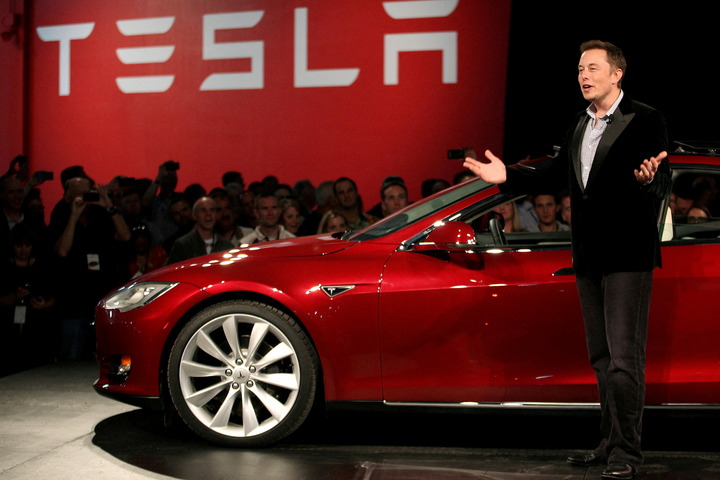
Tesla is getting cheaper. Is it a good move by Elon Musk?

Following a series of price cuts last week in Asia, Tesla reduced prices across the US, Europe, the Middle East, and Africa. Analysts viewed this move as a direct jab at both its smaller rivals who have been bleeding money and the traditional automakers who are hurriedly ramping up their production of electric vehicles.

Tesla
Image Source: reuters.com

According to adjustments made to the pricing of vehicle listings on its website on Thursday, the EV company has lowered costs on some of its popular models, such as the Model Y SUV and Model 3, by close to 20% across the USA and Europe. Even while the cars are still rather pricey, the premium pricing has significantly decreased.

Additionally, it’s a hint that Tesla is defending itself after months of gradually raising the prices of its cars. Price reductions follow the company’s failure to meet market expectations for deliveries last year, which coincided with an economic slump that reduced its market valuation from a peak of $1 trillion to less than $400 billion.

Customers from the United States and France may benefit from the federal tax credits and discounts offered in each nation for specific electric vehicle purchases.

Also Read: What Does Twitter’s 200 Million User Email Leak Actually Mean?

Before a $7,500 federal tax credit became available for several electric vehicles on January 1, those price reductions—which might reach as high as 30%—were already in place. Tesla also reduced the price of its Model S sedan and premium crossover SUV in the US.

Without identifying which costs were decreased, a spokeswoman for Tesla Germany claimed that cheaper price inflation was also a contributing element in price reductions in its top European market.

Tesla reduced the cost of the Model 3 and the Model Y in Germany by anywhere between 1% and approximately 17%. The most popular Model Y will now cost 44,890 euros ($48,499), which is a decrease of 9,100 euros.

Additionally, it brought down costs in Austria, Switzerland, and France. Customers in France purchasing the Model 3 for 44,990 euros will now receive a further discount thanks to a 5,000 euro government subsidy on an electric vehicle programme with a 47,000 euro threshold.

Since taking over Twitter, Musk has progressively expressed his displeasure with the Fed’s strong interest rate hike strategy to drive inflation down slightly to its objective of 2% on the network.

Also Read: Why Are US States Banning TikTok from official devices?

Tesla has suffered because of the increase in interest rates. Its stock lost favour with investors for the same causes that tech stocks as a whole are down; speculative businesses that gamble on the future are currently less enticing to investors than safe-haven value assets like commodities.

Since taking over Twitter, Musk has progressively expressed his displeasure with the Fed’s strong interest rate hike strategy to drive inflation down slightly to its objective of 2% on the network.

Tesla has suffered because of the increase in interest rates. Its stock lost favour with investors for the same causes that tech stocks as a whole are down; speculative businesses that gamble on the future are currently less enticing to investors than safe-haven value assets like commodities.

Google Stadia

How to activate Bluetooth on the Google Stadia controller?

Here’s how to sync the Google Stadio controller with other devices. Even though Google Stadia may be closing down, individuals who still own their controller will be able to utilize it over Bluetooth.

Although Google has stopped offering its Stadia cloud game streaming service, it is providing the wireless Stadia controller another shot as a Bluetooth controller that can be linked to PCs, Macs, phones, and probably other devices as well.

Google Stadia
Image Source: windowscentral.com

The modification will not be made automatically; it must be done manually and cannot be undone. Additionally, the change to enable Bluetooth wirelessly must be made by December 31st, 2023. Any unconverted Stadia controller would still function as a wired USB gamepad after that date, but it won’t be able to play games wirelessly.

Users need only adhere to these instructions to connect and pair their control through BlueTooth, according to the official Stadia Bluetooth blog post.

  1. First, toggle the Bluetooth setting on the Google Stadia controller.
  2. To activate pairing mode, hold down and press the ‘Y + Stadia keys for two seconds. If done properly, the status light will blink orange.
  3. Take hold of the device that you wish to play on and connect the controller with it in the settings. The Stadia controllers’ status light will become solid white if it is successful.
  4. If it was successful, the controller will subsequently connect with the device automatically in the future.

Some devices won’t be able to sync with the controller, per the Stadia blog post. It noted, “Not all Bluetooth devices are the same, so compatibility will vary. The Stadia Controller uses Bluetooth low energy connections, so some features, such as pass-through audio, aren’t possible wirelessly.”

Also Read: Can an Android phone run a PS2 emulator?

But the post goes on to say that its team has “verified that the Stadia Controller works for gameplay with the list of supported devices. It hasn’t been tested with all Bluetooth device types, so it might not work with others.”

Here are some suggestions to reset the controller and attempt to resolve the issue if you are having significant problems pairing your Stadia controller with your selected device.

  1. Inspect the controller to make sure it has a minimum of 30 minutes of charge.
  2. To restart the device, unplug the controller and press and hold the Stadia button for ten seconds.
  3. Holding the Google Assistant and Capture buttons for six seconds will force the controller to be reset to factory settings if the problem persists.

Customer assistance will not be open to inquiries about Bluetooth problems, according to Stadia.

The Google Stadia will sadly be going to shut down this year, and those who did buy games on the platform are furious about losing their progress and game data. Hence a lot of game developers have indeed been working tirelessly to ensure that users can move their Google Stadia data to other consoles and PCs.

AirTags

Is Google bringing its own ‘AirTags’?

Rumors suggest that Google is developing its own location-tracking tag to compete with Apple AirTags and Tile trackers. Based on recent revelations from Android leaker Mishaal Rahman, Google is purportedly developing a rival to Apple’s AirTag trackers.

There is speculation that Google’s Fast Pair is getting ready to add support for a new category of locator tag products, and the company is developing something like the distributed monitoring network Apple utilizes for AirTags. Finder Network branding could be present on this new product.

AirTags
Image Source: hindustantimes.com

Codenamed “grogu,” “groguaudio,” or “GR10,” this new tracking gadget will handle both BLE and UWB. It will come in a range of colours and have a tiny built-in speaker. The device’s functions and design, however, are not disclosed.

The device has been developed by Google’s Nest team, although it’s not obvious what the corporation intends to use it for. According to some reports, the device will be released in the first half of this year, albeit it might happen at the same time as the Pixel 8 launch.

Also Read: Will the metaverse be good for society?

Google’s Pixel 6 Pro and Pixel 7 Pro devices both support Ultra Wideband, just like AirTags and iPhone 11 and subsequent versions, and according to Wojciechowski, the trackers might support the wireless protocol in combination with Bluetooth LE to provide customers accurate directions to a lost tag. At its I/O Developer Conference in May, Google may also introduce new Pixel phones along with the tracking tags.

Apple’s AirTags has been a big success, but the corporation has encountered privacy concerns with the product. Google may require more time to think through potential outcomes and create safeguards for their edition of the tracker.

On the basis of this, it is plausible to predict that Google will develop security measures to prevent problems of a similar nature. In conclusion, it has not yet been proven that Google is developing a tracker that is comparable to Apple’s AirTags. The gadget, with the codename “grogu,” will enable BLE and UWB. Before releasing a product, Google might want to take privacy issues into account.

Users have found Apple’s AirTag feature to be a lifesaver, especially those who frequently have trouble locating their gadgets. The “Find My Feature” app enables users to easily track the location of their equipment and makes it easier for it to find them if they go missing.

Also Read: Is 2023 the year for Apple to launch its mixed-reality headset?

On Android, Google’s tags would probably be considerably more functional than Apple’s AirTags are able to be. While Apple does offer a “Tracker Detect” application in the Google Play Store that enables Android users to scan for AirTags as well as other Find My-enabled products that have been separated from one‘s owner, the app was primarily created to allay concerns that AirTags can be utilized maliciously to track the whereabouts of people

Dunzo, a Google-backed delivery company, was recently in the spotlight for its decision to terminate 3% of its workers. The Bangaluru-based startup competes in the same market as Blinkit, Swiggy, and WeFast. It is a platform for on-demand delivery that enables customers to order anything from the convenience of their homes.

As part of its cost-cutting initiatives, Dunzo has decided to lay off workers. In an interview with CNBC-TV 18, the firm’s CEO and co-founder Kabeer Biswas stated that the company is providing “the best support available” to assist employees during this trying period.