Your Tech Story

Athulya

Being a cinephile with a love for all things outdoorsy, Athulya never misses a chance to chase inspiring stories or poke fun at things, even when the subject is herself. Currently pursuing a degree in mechanical engineering, she is someone innately interested in technical and scientific research. Music reviews and op-eds define her as they allow her to explore different perspectives. Though sometimes she thinks she makes more sense playing the guitar than she does while writing.

automation

Automating the World: Story of George Devol

Robots have been mankind’s fascination for quite some time. But the last two decades have seen them grow from being a science fiction object to reality. Many industries around the world now employ robots to improve their production lines. Automation is no longer a thing for the future, but rather has become a reality. But how did we first start using robots? Here’s a look at the story of George Devol who developed the first known robot.

About the Creator

George Charles Devol was born in 1912 to a wealthy family based in Kentucky. He did his schooling from the famous Riordan Prep school. Following his graduation, he decided not to go for higher studies. Instead, he went into business and founded United Cinephone in 1932. The company produced recording equipment for motion pictures or talkies. But on discovering that companies such as RCA and Western Electric were also working on similar products, he dropped the idea. When WW2 descended on the US, he was working on a proximity controller for washing machines. Finally, in 1939 he filed for a patent for his RF-based controller. This device was the first of its kind and could open laundry presses automatically. However, due to the war breaking out in Europe, the patent office closed down, and hence, Devol could not get his patent.

Work with Radars

It was around this time that he sold his shares in United Cinephone. Briefly after that, he met with Sperry Gyroscope to discuss his ideas on radars. Sperry then hired him as a Special Projects Manager and allowed him to work on radar devices. As the war intensified, the Auto-Ordnance Company approached him to make products for them. However, Devol turned their attention to the emerging field of radar technology. Later, in 1943, he started working for General Electronics Industries which was a subsidiary of the Auto-Ordnance Corporation. He helped with the production of counter-radar devices. Under his tutelage, General Electronics became the largest producer of radar equipment for the American forces. He resigned soon after the war due to differences in opinion with regards to future products.

Creating Unimate

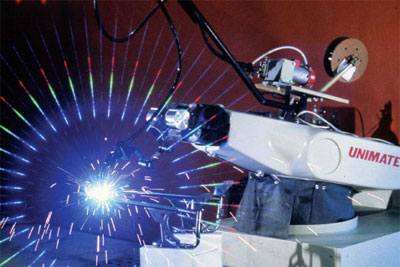
He followed this up by working as a sales manager at RCA. But, he quit this job as he felt he didn’t fit in and started work on his robot. A year later, in 1946 he created a magnetic recording system and applied for a patent for it. He helped with the creation of the first commercial microwave oven, known as the Speedy Weeny. By the early 1950s, Remington Rand was using Devol’s recording device. Soon enough, he became the manager of their magnetics department. Over there he worked on magnetic recording systems, high-speed printing systems and other such devices. While the idea would not work out, Devol’s magnetic invention later became the Unimate robot.

Patenting and Raising Funds


In 1954, Devol got a patent for his concept of Programmed Article Transfer which would become the basis for Universal Automation or Unimation. Devol’s wife, Evelyn suggested the name Unimate for the robot. At the time of filing the patent, Devol wanted Unimate to be a general-purpose machine. After securing the patent which did not have any citations, Devol looked for an investor. While he talked to many companies, they turned him down due to the risks involved. Finally, using family connections, Devol met with Manning, Maxwell and Moore. Joseph F. Engelberger served as the chief of engineering at Manning, Maxwell and Moore which was based in Connecticut. Engelberger found the project interesting and was about to invest in it. Unfortunately, the company was sold off that year and the plan fell through.

Forming Unimation Incorporated

However, Engelberger convinced Consolidated Diesel Electronic to back the development of the robot. Hence Codec, formed a new division called Unimation Incorporated and Joseph Engelberger served as its president. The first Unimate prototype relied on digital switches and transistors. Further, digital encoders and other electronic parts available in the 1950s were not adequate for the Unimate. Hence, under Devol, a team of engineers built all the parts for the Unimates. Devol as a part of the process invented new technologies such as the rotating drum memory system and parity controls.

In 1961, the first Unimate robot was sold to General Motors to help with die casting and spot welding. In 1961. GM’s plant in New Jersey became the first one to utilise a material handling robot. The robot helped in lifting metal from the die-casting machine and stacking them. Soon enough, companies like Chrysler, Ford, and Fiat started purchasing the Unimate. By 1966, full-scale production facilities were set up in Connecticut and Unimate became a resounding success in the field of material handling.

Resounding Success

By 1975, the company was cash positive and was making a profit. The Programmable Universal Machine for Assembly or PUMA robot came out three years later through a collaboration with GM. Since then, industrial robotics has grown to become a massive field with a lot of large-scale applications. So much so, that in 2003, Unimate became a part of the Robot Hall of Fame for being the first of its kind.

While the first robot took over $5 million to develop, industrial robotics is now a sprawling field. Devol would later go on to obtain several patents on visual sensors and magnetostrictive manipulators. He is hence, known for creating the field of “micro-robotics”. George Devol was 9 years old when the word robot was coined. Decades later, he would be the one to invent the first programmable robot, which in turn, started a revolution that continues even today. With over 40 active patents to his name, Devol spent his life-giving wings to his ideas and turning them into real products.

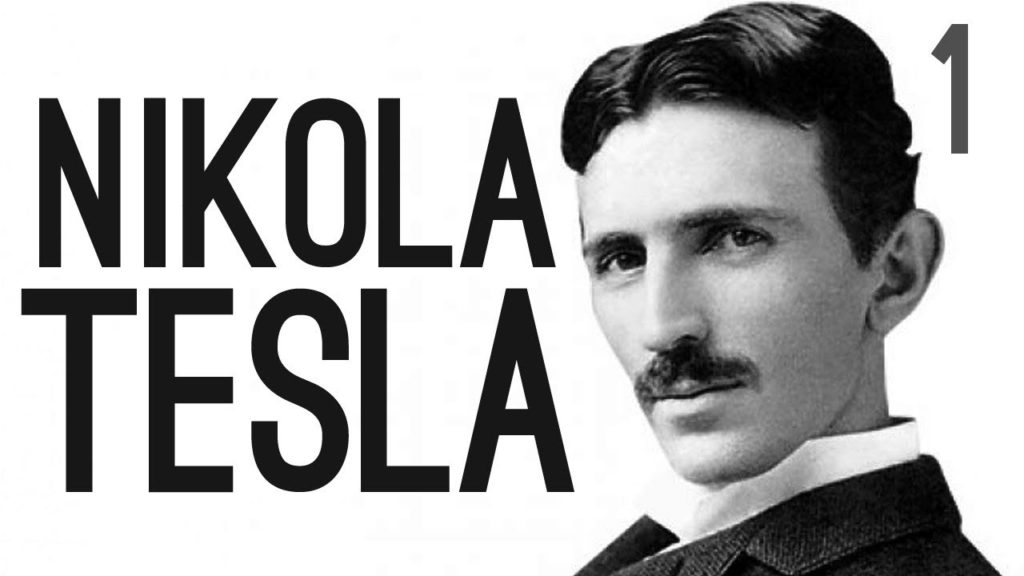
Nikola Tesla

Guiding the Future: Story of Nikola Tesla

Remote controls are without a doubt something that symbolises modern technologies. Most electrical devices we use come with a remote of their own, and most of us own at least a dozen remotes. We have remotes scattered on our coffee tables and even access devices from remotes on our phones now. Although we associate remotes to TVs, they were a staple long before that. So how did the remote control come to be? Read on to find out more about the history, origins and story of remote control systems.

About the Creator

Nikola Tesla was born in Lika in 1856 to an Eastern Orthodox priest who had an interest in mechanical appliances. He attended a primary school in Smiljan and completed his high-school from the Higher Real Gymnasium. His physics teacher inculcated in him an interest in electronics, and that would life-long passion for Tesla. He was a prodigy while at school, being able to do integral calculus in his head. Tesla ran away from home in the 1870s to evade enrolment into the Austro-Hungarian Army.

He then joined the Austrian Polytechnic and learnt electrical engineering but received no degree. Rather, he gained practical knowledge working for Central Telegraph Office in Budapest and the Continental Edison. In 1884, he shifted to the United States and worked for Edison Machine Works. He left soon after, setting out to form his laboratories and companies. His patent for an AC motor through Westinghouse Electric earned him large sums of money, which he utilised to fund his research. During the 1890s, Tesla pushed for wireless lighting and communication, becoming a pioneer in the field. with his devices.

The Famous Boat Experiment

Famous American inventor Nikola Tesla created the world’s first wireless remote control. He unveiled the system at Madison Square Garden in 1898 to much awe from the public. He called the system, which could control several mechanical devices, a tele automaton. To demonstrate his new invention, Tesla used a boat and controlled it via radio waves using a small metal antenna. Tesla sent radio signals to the using a version of remote control. The box consisted of a lever and a telegraph key and generated signals. These signals moved electrical contacts on the boat, adjusting the rudder, thereby controlling it.

Idea Catches On

Financially though, Tesla’s system was a flop. He planned on selling the system to the U.S. Navy, but the contraption was too unreliable for use in war. However, the idea caught on and spread like wild-fire to other equipment. Following in Tesla’s footsteps, Leonardo Torres-Quevedo devised a system utilising wireless telegraphs. With this system he first controlled a tricycle, then a boat, and later even submarine torpedoes.

Acts of War

These inventors led the way for the concept of remote controls. In World War I, Germany made use of such boats to launch attacks against the opposition. Hence, remote controls were the start of a new kind of warfare, which saw armies fight from a distance. During World War II, both the Germans and the Allies used several guided torpedoes and missiles.

Part of Our Lives

By the end of the 1940s though, remote controls became a part of consumer electronics, like garage doors and toys. Soon enough, several products started using technology, radically changing the technological landscape. Afterwards, Philco started production of radios utilising a wireless, battery-powered remote known as the Mystery Control. The most significant contribution, however, was of Zenith who introduced the Lazy Bones remote. Soon after, Eugene Polley made the Flashmatic TV remote, which made use of light technology.

Resounding Success

A few years later, Robert Adler, created a system which made use of ultrasonic sound in place of light. This new remote was more expensive but was still a resounding success. These clicker remotes forever changed the nature of the interaction between customers and electronic devices. It gave people the power to change channels without having to rise from their seats. Ever since then, remotes have been continually evolving, making use of IR technology, and even universal remote technology.
In 1898, the world had little understanding of Tesla’s brilliant idea. But in the years to come, the spark he started grew to become a raging flame. His innovation paved the way for future inventors to build a system that changed the world.

autocad

Drafting the Future: Success of CAD

Mechanical engineers rely on computer-aided d for most of their drafting. Most of the products we see around us use principles of CAD/CAM to generate prototypes. The world would not have so many innovative products, buildings and manufacturing tools if not for CAD. But who came with an idea to use computers for drafting? How did the Engineering Graphics we know, evolve to the stage is it has reached now? So, read on to know more about the success story of computer-aided design.

About the Creator

The American computer scientist, Patrick J. Hanratty, is commonly called the Father of CAD/CAM. He founded and served as the President of Manufacturing and Consulting Services Arizona. As per records, more than 70% of the CAD software we use now, is linked to Hanratty’s works.
Patrick J. Hanratty discovered his love for programming by accident! After serving his country during the Korean War, he returned home to figure out his future. One day, while going through the newspaper, Hanratty saw an ad for programmers in San Diego. He took up the offer and was hired at General Dynamic’s Convair Division, picking up programming along the way.

Hanratty earned a PhD from the University of California for his work on magnetic ink character recognition. He then worked for General Electric during the 1950s. In 1957, he wrote one of the first numerical control languages called Pronto. Further, in 1961 he switched to General Motors Research Laboratories. It was here that he helped in developing Design Automated by Computer. Later, he used GE’s equipment to standardise the characters used on bank checks. The American Bankers Association adopted this system in 1958, and their E-13B font is a standard in the industry.

Founding a Design Company

He found ICS in the 1970s as his first venture. Their first product was a CAD/CAM drafting tool which needed a computer few people owned. Also, the program for the tool was in TPL, a complicated language. He tried again in 1971, founding Manufacturing and Consulting Services. MCS wrote their software using Fortran, and their tools ran on most computers.

He named the product Automated Drafting and Machining, switched to AD-2000, and then Anvil-4000. Some of their famous clients were Computervision, Gerber Scientific and McDonnell Douglas. Furthermore, MCS built most of the popular CAD/CAM packages we use now. These include Auto-Grapl, Autosnap 3D, and Intelligent Modeler.

History of CAD

The CAD we know and love today is based on both PRONTO and Ivan Sutherland’s SKETCHPAD. Both these tools demonstrated the feasibility of computer-aided technical drawing. The initial CAD systems worked like replacements to drawing boards. Designers still used splines and arcs to create their drawings, but their productivity increased. Nevertheless, such modifications made CAD more affordable and user-friendly.

With the release of MAGI’s Syntha Vision, 3D features became popular. The sixties saw the rise of solid modelling and NURBS, which came in 1989, made solid modelling an industry standard. CAS Berlin developed NöRBS, a NURB-based PC software in 1993, and changed the industry forever. The 1980’s witnessed the development of parametric modelling. This led to a more intuitive, user-friendly and price method of modelling.

Present Day CAD

Most industries now rely heavily on computer-aided design and manufacturing software. They find use in almost all stages of design and production, and also help in engineering analysis. The systems have undergone massive changes, and simple desktops have replaced the bulky workstations. 3D Modelling is no longer a luxury, but rather a gold-standard and wire-frame models are rarely used anymore.

The application of computer-aided design has grown in recent years. It is not just a part of the design process anymore. But rather finds use in applications such as Google Maps to create outlines and plans of buildings. Also, Finite Element Analysis has grown to become the industry standard when it comes to engineering analysis. The structural integrity of all designs is tried and tested using this method.

Hanratty was an early pioneer of NC and CAD/CAM and changed the way the industry worked. If not for him, we would still be relying on physical drafting tools to design products. From being something used by a wealthy few, to becoming an industry-standard, CAD has come a long way. The future looks bright for the software, as more and more researchers work to innovate and improve the field.

IoT

Bridging the Gap- Success Story of IoT

The Internet of Things has brought the world together and finds large-scale application in several fields. Healthcare, agriculture, energy development, transportation and the communication sector have all improved thanks to IoT. But how did this revolutionary technology come to be? Here’s a look at everything you need to know about IoT and how it became such a huge success.

What is the Internet of Things?

British industrialist Kevin Ashton came up with the term Internet of Things in 1999. It essentially refers to a global network of devices, smart sensors, buildings and vehicles which connect via networking and electronics. These devices work together and collect data, transfers it and analyses it to learn from it. Everything from complicated cardiac sensors which monitor heart rates, to automatic lights which turn off when not in use come under this category.

About the Founder

Kevin Ashton was born in Birmingham in 1968. He studied Scandinavian Studies at the University College London and after graduating in 1994, joined Procter & Gamble in 1997. He later founded the Auto-ID Center with Sanjay Sarma, Sunny Siu and David Brock. The centre grew under their leadership and even brought in over 100 sponsors.

Once the research was completed, MIT licensed it to GS1. Ashton then found start-ups like ThingMagic, EnerNOC and Zensi, which was acquired by Belkin International in April 2010. He later worked on the Belkin Wemo system and constantly writes for the Medium and Quartz.

Coining the term Internet of Things

The term Internet of Things or IoT came to be when Kevin was making a PowerPoint presentation in the 1990s. He did so to convince a senior manager at Procter & Gamble, that the company should invest in RFID tags. While people at that time knew that the internet was big, they were unaware of its applications.

Hence, Kevin felt that having the word Internet in his presentation could help interest people. He hastily coined the presentation the Internet of Things as they wanted to monitor objects. Somehow, the gamble worked, and soon enough IoT became a popular phrase within the industry.

Building IoT

Kevin was bored with the term ‘smart packaging,’ by then. He explained to his colleges how this idea would work as a Network of Things. The internet was in many ways a Network of Bits. Put the two together, and voila, you get the Internet of Things or IoT. At the time he presented the name, there were no fireworks or large celebrations.

It wasn’t an instant success, but the name stuck. It was Gillette which decided to fund his research at MIT. Ashton relocated to Massachusetts and co-founded the Auto-ID Center; a research lab that laid the foundation of IoT.

Growth of IoT

Between 1999 and 2005, it wasn’t a popular term as the idea was very new. But in 2008, the phrase sprung to life due to developments in the field. An instance that helped was the exponential growth of Twitter. By 2008, Twitter had grown by about 750% and had reached 5 million users. The acronym IoT became viral, and the #IoT became a popular Twitter hashtag. Today, the Internet of Things is a part of our language and is one of the topmost business growth drivers within the industry.


Since then, concepts like Device to Device (D2D), the Electronic Product Code (EPC) and Enterprise IoT have taken over the world of technology. Studies predict that by 2020, there will be over 50 billion connected devices around the world. While the definition of the Internet of Things has changed along the way, Kevin Ashton’s vision made all this possible. Hence, he was referred to as the Father of IoT.

Are we Using the Term Right?

Kevin notes that the number of people using it, knowing what it truly means is few. People tend to misplace their true meaning and use it to refer to anything that is connected to their phones. In essence, IoT refers to sensors and devices that gather and transfer information about the real world through the internet. An easy example to understand what IoT means is that of your smartphone.

It has over ten sensors built into it, and they all connect to the network or internet in some way. You can do so many different things with your phone, including clicking pictures and navigating. That is the true essence of the Internet of Things.

Twenty years ago, when Kevin Ashton sat in Procter & Gamble’s R&D centre in Surrey, he never knew he was going to change the world. The 30-year-old computer scientist just wanted to get the company to use RFID tags to monitor their products. But since then, the term and the technology has come a long way, and none of it would have been possible if not for Kevin.

Phone

Best Phones Under INR 10,000 for Indian Market

Are you looking for the best one under INR 10,000? Well, if you are, then you are in the right place! As technology surges ahead becoming more affordable by the day, features such as high-functioning rear cameras, full HD displays and fingerprint sensors are becoming a common part of even budget phones.

The sub-10,000 market is a very significant one in India and contributes heavily to annual mobile phone sales in the country. There were several new entries into the scene this year and since most of them offer great specifications, it becomes difficult to choose the right model. Therefore, here’s a little something to help you out. Heres a comprehensive look at the five best phones under Rs 10,000 in India.

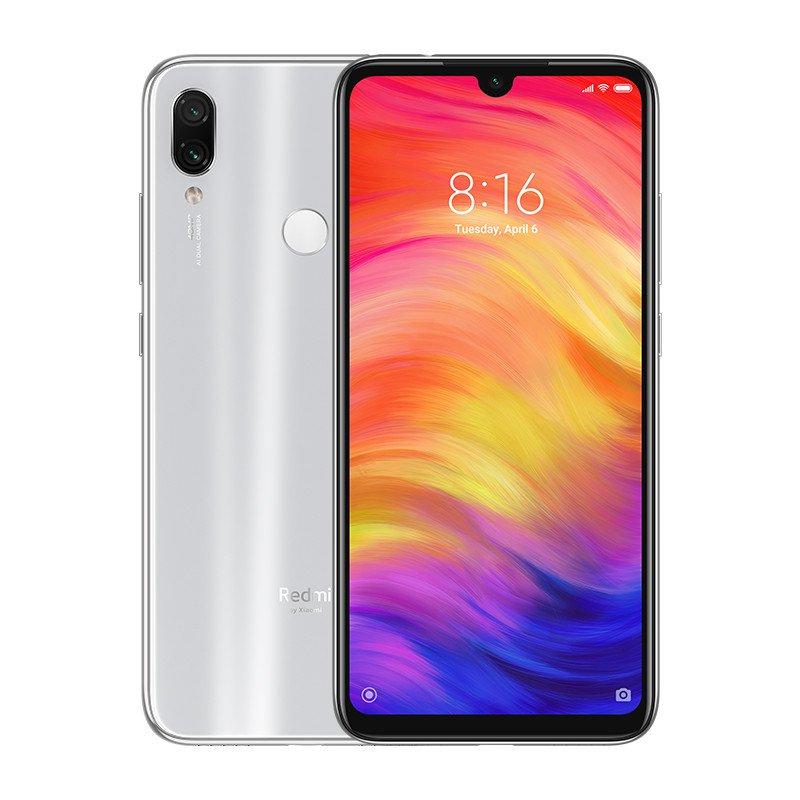
  1.   Xiaomi Redmi Note 7 

The Redmi Note 7 does not offer a 48MP camera, but it comes packed with power as it runs on a Snapdragon 660 SoC that will not let you down when it comes to performance. The vibrant display and new colour gradient make the phone visually stunning. 

It is similar to the Asus Pro M2 but comes with a smaller battery that is well capable of lasting a day and a half.  Performance is where this phone outshines its competitors because the Snapdragon processor makes this phone the fastest in the market for this price range. 

The camera performance, like with all Xiaomi phones is quite good, and the front camera produces some memorable selfies.   The night mode in the primary camera has been well appreciated by users, and so has the noise reduction feature in the video recording. 

Designwise, the screen is protected by Gorilla Glass 5 and has an exceptional finish. The only downfall would be the UI as the phone runs the MIUI 10, which is notorious due to the server ads that it comes with, but overall the phone works great.  

If you don’t mind splurging a little extra, the Redmi Note 7S is a great option, as it sits between the Redmi Note 7 and Redmi Note 7 Pro. This was runs on the MIUI 10.3 and allows a lot of customisations. The major difference though is the camera, as the Note 7S supports a 48MP primary sensor making it a great camera phone.  

2.   Realme 3 Pro 

The Realme 3 Pro is considered one of the company’s flagships and has been designed to go head to head against the Redmi Note 7 Pro. Similar to the Realme 2 Pro in terms of design, the phone features a small notch and slim.

The 6.3inch fullHD+ display helps in bringing to life vivid colours and perform commendably even under direct sunlight. The phone also has three slots, meaning you have enough space for two NanoSIMs and a microSD card. It comes with the Qualcomm Snapdragon 710 SoC., which is one of the best ships in the under 20,000 market. 

The phone comes in two varieties; 4GB RAM and 6GB RAM. The OS used is similar to the Android 9 Pie and runs smoothly.   The phone, thanks to the great processor can handle intensive apps and games and does not heat up at all. 

3.   Samsung Galaxy M10 

The most significant advantage that the Samsung Galaxy M10 provides is that it houses an ultra-wide-angle camera which was not something you would regularly see in the under Rs10,000 segment, making it an excellent buy for the price.

The primary camera does a great job, as with all Samsung phones when the lighting is good enough, and the display stretches till the end, making it a great phone to watch videos and movies on. As long as you don’t want heavy multitasking, the phone is an excellent buy for the price, and the battery is good enough for it to last over a day on a maximum charge.  

 However, the old chipset is not the most reliable, and hence, performance suffers as a result of this. But thanks to optimisations Samsung has deployed, the phone works well enough and can handle a multitude of apps reasonably well. The waterdrop notch on the screen, makes the phone’s display the best in the under 10,000 categories.  

 Further, if you don’t mind splurging a little more, the Galaxy M30 is a great option. The 3GB variant of this phone falls in the under 10,000 categories and is a great buy for the price, sporting a Super AMOLED display. The fullHD+ panel gives crisp images and the Samsung Exynos 7904 SoC also allows for intensive gaming and app use.  Once again, as with most Samsung processors, the device does tend to heat up when used for extended periods of time. However, the greatest drawback is that it comes with an Android Oreo and not Android Pie.   

4.   Realme 5

The Realme 5 comes with an updated crystal back panel and polycarbonate exterior, making it a little heavier than its predecessor. The phone has a huge 6.5-inch HD+ display, which has good brightness optimisation even though the resolution is a little low. The phone, much like most Realme phones, has three slots in the side, allowing the phone to carry Nano-SIMs and a microSD card.

The Realme 5 runs on the ColorOS 6.0.1, which resembles the Android 9 Pie, allowing a lot of customization options such as gestures and shortcuts. The phone utilizes a Snapdragon 665 SoC which allows for intensive gaming without much heating up. The phone sports four cameras in the back, and is the first sub-10,000 phone to do so. These include a primary camera, a depth sensor, a wide-angle lens and a macro lens.

The 13-MP front camera gifts you some great selfies, while supporting video stabilization. While the cameras do a great job in good lighting, they struggle to capture the same quality under low-lighting, which is the main drawback of this phone. The 5000mAh battery can easily last a day and half on a single charge. That is a good thing, given that the phone does not support fast charging. The phone has multiple variants, with the base variant which comes stocked with 3GB of RAM is a good buy at 9000.

5.   Asus Zenfone Max Pro M1 

The Asus Zenfone Max Pro M1 is similar to the Redmi Note 5 Pro but outperforms it as it comes with stock Android. The build quality is fantastic, and the phone feels very robust and sturdy while the 16 MP dual back camera is quite adept at capturing pictures.  

The fact that it comes with the Android 8.1 Oreo helped in boosting sales, and it looks like it will end the year as one of the most popular budget phones. They also provide regular updates for the UI, making it a reliable phone that stays relevant. The phone also comes with a massive 5,000mAh battery that ensures that it will stay alive even under strenuous use.  

adp

Pay Up, America! – Success Story of Automatic Data Processing

Automatic Data Processing, Inc., referred to as ADP, is a leading provider of payroll management services in the US. It is regarded as one of the very few companies in the US, that had an AAA credit rating issued by both Standard & Poors and Moody’s. Here’s a look at everything you need to know about the growth of ADP.

About the Founder

Henry Taub was born on September 20, 1927, in Paterson. The American businessman who has both Hungarian and Jewish ancestry co-founded ADP. Taub attended Eastside High School, and did his graduate studies from the New York University in accounting, graduated in 1947. Two years later, in 1949, Taub founded Automatic Payrolls Inc., which was a payroll processing service in New Jersey. That company later came to be Automatic Data Processing and grew to become the leading computerized payroll management service in the U.S.

He retired from ADP in the mid-1980s. Taub served as the president from 1949 to 1970 and then worked as a CEO for seven years till 1977. Also, he was a chairman till 1985, served as an honorary board member till his death.

After retirement from ADP in the 1980s, Taub served as a Board of Governor in American Technion Society between 1990 and 2003. He passed away in 2011, owing to complications which arose as a result of his leukaemia.

While at ATS, his wife and he were responsible for handling several projects such as the Henry and Marilyn Taub Science and Technology Center, a Faculty Recruitment Program and the Taub Fund for the Future.

Founding ADP

n 1949, Henry Taub and his brother Joe together founded Automatic Payrolls, Inc. which served as a manual payroll processing company. The brothers were joined by Frank Lautenberg and in 1957, Lautenberg, who had previously worked in the sales and marketing division, became a partner.

While starting, the brothers had to make do with a shoestring operation and so often delivered payrolls by bus and even cleaned their own offices during the night.

Henry provided the vision and strategy for the company, while Joe managed the operation and regular running of the company. Meanwhile, Lautenberg handled all the sales and marketing the company had to do to gain clients.

After four years, in 1961, the company switched names to Automatic Data Processing, Inc. and upgraded their manual business to a more automated form which utilized card machines, printing machines, and computers.

The company went public the same year, employing over 125 people, and having around 300 clients. ADP generated revenues worth US$400,000 in its first year.

When the business started picking up, the brothers decided to expand, and so, in 1965 they set up a branch in the UK.

By 1970, Lautenberg had taken over as the president and ADP switched over from the American Stock Exchange to the New York Stock Exchange. In 1974, they acquired Time Sharing Limited, which was a company that specialised in providing computer-related services, and a year later they acquired Cybernetics.

By 1972, the company had several dealer franchises and renamed its auto-division, ADP Dealer Services to CDK Global. Lautenberg remained the CEO until he resigned when he became a part of the US Senate in 1982.

Bringing in the Big Bucks

The company grew exponentially in the 1980s and by 1985 was making more than $1 billion a year. The company handled almost 20% of the entire American payroll market. Such growth helped propel them into other avenues such as employee services management.

In the 1990s, ADP acquired HR companies such as Autonom, GSI, and Chessington Computer Centre which handled administrative services. By the early 2000’s they were expanding aggressively, having acquired companies such as Kerridge Computer Co.

which specialised in creating dealer management systems for auto part dealers. A year later, ADP made its foray into the world of brokerage and insurance, by setting up the ADP Brokerage Service Group. In 2010, they bought the auto-marketing enterprise Cobalt, to improve their footing in the field of automobile manufacturing.

Automatic Data Processing Inc

Fast forward seven years to 2017, Automatic Data Processing Inc. was employing more than 56,000 people worldwide and generated revenues over $12 billion.

This helped the company become the largest HR service provider in the Northern half of the world, with services spread across Europe and North America. In 2018, the company acquired WorkMarket, which helps companies manage freelancers and contractors.

The company now operates in over 112 countries and has won several accolades and laurels such as, “Most Admired Fortune 500 Company”, “100% CEI rating” and 47th on a list of Best places to work by Computer World.

Such growth rates and revenues make it clear, without reasonable doubt that ADP is the largest HR service provider for the whole of North America, Europe, Latin America and the Pacific Rim.

With the handling of employees becoming a growing concern for companies around the world, it is safe to say that the company will be making big bucks in the years to come.