Your Tech Story

Athulya

Being a cinephile with a love for all things outdoorsy, Athulya never misses a chance to chase inspiring stories or poke fun at things, even when the subject is herself. Currently pursuing a degree in mechanical engineering, she is someone innately interested in technical and scientific research. Music reviews and op-eds define her as they allow her to explore different perspectives. Though sometimes she thinks she makes more sense playing the guitar than she does while writing.

product hunt

Launch and Scavenge Every Day: Success Story of Product Hunt

Product Hunt entered the internet space in 2013 and is a website that allows users to share and discover new products, virtually every day. Founded by Ryan Hoover, and backed by Y Combinator, it allows users to submit products, and then issue polls much like Reddit. So, how did this innovative idea come to be, and what is the future of Product Hunt?

About the Founder

Ryan Hoover comes from an entrepreneurial household, wherein his parents ran their businesses. This gave him an early start in life as they encouraged him to start new projects and generate new ideas. He held several jobs before founding Product Hunt. This even includes running a gumball machine in his parent’s video game store when he was eleven. It was through such experiences that he learned to manage expenses and save money. He has also worked for a website that makes banner ads, done freelance yard work, and worked at a home improvement store.

After graduating from the University of Oregon, Hoover an internship at a startup which became a full-time job as a product manager in Portland. In 2010, he moved to San Francisco and joined the start-up PlayHaven as their tenth employee. Afterwards, he helped Nir Eyal write his book Hooked: How to Build Habit-Forming Products. Soon after, he founded Product Hunt, and the rest is history.

How it Works

Every day, the product which has the most votes becomes the daily winner and ends the day on the top of the list. Products usually fall under four main categories- hardware and software products, games, books and podcasts. All members of the community can submit products, and all it takes is a title, URL, and tagline. The website also sends out a daily newsletter highlighting the best product of the previous day.

Starting Strong

The website began as a simple mailing list utilising Linkydink. The idea took off, and a week later, the email list had over 100 participants. Two weeks, they had more than 170 subscribers and 30 contributors. A year later, they had Y Combinator backing them, thanks to the uniqueness of their idea. Nathan Bashaw and Ryan Hoover built the website over their Thanksgiving break in 2013. Meanwhile, Hoover was working on a community strategy to build Product Hunt’s online presence.

A year after launching, they went in for a funding round. Andreessen Horowitz helped them raise over $6.1 million. A year later, they won a Crunchie award for being the best new start-up on the block. The same year, the website started their podcast. However, they ended it soon as it was distracting users from the website’s main objective of introducing products.

A Resounding Success

By 2016, Product Hunt was so popular, that it had helped in discovering over 100 million products made by more than 50,000 companies. The same year, AngelList acquired the company for more than $20 million. A couple of months later, they redesigned their homepage and even launched an app for iOS users. In 2017, they launched Ship, which was a set of tools for creating demand for products. A year later, they launched a news aggregator called Sip. Recently, they launched a Launch Day initiative to help makers monitor their product on the website with ease.

Product Hunt has been so successful that the team even published a book, titled How to Build a Career in Tech. Ryan is behind one of the most unique and popular websites in the world, and the future looks bright for him, and his wacky idea. While the initial inspiration was to explore new technology, Product Hunt now helps entrepreneurs around the world launch their products with ease. With over 1 million registered users and more than 20,000 products launched on, it is safe to say that Product Hunt is here to stay!

yahoo

Goodbye Yahoo: yahoo to shut down community website

If you grew up in the ’90s, chances are that you have used a Yahoo account at some point. The 2000s saw the rise of Yahoo as a big shot with several well-run communities and networks. Since then though, its popularity has dwindled thanks to stiff competition from social media sites like Facebook and Twitter.

However, Yahoo recently released a notice in early October stating that it is closing down the Yahoo Groups website. A popular website back in the day, Groups presented a mix of community forums and mailing lists that people don’t use now. Here’s a look at everything you need to know about the notice, and its impact.

End of an Era

The notice said that users could add new content up to Oct. 28. Following this, on Dec.14, all content will be wiped for good. Therefore, the company has given users time till 14th to back-up their data, and save what they have uploaded. Everything from files, photos, links and polls to attachments will be cleared off the site.

What will remain is the option for users to communicate with their group members through email. However, the website will continue to live but all groups will be private and admins will only have access to limited settings and functions. Yahoo did not clarify why Groups was shutting down. Groups had always been an extension of real-life communities, helping to bring people together across various common interests and friends. The notice also has a link explaining how to save user data. But before that, what exactly was Yahoo Groups?

History of Yahoo Groups

Launched in 2001, Yahoo Groups came when the dotcom boom was at its peak and during its heyday had millions of users. The online discussion portal faced severe competition from the rise of social media sites such as Facebook and Reddit. As people switched to other such platforms, Groups fell behind and was left with a few loyalists. So much so that, several groups on the website have not been upgraded in years! While certain forums on the website are new, it does not provide the kind of interface that Facebook or Instagram does, and hence struggled to retain users.

Rise of Yahoo Groups

Yahoo Groups was once a very popular forum which helped people with common interests connect for almost two decades. At the height of its popularity, that is during 2010, Yahoo Groups boasted of over 115 million active users. To help people build and maintain virtual relationships, the website had over 10 million groups.

Due to a large number of users, Yahoo had enough power to make over 100 carriers and mobile manufacturers pre-install their apps on new devices. To keep Facebook at bay, Yahoo promoted new and unique features such as subgroups, and private chats. But despite their best efforts, Yahoo was fighting a losing battle. With Instagram exploding around that time, users quickly migrated to rival platforms. Hence, it is safe to the say that the shutdown as imminent, being a long time coming!

How to Save Files

To save their data, Yahoo users can download it from their Privacy Dashboard. The notice also links to a Yahoo web-page that explains how to download your data and save it. However, the process is quite cumbersome as you have to individually download each file or photo. Users also have the option of requesting a complete download to the company. This request will take up to 30 days to process, and the download will be available only after that. Afterwards, the group will have only basic communication features. Functions such as attaching photos, polls, links and calendar will be lost forever.

Takeover and Promises

Verizon acquired Yahoo in 2017 in a deal that was worth $4.48 billion and created Verizon Media. Verizon Media too failed to compete against Google and Facebook and is being forced to cut their budget and staff. Strangely enough, the notice regarding Yahoo Groups went away quietly, only being mentioned in small support documents. However, as a sign of good faith, Jason Scott from The Internet Archive has promised to save as much content as possible. So maybe it might not all be lost forever.

Yahoo had previously removed their application GeoCities, taking with it 7 million websites. Digital archivists tried then as well to save whatever they could. Also, before that, they had winded up their Maps site in 2015, and their messenger last year! Sadly, each shut down such as this leads to the erasing of internet history, making it a pivotal moment. While many of you might not have used it in its full capacity, you might have been part of a fan club or movie club. Make sure you do visit one last time before Yahoo effectively erases that part of your childhood.

cognizant

Transforming India’s Digital Landscape- Success Story of Cognizant

A while back Cognizant went ahead of Infosys to become the second-largest IT company in India. It was an iconic milestone wherein a pioneer gave to a young contender, the baton for the future. The man steering this rise of Cognizant was a boyish-looking, exuberant 44-year-old by the name Francisco D’Souza. Here’s a look at how the mild-mannered D’Souza has energized and uplifted the technology company to even greater heights.

About the Disruptor

Francisco D’Souza was born in 1968 in Kenya to Placido D’Souza, an IFS officer and Sushila. Most of his childhood was spent shuttling between countries and D’Souza has lived in over 11 countries. He graduated from the University of East Asia Macau with a degree in Business Administration. He followed this up with an MBA from Carnegie Mellon.

After graduating, D’Souza joined Dun & Bradstreet in 1992, as a management associate. Cognizant started as an experiment two years later within Dun & Bradstreet. Francisco led this experiment, which later turned into a full-on, in-house project. From 1996, D’Souza held various positions in Cognizant and joined the Board of Directors in 2007. Six years later, Francisco joined General Electric, becoming the youngest member on their board. In 2018, he became the Vice-Chairman of the Board at Cognizant.

Founding Cognizant

Cognizant began as an in-house unit of Dun & Bradstreet in 1994. The company started catering to the needs of external clients in 1996 and went public two years later. Cognizant was one of the fastest-growing companies in the early 2000s and became a Fortune 500 member in 2011.

Initially, it was set-up to help Dun & Bradstreet manage large-scale IT projects. Two years after its creation, Dun & Bradstreet merged Erisco, IMS International, Nielsen Media Research, Strategic Technologies and DBSS, to form Cognizant Corporation. The same year, the company changed its name to Cognizant Technology Solutions. In 1997, Dun & Bradstreet acquired 24% shares of DBSS for $3.4 million. A year later, the company moved its headquarters with Kumar Mahadeva serving as the CEO.

Early Days

The same year Cognizant Corporation, split into IMS Health and Nielsen Media Research, with the technology wing becoming a part of IMS Health. In June the same year, IMS Health went public with Cognizant stock raising $34 million. Kumar Mahadeva focused on applications management, and the company grew under his leadership.

In 2002, Cognizant brought in over $229 million, with zero debt. In 2003, IMS Health sold their 56% stakes to prevent hostile takeovers and Lakshmi Narayanan replaced Kumar Mahadeva as CEO. Gradually, the company expanded and ventured into the fields of business process outsourcing and consulting. Finally, in 2006, D’Souza took over CEO from Lakshmi Narayanan. The company then grew exponentially, becoming a part of Fortune’s 100 Fastest-Growing Companies list from 2003 to 2012.

Growth and Success

In 2014, Cognizant acquired TriZetto which specialises in healthcare IT services for $2.7 billion. Owing to this stellar buy, the shares of Cognizant rose by over 3% on that day. A year later, they signed up with Escorts Group in India to help them transform their business segments. The same year, they partnered with NTUC FairPrice to help them revolutionise their business.

Currently, Cognizant employs over 280,900 people globally, with more than 150,000 based in India. The company has centres in main cities such as in Bangalore, Chennai, Noida, Hyderabad, Kochi, Mangalore and Mumbai. Globally, they have centres in Spain, China, Canada, Mexico, Argentina and Brazil. Under D’Souza their revenue increased from $1.42 billion in 2006 to $16.1 billion in 2018. It will be interesting to see how Cognizant utilises its presence to further change the digital landscape in India.

accenture

Accent on the Future: Success Story of Accenture

Accenture is one of the largest professional services companies in the world and provides consulting for a wide range of operations. They are one of the biggest multinational companies in finance, consulting and management. With revenues over $39.6 billion, and operations in more than 120 countries, this Fortune 500 Company is a global leader in consulting services. So, how did Accenture’s story start, and who is responsible for this stellar growth?

About the Author

Arthur Edward Andersen was born in 1885 in Illinois to Norwegian immigrants. His parents died when he was 16, leaving Andersen to fend for himself. He graduated from Northwestern University with a degree in business by struggling through night courses. Andersen worked as a full-time mail boy while he was at college, to support himself financially.

Following his graduation, he started working in Chicago as the controller of Allis-Chalmers. He became a Certified Accountant in 1908, becoming the youngest person to do so in Illinois. While serving as an accountant, he worked as a professor at Northwestern. A couple of years later, in 1913, he formed Andersen, Delany & Co, with Clarence Delaney. Five years later, Andersen bought Delaney out, and the firm became Arthur Andersen & Co.

Founding Accenture

Accenture initially came under an accounting firm called Arthur Andersen LTD. They handled payroll processing operations and other such outsourced processes. The company was mainly based in Kentucky. In the 1950s, the accounting firm Arthur Andersen was helping General Electric with a feasibility study regarding the use of computers. This was the first time computers were used for commercial applications in the US. Andersen got the job thanks to his Joseph Glickauf, who was an early pioneer of computer consulting, working at the firm.

From Andersen to Accenture

After the split, Andersen Consulting had to pay Arthur Andersen 15% of its profits annually. Meanwhile, Arthur Andersen competed against Andersen Consulting via Arthur Andersen Business Consulting. This led to heated arguments and disputes. In 1998, Andersen Consulting claimed a breach of contract against Arthur Andersen.

Two years later, as per the guidelines stated by the International Chamber of Commerce, the two companies severed all ties. As a settlement, Andersen Consulting paid Arthur Anderson $1.2 billion and renamed itself Accenture. “Accenture” comes from a combination of the accent and future of the word, as per the phrase “Accent on the future”. Kim Petersen, an employee from the Norway office submitted the name through an internal competition. They launched their IPO in 2001, at $14.50 per share, on the New York Stock Exchange.

A Stellar Success

The IPO helped Accenture raise $1.7 billion and the day closed with the shares at $15.17. Accenture employs over 459,000 people and has clients in more than 200 cities around the world. In India alone, Accenture employs more than 150,000 technicians. As the company grew, so did their client base, and Accenture now serves 92 of the Fortune 100 and three-quarters of the Fortune 500. The company was incorporated in Ireland in 2009, becoming Accenture plc. HealthCare.gov initiate chosen them as the lead contractor in 2014 for $563 million. The following year, they won a Defense contract from the US, valued at $4.33 billion.

In 2017, Apple Inc. announced that it would be partnering with Accenture to develop iOS software. A year later, they generated $4.060 billion, growing by over 13.4% compared to the previous year.
Currently, Accenture’s shares are worth $159 per share, and the company is worth over US$104.2 billion. It is safe to say that Arthur Andersen gave the world one of that biggest companies in the world, and is hence, rightfully a member of the Accounting Hall of Fame.

hoverboard

The Future is Here- the success story of the hoverboard

How many of us have watched the movie Back to the Future and dreamt of owning a hoverboard? Most kids dreamt of owning this uber-cool device which is both modern and efficient. Well, they turned from a figment of our imagination to reality a few years ago, thanks to one man. Here’s a look at his story and everything it took to develop the hoverboard.

About the Founder

Shane Chen was born in Beijing, in 1956. He has a degree in agricultural meteorology from the Beijing Agricultural University. Since communism in China made it difficult to start and grow a business, Chen immigrated to the US. He founded his first company, CID, Inc in 1988. The company which now goes by the name CID Bio-Science made scientific instruments for agricultural research. Some of their products include a photosynthesis meter, a canopy analyser and a leaf scanner. Later, Chen sold the company in 2009 to become an inventor of consumer products.

Fun Inventions

Way back in 2003, Chen founded Inventist, Inc., which he used to develop products for mainstream consumers. He entered the retail space in 2003 with the AquaSkipper, which was a hydrofoil water craft. The invention won several awards and helped Chen gain some media attention. The History Channel’s show Modern Marvels also featured the product due to its creative and innovative approach. In 2006, Chen patented a three-wheeled scooter and sold it to RazorUSA. His notable products include the Orbitwheel Skates, Lunicycle and Solowheel.

Creating the Hovertrax

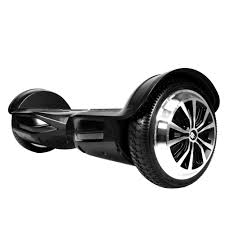
He filed for a patent for the hoverboard in 2012, following which he started making the product. The Hovertrax hit the markets in 2013 and was the first self-balancing scooter or hoverboard. A hoverboard works as a personal transporter and has two wheels connected to pads the user plants their feet on. By leaning forward and backwards, users can adjust the speed of the device. Furthermore, twisting the pads help in changing the direction of travel. Chen launched a Kickstarter campaign in 2013 to fund his idea.


However, the device brought along with its complex patent disputes. Though mass volume manufacture began in 2014 in China, safety issues plagued the device. An overheating battery made early units prone to catching fire leading to product recalls in 2016.

Phenomenal Success and Battles

The device became increasing popularity in the West, due to usage by celebrities like Justin Bieber, Chris Brown and Wiz Khalifa. PhunkeeTree noticed the device at the Hong Kong Electronics Show and started distributing it soon after. By June 2015, several manufacturers were making the board in Shenzhen and Chen decided to pursue litigation. Chen has voiced his frustrations on the lack of clarity regarding patent rights in China. Within a year the U.S. Trade Commission served notices to UP TECH, FreeGo China, Robstep, and Tech in the City for patent infringement.

Also, faulty wiring and bad batteries resulted in units catching fire in various countries around the world. Soon after, many airlines banned taking these boards or transporting them via a flight. The US Product Safety Commission launched an investigation in 2015, and in 2016 ordered over 500,000 units to be recalled. The Swagway model X1 suffered the largest as the company recalled 267,000 units. However, these issues were quickly resolved and the design took off, selling like hotcakes.

IOTAtrax

Chen has since moved on and is now working on a new device, called the IOTAtrax. This one seeks to combine the Solowheel and the hoverboard, making it a hybrid like no other. The success of the hoverboard is a testament to how the future is closer now than ever before. Inventions we deemed impossible just a few years back are turning into realities, right before our eyes. Also, with people like Chen leading the way, it is safe to say that the Future is here for the taking.

Also, faulty wiring and bad batteries resulted in units catching fire in various countries around the world. Soon after, many airlines banned taking these boards or transporting them via a flight. The US Product Safety Commission launched an investigation in 2015, and in 2016 ordered over 500,000 units to be recalled. The Swagway model X1 suffered the largest as the company recalled 267,000 units. However, these issues were quickly resolved and the design took off, selling like hotcakes.

Chen has since moved on and is now working on a new device, called the IOTAtrax. This one seeks to combine the Solowheel and the hoverboard, making it a hybrid like no other. The success of the hoverboard is a testament to how the future is closer now than ever before. Inventions we deemed impossible just a few years back are turning into realities, right before our eyes. Also, with people like Chen leading the way, it is safe to say that the Future is here for the taking.

Nokia Phones

Connecting the World- Success Story of Nokia

There are few people who are unfamiliar with the brand name Nokia. Chance are that if you ask your parents about their first handset, it would be a Nokia. Synonymous with mobile phones in India, and around the world, the company has undergone massive changes in its long history. How many of you knew that Nokia’s history goes all the way back to the 1850s? Here’s a look at the story of Nokia, and how one man’s idea changed the way the world communicates.

About the Founder

Nokia became what it is today, because of the effort and dedication of Fredrik Idestam. The founder of Nokia was born in Tyrväntö, Finland in 1838. While there isn’t much information regarding his education, we do know he was a mining engineer. Though an engineer, Idestam decided to start his own paper factory, and in 1865, set up a plant in Tampere.

Art of Paper-Making

Idestam chose to go into this field because, at the time, Europe had high for paper. Also, Idestam was responsible for bringing fresh technology to the field of paper-making in Finland. His innovative methods came from revolutionising the industry in Finland which used fabric. The new technology came from Heinrich Voelter who utilised wooden raw materials and Idestam introduced this idea in Finland. He called his company Nokia and started making paper in 1865.

A community living in southern Finland inspired Idestam to name his company Nokia. The company’s first factory came up near the Tampere waterfall in 1866 and derived power from the waterfall. The presence of abundant timber nearby made it easy for the plant to acquire raw materials. The rise in demand and the use of new technology helped the company grow exponentially. In 1871, Idestam and Leo Mechelin expanded to Finland and officially created Nokia Ltd. This company became the largest paper manufacturer in Finland and soon started exporting products to the rest of Europe.

Expansion and Merger

Idestam passed away in 1916, leaving Nokia in the hands of a successor. Until World War I ended, this company remained a paper manufacturer and soon after it entered the electricity business. The Finnish Rubber Works later acquired Nokia, and it started manufacturing cables and telegraph lines. In 1967, the merger of three different companies led to the formation of the Nokia Corporation. At this stage manufactured several products such as car tires, rubber boots, cables and even televisions. In 1960, a formal cable division came to be, and later an electronics division, which in later years, became the company’s face.

Networking Giant

By the 1970s, Nokia became a network equipment powerhouse developing switching products. They joined forces with Salora to build automatic cellular phone systems, eventually acquiring the company in 1984. In 1987, Nokia launched the Mobira Cityman 900 which became an instant hit. The Mobira Cityman 900 became iconic when Mikhail Gorbachev used it to make a call in 1987, earning the nickname “The Gorba”. The company helped in the development of the GSM 2G and delivered the first 2G system in 1989. In 1992, Nokia launched the first GSM phone, the Nokia 1011, and the mobile phone landscape was never the same again.

Global Leader

In later years, the company branched out and developed CTRs, LCDs for laptops. They also released a mini laptop, which they discontinued after a short while. But the company will always be known for its mobile phones which were sold in over 130 countries.  The Nokia 2100 series, which was the first to feature the Nokia ringtone sold over 20 million phones, making it one of the most recognisable models of all time. During the late ’90s and early 2000s, the company’s turnover rose from €6.5bn to €31bn.

They followed it up with the spectacular Nokia’s 6100 series which sold over 41 million phones in 1998. The same year Nokia surpassed Motorola to become the world’s top mobile phone manufacturer. The Nokia 6110 was also the first phone to have the game Snake pre-installed.

While mobile phones are a trend now, and everyone has different models to brag about, it wouldn’t have been so if not for Nokia. The company helped make cellular phones popular and was for decades the world’s largest mobile phone manufacturer.  In 2014, Microsoft acquired Nokia, ending the legacy established by Idestam. While it had less success later, due to tight competition, a paper company from Finland changed the telephone industry for the better!