Your Tech Story

Athulya

Being a cinephile with a love for all things outdoorsy, Athulya never misses a chance to chase inspiring stories or poke fun at things, even when the subject is herself. Currently pursuing a degree in mechanical engineering, she is someone innately interested in technical and scientific research. Music reviews and op-eds define her as they allow her to explore different perspectives. Though sometimes she thinks she makes more sense playing the guitar than she does while writing.

Ripple Logo

How Ripple Helped Chris Larsen Become the Richest Man in Cryptocurrency World?

The total digital currency industry amounts to over $600 billion, helping in the making of several new millionaires. One of the newest billionaires to benefit is Ripple’s former CEO, Chris Larsen. With a fortune amounting to a whopping $20 billion, Larsen’s revenue comes from XRP, which serves as the token of Ripple.

Ripple which he co-founded in 2012 with Jed McCaleb is a cryptocurrency based system that allows international payments. So how did this company that uses blockchain technology make Larsen a billionaire? Here’s the story of how Larsen made millions through Ripple and what the future holds for cryptocurrency.

About the Founder

Chris Larsen co-founded E-Loan in 1996, which worked as an online lender is the first company to provide free FICO credit scores. Within 4 years, Larsen grew the company and made it worth $1 billion. He then went on to sell it to Banco Popular in 2005. The next year he co-founded Prosper which he left in 2012, to co-found Ripple Labs Inc., which later developed Ripple. He stepped down in 2016, taking up the post of Executive Chairman. His stake in Ripple is estimated to be worth $37.3 billion, making him the 15th richest American.

Chris Larsen
Image Source: Google Images

Chris Larsen was born to a freelance illustrator mother and aircraft mechanic father in San Francisco. He obtained a BS in International Business from the San Francisco State University in 1984. Shortly after graduating, he started working for Chevron and then went on to do his M.B.A. from Stanford.

He and his colleague Janina Pawlowski, quit their jobs to found a mortgage company in 1992. By 1996, they raised $450,000 from friends and family and set up an office in Dublin. They made their E-Loan website public in 1997, and instantly tasted success.

By 1998, E-Loan was making $6.8 million annually and the company went public a year later. E-Loan was worth $1 billion by 2000, and in 2005 Larsen stepped down as CEO selling E-Loan to Banco Popular.

Larsen and John Witchel co-founded Prosper, which worked as an online auction marketplace like a Dutch auction system. He resigned as CEO in 2012 but stayed on as a Chairman. He then co-founded OpenCoin, which later became Ripple Labs, Inc. in 2013. Ripple Labs developed Ripple and by 2014, XPR was becoming a roaring success.

Making a Ripple in the Industry

San-Francisco based Ripple facilitates secure international transactions and has grown 30,000% between 2017 and 2018. Hence, it has now passed Ethereum and has become the second-largest cryptocurrency in the world. By 2017, XRP’s market share amounted to US$73 billion. The explosive growth of Ripple is due to the launch of futures trading on Cboe and rising investor interest in digital currency.

XRP started out 2017 with a price of $0.006 and ended it by growing over 38000% to become valued at $2.30. In Ripple, the currency is a part of the payment system, unlike other systems wherein the currency is King. Hence, as the payment system is as important as the currency, it makes the entire process a lot safer and very flexible.

Bringing in the Big Bucks

Larsen’s company holds over 61 billion of the total 100 billion XRP in circulation, making him one of the richest people in the world. His 17% stake in Ripple led to him being a part of Forbes’s list of richest people. The company is worth more than $410 million and has over 100 esteemed customers including the likes of Mitsubishi Financial and Bank of America.

The current CEO, Brad Garlinghouse, holds 6.3% stake in Ripple, making him worth nearly $10 billion. Jed McCaleb also served as a co-founder of Ripple but left in 2013 with 5.3 billion XRP.

NEO Logo

How NEO Became China’s Answer to Ethereum?

The cryptocurrency industry is one that is growing at an unprecedented rate. The environment has grown tremendously in the last five years and is now a billion-dollar sector. Several entrepreneurs owe their millionaire status to this industry. This time around we will be looking at two such millionaires. But all this success has led to a saturation in the industry, and it is now highly competitive. With new currencies propping up every year, it is difficult to stay ahead and stay relevant. One such new cryptocurrency that is gaining momentum is NEO. Here’s a look at how this currency came up and the story behind its success.

NEO Vs Ethereum

Ethereum is the second most popular cryptocurrency, second only to the Bitcoin. However, NEO has been creeping up behind Ethereum and is very close to catching up to it. The competition between the two is so fierce that is has earned NEO the nickname “Chinese Ethereum”. The currencies are going head to head against each other because they are very similar in many aspects. For instance, both currencies are multi-purpose, unlike the Bitcoin.

However, NEO gets a lot of support from the developer community as it supports C++, C#, Java and even Go. Therefore, developers skilled at one of these languages can build projects on NEO. Furthermore, the system has the power to handle over 10,000 transactions/second. In comparison, Ethereum supports only 15 transactions/second.

Growth in China

One of the biggest support that NEO receives is from China. China creates alternatives for most services provided around the world. For instance, Alibaba goes head to head with Amazon, while WeChat battles WhatsApp, and Baidu takes on Google. In the field of cryptocurrency, NEO is China’s answer to Ethereum. So much so that has become China’s largest cryptocurrency due to support from the Chinese government.

About the Founder

Da Hongfei, who co-founded NEO, also founded AntShares in 2014 for a decentralized app building. This company later became NEO in 2017 via a re-branding scheme. Hongfei and Antshare’s CTO Erik Zhang founded Onchain in 2014. This company served as a blockchain research and development company.

Da Hongfei
Image Source: Google

Onchain levied partnerships with Microsoft China and Fadada throughout 2016 to build this company. These three companies together became Legal China later on. Hongfei also serves as a communication link between his company and the Chinese government and works as their consultant on matters regarding cryptocurrency. 

Growth and Success

Onchain was also the first Chinese blockchain development company. In 2016, NEO released China’s first consensus protocol called dBFT. It is this protocol that allows NEO to carry out lightning-quick transactions. NEO started 2017 priced at $0.16 and then grew a miraculous 111,400% to end the year at $162! The company’s current market share stands at a whopping $4.96 billion. 

The company opened with 100 million NEOs, out of which, 50 million went to early investors, and the rest went into a smart contract. Every year, 15 million tokens get released to fund development and research. In 2018, Da Hongfei announced that the company would split into NEO Foundation, under Hongfei and Erik Zhang, and two units named NEO Global Development and Global Capital.

NGD will work on research and development, while the Foundation would handle everything to do with operations and marketing. NGD opened its first office in Shanghai in 2018 and the second one in Seattle. 

The word “Neo”, in Greek, means new, modern and young. With their fresh ideas and young team of professionals, it does look like NEO is the newest kid on the block with the power to disrupt the cryptocurrency industry.

Precision Castparts Corp

How Precision Castparts Corp Caught Warren Buffett’s Eye?

Warren Buffett has been running Berkshire Hathaway Inc. for over five decades, and the organization has become synonymous with success. So when the 85-year-old billionaire announced at an annual shareholder meet that he was going to buy Precision Castparts Corp, people were up and listening with intent.

He went on to buy the company the Oregon-based company for $37 billion becoming one of his most highly-priced acquisitions. So what was it about this metal dealing company that caught Buffet’s eye? Precision makes parts for the aerospace industry; a greatly untapped market. Thanks to the efforts of CEO Mark Donegan, Precision has grown to become a giant slayer and here’s a look at their remarkable journey.

The Captain of the Ship

Mark Donegan is a 60-year-old, who played football for Villanova University with an eye for detail. This quiet and reserved CEO has made a name for himself, thanks to his great track record and strive for perfection. This is clear by how after heading Precision for 13 years, the company’s stock has grown by over twenty times!

Mark Donegan
Image Source: Google Images

He has also helped Precision quadruple their annual turnover, bringing it up to an astounding $10 billion and has also been a part of several acquisitions. Precision is now a key supplier to industry heavy-weights such as Boeing, Airbus, and General Electric. All these efforts and striving for perfection made him a part of Barron’s list of the best CEOs in 2014. The CEO is a perfectionist who pushes himself as hard as he pushes his employees and even helps managers with their problems at factories.

Humble Beginnings of Precision

Mark Donegan studied accounting at Villanova and started his career at GE under Jack Welch. Precision hired Donegan’s boss Bill McCormick as President in 1985, and he followed soon after. Engineer and MBA graduate Ed Cooley founded and ran Precision in the 1950s. A decade later, the company began supplying to GE via factories in Portland.

McCormick, who became CEO in 1991, stated that on joining Precision, he found it was run like a family-owned enterprise. Under him, the company expanded aggressively by venturing into manufacturing parts for gas turbines.

They also acquired forging company Wyman-Gordon, which had ties to the aerospace industry. Donegan was working his way up the corporate ladder and soon became President. By 2001, McCormick made him Operating Chief and a year later, he became CEO when the former retired.

New Era

Under Donegan, the company began an acquisition spree, buying even more companies that were associated with the aerospace industry. In 2007, Precision bought Cherry Aerospace to further expand their business and as a result became the 568th largest U.S. company.

In 2012, Donegan acquired a titanium supplier for a whopping $2.9 billion, helping to consolidate Precision’s position in the market. His relentless efforts led to the company’s shares hit an all-time high price of $275.09. By 2013, Precision had over 150 factories around the US to help feed its ever-expanding empire. 

Growing Interest

The company went through a rough patch during 2014-15 due to plunging oil prices, which led to their shares dropping by 27%. However, this led to Buffett forming an idea for an acquisition. His investment manager, Todd Combs, had amassed about 3% shares in Precision by 2012. In 2015, Buffett led Donegan to know that he wanted to buy Precision and the duo met in Idaho. The offer on which they settled finally, came up to $235 a share, allowing Donegan himself to pocket $51.8 million. 

Since the acquisition in 2016, Donegan has captained the ship and increased the company’s stock prices. It is one of the only three Fortune 500 companies to be based in Oregon and ranks 9th with regards to the leaders in Aerospace and Defense.

The company boasts of over 29,600 employees and makes more than 9.6 billion USD annually. It is quite easy to see exactly why Buffett took interest in this industry juggernaut and the stalwart who leads it.

IBM

The Father of Trusts: How Charles Flint’s IBM Changed Computing

If you ever owned a desktop, used an ATM or Hard disk, chances are you used an IBM technology. The International Business Machines Corporation or IBM has been in the business for over a century with connections in over 170 countries. This American giant is one of the world’s largest manufacturers of computer hardware. So how did the company grow to become one of the biggest employers in the world? Here’s a look at the growth of IBM, and how the company changed the world.

Nicknamed Big Blue, IBM is a part of the Dow Jones Industrial Average and employs over 350,000 employees. The company is a research giant with employees having won Nobel Prizes, Turing Awards, and National Medals. All of this came to be thanks to a serial investor who had great business sense.

About the Founder

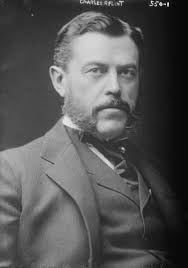
Charles Ranlett Flint was born in 1850 in Maine. The family soon moved to New York, where his father worked as the manager of a firm called Chapman & Flint. The family was business was set up in 1837, and served as a mercantile firm dealing in loans and fiscal help. Flint finished his graduation from the Brooklyn Polytechnic Institute in 1868, and two years later entered the shipping business. His first venture was as a partner in the firm Gilchrest, Flint & Co., which later became W.R. Grace & Co.
Between the years 1876 and 1879, he also served as the head Chilean consul at New York, and as a consul general for Nicaragua.

Image Source: Google

He brought several companies together via a merger and formed U.S. Rubber in 1892. A year later, he helped manufacture naval ships for the Brazilian Republic. He also helped Japan in the First Sino-Japanese War by getting them ships. His business acumen kept growing as he learned the ways of the trade. In 1899, he established American Chicle by merging Chiclets, Beemans, Dentyne and Adams Chewing Gum. He also played a part in the forming of American Woolen in the same year. But his greatest invention came a decade or so later.

Beginnings of IBM

Flint changed the way the world worked by forming the Computing-Tabulating-Recording Company in 1911. The company came to be via the merger of four different companies. This Goliath would later grow to become IBM, the company that revolutionized the field of personal computing! A decade later, CTR would rename itself International Business Machines, and the rest is history. Flint continued to work as a part of the board of directors at IBM until 1930.

Growth of IBM

Initially, the company made machinery like time recorders, slicers, and tabulators. After Thomas J. Watson, Sr became the President, the company went huge, bringing in $9 million, which is worth $130 million today every year.

The company also expanded to Europe, Asia, and Australia. Watson was also responsible for re-christening the Computing-Tabulating-Recording Company to International Business Machines. By 1937 IBM’s equipment was helping companies deal with massive amounts of data. They helped the US Government maintain employee records, and the names of Nazi sympathizers, during the 1940s.

Thomas Watson, Sr., stepped down in 1952, after 40 glorious years, and his son took over. By 1956 the company started working on artificial intelligence through IBM 704 and within a year, they developed FORTRAN. IBM was also responsible for the development of the highly successful Selectric typewriter. During the 1960’s IBM helped NASA with their logistics and was a part of the Gemini and Saturn flights.

Computer Revolution

They came out with the first PC in 1964, called the IBM System/360, following it up with the IBM System/370 in 1970. Both these models were responsible for making the concept of mainframe computing popular around the world. In 1993 IBM posted a US$8 billion loss which was the highest loss by an American company at the time. But the company turned its fortunes around through smart decision making.

In 2005 Lenovo acquired rights to IBM’s PC business and switched over to software development by acquiring SPSS Inc. The company celebrated its 100th anniversary in 2011, and bought SoftLayer Technologies, for $2 billion. They are now working in partnerships with several companies such as Apple Inc., Twitter, Cisco, and Facebook.

Flint’s fluency with handling financial dealings, earned him the nickname Father of Trusts. Honestly, if not for Flint, the world would still be decades behind with respect to computing technology. The company he formed changed the way people looked at personal computing. In many ways, Flint was responsible for starting the Digital Age, which we all cherish and celebrate!

In 2005 Lenovo acquired rights to IBM’s PC business and switched over to software development by acquiring SPSS Inc. The company celebrated its 100th anniversary in 2011, and bought SoftLayer Technologies, for $2 billion. They are now working in partnerships with several companies such as Apple Inc., Twitter, Cisco, and Facebook.

Flint’s fluency with handling financial dealings, earned him the nickname Father of Trusts. Honestly, if not for Flint, the world would still be decades behind with respect to computing technology. The company he formed changed the way people looked at personal computing. In many ways, Flint was responsible for starting the Digital Age, which we all cherish and celebrate!

apigee

How a Simple Man from Meerut Changed the Global API Landscape?

One of the leading technologies to have burst into the scene in recent years is none other than API. Over the past decade, it has proven itself to be a defining and driving force in the IT industry. The API framework allows the software to access other software to perform a particular function or collect data.

Since their inception, API has been helping scientists transform the way applications work and communicate with each other. The growth API’s fueled was so high that a single core API structure helped Twilio and Stripe reach billion-dollar valuations. These frameworks now act as the backbone for several applications we use on a daily basis. Here’s a look at a software company that used API to grow, evolve and attract the attention of some of the biggest names in the tech industry.

What Apigee Does

Apigee is a software company that focuses on providing services related to predictive and analytical functions. The company, founded by Indian origin entrepreneurs Raj Singh and Ravi Chandra relied on API to run processes and work on data. The API development done by Apigee has helped to make communication between devices easier and more efficient. The company provides services including the creation, management, and handling of API proxies. Most of Apigee’s revenues come from subscriptions who run their analytics on the API management platform and a part of it is generated via professional services rendered to customers. Some of the added premium features the company provides is the ability to monetize APIs, traffic isolation, PCI-DSS compliance, and multi-region deployment.

About the Founders

Co-founder Raj Singh is a serial entrepreneur who has a string of successful start-ups behind him. He is the brain behind the jackpot start-up Fiberlane and also the venture capitalist firm Redwood Venture Partners. Ravi Chanda meanwhile, joined Sonoa as the COO. Prior to working for Apigee, he served as the VP of Engineering at Redback, and the company’s VP of Product Management and Engineering, Kishore Seshadri and Ravi Krishna respectively, are ex-Redback employees. The team is rounded up by CTO Vikas Deolaliker, whose impressive resume includes a stint at Sun Microsystems Inc.

Image Source – Google

Raj Singh hails from Meerut, and did his Electrical Engineering from Roorkee, before joining the Navy. He worked on INS Vikrant but found the work to be boring and so left, taking up a Masters in computer science from IIT Delhi. He followed this up by joining the University of Minnesota for an MS in computer science. Between 1981 and 1995 Raj worked for CDC, National Semiconductors, Trilogy Systems, Cirrus Logic, and Inter HDL. Then he ventured into his first startup Advancel Logic, which later became Fiberlane and Stratum One.

Raj’s Multiple Efforts

Singh led InterHDL, which worked on EDA tools for chip design, and sold it to Avant. Next, he found, Advancel Logic which went with Noise Cancellation Technologies. Raj Singh founded Fiberlane in 1996, which he then split into three parts; Cerent, Siara, and Cyras. Out of these, he sold Cerent to Cisco for $7 billion, Siara, meanwhile went to Redback for $4 billion, Cyras was taken up by the Ciena Corp. for $2 billion. He then left the company to form StratumOne, a company that built semi-conductor chips. This company as well went away to Cisco, and we are only half-way done at this point!

Following this, he created Roshnee, which split in two pieces: Inara Networks and Optovation. He then switched over to Corona Networks and worked as a CEO there before leaving to reenter the chip market. Singh and Raj Parekh took over RealChip, and steered it towards success, before unloading and moving on with other interests.

Founding Apigee

The company started out as an XML processing software-based company, working on semiconductors. The markup language was an industry favorite when it comes to operations such as transaction processing. Furthermore, most router companies used XML to switch and route traffic on their systems, in place of Ethernet and Internet Protocol.

Accelerator microchips were adept at language processing help in processing XML and HTML. Some of the early players in this field were Xambala and XaQti. It is interesting to note that Singh was an investor in Xambala, way back in 2001, indicating how interested he is in the industry. Though Sonoa started out with building such chips and engaging in research in this field, it soon changed verticals.

Sonoa Systems began as a project in Santa Clara, California, in 2004. Two years later, the company brought in Chet Kapoor to run its operations as CEO. Though initially, the company worked on creating routers for SOA governance, their priorities quickly changed. Soon enough, the company branched into cloud computing and building application platforms.

They launched a Beta version of Apigee in 2009 giving users a platform to runs their analytics. A year later, the company switched names Apigee and began functioning as an API Management platform. Soon enough the initial application came out with several premium featured added to it.

Success and Subsequent IPO

The platform was an instant success, and soon enough attracted big-shots such as Netflix and Walgreens. In 2012 Apigee acquired Usergrid which works on Mobile API applications, and in 2014, they acquired InsightsOne, which primarily works on Predictive Analysis. The company went public in 2015, raising $87 million via its IPO on NASDAQ. Apigee along with SmartBear and IBM, after receiving backing by Linux, founded the OpenAPI initiative. In September 2016 Google acquired Apigee for $625 million in 2016, owing to the phenomenal work they were doing in the API market.

Apigee grew in a stellar fashion with several high-profile clients including 20 of the Fortune 100 companies. They have a presence in over 30 countries, making over $52.7 million in 2014. The company initially raised $173 million with the help of investors like Vilicus Ventures and Juniper Networks. The IPO gifted them another $87 million, by selling 5.1 million shares at $17 per share at a valuation of $409 million.

This stellar growth and acquisition prove how the entrepreneurial spirit thrives in spite of everything. A simple man from Meerut changed the face of the chip industry, and the world is better due to it. It will be interesting to see what Raj has up his sleeves next!

Fastly Logo

Fastly: How This Company with The Right Values is Growing at The Speed of Light

Data is everywhere now thanks to the Internet Age. According to studies, the amount of total data collected doubles, every two years. Everything from our Internet history to our calendar schedule forms a part of digital data that is important. Research shows that by 2020, we will be producing 1.7 MB worth of data every second! So where does all this data go? Due to Hardware constraints, all computers and mobile phones come with a stipulated storage limit. Also, external hard drives we purchase also have stringent limits on how much space they have. So how do we store the massive amounts of data we create?

Why We Need Cloud Computing

We all want to retain those videos from our first college performance, and also need quick access to our work documents. How can we come up with a system that is secure and at the same time, large enough to store everything? Well, cloud computing has helped most people deal with their storage woes by providing huge amounts of space! Not only do you get to keep your precious memories, but you also get to do so without cluttering up your home.

All your information is locked away in a vault in the sky, so you can loop up baby pictures, and schedule appointments on the go. This time around, we are going to look at one of the fastest-growing cloud computing service providers in the world!

What is Fastly Inc

Fastly Inc.’s highly efficient edge cloud platform allows users access to an extremely fast content delivery network that helps them keep all their memories. Furthermore, the company also provides security services, video streaming, and load balancing. Headquartered at San Francisco, this American juggernaut has offices in New York, London, Portland, Tokyo, and Denver.

Founding Fastly

Artur Bergman founded Fastly in 2011 because he felt the need for a fast and efficient cloud computing service. Prior to founding Fastly, Bergman worked as the VTO of Wikia. Three years into its founding, Google paired up with them to offer users CDN services. This served as a huge boost to the company, which then grew at unprecedented rates.

Image Source – Twitter

So much so, that in 2017, the company launched its own edge cloud platform that supported a ton of new features. The same year, they acquired a Texas-based content delivery network named CDN Sumo. The company helps users extend and expand their existing cloud infrastructure using their network. Furthermore, the service also includes several features such as load balancing, image optimization, and video streaming.

Software Structure

The company’s software works on Varnish, which is an open-source HTTP accelerator. Since they use an open-source product, Bergman has also made it a point to give back to the open-source community. The company supports several non-profit projects such as Hackage, Drupal and DonorsChoose.org. Varnish became the platform for Fastly because it allowed them to reverse proxy and is highly customizable. The software designers always kept performance in mind and then scaled their applications using Varnish. The particular version of Varnish used by them is optimized for large applications, due to the presence of caches.

Giving Back to The Community

Bergman attributes his desire to give back to his raising in a feminist environment such as Sweden. Due to their smaller power distance culture; being inclusive was a way of life rather than a magnanimity. Bergman also believes that diverse teams improve the workspace environment leading to higher productivity. The more diverse the leadership, the easier it becomes to find and encourage diverse talents. This, in turn, makes it possible to create and design diverse products that change the world.

Company Values

Furthermore, Fastly takes both employee and customer satisfaction quite seriously. Since the company works on projects that help people, employees feel great about their work. More people are happy, meaning they genuinely want to look after their users, which makes for great customer engagement and satisfaction. Over 90 employees at Fastly, which constitutes 25% of their workforce, have been there for more than four years.

This proves without a doubt, how important the company views its internal policies and values. The company’s executive team has an almost equal number of men and women. Furthermore, more than 50 percent of their engineers fall into trans, people of color and LGBTQ communities.

Resounding Success

Fastly recently added another $75 million via Series D funding, making the total money hit $130 million! After the financing round, the company named ex-VP of Netsuite, Dan Miller, their CFO. Furthermore, the company recruited ex- Apple privacy strategist, and Mozilla’s security chief to their already impressive employee roster. The company is growing at over 300% year after years, with a team that has grown to over 450 employees now. While the company pushed 40 TB a day in 2012, the data limit per day now stands at 5 PT!

The company already has several high-profile customers such as Twitter, The Guardian, Pinterest, and Wayfair. The company also helped Stripe improve their checkout time by 80%, leading to even more popularity and goodwill within the industry. The company keeps growing from strength to strength having made $144 million in 2018, with revenue growing at 37.8%! Around the world, over 3 billion people see content that served via Fastly, and this is 75% of the world’s internet users. Sure enough, there might come a day, wherein every internet user receives content through a Fastly platform!