Your Tech Story

telecommunication

Singtel

Singtel: The Telecom Conglomerate and The Largest Mobile Network Operator in Singapore.

Telecommunication is the most successful industry in the world, and there are few names that are the biggest contributor to what the telecommunication industry is today. Singtel is one such company, with almost a century-old history in the field. The company is based in Singapore and has a customer base of over 640 million. Singtel is one of the four leading telecom companies of Singapore, and apart from Singapore, it is serving in countries like Australia and India.

A Brief Introduction

Temasek Holdings is the owner company of Singtel, and it trades with the name Singapore Telecommunications Limited. Previously it was branded as SingTel. It is one of the four largest telecom companies in Singapore and is headquartered at 31 Exeter Rd, Singapore 239732. Singtel specializes in fixed-line and mobile telephony, broadband and fixed-line internet services, digital television as well as in IT and network services. As of  2020, the total recorded annual revenue of the company was SGD16.54 billion. Amobee, Dataspark Pte. Ltd., Hooq Digital, Singtel Innov8, NCS Pte Ltd, and Trustwave Holdings are some of its subsidiary companies.

Singtel
Image Source: tranglo.com

The Establishment of Singtel

The history of Singtel dates back to the era of the private telephone exchange in 1883. Singapore got its first telephone network handled by Oriental Telephone and Electric Company (OTEC). OTEC operated the local telephone line for about 25 years, and in 1907 it came under the control of the Central Telephone Exchange in Hill Street. The telephone companies then were under the control of British interests, which changed in the mid of 1950s.

In 1955, the Singapore government incorporated a separate entity to control the telephone networks in the country. The entity was a statutory body and was called the Singapore Telephone Board (STB). After working independently for about 20 years, STB was merged with the Telecommunications Authority of Singapore (TAS), which made the local telecom operations of STB go international. In 1982, the postal services of Singapore were also merged with the telecom services of Singapore.

In 1992, the Singapore telecom merger was again split back into three entities; the Telecommunication Authority of Singapore (TAS), Singapore Telecommunications Private Limited, and Singapore Post Private Limited. This spin-off also formed a subsidiary company named Telecommunications Equipment, which later became Singtel. This subsidiary was formed to make the telecom operations of the company expand to other countries as well. In 1992, the company was renamed Singtel, and a new logo was also introduced for it.

The Growth Years

In 1993, Singtel had the largest IPO of Singapore and was listed on the Singapore Stock Exchange on 1 November 1993. The same year, the company also entered the Philippines. In 1997, Singtel acquired National Computer Systems (NCS), and in 1999, it acquired a stake in Thailand’s Advanced Info Service (AIS). By the beginning of the 2000s, the company had entered countries like India, Australia, Sri Lanka, Indonesia, and Africa, by acquiring shares in companies like Airtel, Optus, and Telkomsel.

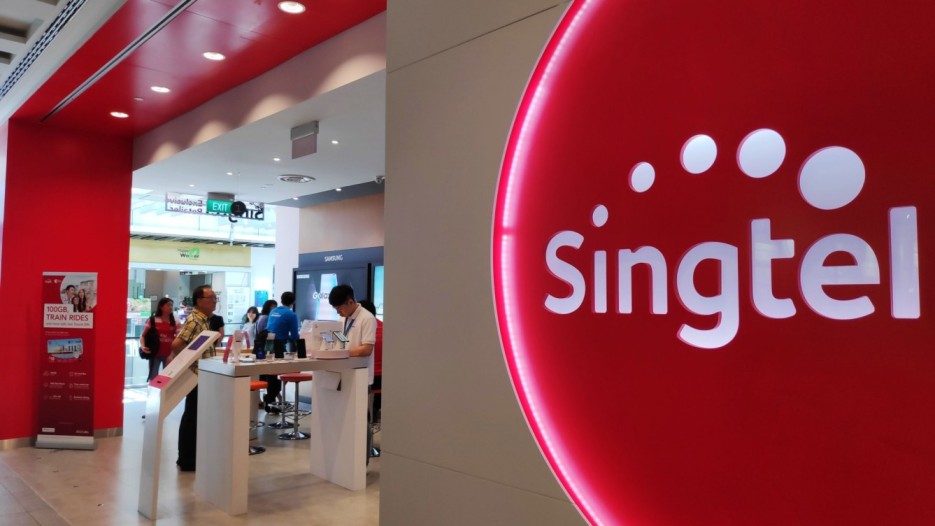
Singtel also started its business in the field of enterprise solutions and investment business. In 2010, the company founded Innov8, an investment company to invest in innovative technologies. In 2012, Singtel acquired a digital marketing company named Amobee, and in 2015, the company took over the operations of a leading US cybersecurity firm, Trustwave. The same year,  Singtel came with an instant message app Wavee to compete with the already existing apps like Skype and WhatsApp. The users could make video and audio calls through the app.
Singtel
Image Source: hrmasia.com

The Company joined its hands with companies like Etisalat, SoftBank, and Telefónica for a  Global Telco Security Alliance to offer cybersecurity services to companies in 2018. The same year, Singtel established the FutureNow Innovation Centre to enter into the consulting business. Singtel, along with Ericsson and Singapore Polytechnic, started the first live 5G facility to support the 5G ecosystem in Singapore in 2019.

In 2020, Singtel won a 5G license for the nationwide 5G connectivity by the Infocomm Media Development Authority (IMDA) Singapore.

The CEO

Singtel announced Yuen Kuan Moon to become Group CEO of Singtel on 1 October 2020. He succeeded Chua Sock Koong as the CEO, who retired in January 2021 from her post. Kuan Moon has been with the company since 1993, and over these years, he has handled some major jobs at the marketing, business development, and sales department of the company. Other than being the CEO of Singtel, he also holds the position of chief digital officer in the company.

Telefonica

Telefonica: The Leader of the Telecom Industry of Spain

There are several names in the telecom industry that have a great history and have been contributing agents to the industry itself. An about century-old Telefonica is an example of such an organization. Telefonica has its headquarter located in Madrid Spain, and it has been in the business of fixed-line telephony, mobile telephony, broadband internet as well as digital television.

Telefonica is counted as one of the largest telecom company, and in this long period of Telefonica’s existence, it has expanded its operations overseas and has established as one of the dominant telecom company in 24 countries, including Brazil, Colombia, Dominican Republic, Ecuador, Chile, Argentina, France, Germany, the UK, etc. 

According to the 2017 list of Forbes, Telefónica was the 110th largest company in the world. As of 2018, the recorded annual revenue of Telefonica was €48.7 billion, and around 120,138 employees were working at the company’s various offices around the world.

The Foundational Story of Telefonica

Telefonica is a almost a century old as was founded in 1924 as Compañía Telefónica Nacional de España (CTNE) in Madrid. ITT was the major shareholder in the company at that time, and by 1945, the state had taken over about 80% of the company shares. Since the state was a major stakeholder in Telefonica, till the year 1997, it had a monopoly over the telecommunication industry of Spain.

Telefonica laid down the first long-distance telephone line in Madrid in 1925, and the next year, it established an underground telephone network at Puente de Toledo, Madrid. The company stayed the only company providing telephone service in Spain till 1960. In 1967, Telefonica entered into satellite communications and commissioned the first Special Data Transmission Network in Europe in 1971.

In the next seven years, Telefonica had installed about 10 million phones and also got listed on the New York Stock Exchange in 1987. In 1989, Telefonica also played a crucial role in the composition of Hispasat.

Telefonica
Image Source: eleconomista.es

Only in three years of entering Chile, the company controlled around 98% of the population for its analog mobile telephone in the country in 1993. In 1994, the company launched its digital mobile service in Peru with the name Movistar. The next year, with the emergence of the internet, Telefonica also launched its internet service named Infovía, and in the same year, the company turned into a partial private company. This privatization completed in 1999 and Telefonica also launched the ADSL broadband fixed access service in the same year.

The company also sold its subsidiary companies and its stakes in other companies in the following years, including Atento (2012), 40% assets in Central America (2013), Telefónica Ireland (2014), its stake in Telecom Italia (2014), Antares (2018), etc.

In 2011 The company created the T. Digital and TGR and had its Germany IPO in 2012. In 2014, Telefonica announced to become a new fully customer-oriented organization. The company created Telxius in 2017 and Aura in 2018. Aura was Telefonica’s way to Artificial Intelligence.

Acquisitions

In 2004, Telefonica acquired BellSouth assets in Latin America, and the next year it acquired Cesky Telecom. The company also bought a 5% share in China Netcom in 2005. The company acquired the operations of O2 in the UK, Germany, and Ireland in 2006 and also acquired 51% shares in Colombia Telecom in the same year. The next year, the company partnered with Telecom Italia, followed by the acquisition of Vivo Brazil in 2008. In 2009, it also partnered with China Unicom.

In 2010, Telefonica bought the operations of a company named Hansenet in Germany, Jajah in Israel, and Tuenti in Spain, and took over the operations of Vivo in Brasilcel. In the year 2014, Telefonica acquired  E-Plus in Germany, DTS (Canal +) in Spain, and GVT in Brazil.

The CEO

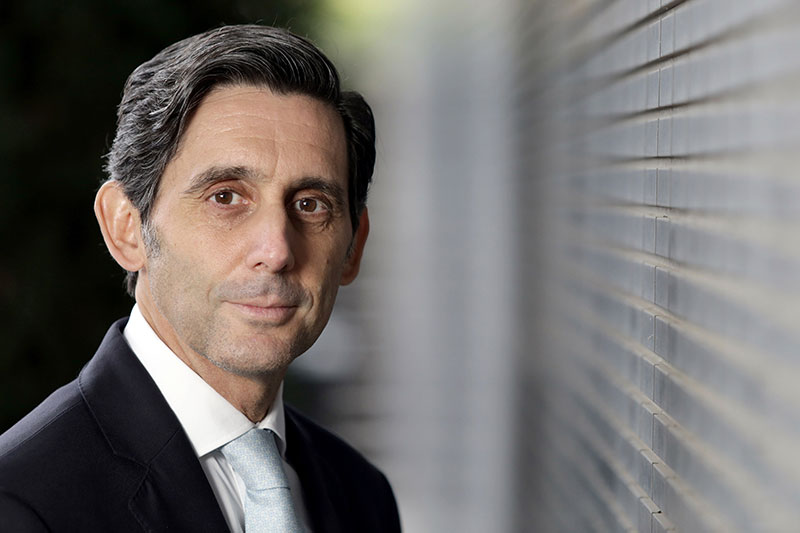
José María Álvarez-Pallete López was born on 12 December 1963, in Madrid and is a famous Spanish economist. Pallete López was appointed the CEO of Telfonica on 8 April 2016.

José María Álvarez-Pallete López CEO of Telefonica
Image Source: telefonica.com

Pallete López started his career at Arthur Young Auditors in 1987. But in 1988, he switched his job and joined Benito & Monjardín/Kidder, Peabody & Co., followed by taking a position in Compañía Valenciana de Cementos Portland (CEMEX) as head of the Investor Relations and Analysis Department in 1995. He handled various positions in the company like CFO, Chief Administration, and Finance Officer of the CEMEX Group’s international offices till 1998.

In 1999, Pallete López got an offer from Telefonica as the Managing Director of the Corporate & Finance in Telefónica S.A. After being posted to many positions like Executive Chairman of Telefonica International S.A., Managing Director of Latin America Telefonica, and President of Latin America Telefonica, he was appointed the CEO on 8 April 2016.

Telstra

Telstra: From a State-owned Enterprise to the Largest Privatized Company of Australia

Telecommunication is one of the biggest industries in the world, despite that only a few names rule the said industry. One such name is Telstra, the largest telecommunication and internet service provider in Australia, that too serves several other countries and provides its services. The company deals in a wide range of network and communication products and services, including fixed-line and mobile telephony, internet, wholesale, retail internet, cable internet, ADSL internet, mobile broadband, satellite internet, dial-up internet, low-cost internet, subscription television, etc.

About The Company

With a history of more than 100 years, Telstra started as a government entity and turned to be one of the largest independent (public) telecommunication service providers in Australia. Apart from Australia, Telstra provides its services to other countries as well. It works in four separate units that include Telstra Consumer and Small Business, Telstra Enterprise (TE), Network and IT (N&IT), and Telstra Infraco. Telstra has its headquarters in Melbourne, Australia, and about 30,000 people are working for the company in its different offices across the world.

Telstra
Image Source: telstra.com

The Foundational Story of Telstra

It all started with the invention of the telephone and the telegraph. Australia got its first telegraph line in 1854, and in 1878, Australia tested its first long-distance call. The country then had started around 30,000 operating telephone services, but there were no authorities to handle the services. In 1901, the Postmaster-General’s Department (PMG) was appointed to control and maintain the telegraph and telephone services along with the postal services. By the year 1922, there were multiple trunk lines installed in the country, and PMG was still controlling the telephone service. In 1925, Australia got its first three-channel telephone carrier systems that enabled multiple calls on a single line.

In the next two decades, telephone communication was also established for international calling for some of the countries including Antarctica and Finland. In 1952, PMG adopted a new telephone system, i.e., automatic TRESS (Teleprinter Reperforator Exchange Switching System). In the next ten years, the introduction of coaxial cables revolutionalized the telecommunication field, such that these cables could handle thousands of calls simultaneously and could do TV retransmission.

In 1970, PMG had a spin-off, and the Australian Telecommunications Commission became a separate authority with the name Telecom. Telecom was offering international direct dialing (IDD) service for 13 countries in 1980, and by the next year, the demand for IDD increased by 800%. The company then introduced the first push-button telephone in 1978. Computerization was also becoming popular around the 80s, such that the first computerized exchange was established in Victoria in 1981.

In the coming ten years, the company was also working on providing mobile services to Australian consumers. In 1992, Telecom partnered with a foreign company named Telecommunications Corporation and formed Telstra. The newly built company introduced its internet services for personal and business clients with the name BigPond in 1996. It is now Australia’s largest cable internet service. In 1997, Telstra had its first IPO listing in ASX.

In the late 90s and the beginning of the 2000s, Telstra started to focus on mobile communication and internet services with BigPond. It also launched the BigPond Music and BigPond Movies services in 2007. Epitiro ranked Telstra as the top Australian ISP in 2009.

In the next two years, Telstra started its 4G services and even introduced pocket size 4G routers for its prepaid customers. In 2013, the company came up with the first-ever LTE-Advanced Carrier Aggregation network in the world that used the 900 MHz and 1800 MHz spectrum bands. In 2014, the company partnered with companies like Huawei and Ericsson to work on the LTE technology at advanced levels. As a result, Telstra launched the world’s first 450 Mbit/s LTE-A downlink with a Category 9 device. It also demonstrated the first live 5G trial in Australia partnering with Ericsson in 2016, followed by the launch of the world’s first Gigabit LTE-Advanced mobile network in 2017.

The CEO

Telstra CEO
Image Source: telstra.com

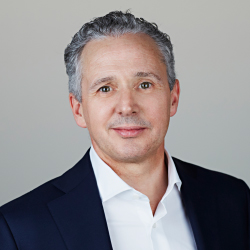
Andrew (Andy) Penn is the current CEO of Telstra. Penn joined Telstra in 2012 as the Chief Financial Officer, and later, in 2014, he was also appointed the Group Executive International. He was promoted to the position of the CEO of the company on 1st May 2015, and since then, he has been leading Telstra to get it at the top in the 5G technology. Before Telstra, Penn has worked in three different industries, i.e., telecommunications, financial services, and shipping, and has got over 40 years of working experience. 

KDDI Logo

KDDI – Born out of a merger with Kazuo Inamori’s DDI that revolutionized the Japanese mobile telecommunication industry

Japanese telecommunications organization called KDDI is known for providing cellular service in the country. It is born out of the merger of KDD, IDO, and DDI in 2000, renamed as KDDI. Headquartered in Chiyoda, Tokyo, the firm served various telecommunication services under various brands. Such as it has mobile cellular service under brand name au by KDDI, and international voice and data service are provided under the brand “an Hikari”. However, its brand-named au one net is related to ISP network services. In 2011, KDDI was in news for purchasing CDNetworks for big money.

KDDI backstory of foundation

Traces of KDDI’s establishment are found in the DDI’s history. DDA aka Daini Denden, founded by Kazuo Inamori shifted the focus on the cell phone business amid deregulation of the telecom industry of japan. That time, it got a golden chance to explore the business, the deal was to merge with KDD and IDO. So, that’s how it emerged as KDDI in 2000, and the Japanese witnessed the emergence second-largest telecom service provider in Japan.

Further exploration

Just after two years of merger, brand new KDDI boomed in the telecommunication industry of Japan. All get started with the launch of the 3G network, based on CDMA2000 1x technology. Thereafter, the firm launched the CDMA 1X WIN brand to provide EV-DO Rev 0 service. With this, the firm introduced fixed rated data subscriptions plans for the first time in Japan. It was the revolutionary step introduced in the Japanese telecommunication industry. Not only this but KDDI also launched the first carrier service with a data rate of 3.1Mbit/s in 2006. Prior to that, the firm also introduced a ringtone download service called Chaku Uta Full. More than 10 million full-length songs had downloaded through this service within six months.

KDDI also entered in wireless data services, with a brand called EZ. In fact, it is one of the successful service ranges enabled by KDDI. The firm never limits the business to specific services, rather it has plunged into a variety of telecom services as per the need. This strategy leads to the continual growth of KDDI.  One of such examples of this strategy is reflected in an agreement sign with the Myanmar state. As per the agreement, KDDI along with one more partner can operate mobile phone service in Myanmar from July 2014 till the next 10 years. As well, it has set consumer showroom called KDDI Designing Studio. It also became a partner with Ericsson to develop 5G technology that will be delivered in near future.

Other Services and Products

Being 2nd largest cellular operator in Japan, it has acquired many customers in the country. With affordable cellular plans and fixed data rates, it also has numerous 3G subscribers in the region. Apart from that, KDDI has also developed applications for its customers, like its Mapion Local Search. It is pointing local search application launched in 2006. It was the first-ever such kind of application introduced in Japan, powered by GeoVector. Another well-known product of KDDI is Media Skin. A brand-new designer phone which also displayed at the Museum of Modern Art, New York. Later on, in 2007, the firm started selling Media Skin.

Glimpse to Masterminds involved in KDDI Success

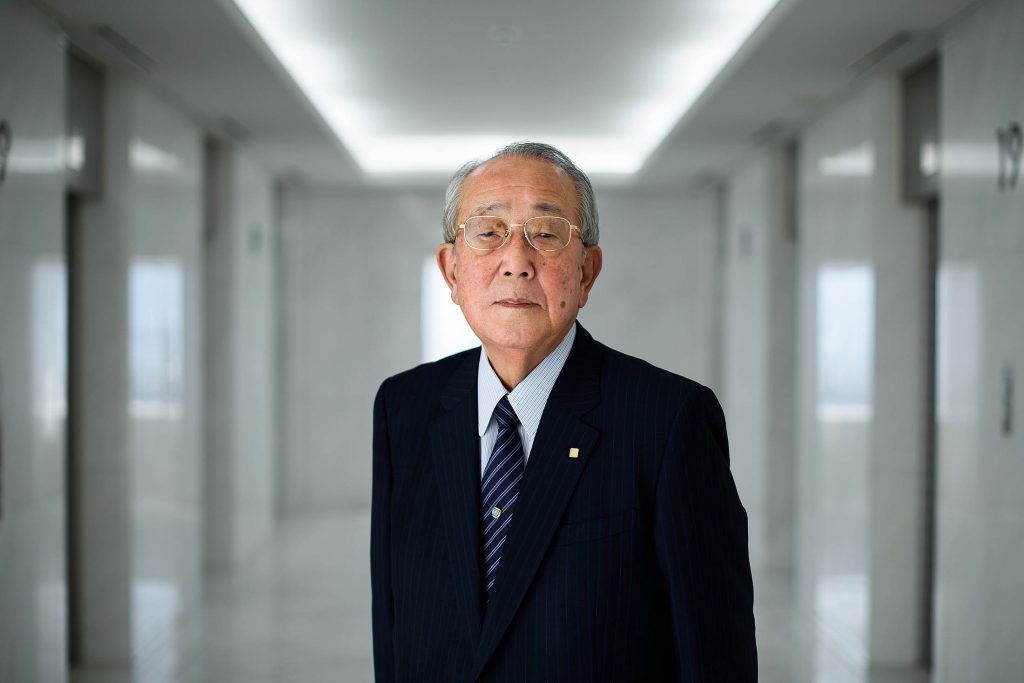
 KDDI founder Kazuo Inamori
Image Creator: Akio Kon | Image Credit: Bloomberg

Kazuo Inamori

Born in 1932, Inamori is a well-known businessman, philanthropist, and entrepreneur hailed from Japan. Apart from founding KDDI, he also helped in the foundation of Kyocera. As well, he served as a chairman at Japan’s airlines.

Early life and Career

Graduated from Kagoshima University, Inamori worked at Shofu industries as a researcher in his early career. At that time, he was part of many important developments in the telecommunication sector. For example, the development of high-frequency insulator components. With his colleagues, he also set Kyoto Ceramic later renamed Kyocera.

Well, this was the period when he created his very own Amoeba Management system for the company’s profit. In 1984, after deregulation of the Japanese telecom sector, he set up Daini Denden(DDI) Which later on became KDDI. Apart from industrial reforms, he also served as the international advisor of Goldman Sachs Group. As well, he became Japan Airlines CEO at the age of 77.

Trimuph of Kazuo Inamori

He has been honored with many prestigious awards for his industrial as well as social work. Apart from that several Universities awarded him Honorary Doctorate. Some of the renowned awards of Mr. Kazuo are International Citizens Award (2011), and Othmer Gold Medal, 2011. Recently, in 2019, he has been honored as an honorary Knight Commander of the Order of the British Empire.

Takashi Tanaka

He is the present CEO at KDDI since 2018. Tanaka also one of the board members at Okinawa Cellular Telephone Co. In his early career, he served as Chairman for UQ Communications, Inc.

T-Mobile

From the consumer’s favorite, how T-Mobile US became the third-largest wireless carrier in America?

USA based wireless network operator T-Mobile US has started in 1994. While it is still a dominating wireless service provider in America. It is providing data services and wireless voice services all across the country. Headquartered in Bellevue, Washington, the firm is known as the third-largest wireless carrier in America. The firm has also crossed over 100 million customers in 2020. Magenta & Magenta Plus, and T-Mobile Essentials are some of the well-known plans of the company.

The backstory of T-Mobile Foundation

The roots of T-Mobile US have traces in the establishment of VoiceStream Wireless PCS. Back in 1994, the firm had started as one of the subsidiaries of Western Wireless Corporation. While after five years, the firm got separated from the parent firm. In 1999, Deutsche Telekom AG purchased VoiceStream Wireless and renamed T-Mobile USA in 2002. However, in 2013, it got merged with MetroPCS and was again renamed T-Mobile U.S.

About T-Mobile US

T-Mobile
Image Source: t-mobile.com

American wireless carrier T-Mobile US is the third-largest firm in the country in that sector. The first owner of the firm Deutsche Telekom holds 43% shares of T-Mobile US. While SoftBank Group owns 24% shares, and the remaining 33% shares come under public holding. T-Mobile US is primarily providing wireless data and voice services in America. As per the consumer report 2015, the firm ranked first among other American Wireless carriers.  Recently, Sprint Corporation and T-Mobile US have merged, making Sprint a subsidiary of T-Mobile. 

Further exploration of business

Within five to six years of establishment, the firm focused on the acquisition of regional network operators. So that the network of T-Mobile US can map most of the regions in the country. Aerial Communications Inc. and Omnipoint corporation are examples of such acquisitions, made in the year 2000. Thereafter, the firm bought licenses to operate a cellular communications network, providing coverage in many parts of America. In 2017, the company purchased a 600 MHz nationwide license. Recently, this network reaches 8,900 towns and cities, covering over 248 million users. It also provides an LTE network that supports VoLTE, like JIO’s LTE, which operates in India. However, the firm had launched its first-ever 3G phone in the market in 2007.

Products and Plans for users

Magenta & Magenta Plus, T-Mobile ONE, T-Mobile Essentials are some of the well-known products of the company. In fact, Magenta plans are the next level of T-Mobile One Family of plans. It is actually based on the existing features of the previous one, but with add-ons. Like HD streaming, 20GB HotSpot Data, etc. As well, the firm offers specialized plans for seniors, Military Personnel, and most importantly, the first responders. For them, the firm provides offers like 50% off the pricing of Magenta and Magenta plus plans.

T-Mobile Essentials, another plan of the firm offers other wonderful services to the users. It comes with unlimited Talktime, SMS plan, and data service. The cost of the plan is in fact lower and affordable to all.

Awards and Achievements

The firm has received numerous workplace awards and appraisals for delivering the best in the wireless industry. Disability Equality Index which shows the disability inclusion allotted 100 points to the firm. As well, the Human Rights Campaign honored it as the best place to work for LGBT Equality for back to back four years. Military Friendly also marked its name in the list of top 100 Military Friendly Employer. Most importantly, the company is among the firms recognized as Most Ethical Companies in the world. Apart from many such renowned awards, the firm has been awarded on a local basis as well.

Policy Maker and President at T-Mobile US- Michael Sievert

He is CEO, president, and one of the board of directors. Earlier, he worked at IBM, Clearwire. While Michael started his career at Procter & Gamble. As well, he served as an executive vice president at E-trade. In his past career, apart from being a CEO of Discovery Bay Games, Sievert also worked at AT&T wireless. Additionally, he played an important role at Global Windows Group of Microsoft. There he was a part of the team that worked to launch Windows Vista. Apart from serving as an employee, he also helped in founding Switchbox Labs. Later on, this business was acquired by Lenovo.

Coming to the journey of Michele at T-Mobile US, he joined the firm as CMO. After that, he became COO and reached the post of CEO in the year 2020. Sievert’s contribution to rebranding and marketing the business of T-Mobile US is remarkable.

Charter Communications

Charter Communications – Journey to deliver high-speed broadband service even after lots of obstacles in the way

An American telecommunication firm, Charter Communications Inc. is a well-known mass media company. It has more than 26 million consumers in almost 41 states in the USA, making it the second-largest cable operator in America. As well as the firm has been recognized as the third-largest pay-TV operator in the country. Apart from that, Charter Communications ranks fifth as the largest telephone provider as per the residential subscriber line count. The journey to achieve this level in business has never been easy for the founders and the firm. Started in 1993, Charter Communications has experienced many hustles and went through lots of controversies. However, the firm proved that with excellent service and continuous efforts, any company can make a stand, despite all odds.

About Charter Communications Inc.

Charter Communications is well-known broadband connectivity and cable operator in the USA. With more than 30 million customers, it is also NASDAQ listed firm. Over the years, the firm has been providing communications and entertainment solutions to personal and commercial users. It also offers multiple services like cable video programming, premium channels, and online video services. Also, it is the ultimate stop for services like telephone services, sports content, internet services, and several others.

Through the spectrum band, Charter Communications has enabled broadband connectivity in 41 states in America. With this spectrum business of charter, communication fulfills the needs of small and medium-sized firms. As well, it provides broadband service and products to large businesses including some government entities also. Moreover, the firm has listed at number 70 in the Fortune 500 list, 2019.

The founders in the limelight

Jerald L. Kent

He is a well-established entrepreneur and businessman in the telecommunication industry. Apart from working at Charter Communications, Kent also served as TierPoint’s CEO. As well, he was the CEO of Cequell III.

Barry Babcock

He was born in Minneapolis and brought up in Oklahoma City. Belonging to a lower-middle-class family, he had to left highschool for some personal reasons. However, he continued education at the University of Oklahoma. When Barry entered the cable industry, he had nothing. In fact, he had to borrow money to invest in Charter Communications.

Howard L. Wood

He is one of the founding members of Charter Communications. As well, he helped in setting Cequel III in 2002. Before that, he served as CEO at Centcom Cable Associates.

The backstory of foundation

Charter Communications
Image Source: deadline.com

The firm has originally started as Charter Communications CATV systems in 1980. However, in 1993, Howard Wood, Barry Babcock, and Jerald Kent made it exceptional under the name Charter Communications Inc. Since then the firm has flourished dramatically which turned out pioneering in the field of the cable industry. Today, it is one of the inseparable parts of the high-tech cable industry.

Growing the business

It was started in the era, where the cable network was started from hilltops and ending at homes. Over the period, this cable business has morphed into a much advance and high-tech cable industry. While Charter Communications also evolved and is in the leading position today. Through several mergers and acquisitions, the firm has time to time to fulfill the requirements of consumers. In fact, to do so, it has done over 10 major acquisitions in the late 20 century. The firm has acquired subscribers from dozens of cable system providers in the USA. Includes, 4 lakh subscribers from InterMedia Partners, and 4 Lakh and 60K subscribers from Interlink communications. Additionally, it acquired leading firms like Renaissance Media Group, Helicon Cable Communications, Vista Broadband Communications, etc.

Charter Communications implemented one more new strategy i.e., swapping customers. To improve geographic clustering the firm has swapped its customers with many leading cable service providers. One such customer exchange was made with AT&T corporation in 1999.

Controversies

The firm received lots of criticism in its history. Even it was listed as worst among 14 major internet service providers by PC World. As per the consumer report 2008, it was marked as the worst of national carriers. As well, the US department of justice investigated the Charter in 2002 for a lawsuit filed against the firm. Several other financial lawsuits have also filed on Charter Communication.

Later Success

Currently, the firm has grown its cable network to more than 7.5 lakh miles, fulfilling the needs of more than 30 million consumers. The vast infrastructure of Charter Communications is now offering faster broadband, which once accused of providing the worst network. As well, it has enabled many other services like voice, telephone, and offers the best customer support. Being the leading broadband connectivity firm, the Charter is providing innovative services with the best customer satisfaction.