Your Tech Story

Technology

Infosys and NVIDIA Collaboration

Infosys and NVIDIA Collaborate to Help World’s Enterprises Boost Productivity with Generative AI

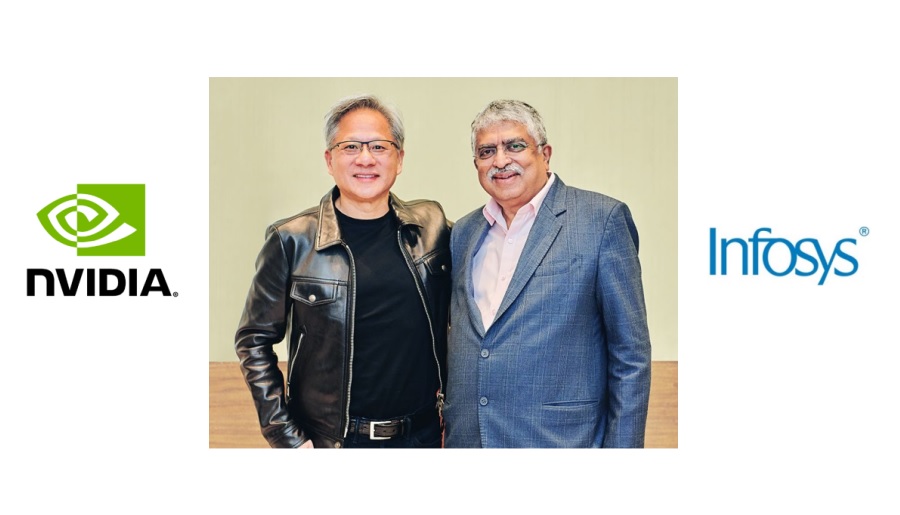
On Wednesday, Infosys and NVIDIA declared that they have intensified their strategic partnership to support businesses all over the world in using generative AI tools and applications to increase productivity.

Infosys and NVIDIA Collaboration
Image Source: equitybulls.com

The expanded collaboration will provide Infosys Topaz, an AI-first suite of services, solutions, as well as platforms that enhance company value by leveraging generative artificial intelligence technologies, with access to the NVIDIA AI Enterprise network of models, runtimes, tools, plus GPU systems. Infosys will develop products that clients can use to quickly incorporate generative AI into their operations through the integration, the firm stated in its regulatory submission.

Furthermore, Infosys announced plans to establish an NVIDIA Excellence Centre, where it would educate and certify 50,000 of its staff members on NVIDIA artificial intelligence (AI) technology to offer generative artificial intelligence (AI) services to its extensive network of clients across sectors.

“Infosys is transforming into an AI-first company to better provide AI-based services to our clients worldwide. Our clients are also looking at complex AI use cases that can drive significant business value across their entire value chain,” said Nandan Nilekani, Co-founder and Chairman, Infosys.

“Infosys Topaz offerings and solutions are complementary to NVIDIA’s core stack. By combining our strengths and training 50,000 of our workforce on NVIDIA AI technology, we are creating end-to-end industry leading AI solutions that will help enterprises on their journey to become AI-first,” he added.

financialexpress.com

Integrated Full-Stack NVIDIA Enables Sophisticated Infosys Services To foster creativity across all of its business processes, Infosys leverages the full-stack NVIDIA generative artificial intelligence platform, which includes enterprise-grade software as well as hardware. Infosys also assists clients in developing generative artificial intelligence applications for company operations, revenue, and advertising.

The NVIDIA AI Enterprise network is swiftly scaling up to deliver the generative AI platform. Together with Infosys, NVIDIA is going to create a skilled workforce to assist startups in using this platform to develop unique applications and services.

Also Read: OpenAI Releases Third Version of AI Image Creator DALL-E in October

Infosys is currently developing several AI-first business solutions across sectors using NVIDIA AI Enterprise systems, models with prior training, and toolkits, such as the NVIDIA NeMo LLM structure, NVIDIA Metropolis for computer vision, including NVIDIA Riva for speech Intelligence.

combining the Infosys Video Analytics solution with NVIDIA Metropolis, which uses the capabilities of computer vision to tackle a variety of difficulties facing the retail sector, which includes the creation of seamless purchasing experiences.

OpenAI releases third version of AI image creator DALL-E in October

OpenAI Releases Third Version of AI Image Creator DALL-E in October

OpenAI is now enhancing its services after introducing generative AI models that produce visuals based on user text inputs. The business that created ChatGPT is releasing DALL-E 3, the third iteration of its AI image maker. What’s new is as follows.

OpenAI releases third version of AI image creator DALL-E in October
Image Source: techstartups.com

DALL-E 3 allegedly comprehends much more depth and detail in text prompts than previous versions, according to OpenAI. In turn, this enables users to produce visuals closer to the concepts they are thinking about.

“Modern text-to-image systems have a tendency to ignore words or descriptions, forcing users to learn prompt engineering. DALL-E 3 represents a leap forward in our ability to generate images that exactly adhere to the text you provide,” the company said. OpenAI CEO Sam Altman shared some examples of images created by DALL-E 3 emphasising the accuracy of the results produced based on text prompts.

moneycontrol.com

According to OpenAI, because DALL-E 3 is developed natively on ChatGPT, certain aspects of the complexity associated with prompt engineering, or the process of fine-tuning the text that is provided to the program, are reduced. Users may still make adjustments using ChatGPT’s interactive interface. By lowering the threshold for producing complex AI artwork, the new tool may also enable OpenAI to maintain an advantage over rivals because of the greater capabilities of its chatbot.

When prompted with an idea, ChatGPT will automatically generate tailored, detailed prompts for DALL-E 3 that bring your idea to life. If you like a particular image, but it’s not quite right, you can ask ChatGPT to make tweaks with just a few words,” the company noted.

moneycontrol.com

Beginning in early October, ChatGPT Plus and Enterprise clients will have access to DALL-E 3. DALL-E 3 images can be reprinted, bought, or used to make products. Additionally, according to OpenAI, DALL-E 3 won’t produce any violent, pornographic, or xenophobic material. There are ways to deal with inquiries that specifically ask for a prominent figure’s name.

Read More: Elon Musk’s Neuralink to Start the human trial of Brain implant for paralysis Patients

However, the usage of these artificially intelligent art systems has also raised questions about how copyrighted content is used by AI businesses to train their algorithms, as well as the possibility that professional human creators may be replaced.

OpenAI also revealed today that it will introduce a method for artists to have their creations excluded from further training runs as a response to this uproar. Dall-E 3 will also stop users from attempting to create artwork in the manner of a famous artist by recognizing when that is mentioned in a prompt.

Elon Musk's Neuralink to Start the human trial of Brain implant for paralysis Patients

Elon Musk’s Neuralink to Start the human trial of Brain implant for paralysis Patients

Neuralink, a brain-chip business founded by Elon Musk, declared on Tuesday that it received permission from an independent evaluation board to begin hiring volunteers for the first human trial of its brain implant intended for paralyzed people.

Elon Musk's Neuralink to Start the human trial of Brain implant for paralysis Patients
Image Source: ommcomnews.com

The experiment will take into account those who have ALS (amyotrophic lateral sclerosis) or cervical spinal cord wounds that have caused paralysis, however, the precise number of individuals who will participate has not been made public. It is anticipated that the trial will last around six years.

The brain-computer interface (BCI) will be surgically implanted in the part of the brain that controls movement intentions as part of a Neuralink study. The initial objective is to empower.

Neuralink had initially planned to get permission to implant its gadget in ten patients.

However, due to concerns regarding safety highlighted by the US Food and Drug Administration (FDA), discussions with the agency resulted in a probable decrease in the overall number of patients. The precise number of patients who received FDA approval is not yet public knowledge.

Elon Musk has bigger plans for Neuralink, hoping to make it easier to put its chip devices during surgery to treat issues including obesity, depression, autism, and schizophrenia. However, experts agree that even if the BCI gadget proves to be safe for human use throughout this study, it may take the business over ten years to obtain commercial usage permission.

Neuralink had previously announced that it had gotten FDA approval for its first human clinical study in May. However, the business was already being investigated by the government for how it handled animal experiments at the time.

Beginning this human study is a critical turning point for Neuralink and a step closer to realizing Elon Musk’s ambition of cutting-edge brain-chip technology.

Also Read: AI Startup Corti Raises $60 Million to Take on Microsoft in Health Care

Based on a report by WIRED, it is now clouded since concerns have been raised regarding claims made by the multi-billionaire surrounding the deaths of monkeys used in Neuralink’s research. According to the article, a medical ethics organization has requested that the Securities and Exchange Commission of the United States (SEC) look into Musk’s assertions that the deaths of the monkeys had nothing to do with the implants made by Neuralink. The organization contends that veterinarian records show that implant-related issues were the real cause of the animals’ deaths.

Solana Co-Founder: To Keep the Next Great American Founder in America, Congress Must Regulate Crypto

Solana Co-Founder: To Keep the Next Great American Founder in America, Congress Must Regulate Crypto. But First Lawmakers Should Learn How it Works.

Anatoly Yakovenko, the co-founder of Solana and CEO of Solana Labs, recently shared his perspective on the importance of Congress regulating cryptocurrency to foster innovation and retain talented entrepreneurs in the United States. 

Solana Co-Founder: To Keep the Next Great American Founder in America, Congress Must Regulate Crypto
Image Source: bitnation.co

Born under Soviet rule in modern-day Ukraine, Yakovenko moved to America at the age of 11 and has since been a champion for open and accessible technology. Yakovenko’s journey from a young immigrant to a successful entrepreneur mirrors the American dream, but he worries that regulatory hurdles are driving away the next generation of innovators in the blockchain space. In his view, Congress should take proactive steps to create a regulatory framework that both protects consumers and encourages entrepreneurship.

The blockchain revolution has spawned thousands of entrepreneurs with ambitious projects, many of whom are challenging corporate giants in industries like wireless networks, ridesharing, food delivery, and social media. However, building a blockchain company in a compliant manner is a complex and expensive process, dissuading young founders from pursuing their dreams in the U.S.

Yakovenko highlights the alarming decline in the number of open-source blockchain developers in the U.S., dropping from 42% in 2018 to 29% in 2022, emphasizing the urgent need for regulatory clarity to prevent this talent drain.

While acknowledging the need to combat scams and protect consumers, Yakovenko argues that the entire blockchain industry should not be punished for the actions of a few bad actors. Instead, he calls for a regulatory framework that fosters innovation while maintaining American values.

In July, two Congressional committees advanced legislation aimed at creating regulatory frameworks for digital assets and stablecoins, a bipartisan effort that Yakovenko applauds. While these bills may not be perfect, he urges Congress to move forward with them and continue refining the regulatory landscape.

Beyond legislation, Yakovenko emphasizes the importance of government investment in blockchain research and development, citing historical examples of technologies like GPS and the internet that were initially incubated by the U.S. government. He urges policymakers to experiment with blockchain technology and explore ways to harness its potential for public benefit.

Also Read: Intel CEO Says the Chipmaker’s Technology Is Central to AI Boom

Yakovenko concludes by inviting an open conversation between blockchain entrepreneurs and policymakers, advocating for collaboration to shape a regulatory framework that not only protects consumers but also encourages innovation and keeps talented founders building in America.

As the blockchain industry continues to evolve, Yakovenko’s insights underscore the critical role that Congress and government institutions must play in ensuring that the United States remains a hub for technological innovation and entrepreneurship in the digital age.

Intel CEO Says the Chipmaker’s Technology Is Central to AI Boom

Intel CEO Says the Chipmaker’s Technology Is Central to AI Boom

In a bold and ambitious statement, Intel Corp.’s Chief Executive Officer, Pat Gelsinger, has emphasized the pivotal role that the company’s technology will play in the forthcoming AI revolution. 

Intel CEO Says the Chipmaker’s Technology Is Central to AI Boom
Image Source: tech.hindustantimes.com

Speaking at Intel’s annual Innovation conference, Gelsinger outlined Intel’s advancements in production technology and developer tools for AI, underlining how these innovations are set to shape the AI landscape. Gelsinger believes that the surge in AI capabilities driven by personal computers will create unprecedented opportunities for developers and businesses. He described AI as a “generational shift,” one that will usher in a new era of global expansion where computing becomes even more fundamental to shaping a better future for humanity. Gelsinger stated, “For developers, this creates massive societal and business opportunities to push the boundaries of what’s possible, to create solutions to the world’s biggest challenges.”

Intel, once a dominant player in the semiconductor industry, has been working tirelessly to regain its leadership position. Gelsinger is resolute in his vision of Intel’s resurgence as a driving force in the AI computing sector. He argued that AI’s reach will not be confined solely to the data centers of major cloud providers, such as Nvidia Corp., which has been dominating the AI accelerator market. Instead, AI will extend its influence into new domains, including the PC market, which has seen limited growth in recent years.

As part of Intel’s ambitious agenda, Gelsinger reaffirmed the company’s commitment to rapidly upgrading its manufacturing technology. He revealed that Intel 3, a cutting-edge chipmaking technique, will be introduced by the end of the year. Intel aims to overcome its past manufacturing setbacks and compete effectively with Taiwan Semiconductor Manufacturing Co. and Samsung Electronics Co.

Intel has also made strides in its accelerator efforts, with the Gaudi2 product line gaining recognition in certain areas. Gelsinger unveiled plans for Intel Core Ultra processors, equipped with an integrated “neural processing unit” designed to accelerate AI software in PCs. These processors are slated for release in December and are expected to bring AI capabilities to a wider range of personal computing devices.

Also Read: IBM Commits To Train 2 Million in Artificial Intelligence in Three Years, With a Focus on Underrepresented Communities

In a surprising move, Gelsinger announced that Intel would open its factory network to external customers, even if they were potential competitors. This venture into the foundry business is a bold step, requiring Intel to reestablish itself as a pioneer in advanced manufacturing by 2025, a promise that Gelsinger is determined to fulfill.

Pat Gelsinger’s resounding message at the Innovation conference is clear: Intel intends to be at the forefront of the AI revolution, leveraging its technological advancements and manufacturing prowess to shape the future of computing. As the AI boom continues to reshape industries and societies, Intel is poised to play a pivotal role in driving innovation and addressing some of the world’s most pressing challenges.

IBM Commits To Train 2 Million in Artificial Intelligence in Three Years

IBM Commits To Train 2 Million in Artificial Intelligence in Three Years, With a Focus on Underrepresented Communities

IBM today declared an initiative to teach two million students in artificial intelligence by the end of the year 2026, having a concentration on neglected areas, to help reduce the worldwide artificial intelligence (AI) capabilities imbalance. To accomplish this objective on a worldwide basis, IBM is offering new generative AI courses via IBM SkillsBuild, extending AI education partnerships with institutions across the world, and working with collaborators to provide AI training to adults worldwide. This will build upon IBM’s current initiatives and platforms for career development to provide improved availability for technical positions and in-demand AI education.

IBM Commits To Train 2 Million in Artificial Intelligence in Three Years
Image Source: ffnews.com

The latest global research by the IBM Institute of Business Value found that CEOs believe that the implementation of artificial intelligence and automation will necessitate the reskilling of forty percent of their employees throughout the next three years, primarily those working in entry-level roles. This serves as another evidence that generative AI is generating a need for new positions and expertise.

“AI skills will be essential to tomorrow’s workforce,” said Justina Nixon-Saintil, IBM Vice President & Chief Impact Officer. “That’s why we are investing in AI training, with a commitment to reach two million learners in three years, and expanding IBM SkillsBuild to collaborate with universities and nonprofits on new generative AI education for learners all over the world.”

finance.yahoo.com

IBM is working with institutions all around the world to develop their AI capabilities by utilizing IBM’s network of professionals. University professors will have a chance to attend IBM-led training, which includes certifications after completion of immersive skilling experiences and lectures. Additionally, IBM will offer course materials, including self-guided artificial intelligence (AI) learning paths, for instructors to utilize in the classroom. IBM will provide students with adaptable and flexible resources, including free online courses in generative AI as well as Red Hat open-source tools, along with academic instruction from academics.

Learners worldwide may have access to AI education through IBM SkillsBuild, which IBM specialists established to deliver the most recent cutting-edge technological breakthroughs.

Also Read: Google Tweaks Ad Auctions to Hit Revenue Targets, Executive Says

IBM SkillsBuild already provides free training in chatbots, the basics of AI, and important subjects like AI ethics. Coursework and improved features are included in the latest generative AI plan.

Along with workshops, expert interactions with IBM coaches along mentors, learning through projects, availability of IBM software, specialized assistance from partners during the learning procedure, and connections to employment prospects, the improved partner edition of IBM SkillsBuild may also contain these features.